A US-Cuba Trade report uses a strategic program already announced for Africa as a model.
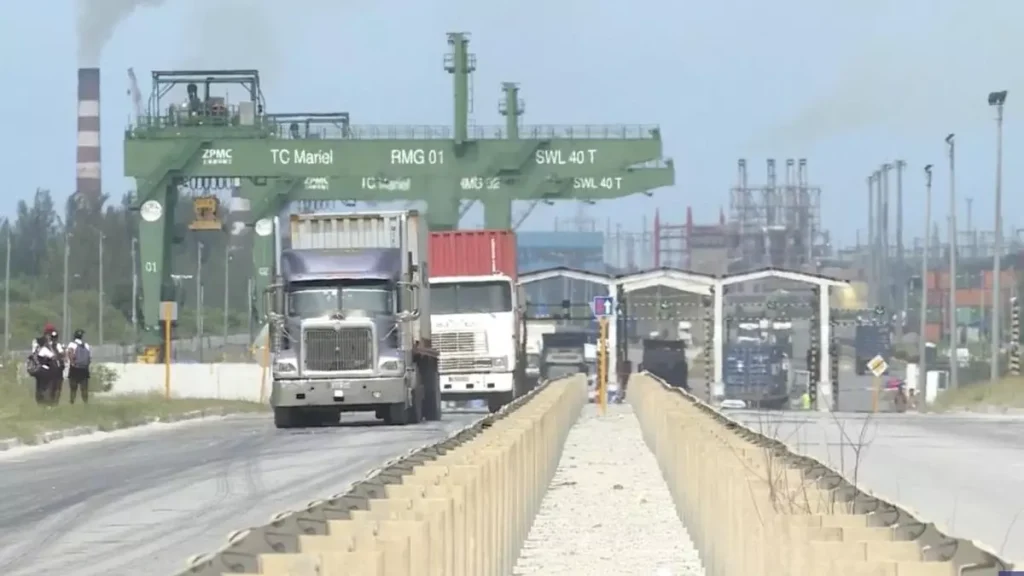
 14ymedio, Havana, July 28, 2026 – An analysis published Tuesday by the U.S.-Cuba Economic and Trade Council (US-Cuba Trade) argues that Donald Trump’s administration could adapt an investment program for Cuba to invest in its infrastructure with a $500 million budget. The organization bases this proposal on a program the United States already has in operation for Africa, with the same budget.
“Within the White House, the U.S. Department of State, the U.S. Department of Commerce, and the U.S. Department of the Treasury, a growing number of mid-level and senior officials, both career staff and political appointees,” the report states, “are reaching the conclusion that the Republic of Cuba will require capital and guarantees, particularly for infrastructure, that the U.S. private sector will neither be able nor willing to provide.”
Accordingly, the organization proposes that public funds could be used to support private investment through guarantees, seed capital, underwriting, or even equity participation in companies. “The goal of the U.S. taxpayer’s financial commitment would be to mobilize at least $1 billion,” the document states.
“The goal of the U.S. taxpayer’s financial commitment would be to mobilize at least $1 billion”
As a possible vehicle for that mechanism, the analysis mentions the U.S. International Development Finance Corporation (DFC), a U.S. government agency that finances and supports investment projects in other countries through loans, guarantees, and other financial instruments. The agency describes itself as “the U.S. Government’s international development finance institution” and says its objective is to mobilize private capital to advance Washington’s economic and foreign policy interests.
The document does not confirm the creation of a program for Cuba or cite a White House decision to that effect. Instead, it examines a possible formula: a new model already proposed for investments in Africa. The U.S.-Africa Strategic Investment Program, announced on July 24, could be replicated and renamed the “U.S.-Cuba Strategic Investment Program.”
The Africa initiative also has a $500 million budget and is specifically intended to finance projects that encourage U.S. private investment in sub-Saharan Africa, particularly in areas considered strategic, such as critical minerals and trade cooperation.
According to the U.S. State Department’s official announcement, the program seeks “market-based solutions” that improve conditions for foreign investment through projects with measurable benefits for African countries while facilitating the participation of U.S. companies. The fund is expected to award grants ranging from $5 million to $50 million to companies, nonprofit organizations, and international organizations.
Based on that model, US-Cuba Trade argues that Washington could follow the same approach to attract U.S. investment in Cuba.
The document also anticipates competition among companies and interest groups seeking access to those potential funds. “Every application will have advocates, lobbyists, and members of the U.S. Congress who believe their application is the most important for the Republic of Cuba,” the Council states, predicting that private companies, organizations, and members of Congress would seek to influence which projects are considered priorities. “The epicenter of the pressure will be in South Florida.”
To illustrate its proposal, the report cites a Semafor article on the Africa program, describing the initiative as part of a shift in U.S. policy toward emphasizing “trade over aid.” According to that outlet, Washington aims to use development resources to promote private investment, especially in strategic sectors.
Translated by Regina Anavy
______________________
COLLABORATE WITH OUR WORK: The 14ymedio team is committed to practicing serious journalism that reflects Cuba’s reality in all its depth. Thank you for joining us on this long journey. We invite you to continue supporting us by becoming a member of 14ymedio now. Together we can continue transforming journalism in Cuba.