Even Natural Remedies are Disappearing From Cuban Pharmacies

“They don’t have any jars on the shelves, they don’t have anything”, say people who just want some plant-based syrups


Pharmacies of natural or alternative remedies that are well stocked with products are already a rarity in Cuba. / 14ymedio

14ymedio bigger14ymedio, Julio César Contreras, Matanzas, 29 July 2025 (delayed translation) – A sign with huge capital letters saying “NO ENTRY” stops Ramón in his tracks as he approaches the door of the natural medicine chemist on Calle Milanés / 2 de Mayo in Matanzas. It’s not that he expected some modern shining establishment, but the accumulated dust on the windows, the cardboard signs hanging from a shabby table and the disinterested expression of the assistant, more absorbed in their phone, all give the impression of abandonment rather than a thriving health establishment.

“I’m looking for some ginger syrup for my digestive problem”, he says, quietly, as though asking for something clandestine. The reply comes back as hard as his stomach discomfort: “There isn’t any”. Ramón isn’t surprised. “If national sugar production isn’t even enough to meet normal everyday consumption needs, how can you expect it to be enough to make natural medicines?”, he says, more resigned than annoyed.

“If national sugar production isn’t even enough to meet normal everyday consumption needs, how can you expect it to be enough to make natural medicines?”

In the glass cabinets where there ought to have been jars containing extracts, packets of infusions or plant-based creams, the only thing to be seen are hand-written signs, some wrinkled up, others faded by the sun. The prices – still containing cents – are a rarity in a country with hyperinflation: sour broom extract at 6.67 pesos, rosemary, 12.67, plantain, 3.00. But the signs that have not yet been removed from the wall are like ghosts: products that used to be on sale but are no longer available and possibly never will be. The assistant, without looking up, mumbles that they can’t be produced for lack of raw materials. No jars, nor sugar nor alcohol. Nor technicians in the lab that remains closed like a poorly conserved continue reading

museum piece.

Consumers find low prices irrelevant if the products aren’t available. / 14ymedio

Miguel, another regular customer, came in search of camomile syrup, the only thing of its kind remaining in the shop. Beset by a dry cough, he recalls that: “they used to make the medicines themselves right here. There was a good variety and there was good customer treatment. All that’s gone now and there’s no courtesy to make you feel you’re at least being attended to”. As a regular consumer of the cough syrup Imefasma – the classic natural extract of ginger and honey – he complains that there aren’t even any containers to put it in. “They don’t have any jars, they don’t have anything”, he says. “What good are low prices if there’s nothing available to buy?”

The outlook for this small pharmacist reflects a more general, and major, collapse. According to official data, more than 70% of basic medications were affected in 2024 and the situation has been getting worse. Of 651 products reviewed, 461 are either unavailable or have only limited availability. And the problem extends to natural remedies too, which were earlier promoted by the authorities as “sovereign” alternatives in the face of the pharmaceutical industry crisis.

In provinces such as Camagüey the authorities have admitted publically that the production of onion, oregano and honey syrups has suffered along with the collapse of the national sugar cane crop

In provinces such as Camagüey the authorities have admitted publicly that the production of onion, oregano and honey syrups has suffered along with the collapse of the national sugar cane crop. The annual target of 370,000 jars of Imefasma has barely reached 26%. And more generally, only 56% of planned natural medication production has been achieved. The health authorities, which in earlier times incentivised the sowing of medicinal plants, are now seeing empty pharmacies gathering dust and traditional formulas disappearing from the laboratories.

To all of this is added the problem of electricity. The pharmacy on Calle Milanés / 2 de Mayo, like many others, cannot stock anything that requires refrigeration. The sentence “come back next month” has lost all logical sense after the months have rolled by and the shop windows remain empty. Some patients go into the mountains in search of plant leaves, others resign themselves to homemade infusions. “We’ll have to look for the herbs ourselves or die for lack of remedies”, says one lady leaving the shop empty handed.

Translated by Ricardo Recluso

____________

COLLABORATE WITH OUR WORK: The 14ymedio team is committed to practicing serious journalism that reflects Cuba’s reality in all its depth. Thank you for joining us on this long journey. We invite you to continue supporting us by becoming a member of 14ymedio now. Together we can continue transforming journalism in Cuba.

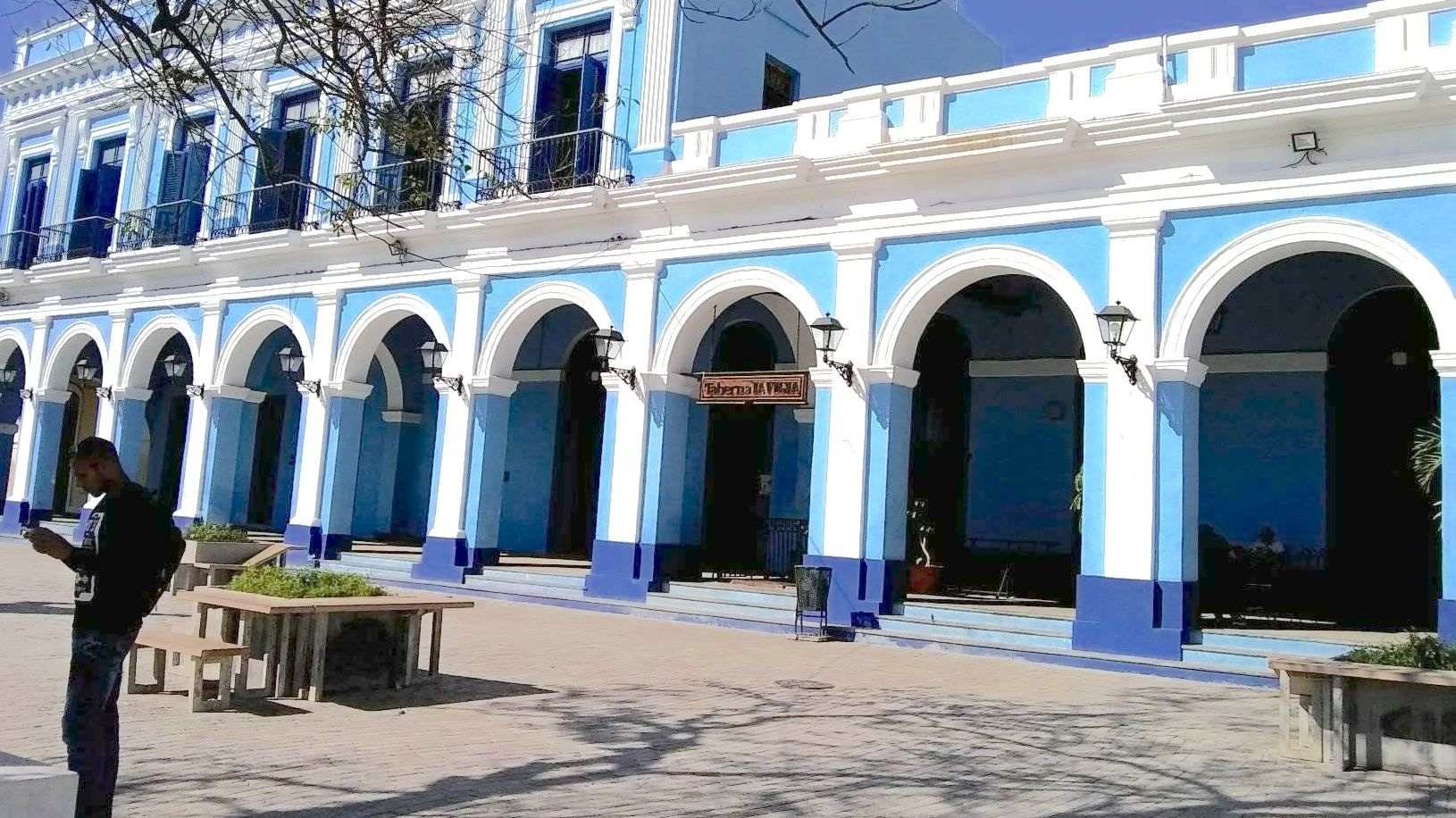
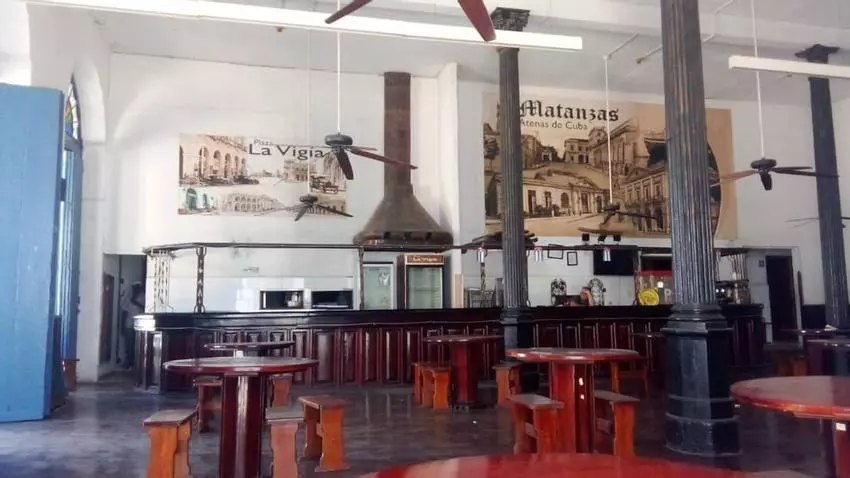
At the Vigia Cafe in Matanzas, Cuba, There Is No Longer Any Beer Nor Roast Chicken, and Neither Are There Any Friends Left

Idael returns to the café he’s known all his life and finds, to his indignation, that all they have to offer are toilets with no water, and even that costs 20 pesos

Plaza de la Vigía, where the café is situated, suffers from constant power cuts and the clientele has diminished. / Facebook / Fotos de Matanzas

14ymedio bigger14ymedio, Julio César Contreras, Matanzas, 23 August 2025 – Until he emigrated to Spain seven years ago Idael used to meet up with friends at the Vigía café on the square of the same name in Matanzas. That colonial building, with its wide entrance way and tall pillars was a refuge of shared beers and nighttime meals – which avoided the need to switch on the cooker at home. Today, visiting his native city, the IT engineer was hoping to relive these scenes but the half open doors of the establishment seem to indicate that time has not been merciful.

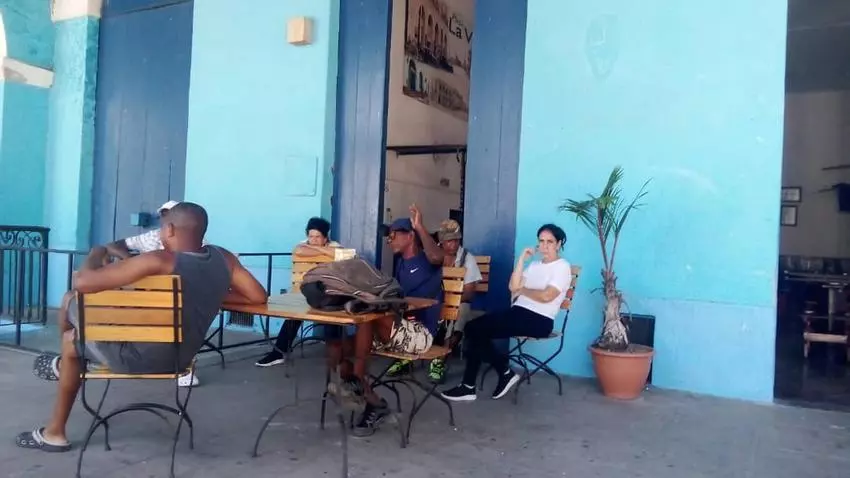
“My parents helped me to learn to walk right here on this wooden lounge floor, and later I used to lift my own son up onto one of the toy horses here”, he remembers, as he observes the staff members in the doorway, distracted, talking about anything but work. One of them asks him, almost with indifference, if he would like anything, as though he was speaking to a stranger, an intruder. No chalkboard here showing special offers of the day, nor any hustle and bustle of clientele: only tables occupied by people taking advantage of the shade, with nothing available to eat.

Looking inside, Idael sees a man seated in the half light of the lounge. “I asked him if I could use the toilets and he told me it would cost me 20 pesos”, he says. And then he realized that all that the Vigía had to offer had been reduced to a toilet and a washbasin with no water. Shortly after, another employee explained that there was no beer, because the place had been without power since the early hours. The coffee machine was broken and all they had were a few fruit juices past their sell by date: an interminable list of what used to be and now no longer is.

No chalkboard here showing special offers of the day, nor any hustle and bustle of clientele: only tables occupied by people taking advantage of the shade, with nothing available to eat. / 14ymedio

The scene infuriates the visitor. “The government ought to give these places over to private ownership who would make them productive”, he complains. “Here you have a bunch of workers who don’t produce anything, earning a miserable wage for opening up at nine and shutting at four. continue reading

Where’s the economical purpose in that? Are they just waiting for the roof to fall in so they can close it down for good?” His questions resound around the cracked walls and the empty tables.

The area around Plaza de la Vigía, where the café is located, doesn’t help either: there are frequent power cuts, a lack of nighttime security and an overall ambience that has been deteriorated by the theft of such things as sound systems and general decoration. The surroundings themselves scare off any potential visitor as much as does the general inertia of a place that seems condemned to be forgotten.

For Idael, what remains is barely even a faded postcard. The Vigía is no longer the meeting place that brought together locals from any profession or salary: “The 20 pesos that used to be enough to get you a Mayabe beer will only be enough to use the toilet today”, he says bitterly. “There’s no Congrí rice or roast chicken anymore. Only silence, a silence that hurts”.

And perhaps what hurts the most is that all the friends are gone. All of them, like himself, have gone.

The Vigía is no longer the meeting place that brought together locals from any profession or salary. / 14ymedio

La Vigía ya no es el punto de encuentro que reunía a vecinos de cualquier oficio o salario. / 14ymedio[/caption]

Translated by Ricardo Recluso

____________

COLLABORATE WITH OUR WORK: The 14ymedio team is committed to practicing serious journalism that reflects Cuba’s reality in all its depth. Thank you for joining us on this long journey. We invite you to continue supporting us by becoming a member of 14ymedio now. Together we can continue transforming journalism in Cuba.
Acosta Dance, the Company of Cuban Dancer Carlos Acosta, Celebrates Ten Years of ‘Dedication’ Onstage

‘A Decade in Motion,’ taking place in Havana this Friday, Saturday, and Sunday

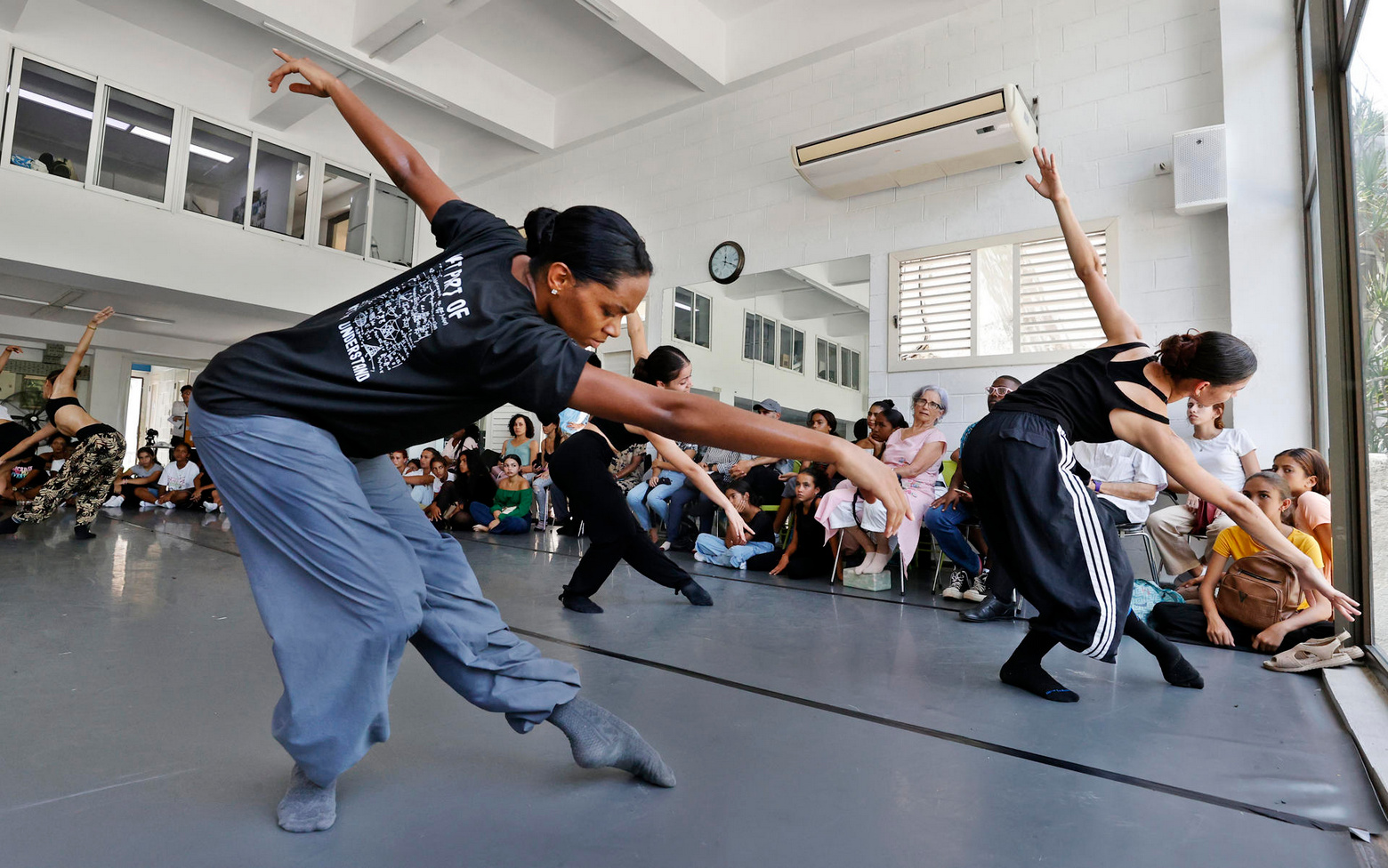
Dancers of the company Acosta Dance, pictured on August 27 during rehearsals for a show in Havana. / EFE/Ernesto Mastrascusa

14ymedio biggerEFE (via 14ymedio), Laura Bécquer, Havana, 5 September 2025 — Acosta Dance Company, under the direction of prestigious Cuban dancer/choreographer Carlos Acosta, celebrates, this weekend in Havana, a decade of “sacrifice and dedication” onstage, with its fusion of classical and contemporary dance technique.

“It’s been ten years of sacrifice, of dedication, of working alongside Carlos and making his dreams become a reality. We’re very happy with what we’ve achieved”, remarks the company’s artistic director Yaday Ponce in an interview with EFE.

Acosta (born in Havana, 1973) founded the company at the end of 2015, although it actually had its artistic debut in April 2016 during the course of a new cultural boom in Havana which was seeing a new closeness develop between Cuba and the United States.

For Ponce, “it was very difficult to begin with: getting the public to understand Carlos’s intentions – here was a classically trained dancer, forming a contemporary dance company”.

“This took quite a bit of work, but I think we managed it”, she says, from the headquarters of Acosta Dance in the Havana district of Vedado, during final rehearsals before the launch of a commemorative season, entitled ’A decade in movement’, marking the anniversary which takes place in Havana this Friday, Saturday and Sunday.

Acosta, the current director of the Birmingham Royal Ballet, is considered by critics to be one one of the foremost dance practitioners in the world 

Acosta, the current director of the Birmingham Royal Ballet, is considered by critics to be one one of the foremost dance practitioners in the world .

Trained at Havana’s National Ballet School, he consolidated, from a very young age, a career which was endorsed by numerous honours, including the Prix De Lausanne in 1990. He retired from performing in 2016 after 28 years as a professional dancer with prestigeous companies, both in Cuba and internationally.

It was at that point that he formed his own company, giving life to a personal project in which the classical ballet techniques in which he dominated were combined, with ease and imagination, with the liberty of movement of contemporary dance. continue reading

Ponce, who has accompanied the prestigeous dancer from the beginning, highlights that “he is a director who is always present”, even now when he resides in the United Kingdom.

“He’s a role model for me, not just as a dancer but as a director too. He’s very demanding: with the dancers’ precision, with the repertoire itself… everything. He’s in constant communication, present with us at all times, although he’s not actually physically present”, she explains.

Each one of the 14 dancers who make up the current Acosta Dance company – all young dancers trained in his own academy – transmits an energy and a passion to the rehearsals for the four pieces which will celebrate the ten year anniversary.

The evening includes: an interpretation of Spanish-Venezuelan choreographer Javier de Frutos’s ’98 Days’, inspired by Federico García Lorca’s visit to Cuba in 1929-30; ’The Equation’, by the Cuban Georges Céspedes; and ’The Calling’, with choreography by Goyo Montero.

The evening includes: an interpretation of Spanish-Venezuelan choreographer Javier de Frutos’s ’98 Days’, inspired by Federico García Lorca’s visit to Cuba in 1929-30

The show closes with ’From End to End’, by Ponce herself, based on the original piece by Cuban choreographer Alexis Fernández, a work nominated in 2022 for the Laurence Olivier prize in the UK.

On the subject of this final piece in particular, the young dancer explains to EFE that it has formed part of the repertory “since the company was founded, and it’s a reflection of the Cubans, a representation of what Cuba is, and of how Cubans feel, of their way of moving”.

“It’s a very integrated work because it includes dancers, musicians and audiovisual material. It’s what Carlos envisioned when he created the company in Cuba: that all the artistic elements of the show were to be integrated, to bring all this Cuban talent to the world’s attention”, she explains.

The company’s work has been endorsed through many diverse awards, among them the UK National Dance Prize (2025) for Best Medium Scale Dance Company.

For Ponce, her own “greatest personal achievement” has been in the training of her own dancers: “to be an artist-teacher for the company and for young dancers from all over Cuba”.

Translated by Ricardo Recluso

____________

COLLABORATE WITH OUR WORK: The 14ymedio team is committed to practicing serious journalism that reflects Cuba’s reality in all its depth. Thank you for joining us on this long journey. We invite you to continue supporting us by becoming a member of 14ymedio now. Together we can continue transforming journalism in Cuba.
Official Data Reveals the Magnitude of Cultural Decline in Cuba

In 2024 a general decline was recorded in almost all of the country’s cultural indicators: in production, creativity, active spaces and audience attendance.

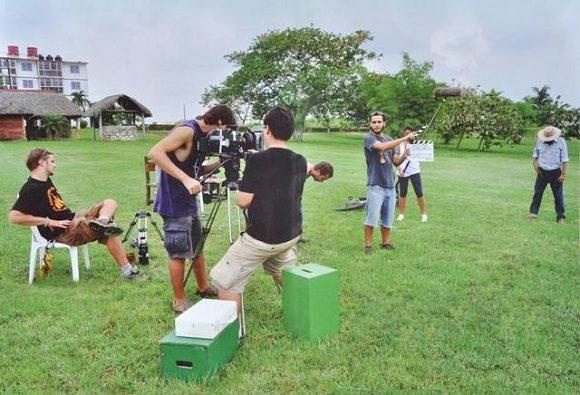
Archive image of film production organised by independent producers in Cuba. / Cubadebate

14ymedio bigger14ymedio, Yunior García Aguilera, Madrid, 18 July 2025 – A nation’s culture is not measured in kilowatts, but when the lights go out in its theatres, its libraries and its cinemas, the resulting darkness has no need of metaphors. And even if artistic quality doesn’t figure in any quantifiable economic indicators of state, the coldness of the numbers is enough to illustrate a map of the disaster. Cuba’s 2024 Statistical Yearbook offers a cold but revealing picture of the structural deterioration that the nation’s cultural ecosystem is suffering.

The diagnosis is severe. Data from the National Office of Statistics and Information (Onei) shows a general fall in almost all cultural indicators: production, creativity, active spaces and audience attendance. But among all the headlines, the one concerned with books destroys any triumphalist speeches given by Alpidio Alonso – head of Culture – who comes precisely from the book sector himself. Whilst in 2023 six million book copies were printed in Cuba, in 2024 the figure fell dramatically to 1,355,500. It isn’t just down to a shortage of paper, but a shortage of political will, and priorities.

Cinema, for its part, confirms the sombre tone. In 2024 there were 6,647 fewer screenings than in the previous year, and 15 cinemas completely disappeared from the map. Production contracted in size too: there were fewer shorts produced and the overall total of animation films was reduced. continue reading

According to the Onei itself, not one feature film was actually completed – a statement contradicted however by the actual facts themselves

According to the Onei itself, not one feature film was actually completed – a statement contradicted however by the actual facts themselves: at least two films were recognised by critics as being the best films of the year: ’An Evening With the Rolling Stones’, by Patricia Ramos; and ’Maisinicú, Half a Century Later’, by Mitshell Lobaina. Both productions, completed in 2024 under the hallmark of the Cuban Institute for Art and Cinema (Icaic), were simply ignored in the official figures, which – it’s worth adding – are compiled using data from the Ministry of Culture.

The lack of insight goes even further when you look at independent filmmaking. Invisible for the Art & Cinema Institute, the National Office of Statistics, the state-run media and all the state-run cinemas of the country, this sector develops audiences beyond the usual margins – at international festivals or on digital platforms. Two titles particularly stand out in this area: the documentary ’Cronicles of the Absurd’, by Miguel Coyula, and the fiction debut of director Marcos Díaz Sosa, ’Natural Phenomena’. Two works which demonstrated that, even if they didn’t cross the thresholds of the national cinemas, art itself needs no permission to exist.

And theatre, traditional object of suspicion and censorship by the cultural police, has also given ground. Although the number of venues increased marginally, from 85 to 87, more general figures invite pessimism. 48 actual theatre companies were lost, along with 440 professionally-active performers (reducing from 2,103 to 1,663). The country registered a deficit of 1,205 performances, and 195,700 fewer theatre attendances than in the previous year. Neither the heroic efforts of theatre creators nor the enthusiasm of loyal theatre audiences have been able to reverse the decline.

Music is suffering a parallel fate. Some 334 bands disappeared and there were 1,691 fewer working musicians than there were in 2023. The number of live concerts, clubs and related cultural activities decreased from 90,033 to 62,162 – an equivalent loss of more than 6 million concert attendances. The silence is not only falling upon theatres but also on parks, cultural centres and community spaces.

Music is suffering a parallel fate. 334 bands disappeared and there were 1,691 fewer working musicians than there were in 2023

This newspaper has monitored complaints from musicians across a number of provinces, many of whom are victims of prolonged outstanding payments from state entities such as Artex. Some artistes have gone for months without pay, whilst the company boasts about an optimistic balance sheet. The paradox is revealing: company income is growing but cultural activity is decreasing. They are saving on culture, as though culture were something dispensable. Even worse, the company (state-run, ’socialist’, so they say) gets richer, whilst its artistes are exploited and go unpaid.

Geographical inequalities are also notorious. Holguín survives with just one theatre. Las Tunas is seeing its network of cinemas and libraries diminish. In Mayabeque some libraries are barely managing to cling onto existence. Ciego de Ávila turns out to be the province with fewest museums, and Sancti Spíritus has only hung on to two art galleries. Beyond the larger urban centres, culture has been reduced to mere wreckage and nostalgia.

So 2024 was more than just a poor year for culture, it was a year of cultural famine and darkness. Not for a lack of cultural creatives, nor through any public apathy, but because of a worn out model that administers culture as though it were just another office of state. What the National Statistics Office can’t measure – nor dares even to name – is the spiritual price of this shutdown. And as they’re so keen to quote José Martí so often, they ought also to remember this one: “The mother of decency, the lifeblood of liberty, the conservation of the Republic and the solution to all its ills is, above all else, the propagation of culture”.

Translated by Ricardo Recluso

____________

COLLABORATE WITH OUR WORK: The 14ymedio team is committed to practicing serious journalism that reflects Cuba’s reality in all its depth. Thank you for joining us on this long journey. We invite you to continue supporting us by becoming a member of 14ymedio now. Together we can continue transforming journalism in Cuba.

‘They Treat Us Like Dogs’, Says a Cuban Reggaeton Singer Detained in Alligator Alcatraz

Former Miami Mayor Xavier Suarez and several local officials denounce the conditions of migrant detention.

The moment of arrest in Miami of the Cuban reggaeton singer Leamsy Izquierdo, ‘La Figura’. / Facebook

14ymedio bigger14ymedio Havana, 8 July 2025 – In the new migrants’ detention centre Alligator Alcatraz “they treat us like dogs”, said the Cuban reggaeton singer Leamsy Izquierdo, La Figura. “There’s nothing in the place, it’s not suitable for humans”.

The singer, who was detained last week by agents of Immigration and Customs Enforcement (ICE) in Miami, described for his girlfriend Katia Hernández by telephone the conditions in the migrants’ prison, which was inaugurated by US president Donald Trump on July 1st.

“We only get one meal a day, and sometimes they have maggots in them”, said the musician. According to judicial records, Izquierdo was admitted into the Turner Guilford Knight Correctional Center and bailed for 6,000 dollars for armed aggression. However, his freedom was blocked by a migrant detention order and he was detained by ICE.

La Figura said he doesn’t even know whether it’s day or night. “The lights are permanently on, 24 hours a day”. The Cuban also said that “the mosquitos are like elephants and there’s no water for washing. He asked that everything be made known to his lawyer so that he could post it onto Instagram.

Inside the complex, which has a total of 200 surveillance cameras, 8,500 metres of barbed wire, more than 400 guards and is surrounded by swamp, caymans and snakes to deter escape, the reggaeton singer says there are “more than 300 people who are suffering”. He added that there are a number of shortages. “There’s no medication for mental health issues”. continue reading

The first of Miami’s mayors to be born in Cuba, Xavier Suárez, protested against Alligator Alcatraz. “That installation is an environmental risk in a very fragile ecosystem”. He added that “the people are treated with the same rhetoric that they always use”.

On Tuesday, before the denouncements, Daniella Levine Cava – mayor of Miami-Dade County where the new detention centre is situated – demanded that the federal and state governments give her access to the site for monitoring purposes; last week legislators from Florida State were denied entry to the centre.

For their part, the environmental associations Friends of the Everglades and the Center for Biological Diversity pushed their legal demands that the centre should be closed because of its averse environmental impact.

“This country’s national parks are considered to be one of the United States’ best ideas but this massive detention centre in the heart of the Everglades is one of its worst ideas”, said Eve Samples, executive director of Friends of the Everglades and who leads the campaign Stop Alligator Alcatraz.

Translated by Ricardo Recluso

____________

COLLABORATE WITH OUR WORK: The 14ymedio team is committed to practicing serious journalism that reflects Cuba’s reality in all its depth. Thank you for joining us on this long journey. We invite you to continue supporting us by becoming a member of 14ymedio now. Together we can continue transforming journalism in Cuba.
The Nobility of the Chess Player

La patria, homeland, that word that for some is barely an echo—is the largest chessboard that life gives us. And on it, each person must decide whether to play like a knight or to crawl like a pawn.

Capablanca knew that true glory in the game of chess couldn’t be sullied by dirty politics or by a despot’s ambitions. / CC

14ymedio bigger14ymedio, Jorge Luis León, Houston, 30 June 2025 – It was Savielly Tartakower who, with an acuity that distinguished him as much off as on the chessboard, uttered the following sentence which still resonates today with some force:

“Chess is only a game; any nobility attributed to it is owing, without a doubt, to any nobility in those who play it.”

This sentence contains a deep truth. Chess, in itself, is just a mixture of rules, pieces and movements. But when honest men take up the game and when they turn it into a way of life, those of them who don’t compromise themselves through lying then ennoble the game; it becomes dignified and reaches an ethical dimension that goes beyond any art or sport.

Capablanca: honour versus power

Cuba, cradle of one of the most immortal geniuses of chess, found in José Raúl Capablanca not just a world champion, but a man of principle. Few people know or remember that during Gerardo Machado’s dictatorship there were attempts at using him as a propaganda tool for the regime. Capablanca refused, with elegance but also with firmness. He knew that true glory in the game of chess couldn’t be sullied by dirty politics or by a despot’s ambitions. He was an example of that nobility that Tartakower had revered. He never betrayed his dignity, even when silence could have been easier.

Cuba, cradle of one of the most immortal geniuses of chess, found in José Raúl Capablanca not just a world champion, but a man of principle

Miguel Alemán: voice of the people and of conscience

In more recent times another name shone out in my memory as a symbol of courage: Miguel Alemán, ex national champion of Cuba, a modest gentleman, he stayed away from public focus but remained immense in his truth. I listened to him speaking when I was barely an adolescent in a small chess club:

“Living under dictatorship is unbearable.”

He said it without embellishment, without fear, and with the simple clarity of a pawn who sacrifices himself for the greater good. Years later, ill and continue reading

lying in a hospital bed, he reaffirmed to me the same thing: “The revolution is a swindle.” And with these words his consistency was confirmed. He was never recompensed for his talent, never exalted by the system, but today he figures as a giant in the face of many others’ cowardly silence.

Dignity on the chessboard

What has become of Cuban chess players in these our tragic times? Where is their nobility? Why are they so full only of analysis, of replayed matches, of calculated movements and detail, whilst Cuba is being pushed into the abyss of desperation?

Perhaps it’s simply enough for them to adjust their player’s seat and set the timer while the nation bleeds and dies beyond the edges of their chessboard? No need to defend anything more than a well-plotted chess move? Where are their voices whilst the fatherland is trapped, whilst the people – the same ones that applaud them during their tournaments – are drowning in misery?

Many of these chess players, some of them with enviable academic titles – lawyers, historians, sociologists – have preferred to stay silent. Or even worse, they’ve decided to repeat empty slogans about the “blockade”, joining in with the con like docile pieces in a match that lacks any dignity. In their social networks they show brilliant chess moves, digital chessboards, victories which save nobody. And not a word about the repression, not a single gesture in the face of all the people’s pain. They settle for a few crumbs here and there, a bit of travel, a medal. Some even openly declare “fidelity” to Cuba’s tormentor.

Other examples, same shame

In other parts of the world there’ve been chess players who raised their voices. Gary Kasparov, for example, openly confronted Putin’s regime, knowing he was putting his own safety at risk. He chose the truth. He chose to be a man over being a champion. He didn’t sell his voice for a title or for a chair on some committee.

In Iran, champion player Dorsa Derakhshani was expelled from the national team for not wearing the veil in one tournament. She refused to give in, refused to pretend

In Iran, champion player Dorsa Derakhshani was expelled from the national team for not wearing the veil in one tournament. She refused to give in, refused to pretend. Today she represents the United States and continues to speak up for the oppressed. What does this tell us about force of character?

Silences that are betrayals

I have put questions to a few Cuban chess players. I’ve spoken to them with respect, called on them to join the debate, to bare their souls. The majority told me I should just keep silent. Others, more cowardly, simply blocked me. Is that the fortitude of a chess master? Is that the spirit of Caïssa? No. It’s just the alternative sham for which they have preferred to bend the knee.

I say this to them, out of a passion I’ve had for the game since infancy:

Your dignity is worth so much more than any medal, than any trophy, than any foreign trip.

The fatherland – a word that for some is merely an echo – is the biggest chessboard that life has given us. And on it, each one of us must decide whether to play like a gentleman, or whether to be sold, as a pawn, and swept away.

The nobility of a chess player isn’t measured by their titles, but rather by their commitment to the truth. It’s in their refusal to be complicit.

Today more than ever, Cuba needs chess players to play the hardest match of all: that of dignity against oppression. And in that match there is no possibility of a draw.

Either you win with honour, or you lose forever.

Translated by Ricardo Recluso

An Old Havana Resident Blocks His Street in Protest Against the Poor State of his Home

Aguilar Medrado asked to speak with the mayor, but they sent him the police and state security.

After one o’clock in the afternoon, when we visited the scene, Aguilar had already been detained by officials. / 14ymedio

14ymedio bigger14ymedio, José Lassa, Havana, 19 June 2025 – Lázaro Aguilar Medrano’s patience came to an end this Thursday. The resident of Calle Aguiar/Muralla in Old Havana cut off the traffic in the morning demanding a reply from the authorities to his claim about the poor condition of his home. However, in place of council officials it was the police and State Security who turned up, this newspaper was able to confirm.

Aguilar Medrado stopped the traffic using an old armchair, a mattress, a bed frame, a washing machine, a sign containing his demands, a motorcycle and some containers that his family uses for stockpiling water in this, one of the municipalities worst affected by poor water supply in the whole city. “I want the government here. Because it’s got beyond a joke now and I’m not going to talk to anyone else”, he declared in a video released by CubaNet.

In the recording, Aguilar Medrano demands the presence of Alexis Acosta Silva, administrator for the Old Havana district, as well as the city’s governor Yanet Hernández Pérez. “The block is going to be closed off until the government comes here”, he insisted. The man referred to the lack of replies to his requests for solving his family’s problems on the part of the Institute for Housing, the Communist Party and other provincial and municipal bodies.

The protestor’s things had been removed from the street and stacked on the pavement in front of his house. / 14ymedio

The man also made mention of his mother, Estrella Medrano López. According to him, the woman obtained numerous medals and awards throughout her life: “And Estrella has a thousand medals, a thousand pieces of s**t, a thousand… Well, F**k all that” and he went on to say how abandoned the people feel who, in their younger days, actually helped to build the current political model of the country. “And for what party? For which government? Close them down. Because they don’t function. They don’t function”, he said. continue reading

After one o’clock in the afternoon, when we visited the scene, Aguilar had already been detained by officials and a police car remained parked outside his house. Some graffiti on the front of a neighbouring building almost on ruins assured us: “All we need is love”.

The deployment command post was located in the local Municipal Electoral Commission, right on the corner. / 14ymedio

The protestor’s things had been removed from the street and stacked on the pavement in front of his house. Although the man was no longer present, his neighbours remained watching the scene of the police operation which included patrol vehicles, uniformed and plain clothes officers who watched from the street corners. The deployment command post was located in the local Municipal Electoral Commission, right on the same corner.

The exterior of Aguilar Medrano’s home, probably built at the start of the last century, shows the poor state of construction in which he is living – after decades of neglect, lack of resources available to the inhabitants, and overcrowding owing to housing problems. In a photo posted to his Facebook page you can see that his building also makes use of an old makeshift wooden “barbecue” [a sleeping platform built inside the room] to maintain the vertical space. On the same block there are also signs of multiple building collapses.

Calle Aguiar isn’t just any old Havana street. From its beginnings at the Avenida de las Missiones it goes into the city via some fifteen blocks. In its early days it was home to the headquarters or branches of at least nine banks, such that it became one of the epicentres of the financial district of Cuba’s capital, the little Wall Street of the island. All of these businesses were nationalised after Fidel Castro came to power in January 1959.

The street was one of the epicentres of the financial district of Cuba’s capital, the little Wall Street of the island, before 1959. / 14ymedio

There were also numerous insurance companies in Calle Aguiar, as well as various commercial associations like the British Chamber of Commerce, the Association of Cuban Banks and the National Chamber of Business and Industry. In its buildings, up to 105 law firms, beauty salons, small tailors and sheet manufacturing industries were located. Its commercial and financial activity was so great that it earned the name “money street“.

The blocking off of streets, be it to protest the poor state of housing or to protest the lack of water supply, has become increasingly common in Cuba in recent years. In Havana it is common to see lines of women who block the traffic to demand either a solution to their housing problems or the provision of a water truck to alleviate the lack of mains supply.

Translated by Ricardo Recluso

____________

COLLABORATE WITH OUR WORK: The 14ymedio team is committed to practicing serious journalism that reflects Cuba’s reality in all its depth. Thank you for joining us on this long journey. We invite you to continue supporting us by becoming a member of 14ymedio now. Together we can continue transforming journalism in Cuba.

Drawn by Spies

The sketch made by an English agent in 18th-century Havana sparked an invasion, a conversation, and a novel.

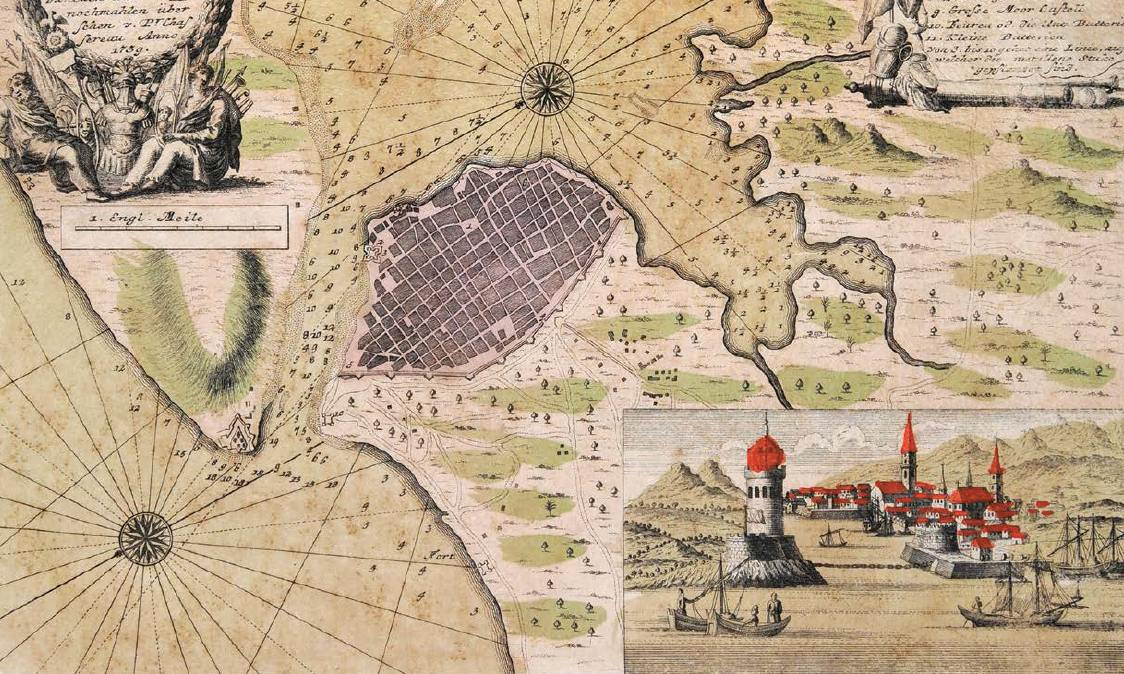
Map of Havana in ’Atlas of the English Colonies’, printed in Nuremberg in 1739.

14ymedio bigger14ymedio, Xavier Carbonell, Havana, 10 May 2025 – You have to go back to the moment in which Miriam Gómez, tormented by a husband who writes even after death, remembers a map “made by an English spy in the eighteenth century”, hanging in Alejo Carpentier’s office. Cabrera Infante looks at it and names a novel after it, but in the actual text he forgets all about it and prefers instead to evoke a Hemingwayesque print from 1778: ’A youth rescued from a shark’.

Distracted by Carpentier’s baloney, Cabrera Infante has time to examine more than one picture. He looks closely at the drawing of the sharks, but he also looks at an antique map of Havana, and perhaps then one of his famous pet phrases occurs to him: “The picture describes” or “In the picture can be seen”, which he uses in ’View of the Dawn in the Tropics’.

The strongest proof that the map existed – and now I feel like a scholarly theologian – is that very same book itself. In ‘View of the Dawn in the Tropics’ the novelist describes in great detail (amongst dozens of vignettes of violence in Cuba) the map that we’re looking for:

“I have here a map created a few days (or perhaps weeks or months) before the English attack on the island’s capital. As one can see, the map is quite crude but its task is well accomplished because the fortifications of Morro and La Cabaña are clearly shown, at the entrance to the bay, and then the fortifications in Havana itself of La Punta, Castillo de Atarés and Torreón de San Lázaro. You can see how the map distorts the city’s characteristics and those of its surrounding area. It’s believed that this map was created by an English spy”.

The mistakes are numerous but let’s just say that Cabrera Infante’s Havana is timeless and gloss over that

The mistakes are numerous but let’s just say that Cabrera Infante’s Havana is timeless and gloss over that. The British Invasion happened in 1762 and the maps that the fleet used were actually from a few years earlier, not continue reading

“weeks or months”. La Cabaña didn’t even exist then; it was just a hillock which in fact was strategically important at the time of the bombardment of Morro. Neither Atarés nor San Lázaro existed either. Cain only got it right with La Punta.

In one of his catalogues Emilio Cueto brings together 17 maps drawn up by English spies in 1762 alone. In earlier decades many others were drawn up, and a great quantity of sketches which were more or less precise, “crude” but useful for the invasion. Several of those maps were created from testimonies by “an experienced commander”.

In 1756, one of those high ranking commanders visited Havana. He was Charles Knowles, the naval governor of Jamaica, who, from first entering the bay began to make careful notes about the city’s defences. It was he who drew up the plan for the attack six years later. The maps used in the occupation were reproduced ad nauseum in British magazines to bring news of the battle.

The espionage became more intense as the invasion approached. In 2003, the translator Juliet Barclay brought to light two unedited documents in the magazine Opus Habana – a letter and a map – addressed to the Count of Egremont in 1760. Signed “your most faithful servant”, the text offered the coodinates of the port – “the base for all Spanish maritime forces in America”.

In the agent’s view, Havana was “almost oval, completely surrounded by stone and brick walls”

In the agent’s view, Havana was “almost oval, completely surrounded by stone and brick walls” and having a bay with “a narrow inlet”, as is seen in his sketch, somewhat inaccurately. It’s a little reminiscent of Cargapatache’s Map – a Portuguese bandit who left instructions to enter the Havana bay in the sixteenth century. For him, the bay was a kind of feminine belly and the ship had to be guided by two mounds which he called The Tits. Was this the map that Cabrera Infante saw? Barclay unfortunately doesn’t say where he got it from.

There’s no solution to the case until someone discovers where Carpentier’s drawings ended up. Cabrera’s “English spy” could be Knowles, or an anonymous Brit who escaped to England before the invasion, or any “experienced commander” who passed through the island. Or even some Cuban, because there was no shortage of collaborators when Havana was under English occupation.

Thumbing through Cueto’s catalogue leaves an investigator with a bunch of suspects’ names – people who drew or printed maps during those years: Pierre Chassereau, William Henry Toms, P. A. Rameau, J. Gibson, Andrew Bell, Giuseppe Pazzi… Which of them was our man in Havana? To find out, you’d need a metaphysical detective in the style of Oesterheld or Mœbius, an informer of the kind Infante and Carpentier talked about, a spy to spy on the spy that eluded us… and a better artist than he was.

Negative image of the city. / Xavier Carbonell

Translated by Ricardo Recluso

____________

COLLABORATE WITH OUR WORK: The 14ymedio team is committed to practicing serious journalism that reflects Cuba’s reality in all its depth. Thank you for joining us on this long journey. We invite you to continue supporting us by becoming a member of 14ymedio now. Together we can continue transforming journalism in Cuba.
In Matanzas, Not Enough Buses and Too Many Billboards For the First of May Celebrations

INTERNATIONAL WORKERS DAY

A billboard for the First of May next to the Ayllón Viaduct bus stop. / 14ymedio

14ymedio bigger14ymedio, Julio César Contreras, Matanzas, 1 May 2025 – The colours on the billboard leap out at you in the middle of the terrace around the Ayllón Viaduct bus stop. The grassed area has already been worn away by the constant flow of people and by the drought. It the middle of all this parched earth with all its attendant long faces brought on by the transport crisis, the huge billboard inviting you to the First of May procession seems to have landed from a parallel universe.

“Together we’ll do it, for Cuba”, the poster’s text assures us, and it shows us a linesman from the Electric Company and a pioneer character holding a Cuban flag and wearing a kufiya – the traditional Arabic headscarf which Yasser Arafat converted into a political symbol for the Palestinians. And all the while, the country suffers long power cuts and an economic crisis without precedent.

Just a few metres from the hoarding, the actual reality of the situation becomes clear. This Wednesday the bus stop was particularly crowded with desperate travellers, waiting. Some of them had managed to find some shade to sit in, but others, because of lack of space or lack of patience were more dispersed and were forced to wait out on the pavement under the sun, their gaze fixed out there on the road, arm ready to be raised if and when they caught sight of any private transport, annoyance painted on their faces.

The travellers remember when tourism was buoyant and the state-operated buses still had space and stopped to pick them up.

Yunior, 43, wears a cap to shield himself from the unrelenting heat of the sun. He arrives at the bus stop after his day’s work in a nearby state department office every afternoon after five o’clock. With his back to the giant Labour Day billboard, the employee pins all his hopes on any driver from an official organisation who might take pity on someone like him who needs transport back to somewhere near his home.

The Viaduct bus stop is always crowded with people headed out towards the outskirts of the city, to Cárdenas or Varadero. “The bus inspector is here between two and three in the afternoon, and he gets on the first bus that passes. Although his presence doesn’t even guarantee either that the buses continue reading

will actually stop”, Yunior explains. A commotion causes him to turn towards a state registered vehicle which has just picked up two women. Although a crowd of people rushes towards the car, there is only room for those two.

The guy from Matanzas does a quick calculation. “The lorries that head towards Cárdenas charge 200 or 250 pesos, but after 4pm there are hardly any of them. When I manage to board one of them it costs me 50 to get to Peñas Altas and then I have to continue on foot”. In the little more than twenty working days that he has each month Yunior spends a third of his salary on getting to and from work.

The number of people waiting for transport keeps increasing and spreads across the tarmac from the traffic lights behind the Sauto Theatre and up to the Viaduct bus stop. There are even some who stand as far down as the bridge, keeping apart from the crowd in order to keep their options open if a car should suddenly appear with an empty seat. However Yunio stays next to the billboard. “There’ll be a bit of shade from the billboard here shortly and even if I haven’t found a lift yet, at least I won’t end up being baked by the sun”. Even propaganda can have its unexpected uses.

The more unlucky ones had to wait in the sun for a bus to arrive.

Although the Cuban authorities have emphasised that this year’s First of May celebrations will have a lower consumption of fuel, at the Viaduct bus stop people do their own sums and calculate the impact of the event. The local press describes the events of next Thursday morning thus: “On the main thoroughfares, workers, students and representatives of all social sectors will show their support for the Revolution and will reaffirm their commitment to the development of the province”.

“No matter how little fuel they use it’s obvious that the leaders aren’t going to travel from their houses to the procession on foot”, one woman is heard to say: she is one of the lucky ones who this Wednesday managed to find some shade and a bit of wall to sit on beneath the bus shelter. A state employee, like the majority waiting for public transport, she says that in recent months the number of people waiting at Viaduct has increased.

It’s not only the shortage of fuel but also the fall in tourism that has lengthened the amount of time spent waiting here. “Before, when the Transtur buses to and from from Varadero had empty seats they would stop here and take people on board”, she remembers. But the frequency of those buses has plummeted. Just like for many of the others waiting here for a bus, for her the next two days of festivity will merely be a pause in the unwanted drama of trying to get from A to B.

Translated by Ricardo Recluso

____________

COLLABORATE WITH OUR WORK: The 14ymedio team is committed to practicing serious journalism that reflects Cuba’s reality in all its depth. Thank you for joining us on this long journey. We invite you to continue supporting us by becoming a member of 14ymedio now. Together we can continue transforming journalism in Cuba.

Eduardo López-Collazi, Scientist and Writer Who Left Cuba ‘To Be Free’

The Elena Fortún Library was packed with a broad ranging audience./ 14ymedio

14ymedio bigger14ymedio, Yunior García Aguilera, Madrid, 26 april 2025 – “I left Cuba to be free”, Eduardo López-Collazo said on Saturday in Madrid at the launch of his first novel, ’Narcisos’. After thirty years in Spain his life has become an example of personal and professional realization, combining rigorous investigation with creativity, a passion for the arts and literature, scientific dissemination and activism to promote diversity and inclusion.

On account of this, the psychologist and neuroscientist Ana Asencio wondered: “How can so many lives fit into one single body?” López-Collazo himself rebels against the insistence, in certain sections of society, for always classifying or pigeonholing people with one single label. It’s a long time since he decided to come out of all the closets: he stopped signing his cultural critiques with a pseudonym, and in his LinkedIn profile he stopped hiding the fact that he wrote about dance in El Cultural. He’s not worried that they call him a twenty-first century Renaissance man.

The amazing thing is that this Cuban, born on 3 July 1969, in Jovellanos, Matanzas, manages to do it all “like crazy”. He graduated as a nuclear physicist from the University of Havana, a city in which, in his own words, he was “hungry and homeless”. In Spain he got his doctorate in pharmacology at the Complutense University of Madrid and ended up running, over the course of a decade, the biggest centre for scientific investigation in the Spanish capital. The impact of his work has been recognised by Forbes, El Mundo and El Español, all of which have described him as one of the most influential people in the country.

Narcisos presents us with the lives of eight men through the eyes of Carmen, a psychologist who will go on to have a journey of self discovery over the course of the narrative. The author describes the novel as a search for understanding “who we are when nobody is looking at us, not even ourselves”. The work is dedicated to his lifetime companion Holden, with whom he discussed the evolution of many of his characters. continue reading

[The filmmaker and writer Carlos Lechuga, charged with presenting the book, described its cinematic potential

The filmmaker and writer Carlos Lechuga, charged with presenting the book, described its cinematic potential. The reader will be able to confirm this immediately, thanks to the fluidity of the dialogue and the richness of the images transmitted through its pages.

Although this is the first novel he has had published – by Mayda Bustamante and Ediciones Huso – it is in fact the third one he has written. The previous two are very personal and it might take a little more time for them to see the light of day. Nevertheless, anyone who has followed his work, including his most scientific texts, will recognise the ease of his writing. It’s not for nothing that El País included one of his titles in their list of “books with an unsettling theme that are a pleasure to read”.

When questioned about whether there exists a battle between the rigour of science and the chaos of creativity, López-Collazo replied that he always looks for freedom. Naturally, he’s a firm believer in discipline: he admits that on occasion he sometimes found himself counting the number of words that he’d ascribed to each of his characters in order to achieve perfect equilibrium. “But without freedom”, he confessed, “growth is lateral, never upwards”.

It’s no surprise that the Elena Fortún public library was packed with a broad ranging audience, many of them standing, to be witness to this presentation. Among those present were the singer-songwriter Liuba María Hevia, the Nobel Peace Prize winner Carlos Umaña, the former Vice Mayoress of Madrid Begoña Villacís and the dancer María Pagés, worthy winner of the Asturias Prize for Princess of the Arts. And many others, who, when it was all over, rushed to buy the book – in which some of the characters are real… and others are too.

Translated by Ricardo Recluso

____________

COLLABORATE WITH OUR WORK: The 14ymedio team is committed to practicing serious journalism that reflects Cuba’s reality in all its depth. Thank you for joining us on this long journey. We invite you to continue supporting us by becoming a member of 14ymedio now. Together we can continue transforming journalism in Cuba.

Shakespeare’s Light Shines in a Havana Theatre in the Midst of Power Cuts

In order to understand all the references you’d need an extensive knowledge of William Shakespeare. / 14ymedio

14ymedio bigger14ymedio, Reinaldo Escobar, Havana, 6 April 2025 – When actor David Reyes, playing the role of Shakespeare, throws into the air the sheets of paper on which he has written his works, whilst Francis Ruiz, holding onto the lectern in the role of Shek, has at his feet the scull of Yorick, any experienced spectator might suspect that ‘Shakes’ runs the risk of being accused of being theatre about theatre.

This show, at the Bertolt Brecht Cultural Centre in Havana’s El Vedado district, is the sixth play by writer Reinaldo Montero that Sahily Moreda, director of the Cuartel Company, has brought to the stage over the last ten years.

If the audience reads the programme before the performance they’ll think they’ll be watching a strictly political play which criticises censorship and which shows the dilemmas that producers have with either needing to please those in power or to say what they need to say. A dilemma that is as current as it is difficult to tackle in today’s Cuba.

The presentation of this well-constructed piece is a relief and it encourages us to go back to the texts to find answers to the questions that it leaves us.

But ’Shakes’ seems to travel a different path. It’s not that the programme lies, but that the work is more demanding of its audience. In order to understand all the references you’d need an extensive knowledge of William Shakespeare. Those who have wide knowledge of the English playwright’s catalogue will be able to enjoy all the allusions to his works and laugh along with every knowing wink that the actors make towards his multiple themes.

The piece is a deep immersion into the Shakespearean world and the social and political setting through which he gave form to his characters, embracing also the pressures which the actor and poet himself endured. The play, directed by Moreda is the third in a tetralogy written by Moreno. The first was ’Liz’, which premiered in Havana in 2008, followed by ’Robin’, with the final part being ’Macbeth 2.0’. The enjoyment of all four parts could help in the understanding of each separate one.

But beyond mere comprehension, ’Shakes’ is enjoyable. In a city hit by power cuts and the difficulties of moving from one place to another, the presentation of this well-constructed piece is a relief and it encourages us to go back to the texts to find answers to the questions that it leaves us. I admit that I only went along to the Bertolt Brecht to escape a power cut where I live, but I came out recharged and illuminated.

Translated by Ricardo Recluso

____________

COLLABORATE WITH OUR WORK: The 14ymedio team is committed to practicing serious journalism that reflects Cuba’s reality in all its depth. Thank you for joining us on this long journey. We invite you to continue supporting us by becoming a member of 14ymedio now. Together we can continue transforming journalism in Cuba.

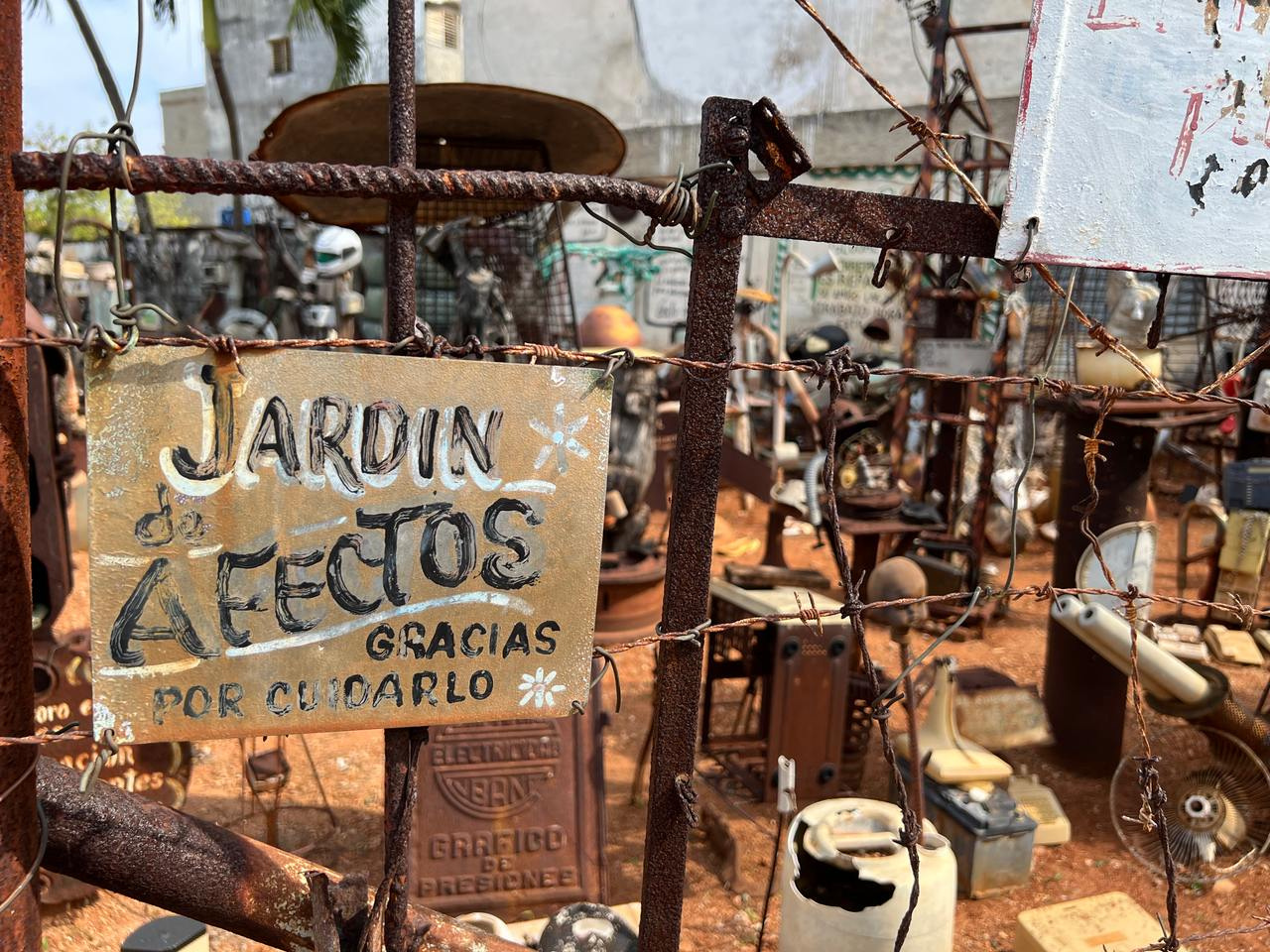
‘Let There Be Light!: And the Light… (Went Out)’

The Garden of Passions, a museum of odds and ends created by a Cuban barber turned diplomat and spy

Wise sayings, reflections, commentary, fragments, doubts: all written upon a sheet of tin. / 14ymedio

14ymedio bigger14ymedio, José Lassa/Juan Izquierdo, Havana, 29 March 2025 – “An interesting and different kind of museum, created from throwaway objects transformed into beautiful sculptures that transmit messages full of moral lessons”. EcuRed’s [’Cuba’s Wikipedia’] perhaps rather simple definition, is, in a way, less eloquent than the unofficial names for the place it describes: The Museum of Junk, or Garden of the Passions. Also, we have: The Scrap Metal Gallery, or Gallo’s [’Cockerel’s’] Henhouse, along with many other variations on the name for the place created by Héctor Pascual Gallo, in the Alamar neighbourhood of Havana.

What’s significant is that EcuRed doesn’t even tell its readers who Gallo was – they have deleted the page which described the man who informed Fidel Castro – or at least so the legend goes – where Cuban exiles were going to land during the Bay of Pigs invasion. Born in eastern Havana in 1924, he was a barber, a diplomat, a spy and an artist, and he died in 2020.

After a whole lifetime – or several lifetimes, as he used to say – Gallo turned up in Alamar and began, aged over 80, a career in culture. One enormous and somewhat ghostly portrait of him is hung above the terrace inside the Garden. Another, signed by the Belgian artist Denis Meyer in 2019, is similarly fantasmagorical. Both represent Gallo as a sort of god of the place. And, in effect, it is his moral lessons – his passions – which populate the place.

A portrait signed by Belgian artist Denis Meyer in 2019 decorates the entrance. / 14ymedio

“I love white coffee more than anything else. Anything? Yes!”, says one of his commandments. “It’s good to know how to, and to be able to feed yourself”; “With time, beauty fades, but charm is accentuated”; “Putting something off doesn’t resolve it”; “Doing silly things doesn’t make you silly, unless it’s for more than 24 times a second (I was free for a minute)”. Wisdom, reflections, commentary, fragments, doubts: all written on bits of tin or wood and accompanied by arrows to keep you reading.

The most important thing about the Garden, however, is that it has the power to silence. In the land of rubbish tips, Gallo is the great organiser of rubbish, to which he attributes meaning, and history. The history of Cuba, no less. A mountain of cash registers, destroyed by rust, is the best symbol of the economic sinking of the country. A kind of Nganga cauldron, complete with forks and shells, recalls the incurable hunger of the Cuban people. One sign reads: “A verb most often used: resolve it. An expression most often heard: it’s not easy”.

A mountain of cash registers, destroyed by rust, is the best symbol of the economic sinking of the country. / 14ymedio

Picturesque and with an overall rusty brown hue, the Garden bursts its way into the daily life of Alamar. It’s impossible not to see it or hold an opinion about Gallo and his legend. No one knows exactly what to call the place, says Gertrudis, who lives close to the building with the giant portrait of the artist.

“They used to call it the Park of Junk. Perhaps it was after Gallo died that they named it Garden of the Passions. People know this street as Junk Street and everyone knows where it is”, she explains.

Ricardo, another person who grew up amongst Gallo’s trash, confirmed Gertrudis’s geographic reference: “Yes, they’d say ’Junk Street’. It’s part of his garden, where he turned all of his rubbish into a kind of love. Rubbish into Art. His granddaughter was at school with me actually. This part here is the old stock. Then it gets more organised as more objects were found. He was a journalist as well. A supercool old guy”.

’Brut Art’ by Cubans such as Gallo is currently on exhibition in a museum in Lausanne, Switzerland. / 14ymedio

For Gertrudis, a teacher who has lived in Alamar for years but has never actually been inside the Garden, the installation is connected with the so-called ’brut’ or ’deviant’ art movement. In fact, a number of works by Cubans who identify themselves as practitioners of this movement (one which might be defined as art created by people who aren’t, strictly speaking, artists), among them various works by Gallo, are being shown in Lausanne, Switzerland, this month.

“I find this kind of art quite interesting”, says Gertrudis. “I don’t know to what extent the people who create it have any artistic training, but yeah, it seems a pretty genuine movement to me. The materials they use are almost always re-used or recycled”.

On the question of what the Garden actually represents, its neighbours sum it up in one expression: “Daily objects which hold in themselves a sense of art”. / 14ymedio

On the question of what the Garden actually represents, Gertrudis sums it up in one expression: “Daily objects which hold in themselves a sense of art”. “Gallo transformed a space which, in itself, is quite boring. Alamar as a place is rather monotonous at times, and the idea of breaking with this physicality, with this architecturally ordered space – where, above all, there aren’t even any parks or other outstanding places either – is a great proposition, and its courage is rooted precisely in this”.

“Let there be light!: And the light… (went out)”, wrote Gallo on a signboard from 1993. More than 30 years have passed and the work appears just as fresh now as it did in the Special Period. At that time, forgotten by the regime which he had served, and apparently under Castro’s radar, Gallo made a place of creation out of poverty itself.

The goal is: to survive in this life, and in the next. “The difference between Goya and Gallo is just spelling”, says one of his aphorisms. “One is immortal, and the other is unmortal”.

Forgotten by the regime which he had served, and apparently under Castro’s radar, Gallo made a place of creation out of poverty itself. / 14ymedio

Translated by Ricardo Recluso

____________

COLLABORATE WITH OUR WORK: The 14ymedio team is committed to practicing serious journalism that reflects Cuba’s reality in all its depth. Thank you for joining us on this long journey. We invite you to continue supporting us by becoming a member of 14ymedio now. Together we can continue transforming journalism in Cuba.

Cuba: On Cienfuegos’s Malecon the Graffiti Demonstrates Defiance as well as Nostalgia

The graffiti, attributed to a group of tourists, have shocked some and generated excitement in others.

The graffiti has sparked a debate over the most spectacular sea view in the city. / 14ymedio

14ymedio bigger14ymedio, Julio César Contreras, Cienfuegos, 27 March 2025 – A malecón isn’t just a sea wall. It needs people coming and going, and some pleasurable activity or other going on. In Cienfuegos, the longest wall in the city has been losing, bit by bit, that which drew both tourists and residents to spend some time there in front of the waves. Through a lack of street lighting, holes in the pavements and the strict prohibition of fishing in the area, little remains today of its former atmosphere of hustle and bustle.

The recent appearance of three pieces of graffiti on the wall has once again brought this recreational zone – which begins at the Paseo del Prado and finishes at Punta Gorda – into the centre of local debate. The graffiti, assumed to have been made by a group of tourists, has scandalised some people, whilst causing some excitement in others – but whichever the case it has sparked a debate about the most spectacular sea view in the city.

With the title ’Graffiti as Art, or Vandalism Disguised as Art’, one statement linked to official sources criticised the “poor quality” of the work of tourists who then “move on, leaving us with their ugly handiwork”. The webpage ’Fernanda’s Things’ branded as “visual aggression” and “vandalism” the graffiti designs which have appeared at various points in Cienfuegos, most notably on the malecón and in the historical city centre.

The graffiti assault has unleashed a wave of opinions, both for and against, but it has also opened up a familiar old wound for Cienfuegos residents. “What they ought to be doing is looking after the deteriorating sections of continue reading

the wall and the potholes everywhere”, complained Darío on Monday – a 48-year-old street seller of sweets and candies who walks the length of the seafront several times daily.

The three graffitis on the malecón seem to be the least of the Ciénfuegos residents’ problems. / 14ymedio

“Also, they need to get some better quality light bulbs in the street lighting because there are some with very low brightness and at nighttime it leaves the place in darkness”, says the seller, and he tells 14ymedio about the times in his youth when he often used to wake up on the sea wall. “It’s dangerous if you do that now because it’s so dark after sunset and people just don’t want to come here”.

For Darío, one of the greatest losses on the malecón has been the fishermen who have been prohibited from carrying out their activities on this part of the coast. “Ever since they implemented the new Fishing Law they prohibited them from coming here with their rods, hooks and bait”, he explains. He says that without those figures, who used to be dotted all the way along the sea wall, the promenade has lost some of its essential character.

The prohibition of fishing on the malecón is just part of a general deterioration of the Cienfuegos bay area – one of the most important industrial areas on the island, where the port activities converge with those of the refinery and other industrial plants to give out toxic waste. “The industrial and the sewage discharges all get poured into these waters, so they’re pretty dirty”, he adds.

The three graffitis on the malecón seem to be the least of the Ciénfuegos residents’ problems. They are centred within just two blocks – between the Provincial Hygiene Centre building and the Radio Sea City building. “There are no refuse bins around there and all the plants that were established there are dried out because the Community Services Company can’t be bothered to look after them”, says another local who’s a regular visitor to the malecón.

The malecón “has become a dangerous place to be at night because drug and alcohol users arrive here and the police don’t do anything”. / 14ymedio

“It’s become a dangerous place to be at night because drug and alcohol users arrive here and the police don’t do anything”, he says. This local resident blames the situation on the lack of alternative recreational activities for the youth of Cienfuegos. The nearby Plaza Cultural (Culture Square) hosts barely a couple of events in its monthly calendar and the prices in the cafeterias and bars remain beyond the reach of most; and the lengthy power cuts conspire against any attempts at an artistic programme for them.

“My parents told me that guys with guitars used to turn up here and there was a great atmosphere”, says Mailén – a 21-year-old who often comes to the malecón to watch a group of skateboarders. “It’s all that there is left for entertainment because this city is practically dead for young people”. The young woman interprets the graffiti as an act of rebellion against the situation in the area.

With its furrowed brow, one of the painted faces on the wall is described by Mailén: “This one seems to be hungry, or he’s angry because there’s no electricity”, she speculates. “That one with the cap and the red face reminds me of a policeman who’s watching someone who’s not committing any offence but everyone turns a blind eye to what’s really happening here”, she continues to interpret the shapes and the colours.

In the malecón of Mailén’s dreams there are “graffitis, sellers with lots to offer, fishermen and lots of young people enjoying themselves”. This last detail is fairly improbable as Cienfuegos has one of Cuba’s most aged populations. The percentage of people over 60 is 24.9% – above the national average of 24.4%.

Translated by Ricardo Recluso

____________

COLLABORATE WITH OUR WORK: The 14ymedio team is committed to practicing serious journalism that reflects Cuba’s reality in all its depth. Thank you for joining us on this long journey. We invite you to continue supporting us by becoming a member of 14ymedio now. Together we can continue transforming journalism in Cuba.

Cuban School Manuals Since 1901: From Education To Indoctrination

A Spanish institution digitizes more than 50 20th-century textbooks.

Fidel and Raúl with pioneers on the Central Committee, in which they celebrated the first Children’s Day in Cuba, on July 6, 1973 / Cubadebate

14ymedio bigger14ymedio, Havana, 16 March 2025 – The text books with which many generations of Cuban children were educated since 1901 can be found today in the Manes archives, a Spanish institute dedicated to the conservation and narration of South American educational thinking. The project, with more than 50 school manuals already digitised, allows us to take the pulse of changes in Cuban pedagogy and their relationship to the political propaganda of each historical era.

According to Manes’s website, the aim of the exhibition is to provide reflection on how teaching has evolved in the island since the end of Spanish dominance. Two German institutes – Leibniz, and Georg Eckert – financed the Cuban historians’ digitisation process.

The material, available free to download, are mostly books on Reading, History and Geography, as well as Morals and Citizenship (two subjects which were key to citizenship training during the Republic), Natural Sciences and Pedagogy. Each one of the original books are kept in the José Martí National Library in Havana.

The oldest records in the collection are those of ’Courses of Study, and Teaching Methods for Public Schools’, printed in 1901 in Havana by the Board of Superintendents of the nascent Republic. This manual attempted to lay the foundations for an education service in a country which, though only recently emerging from war, was ready to “achieve the progress desired” by those who had lost their lives in the wars of the nineteenth century. continue reading

The oldest records in the collection are those of ’Courses of Study, and Teaching Methods for Public Schools’

In its preamble, the text denounced the schooling situation in the country, and the “monstrous barbarisms” of the language. The authorities also wanted Cuban children to learn mathematics, so that “those who are able to work out for themselves their exact change (in a shop) won’t be vulnerable to being swindled”.

They also insisted on the study of agriculture – depending on the region – as well as arithmetic, needlework and civic instruction. In this latter subject the syllabus required the teaching of “the need for keeping promises, of always being punctual, of using courteous language, of never using bad language and always using moderate tones in speech”. And to “erase any superstitious behaviour”.

Because of the proximity of the USA to Cuba, children were also to be taught the history of that country, and they argued “the influence of Cuba in the independence of the United States”. In June 1900, whilst this manual was being written, 1000 Cuban teachers attended a Summer School at Harvard, to train in the most up to date pedagogical thinking.

During the following decades, the biggest names in teaching on the island, like Ramiro Guerra, were consolidated. A number of titles authored by Guerra, the most significant Cuban historian of the first quarter of the century, are among those digitised by Manes – titles having such significance that not even Fidel Castro could banish them completely from schools.

Such is the case of his ’Manual of Cuban History’ – a voluminous recounting, in more than 700 pages, of colonial history – which continues to be the text par excellence for the teaching of history on the island, including at university level.

But by 1968, when People & Education published ’My First Book’, by Josefina Díaz Entralgo, the context, just as much political as educative, had completely changed. The content, overseen by a series of education authorities – a fact which is flagged up in an initial note – was aimed at first grade children:

“One, two, three! Soldiers marching!” is one of the slogans that appear, along with a corresponding image, in the first pages of the book, mixed in with elements of daily life. “I’ll be a pioneer”, “The Sierra” – in capital letters, refers to the Sierra Maestra where Fidel Castro’s forces were based – “We are like soldiers with their rifles”, or, “No one must drop out of line”, are some of the other illustrations.

In a few lines, Entralgo sums up what a child of six should learn about the military

In a few lines, Entralgo sums up what a child of six should learn about the military: “Yesterday, a soldier from the Revolutionary Armed Forces came to talk to us in our classroom. He’s our friend. We met him in November when we visited his base… After he left, we children were thinking, ’How brave are those soldiers of the Revolutionary Armed Forces! They love Cuba very much and are always there to protect it”.

“Eusabio’s parents told him that before, life was very bad in the mountains. The people of the Sierra suffered a lot: the children didn’t have school”, says another passage. “But Fidel and the rebel soldiers fought there and now there are many new things in the Sierra. There are roads and hospitals and lots of schools. The Revolution changed life in the mountains. All the people there are happy now”.

The first edition alone of ’My First Book’ – still read in schools until recently – was printed 80,000 times. But beginning with the Congress of Education and Culture in 1971 – the starting shot for a period of repression in schools and cultural centres – school textbooks no longer even attempted to disguise their motive of indoctrination.

Although Manes, founded in 1992, doesn’t have those texts in their collection, other repositories, like that of the Ministry of Education itself do have them, and they facilitate confirmation of the high level of political, ideological and pro-military content that these school textbooks – still in use today – are filled with.

Translated by Ricardo Recluso

____________

COLLABORATE WITH OUR WORK: The 14ymedio team is committed to practicing serious journalism that reflects Cuba’s reality in all its depth. Thank you for joining us on this long journey. We invite you to continue supporting us by becoming a member of 14ymedio now. Together we can continue transforming journalism in Cuba.

Radio Marti’s Closing Statement

For 40 years, the elimination of the station was one of the most constant demands of the Cuban dictatorship, comparable only to the return of the Guantanamo naval base or the end of the embargo.

For years I was a regular contributor to ’The News As It Stands’ on Radio Martí, where you could hear reports from ’14ymedio’, ’Diario de Cuba’ and ’Cubanet’ / Radio Martí

14ymedio bigger14ymedio, Reinaldo Escobar, Desde Aquí, 18 March 2025 – I don’t know whether the USA will now be more “grande” (’great again’) after closing down Radio Martí. Neither do I know whether, in the English spoken by the president of that country, the word “grande” (’great’) is limited to the amount of money that that country stashes away in its vaults. In the Spanish that we speak in Cuba the word “grande” is associated with “grandeza” – magnanimity, or nobility – and this word in turn is associated with generosity.

Generosity cannot be demanded, but it is one’s duty to give thanks for it.

For 40 years, the elimination of Radio Martí was one of the most consistent demands made by the Cuban regime, comparable only to their demands for the return of the Guantánamo naval base and the end of the embargo. To use an expression familiar to the Republican who, for now, occupies the White House, the Cuban negotiators never even had “the cards” to put on the table for achieving their goal of switching off Radio Martí.

I’m not familiar with the rules of Poker, nor of any other card game, but if I were to get all ’conspiracy theory’ about it I would dare to suspect that the game’s being played underneath the table. ’Certainly’ it’s a coincidence that the closure of Radio Martí came just after we’d heard about the release of 553 prisoners! – which had been promised to the Vatican (of which only 230 were considered to be political prisoners), and shortly after it was announced that foreigners could now buy and own land in Cuba. And who knows, perhaps at last we may be about to find out exactly why so many hotels have been built on the island recently. continue reading

In the Spanish that we speak in Cuba the word “grande” is associated with “grandeza” – magnanimity, or nobility – and this word in turn is associated with generosity

There’s no use crying over spilt milk. For years I was a regular contributor to ’The News As It Stands’ on Radio Martí, where you could hear reports by independent media organisations such as ’14ymedio’, ’Diario de Cuba’ and ’Cubanet’, to name but a few. There, any Cubans without internet access were able to find out what these digital media had been publishing. Granted, it was accompanied by noise and interference, but it had a clarity which only the truth can provide.

By this means they were able to listen to: Dagoberto Valdés, Martha Beatriz Roque, Yoani Sánchez, Henry Constantin, Boris González, Miriam Leiva, Dimas Castellanos, Oscar Elías Biscet, Manuel Cuesta Morúa and other voices of opposition: people who daily ran the risk of prison, precisely for using those very microphones.

Perhaps it’s now just become our turn for giving “grandeza”/generosity towards the United States – to help it become “great again,” via yet more money in its vaults, in exchange for losing those spaces for truthful information about our reality. But as I’ve already said: generosity cannot be demanded, but it is one’s duty to give thanks for it.

Translated by Ricardo Recluso

____________

COLLABORATE WITH OUR WORK: The 14ymedio team is committed to practicing serious journalism that reflects Cuba’s reality in all its depth. Thank you for joining us on this long journey. We invite you to continue supporting us by becoming a member of 14ymedio now. Together we can continue transforming journalism in Cuba.