Angel Santiesteban and the Path of the Fugitive

By Armando Añel, July 30, 2014

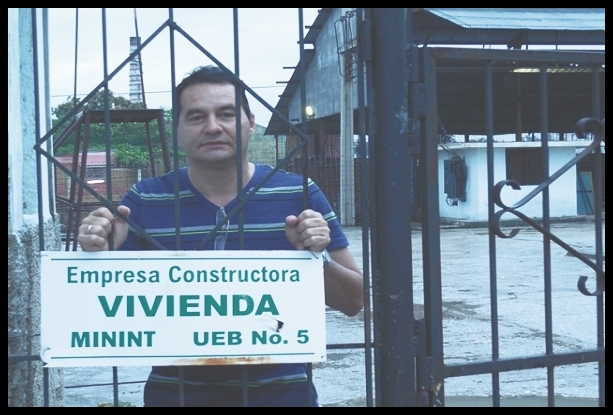
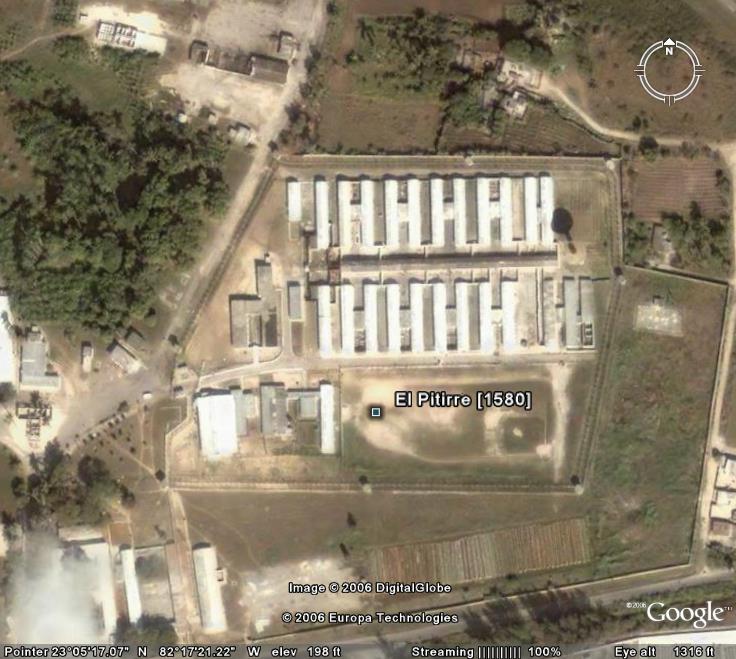
The confused news that comes from Havana indicates that either Angel Santiesteban ran away from the prison-settlement where he was unjustly imprisoned or the political police have launched a fabrication to condemn him to a longer term of imprisonment and keep him isolated.

In any case, we must wait for specific statements from the novelist and blogger. Today we know that his children saw him in prison but they couldn’t speak freely with him: a member of State Security was with them the whole minuscule time they were with their father.

I don’t believe it, but if Santiesteban effectively took the decision to flee — in spite of the fact that, as his sister Maria de los Angeles Santiesteban said, at another time he could have remained in the exterior without major inconvenience and he didn’t do so — I congratulate him.

Begging pardon from friends and colleagues who disagree, one never should surrender to a delinquent regime. In Cuba no procedural guarantee exists, and we all know the degree of superlative helplessness that the citizenry suffers. A product that the Castro regime has exported to countries like Venezuela, where the case of Leopoldo Lopez shows that these gestures of chivalry are counterproductive in societies hijacked by the State.

I chatted with Idabell Rosales for a moment. Santiesteban never should go into prison voluntarily. Not only because of the rigged trial that he suffered previously and that made his sentence absolutely unjust, but also because in countries like Cuba all the gear of social coexistence, of daily structure, is flawed in advance and twists the logic of personal relations.

During these last months, in the face of the campaign for his freedom, he saw with clarity the degree of vilification by the Cuban intellectual class not only on the Island or among the pro-Castro creators, but also in the exterior and in a part of the media-oriented dissidence that he says “laments” his detention but travels half the world without advocating for his freedom.

To live in Cuba is to surrender to a darkly surrealist reality, and to yield to the jailers of the country as he did in 2013, seemed to me and seems to me to be doubly absurd. Fugitives don’t hand themselves over. But I respect, scrupulously, the author of The Summer God Slept and those who defend that type of attitude, brave like very few. It appears that God continues to sleep. Although, as Carlos Alberto Montaner said, we also know that He will wake up.

Published in NeoClub Press.

Have Amnesty International declare the dissident Cuban Angel Santiesteban a prisoner of conscience. Follow the link to sign the petition.

Translated by Regina Anavy

Completely dismantled, the farce against Angel Santiesteban continues in an unknown location

Angel continues being held in an unknown location, transferred illegally and without being able to communicate to his family, a few days after his son, Eduardo Angel Santiesteban Rodriguez, told the truth about what happened when he was only a child. He now is a 16-year-old adolescent.

Forced and manipulated by his mother — Kenia Diley Rodriguez — and Castro’s State Security, he has told now that the objective was to harm his father and declare against him. He said that he never saw anything of what his mother said Angel had done to her, and that everything is a plot in order to punish Angel for his dissidence, and that his mother, for motives of “love,” collaborated with the Regime to lie.

It’s important to clarify that the ex-partner was the one who abandoned Angel and the two-and-a half-year-old boy, a little before she started to make up false accusations against him.

She abandoned him after deceiving him with a lover who had made promises to her that later he didn’t keep, and she, disenchanted with that lover, decided to try to win him back, something she couldn’t do, because he had already formed a stable partnership with a very well-known and beautiful Cuban actress. Kenia, disgusted and jealous, formed a new partnership with an agent of the political police, and from that moment the false accusations rained down. continue reading

Here I present a letter that Kenia Diley Rodriguez wrote to a girlfriend explaining all this; the letter, like many more other proofs of Angel’s innocence, is found in the court file, which has been available in complete form in this same blog for almost two years.

Let’s demand Angel’s immediate appearance, and let’s make Raul Castro responsible for Angel’s life and integrity, as well as that of his son, Eduardo Angel.

The Editor

Note:

1-”Ch” is “Chino” (“Chinese man”), a colloquial name that Angel Santiesteban’s family calls him.

2-”Micho” is the name of Kenia Rodriguez’ ex-lover, with whom she cheated on Angel with while they were a couple and for whom she abandoned him, leaving him the boy. When “M” (“Micho”) disappointed her by not giving her what he promised, she tried to go back with Angel.

Have Amnesty International declare the Cuban dissident Angel Santiesteban a prisoner of conscience. To sign the petition, follow the link.

Translated by Regina Anavy

24 July 2014

S.O.S. Imminent Transfer: Am I more dangerous than the murderers? / Angel Santiesteban

In the most total secrecy, State Security is preparing my transfer to a military unit of border guards.

In the last few days, a rumor started that now has become plausible, inasmuch as the prison authorities are waiting for my transfer in order to bring me to a Minister or a Vice-Minister of Construction who keeps convicts for “diversion of resources,” and in no way can they clash with me, fearing that I will get information from them and later divulge it in my blog.

After a prisoner escaped and managed to reach Miami, State Security ordered that the surveillance on me be strengthened, so they set up a 24-hour command post and kept every movement that I make inside the settlement under supervision.

A few minutes ago, they just ordered a welding of some bars to secure the place where they’re taking me, and the bars have to be placed in the frontier-guard unit before morning.

Evidently, they will keep me more guarded and isolated there. Another chapter begins in this journey of injustice, for my dangerous crime of thinking differently.

I reaffirm that I am stronger than the first day of imprisonment. It’s an honor that they commit these extremes against me — for exercising the craft of thinking and expressing my opposition to the dictatorial regime that has suppressed our country for more than a half-century — while they accept murderers, drug traffickers and rapists, whom they barely harass or watch, like they do in my case.

Long live Cuba, and let it be free.

Ángel Santiesteban-Prats

Lawton Prison Settlement, July 2014.

Follow the link to sign the petition to have Amnesty International declare Angel Santestieban-Prats a prisoner of conscience.

Translated by Regina Anavy

21 July 2014

Are Anguish, Bitterness and Loneliness Only Names of Havana Streets? / Angel Santiesteban

A voyage to the end of all things.

By Antonio Correa Iglesias, June 6, 2014

Angustia (Anguish), Amargura (Bitterness) and Soledad (Loneliness) are not only names of Havana streets. They also are discovered feelings that seize and condition that which we call Cuba, the infinite island, which Abilion Estevez and Virgilio Pinera call the fate of being cursed, a portion of earth that floats in the sea, a sea that is the beginning and end of everything, where weightlessness and drifting are forms of keeping afloat.

But the island is also longing and folly, desire and debauchery, hatred for those who have made Cuba a prison of 111,111 square kilometers, as Reinaldo Arenas reminds us in his Leprosorio. The island and its agony accompany us each morning when we prepare coffee, a coffee which reminds us where we came from, and by those smoky silhouettes of a woman we remembered the amazing knitting grandmother who  helped the homesick and the spoiled greet the dawn. How Cuba hurts, and hurts much more when we find in a literary exercise a daily reality like that which Angel Santiesteban Prats describes for us in a clear and visceral voice. continue reading

The Summer When God Slept (Neo Club Editions), by Santiesteban Prats, isn’t just one more novel that adds to the already extensive and archetypical denomination of “Cuban literature,” from which many — including the author himself — have been excluded.

The Summer When God Slept coexists in a very special place, once it encounters an unexploitable reality not only from the sociological and political order, but also the esthetic and experiential. A reality that by its “everydayness” passes to being assisted history — many times loaded with “comicality” — but that the author handles with the rigor that he always brings rigged to the traumatic act.

That’s to say that Angel Santiesteban’s novel isn’t only a stark x-ray picture of the Cuban context: It’s above all a blog where hidden desires and frustrations, longings and deceptions exist, trying to expunge the feeling of guilt that gravitates — consciously or unconsciously — over our heads.

The voyage is the driving thread of the narration, a voyage like going and returning, like a Nietzchean return, with an eternal return of the same, an endless spiral like those hallucinations that wake us up in the somersault of dawn and tighten our chests.

The voyage that Angel Santiesteban proposes results in a crossing marked by the curse of incertitude, a voyage like a traumatic passage associated with death, a voyage without the guarantee of a destination. A voyage in which death waits patiently and heteromorphically, cross-dressed in hallucinations, decomposition and the deterioration of the human being.

The decision to escape — the foundation of the voyage — the conviction to leave, a transcendental and definitive action of life, is the plot-line of the novel. However, this voyage drags with itself calamities and dangers narrated as extraordinary experiences, once the characters in the novel embody others who have met death on the trip. The desperation of the traveler brings them to grasp themselves “with their fingers, their fingernails …until they bite the wood, the wind or even my own skin….” Yes, it’s precise.

The author manages to construct the drama of the text, and the exercise is of such magnitude that the reader feels himself teletransported; you are no longer only the one who reads; you appear with them, you are one of them, and like an argonaut (that’s to say, like a hero), you search for the Golden Fleece — in our case, Liberty.

Because the sensation of fleeing has to be earned, the voyage is a process of tearing into shreds your awareness of what you leave and where you are going, although you know nothing of your final destination. The sensation is of abandoning weight like a ballast, like a stone infinitely weighing on your shoulders, since what you leave is who you are. So the sensation of abandon in the characters of the novel confuses itself with the coldness of the night, which always reminds you of death.

Because the flight comes associated with the anguish of saying goodbye, a goodbye that is in the voice that resonates in the depths of your being, the doom of a delirious echo that torments. Because the goodbye is accompanied by a sensation of eternity that weighs down and clouds the consciousness of whoever – mumbling his lyrics — knows that he has no guarantee of return.

So the dream of fleeing the island — a laboratory island of politics, a laboratory where the consequences of the experiment and the human cost aren’t registered (the cost in terms of a future isn’t considered in the statistics) — begins to be a reminiscence until it’s converted, as the author says, into a virus, a virus that has inoculated a whole society and that corrodes, in a slow but at the same time delicate and emphatic form, every portion of you, dawning one day, confused by the continuous evaporation of desires and illusions — now that all the illusions have died, like the song about the Matamoros* — and some other unknown end.

Antonio Correa and Carlos Alberto Montaner during the presentation of the book (photo by Ulises Regueiro).

In The Summer When God Slept, nostalgia for the past is a recurring theme, fictional, never political; however, the longing for the past not only invalidates the present for us but also makes the future impossible. For the characters in the novel, to be anchored in the past safeguards the possibility of existence, a life that no longer belongs to them because it lacks a fate, once it’s marked by the calamities and sufferings of a people.

Neo Club Press

*”Matamoras Banks” is a song by Bruce Springsteen about an illegal immigrant who drowns while crossing the Rio Grande River.

Translated by Regina Anavy

20 June 2014

The Tribal Unity of the Dissenters / Angel Santiesteban

I want to mention the appearance of laziness inside the Cuban opposition, because — in my opinion — this is what most corrodes our political force and does the lamentable work of the common enemy.

And I’m not even referring to those who must be sprinkled among us doing the terrible and cowardly work of the satraps, but also to that partitioning of ideas and movements, where each one thinks he’s better and more important, and that his work will be most recognized.

I have listened to those who talk about themselves and their work, and — even recognizing their merits — later I have seen how they end up lowering themselves, diminishing themselves as human beings. They leave much to be desired from those feelings that — I take for granted — all fighters for human rights should have.

Comprehension and respect are important to co-exist with others and above all, you know what, not thinking you’re better than anyone else… Just as there are a lot of people who don’t like me… it makes sense to assume that I can’t like a ton of imbeciles… no?

Sometimes, the daring of confronting a regime isn’t sufficient when we ignore common sense and let them impose that mechanism educated in misery that they have imposed on us since birth. continue reading

We will always fail when we show that we are isolated tribes, those on the Island as well as those in exile, and on that subject, the Patriotic Union of Cuba (UNPACU) has taken a laudable step, uniting people in the whole national territory; today, together with the Ladies in White, it’s one of the most constant and effective coalitions against the dictatorship.

To attack each other, to envy and criticize any initiative, work, and recognition of others, and to not support and make known the sacrifice of others, turns us away from that dialogue with the regime that — in some moment — we will have to have by sitting down at the table of political negotiations for a better and democratic Cuba.

When we understand and assume that all of us are no more than grains of sand dissolved on that beautiful beach of our dreams, then we will understand that only if we remain joined and united will we be capable of constructing the wall that can support the calamities that totalitarianism still strikes us with and makes us suffer.

A political conscience, a soul like José Martí, and a respective dose of humility will be the only formula that makes us visible and respectable before the Regime of the Castro dynasty. Otherwise, let’s prepare to continue with the tyranny for half a century more.

We pray to God that He grants us the wisdom to form a national conscience that summons us to political unity, while we maintain and respect individual paths and objectives to accomplish the CHANGE that we all yearn for.

Angel Santiesteban-Prats

Lawton prison settlement. May 2014.

Please follow the link and sign the petition to have Amnesty International declare the Cuban dissident Angel Santiesteban a prisoner of conscience.

Translated by Regina Anavy

30 June 2014

Response to my Blog Readers / Angel Santiesteban

Messages come to my blog mail, some elegant with congratulations for “my upright position” before the dictatorship; others, interested in my health, like this one that I answer in which they ask questions because they don’t understand why I’m in prison, then recognize that sometimes there are contradictions. And of course, this happens so much that I thought I needed to answer. With the most possible brevity, I’ll try to answer many questions in one single answer: this post.

Everything that is sanctioned in Cuba with a maximum sentence of five years is recognized as a “minimum severity” conviction. There are three types of sentences: “maximum”, “medium” and “minimal severity”. As my punishment was for five years, according to the present laws for prisoners condemned for “minimal severity”, they had to place me in a settlement.

The prisoners of “prioritized” character (meaning the most dangerous, condemned for murder, trafficking of people or drugs, economic crimes, rape, pederasty, etc.) are always sent to prisons. continue reading

But those like myself with a sentence of “minimum security” and furthermore, with a first offense, are transferred to a camp or a settlement, which is the same thing but with the difference that the second group contains fewer inmates. For example, if in a camp you can have little more than 100 prisoners, in the settlements (like the one I am in, in Lawton) they can only crowd together around some 20 inmates.

When they transferred me on April 9, 2013, from the camp of La Lima to Prison 15-80, the truth was that they were trying to hide me from that group of international journalists, and for that reason, unjustly, they changed my penitentiary regimen from minimum severity to medium severity. They held me there until August 2, the date when they brought me to this place: a settlement.

Once you are in the camp you are confined for the first three months. As indicated in the penal code, the prisoner has a right to a pass of 72 hours every 70 days. In the camp of La Lima, they transferred me at two months, one month before what could have been my first pass.

After arriving at the present Lawton settlement, they gave me a pass at the beginning of October. But in that release, according to the dictate of my principles, I met with the dissidents Antonio Rodiles and Jose Daniel Ferrer, among others, and I suppose that this was the reason, a fair decision, that they took away my pass authorizations, although it’s another one of their flagrant violations.

But they are so many and they have continued for so long, that it’s not worth the bother to complain, and up to this date, they have denied me a pass on five occasions.

Since the last year, exactly on July 4, 2013, the Petition for Review of my case was presented to the Minister of Justice. There they archived said petition for six months. Later they communicated that they did it for lack of a paper that the lawyer did not send.

She returned again to present the Review, and after some months, they answered that the court did not find similarity between the number of case 444/12 and my name. My lawyer returned to meet with the corresponding officials and showed them the papers that corroborated that there was no mistake, and then they recognized it.

All the times that I called this department, they assured me that they were doing what they could, and in their tone of voice, I didn’t suspect pressure on the part of State Security.

But once they told me, almost one year later, that they found the file in their offices; finally now the tone was abrupt and not friendly, and the experience that I had (forcibly), of recognizing when someone is afraid or pressured, made me intuit that this tone signaled the subsequent proceeding with my case.

Knowing their methods, I dare say that now the political police reported to this department and exposed the rules of the game. This is nothing new: It’s always been them, the omnipresent and omnipotent State Security.

First, they were the ones who decided to start the accusations against me. Later, they imposed a bond on me. After that, they sanctioned me through a manipulated trial, and, finally, they sent me to prison as a punishment for thinking differently. Now they are busy trying to detain me.

I don’t expect justice from that review. They, the judges, prosecutors and the rest of the officials who are busy imposing the law, do not govern themselves, just as no other institution of the country is auto-governing.

It’s not for pleasure that we live in a totalitarian regime. I only have accepted doing all these negotiations using the existing official channels to demonstrate clearly that I live in an inhuman and all-powerful system, which mocks the legal and judicial norms established internationally in order to truly defend the integrity of citizens.

I hope that the people who are interested in me feel that I have answered their questions. However, I take the time to insist, always, that the intentions of concern be honest. Thank you very much.

Ángel Santiesteban-Prats

Lawton prison settlement, June 2014.

Please sign the petition to have Amnesty International declare the dissident Cuban Angel Santiesteban a prisoner of conscience.

Translated by Regina Anavy

28 June 2014

The New Man in Cuba in Search of Anabolic Steroids / Juan Juan Almeida

You don’t need to be an expert critic, clairvoyant sociologist or a wise politician to understand that when you grow up in a totalitarian and absolutist country like Cuba, flooded with numerous afflictions, it’s normal to feel small.

Thus, because of the great restrictions on individual freedom, the meager access to modernity and a determined idleness, every day more young Cubans, trapped in the wrong time of an epoch that doesn’t move on, however much it’s announced, and doesn’t arrive, evade reality by finding refuge in sex, drugs, alcohol, emigration, robbing, lying and in a new sickness that, although it’s not recognized as such by the international medical community, is now all the craze.

The consumption of anabolic steroids has grown into an epidemic, especially among adolescents and young people, who want to improve their physical and esthetic qualities. They also are sure they will lose body fat, which is in vogue. continue reading

In large measure, the creators of the problem are the media of communication. Cinema, television, literature, magazines, trying to sell a gallant beau, aren’t aware of what happens later. Prosecuting them now leads nowhere; what’s worrisome is the increase in young people cared for in the emergency rooms of Cuban hospitals, affected by severe liver and multiorgan failure, brought on by the consumption of anabolics, because the desire to look good, even as a form of social nonconformity, draws them to spend money for these substances that exaggerate their musculature.

Primobolan, Proviron, Winstrol, Parabolan, Anadrol – young people talk about the brand names and doses without having the remotest idea of the secondary effects.

The Cuban government knows about this, has the information, even has referred to the subject in extensive editorials that sound less convincing than Mariela Castro’s curriculum; but understanding that it’s a matter of an invisible hurricane, they prefer to practice their habitual sedentary politics of explaining and not acting. As if Poseidon, the Greek god of the sea, couldn’t stop a tsunami.

The Minister of Public Health, with total shamelessness, assures that the market for this type of substance is controlled; but it’s certain that young people can obtain it without much work in pharmacies, hospitals, sports schools and connections in the black market. But the principal providers of this “destructive spring” are some Cuban functionaries with the medical mission in Venezuela, who through a dark back-route and in complicity with officials of General Customs of the Republic of Cuba, send and let pass the product into the national territory by treating it as regulated but lawful trade.

The “Trafficking and holding of toxic drugs and other similar substances” is well-represented in Chapter V (Crimes against public health) of the Cuban penal code; but its sanction is poor, and by association, the business is easier, more profitable, less prosecuted than trafficking in cocaine, and it guarantees an equal number of dependent clients, creating a host of young people trapped between the weights and this addiction, scientifically called muscular distrophy or vigorexia, which obliges them to fall into the constant nightmare of raising their self-esteem. My aunt always repeated, “Mijo, don’t let yourself be fooled; there are no roses without thorns.”

Translated by Regina Anavy

2 June 2014

What Can an Independent Lawyer do in Cuba? / Laritza Diversent

In Cuba, professionals can’t work for themselves in the specialty in which they graduate. Legal counseling and consulting are not recognized as self-employed activities, the only actions that a lawyer can perform independently. The few that make this decision have to do it for free.

It’s also difficult to form an autonomous association. The red tape required to legalize a non-profit organization assures that the State has absolute control over it.

To these limitations economic dependence is also added. The lawyer who doesn’t work for the State doesn’t earn anything. In order to survive, in a system where the economic crisis is permanent, independent lawyers collect extra honoraria, even when the regulation on the practice of advocacy, among other causes, considers it a serious shortcoming to receive honoraria that are not established or are better than those officially approved, whether in cash or in kind. A double morality is imposed by these conditions on the practice of advocacy in Cuba, and with it comes total submission to the system.

See Artículo 59.3 inciso c, Resolución No. 142/84 “Regulation on the practice of Advocacy and the National Organization of Collective Law Firms.”

From Jurisconsulto de Cuba, by Laritza Diversent

Translated by Regina Anavy

9 June 2014

Being In Prison is Worth It / Angel Santiesteban

Cartoon by Garrincha: 

“Excuse me, but we have a writer who they say beat his wife. Of course there is talk about him.”

“Dude, do I look like a marriage counselor or something?”

“It’s just that this writer is a dissident, you know?”

“Where is that abuser?!”

Seated in the door of my cabaña, many people ask me if it’s worth being a prisoner, and without doubt I say yes.

Here inside I see the internal and profound face of a society submerged in the horror of survival. Furthermore, it permits me to do a unique sociological study; it’s an exceptional experience. Seen in this way the suffering of confinement doesn’t hurt. To this I add the use of time spent in reading and writing.

I am sure that with my imprisonment the government, and particularly the Castro brothers, are the ones who have been harmed the most, because they left in evidence the credibility of the “reforms” that they wish to sell. They showed how they try to deceive the world in order to obtain financing for the ruined Cuban economy. continue reading

My truth and my rights are my armor, and with that I feel invincible before the dictatorship; I also add my illusion that one day I’ll know who planned to silence and humble me, which, no doubt was thought up by Raul Castro and his son, Alejandro, after my first “Open letter to Raul Castro,” which I wrote in November 2012. Also I’ll know who covered up the order, and those who have been willing accomplices in the cultural milieu, and even those who – inside the same opposition – made a pact of silence in exchange for some privilege.

What will be infallible is that sooner or later, all the truth that today we can’t even imagine will be known. Then it will be like opening a book and seeing peoples’ souls. That is my awesome tranquility, and like the Arab, I sit in the door of my cabaña hoping to see the cadaver of my enemies pass by. If before this I have to pay with my life, I shall equally hope for it, because they will purge my death.

What’s certain is that – in one way or another – they won’t escape paying for their injustice to me and to the hundreds of activists who they have beaten, imprisoned and assassinated. The Castros know that this moment is inevitable, and for that reason they are working now. They are pretending to make a transition that apparently satisfies “everybody” when Raul Castro leaves power, but they are leaving secure the threads that move the country, in politics and economics, to avoid being judged for crimes against humanity.

Ángel Santiesteban-Prats

Lawton prison settlement. May 2014.

Follow the link to ask Amnesty International to declare Angel a prisoner of conscience.

Translated by Regina Anavy

9 June 2014

Amir Valle, the Apple of theDiscord / Angel Santiesteban

He was introduced to me in 1986, in a meeting of young writers that I attended, invited as an observer, in the Alejo Carpentier Center. I believe I was the last writer who arrived at the then so-called “Generation of the Newest.” There I knew those who later would be my brothers in the profession, and we would share literary, existential and family conflicts.

Jorge Luis Arzola was as thin as a thread of water; his shyness was complete and competed with his naivety. Their first images are those that I’ve always remembered. They remain frozen in my memory: Guillermo Vidal, Jose Mariano Torralbas, Alberto Garrido, Daniel Morales, among others.

Amir came to Havana to finish his journalism studies, which made us closer. He brought that form of rebellion of the literary group, ” Six of eighty,” that State Security, at such early ages, had added to their black list, and they were persecuted, interrogated, and their families were summoned before the Political Police. They were marginalized from literary activities in the province. Once you show your dissent, they never forgive you, although they dissimilate and even smile.

Amir was watched since that time and they never trusted him; they stayed on alert, suffering his literary triumphs, his prolific work.

The writers of preceding generations warned us. In particular, they told me that I shouldn’t trust Amir, that he was not my friend, that he was deceitful, that surely he would betray me, and even his condition of being from Santiago served them to sow discord.

Amir left the country — or they made him leave — and for his political detractors it was a relief. He never stopped contacting us, keeping up with our lives and experiences. In an interview of me that Amir did for his digital magazine, “Otro lunes,” (Another Monday) he raised hives among Cuban officials, and some told me about his nonconformity, but always dropping a hint that he wanted to harm me.

When I opened my blog he appeared very worried. He told me, “Be careful about what will happen, little brother.” He supported me at each terrible accusation, and we suffered together, like brothers do.

From my entrance into prison, Amir has kept representing me and promoting my books, and has taken care of every detail that has to do with my person; and in a great irony, those who betrayed me were those who counseled me to be careful of my brother writer. What’s sad is that they did it out of fear and to obtain benefits, because I heard what they thought of the Regime, and I am sure they are more radical that I am.

That’s the sad reality of the Cuban intellectuals, and at the same time, the immense happiness I have to be able to count on a brother like Amir Valle Ojeda.

Angel Santiesteban-Prats

Lawton prison settlement. May 2014.

Have Amnesty International declare the dissident Cuban Angel Santiesteban a prisoner of conscience. To sign the petition, follow the link.

Translated by Regina Anavy
2 June 2014

Cuban Talent Bound for the Cannes International Film Festival / Angel Santiesteban

Movie Magic

Finally, by means of my son’s cell phone, in his visit to me in past days where they keep me locked up, I could appreciate the short film, “Death of the cat,” from the Cuban director Lilo Vilaplana, living for more than a decade in Colombia, the place where he took — in addition to his talent, profession, some friends and his family — the resentment he suffered in his own body, consistent with totalitarian processes, and that now, as a mature creator, he feels the duty to expose, first as literature, and now in film.

The traumas Lilo lived, which he carried in his soul like a pregnant mother who travels, started to emerge in that second homeland — Colombia — which opened its arms to him before his blast of talent and work in movie production.

After a decade of successes, now he can give himself the luxury of producing these shorts; this one in particular. He based the screenplay on one of the tales from the compendium, “A Cuban account,” that would see light, also, after he emigrated. continue reading

Many viewers would be confused about its geography and would think that he shot the whole film in Havana, since at the beginning you see the character Armando walking through its streets, in the brilliant interpretation of Albertico Pujol, who was filmed by another colleague, at Lilo’s request, because of his impossibility of entering Cuba.

Later the brilliant editing would splice harmonically with the rest of what was filmed in Colombia, thanks to the plausible scenery of the excellent professionals who thought about the most minute detail, and who helped give the coloring of Cuban reality at the end of the decade of the ’80s of the past century — on the eve of announcing officially the so-called “Special Period,” which would uncover the worst hardships ever experienced by the Cuban people, and which, with one sudden pull, changed the perspective of a nation deceived and repressed for decades.

In the interest of putting the story in context, it’s worth remembering that Lilo chose the day after the execution of the Hero of the Republic of Cuba, Brigade General Arnaldo Ochoa, a circus spectacle of the Castro brothers to distract the people, make them forget their hardships and so they wouldn’t take to the streets in protest. It was also a lesson for the military high command – a message, no less important – to remove the danger of those who had feathered their nests, and who imitated the habits of the Castro brothers, their mentors, for whom “life was to enjoy as it would produce.”

Ultimately, once the officials were punished for “deviating from the ethical principles that the Revolution pursues,” as the official press said, that had to stop once with the denunciations of the U.S. government, which accused Fidel Castro of being part of the international narco-trafficking that introduced drugs in his country.

Those men who could testify about the Regime’s consent to participation — and with the most distinguished “capos” like Pablo Escobar himself — sealed an ignominious chapter, and, as if it were no small matter, exterminated those who could create a seditious plan against its government, and compete with his brother, Raul Castro, for military power.

In the middle of this national paralysis, the artist that grows inside Lilo takes care of little things, apparently unimportant to most people, in order to reflect on art, as on hunger, the need for a political transition, the loss of values in society, family separation and painful scars, exposed in this case, in the character of Armando, who doesn’t have news about the son who launched himself into the sea on a raft. Much time has gone by not knowing his whereabouts, and Armando supposes that he didn’t manage to reach the coast of Miami and lost his life.

The story crosses the thin line between social denunciation and artistic setting, between melodrama and sensitivity, achieving, happily, a graceful outcome that avoids the trap of trying to tell about suffering through each actress, actor and production team, excepting the young actor, Camilo Vilaplana, who, thanks to his parents, managed to grow up far from that social catastrophe. Finally he manages to banish, although he always suggests, the conviction of those guilty of the desperate reality; that indictment is left in the hands of the public, in particular the Cuban public.

Without making it obvious, either, he arouses that fine humor inevitable in Cubans although the worst happens. The cat is the trophy for their real salvation and their goal: to incorporate meat into their source of food proves vital, and, in this case, the black pussycat is converted into a symbol of evil, because, in addition, it’s a retaliation against the oppression he feels from his owner, the neighborhood informer.

The masterful performances of Jorge Parugorria as Raul, Alberto Pujol as Armando, Barbaro Marin and Coralita Veloz, as Camilo and Delfina, respectively, raise the setting, in a joint brilliance, to a dignified height, artistically speaking, which leaves a taste of sadness and at the same time of pleasure.

We appreciate the effort of the Vilaplana family and the artist friends who joined the project, because in the death of the Armando character, we kill part of the shadow that still follows us from those hardships, and we feel the suffering and tears of Raul and Camilo, in a full exercise of personal exorcism.

During these days, the short film has been invited to participate in the Cannes Festival, in spite of the pain of seeing our lives reflected on the screen, and knowing that the dictatorship that is guilty is still in power after more than half a century. Each time that Cubans wander through the world in search of freedom and opportunities, they overcome the fear of being oppressed. In any corner of the planet where Cubans try to hide, they triumph, above all with the weapon of art, the most powerful of all.

May they receive my hug and my gratitude for the unmerited dedication, from their brother Angel, from the prison settlement of Lawton.
Ángel Santiesteban-Prats

Lawton prison settlement. May 2014.

Editor’s note: Trailer of “The Death of the Cat”

This masterful short, that I had the immense privilege to see in a sneak preview and which I predict will have an absolute success, will be released in a few days at the International Film Festival in Cannes, France, which will take place between the 14th and the 25th of May. Its presentation will be in the Short Film Festival. Before being released, it has already received excellent critiques, like this one from the prize-winning writer and journalist, exiled in Berlin, Amir Valle:

The death of the cat is one of the most demolishing and most Cuban shorts in the history of Cuban cinematography. I can’t believe that it can say so much about the national drama of the island in such little space, since beyond the anecdote itself (which I’m not going to give away since the film hasn’t even been released), the psychological representation of each one of the characters is simply the essence of that human animal into which we Cubans were converted in the middle of that crisis, which now is becoming eternal. If you add to that the fact that the trauma occurs in 1989, just hours after the execution of General Ochoa, the keys to unraveling the story increase exponentially.

“The death of the cat is the first story of the book A Cuban tale, by Lilo Vilaplana, a book that Lilo himself knows to be imperfect: “I see it more as small screenplays, like stories for screenplays,” he told me upon giving me a copy. And although he’s right, it’s necessary to say that for any writer who is already a success (and Lilo should feel satisfied on this account) in this book of nine stories there exist three pieces that are first-rate on a literary level, like “The empty house,” “Gumara,” and “Cuban soap opera,” stories of effective forcefulness, well-narrated dramatically and with messages of a profound Cubanness.

“The atmosphere of marginal asphyxia created by Lilo in the short, The death of the cat, is reinforced by the excellent performances of four respected Cuban actors: Albertico Pujol, Jorge Perugorria, Barbaro Marin and Caralita Veloz. The tragi-comedy that hides under the skin of the characters they embody will make you believe the powerful message of that which, only in appearance, is one more of the human and heartbreaking stories that can happen in a tenement in Cuba.

“Lilo, I know fearfully, showed me a work still unfinished: ’I have to work on the colors, the light, set up the sound track,’ he told me, and although from the first moment I knew that I was seeing the skeleton of what The death of the cat would be, I felt profoundly impacted by the quality of the acting (with a thunderous applause for Albertico Pujol in the final scenes), by the accurate insight of the screenplay into the psychology of the characters, enjoying the counterpoint of the tragic and the comic of each one, but above all by the multiplicity of messages that are transmitted in so little time: something that, with apologies to other Cuban filmmakers, seems to be missing a lot in our cinema and our television, where every time (barring very rare exceptions) they impose more nonsense, sexuality for sexuality’s sake, as a hook, the censored Communist media, or simulation and deceit. The death of the cat is a short that is overwhelming by its criticism, funny but reflective. It makes you think. And we Cubans need to think to understand the causes of our misfortune.”

Have Amnesty International declare the dissident Cuban, Angel Santiesteban, a prisoner of conscience.
Translated by Regina Anavy

10 May 2014
Prostitution: Made in Cuba? / Angel Santiesteban

Mariela Castro. Photo: EFE

The news spread through the international media, except for Cubans, of course, because it pertained to the “secret,” a word that in the last days, after the congress of journalists, has been fashionable. To top it off, they were the same political leaders who tried to blame the communicators for informing without their consent, and even more, without their will.

What’s certain is that in Ecuador they have discovered a network of trafficking of Cuban women, who — deceived by the dream of getting to Miami — were taken off the island and later obligated to sell their bodies in a chain of brothels. continue reading

Fate again mocks these women, who prostitute themselves in Cuba in exchange for almost nothing. The majority are cheap, who work on the dark corners of the barrios. A few make it to the big leagues, which is access to tourism.

Always victims — be it in Havana or in Quito — the Cuban government should influence their legal situations, and shouldn’t make expatriation mandatory for them. In particular, it’s Mariela Castro, from Cenesex, who should take care of the fate of these young women, those who suffer and pay for the social whims imposed, first by her uncle, Fidel, and now by her father, Raul. To be saddled with their last name is a stigma that would take several generations to clean.

Ángel Santiesteban-Prats

Lawton Prison Settlement. April 2014.

Have Amnesty International declare the dissident Cuban, Angel Santiesteban, a prisoner of conscience. Sign here.

Translated by Regina Anavy

13 May 2014

Open Letter to Leopoldo Lopez / Angel Santiesteban

Dear Leopoldo, my brother in struggle,

I write to you from another prison, in Havana, in the claws of the brother dictators Fidel and Raúl Castro.

First of all, I want to send you my moral support. Right now, you need it more than I do, since your country is hanging on by a thread to becoming a totalitarian state like ours, from which we have been suffering for more than half a century.

I admire your upright position in defense of your ideals and dreams for a free country where democracy governs and justice and the rule of law reign supreme.

I have your wife and children in my prayers so that God protects them and maintains the courage with which they support you unconditionally, and so that He returns you soon to your home, next to them, from whom they never should have separated you. continue reading

I am filled with emotion at the solidarity of the deputy, Maria Corina Machado, meanly stripped of the office that the people assigned to her, and of the governor Henrique Capriles, who together with millions of his compatriots has not forgotten you, nor left you alone. This support — that you certainly deserve, for your ideals and the way in which you defend them — perhaps tomorrow can be intended for them, because the government of the puppet Nicolas Maduro, like that of Cuba, doesn’t pardon or forget those who raise their voices against his regime and its abuses.

Many Cubans, by the corresponding share of responsibility that touches us, feel ashamed of the Cuban government that, without hiding in the wings, orders and manipulates Venezuela’s plans, because their interest — it’s no secret — is born from their thirst for oil, their need to count on Venezuelan oil to stay in power.

As on our island, they already have devastated everything, from the economy up to human values. Now – by the death of your people – they have thrown their sharp fangs over your country. They are vampires of fuel, opportunistic parasites who act like those terrible mutant viruses that risk everything up to the end, hanging on to the body of the chosen victim.

In the same way that they harm your country –and it is part of your demands and claims — they continue oppressing us. Clearly, if you can’t contain and avoid the permanence of the Chavistas in power, your nation will be submiited to the biggest misery that you could ever imagine, and will suffocate itself more each day, submitting to an empire of injustices and constant repression.

I pray to God that you stay healthy so that your social light doesn’t go out, and you continue setting an example for those millions of compatriots who today are already struggling for their future, an example also for those of us who observe, expectantly, from the rest of the world, the struggle of the worthy Venezuelan people for their freedom.

Hopefully we can soon raise a glass for the freedom of our people. The dreams that we share today are the seeds of what we will later call reality.

Receive my hug and admiration for surrendering your freedom in the urgent demand we all have.

Ángel Santiesteban-Prats

Lawton Prison Settlement. May 2014.

Have Amnesty International declare the dissident Cuban Angel Santiesteban a prisoner of conscience.

To sign the petition follow the link.

 Translated by Anonymous and Regina Anavy.

9 May 2014

A Hero and a Villain / Angel Santiesteban

The citation document sent to Angel Lazaro Santiesteban Prats to put him in prison.

To be a Cuban dissident in prison — who doesn’t tremble at denouncing the Castro dictatorship — and to be designated by Reporters without Borders as one of the “100 Heroes of Information,” is not only an immense honor but also makes Angel Santiesteban-Prats worthy of some “benefits” that only Raul Castro’s state security knows about and can grant.

And yes, Angel Santiesteban — before knowing that he was one of the 100 Heroes — suspected that something had happened. Mysteriously, that day Officer Abat came to the settlement to order the guards to have more control and security over him. Later, when he knew about this, he understood that it was apprehension and fear that made them send the officer to order such measures. continue reading

Not being satisfied with increasing the harassment of Angel, they decided to “honor” him. Nor were they original in this; they repeated a “detail”: The next Friday again all the prisoners would leave on pass, and Angel would remain alone with all those jailers, which the poor Cuban people are obliged to pay. He must be a very important prisoner to make them pay so much for the salaries of his many “guards,” a privilege that he shares with Raul Castro himself.

But before State Security knew that they held a hero in prison, already they strove to transcend the brilliant Kafka, speculating on new chapters of “The Trial” against Angel.

Not even Franz himself would have been able to imagine that the review of the judgment, delivered on July 4, 2013, to which they never responded, was archived because one paper was missing. They would respond when the state investigated. Then they went back to start the proceedings. This time the Court answered the Minister of Justice, who was the one who accepted the request for review, that the number 444/2012 didn’t correspond with the name of Angel Santiesteban.

They said that from the First Chamber of State Security, which was where it materialized. They are blatantly delaying the delivery of the file; they are hiding it because they know that they don’t have any proof that sustains the claim. This coming week, the attorney, Lourdes Arzua, who replaced the disabled Amelia Rodriguez Cala, returned to present herself in the Department of Revision of the Ministry of Justice, in order to point out and insist on the petition of the file from the Tribunal. Now we will see what they come out with this time. The capacity they have to manipulate and violate the law is infinite.

These days they have also confiscated a legal construction that Angel had in Vedado, Plaza Municipality. Part of the money he earned from his books went into that construction. Before going to prison, they had already seized an apartment, also in Vedado; it went to State Security. He didn’t want to denounce it because he felt ashamed to raise his voice for material goods when his country has lost things that are needed more: liberty and spirituality.

Raul Castro, you have not taken me seriously when I told you so many times that the free world has its eyes on Angel Santiesteban. There can only be heroes if there are villains. You yourself already have recognized that he is a political prisoner when you offered him “freedom” in exchange for renouncing his political position. You never imagined that an intellectual would not cede to blackmail and violence to make him desist from his convictions.

All that arbitrariness and violations of his rights do nothing but increase his strength and demonstrate that all those denunciations are true. Only a dictatorship imprisons those who oppose it; only a dictatorship uses Justice as a weapon to impart vengeance.

If you were a democratic president in a country where rights prevailed, Angel or anyone could call you a dictator or whatever occurs to them, and they wouldn’t go to jail for that. A democratic president can be upset or angry about what is said about him, but just by being the leader of a democratic state, he knows that this is the price he pays for having power in a system where freedom and rights prevail.

Only some days ago, you yourself said at the closing of the Eighth Congress of UNEAC, that “it’s very good that everyone has said what they think, although I do not agree; but I respect those who disagree, because I am an absolute enemy of unanimity.” Pretty words, certainly. Now comes the moment to put them into practice.

Grant Angel Santiesteban a fair trial with all the procedural guarantees; return to him the goods that were confiscated without a reason; free him until this new trial is held, when he will be absolved, because there is no proof against him and he DIDN’T commit any of the crimes that they impute to him. Show that your regime is not a dictatorship; free all the political prisoners and stop the harassment and the use of violence against the dignified Ladies in White; call for free and multiparty elections; stop the harassment of the independent press and all its journalists.

It’s up to you to show that you don’t erase with your elbow what you sign with your fist.

The Editor

Have Amnesty International declare the dissident Cuban Angel Santiesteban a prisoner of conscience.

To sign the petition, follow the link.

Translated by Regina Anavy

3 May 2014

Are the Castros Using Civil Crimes to Imprison Their Opponents? / Angel Santiesteban

The Cuban writer and blogger, Angel Santiesteban-Prats, imprisoned since 2013 by the Castro brothers’ regime, spoke from prison in an exclusive interview with “Zoom to the News” of NTN24.

The dissident, who is serving a sentence of five years for supposed charges of inter-family violence, criticized the Castro regime and said “I don’t believe in the alleged intention of political opening.”

He even claimed that “as in my case, the Castros are using civil crimes to imprison their opponents.”

“In no moment will there be an opening for a national consensus”: Santiesteban.

[site manager: Our apologies, this video is not translated.]

Translated by Regina Anavy

6 May 2014