‘It’s a Little Crazy To Think That the Ordinary Cuban Can Buy One of These Cars’

 Mercedes-Benz in Havana sells its own models and many Chinese ones


MCV Comercial, a joint company between the Cuban State and Mercedes-Benz, is not new to the car import business /14ymedio

14ymedio bigger14ymedio, José Lassa, Havana, 10 January 2025 — In black suits and shiny shoes, the agents of MCV Comercial, a vehicle importing company, presented to customers this Thursday their most recent acquisition: seven newly arrived cars on the Island parked at the intersection between Vía Blanca and Vía Monumental, in Havana. Except for the Mercedes-Benz, which the company acquired on its own and which can cost between 50,000 and 60,000 dollars, the vehicles had something in common: they have all had owners for months.

“The Chinese ones we had in the square are already sold. Customer demand is brutal. People have come from Villa Clara, Pinar del Río and other places,” one of the sellers proudly told a customer while listing the brands in stock: the Chinese Foton, SkyWell, Faw Bestune and DFSK, the Korean Kia or, its specialty, the brand new Mercedes. “We are accepting orders, and a second batch is arriving in February,” he said.

MCV Comercial, a joint company between the Cuban State and Mercedes-Benz, is not new to the car import business. For years, the company has been dealing, almost exclusively, with everything that has to do with the German manufacturer, whether they are donations of ambulances, passenger cars or imports authorized by the Government. With the entry into force on January 1 of a decree that facilitates the purchase of vehicles abroad for individuals, the company has opened its horizons. It was one of the nine companies selected to manage the importing of vehicles. continue reading

Customers’ eyes shine while trying the interior of a Bestune T55, “the best seller by far”

Eight days later, MCV organized the showroom where several customers came in to try the interior of a Bestune T55, “the best seller by far.” The price of the vehicle, even if it is Chinese-made, has made it one of the most demanded by wealthy Cubans. Its final value, including the payment of taxes and customs fees, is about 26,846 dollars, although it can go up to 30,000, “a bargain.”

It is enough to take a look at the event to notice that several requirements must be met to negotiate with the company. Exclusivity is, after all, a guarantee of MCV. “The best or nothing,” promises its catalog, and its agents have no qualms about confirming it. “It’s a bit crazy to think that the ordinary Cuban can buy one of these cars,” admitted the sales agent, answering the question of a curious person.

Payment is accepted from abroad through international cards, in addition to the Classic prepaid card, which is recharged with dollars, from Cuba. Cash or prepaid cards such as Bandec and Metropolitano are not accepted.

Despite the Government’s tax cut, vehicles are still impossible for the pockets of employees on the Island, and the difference between those who have the economic power to acquire one and those who cannot even afford to look at them is evident in the event itself. All the visitors wore elegant clothes and arrived by car. MSMEs, traders, relatives of big-shots and, thanks to the new law, Cuban professionals who have completed more than two years of missions abroad, make up the usual clientele of the importers.

“We have a small stock of those Mercedes, about 20 or 25 vehicles of the two models that are there. They cost between 45,000 and 55,000” / 14ymedio

MCV doesn’t worry about whether the products it offers are affordable, because it has plenty of customers with money. “Don’t worry. They are going to call you, and at that moment if you do not want the vehicle or want another one, you can change it,” explains the agent to an annoyed buyer because, of the cars on display, none is free to buy at the moment. “And how long does it take to arrive?” the man asks: “Two to four months. That depends on the shipping companies and the ships, but the car comes with a pin number, identifying that it is yours. Once you sign the contract and pay, even if it takes 140 days, it’s yours,” he said.

“And those?” the buyer inquired, without being satisfied yet. “We have a small stock of those Mercedes, about 20 or 25 vehicles of the two models that are there. They cost between 45,000 and 55,000.”

On the other side of the exhibition, a lady insisted to one of the sellers that she wanted a T55. “Go to the counter and give your details. The sales clerk will write up the contract, and you can specify the color you want and schedule an appointment. The day it arrives you can buy that vehicle and any others you want. Although there is a special tax for those who buy more than three,” he explained.

A man arrives in the parking lot driving a newly acquired Bestune, the same one the woman wants. She doesn’t hesitate to approach him to ask his opinion. The answer is what she expects: the process of buying it is a pain, but “it turns out well. The problem is gasoline. You have to buy the ’special’ fuel in the gas stations, which is hard to find.”

Translated by Regina Anavy
____________

COLLABORATE WITH OUR WORK: The 14ymedio team is committed to practicing serious journalism that reflects Cuba’s reality in all its depth. Thank you for joining us on this long journey. We invite you to continue supporting us by becoming a member of 14ymedio now. Together we can continue transforming journalism in Cuba.

The Opening of the Hotel in the Controversial K Tower in Havana Is Delayed

As ’14ymedio’ confirmed, the works are not yet finished.

The scene that ’14ymedio’ found this Thursday showed the building, scaffolding and cranes closed and workers lying on the sidewalk. / 14ymedio

14ymedio bigger14ymedio, Jose Lassa, Havana, 17 January 2025 — The opening of the Iberostar Cuba Selection, which occupies the controversial new skyscraper at 23 and K, in Havana’s Vedado, did not occur on January 15, as announced by Havanatur, which promotes the hotel managed by the Spanish firm. Nor did it take place on the 16th, since on Thursday the building remained closed, with scaffolding, cranes and workers lying on the sidewalk, as 14ymedio was able to confirm.

Asked when the work will be finished, the workers shrugged their shoulders: “We only know that the opening has been delayed, they say it will be on the 20th or so.” Although neither the Iberostar website nor that of the state agency Havanatur indicate a date, some tourist reservation sites do: starting on February 1, they are offering rooms from $483 to $959 per night.

Meanwhile, Cubans are increasingly criticizing the state’s investments in five-star tourist facilities. The latest thing that has provoked this is the hydraulic works that have been going on for weeks on Boyeros Avenue, without any government information, heading towards the neighborhood where the new luxury hotel is located, and about which the official press finally made a statement two days ago. continue reading

Although neither the Iberostar nor Havanatur websites indicate a date, some tourist reservation sites do: this coming February 1st. / 14ymedio

The new ‘Marino Palatino’ pipeline, was created, Cubadebate explained, and is intended to “replace a network of aging pipelines that has caused constant breaks and leaks, affecting approximately 72,250 inhabitants of the Cerro and Plaza de la Revolución municipalities.”

Without mentioning the K Tower – something that some commentators do, however, mention at the bottom of the article – the media acknowledges, speaking of the “population increase in the area” on “an already weakened system, increasing the need for drinking water”: “The hotel development planned in the area poses a challenge by further increasing demand.”

The building, first popularly known as the “López-Calleja Tower” – named after the late head of the military conglomerate Gaesa, owner of the facilities through one of its subsidiaries, Grupo Gaviota – and then as Torre K, has been surrounded by controversy since the moment its construction was announced in 2018. It represented, from the start, a waste of resources in an impoverished country.

As the building was being built, and with tourism at its lowest levels, technical criticism also began. Several architects pointed out the “mistakes” of the project, including the “pretentious gigantism,” the “insulated glass” that is dazzling in a tropical country, and the poor orientation of the hotel, with no views to the north, which would have been the best façade to orient the rooms so that they do not suffer from “that Caribbean sun that costs a lot of energy and money to cool.”

____________

COLLABORATE WITH OUR WORKThe 14ymedio team is committed to practicing serious journalism that reflects Cuba’s reality in all its depth. Thank you for joining us on this long journey. We invite you to continue supporting us by becoming a member of 14ymedio now. Together we can continue transforming journalism in Cuba.

In Guanabacoa They Remember With Nostalgia La Cotorra, the Company That Distributed Water Throughout Cuba

The springs of Loma de la Cruz are in good condition, but no one exploits them anymore

The abandonment of La Cotorra reflects a loss of identity and collective memory / 14ymedio

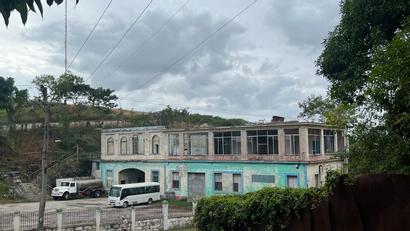
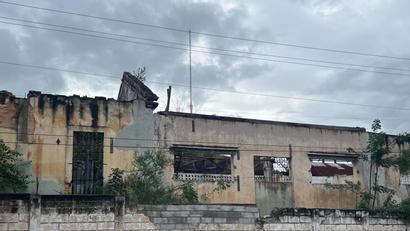
14ymedio bigger14ymedio, José Lassa, Havana, 6 January 2024 — “It was the water that we drank in my house, and a fleet of trucks delivered 20-liter glass bottles at home,” Ramón sighs at the ruins of La Cotorra, one of the most emblematic companies of pre-revolutionary Cuba. Uncovered roofs, cracked walls, chipped paint and weeds growing wildly among rusted iron are all that remain now of the factory, located at the entrance of Guanabacoa (Havana), on Corral Falso Avenue.

“We bought water from the trucks that distributed it,” Ramón continues. “At home they put it in some metal containers where you could swing the bottle forward to extract the water. We were regular customers of La Cotorra and we never lacked water. The same truckers had you change the empty for the full, carrying it on their backs in a very characteristic way, and they took the water everywhere. It cost 20 cents.”

Uncovered roofs, cracked walls, chipped paint and weeds growing wildly among the rusted iron is all that is left now of the factory / 14ymedio

The man’s nostalgia is evident; he knew the factory when the Soviet subsidy still kept it active. La Cotorra, however, knew better times. Its foundation dates back to the early nineteenth century, when the Galician immigrant Claudio Conde Cid – who began in 1905 to transport water from the Isle of Pines to Havana – acquired in 1915 the land in the Loma de la Cruz, known for its springs, including the famous Chorrito del Cura.

Those first years were dedicated by the company to bringing water to the capital under the La Vida brand, but it soon began a much larger continue reading

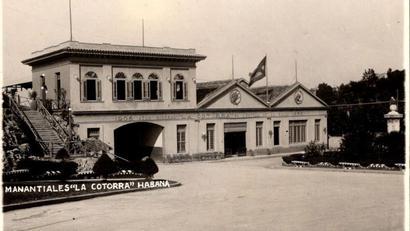
deployment aimed at exploiting local resources. In 1920, the company completed the construction of an industrial complex that included purification, packaging and distribution facilities, along with gardens and halls that became popular spaces for social events.

The company became one of the great economic centers in the area, not only because of the water it distributed, but also because of the employment and social activities it generated. In the 1940s it had 42 distribution trucks and 69 branches throughout the country, and produced about 20 million bottles in 1959.

The company became one of the great economic centers in the area, not only because of the water it distributed, but also because of the employment and social activities it generated / Archive

After nationalization in the 1960s, the company was converted into the Administrative Unit that controlled water and soft drinks. Several local brands were unified, and the name was changed to José Ramón Reyes Moro, in honor of a soldier from Guanajuato who fell at Playa Girón. In that decade and the next, there were still years of splendor for the company, as Julián, a neighbor of the Habana Nueva neighborhood, points out.

“Although I was born in 1968, the service still existed. In my grandmother’s house it was the water we drank. Over the years, the bottles were used to make rice wine that my great-grandmother loved,” he recalls. Little by little, like so many facilities on the Island, the money stopped flowing and the deterioration became increasingly pronounced.

In 1986, the official newspaper Granma itself reflected on the deterioration of the industrial facilities. The lack of maintenance and the precarious conditions of the infrastructure, which included defective boilers and obsolete filters, began to diminish production.

During the Special Period, the social halls and the playground disappeared, becoming offices and warehouses. The springs of the Loma de la Cruz, once an inexhaustible source of pure water, stopped being exploited due to the proliferation of houses, which made the neighbors think that the water was contaminated. The plant was dedicated solely to marketing water from the El Gato aqueduct, and, in 1997, the management became part of the Beverages and Soft Drinks Company of the City of Havana.

However, an expert in the field, Laureano Orbera, points out that, despite the widespread deterioration, the springs of the Loma de la Cruz are in good condition. In a study conducted in 2005, Orbera and a team discovered twenty virgin wells with a constant flow of one liter per second and adequate mineralization. Despite the constructions that have invaded the Hill of the Cross, the deep water remains intact, although its medicinal and valuable waters remain inaccessible due to the lack of adequate infrastructure for its exploitation.

Today, the factory operates as a parking lot. Collapsed, it remains closed, with access to its interior forbidden. The image is very different from the memories of Monica, who went to visit it as a child with her school.

Today, the factory operates as a parking lot. Collapsed, it remains closed, with access to its interior forbidden / 14ymedio

“There was a sculpture of a parrot in the center of the gardens resting on a concrete slab that covered a large well or pond of crystal clear water with blue rock walls. There was a large park where the trucks that distributed the water were parked. At the top of the factory were the offices and a large hall where activities, meetings, birthdays, dances, etc. were held. Now it is a garden, playground and gastronomic center, but the restoration has been horrible.”

The deterioration is not only physical. The abandonment of La Cotorra reflects a loss of identity and collective memory. The history of this emblematic water company is in ruins, and with it, the future of a heritage that was once vital for Guanabacoa.

Translated by Regina Anavy

____________

COLLABORATE WITH OUR WORKThe 14ymedio team is committed to practicing serious journalism that reflects Cuba’s reality in all its depth. Thank you for joining us on this long journey. We invite you to continue supporting us by becoming a member of 14ymedio now. Together we can continue transforming journalism in Cuba.
The Garbage on El Chacón Beach Has Ruined the Fame That Hemingway Gave to Cojímar

In its time, El Chacón was one of the most beautiful places on the coast of Havana / 14ymedio

14ymedio bigger14ymedio, José Lassa, Havana, 5 January 2025 — “Take care of your people. Your garbage pollutes.” The sign on a small wall on the beach of Cojímar – known as El Chacón – east of Havana, becomes a bad joke when the visitor looks out at the coast: a long landfill, with several strata, between the weeds and the sea.

Cojímar is still the town of Santiago, Hemingway’s battered fisherman in The Old Man and the Sea. But to the poverty of the town, which was already a humble but very lively community in the 1950s, are now added entire months of waste accumulation. Almost a year ago, when a reporter from 14ymedio toured Cojímar and Alamar, El Chacón was already submerged in the garbage, dragged from the bay and the river of the area.

“The beach was a place where families and tourists came to enjoy themselves. Sometimes I feel helpless when I see how everything has deteriorated,” says Ana María González, owner of a small coffee shop in the area. The woman remembers the times when the beach was full of laughter and children. “On weekends I prepared lunch, and we went to the beach to spend the day. It was a close and cheap option, and my children had a great time.”

“Take care of your town. Your garbage pollutes,” says a sign on a small wall on the beach / 14ymedio

At the time, El Chacón was one of the most beautiful places on the capital’s coast. At the end of the coastal curve is the 17th century “castillito” that was the last bastion against French pirates and English invaders. The old tower gave charm to the place, in whose waters sailed the yacht Pilar, of the American Nobel Prizewinner (1954), in search of Nazi submarines that – it was thought at the time – loaded fuel in some Cuban key. continue reading

Now, however, “the fall in tourism has made the authorities prioritize other areas,” laments Miguel Ángel Rodríguez, a veteran fisherman from Cojímar. “We used to have tourists buying fresh fish right here. Now, they don’t even want to get close.”

Some insist on setting a date for the decline of El Chacón: 2017, the year of Hurricane Irma, which devastated the northern coast of Havana. However, it’s the tide and the river current that have, over time, returned to the area’s inhabitants everything they have thrown in the water.

No one wants – or can – walk along the beach anymore. Not to mention swimming in its waters. You can barely see a path of sand below the carpet of waste: it shows that, in spite of themselves, many residents of Cojímar must cross the beach.

You can barely see a path of sand between the carpet of waste. It shows that, in spite of themselves, many residents must cross the beach / 14ymedio

The complaints that frequently appear in the Havana press have been worthless. Reinier Torres Cruz, a resident of Cojímar and president of the Alto Voltaje motorcycle club, led a beach cleaning in 2019. His description of the landscape, published in Trabajadores, already presaged the current situation.

“The river brings the largest amount of garbage to the beach,” Torres explained. “It is dragged from Regla and Guanabacoa, and, as if that were not enough, there are industries that also dump their waste in the river. That’s why it takes so much work to keep our bay clean.”

In August 2024, the Regional Office of Culture for Latin America and the Caribbean, in collaboration with UNESCO, carried out cleaning work. They collected as many as 150 bags of garbage.

On December 15, the restored Golfito de Alamar – currently leased to a private company – organized another garbage collection with private businesses in the area. “It’s a collective effort, but we need more support and education on conservation,” one of the volunteers told this newspaper at the time. “People don’t understand that every little gesture counts.”

Complaints about the precarious state of El Chacón have even reached social networks / 14ymedio

Complaints about the precarious state of El Chacón have even reached social networks, where neighbors publish photos of the garbage that the sea deposits on the sand. “We can’t go on like this,” an Internet user living in the area recently commented. “I have lived here all my life and have never seen anything so sad. The beach is part of our history and is now disappearing.”

The little beach continues to attract Cojímar’s garbage. The fact that the place is no longer among the sites of tourist interest has condemned it to permanent neglect by the authorities. Defeated in its war against the landfill, like Hemingway’s old fisherman, El Chacón appears to be very unlucky.

Translated by Regina Anavy

____________

COLLABORATE WITH OUR WORKThe 14ymedio team is committed to practicing serious journalism that reflects Cuba’s reality in all its depth. Thank you for joining us on this long journey. We invite you to continue supporting us by becoming a member of 14ymedio now. Together we can continue transforming journalism in Cuba.
The Línea Street Tunnel in Havana is Pitch Black

The time when the Orquesta América sang “they want to cross the tunnel” to celebrate that engineering work is long ago

The Linea Tunnel in Havana connects El Vedado with the Miramar neighborhood / 14ymedio

14ymedio bigger14ymedio, José Lassa, Havana, 12 December 2024 — In Havana there are several types of darkness. There is the one that is sought voluntarily, for a romantic moment, and the other, the most common, is the one imposed by the crisis. The fuel shortage extends blackouts throughout the city, and the deterioration of public lighting makes places like the tunnel on Línea Street turn pitch black. The road that connects El Vedado with the Miramar neighborhood is now a gloomy place that drivers avoid.

“I haven’t been here for a long time and my hair has stood on end,” commented on Wednesday the driver of a car linked to the La Nave application that moved a customer from the vicinity of Central Park to the vicinity of the Karl Marx theater. “With your eyes accustomed to sunlight you move on to this that has a few lamps that do not illuminate anything. It is very dangerous because even if you have good headlights in the car there is almost no visibility,” explains the taxi driver.

The road that connects El Vedado with the Miramar neighborhood is now a gloomy place that drivers avoid

“I felt like someone entering a cave; this is very dangerous and it seems that no one cares,” said a passenger, who could not help but cling to the seat while he and the driver traveled the little more than 200 meters of the underground road. The next time they have to go west of the Cuban capital, it is unlikely that they will choose to immerse themselves in a passageway that could be a scene in a film about a trip to hell.

At night the situation is even worse, because although the pale interior lights are a little more noticeable, they are so immersed in the shadows that it is even difficult to distinguish the lanes. If, on top of this, there is a power cut in the area, then the risks multiply and you have to rely on the headlights, keep your hands firmly on the wheel and appeal to luck so as not to collide with anything or come across some other surprise on the way. continue reading

Lately only bad news emerges from the central tunnel. Last February, several Internet users complained about the water that fell on windshields, blocking the vision of drivers. Those complaints came just a few months after the road was closed to carry out repair work that included painting the side walls at both entrances with an intense blue color that can’t be seen in the dark.

Havana, the city that in the 50s was at the forefront of urban and architectural innovations in Latin America, was left with only three tunnels to channel traffic. Two of them pass under the Almendares, now turned into a pestilent and reduced river, while the third and more impressive is immersed in the waters of the bay. The one that connects Línea Street with Miramar is the oldest, and the amazement it caused after its inauguration was even reflected in a catchy song.

Lately only bad news emerges from the central tunnel. Last February, several Internet users reported the presence of leaks on social networks

It was the well-known musician Enrique Jorrín who composed the theme that later became popular with the Orquesta América. Then, that engineering work was attractive because of its modernity and the romantic atmosphere felt when crossing it. On the stage and phonographs you could hear: “All the people in Havana who like to drive / when they go out / they want to cross the tunnel … And now the little ones say / when they see the car: let’s go to the tunnel, my darling, / let’s go to the tunnel, my love.”

However, fear has never been a good ally of flirting, so now everyone is in a hurry and holds their breath when they cross through the tunnel. No one sees, among so much darkness, an opportunity to fall in love or curl up. Rather, muscles twitch, eyebrows furrow and a chill runs up the neck until they reach the other side. Only then a sigh of relief runs through the inside of the vehicle. The dangerous tunnel has been left behind.

Translated by Regina Anavy

____________

COLLABORATE WITH OUR WORKThe 14ymedio team is committed to practicing serious journalism that reflects Cuba’s reality in all its depth. Thank you for joining us on this long journey. We invite you to continue supporting us by becoming a member of 14ymedio now. Together we can continue transforming journalism in Cuba.