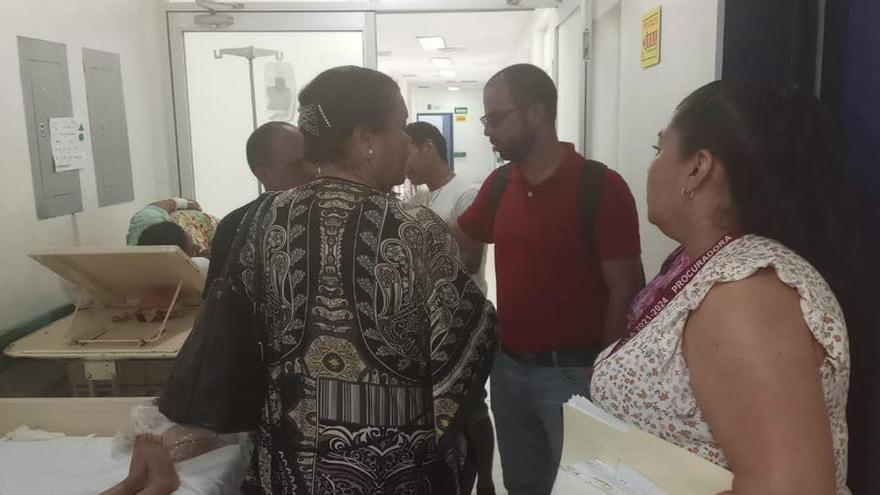

Cuba Identifies 9 of the 10 Who Died in the Accident in Mexico, but Refuses To Give Their Names

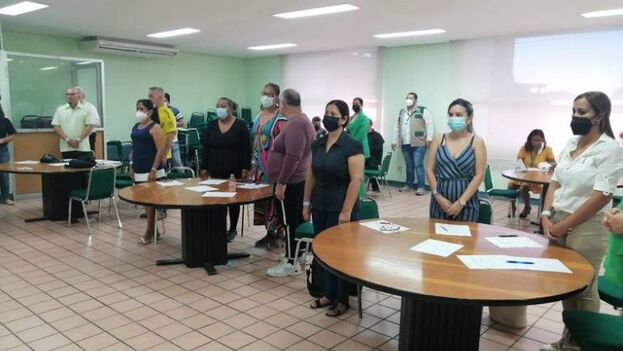
Eleven Cubans, who were injured in the accident in Pijijiapan (Chiapas), were discharged. (Cuban Embassy in Mexico)

14ymedio bigger14ymedio, Ángel Salinas, Mexico, 4 October 2023– Cuban authorities have identified nine of the ten people who died last Sunday in a traffic accident in Pijijiapan (Chiapas), but at the moment they have not publicly said who they are. According to the consul in Mexico City, Miguel Ángel Moreno Carpio, “all the deceased will be repatriated shortly.”

In a video uploaded to the diplomatic headquarters’ Facebook account, the consul mentioned that he is “working diligently” together with the Mexican authorities to identify the missing victim of the incident.

A nurse at the Pijijiapan hospital, where some of the injured are being treated, confirms to 14ymedio that among the deceased are Dayanes Morales Piedra, 23 years old, Naelis Carrillo Rodríguez, Aylen Moreira Guimarais, María Fernanda Lara (12), Zulema de la Caridad Amarral Valverde (16), Alicia de la Caridad Rodríguez Montero (22) and Shakira Martínez. The nurse does not have authorization to provide the other three names.

Selena, Shakira’s sister, requested the help of the authorities for the repatriation of her sister’s body. The deceased young woman, originally from Holguín, left Cuba more than a month ago in the company of her sisters with the purpose of reaching the United States, commented independent reporter Neife Rigau, a friend of the young women. continue reading

“I don’t understand why they don’t release the list. They asked us not to report anything without consular authorization,” the nurse tells 14ymedio. “Each of the cases have been detailed to the authorities. Among those hospitalized there are several minors who required specialized care and had to be transferred to other institutions.”
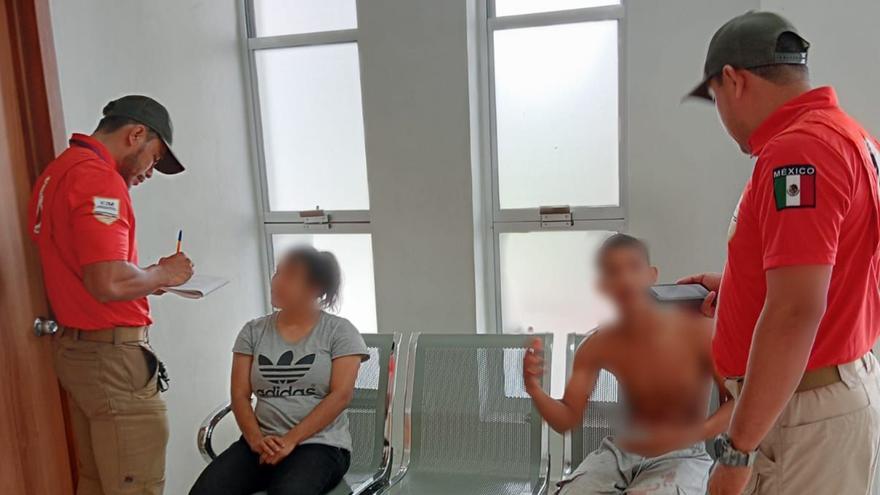
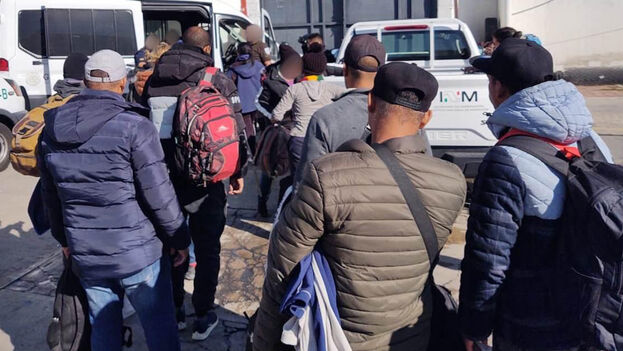
Immigration agents take data from two Cubans who were traveling in the truck that crashed last Sunday in Pijijiapan (Chiapas). (Migration’s national institute)

The injured have been treated at Huixtla, Mapastepec and Tonalá hospitals, as well as Pijijiapan. The initial list included Damelos Talavera Sánchez, 32, Mailen Melissa Aliaga Tamayo (24), Ariany Velasco Moreira (7), Yaritza Alen Cuitc (44), Eliani Dueña Carrillo (6), Melissa Guilarte Cerrando (18), Elisa Mauro Chávez Prieto (20), Sonia Tamayo Rosales (53), Daykenia Rodríguez (46), Diana Iris Lozano Moleón (26), Armando Cárdenas Césped (60), Alejandro Adrián Velasco (12), Yorlaine Valverde Pastor (17), Ross Liz Cortina Mandearable (18), and Félix Arriaga Suárez (46).

The Cuban consul did say that 11 people were discharged and another “six receive personalized medical assistance.” Among them is a minor who “receives treatment for lung involvement.”

The nurse explained to this newspaper that the difference in the figures occurs because two of the injured “did not need hospitalization.” Two of the patients, she said, “were admitted with the diagnosis of serious illness to the General Hospital of Huixtla.”

The Chiapas State Prosecutor’s Office opened an investigation file for the crime of reckless homicide in “traffic events” against the person or persons responsible for this incident.

____________

COLLABORATE WITH OUR WORKThe 14ymedio team is committed to practicing serious journalism that reflects Cuba’s reality in all its depth. Thank you for joining us on this long journey. We invite you to continue supporting us by becoming a member of 14ymedio now. Together we can continue transforming journalism in Cuba.
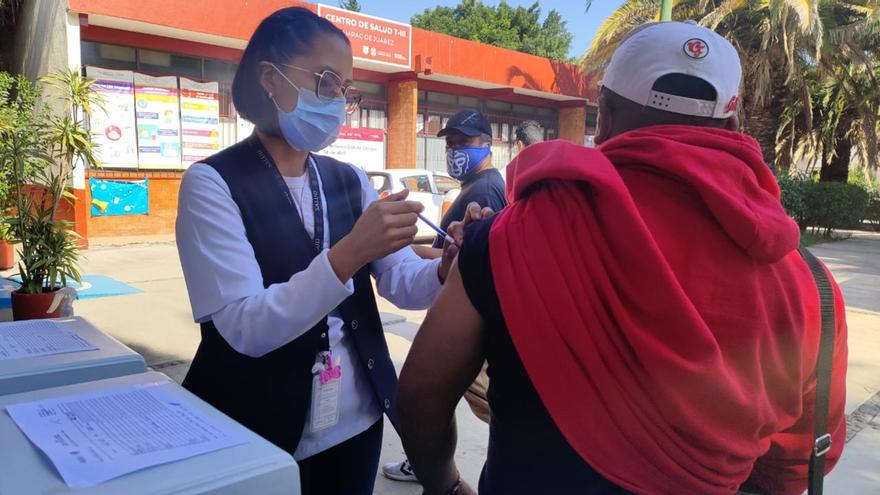
The Supreme Court of Mexico Demands Data on the Expired Doses of Cuba’s Abdala Covid Vaccine

At least 335,244 doses of the Cuban Abdala vaccine, which was bought by Mexico, expired in August. (@SSaludCdMx)

14ymedio bigger14ymedio, Ángel Salinas, Mexico, 1 September 2023 — The Supreme Court of Mexico has ordered the Federal Ministry of Health on Thursday to reveal the number of vaccines against COVID-19, including the Cuban Abdala, which expired before their application, as well as the manufacturer and batch of origin. In a statement, the Court stressed that this information “does not put national security at risk” nor the fight against the pandemic, as argued by the Government, which did not want to reveal the data.

14ymedio learned that at least 335,244 doses manufactured on the Island expired in August and that they had been distributed in the states of Coahuila, Chihuahua, Jalisco, Puebla and Oaxaca. Of these, 70,000 were authorized in Coahuila to be applied as a booster against the virus for another 18 months.

The Government of Mexico also defined as “classified,” for five years, all the information related to the hiring of Cuban specialists, as well as the agreements and payments made for the shipment of 9,000,000 doses of the Abdala vaccine. The Judicial Counsel blocked the information, claiming that offering details about the process of confidentiality agreements could be taken advantage of by criminal groups.

An intensive care nurse, Vannesa Ordoñez, who denounced the use of expired Cuban doses in Coahuila, told 14ymedio that in the state of Zacatecas, 400 doses of the Pfizer vaccine, expired since November 2022, were injected into children who went to the Francisco Esparza health center. continue reading

COFEPRIS authorized the use for another 18 months of the 70,000 doses of the Cuban Abdala vaccine that expired in August. (Facebook/Coahuila Ministry of Health)

“There is concern in health personnel because this was made known just after COFEPRIS (the Federal Commission for Protection against Health Risks) authorized the use of expired Cuban doses in Coahuila. In Zacatecas there was an anonymous complaint, which we were able to verify,” she explains. Ordoñez warned that “children are a vulnerable sector, and every medicine given to them must be made transparent. The parents are the ones who give consent, and they must be informed.”

Last January, expired doses of Pfizer were also used under the argument that they could be administered up to 12 months after the expiration date, October 31, 2022, as indicated on the bottle. On that occasion, the authorities of the state of Guerrero assured that “there was no problem” and that the drugs “served and could be administered until February” of 2023.

In September of last year, it was shown that the Government of Mexico had disposed of 5,041,050 doses of anti-covid vaccines, of which 3,409,440 were from the British AstraZeneca vaccine and 1,631,610 from the Russian Sputnik, which were in a warehouse of the Birmex company and in the National Institute of Virology.

Mexico has acquired anti-covid vaccines of different brands from several countries, such as Pfizer, Cansino, Covax, Sputnik-V, AstraZeneca, Janssen, Moderna and Abdala. According to official figures, out of 129 million Mexicans, some 90% of the country’s population has been immunized.

Despite the fact that the Abdala vaccine has been rejected by the population because it does not have the endorsement of the World Health Organization, COFEPRIS, in charge of the control of medicines, authorized the use of the Sovereign 02 and Sovereign PI doses, manufactured on the Island.

Translated by Regina Anavy

____________

COLLABORATE WITH OUR WORKThe 14ymedio team is committed to practicing serious journalism that reflects Cuba’s reality in all its depth. Thank you for joining us on this long journey. We invite you to continue supporting us by becoming a member of 14ymedio now. Together we can continue transforming journalism in Cuba.
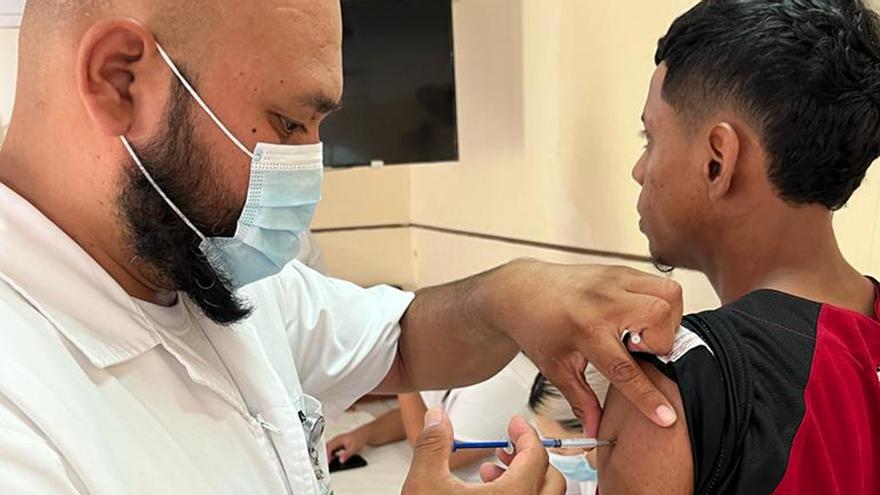
Mexico Has Paid Havana About 10 Million Dollars for 718 Cuban Medical Specialists

Last week a group of Cuban specialists arrived in  Guerrero. (Facebook/Salud Guerrero)

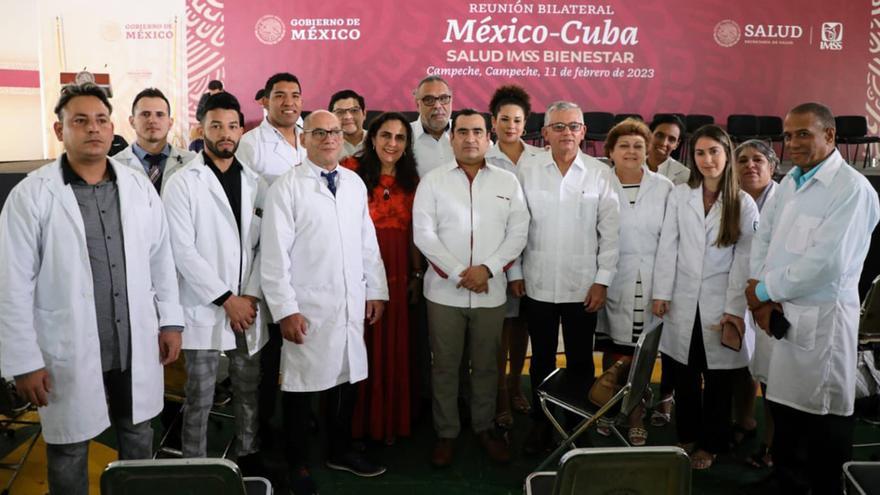
14ymedio bigger14ymedio, Ángel Salinas, Mexico, 15 July 2023 — The Mexican Government paid Cuba $9,667,115 between July 2022 and May of this year for a contingent of 718 doctors, according to a source from the Ministry of Health who requested anonymity. Of the specialists, 128 are still receiving training or processing the necessary documentation to practice, and the remaining 590 have already been distributed in 11 states of Mexico.

Among the 128 Cuban health workers who are in training, there are 18 specialists who were rejected in Morelos for not having a professional card. “These doctors are all in the same state, and their documentation is being expedited to be forwarded to another region.”

According to the official transparency portal – a publicly accessible information platform – the contract, which entered into force in May 2022, requires a monthly disbursement of 1,177,300 euros by Mexico for the services of 610 Cuban health workers. The payment was initially established under the name of the Comercializadora de Servicios Médicos Cubanos, but since September it was redirected to the company Neuronic Mexicana, which is a subsidiary of Neuronic S.A. Cuba.

Since 2018, according to the official, Neuronic Mexicana has been representing the products and services of the Island’s biotechnology and pharmaceutical industry, and the president, Tania Guerra, is a Cuban. The company “is in charge of receiving the salary of the Cuban specialists.” In summary, it has “custody of and administer the funds that the Mexican Social Security Institute (IMSS) allocates to the contingent,” he added. continue reading

In the Mexican state of Colima, Mexican doctors have questioned the fact that Cuban specialists are given accommodation and food. (Facebook/Government of Colima)

The doctors, who arrived in the middle of last year with the intention of establishing a base in the Montaña de Guerrero, one of the most troubled points in Mexico due to its high poverty rates and the presence of several cartels that dispute the drug transport channels, have been relocated to the states of Baja California Sur, Campeche, Colima, Michoacán, Nayarit, Oaxaca, Sonora, Tlaxcala, Veracruz and Zacatecas.

According to official data from the federal Ministry of Health, only 43 specialists in cardiology, otolaryngology and gastroenterology were sent, although they had also promised the arrival of pediatricians. Despite this, the state government, led by an ally of President López Obrador, proclaimed the increase in consultations and the improvement of medical services.

In the Ometepec region, located on the Costa Chica de Guerrero, three Cubans joined the Tomás Molina hospital in the last week of June. These doctors “cannot talk to the media,” a nurse from the medical center itself confirmed by telephone to 14ymedio. “Annel [the cardiologist] cannot attend to them; both she and the dermatologist and the other doctor need authorization from their coordinator,” Alfredo González Lorenzo, the nurse replied when this newspaper requested direct contact with the Cuban specialists.

As part of the Guerrero health project for this year, the deployment of four Cuban psychiatrists in mental health caravans, in addition to offering itinerant services, will collaborate in the hospitals of San Marcos, Tlapa, Coyuca de Catalán and Chilpancingo. The plan for mental health specialists has been questioned, because the main causes of death in the state are diabetes, cancer and cardiovascular diseases.

Translated by Regina Anavy

____________

COLLABORATE WITH OUR WORKThe 14ymedio team is committed to practicing serious journalism that reflects Cuba’s reality in all its depth. Thank you for joining us on this long journey. We invite you to continue supporting us by becoming a member of 14ymedio now. Together we can continue transforming journalism in Cuba.
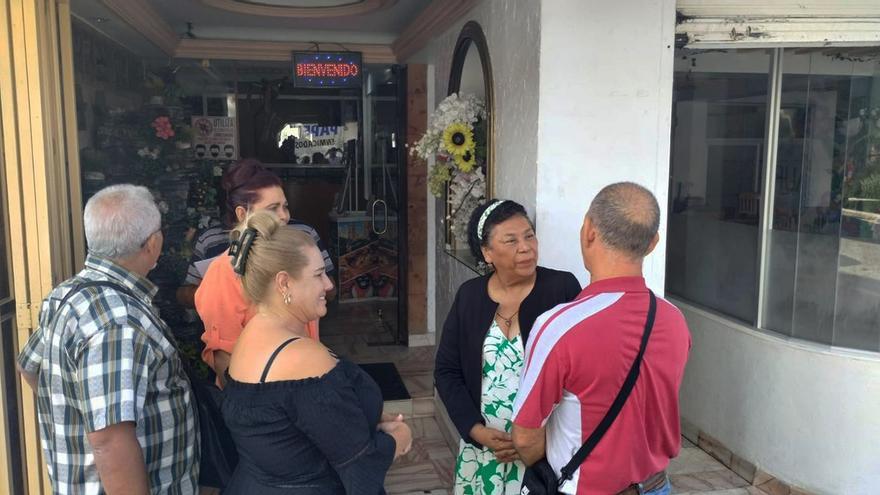
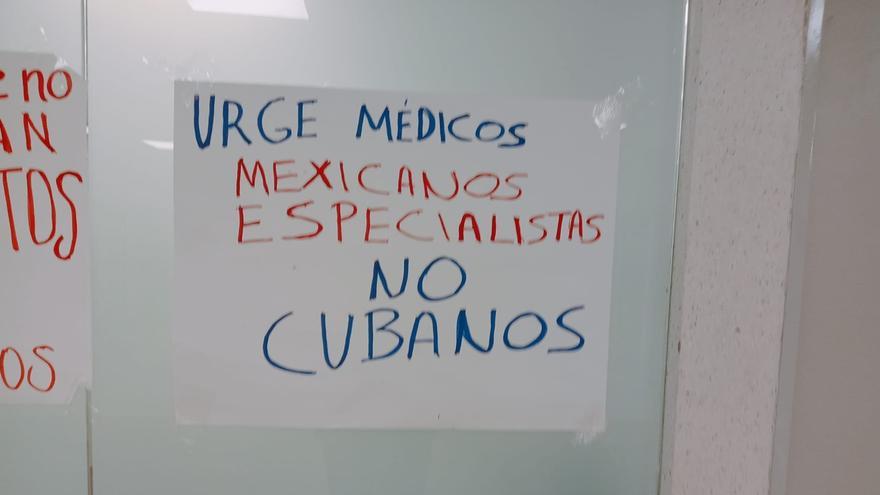
Another Mexican State Wants To Remove a Group of Cuban Doctors Because of Their Poor Skills

Blanca Águila Lima, who represents Mexican doctors, confirmed that “they are gathering evidence of the negligence that Cuban health workers have committed.” (4th. Poder Tlaxcala News/Facebook)

14ymedio bigger14ymedio, Ángel Salinas, Mexico, 9 June 9, 2023 — In the states of Tlaxcala and Morelos, Mexican doctors have expressed their dissatisfaction with the low level of preparation and the high salaries of health workers hired by the Government of Mexico from Cuba. Blanca Águila Lima, the head of a national workers’ union of the Ministry of Health, told the media on Wednesday that Cuban specialists “lack expertise” in surgical procedures.

Águila confirmed that “they are gathering evidence of the negligence they have committed, of the lack of expertise” and that she will present them to the corresponding authorities to remove the Cuban specialists.

The representative of Mexican doctors said that among these cases is that of a Cuban urologist. “This doctor initiated a surgical process to remove a patient’s prostate and could not complete the intervention… It was the Tlaxcala surgeons who had to take responsibility for completing the surgery successfully.”

The complainant was confident that 88 specialists from the Island, who are currently in several hospitals in Tlaxcala, would be removed. She said that in Morelos, 18 Cuban doctors were removed for not having a professional card. The leader of the union of the state Ministry of Health, Gil Magadán Salazar, confirmed that a Cuban anesthesiologist was not even “able to inject a block (an anesthetic).”

Mexican President Andrés Manuel López Obrador specified that there are currently 700 Cuban health workers in Mexico who “provide their services for the benefit of the people.” At the beginning of this week he defended the hiring of Cuban specialists, assuring that it was not “an ideological issue, nor did it have to do with anything political.” continue reading

Mexico, according to information that reached the editorial staff of 14ymedio, disburses 1,177,300 euros per month, from which the doctors do not receive anything. Everything goes directly to the Cuban company Comercializadora de Servicios Médicos Cubanos, S.A.

The Mexican government also acquired the Cuban vaccine Abdala. López Obrador has claimed to have obtained 230 million doses from various laboratories. Of these biologicals, 9,000,000 were bought from the Island, and a little more than half are still not used in the face of the distrust of Mexicans, because it is an option without endorsement from the World Health Organization.

Translated by Regina Anavy

____________

COLLABORATE WITH OUR WORKThe 14ymedio team is committed to practicing serious journalism that reflects Cuba’s reality in all its depth. Thank you for joining us on this long journey. We invite you to continue supporting us by becoming a member of 14ymedio now. Together we can continue transforming journalism in Cuba.
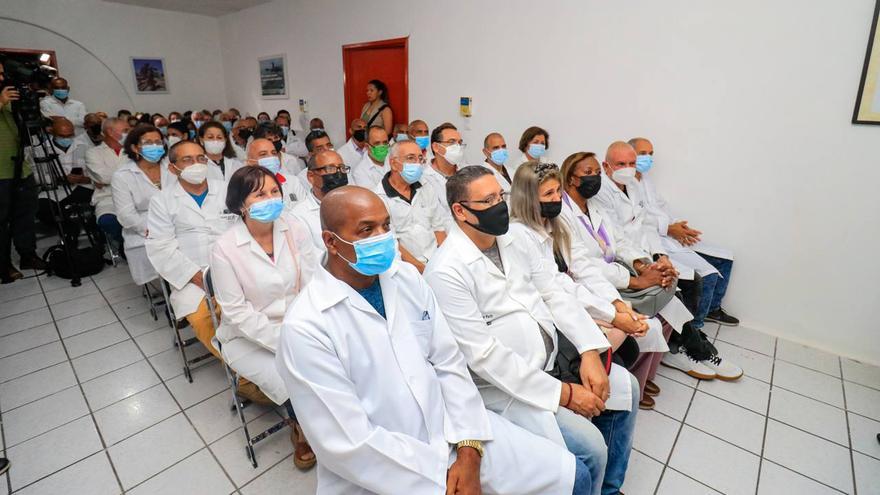
Mexico Shields the Information About the 1,200 Cuban Doctors Hired and the Abdala Vaccine

A group of Cuban health workers in the state of Campeche. (Facebook/Zoé Robledo)

14ymedio bigger14ymedio, Ángel Salinas, Mexico, 29 May 2023 — Under the argument of “reserved file,” the Government of Mexico shielded the information on public spending that will be allocated to the hiring of more than 1,200 Cuban doctors to be sent to remote areas and the disbursement for the purchase of 9,000,000 doses of the Abdala vaccine, without the endorsement of the World Health Organization (WHO), for the reinforcement campaign against COVID-19. Some of the vaccines are about to expire.

The federal Secretary of Health said that the data requested by the newspaper Reforma through the National Institute of Transparency, Access to Information and Protection of Personal Data (INAI), could not be made public because they were considered national security and could “harm” the relationship with Cuba.

The payment to Cuban health workers “is part of the contract for the acquisition of the Abdala vaccine,” the federal Health unit said in the request for transparency.

The Mexican Government has an evident secrecy about these specialists and the validation of their studies, mandatory in the Aztec country to be able to prescribe for patients. At least twenty of these doctors were rejected in the state of Morelos for not having a professional card.

A report to 14ymedio in August, 2022, revealed that for 610 specialists on the Island, the Government of Andrés Manuel López Obrador paid $1,308,922 per month, money that is managed by the Comercializadora de Servicios Médicos Cubanos, S.A. continue reading

The collaboration agreement signed by the director of the Mexican Social Security Institute (IMISS) Zoé Robledo and the president of the Comercializadora de Servicios Médicos Cubanos, S.A., Yamila Ramona de Armas Águila, specifies that the payment is 1,177,300 euros per month, not in another currency, through bank transfer. The López Obrador Administration has the first 10 days of each month to make the disbursement.

The July 2022 agreement established that the Cuban doctors will work eight hours a day for five days. Those who cover night shifts will work nine hours for three days.

In September of last year, two months after the agreement was made official, it was specified in one of the clauses that Cuban health workers would have “guaranteed accommodation, food and transport services” in the states to which they were sent. This newspaper has delved into the benefits, which in some cases are à la carte dinners.

Among the reserved information is also that relating to the Abdala vaccine, which without approval from the WHO was acquired by Mexico to be applied as a booster against COVID-19, and a few months ago it was accepted to be administered to children.

At least 90,000 of these biologicals will expire in July, and another almost 70,000 that were sent to Oaxaca will expire in August. In addition, more than 636,000 doses are refrigerated, unused due to the distrust of the Mexicans.

Translated by Regina Anavy

____________

COLLABORATE WITH OUR WORKThe 14ymedio team is committed to practicing serious journalism that reflects Cuba’s reality in all its depth. Thank you for joining us on this long journey. We invite you to continue supporting us by becoming a member of 14ymedio now. Together we can continue transforming journalism in Cuba.
Cuba Pays Double for Its Baseballs to an Italian Friend of a Son of Fidel Castro

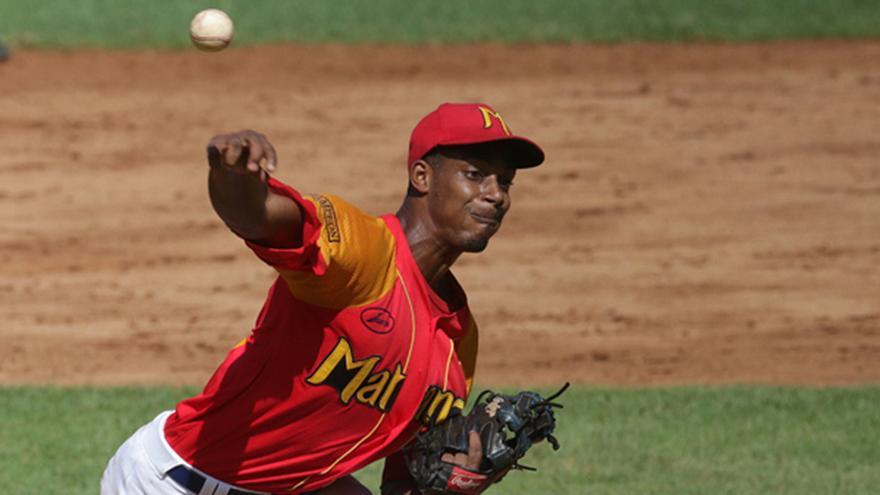
Renner Rivero from Mantanzas, throwing a TeamMate ball. (Jit)

14ymedio bigger14ymedio, Ángel Salinas, Mexico, 27 May 2023 — The Cuban Baseball Federation (FCB) is paying more than double for the official balls of the Major Leagues of the United States. The Island paid 12 dollars for each ball of the Italian brand TeamMate in 2020, according to figures from the FCB treasurer, Luis Daniel del Risco, while those manufactured by the Rawlings company for the Major Leagues since 1977 cost a little more than five dollars.

As usual, Del Risco blamed the “blockade” for the cost of the balls, which had to be “bought in China and with transportation” cost between five and seven dollars more than their value. “Here we could buy them for less, but we have to look for them in far-away places, and they are quite expensive,” he said.

The TeamMate company has been supplying the Island with balls since 2020. (Jit)

For five years, the Island’s sports industry has had serious difficulties in producing the balls. According to the official, due to the “lack of leather for the ball, the lack of thread and adequate glue,” the delivery of 100,000 balls (70,000 synthetic and 30,000 leather) per year to meet the needs of 16 teams of the National Series and eight other categories in 547 sports centers was not fulfilled.

Cuba chose TeamMate to try to overcome the crisis. It’s an Italian company based in San Marino and linked to Riccardo Fraccari, president of the World Baseball and Softball Confederation (WBSC). He is close to Antonio, a son of Fidel Castro, and the man who pulls the strings for baseball in Cuba. continue reading

According to Radio and Television Martí, in 2021 the San Marino news website Libertas.sm revealed that Fraccari and the WBSC were being investigated for alleged money laundering. The publication indicated that the Panamanian sports federation complained about the price of the balls provided by the Confederation.

A tax inspection made it clear that “the money that was paid for the TeamMate balls was much higher than the real market value,” the media stressed. “Two million euros were seized at the WBSC headquarters in Lausanne, Switzerland,” although it was later revoked and reduced to the amount of 258,000 euros, which has maintained to date the accusation of money laundering.

Seeing how a baseball is made is so satisfying.

Haití, separada de Cuba por el estrecho paso de los Vientos, llegó a ser considerado entre 1969 a 1990 como el principal proveedor de pelotas de béisbol en el mundo, cuando en el país no existe identidad por este deporte. En esta región caribeña se establecieron varias empresas dedicadas a maquilar con mano de obra barata miles de bolas. Las compañías McGregor y Rawlings fueron de las beneficiadas de este modelo de explotación impulsado por el dictador haitiano Jean-Claude Duvalier, señaló a The New York Times, Josh DeWind, coautor de Aiding Migration: The Impact of International Development Assistance on Haiti.

Haiti, separated from Cuba by the narrow Straits of Winds, came to be considered between 1969 and 1990 as the main supplier of baseballs in the world, when this sport had no identity in the country itself. In this Caribbean region, several companies dedicated to making thousands of balls with cheap labor were established.

The McGregor and Rawlings companies were the beneficiaries of this model of exploitation driven by Haitian dictator Jean-Claude Duvalier, as told to The New York Times by Josh DeWind, co-author of Aiding Migration: The Impact of International Development Assistance on Haiti. Shielding itself from the political instability of Haiti, Rawlings closed the plant in Port-au-Prince in 1990, where about 1,000 Haitians worked. It moved its production to Turrialba (Costa Rica), where it produces 2.4 million balls a year.

The company pays $1.60 an hour and the workers have 10-hour days. There they shape the “cork and rubber centers, the Holstein cowhide of Tennessee and the wool fiber of New Zealand that make up the balls that are sent tax-free to the factory,” Reuters published.

Rawlings also supplies balls to the Mexican Baseball League. In 2020, it agreed to a price of $64.40 for 12 balls. That is, each piece costs $5.33, less than half of what Cuba disbursed for each TeamMate ball.

The price of TeamMate also exceeds that of the Franklin Sports brand in the United States, at the same level as the Italian brand, which offers national leagues an average price of 12 balls for 52 dollars.

The balls of the Italian brand TeamMate began to circulate in 2020 on the Island. They replaced the Japanese Mizuno 200, and these in turn replaced the so-called “dull” Connection, a “ball of national production with a very poor bounce,” Cubalité published.

In the first 40 games of the 60th season of the National Series, TeamMate’s ball caused controversy due to the fact that the long-distance batting was more frequent than usual in Cuba. “Since its establishment, home runs have been happening more than usual, and many are already starting to wonder if we are on our way to establishing a new brand of fly balls or frequency of home runs,” the same publication said.

The controversy closely follows the Italian company TeamMate. After failing to supply uniforms, which caused the Elite League to be delayed last October, it has now delivered only half of the balls necessary for the current National Series. Thus, the league had to resort to those of the Batos brand, which “is not made in Cuba, but acquired from a supplier abroad who agreed to give it that name,” Cubadebate said.

Translated by Regina Anavy

____________

COLLABORATE WITH OUR WORKThe 14ymedio team is committed to practicing serious journalism that reflects Cuba’s reality in all its depth. Thank you for joining us on this long journey. We invite you to continue supporting us by becoming a member of 14ymedio now. Together we can continue transforming journalism in Cuba.
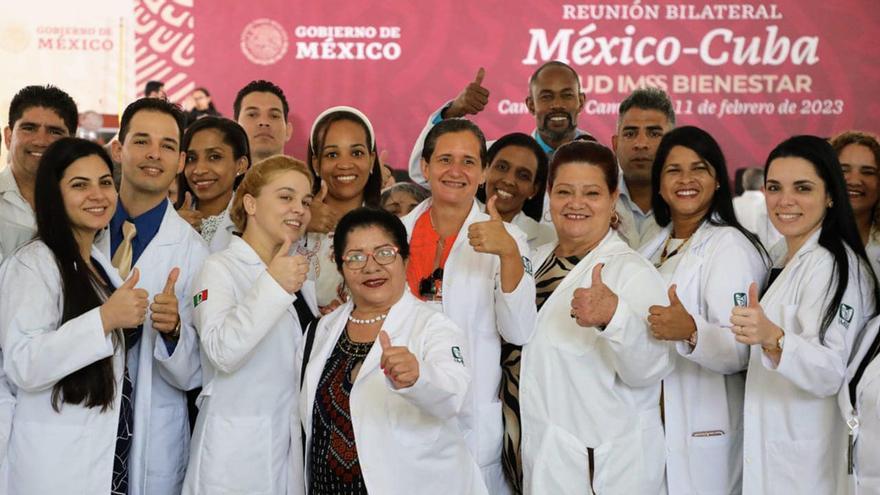
Cuban Doctors Announce a Gallbladder Surgery in a Hospital in Mexico Where Nurses Are Lacking

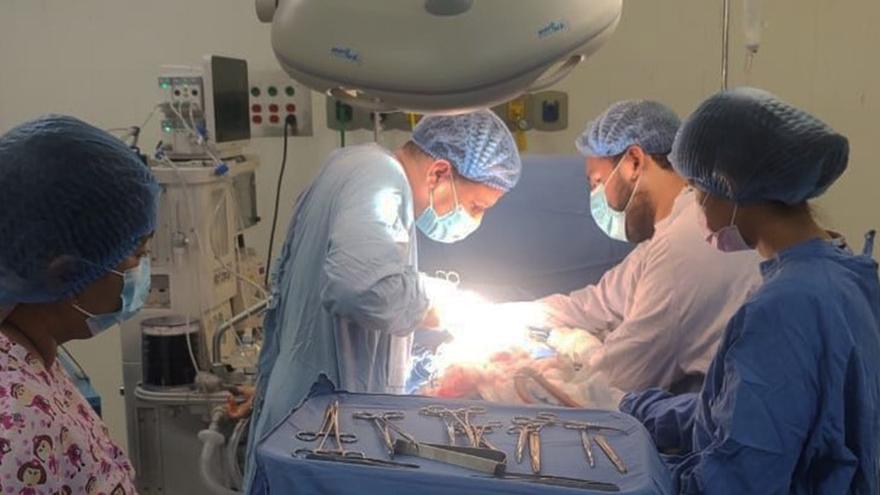
Cuban specialists performing an extraction of a gallbladder at the Hospital of Xpujil (Campeche). (Twitter/@ConsulCuMerida)

14ymedio bigger14ymedio, Ángel Salinas, Mexico, 23 May 2023 — The Government of Mexico updated the number of Cuban specialists who are working in hospitals. According to President Andrés Manuel López Obrador, there are 700 health workers who “provide their services for the benefit of the Mexican people,” but he did not offer details about the remote areas in which they are located.

López Obrador proclaimed on Tuesday the strengthening of his Health Plan for Welfare implemented in 2022 with doctors from the Island and the improvement of hospital infrastructure. “An investment in the Health Plan of 389,471,652 dollars destined for the conservation, maintenance and equipment in units (hospitals) of first and second level of care in 14 states of the country,” said the general director of the Mexican Social Security Institute (IMSS), Zoé Robledo.

Since February, several groups of health workers from the Island have arrived in Mexico as part of the extension of the agreement with the Comercializadora de Servicios Médicos Cubanos to select another group of 610 people. On May 12, 129 doctors were received by diplomatic authorities.

The Consulate General of Cuba in Mérida (Yucatán) highlighted on its social networks the extraction of a gallbladder carried out on May 20 by Cuban doctors. This is the first surgery of this type in 15 years performed at the Hospital of Xpujil (Campeche). López Obrador affirms that with his health plan “it will be possible to have the necessary doctors 24 hours a day,” but the facts contradict the president’s version. continue reading

In September of last year a group of Cuban specialists was received by the governor of Campeche, Layda Sansores. (Facebook/Juan Manuel Herrera Real)

In that same hospital, meanwhile, since last May 10, a patient has been waiting for a date for a gallbladder surgery. His wife, who gave the name of Ana, tells 14ymedio that he was admitted to the emergency room that day and a few hours later was discharged. “At midnight he got sick again and they took care of him again.” In the morning he asked to be scheduled for surgery, but he was told that “there were many appointments and a surgeon was on vacation.”

In addition, this hospital lacks a laboratory for sampling and for performing ultrasounds. “We have done all that on the outside,” he says. She confirmed that her husband has been treated by Cubans, but she doesn’t know if they are going to operate on him. “The only thing they have told me is that there are no specialized nurses now.”

Last February, the arrival of the first 610 doctors on the Island concluded. The initial agreement is that these doctors would be sent to remote areas, so most Cuban health workers would have as a work base “the Montaña de Guerrero,” one of the most violent points in the country. As of April 26, 43 specialists had arrived in this state, whose main mission was to form “mental health caravans” in the region.

This newspaper obtained information about the lodging, the “a la carte dinners” and the free transportation enjoyed by several of these specialists in the central states of the country, as well as the claims about the lack of capability and professional cards to practice.

In Morelos, the leader of the union of the state Ministry of Health, Gil Magadán Salazar, told 14ymedio that a Cuban anesthesiologist did not even “know how to put in a block.” In addition, the Imss-Bienestar, a program of the Mexican Government in charge of offering health services, sent geriatricians and psychiatrists without having their professional certificate and not the cardiologists, gastroenterologists and pediatricians they require.

There is also discomfort among the doctors and nurses of the IMSS-Bienestar because the Cubans are paid more. According to Fabián Infante Valdez, leader of the National Union of Mexican Nursing, when the reform that took away the Institute of Health for Welfare and passed to the IMSS-Wellness, as a decentralized body, was approved, salaries were reduced by up to 50%.

According to him, where three categories for nurses are established by zone, those classified as type “B” went from earning 620 dollars to 290 per month. The assistants received $657 and now $308. To the graduates, if they earn 931 dollars, they are given $372.

General practitioners received 1,224 dollars a month, now $491, and specialists who received 1,487 dollars now get $647. On the other hand, according to the agreement with the Comercializadora de Servicios Médicos Cubanos, Mexico disburses to Havana for each specialist 2,042 dollars per month and $1,722 for each general practitioner.

The export of medical services continues to be the first source of income for the Island, which on Monday celebrated 60 years of medical collaboration, a practice denounced by international organizations for being a method of “modern slavery.” According to Cuba’s ambassador to Mexico, Marcos Rodríguez Costa, there are 22,000 health collaborators on an internationalist missions in 58 countries.

Translated by Regina Anavy 

____________

COLLABORATE WITH OUR WORKThe 14ymedio team is committed to practicing serious journalism that reflects Cuba’s reality in all its depth. Thank you for joining us on this long journey. We invite you to continue supporting us by becoming a member of 14ymedio now. Together we can continue transforming journalism in Cuba.
The Human Rights Commission Forces Mexico to Re-Accept a Family of Cubans

The Mexican Commission for Refugee Aid (COMAR) has received 48,970 applications for refuge in the first four months of the year, of which 3,374 are from Cubans. (EFE)

14ymedio bigger14ymedio, Ángel Salinas, Mexico, 5 May 5, 2023 — The National Human Rights Commission (CNDH) on Thursday ordered the National Institute of Migration (INM) to repair the damage caused to a family of four Cubans that it deported in November 2022 “despite having refugee status.” The measure includes “some compensation,” without specifying what it consists of, in addition to “allowing them to enter” Mexico and “to be given the medical and psychological care they require.”

According to the National Human Rights Commission (CNDH), the agents violated the rights of these people by not “verifying their documentation,” detaining them for eight days in a way station in the state of Tabasco and “returning” them to the Island.

As punishment, the officers involved in the arbitrary deportation will only be given “training and education in human rights, focused on legal security, legality and the principle of non-return.”

According to its archives, on December 1 of last year the human rights organization received the complaint of one of the victims. In the letter he details that on November 8 they were arrested at a checkpoint on the road section that goes from La Venta to Villahermosa with the argument that the documents certified by the Mexican Commission for Refugee Aid (COMAR) were not valid. continue reading

Six months after the deportation of the Cuban family and five months after the complaint, the CNDH determined that the Migration agents “did not conduct a thorough interview” nor did they grant the necessary conditions so that the aggrieved people could file the appropriate appeals or trials.

In the interview with COMAR on October 11, one of the deported Cubans said: “Since 2018 it’s been hell for me and my family to be able to live in my country; we suffer constant police harassment.” He said that he was arrested in December of that year, “beaten and threatened with death for claiming my right as a citizen.”

This Cuban specified that on July 12, 2022, his father was intimidated at work by the police and “suffered threats against his life and that of his family.”

According to COMAR’s statistics, in the first four months of the year, 3,374 Cubans have applied for refuge, 333 have been accepted, 607 rejected and 2,434 Island nationals are still waiting for resolution of their cases.

The deportation of this family of Cubans “violated the Migration laws,” migrant defender José Luis Pérez Jiménez told 14ymedio. “During the past year, there were clandestine deportations of Cubans, despite the fact that they have stays granted by district judges or COMAR documentation.”

A month before the arrest of this family, journalist Mario J. Pentón denounced through his social networks that a group of Cubans had been taken with the deception that they would “process their refugee status” at the Mexico City International Airport, where they were put on a plane with the intention of deporting them. But thanks to the evidence, this was avoided.

In April, Ramón Tejera told this newspaper that together with his wife Yairely Andreu and daughter they were deported for not paying Migration agents an extortion of 1,500 dollars at a checkpoint. The family was transferred to the Border Bridge II of Piedras Negras despite having safe-conducts of legal stay for 180 days.

During their arrest, an officer told this Cuban naval engineer: “If you give me 4,000 dollars per person I will take you to the Rio Grande to cross.”

Translated by Regina Anavy

____________

COLLABORATE WITH OUR WORKThe 14ymedio team is committed to practicing serious journalism that reflects Cuba’s reality in all its depth. Thank you for joining us on this long journey. We invite you to continue supporting us by becoming a member of 14ymedio now. Together we can continue transforming journalism in Cuba.

A Cuban Couple, Victims of Mistreatment at a Migration Station in Mexico

The National Human Rights Commission (CNDH) has registered more than 4,000 complaints of human rights violations of migrants in their transit through Mexico. (Captura)

14ymedio bigger14ymedio, Ángel Salinas, Mexico, 31 March 2023 — Yamilé, a Cuban woman, was illegally detained for five days at the Acayucan station of the National Institute of Migration (INM), in the Mexican state of Veracruz, and her husband José, for 12 days. “Once they admit you, they take away your papers and your cell phone. It’s hell. There is harassment by the agents, mistreatment, extortion. They sell you a sanitary pad for 25 pesos ($1), toilet paper for 35 pesos,” this habanera tells 14ymedio, adding that they transported the couple to the border with Guatemala.

“Human rights do not exist. A woman with asthma had her medicines withheld until she paid 500 pesos,” she said. They told Yamilé’s husband to continue to Tijuana to be processed by Customs and Border Patrol because the application process was overwhelmed. “Keep going, because if you go back to Tapachula they can put you in jail,” they warned him.

“Those who arrive to help you are coyotes, who tell you that they are lawyers. They asked us for $1,000 each to release us; a group of seven Colombians, $2,700; and a Venezuelan and her daughter, $1,300,” she says.

Yamilé says that the migrants in Acayucan are overcrowded because every day people arrive from Guatemala, Venezuela, some Cubans and Haitians. “There are people who have been there for 25 days and don’t know if they are going to be returned to their country. You are imprisoned like a criminal.” Before leaving the immigration station, they threatened to deport her if she came back. “I’m already registered.”

The editorial staff of 14ymedio has received complaints of Cubans who have been imprisoned in the immigration centers of Acayucan (Veracruz), Siglo XXI (Tapachula) and Las Agujas (Mexico City). Relatives of Luis Ángel Sánchez said that he spent several days in the capital. The agents accused him of having entered illegally, even when he had a safe-conduct pass and humanitarian parole from the United States. continue reading

A law firm contacted Sánchez’s relatives and offered to release him  in exchange for $5,000. After several days, he was released and is now with his family in the United States. Migration stations have made extortion the bargaining chip so that Cubans can move forward on their journey through Mexico.

The human rights violations of migrants in transit through Mexico to the United States have been duly recorded in 4,424 complaints received by the CNDH against the INM between 2020 and 2022, but only 48 recommendations were issued.

“From 2018 to 2023, which corresponds to the Government of Andrés Manuel López Obrador, most of the National Security posts have been militarized, including the migration centers,” said migrant advocate Jose Luis Pérez Jiménez.

In the case of the 39 migrants who died in the fire at the provisional stay center in Ciudad Juárez, attorney Pérez Jiménez says: “Migration was fully responsible not only for the fires in the center, but also for the overcrowding, the systematic violation of the rights of those housed and the torture and mistreatment suffered by migrants at the hands of police officers and immigration agents.”

Migration has become dehumanized, said the migrant ombudsman, and this is because the Government of López Obrador has “militarized” the detention centers for foreigners who enter illegally.

The military is not prepared, and “their treatment of migrants is not the most ideal,” Pérez Jiménez explained. “We see it in Mexico City at the Las Agujas station, controlled by José Luis Valenzuela, a soldier with a bad reputation. Another case took place in Tapachula, which until recently was controlled by General Aristeo Taboada. The captain of the Navy, Jorge Alejandro Palau Hernández, is in Acayican. These are examples of only three migrartion centers, but obviously almost all of them have been militarized by López Obrador.”

Palau Hernández was removed from his position as director of the Siglo XXI immigration station, in Tapachula, after a video was released in which he could be seen beating a migrant. He was transferred to Las Agujas, where several Cubans have been detained, from whom they tried to extort money.

Important for #INAMI to clarify if this information is true

Jorge Alejandro Palau Hernández, who was director of the Siglo 21 Migration Station, in Tapachula, #Chiapas, and was removed from his position after the beating of a #migrant, is now head of the #CDMX immigration station. pic.twitter.com/QaCQFH830S — Eunice Rendón (@EuniceRendon) September 25, 2021

During his usual morning conference this Friday, López Obrador said: “I confess, the issue of the 39 deceased migrants has hurt me a lot, it has hurt me (…) it moved me, it broke my soul.” The Mexican president announced a reform within the INM and the formation of an external council so that the human rights of people in transit are not violated, for which he has the collaboration of Father Alejandro Solalinde.

More than a reform of the INM, Jose Luis Pérez Jiménez says that there is an urgent need for reform to the Migration Law, so that “the accommodation for a migrant is not understood by the INM as a pretrial detention. As long as this is not specified, there will continue to be abuses by migration agents.”

“It is also necessary to repeal Article 111 Part 5 of the Migration Law,” says the lawyer, because currently the agents use it to “pressure migrants to leave the shelters.” When they are released they give them “a resolution that, most of the time, is a permit for them to leave the country in 20 days, not so they can go to the border with the United States, and they don’t tell them that.”

Translated by Regina Anavy

____________

COLLABORATE WITH OUR WORKThe 14ymedio team is committed to practicing serious journalism that reflects Cuba’s reality in all its depth. Thank you for joining us on this long journey. We invite you to continue supporting us by becoming a member of 14ymedio now. Together we can continue transforming journalism in Cuba.
More Cuban Rafters Arrive in Mexico Because of Difficulties Entering the United States

A group of 34 Cuban rafters detained on the high seas awaits a response to their request for asylum. (Semar)

14ymedio bigger14ymedio, Ángel Salinas, Mexico, 13 April 2023 — The crew of the Mexican Navy ship Comet notified the captain of Puerto Juárez last Tuesday about a “raft” drifting 90 miles north of Isla Mujeres, one of the illegal landing points for Cubans in recent years, a fisherman told 14ymedio.

According to a statement from the police, 34 Cubans were traveling on the home-made boat, including a woman and 33 men, who were trying to reach Mexico when they were intercepted by two coast guard boats.

The Cubans were treated by naval health personnel, who indicated that they were all in good health. They were transferred to the naval station of Puerto Juárez, where they were handed over to agents of the National Institute of Migration.

A municipal security officer identified as Horacio Márquez, confirmed that the Island’s nationals requested asylum. Migration picked up their identity cards and seven passports. “When applying for asylum, the law allows them to remain in Mexico until the case is resolved.” Article 7 of the Law on Refugees, Complementary Protection and Political Asylum emphasizes that “no sanction will be imposed” for illegal entry.

Márquez specified that this group of Cubans is the first known to arrive in Isla Mujeres this year. “The last week of October 2022, a similar group arrived. On that occasion, 30 rafters, who were linked to coyotes, were detained, but nothing was verified. Most continued on their way to the United States.” continue reading

The Migration Law establishes in article 69, paragraph V, the possibility of “regularizing their situation,” but several Cubans have denounced extortion, arbitrary detentions and imprisonment in Mexican immigration stations.

This arrest of 34 Cubans comes a week after journalist Fátima Vázquez said that at least 15 nationals of the Island had disembarked on San Miguelito beach, located near kilometer 13.5 of Kukulcán Boulevard, the main avenue that connects with the hotel zone of Cancun.

Municipal security officer Horacio Márquez said he did not know of any investigation by the Attorney General’s Office on the routes taken by migrants. “There is nothing out of the ordinary. We see it with this group, which was sighted by sailors on the ship Comet, but not through surveillance.”

Another rescue of rafters was recorded this Thursday. The Norwegian ship Bow Summer provided assistance to seven Cubans whose boat was adrift 100 miles from the Yucatan. “They were without food or drink, about to be swept even further offshore. We took them on board and provided them with dry clothes, food and drink,” said Captain Tor-Gisle Bjerknes.

The arrival of these 49 Cuban rafters in Mexico occurs just when the United States Coast Guard has reiterated that the borders are not open. The agency specified on its social networks that “a strong maritime presence is retained to detect and intercept anyone who tries to migrate illegally by sea.”

This Thursday another group of 28 people were returned to the Island aboard the ship Isaac Mayo. According to official figures, in the last six months the United States has returned more than 2,200 Cubans.

Translated by Regina Anavy

COLLABORATE WITH OUR WORKThe 14ymedio team is committed to practicing serious journalism that reflects Cuba’s reality in all its depth. Thank you for joining us on this long journey. We invite you to continue supporting us by becoming a member of 14ymedio now. Together we can continue transforming journalism in Cuba.

About Twenty Cuban Doctors in Mexico, Rejected for Lacking Professional Credentials

A group of the 610 Cuban doctors who were hired by Mexico to work in marginalized areas. (Twitter/@zoerobledo)

14ymedio bigger14ymedio, Ángel Salinas, Mexico, 11 April 2023 — The Cuban specialists who arrived last January in the Mexican state of Morelos and proclaimed their experience in Saudi Arabia, Venezuela, Guatemala and Pakistan, “are not in position” because they lack a professional identification card. According to the president of the Federated Colleges of Medicine A.C., María Reyna Bárcenas Hurtado, “about 20 health workers” have already been returned to Mexico City.

Bárcenas Hurtado told 14ymedio that during monitoring by the health centers of Axochiapan, Ocuituco, Tetecala and Temixco, it was found that the specialties of the Cuban doctors “do not correspond to what is needed in these hospitals, especially in the Temixco region.”

The last week of March, the leader of the Union of the Ministry of Health, Gil Magadán Salazar, said that the specialists “had no experience” and stressed that “the official Mexican regulation requires doctors to have a professional credential to practice, and they don’t meet the requirement because they don’t have the document from Cuba.”

Magadán Salazar spoke of three cases: “One said he was an anesthesiologist, but he didn’t want to work. We have a dermatologist who has never given a consultation, and the others seem to be gerontologists, areas that we do not require.” That’s why they were enrolled in a training program. continue reading

According to Bárcenas Hurtado, the specialists “were supposed to go to meetings but never showed up.” In addition, he says that it is up to the federal authorities to let them know what is going to happen to these doctors.

Despite the fact that there is a letter signed by the Union of the Ministry of Health of Morelos noting that “they should not be hired” due to a lack of certification, a source confirmed to this media that “no payment has been stopped” to the Comercializadora de Servicios Médicos Cubanos, S.A. For each specialist, the Cuban company, which is accused of human trafficking and forced labor, receives $2,042 per doctor each month.

The places that were left vacant, Bárcenas Hurtado explained, should be covered with specialists, but “we are waiting for the response to the letter presented to the state Ministry of Health.”

Meanwhile, in the state of San Luis Potosí, Governor Ricardo Gallardo Cardona confirmed last March, without specifying the number, the arrival of specialists from Cuba. On Monday, the state Ministry of Health and the Mexican Social Security Institute indicated that there are 113 places available, but it has not been defined how many will be filled by foreigners.

The College of the Medical Profession of the State of San Luis Potosí affirmed that Cuban health workers “are not prepared, and before being hired they must be certified by the Medical College.”

Translated by Regina Anavy

____________

COLLABORATE WITH OUR WORKThe 14ymedio team is committed to practicing serious journalism that reflects Cuba’s reality in all its depth. Thank you for joining us on this long journey. We invite you to continue supporting us by becoming a member of 14ymedio now. Together we can continue transforming journalism in Cuba.
Mexico Buys Medicines From Cuba for More Than $84 Million

A group of Cuban doctors is received in Mexico, hired by the Government of Andrés Manuel López. (IMSS)

14ymedio bigger14ymedio, Ángel Salinas, Mexico, 13 February 2022 — The Government of Mexico announced the purchase in Cuba of medicines for anesthesiology, pulmonology, ophthalmology and cancer treatment. According to the Secretary of Health, Jorge Alcocer Varela, for the “already consolidated” acquisition, the Island will receive 84,425 dollars as part of the new health agreement that was ratified with Miguel Díaz-Canel’s visit to Campeche.

This agreement also provides for the extension of the hiring of Cuban specialists. The plan, which has not yet been detailed, foresees that another 100 health workers will arrive in Mexico this year, in addition to the more than 641 doctors for which the Government of Andrés Manuel López Obrador disburses $1,308,922 per month.

The state company Comercializadora de Servicios Médicos Cubanos S.A. is in charge of managing the shipment of doctors. For each specialist, the Cuban Government receives $2,042 per month, while for the services of general practitioners, $1,722 per month enter its coffers. Health professionals are only granted a stipend in Mexico that will be kept by the Cuban Government  during their year of service.

Although there are intentions to continue with the purchase of the Abdala vaccine against covid-19, this has not yet been ratified by Mexico. 14ymedio was able to confirm that, of the 9,000,000 doses already sent to Mexico, less than 3% had been used up to February 7.

About the Cuban specialists who have been distributed in various states, Foreign Minister Marcelo Ebrard proclaimed this Sunday on his social networks that thanks to these professionals “162,000 Mexican lives have been saved.” And so he said goodbye to Díaz-Canel. continue reading

However, one day before the enthusiasm of the Mexican chancellor, the data provided by the Mexican Secretary of Health, Jorge Alcocer Varela, reveal something else. Cubans had provided 242,000 services as of Friday, of which, he stressed, 110,246 were specialty consultations.

In detailing part of the activities of physicians in Mexico, Health Secretary Jorge Alcocer explained that Cubans have “coordinated laboratory services”; that is, they have taken samples for the performance of 46,191 clinical analyses and performed 41,418 X-rays for radiological studies.

In June 2022, a report by LatinusUS revealed that Cuban doctors who arrived in Mexico during the pandemic limited themselves to “making beds, taking vital signs and conducting surveys, in addition to passing sponges to patients to bathe.” This contrasted with the triumphalism of the Cuban authorities, who even assumed the decrease in mortality caused by the coronavirus in Mexico.

The general director of the Mexican Social Security Institute, Zoé Robledo, explained that Cubans who arrived in Mexico have a specialty in internal medicine, pediatrics, general surgery, family medicine, ophthalmology, nephrology, intensive care, imaging, cardiology, dermatology and otorhinolaryngology.

Robledo mentioned that doctors are currently in large general and civilian hospitals, as well as in small community health centers “where their arrival often meant the first time there was a  specialist available.”

He mentioned that they are located in the most remote areas such as La Mesa del Nayar, (Nayarit), the Costa Chica (Oaxaca), the desert of Baja California Sur, Cananea (Sonora), Tlaxcala, Colima, Tierra Caliente (Michoacán), in the Huasteca Alta (Veracruz), in Zacatecas, Morelos, Campeche and La Montaña de Guerrero, where 11 specialists arrived just this Sunday to make a total of 29.

On the other hand, there was indignation among Mexican politicians and the media by the delivery to Miguel Díaz-Canel of the Order of the Aztec Eagle, created in 1933 to distinguish foreigners for humanitarian services. This was joined by a group of people who define themselves as “sympathizers of a democratic, liberal and institutional left.”

“There are no ’acceptable left-wing dictatorships’ and ’abhorrent  right-wing dictatorships’,” they said in a public statement, signed  by members of the opposition party Movimiento Ciudadano, including Martha Tagle Martínez, as well as the Party of the Democratic Revolution, Cecilia Soto González, and the academics, Diego Petersen Farah, José Woldenberg, the Cuban academic based in Mexico and Armando Chaguaceda, among others.

“We condemn the president of Mexico for turning a deaf ear to the repression that the citizens of Cuba endure on a daily basis and even for hanging on the chest of the Cuban dictator the highest distinction that a foreigner can receive from our country,” the signatories endorsed.

Translated by Regina Anavy

____________

COLLABORATE WITH OUR WORKThe 14ymedio team is committed to practicing serious journalism that reflects Cuba’s reality in all its depth. Thank you for joining us on this long journey. We invite you to continue supporting us by becoming a member of 14ymedio now. Together we can continue transforming journalism in Cuba.
283,189 Cubans Crossed to the U.S. in 2022, an Average of 775 Per Day

On December 28, 24 Cubans who were taken in a van to the U.S. were arrested. (National Institute of Migration of Mexico)

14ymedio bigger14ymedio, Ángel Salinas, Mexico, January 2, 2023 — Miami is the target of Rolando and his wife Yaimaris. In this region in southeastern Florida they hope to achieve a better future for their seven-year-old daughter, because on the Island “the situation gets worse every day.” This Cuban couple spent 48 hours in a detention center after crossing the border before the end of 2022.

In the last twelve months, 283,189 Cubans have been arrested crossing the border between Mexico and the U.S., on average more than 775  per day. This represents the largest wave of migration from the Island to the United States since the 1990s. In November alone, 35,849 nationals arrived on U.S. soil, according to data from the Customs and Border Protection Office.

Rolando and his family made the journey through Nicaragua, thanks to the support of their relatives who are waiting for them in Miami. “The hardest part was leaving Cuba,” he said. Since November 22, 2021, when Daniel Ortega allowed Cubans to enter without a visa, Managua has become the first stop in the journey of Cubans to reach the United States.

José Luis and Yurisleidys are another Cuban couple who are in Piedras Negras. These Havanans arrived at the border in the Mexican state of Coahuila with two acquaintances and a cousin, who is already in the United States. “My cousin crossed with several others from Nicaragua, but we couldn’t do it because Migration arrived,” the 29-year-old man told 14ymedio.

In order to reach the border, they paid $13,000 to the coyotes. “They abandon you at this point. If you want to be passed into Texas, it’s another $4,000,” said Yurisleidys, who has a sister in Florida. continue reading

The passage of migrants through Mexico is a nightmare. They face extortion from drug trafficking cartels, arbitrary detentions, fake  receipts from immigration stations, repatriations and expulsions. In April, Ramón Tejera complained that for not paying a bribe to Migration agents he was repatriated to the Island along with his wife Yairely Andreu and his daughter.

On December 28, Migration agents in the municipality of Huamantla, in the state of Tlaxcala, detained two vans in which 24 Cubans, two Salvadorans and four Nicaraguans were traveling to the U.S. The detainees were taken to a migration station, where they were given a safe-conduct pass to leave the country within 20 days.

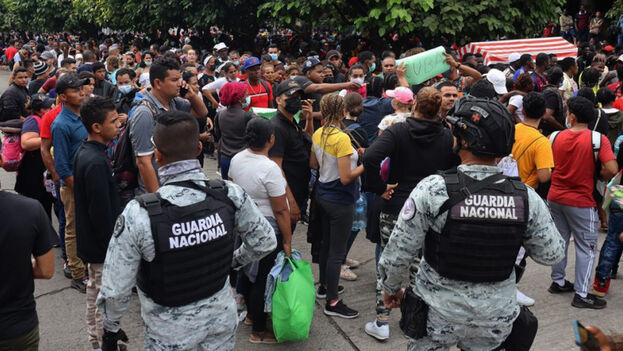
On Monday, in the south of Mexico, 5,000 migrants from various countries, including several Cubans, demonstrated in front of the offices of the Mexican Commission for Aid to Refugees (Comar). A group entered by force and demanded a response to their request for free transit.

“We want papers to stay in Mexico legally and continue the journey to the northern border with the United States,” Yanela said. The young woman of Cuban origin said in Tapachula that the facilities had been closed for 15 days and they had to arrive on Sunday night to be taken care of, but no one approached them.

Jordi Armando, another of the Cubans who is waiting for his turn to be assisted, warned that the authorities are causing “disorder and chaos,” so if they don’t take action in the matter “this can get out of control” and end up in a tragedy. Among the group of people there are several Haitians, who he said are the most desperate.

In the face of the protests, Comar officials warned migrants that they will only care for families with children, so the other adults will have to wait their turn in line.

The number of migrants arriving in the U.S. will increase in coming days, said Father Felipe de Jesús Sánchez from Casa Indi, which is located near the Santa María Goretti Parish, in Monterrey. He mentioned to 14ymedio that there are more than 80,000 people from Nicaragua, Cuba, Venezuela, Haiti, Guatemala, Honduras, “in shelters” near the border from Tijuana to Matamoros, “waiting to cross to the United States.

On the night of December 12, a caravan with more than 1,000 irregular migrants illegally crossed to El Paso (Texas), according to Fox News journalist Bill Melugin on video. “The city of El Paso reports that the Border Patrol now has more than 5,000 migrants in custody and has released hundreds onto the streets of the city,” he stressed.

The exodus of balseros continues by sea. This Sunday, “more than 160 migrants were found in the Florida Keys,” Border Patrol Officer Walter Slosar reported on his social networks. According to details offered, there were 10 landings recorded “since midnight.”

Slosar explained that in the last 72 hours, the Border Patrol responded to a high volume of arrivals of migrants, so “there is a greater presence of law enforcement and rescue workers in the area” to prevent them from arriving in Florida.

One day before the end of 2022, there was a landing of 88 Cubans, who arrived in Florida on five rafts. Faced with the large number of balseros, the authorities decided to close Dry Tortugas National Park on Monday, in the Florida Keys, to be able to assist and rescue the rafters who are stranded on the islets.

Translated by Regina Anavy

____________

COLLABORATE WITH OUR WORKThe 14ymedio team is committed to practicing serious journalism that reflects Cuba’s reality in all its depth. Thank you for joining us on this long journey. We invite you to continue supporting us by becoming a member of 14ymedio now. Together we can continue transforming journalism in Cuba.

More than 100 migrants, Mostly Cuban, Were Abandoned in Two Hotels in Mexico

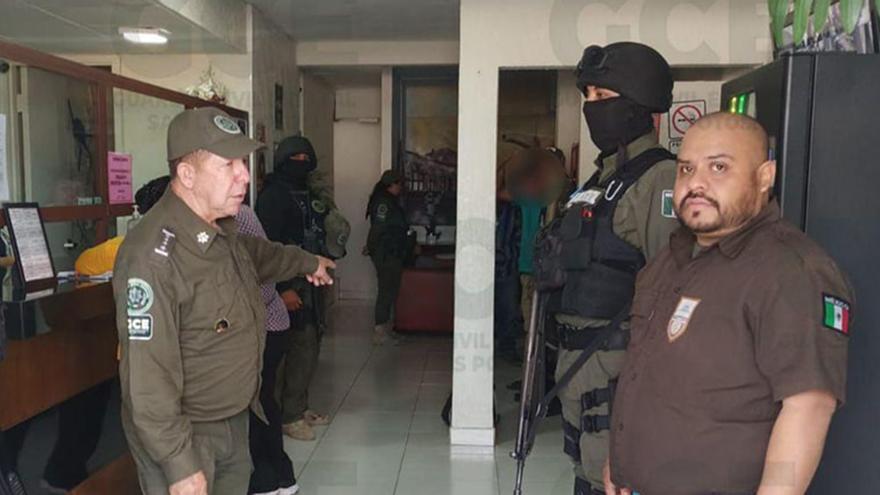
The migrants will be taken on Tuesday night to the U.S. border. (GCE)

14ymedio bigger 14ymedio, Ángel Salinas, Mexico, 9 November 2022 — On Tuesday, the State Civil Guard of Mexico arrested more than 100 migrants, mostly Cubans, who were abandoned by coyotes in two hotels in the municipality of Soledad, in the state of San Luis Potosí.

“The group waited for the evening to continue on its way to the United States,” said one of the guides, speaking to the clerk of a store where they bought water, ham and bread. The business is located a few feet from one of the hotels.

Contacted by 14ymedio, the clerk, who identified himself as Josué, pointed out that, between Saturday night and early Monday morning, several vans “of Cubans” entered the California Hotel. The establishment is located four minutes from federal highway 57, one of the routes used by coyote networks for the smuggling of migrants, according to what Miguel Gallegos, a spokesperson for State Security, said in May.

Josué specified that on Monday, several Central Americans, mostly men who stayed at the España Hotel, descended from a truck normally used for the transport of cattle. “I know because one entered the store and asked me if I accepted quetzales. That’s when I found out that he was from Guatemala and the others came from Honduras and Ecuador,” he clarified.

“I can’t give you exact numbers, but several groups of between 40 to 60 people per day pass through the municipality. Some stay, others are escorted, like the Cubans,” Josué explained. continue reading

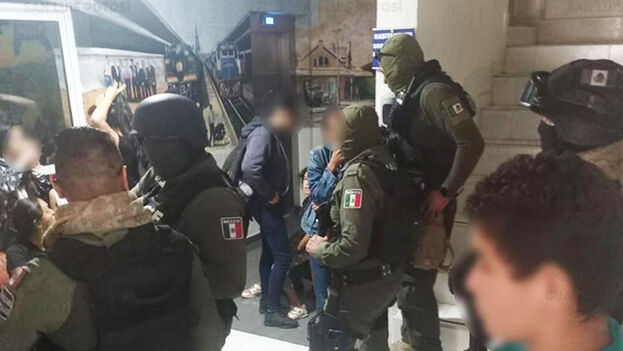
The authorities of San Luis Potosí reported to Migration the detention of Cubans and other migrants. (GCE)

Gallegos pointed out that, because of the increase in roadblocks, the polleros (coyotes) began to use alternate roads, and the state administration is trying to cover the “gaps” used by human traffickers for the transfer to the U.S. border.

On Tuesday, the governor of San Luis Potosí, Ricardo Gallardo Carmona, addressed the immigration issue and reported that the authorities “rescued” more than 100 undocumented people, almost all of Cuban origin, but wondered how they managed to get almost half-way on their journey without having been intercepted by any  authority.

From San Luis Potosí, migrants can take the route that brings them to the state of Coahuila and try to cross the Rio Grande through Ciudad Acuña or Piedras Negras. The crossings through Matamoros, Reynosa and Nuevo Laredo are another alternative, but they are controlled by the drug cartels. Several Cubans have told 14ymedio that the Gulf Cartel uses keys and colored bracelets for the passage of migrants, depending on the payment they make for the transfer.

According to the authorities of San Luis Potosí, the National Migration Institute will take care of the corresponding procedures for the repatriation of irregular migrants.

Translated by Regina Anavy

____________

COLLABORATE WITH OUR WORKThe 14ymedio team is committed to practicing serious journalism that reflects Cuba’s reality in all its depth. Thank you for joining us on this long journey. We invite you to continue supporting us by becoming a member of 14ymedio now. Together we can continue transforming journalism in Cuba.
A Senior Migration Official in Mexico Demands $70,000 from 14 Cubans to Avoid Deportation

In recent months, several Cubans have been arrested during their journey through Campeche. (Captura)

14ymedio bigger14ymedio, Ángel Salinas, Mexico,30  September 2022 — “You have 72 hours or you’ll be deported.” In this way, an agent of the National Migration Institute threatened a group of 14 Cubans in Mexico City. The alternative is blackmail: “They’re asking for $5,000 for each, $70,000 for the group,” a close friend of the detainees who wants to remain anonymous tells 14ymedio.

The group formed part the 103 Cubans detained in the Mexican state of Campeche, who were forced to remain on a bus without food for 24 hours. A Migration officer recommended to the source interviewed by this newspaper to “get moving” with the money.

In an audio to which this newspaper had access, the telephone warning of the agent, identified as the deputy director of the Las Agujas migration station in the Mexican capital, is heard. “I want to know if they’re going to get their hands on it,” asks the official, who warns that “the amount will be considerable” if the group wants to be freed.

The voice also proposes the alternative of allowing their deportation and then negotiating a new entry. Although, it clarifies, now this was going to “stain their passports.” “It’s going to be a little more complicated, I think,” says the man, who recommends that the Cubans act quickly.

“The group had been divided,” explains the same source. “Some of them were taken to the Escárcega migration station, in Campeche, but others were transported to the prosecutor’s office, after spending more than a day without eating, until they were moved to Cancun, then to Chetumal and now they are in Las Agujas,” he says. continue reading

Those who moved to Cancun offered money to the agents and achieved their release in Chetumal. A minor, Jimmy Jorge Céspedes Sánchez, who presented health problems derived from the asthma he suffered during the retention, and also Yaimet Sánchez Selles, Yaimet Selles Velázquez and Jorge Luis Sánchez Proenza, are part of this group.

It’s not the first time that Cubans have reported abuses by Las Agujas Migration agents.

In the last week of July, Angélica María Rodríguez Varela, Isael Meléndez Castro, Junier Blanco Hernández and two other Cubans were arrested despite having legal protection to pass, during their transfer to the border with the United States.

Rodríguez, Meléndez, Blanco and other nationals of the Island were robbed of the little cash they had. Their passports were taken away, the chips from their mobile phones removed and they were kept incommunicado for several days. The agents demanded the payment of $2,000 from each one to be released and have their documents returned. Thanks to the intervention of an activist, they were allowed to leave and are currently in El Paso, Texas.

The journey of Cubans through Mexico has increased significantly in recent months. In the last 45 days, immigration authorities reported the arrest of 220 people who entered the country illegally.

What they don’t say is that there are hundreds of prisoners in Migration prisons. “That’s a crime,” says the 14ymedio source, who warns Cubans not to rely on money to avoid deportation. “It’s crazy, they want $70,000.”

More than 177,000 Cubans have arrived by land in the United States and more than 5,000 by sea since October 2021.

Translated by Regina Anavy

____________

COLLABORATE WITH OUR WORKThe 14ymedio team is committed to practicing serious journalism that reflects Cuba’s reality in all its depth. Thank you for joining us on this long journey. We invite you to continue supporting us by becoming a member of 14ymedio now. Together we can continue transforming journalism in Cuba.