What Does Adidas’ Fame Have to Do with Fidel Castro? / Juan Juan Almeida

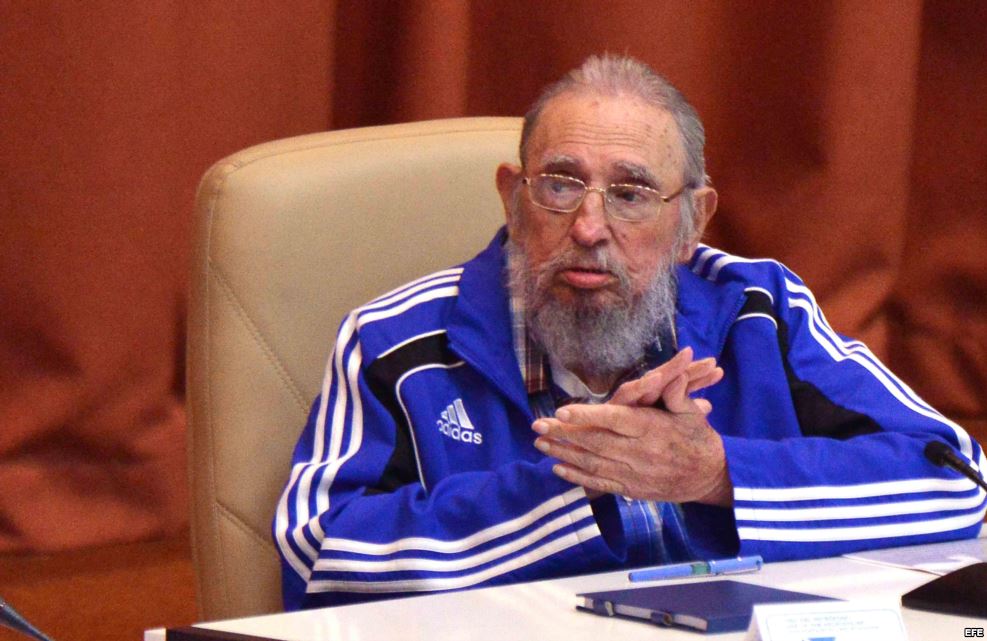
Juan Juan Almeida, 4 June 2016 — A study conducted by the firm Boston Consulting Group reveals some very curious findings, which I find questionable, about Cuban consumers. It claims that Adidas is the best known brand on the island due, according to this report, “in large part because of Fidel Castro’s preference for the company’s tracksuits.”

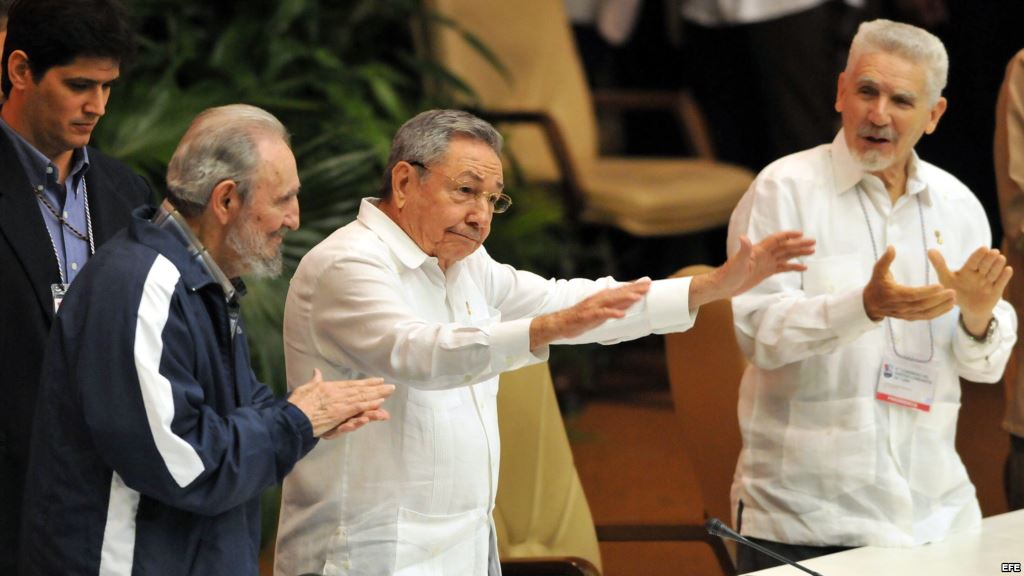
The former commander-in-chief was unquestionably the ultimate promoter of Cuban Revolution abroad. It can be logical to assume that, in a country — and I am talking here about demographics — that is one of the oldest in the Americas, its citizens still look up to the irreverent, bearded young man who angrily challenged US interests from his podium in “the plaza.” But actually it is something much simpler. The leader has grown old and is now looked upon with a certain nostalgia by people over the age of fifty-five. continue reading

Certainly every time Cuba’s nonagenarian former president appears on television or in the national press, it becomes an international news event, with his name and image splash across world headlines. But on the island it has the opposite effect, one of saturation and annoyance.

It is unrealistic to think that Adidas is popular on the island because Fidel Castro wears its label. This ignores the fact that, until 2012, the German brand was the official sponsor of the Cuban National Olympic Committee and equipped all its athletes with clothes used in both training and competition.

It is for this reason that all of Cuba’s top leaders, not just Fidel, sport the German brand. The stores run by the Ministry of the Interior, especially those managed by the presidential security service, are always fully stocked with clothing and footwear by Adidas. And until a very recent and much-talked-about corruption scandal, sweatshops run by an arm of the National Institute of Sports, Physical Education and Recreation were turning out unauthorized and obviously fake versions of Adidas merchandise.

It is hard now to remember that the Cuban judo athlete Daima Beltral, who moved us to tears at the time, was wearing an Adidas tracksuit when she was awarded silver medals at the Olympic Games in Sydney (2000) and Athens (2004). That at the IAAF World Championships in Budapest on March 14, 1989 Javier Sotomayor set a new world record of 2.43 meters in the high jump wearing Adidas shorts and sweat shirt. And when the track and field athlete Dayron Robles and the wrestler Mijain Lopez became the only Cubans to win Olympic medals in Beijing in 2008, they were both wearing Adidas.

This, and not the tedious image of an old, worn-out dictator, were some of the emotional moments that on a subliminal level set the Adidas brand apart from all other sportswear labels in Cubans’ minds.
Cuba to Close Medical Missions in Brazil and Venezuela / Juan Juan Almeida

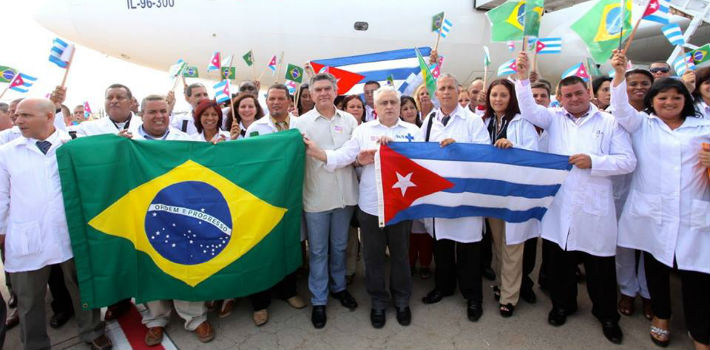
Cuban doctors on medical missions in Brazil (Source: am revista)
Cuban doctors on medical missions in Brazil (Source: Ceara em Revista)

Juan Juan Almeida, 16 May 2016 — Quite unexpectedly, Cuban authorities say they are prepared to suspend or cancel medical missions to Brazil and Venezuela.

Ever since Cuban informants, who are spread across the continent, warned that Brazilian legislators were planning to remove President Dilma Rousseff from power and long before President Maduro began facing pressure from the opposition-controlled National Assembly, the Cuban government — calculating as ever and with a proven penchant for creating adversity — secretly devised a plan B, which has now begun to take effect. continue reading

The interim president of Brazil, Michel Temer, publicly stated that his government does not intend to get rid of the Cuban medical program “More Doctors,” which was established by Rousseff’s government. Such assertions only demonstrate that the acting president is unaware of the surprise Cuba’s shifty ideologues have in store for him.

Perhaps he will learn the hard way that, for the island’s government, the medical missions are more than just a charitable undertaking and a very profitable enterprise. The are above all instruments of pressure that are one aspect of an aggressive foreign policy.

A commission made up of members of the Communist party, the government, the Ministry of Public Health (MINSAP) and local officials are touring the island of San Antonio de Maisi to brief staff at every hospital on plans for removing all Cuban health care workers from Brazil and Venezuela at a designated time and returning them to Cuba.

This action has two objectives. One is to forestall more doctors from deserting. The other and more important one is to strike a timely political blow by withdrawing the services of Cuban doctors in remote and impoverished areas.

In conversations with staff, this itinerant commission reported that Cuba receives significant subsidies by leasing out its professionals’ services as part of various overseas health care programs. But it now plans to amortize its economic losses by backing out of its agreements with Venezuela and Brazil.

Cuba is fashionable and there will always be places in the world with a profound need for health care workers. Thus the idea is to redirect Cuban medical cooperation to other countries and gradually increase health care access on the island. But not to Cubans. On April 3 the minister of health, Lina O. Pedraza Rodriquez, signed Resolution 145/2016 which allows doctors to collect up to five percent of the fees billed to foreign tourists.

Concurrently, MINSAP has released more than 200,000 dollars from the hard currency reserve on orders from the Central Committee to launch a big ad campaign that includes an untold number of printed flyers for distribution through privately owned rental homes, hotels, travel agencies (both inside and outside the island), the official Ministry of Foreign Affairs website, Cuban diplomatic missions abroad and MINSAP affiliated facilities, including hospitals. It is intended to promote and sell a range of health care services that the country offers.

On the Trail of the MININT Papers / Juan Juan Almeida

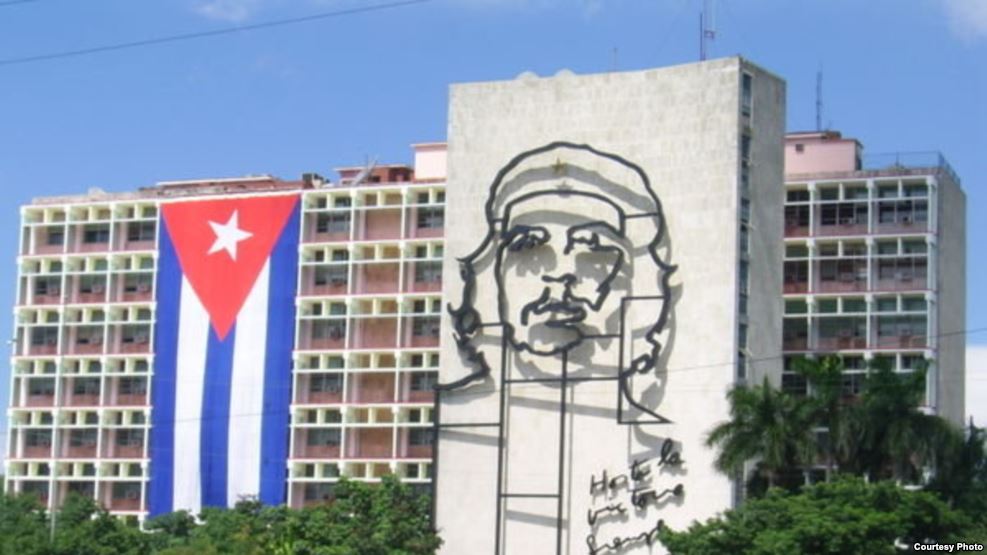
Ministry of the Interior headquarters in Havana, Cuba

Juan Juan Almeida, 9 May 2016 — In connection with a top secret theft targeting the Interior Ministry of the Republic of Cuba (MININT), a high number of officials have been arrested, a colonel in charge of computer operations has committed suicide in his own office on the eighth floor of Building A at MININT headquarters, and a foreign businessman is being subjected to enormous pressure from the Cuban government.

The information had remained secret until March 31 when an article appeared here under the title “MINIT Confronts What Could Be Its Worst Challenge: Information Theft.” In it, I wrote that the Major General Carlos Fernandez Gondin had left his office accompanied by a doctor after a fit of rage, which led to a heart attack and his hospitalization. continue reading

At the time the obvious question was, “What could be so irritating as to reduce the blood flow of someone capable of not only leading a firing squad without the slightest remorse but of also justifying it?”

Now after much effort, some payouts and access to high-level sources, the enigma has begun to take shape. As I previously noted, it is almost impossible to believe that the theft of secret material was not the result of a cyber attack. It was a calculated, premeditated act, paid for by a Canadian businessman. Though he is not now in Cuba, he is being pressured by Cuban authorities to not release or sell the information to a foreign intelligence agency. Though he himself is not currently in the country, the businessman, whose name I do not know, is being cruelly coerced because, among other things, members of his family still live on the island and are not being allowed to leave.

According to one of source, “the information is so secret that, if it came to light, it would be extremely damaging to Cuba and its leaders. It is more serious than the Number One and Number Two Cases of 1989. Never in the entire history of MININT or the former DIER (Department of Army Investigations) has such valuable information been stolen.”

The reports are troubling. It is said that there are documents implicating European intellectuals, American academics and businesspeople, and even a former president of Panama. There is also talk of a list of names of Cubans who have been forcibly “disappeared,” of covert activities carried out overseas, of regional destabilization operations, of money laundering, of the sale of Venezuelan and Panamanian visas, of the government approving trafficking operations under the more attractive guise of humanitarian aid to separated families, and of significant investments by Cuban leaders in Nicaragua, Panama, Mexico and Venezuela. 

A lot can be discerned about the robbery but not very much about the names. Internal control, intelligence, counterintelligence, military counterintelligence and CIM (Defense and National Security Commission) officials are using disinformation to obscure the identity of the Canadian businessman, the number of disgruntled military men involved in the sale of information, and the names of the colonels and general who led the operation and who remain in custody.

See:

MININT Confronts What Could Be Its Worst Challenge: Information Theft / Juan Juan Almeida

The Weighty Legacy of ‘Furry’ / 14ymedio, Reinaldo Escobar

https://translatingcuba.com/sadistic-extravagant-and-kleptomaniac-general-gondin-juan-juan-almeida-cuba/

Antonio Castro’s Fiancee, Manager of Desigual: How a Boutique Works in Cuba / Juan Juan Almeida

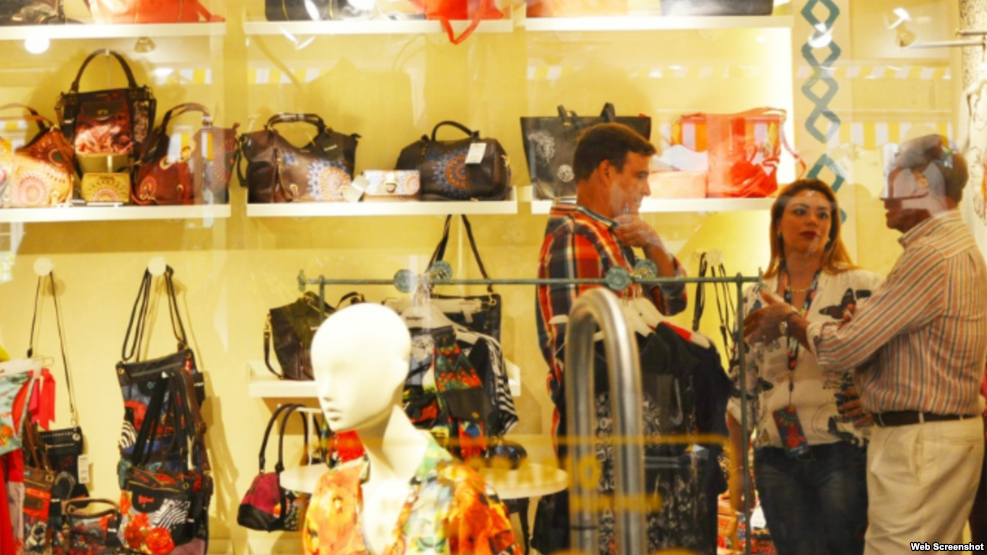
Antonio Castro, son of Fidel Castro, in the Desigual store located in the Hotel Comodoro shopping mall. From the blog This-is-this.

Juan Juan Almeida, 12 May 2016 — The most expensive labels in Cuba are on the verge of the abyss. Mango, Gas, Zara, Paul & Shark, Adidas, Lacoste, Desigual and a few others present their calling cards to the Cuban government while naïve foreign businessmen in the high-end textile industry look on, allowing themselves to be seduced. The stores pretend to be profitable but it is all an illusion. They are nothing more than a houses of cards, fragile and in danger of collapse.

Commercial concessions like these are doled out on the basis of their usefulness through politically connected friends and with people who, directly or indirectly, wield authority, hold decision making power or have influence. continue reading

One very recent example happens to be talk of the town: Patricia Nuñez, an anchor on the educational channel and the current fiancée of Antonio Castro Soto del Valle, son of Fidel Castro. She recently made her debut as manager of a new Desigual store in the shopping mall of the Hotel Comodoro in Miramar.

Fashion is the new obsession among Cuba’s elite. But not even close ties to Cuba’s monarchs are enough to improve the bottom line of these luxury clothing brands. Having a presence in Cuba can certainly be an added plus, albeit a costly one. Economically speaking, the thrill of being on the island mainly results in huge and continuous losses.

The government’s unpaid bills are piling up in the accounting books of these retail companies. But that is not the main reason these stores are suffering. It is due to their employees who — with a work ethic that includes criminality (specifically, handling stolen goods) — make steady money tax-free while dealing a body blow to their own employers.

Another issue is that, generally speaking, what is being sold in stores like those in the Hotel Comodoro are knock-offs imported by merchants who circumvent Cuban custom regulations, or who sell merchandise produced clandestinely by seamstresses — with or without self-employment licenses — who attach fake labels made by local artisans.

These include blouses, skirts, shirts, leggings and pants. Anything that can be purchased for a price of between five to seven convertible pesos is sold as “the real thing” at one-hundred times the original price. As a result, the legitimate stores lose while these shopkeepers win.

It is for this reason that Cuba’s well-to-do have not been seduced into buying this stuff. They have no interest in the Hotel Comodoro shopping mall.

What interests them are places like New York’s Fifth Avenue, London’s Bond Street, Rodeo Drive in Beverly Hills, Tverskaya Street in Moscow, Bahnhofstrasse in Zurich, Wangfujing in Beijing, Avenue Montaigne in Paris, Via Monte Napoleone in Milán, P.C Hooftstraat in Amsterdam and Madrid’s Serrano Street.

Why? Because for them, as well as for those who talk so much about sacrifice and revolution, the shopping experience at these places far exceeds the average earthling’s retail expectations, whether they live inside or outside of Cuba.

A Friend and Cuban Military Official Just Sent Me an Email / Juan Juan Almeida

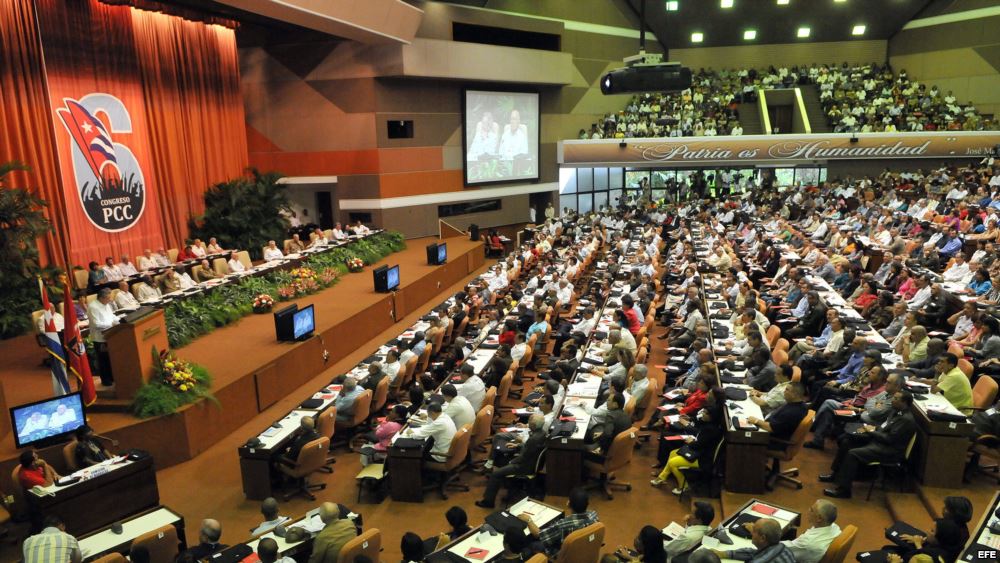
Juan Juan Almeida, 11 April 2016 — This will not just be the seventh congress of a communist party condemned to being swallowed up by history. It will be the last.

Cuba is a small island filled with dangerously blinding lights. All this brightness dazzles the opposition. So much so that it cannot even manage to capitalize on the discontent of eleven million Cubans.

This suggests to one segment of the exile community that the rhetorical debate has shifted from victimhood to complicity, that it overestimates a government that is losing power and is struggling to get itself out of a grave that we, the people, have not been able or known how to dig. continue reading

But there are fireflies who carry on in the darkness, like a friend of mine, who is an official in the Revolutionary Armed Forces (FAR). I would like to share an email he just sent but, given his ample political, military, intellectual and popular appeal, he prefers to remain anonymous. I have not changed so much as a comma:

“April 16, 2016 will mark the start of the Cuban Communist Party Congress in Havana. Numerically it is the seventh but alphanumerically it is the last. Seven is a magical number in Egypt while it has an anal connotation in charades and in the Cuban vernacular. This is where we are. At the end of communism’s digestive tract. What emerges from this congress will be nothing more than a nebulous and fetid outgrowth.

“Unlike previous events, this one two distinguishing characteristics: an excess of secrecy and extemporization. No one seem able to answer two questions directly. What will be discussed in these sessions and why now? We can only speculate. And since speculation is the spice of politics, here we go.

“Political journalists and some observers both inside and outside the opposition are asking themselves if some ‘logical changes’ in Cuba’s direction are being devised. Vocal opponents and silent opponents, staunch supporters and timid supporters, and those of all political stripes expect nothing of the sort. These supposed logical changes, the necessary reforms, require a mental flexibility that Raul Castro and his cronies do not have. To confuse the undeniable skill that Cuba’s leaders have shown in holding onto power as a sign of Realpolitik would be a mistake.

“This congress is part of Raul Castro’s master plan. It is the next step towards the ultimate goal. To retirement. The most important matter at this event will be trying to deal with the tricky matter that socialist governments throughout the world have had to confront: the problem of succession. It is one aspect of his conspiratorial nature. He is trying to pick the gerontocracy’s successors, people with no political base, some of whom are the result of blatant nepotism. Many of them are already in place. They are the dull, shadowy figures who repeat the same old ideas that no one of their generation in Cuba believes anymore. A straightforward public rollout of these people would have led to even more discontent and disappointment in society.

“The other reason for this mysterious project is the immediate future. The general idea is to  maintain the status quo. In other words, to try to consolidate state capitalism and to capitalize on a five-decades-long hold on power. This has very little attraction for the Cuban people and would further deepen the gap that separates them from the current regime. Cuban leaders are smart enough to know that this project cannot be discussed in public because it would contribute to an increase in social unease.

“All this fits perfectly with the issue of the timing of the congress. You cannot impose new leaders and unpopular policies without suffering the consequences. It takes patience and spit, and the first glob is the congress. Before [Raul’s] permanent retirement after the general elections there will be four sessions of the National Assembly in which to implement the succession.”

Obama Invades Cuba / Juan Juan Almeida

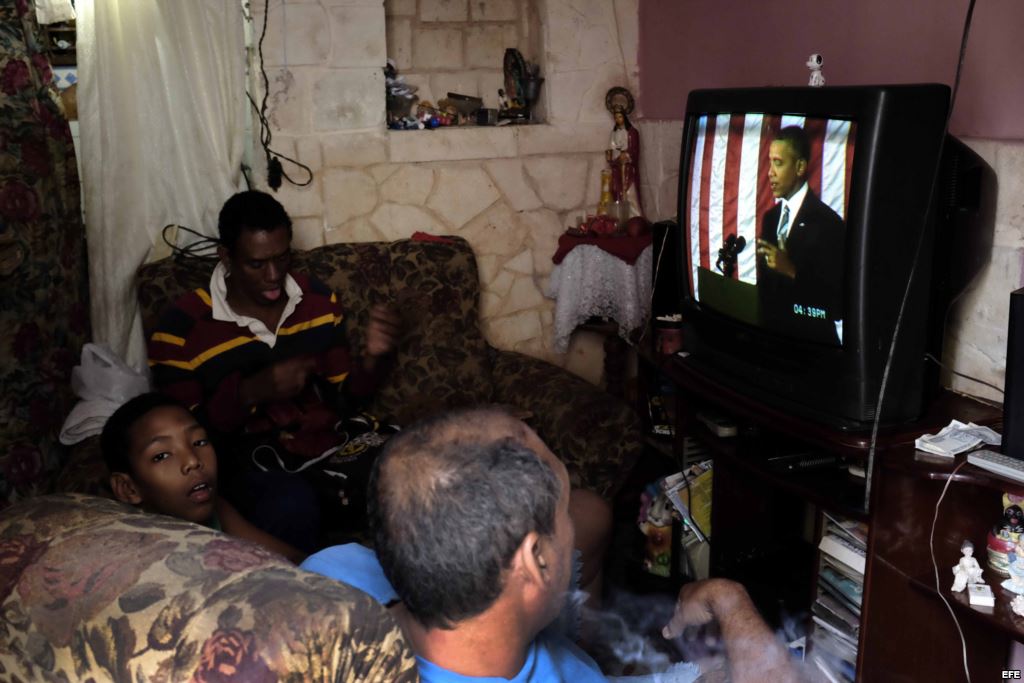
A Cuban family watching Obama’s speech during an entrepreneurs’ forum in Havana (21 March 2016)

Juan Juan Almeida, 28 March 2016 — I do not generally like rehashing old topics. It tends to squash conversation. But I am making an exception in this case because a critical reader, who in a confrontational tone accused me of being one of Castro’s spies, asked my opinion of President Barack Obama’s speech at Havana’s Gran Teatro Theater.

Time is a better and much wiser judge, and in politics everything is a production, like a Rolling Stone’s concert.

I will try to remain impartial. But for me the visit was an historic event. No sooner had Air Force One touched down in Havana than the topic was trending on all the social networks. continue reading

It was an outstanding speech: direct, clear and inspiring. He captivated us when he said, “ I can’t force you to agree, but you should know what I think. I believe that every person should be equal under the law. Every child deserves the dignity that comes with education, and health care and food on the table and a roof over their heads. I believe citizens should be free to speak their mind without fear, to organize and to criticize their government, and to protest peacefully, and that the rule of law should not include arbitrary detentions of people who exercise those rights. I believe that every person should have the freedom to practice their faith peacefully and publicly. And, yes, I believe voters should be able to choose their governments in free and democratic elections.”

He later sweetened the sentiment with classic and well-known references to Cuban culture like ropa vieja, Celia Cruz, exile and Our Lady of Charity.

Cubans like myself — those who were born and grew up with the revolution and long expected an invasion by strong, blond Americans in camouflage fatigues, brandishing guns in one hand — were amazed. I do not know if that is the right word. But within one minute of his reference to one of Jose Marti’s most beautiful and famous poems, “Cultivo una rosa blanca,” this skinny little guy — with charisma to spare — demolished the myth that for years had been fabricated, inculcated and exported by our leaders.

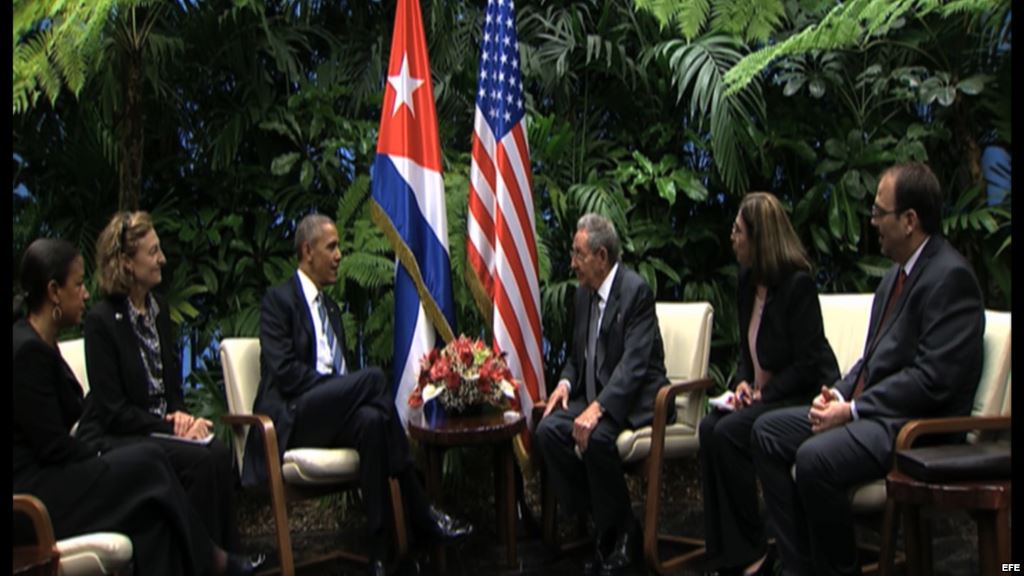
Obama seduced. He clearly scored with his visit to Havana but, like it or not, so did Raul Castro. A few days before the start of the VII Cuban Communist Party Conference on April 16 and months before his long anticipated retirement in February 2018, a U.S. president visited the island without Cuba’s leader having to make a single concession.

I understand that an abundance of passion can cloud one’s vision. We have imagined an oasis where there is only desert. This is called a mirage.

At no point did I see Raul Castro looking uncomfortable, as some of my countrymen have claimed.

I believe that his arrogant response to the requisite (and anticipated) question on political prisoners was a very bad move by the Cuban president to stall for time. But at this point in the tournament, even a few seconds count. His cynical closing shot — “give me the list and I will release them” — made it very clear that “on the plantation, he is in charge.”

Rather than an out-of-control dictator, what I saw was really an octogenarian clown with hearing problems. It was the same situation during Obama’s speech at the theater. Assuming they were following the rules of protocol, the president hosting the event would have known in advance what his guest would say.

A close friend of mine says his sources in Cuba have told him that the former commander-in-chief is upset with Raul over Obama’s visit. I don’t buy it. If the ex-omnipresent one is complaining, he must be because no one has changed his Pampers. This development is one he had long hoped for, especially after an unfortunate event during a visit to Europe for a funeral.

Acknowledged for his incomparable skill at managing crises, albeit immodestly, Fidel Castro would have used the attacks in Brussels to his advantage. To gain attention, he would have declared three days of mourning in solidarity with the Belgian victims, discredited Obama’s meeting with Cuban dissidents, suspended the baseball game with the American team when it looked like the Cubans would lose and stolen the show. In this way he would have diminished the significance of the president’s visit to “his island.”

“In politics, it is all about production values, like the Rolling Stone’s outdated concert.

MININT Confronts What Could Be Its Worst Challenge: Information Theft / Juan Juan Almeida

Raúl Castro pins the title of Hero of the Cuban Republic on division general Carlos Fernández Gondín.

Juan Juan Almeida, 31 March 2016 — Not so long ago there was a rumor that high officials of MINIT had been arrested by the Ministry. In agreement with those implicated in the event and making a clear allusion comparable to Case No. 1 of 1989 [a highly respected Cuban general was executed for drug trafficking], there was speculation about a new report. But the rumor faded away under a suspicious silence and a potent, air-tight cloak of secrecy.

Theories have flaws, and even the Roman Empire lasted four centuries longer than predicted.

What’s certain is that the Division General, Carlos Fernández Gondín, left his office in the MININT building accompanied by a doctor, after an attack of rage that gave him a stroke and left him hospitalized. continue reading

What could have made him so irritated, or what could be so serious that it could reduce the blood flow of someone who had been capable, without remorse, of ordering the “ready, aim, fire” and, furthermore, justifying it.

A little more than four months after the Army General, Abelardo Colomé Ibarra (alias “Furry”), resigned from the Council of State and as Minister of the Interior, the Ministry faced what could be its biggest challenge: information theft.

What’s certain is that the recent initiate as Minister, Division General Carlos Fernández Gondín, who also holds the “honorable” award as Hero of the Republic of Cuba, left his office accompanied by a doctor, after an attack of fury, which provoked a stroke and left him hospitalized.

The possessor of a sinister countenance, General Gondín is known for keeping himself in the vanguard of the struggle. His principles, as well as his doctrine, begin and end with the word “terror.”

But when he had the new appointment, when he felt part of those who call the shots, a group or an individual, still not identified, entered the warehouse where the ultra-secret rumors are guarded and ransacked a very important data base with privileged information.

What information was stolen? I have no idea! And those who know aren’t talking. However, the Cuban Government has let loose the largest operation ever seen in many years, and, by the aggression of the search, is showing desperation.

Officials of Internal Control, Intelligence, Counter-Intelligence, Military Counter-Intelligence and the Commission of Defense and National Security have been given the task of finding and questioning, completely, without exceptions, those who entered and left the Ministry in question.

And, as all computer networks are fashionable these days, despite assurances that the theft was not the result of any cyber attack, there’s a good group of investigators, working full-time, who are snooping around, with incisive scrupulousness, in the corners of cyperspace.

The fear and reprimand suffered by the sadistic, cowardly, possessed and insecure Gondín, weren’t because he didn’t have copies of the stolen archives, but for the fear and worry of not knowing into whose hands what some consider “delicate information” could fall.

Translated by Regina Anavy

Raul Castro and His Retirement Plan / Juan Juan Almeida

Juan Juan Almeida, 24 March 2016 — It is a few days before the start of the Cuban Communist Party Congress and Raul Castro is counting down the months until his retirement. He has everything more or less figured out. Almost. If you consider everything the president of both the Council of State and the Council of Ministers has said and done in the last two years, it quickly becomes apparent that it is all part of a plan in which he has weighed the possible consequences of an exponential loss of power. He knows that even if he wields power from the sidelines, as I anticipate will happen, there will be a handful of decisions about which he will not be consulted and, as happened to Fidel, he will find himself out of power.

Raul Castro’s plan is to retire while simultaneously reducing the very real possibility that a Baltasar Garzon will come along one day to stand in judgement over his many crimes. He is in jeopardy in Cuba; outside Cuba the risk is greater. continue reading

The only person with whom he can cooperate to guarantee some sort of immunity is His Holiness the Pope.

Unlike in journalism, what is important in politics is what you don’t see.

Let’s take a look at recent events. In the past year the president of France, the prime minister of Italy, the president of Austria and now Barack Obama have passed through Havana. In the midst of all the comings and goings of important and elegant visitors, the Paris Club wrote off part of Cuba’s external debt.

It would be logical to think that all this is the result of some great negotiation, especially since we know that the Paris Club does not give away four billion dollars without some kind of agreement.

Tourism in Cuba has grown by more than 20%. Havana is filled with visitors while both profits and remittances are increasing. Clearly, there is a lot of money coming into the country yet the streets are disgusting, street lamps are non-existent, stores go unstocked and people are broken.

Where is all this money going?

A good part is being siphoned off to create a large fund to support the royal family and its retinue of bodyguards in retirement.

The well-publicized battle against corruption allows the general to consolidate the funds into a single treasure chest while at the same time eliminating a certain number of “corrupt” individuals whom he could not trust.

Based on information they had, these individuals accused officials of dishonesty. They had either followed the trail of misappropriated funds or knew where they were ultimately being directed. Rather than being corrupt officials, they became the incarcerated elite.

Such was the case of Thomas Lorenzo, former director of credit card sales at BICSA, a man whose crime was never larceny. His transgression lay in the way he handled information, which is perhaps why he ended up dying in prison.

Another portion of the money is being used to pay creditors and, by paying, gain their confidence and  protection. Russia, China and the Paris Club shelled out because there were demonstrations of an intent to pay and those actions warranted debt forgiveness.

The next person to visit Havana will be the recently elected president of Argentina, who has already warned his country that he will also commute part of the debt.

The strategy is effective but dangerous. It is very similar to the one used Nicolae Ceausescu before he was shot. He tightened Romania’s belt in an effort to begin paying down the country’s debts but his timing was bad. Misery had overtaken the country. It was 1989, the winds of freedom were blowing and the rest is history.

The only thing the general’s ingenious plan lacks is a successor capable of keeping him away from those like me who are always lurking. It should someone who is a loyal apprentice but not, in my opinion, his son. Or Miguel Diaz-Canel. No doubt we will begin to get some idea in the coming days after new appointments are announced during the upcoming VII Congress of the Communist Party of Cuba.

Raul Castro Takes His Son to First Private Meeting with Obama / Juan Juan Almeida

Photo: Bilateral meeting between Raul Castro and Barack Obama in Havana.

Juan Juan Almeida, 22 March 2016 — President Barack Obama’s visit to Havana is replete with coded messages and defensive tactics. Why is it that at the start of the official ceremony we do not see Vice-President Miguel Diaz-Canel but rather Prince Alejandro Castro?

As everyone now knows, while the president of the United States was traveling on Air Force One to Jose Marti International Airport in Rancho Boyeros, the inhospitable Cuban government was brutally disrupting a peaceful demonstration by the Ladies in White and civil rights activists, showing us just how much progress it has made on the issue of human rights. continue reading

Raul Castro did not lead the delegation greeting this important visitor upon his arrival in Cuba. Instead we saw Foreign Minister Bruno Rodriguez Parilla and other lesser government officials in his place. I am not saying this is a serious breach of diplomatic protocol, but in fact it is a rather vulgar response given all the efforts at reconciliation made by the United States.

Obama laid a wreath at the monument to Cuba’s national hero, Jose Marti. Afterwards, it was also very odd to see Prince Alejandro at the first meeting between the two heads-of-state in place of any of the country’s vice-presidents.

While these types of actions may not follow protocol, they can be explained. At the moment the Cuban government is facing a less than full-blown state of emergency. It is in a state of mobilization, a state of war in a time of peace, and not because of the rarity of a visit by an American president. Not at all. It is because things back at the palace are not going well. The post of interior minister is vacant because the recently appointed Carlos Fernandez Gondin was involuntarily removed from office under suspicious circumstances.

Given the current situation and in compliance with some bogus article not found in the nation’s constitution, the country now finds itself under the control of the Commission for Defense and National Security, directed by none of other than the prince, Alejandro Castro.

Authorities Prepare a Lukewarm Welcome for Obama / Juan Juan Almeida

Cubans advised to stay home and watch Obama’s visit on TV

Juan Juan Almeida, 17 March 2016 —  Obama arrives in Havana on March 20. However, arbitrary arrests continue and we see only the most minimal progress on the issue of human rights and respect for basic freedoms.

The truth is Raul Castro is not pleased by all the enthusiasm surrounding his visitor, who on Havana’s streets is more popular than George Clooney.

An employee at the Cuban Export-Import Corporation — a man who is a current official and former officer in the Revolutionary Armed Forces — notes, “They are telling us is it not important to go and greet Obama and that we can see the events better on television, that everything will be very formal without a lot of fanfare.” continue reading

Though Obama arrives in Havana on March 20, arbitrary arrests continue and we see only the most minimal progress on the issue of human rights and respect for basic liberties.

Although many of our fellow citizens do not want to acknowledge it, or do not understand it, one thing is clear: The agenda of the President of the United States extends far beyond the borders of one island.

Fifty-years of conflict have produced no significant results, so Washington and Havana have decided to stop being each other’s worst enemies and to become respectful neighbors instead.

I do not know why they could not see it before. It has been a constant throughout history. The Greeks and Romans were always inventing new and ingenious ways to gain influence with their rivals.

Confrontation only works when there is a lot to be gained. Perhaps that is why a few hours before his arrival surveys indicate that Barack Obama is more popular on the  streets of Havana than George Clooney.

In fact, Raul Castro is not pleased by all the enthusiasm surrounding his visitor.

His press kit has always been divided into two parts. One is aimed at Cuba and Cubans. The other is aimed at his principal target audience, international public opinion, which has involved garnering favorable newspaper and magazine headlines for one’s own benefit.

With more than 2,400 arrests in the first months of this year, the rhetoric that Cuba and Cubans hear remains an eternal constant: We will change, we will continue to repress, we have the power, the country is my ranch and its businesses are run by my soldiers, the Yanks won’t even put up a fight.

For those beyond the front door, for the world, the message is clear and needs no further clarification: You can be a dictator, you can repress, you can enjoy the earnings generated by properties you have illegally seized from the United States and your reward will be a visit from the president of the United States.

But beyond its swaggering, troglodyte bravura, the Castro leadership is relying on Pepto Bismol.

These days, the island’s government is trying to behave harmoniously, maintaining a demure posture in response to American attempts at reconciliation.

Forced to abandon its long-held image of David against Goliath, it has ordered various faithful lieutenants to inform businesses and ministries — in no uncertain terms — that workers need not abet or attend public events where President Obama will be present.

I was told by an employee at the Cuban Export-Import Corporation, a man who is a current official and former officer in the Revolutionary Armed Forces, “They are telling us is it not important to go and greet Obama, that we can see the events better on television, that everything will be very formal, without a lot of fanfare.”

Message received. Over and out!

Project Ramon, Cuba’s Latest Bait to Lure American Investors / Juan Juan Almeida

Juan Juan Almeida,18 February 2016 — The latest property to be auctioned off is part of a plan to lure big American investors called Project Ramon. It involves destroying a small local beach and converting it into an exclusive tourist resort catering to a very few.

This new ecological disaster is being forged in Ramon de Antilla. continue reading

Motivated by insolvency and economic uncertainty, the country’s top leaders and their managers have decided to make some changes. The chosen option is to sell the island to the highest bidder. I am talking about bidders of the highest caliber — an essential requirement — who are interested in breaking into the Cuban market. I am not criticizing them. This is how things have been done since the beginning of time, by setting aside one’s principles. It’s called politics.

It is no secret that Cuban leaders are desperately looking for foreign capital to prop up the country’s fragile economy. And with the untimely collapse of its principal ally, Venezuela, Cuba has become very interested in a range of business opportunities.

The government is offering a range of investment options in projects totaling 8.7 billion dollars. But the key component to be auctioned off, on which only the largest American investors can bid, is known as Project Ramon. It involves destroying a small local beach and converting it into an exclusive tourist resort catering to a very few.

This new ecological disaster is being forged in Ramon de Antilla, an undeveloped peninsula of extravagant beauty located in the town of Antilla, north of Holguin. Nineteen kilometers long, it separates two important bodies of water: the Bay of Banes and the Bay of Nipe.

Located very near the idyllic Saetia Key, the site boasts innumerable natural attractions. In addition to beautifying the area and serving as a breeding ground for sparrow hawks, grassquits, red-billed tropicbirds, multi-colored land snails, reptiles and exotic insects, local residents insist that its mangroves and forests also harbor the treasure trove and ghost of the feared English pirate William Hastings.

The economic crisis and expectations for change in Cuban society have led the regime of Raul Castro to open the gate. And with the tax receipts such a mixed-use development could generate, the project’s planners are hoping to attract significant investment, much greater than what went into building the Varadero resort. Project Ramon is so ambitious that the hope is will become Cuba’s biggest tourist draw.

The Role of Raul Castro’s “Super Grandson” in Cuba’s Future / Juan Juan Almeida

Raul Castro with his grandson (l.) and French president Hollande (r)

Juan Juan Almeida, 8 February 2016 — Some say that Raúl Guillermo Rodríguez Castro — also known as “the Crab,” “the Grandson-in-Chief,” “Raulito” and even “Arnol-mal” (or Evil Arnold, an ironic nickname referring to the former body builder, actor and politician Arnold Schwarzenegger, and also a slight twist of pronunciation on the Spanish word anormal, or abnormal) — is considered to be among the contenders for the Cuban crown.

I can see that, but a crown without scepter is simply a Pamela.

Inept and dangerous — a bad combination for those who confuse folly with merit — Raul-the-Grandson can exert influence to get foreign businessmen expelled from the country. continue reading

(According to one headline, “Raul Castro’s Grandson Expels a Spanish Investor from Cuba.”) He can do as he likes without suffering any repercussions.

But there is a huge difference between those who have power and those, like him, who only have access to those who have power. And for the record, this is not just a play on words.

Some time ago I wrote a short profile entitled “Raul Castro’s Racist Grandson.” The grandson’s Paris sideshow led some people to ask me, as someone who knows all too well the cloth from which this family is cut, “What will happen in Havana after this fiasco?” Actually, nothing.

Raul Castro’s visit to France, during which some ten agreements were signed and where the Cuban president awarded his French counterpart Cuba’s highest honors, was a response to what François Hollande had effected on the island in May 2015.*

It is worth noting that Cuba’s leaders have an interest in Hollande because they need his help in securing a favorable treaty with France to restructure Cuba’s debts. Beyond exploring the prospect of new business deals, they are trying to signal to those European countries demanding greater individual freedoms and human rights in Cuba that they will have fewer opportunities than France in the new “business-oriented island.”

I will bet that, if the satirical commentary by the Gallic press and its echo on social networks got Raul and Vilma’s grandson riled up and affected relations between the Castro family and France, the French chancellery will have sent a note verbale (a diplomatic communiqué that is actually written rather than verbal) to the Cuban Ministry of Foreign Relations in an effort to downplay the issue.

There are those well-versed in Cuban affairs who insist on placing Raul Guillermo at the forefront of possible successors to the throne of the Castro clan, a herd made up of uneducated, arrogant individuals, who are short on gray matter and ignorant of the most basic principles governing diplomatic norms, protocols and proper behavior.

*Translator’s note: In May 2015 Cuba announced an oil exploration deal with France in the Gulf of Mexico after the French president, François Hollande, made a historic visit to Cuba in which he called on the United States to end its trade embargo on the Communist-run country.

Necessary Investigation Into Dead Cubans In The Nicaraguan Jungle / Juan Juan Almeida

C033D3C0-02FF-40C6-8161-F5EB6D37D6EF_w640_r1_s

Juan Juan Almeida, 18 January 2016 — Why don’t the countries which are implicated carefully investigate, in a reasonable period of time, the disappearance of these Cuban migrants? Why doesn’t the Nicaraguan government carry out an effective judicial investigation into these cases?

The accusers whisper, but, out of fear, do not accuse. They speak cautiously about dozens of Cubans abandoned in the jungle.

We will only have a rough idea of the number of those who have disappeared when those who are arriving and those who are still in Costa Rica, decide to break their silence. continue reading

Although for now there is no exact number of Cubans who have disappeared, whether assassinated, or lost, we are beginning to hear worrying tales, referring to the Nicaraguan jungle as a mass grave, where the bodies of some of our countrymen are hidden.

Sadly, while they ignore all this, the useless media is pleased with itself, and entertains itself scrutinising with disproportionate voracity and exaggerated delight, the motives, whether political or economic, which oblige these people to abandon their country.

This Friday, the first group, out of the thousands of Cubans who are stuck in Costa Rica, arrived in Laredo, in South Texas. According to the authorities in the Central American country, the selection criterion for this group of 180 was how long they had been there, that is to say, the date they entered the country.

But no one says that the list was modified because, in spite of the order of arrival, or the date of entry, some of them didn’t have the money – over $550 – to pay to continue their journey, or because, simply, they had disappeared.

And little or no attention is paid to the predictable slipping away of Cubans who, fed up with waiting, unwise or impatient, under their own steam, or with the help of traffickers – and most of them know who they are, where they live and how to contact them – decided to enter the jungle in order to get to their destination and today are dead, or locked up in Nicaraguan prisons.

The accusers whisper, but, out of fear, do not accuse. They speak cautiously about dozens of Cubans abandoned in the jungle, and of some mutilated with machetes, but they don’t say how many. They also, between themselves, say that some countries in the area know about this, but are not saying anything. It is serious and brutal, like a small-scale extermination.

For one of those people, who didn’t want to give his name, because he is still there with his family, the fact of not hiding the bodies of Cubans who tried unsuccessfully to escape from Costa Rica, by way of the Nicaraguan jungle, has two explanations:  lack of interest in or respect for the fate of a Cuban, and a clear warning, with an element of threat, directed at the rest of those stuck in Costa Rica: “Don’t even try to get through the jungle.”

Fortunately, everything seems to indicate that our countrymen will arrive at a safe port, but, unfortunately, we will only have a rough idea of the number of those who have disappeared, when those who are arriving and those who are still in Costa Rica decide to break their silence, which casts a shadow over their complicity, and when all of them arrive in the United States and the families of the lost ones start to ask about their relatives’ whereabouts.

With so many unanswered questions, I wonder why don’t the countries which are implicated carry out diligent investigations within a reasonable period of time into the disappearance of these Cuban migrants? Why doesn’t the Nicaraguan government carry out an effective judicial investigation into these cases? Why doesn’t the press, both here and there, make any comment about what seems to be a badly-kept secret? There is no choice, we will have to wait, investigate and ask questions of our arriving fellow-countrymen.

Translated by GH

Discrimination Against the Poor, an Injustice in Present-day Cuba / Juan Juan Almeida

Juan Juan Almeida, 11 January 2016 — Racial and gender designations were fundamental in the dynamics of international politics, basically dominated by white men; but, fortunately, and like the rough action of a Russian-made Aurika washing machine, there are cycles with an expiration date.

Several penal codes in the world sanction racism, homophobia and whatever other ways to exclude human beings; and, disgracefully, there are people and groups that, clinging to outworn concepts, tarnish themselves by raising flags, at least in Cuba, that are shameful and unrestrained. continue reading

It’s clear that bad news is always the most fascinating, and segregation of whatever type is an image that, by being unpleasant, seduces the media and certain politicized groups. But I don’t think that Cubans who live on the island are racist or homophobic; it’s more a matter of being “classist.”

Discrimination, whether racial, sexual, religious, ideological or by social condition, is a phenomenon that came to our hemisphere long before Columbus. Fidel Castro didn’t invent it, nor did the so-called Revolution create it, although, without doubt, in a purposeful moment they used it. This “divide and conquer” stimulated resentment and generated a cruel individuality that, paradoxically, ended up dynamiting the essence of an “egalitarian nation.”

Demonizing wealth had the opposite effect to the one desired by the Revolutionary leaders. It ridiculed the “way of acting that had been established as the way of the proletariat” and created a negative image of the working class. They started to disrespect the sacrifices of the journalist, the soldier, the housewife, the engineer, the builder, the street sweeper and everyone who was working. Thus, the work of those who were able criminals was glorified.

The pyramid inverted itself, and the persistent spectacle of indoctrination saturated everyone. By force of repetition, the echo of the word “discrimination” contaminated all of us and converted us into a transmitter of a thought that, I’m not saying is a lie, but yes, truth was exaggerated so much that today I consider it worthy of study.

It’s true, Cuba is a dictatorship where the consumption of any hallucinogen is better than Raúl Castro for social health. We don’t have a multiparty system, much less a free press, and it’s shameful to see how every day the percentage of the population that finds a solution by fleeing the island is growing. But to say that apartheid and homophobia are growing is a mistake or a very studied manipulation of those who analyze the phenomenon from a single side of society, and identify it as a generality.

It’s a serious fault, I think, the fact of seeing things in a provincial way, clearly biased, and not taking personally our social responsibility; but this appears to be a subject that is as interesting as the problem of mating between a drone and a queen bee.

No one can deny that there exist racists, homophobes and a pack of people who feel superior or with the right to exclude others in Cuba, but this isn’t the majority. It’s a shame that the Communist Party of Cuba (PCC), the National Center of Sexual Education (CENESEX), and even some opposition organizations seem to be pushing strategies that, instead of helping, are stimulating the fracture of Cuban society.

The reality is that today in Cuba, with rare exceptions, Cubans don’t discriminate by black, woman, old, gay nor religious; they discriminate against the poor, and more so when the underdog shares the aforementioned conditions. Without a doubt, the rejection, marginalization and differentiation by social status is frightening.

Translated by Regina Anavy

Clandestine Fight Clubs are Booming in Cuba / Juan Juan Almeida

Two officers of the People’s Revolutionary Police (PNR) in Cuba in a patrol car.

Juan Juan Almeida, 7 January 2016 — Tired of family conflicts, without a future, restless by today and without a better model for living, clandestine fights become a place where hundreds of Cuban adolescents believe they can fulfill the dream of becoming famous and earning “a lot” of money. It’s a shame that they receive little interest from the State and no sensitivity.

The phenomenon is already part of the underworld, a jungle that seems to combine sports, barbarity and human decadence; something that for the time being can’t be confronted, because it’s impossible to put the brakes on those who have nothing to lose.

A trainer and former member of the Cuban team that participated in the Sydney Olympics explained to me that “with only 5 CUCs (or its equivalent in national money) and the appropriate contacts, anyone can come to those closed and shady places to witness an interesting spectacle. continue reading

“The boxers are young people from the slums who dream of having the money and fame that a professional boxer gets. They’re bored with looking in the mirror of family frustration or of the retired glories of the amateur sport, the national flag having been raised for a gold medal at the Olympics. They don’t have enough money to consume anything, not even in the cheapest makeshift shop.”

“To attend these clandestine coliseums you only have to pay, put yourself on a list and wait; the response arrives by SMS message, which almost always originates from a cell phone with a blocked identity, where they tell you the day, the time, the place and the program.”

The rookies begin charging, depending on whether they win or lose, from 25 to 100 CUC for fights of 4, 6 or 8 rounds, performed in boxing rings built in such an artisanal way that, instead of a ring, they look like cages. And, as in the movies, before starting the fight, the employees register all the bets.

The fighters wear gloves, boxing shorts, mouthpieces and almost never a shirt; and, in spite of looking like outlaws, the support team consists of trainers, ex-martial arts sportsmen, chiropractors, nurses, doctors, sports and health professionals with connections in clinics and hospitals in case of emergency, for any injured boy who needs it.

The PNR (National Revolutionary Police) pursues them.

It’s known that these “illegal circuses,” almost all located in the Havana municipality of Cerro, take place in private gyms and with a business license as “instructor of sports practices,” which, by being designed for a Cuban clientele, would have had to close if they hadn’t struck this vein.

They’re easy to detect, and because of that, there are periods of frequent raids. Although many guess that the earnings from this type of business are impressive, those arrested can’t be indicted because — according to an expert in reliable gossip — it’s not an illegal game but a sports exercise with certain legal guarantees, and there doesn’t exist, as far as I know, a legal description in the penal code that conceptualizes the crime.

Surely the Cuban authorities, moralist and complicated, are thinking about legislation; but the solution is simple and can be found behind that door that still resists opening: authorizing and supporting professional boxing.

Translated by Regina Anavy