The irregular operations of bakeries and the high prices on the informal market are worsening the finances of households in Matanzas.
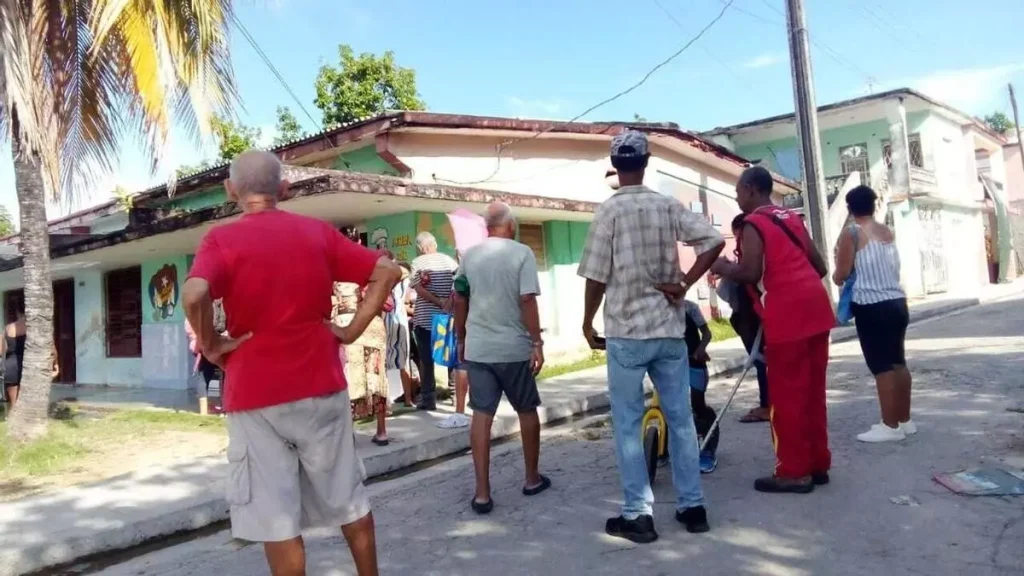
 14ymedio, Julio César Contreras, Matanzas, July 5, 2026 — Teresa breathed a sigh of relief when she turned the corner and saw a line outside the neighborhood bakery in the Versalles district of Matanzas. In today’s Cuba, a line is no longer always a reason to complain; sometimes it’s the only sign that there is still something left to buy. She clutched her shopping bag to her chest and quickened her pace. At home, her grandson was waiting for her on his school vacation, with the endless appetite that children have that knows nothing of inflation or shortages.
“Now I have the boy with me, and he’s asking for something to eat at all hours,” she says as she settles in at the back of the line. “Street vendors come through here every day, but a loaf of bread for 200 pesos is something a pensioner living on my pension simply can’t afford. If only this bakery had special offerings more often, at least we’d have some way of getting by.”
The scenes around her seem to summarize household economics in Matanzas. An elderly man stands with his hands on his hips, staring intently at the bakery door. A woman shields herself from the sun with a fuchsia umbrella. Two children sit on the grass, resigned to the boredom of waiting in line, which for adults means much more than wasting time: it represents the chance to bring something home to the table.
The news spreads by word of mouth even before the first customer comes out. They baked only ten trays of crusty baguette-style bread, the only item available, priced at 120 pesos a loaf with no purchase limit. The calculation is immediate. There are far too many people waiting for such a small production.
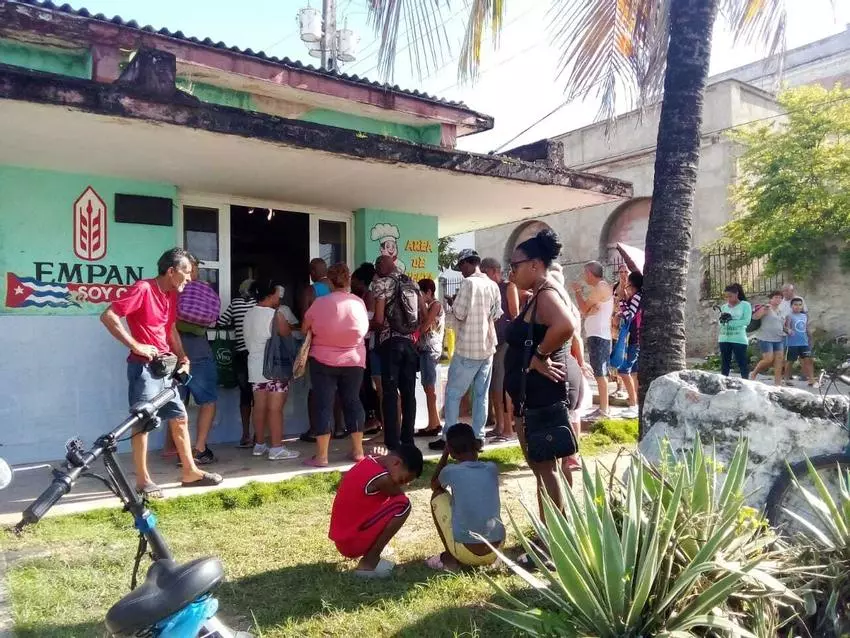
“Before they even opened, they had already sold a whole bunch of loaves to resellers, who then mark them up by another 20 or 30 pesos,” Teresa protests, unable to hide her frustration. “That makes it impossible for ordinary people to get any. The poor are never part of that business.”
The scene is repeated frequently at this bakery, which was leased to private entrepreneurs some time ago. Many neighbors imagined the change would bring display cases full of bread, different varieties, and steady production. The reality has been far less promising. Baking takes place only once or twice a week and depends above all on the arrival of flour.
Luis Antonio, who lives in a nearby microbrigade apartment building, watches the activity while leaning on his bicycle. He is the father of two children and knows exactly how much a loaf of bread weighs on the family budget.
“When there’s nothing here, I have to go to a private business and buy a bag with ten little rolls for 400 pesos,” he explains. “The problem is that they’re so small I even have to hide them. If my kids come with me, they’ll eat them in three bites before we get home.”
He says that even the bakery’s own employees have looked for other ways to earn a living.
“For them, the bakery salary is just extra income. Most of the time the ovens are off because there’s no flour. At least this electrical circuit has power because it’s connected to the maternity hospital, but having electricity doesn’t help if there’s nothing to produce.”
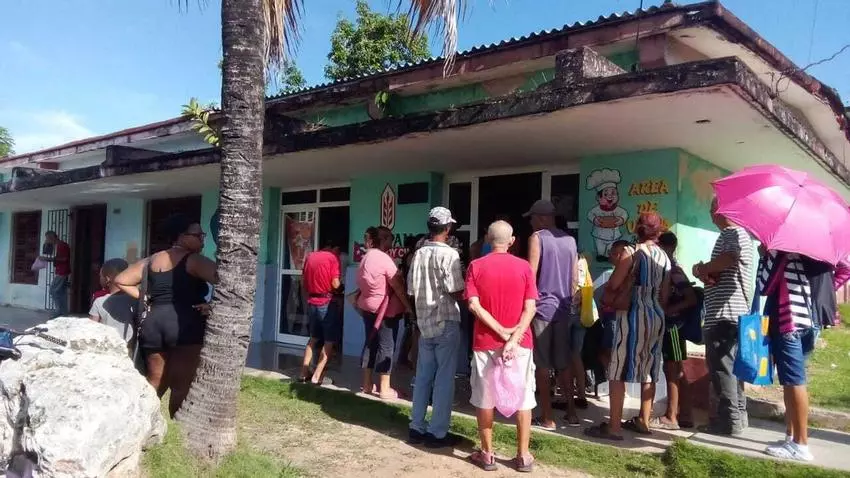
Inside the bakery, someone announces that there will be no more bread. The words land like a slammed door. Some customers stand frozen, looking toward the entrance as if hoping for a last-minute miracle. Others quietly leave the line with the resignation that comes only from getting used to returning home empty-handed.
Alfredo, a retiree carefully holding his wallet, had set out determined to spend the 250 pesos he had with him.
“The truth is I’m standing in this line for my wife,” he says. “I wanted to bring her something for lunch besides the same boiled plantains we eat every day. The bread doesn’t look very good, with the crust all cracked, but it’s what there is.” In the end, the elderly man gets nothing and avoids joining the scramble at the door as some customers try to persuade the clerks to sell more.
“I’m not going to get into that mob only to end up with nothing. Around here, you never know when there will be bread or how much they’re going to put out.”
He walks slowly down the sidewalk as the line begins to dissolve. The palm tree shading the corner remains still in the morning heat, and the neighborhood gradually returns to its routine. Only a small group remains, talking about when another batch of bread might come out. No one knows.
As he leaves, Alfredo has already made a decision that sums up the food reality facing thousands of Cuban families. “I’m going to buy a little loaf from the first street vendor who passes my house, even if it costs me 200 pesos. One day is one day. If I wait for this bakery, I may have to come back in another week and find the same line and the same ending all over again.”
Translated by Regina Anavy
______________________
COLLABORATE WITH OUR WORK: The 14ymedio team is committed to practicing serious journalism that reflects Cuba’s reality in all its depth. Thank you for joining us on this long journey. We invite you to continue supporting us by becoming a member of 14ymedio now. Together we can continue transforming journalism in Cuba.