José Antonio Saco warned more than a century and a half ago that no national sovereignty is worth anything if the citizen remains subject to despotism
 14ymedio, Rolando Gallardo, Alicante (Spain), July 4, 2026 / There is a paradox that runs through the history of Cuba like a ruptured vein: for two centuries, Cubans have fought to be free without ever fully agreeing on what that word actually means. Free as a country from foreign powers? Free as a citizen from one’s own government? The confusion between the two has cost blood, exile, and lost decades. And the most astonishing thing is that someone spelled it out with complete clarity almost two hundred years ago – and no one listened.
To understand the origin of this tangle, one must go back to the 19th century. After the collapse of Spain’s continental empire and the emancipation of the American republics, Cuba emerged as the last great transatlantic bastion of Madrid: a magnificent island, enriched by the whirlwind of the sugar industry and ever-growing trade. It was, by far, the brightest jewel remaining in the Crown.
And yet, instead of administering it with the breadth of vision that such prosperity demanded, Spain chose to govern it with a closed fist. Terrified by the specter of the Latin American independence movements, the metropole treated its wealthiest colony like a besieged military garrison. That distrust hardened into decree: in 1825, under Ferdinand VII and at the request of Captain General Francisco Dionisio Vives, the so-called “omnimodous powers” (facultades omnímodas) were instituted, granting the captains general authority equivalent to that of a wartime city governor — suppression of civil guarantees, banishment without trial, forced silence — and these powers were later ratified by Royal Ordinance in 1834. The Crown governed while looking over its shoulder, in the perpetual alarm of one who assumes treason lurks in every sugar mill and every social gathering.
Saco watched with astonishment as Cuba belonged to a nation – Spain – that boasted of being free, while subjecting its overseas citizens to despotism
The most curious thing about this period — and the most revealing — is that the boot of despotism did not discriminate by place of birth. The bureaucratic and military yoke suffocated newly arrived peninsulares, hardworking island farmers, and Cuban-born criollos alike. All were subjects deprived of political voice. This orphanhood of rights was the true engine of reformism, one of the richest and most misunderstood currents of that century. Later nationalist historiography often blurred it, mistakenly dismissing it as lukewarm or accommodating. It was, in fact, the first great civic effort to establish political modernity on the island.
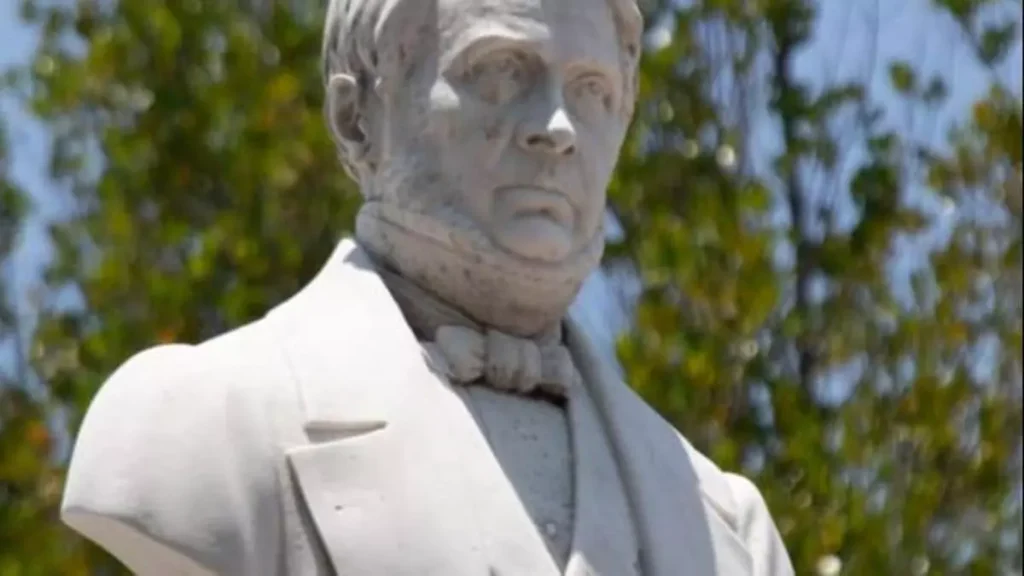
It is in this context that the figure of José Antonio Saco emerges, and it is hard to understand why Cuba has forgotten him so thoroughly. Born in Bayamo on May 7, 1797, a thinker of uncommon lucidity and a relentless polemicist, Saco is the great neglected prophet of Cuban politics. His liberal ideas cost him exile: the decision of Spanish politicians to stamp out any reformist current on the island led to his indefinite banishment, forcing him to write from Europe what he was not permitted to think on his own soil.
It was precisely from that Parisian exile that, in October 1851, he published through the E. Thunot printing house his essay The Political Situation of Cuba and Its Remedy (La situación política de Cuba y su remedio) — an argumentative political text addressed to enlightened public opinion, not a memorial to the Crown — in which he laid bare, with analytical precision, the contradictions of absolutism. His argument was not a separatist rallying cry; it was, above all, a civic demand: the claim of the ordinary individual’s right to the freedoms proper to the good exercise of his rights.
Saco watched with astonishment as Cuba belonged to a nation — Spain — that boasted of being free, while subjecting its overseas citizens to the despotism of an old military nobility and to the swings of a metropole that oscillated endlessly between recalcitrant absolutism and the convulsive outbursts of republicanism. With a sharp pen, he directly challenged Madrid’s hypocrisy:
“Is it just and political that, when Spain today prides itself on belonging to the number of free peoples, that same Spain strives to keep Cuba, its favorite daughter, among the number of slaves?”
By refusing to yield any space for civic participation out of fear and distrust, the colonial apparatus brought about its own ruin
The metropole’s excuse hid behind the island’s particular social structure: a society built on African slavery, it was argued, could not manage liberal institutions without risking a collapse similar to that of Haiti. Saco dismantled that fear with surgical precision:
“And since when has domestic slavery been an obstacle to free men enjoying political rights in the countries where it exists?”
The argument had a brutal honesty to it, and in it lies the key to reformism: it did not call for the abolition of slavery – Saco had his own contradictions on that front – but rather separated two problems that Madrid insisted on conflating in order to maintain control. The Creole bourgeoisie accumulated economic power but repeatedly ran up against the wall of its political marginalization. Saco further warned that Caribbean prosperity was not a gift from the Crown, but a local achievement won in spite of it:
“The enlightenment and wealth that Cuba has acquired, far from being the work of despotism, are conquests it has made by fighting against it. Is it not true that, had it been free, it would be incomparably more enlightened and wealthier than it is today?”
The political lesson he drew from all this was as simple as it was devastating. By refusing to yield any space for civic participation out of fear and distrust, the colonial apparatus brought about its own ruin. Madrid could send soldiers, but it could not buy legitimacy:
“A hundred thousand bayonets sent there by the government would not do as much to secure Spanish rule as the granting of political freedoms.”
No one listened. By closing off the path of reform, the empire left no other outlet but radicalization. As Saco himself declared, with a precision that still resonates today:
“…when despotism is the regime that prevails there, despotism, and despotism alone, is solely responsible for those misfortunes and for the greater ones yet to come.”
The passage of time and the crystallization of the republican project exposed a tectonic fault line in Cuban political thought: the confusion between the freedom of the country and the freedom of the citizen
That intransigence bred a point of no return. It was no longer enough to obtain civic freedoms within the Spanish framework. Economic power would inevitably and violently seek political power. The categorical necessity of “Viva Cuba Libre” then took hold.
And there begins, however, the second part of the problem – and the more enduring one.
The passage of time and the crystallization of the republican project exposed a tectonic fault line in Cuban political thought: the confusion between the freedom of the country and the freedom of the citizen. It was assumed, with almost religious faith, that the sovereignty of the State would transfer by osmosis to the individual. History proved that to be a fantasy. During the Republic, from its birth in 1902 until 1959, Cuba was a formally sovereign state: it was, on paper, a Free Cuba. And yet Cubans lost their most basic rights in successive and highly complex stages. The climax of that dissonance came in 1952, when a military coup suspended constitutional guarantees, brutally demonstrating that national sovereignty is no shield against internal dictatorship.
The dissonance reached even more dramatic proportions after 1959. The country gained – or believed it gained – an airtight sovereignty against outside powers. Individual freedoms, on the other hand, were subjected first to the whims of a caudillo, and later to the relentless orthodoxy of a party that confused loyalty with thought. The State swallowed the nation. The status of “sovereign state” became precisely the alibi for annulling the free citizen.
The line connecting the 19th century to the 21st in Cuba is, at bottom, the chronicle of a discontent that never quite resolves itself. From the annulment of the Constitution of Cádiz – the first constitution in history ever applied to the island – to the more than 176 reforms the Díaz-Canel administration is attempting to test, everything comes back to the same eternal clash: Cubans against the elites who hold de facto power. The ideological garb of those elites has changed several times: once they were Captains General shielded by omnimodous powers; then military coup leaders amid republican fragility; more recently, sectarian revolutionaries entrenched in bureaucracy and the monopoly on violence. The outcome for the ordinary citizen has been, in each case, alarmingly similar.
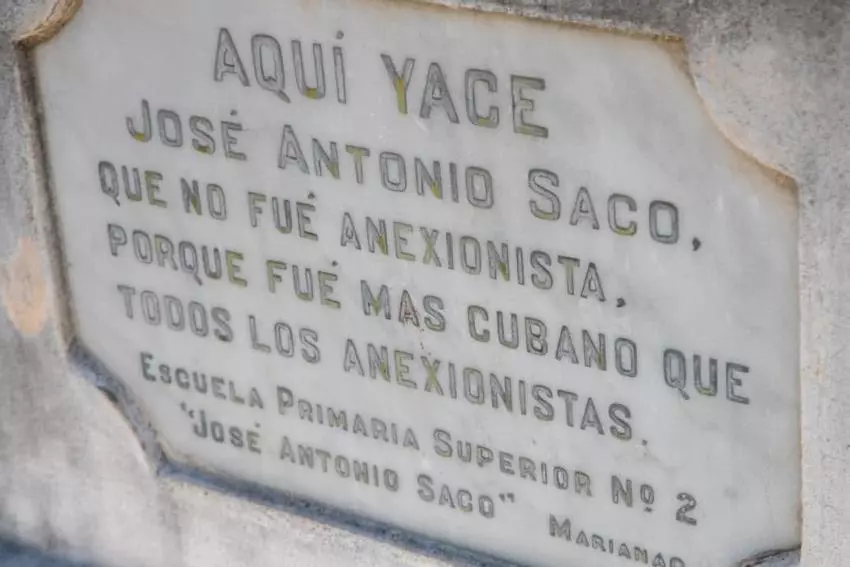
José Antonio Saco saw it all from Paris, a century and a half in advance. He died in Barcelona in 1879 without ever having lived again in the land he never stopped loving, and he asked that an epitaph be engraved on his tomb that stands as a summary of his entire life: “Here lies José Antonio Saco, who was not an annexationist because he was more Cuban than all the annexationists.” It was his way of saying that he loved Cuba too much to hand it over to anyone – not to Washington, not to Madrid, nor to any despotism disguised under a flag.
As a nation, Cubans have spent two centuries trying to find the formula that reconciles the existence of a truly free State with the construction of a legal framework in which the citizen can enjoy all the rights that are rightfully theirs. Saco’s echo still resounds across the Caribbean, uncomfortable and unanswered: despotism, no matter what flag it disguises itself under, remains solely responsible for present misfortunes. And for those yet to come, if that equation is not resolved once and for all.
Translated by GH
______________________
COLLABORATE WITH OUR WORK: The 14ymedio team is committed to practicing serious journalism that reflects Cuba’s reality in all its depth. Thank you for joining us on this long journey. We invite you to continue supporting us by becoming a member of 14ymedio now. Together we can continue transforming journalism in Cuba.