One month after returning to Cuba, the Cuban intellectual was questioned by two “immigration officers” and reaffirmed his decision to remain on the island
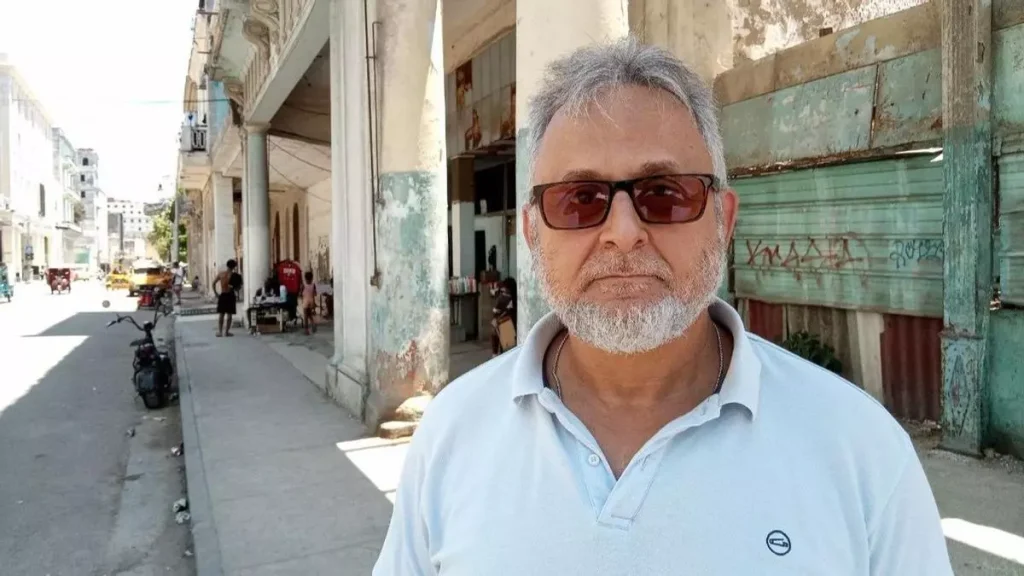
 14ymedio, Havana, July 4, 2026 / Cuban dissident Roberto Veiga González denounced this Saturday that he had been pressured by immigration officials to leave the island, after being taken to an “interview” in which, according to his account, he was pressed to buy a return ticket to Europe and leave the country “quickly.”
The political analyst, who returned to Cuba this past June after years in exile, stated that he rejected this pressure and reaffirmed his intention to remain permanently in the country.
In a post on his Facebook profile, Veiga stated that on the afternoon of July 3, after returning home following his participation by videoconference in an event organized in Paris by the Casa de América and the Association France for Democracy in Cuba, he was intercepted by two “immigration officers” and taken to an “interview.”
According to his account, during the interrogation the officials repeatedly pressed him on when he would buy his return ticket to Europe and “imperatively advised him to leave the island quickly.” Veiga rejected this pressure and reaffirmed that his intention is to remain in Cuba on a stable basis: “There will be no return ticket to Europe. I confirm that I have returned to Cuba to settle here permanently in my country,” he wrote.
“There will be no return ticket to Europe. I confirm that I have returned to Cuba to settle here permanently in my country”
Roberto Veiga returned to the island after nearly seven years in exile. His organization, the Cuba Próxima study center, reported at the time that Veiga had been detained upon his arrival at José Martí International Airport and subjected to interrogation by State Security, surveillance that, according to the organization itself, has not ceased since then.
Veiga, who was one of the central figures of the magazine Espacio Laical and later of the Cuba Possible project, returned to Cuba with the intention of promoting, from within the country, a political transition proposal titled La apertura acordada: una hoja de ruta para la reconstrucción nacional (The Agreed Opening: A Roadmap for National Reconstruction).
The plan, presented in April by Cuba Próxima, proposes a negotiated transition based on a “multi-actor sovereign dialogue,” with deep institutional reforms, the release of political prisoners, changes to the electoral system, and the restructuring of the Gaesa military conglomerate. It also includes proposals directed at the US, such as the lifting of economic restrictions and the removal of Cuba from the list of state sponsors of terrorism.
The organization maintains that Veiga’s return is part of a commitment to “political action from within” at a time of national crisis. In recent statements to 14ymedio, Veiga himself defended his decision to return despite the risks: “No matter how much one works from outside, one remains a spectator. You have to work in here, because that is where things are going to happen.”
Translated by GH
______________________
COLLABORATE WITH OUR WORK: The 14ymedio team is committed to practicing serious journalism that reflects Cuba’s reality in all its depth. Thank you for joining us on this long journey. We invite you to continue supporting us by becoming a member of 14ymedio now. Together we can continue transforming journalism in Cuba.