- The National Assembly will evaluate the new measures this Thursday.
- Although the press, especially the international media, has largely accepted that narrative, most of the announcements made on Friday were laws and decrees that had already been published in the Official Gazette.
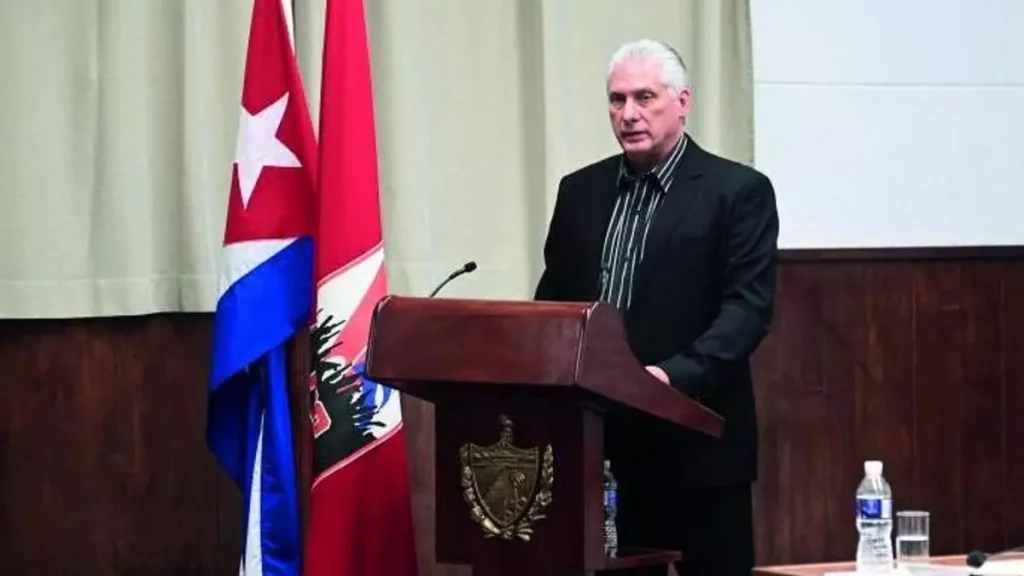
 14ymedio/EFE, Havana, June 16, 2026 — The Communist Party of Cuba (PCC) on Monday called an extraordinary plenary session of its Central Committee, to be held this Wednesday, to “evaluate” the package of economic reforms announced last Friday by President Miguel Díaz-Canel.
The announcement, published on social media and in official media outlets, states that the initiative came from the Political Bureau, the PCC’s highest governing body and, in practice, the country’s top decision-making authority.
In practice, the plenary session is expected merely to confirm measures that were, for the most part, already anticipated, if not already approved.
In practice, the plenary session is expected merely to confirm measures that were, for the most part, already anticipated, if not already approved
On June 12, Díaz-Canel unexpectedly appeared on State media to unveil a group of reforms that include changes aimed at decentralizing authority and granting greater “autonomy” to State-owned enterprises and municipalities.
Although the media, especially the international outlets, have portrayed the announcement as a significant shift, most of Friday’s measures were laws and decrees already published in the Official Gazette. These include the opening of exports without State intermediaries, approved in April; various forms of business partnerships, announced in March; and draft laws on agricultural land and housing, presented earlier this month.
Díaz-Canel also introduced some new proposals for which details remain unavailable, including changes to the real estate business and the tourism sector. According to the president, the reforms will allow different forms of management and seek out “new modalities” and “new actors.”
He also spoke of the possibility of reducing the list of activities prohibited to the private sector. However, he stopped short of saying that prohibited activities would disappear entirely, stating instead that the scope of permitted business activities would be “as broad as possible” and that opportunities for equity participation would be expanded.
Díaz-Canel further appealed to Cuban emigrants to invest in the country, despite the fact that the government has spent years promoting such investments, including through conferences aimed at entrepreneurs interested in cooperating with the regime.
Díaz-Canel further appealed to Cuban emigrants to invest in the country, despite the fact that the government has spent years promoting such investments, including through conferences aimed at entrepreneurs interested in cooperating with the regime.
At the time, Díaz-Canel said the reform package would be ratified in the coming weeks by the PCC’s Political Bureau.
As is customary in Cuba, once the measures receive approval from the Central Committee of the Communist Party, a key political body in the country, they will then be submitted to the National Assembly of People’s Power (ANPP), where proposals are typically approved unanimously.
Abroad, the reforms have been interpreted as an unprecedented opening prompted by pressure from the United States. However, most Cuban analysts and media observers note that nearly all of the measures are decisions that were already underway, already in force, or anticipated in previous meetings of the country’s leadership.
Translated by Regina Anavy
______________________
COLLABORATE WITH OUR WORK: The 14ymedio team is committed to practicing serious journalism that reflects Cuba’s reality in all its depth. Thank you for joining us on this long journey. We invite you to continue supporting us by becoming a member of 14ymedio now. Together we can continue transforming journalism in Cuba.