Cuba’s Family Assistance System survives with great difficulty thanks to the non-state sector.
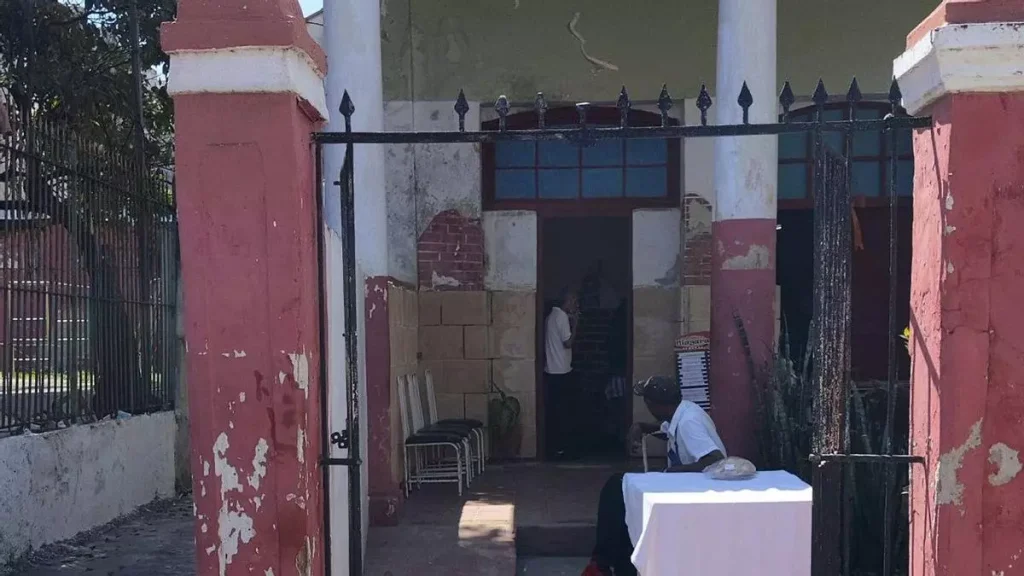
 14ymedio, Madrid, June 16, 2026 – Diners in the Family Assistance System (SAF) have been left without dessert. Authorities acknowledge this in a lengthy report published Tuesday by Cubadebate, devoted to addressing the problems facing this program, which functions as almost the last safety net for the most vulnerable. Today, with the State’s virtually nonexistent resources, it survives—or rather, barely survives—almost entirely thanks to support from private businesses and cooperatives.
The situation is so extreme that last February the Government authorized an almost entirely private alternative: community care homes. Ideally designed for smaller, rural populations, these centers are managed by self-employed workers licensed to provide food services. They serve groups of up to 10 vulnerable people and receive a small initial boost from the State: the equivalent of a two-month supply package, funding for equipment, advisory services, among other support, in exchange for providing the required services and charging no more than 50 pesos per meal.
This Sunday, the provincial newspaper of Villa Clara reported that there are already 29 such homes in Guantánamo, Holguín, and Santiago de Cuba. The eastern region will have the largest number (105) of the 325 expected to open across the Island. What is striking is that this option, originally intended for more remote populations that the SAF had difficulty reaching, has had to be implemented in the Cuban capital itself, as the Cubadebate report acknowledges. “On the outskirts of Havana—Cotorro, Arroyo, Habana del Este, La Lisa—they have gone even further. Faced with the absence of state or private entities capable of providing food services, they are creating the so-called community care homes,” the report states.
What is striking is that this option, originally intended for more remote populations that the SAF had difficulty reaching, has had to be implemented in the Cuban capital itself, as the report acknowledges
In addition, SAF dining halls increasingly rely on support from private businesses. Liliam de la Rosa Domínguez, administrator of one such center, El Río in the Plaza de la Revolución, explains that the facility served about 84 diners last month. “In my case, I have State partners, such as the restaurant that helps us improve the food we provide,” she says, but private small and medium-sized enterprises also contribute main dishes, ice cream, spices, and even bread twice a week. “That bread isn’t charged for; it’s free. Right now we’re affected by the flour shortage, yet they still are able to eat bread,” she says.
According to the official, the Ministry of Domestic Trade requires five portions: boiled root vegetables, salad, rice, beans, and a protein dish (ground meat, hamburger, croquette, fish, chicken, or pork). Dessert, she notes, “has gone by the wayside,” although it still appears on the list as a dish that should exist “in theory.” The data show that about 76,000 people are registered in the SAF’s 1,445 units. The program was created as a state initiative in 1998 and now requires a contribution of 1% of municipal budgets for repairs because some facilities are in deplorable condition, admits José Antonio González, a Commerce Department official in Havana.
In the capital there are about 16,092 beneficiaries, he says. Although the figure fluctuates and the trend is upward due to demographic factors, authorities also acknowledge that some people have stopped attending because of transportation difficulties.
In contrast to the relatively successful operation of El Río SAF, the Villanueva center in Boyeros reports countless problems. Several users express gratitude for its existence, as well as for the companionship and efforts of its workers, but when asked about the food, the complaints begin. “To improve, we need supplies. Better-quality food,” says one woman. “There have been gas shortages here, but we’ve never gone without eating. I wish the food would improve, that the portions were larger, because pensions aren’t enough.” “There is no breakfast, no afternoon snack, only lunch and dinner. And that’s not enough for the whole day.”
Workers point out that food is not the only problem and call for more doctors and social workers, but, they say, “salaries are very low and conditions are bad.” Inflation is also hitting the system hard. “Now a pound of sugar costs 400 pesos, if you can even find it. A retiree can’t even drink a glass of sugar water. The country’s economic situation is very bad,” they explain. Another user, Elsa, says she receives a pension of 4,000 pesos, but basic utility bills alone consume 3,500 pesos.
“Just as institutions sponsor schools, they should sponsor dining halls for the elderly. They should find sponsors, even if only for donations”
The outlet asks the retiree how SAF services could be improved. “Just as institutions sponsor schools, they should sponsor dining halls for the elderly. They should find sponsors, even if only for donations,” she argues. The administrator, who now spends his time gathering firewood to cook because there is no gas, believes local private businesses contribute less than those in other areas. “Private individuals can do more. I know things are bad for everyone, but they could help a little more. In other neighborhoods they do, but not here.”
Enrique Martínez, administrator of El Rampeño in El Vedado, argues that the true backbone of the SAF is cooperation between the state and non-state sectors. “Today the State gives us a certain amount of food and a little bit of protein, which is all we have,” he admits. The State provides about ten or twelve kilograms of processed luncheon meat and some ground fish, pitiful amounts for 95 users. “It doesn’t last the month,” he says, admitting that without private support, “many elderly people would be left with half a plate of food.”
After visiting several dining facilities, Cubadebate concludes that it is necessary to go beyond the current concept and sets out a series of demands whose fulfillment remains uncertain given the current situation. “Perhaps it is time to think beyond this. To turn SAF centers into comprehensive service centers, not just dining halls. To ensure that a doctor has fixed office hours. That delivery services no longer depend on the goodwill of a neighbor who died and was never replaced. That missing teeth, dentures, and walking canes cease to be luxuries. And that the non-state sector receives real incentives to sponsor these programs, rather than inspectors who drive them away.”
Translated by Regina Anavy
______________________
COLLABORATE WITH OUR WORK: The 14ymedio team is committed to practicing serious journalism that reflects Cuba’s reality in all its depth. Thank you for joining us on this long journey. We invite you to continue supporting us by becoming a member of 14ymedio now. Together we can continue transforming journalism in Cuba.