The Catholic intellectual advocated dialogue with the regime, in contrast to the roadmap of the Pasos de Cambio coalition, which ratified the Liberation Agreement this Sunday in Madrid
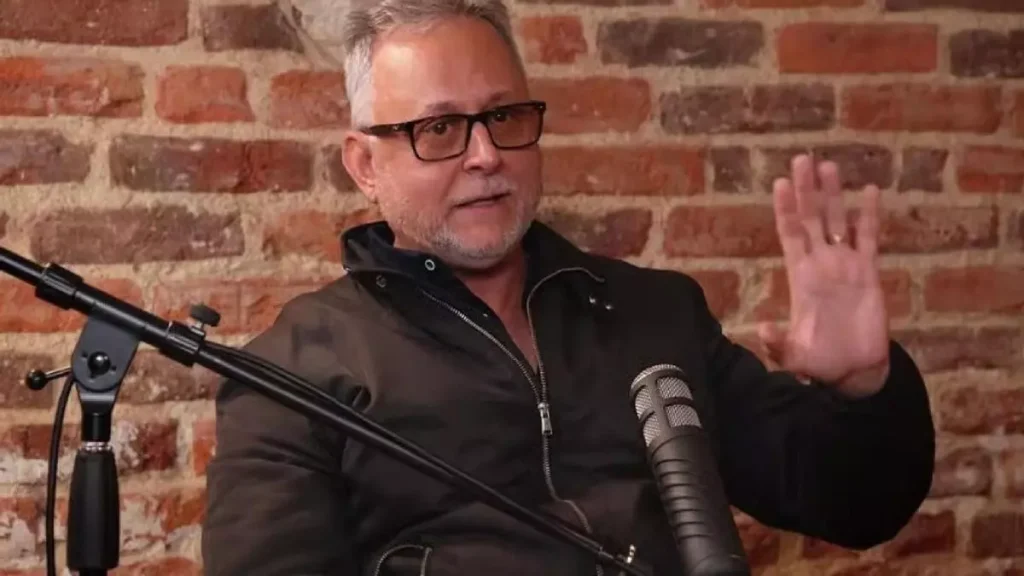
 14ymedio, Madrid, 1 June 2026 / Roberto Veiga González, director of the Centre for Studies on the Rule of Law Cuba Próxima, has returned to the Island in recent weeks to take up permanent residence there after nearly seven years in exile. The decision was announced by the organisation he founded in 2021 through a statement informing that State Security had already detained him upon his arrival – on a date they have not disclosed – and subjected him to several interrogations.
Veiga took this decision in order to “represent, from within the reality of a people afflicted by power cuts, scarcity, and social fracture, the political proposal entitled The Agreed Opening: A Roadmap for National Reconstruction.” This is a transition pathway proposed by Cuba Próxima last April that would “replace sterile confrontation with political realism.”
The platform – which also includes Michel Fernández, Ileana de La Guardia, and Pavel Vidal, among others – argues that inaction is not an option in the face of “a systemic crisis that has overwhelmed the current model,” and that “profound change is an ethical and national security imperative” under present circumstances. Accordingly, Veiga González returns to promote, alongside others, “a process of reciprocal and verifiable steps” that would break the current dynamic.
“The director of Cuba Próxima calmly accepts the hardships and pressures that political activism from within Cuba entails, which have already begun.”
“The director of Cuba Próxima calmly accepts the hardships and pressures that political activism from within Cuba entails, which have already begun,” the communiqué states, without going into much detail about the measures taken by State Security. “The rigour of commitment demands that personal sacrifice not be an instrument for victimhood or the pursuit of admiration, but a bridge of encounter so that other Cubans may move towards a shared solution,” the text underlines.
Cuba Próxima established eight strategic pillars in its proposal: full guarantee of all rights; a democratic and social rule-of-law state, with separation of powers and local autonomy; equal opportunities and social inclusion without discrimination; efficient public bodies at the service of the citizen; a free economy with social responsibility; centrality of the labour question and dignified wages; health, education, and social security as universal services; and sovereignty and strategic neutrality, grounded in peace and mutual respect.
The organisation believes that Veiga’s return demonstrates its commitment to this agenda and that “the freedom of the Cuban people is its non-negotiable destiny.” With this gesture, the Centre places itself, the statement asserts, “at the core of national necessity, convinced that Cuba can afford no further delays.”
The agreed opening proposal formalised by the organisation on 13 April last sets out a roadmap divided into three phases for national reconstruction through what it calls an internal “Multi-Actor Sovereign Dialogue” and the normalisation of relations with the United States. The document, drawn up by the board of directors, identifies as immediate priorities the release of political prisoners under an Amnesty Law, the restructuring of the military conglomerate Gaesa, and reform of the Electoral Law, all under the umbrella of international technical mediation.
The document also contains a list of demands addressed to the United States, including an end to the energy blockade imposed by Donald Trump since 29 January last.
The document also contains a list of demands addressed to the United States, including an end to the energy blockade imposed by Donald Trump since 29 January last, the removal of Cuba from the list of State Sponsors of Terrorism, the lifting of the travel ban, and support for certain economic sectors, including emergency financing for an emergency food programme, a healthcare programme, and an energy programme.
The proposal has not been without controversy within the Cuban opposition, as those sectors that favour US intervention argue that the Cuban Government has shown no willingness to engage in dialogue over decades. Veiga and his team, on the other hand, believe that confrontation has likewise led nowhere.
The news comes precisely one day after the Pasos de Cambio coalition ratified in Madrid the Liberation Agreement presented in March in Miami – a document establishing a unified roadmap to guide a democratic transition in Cuba after 67 years of communism. Led by opposition figures such as Rosa María Payá and backed by organisations both on the Island and in exile, the plan opts for a pathway in which the regime plays no part.
The project envisages the creation of a provisional government to address the humanitarian emergency, release political prisoners, and restore citizens’ fundamental rights and freedoms.
These opposing positions are precisely what led to the split between the lawyer and intellectual and his partner of more than 15 years, Lenier González. Both served as directors of the magazine Espacio Laical and the think tank Cuba Posible, which over time came to be regarded by the Cuban authorities as a threat, as it promoted conciliatory positions that were gaining traction – as both recounted in various interviews – among the more moderate members of the Communist Party.
The regime launched a campaign of harassment against the pair, who ultimately went into exile. Veiga settled in Spain, where he founded Cuba Próxima, while González moved to the United States and turned to academia, stepping back from politics. However, the latter has publicly criticised the former, attributing to him connections with senior government officials that have caused him serious reputational damage, as Veiga himself has recently lamented.
Translated by GH.
______________________
COLLABORATE WITH OUR WORK: The 14ymedio team is committed to practicing serious journalism that reflects Cuba’s reality in all its depth. Thank you for joining us on this long journey. We invite you to continue supporting us by becoming a member of 14ymedio now. Together we can continue transforming journalism in Cuba.