“If that store is in dollars, I can’t enter,” complains an elderly Party activist.
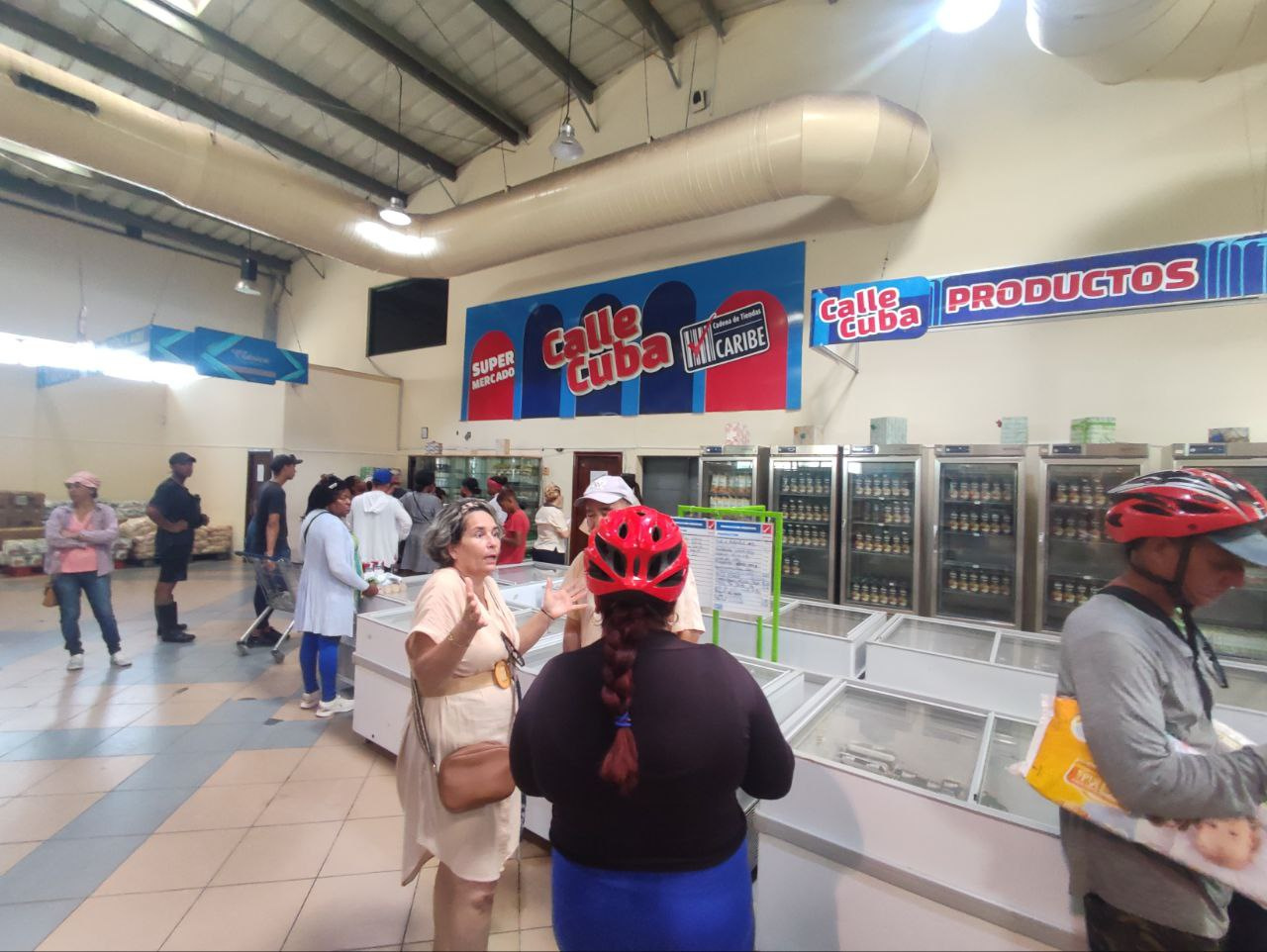
 14ymedio, Mercedes García, Camagüey, 26 August 2025 — Cubans who handle dollars are distinguished by certain outfits and attitudes. Many wear branded clothing, gold chains and use perfumes that remain in the air after they have already left. Shops in US currency also have an obvious stamp. Well lit, with shelves full of products and even shopping carts, the Calle Cuba market in the city of Camagüey fits perfectly into the new image that the green bills give the State shops.
On the outskirts of the premises, a custodian clarifies to the clueless customers that “this is no longer in MLC,” the freely convertible currency that is in free fall and worth only 195 pesos against the 405 dollars exchanged on the informal market. But the employee’s warning is not necessary. It is enough to look inside and see the shelves loaded with packaged sweets, grains, sauces and legumes to realize that in the Calle Cuba, the “fula” (US dollar) has a clear path with no brakes. Even the customers who lined up this Monday in the area of the butcher shop are “people with access to currency,” a curious man who only entered “to look into the future,” says sarcastically.

Managed by the chain Tiendas Caribe, the central market is located right on the street that bears the name of the country. A coincidence that has not been overlooked by the most critical members of the Communist Party with the dollarization that advances on the island and that had its beginning in the inauguration, last January, of the 3rd and 70th Supermarket in Havana. “If that store is in dollars, I can’t enter,” says a dismayed elderly Party militant, paraphrasing a verse by Martí and wary of official explanations to boost trade with US currency.
“I don’t have dollars and I don’t want them,” she says. Her look also fits the stereotype of Cubans who only use the national currency: clothes bought in the rationed market of industrial products more than 30 years ago and a sneer of frustration. She has a cloth bag on her shoulder and is waiting to find something to buy with the Cuban pesos she receives as her pension.
Translated by Regina Anavy
____________
COLLABORATE WITH OUR WORK: The 14ymedio team is committed to practicing serious journalism that reflects Cuba’s reality in all its depth. Thank you for joining us on this long journey. We invite you to continue supporting us by becoming a member of 14ymedio now. Together we can continue transforming journalism in Cuba.