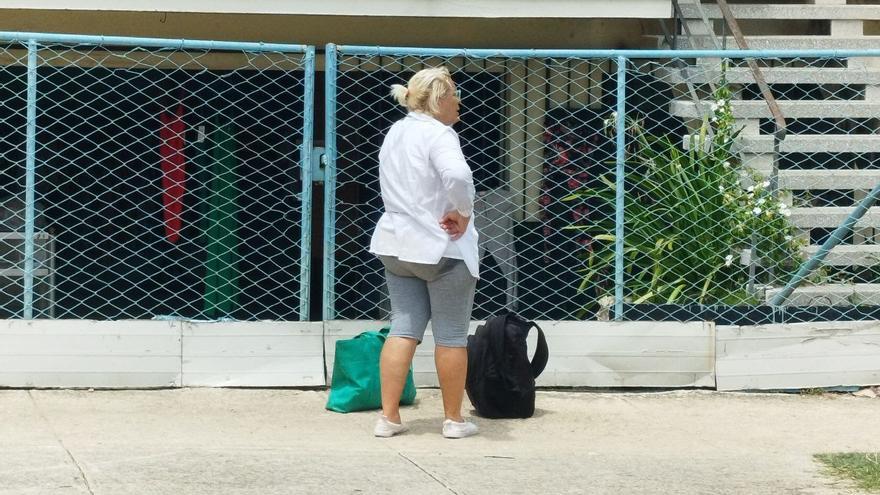
Cuban doctors stationed in Mexico, as part of the Henry Reeve Brigade. (Minrex)
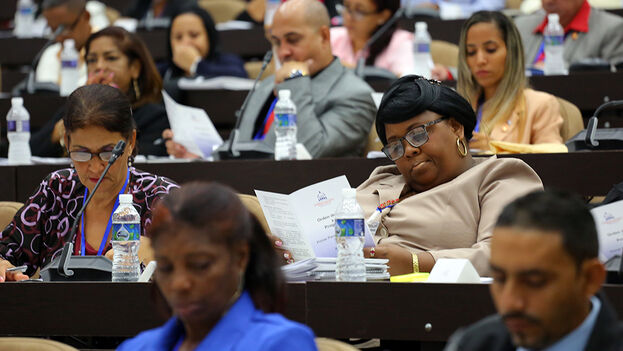
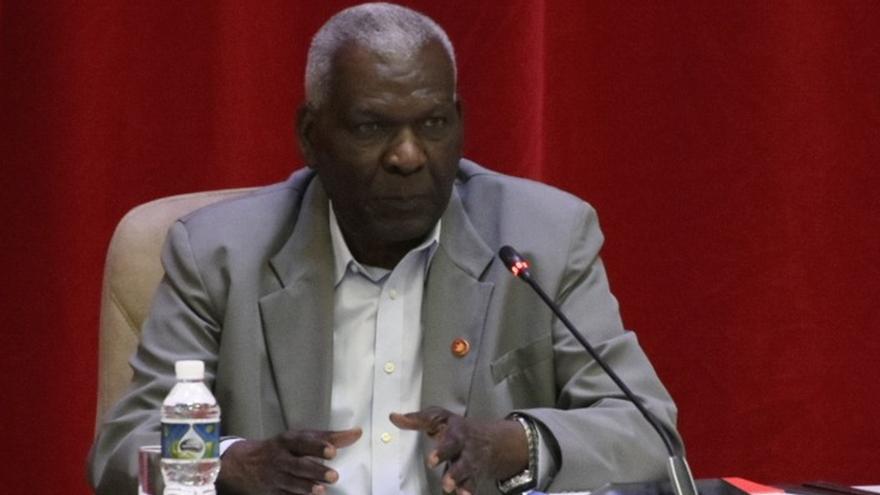
EFE (via 14ymedio), Havana, July 23, 2023 — On Saturday, Cuba President Miguel Díaz-Canel defended before the (unicameral) Parliament the missions of Cuban doctors abroad, despite the “dirty campaign” of the United States.
“Cuba’s international cooperation continues to develop as a legitimate and altruistic activity that we maintain despite the dirty campaign of the United States,” said the president when closing the parliamentary session.
In his speech, he did not offer more details about the criticism of the work of Cuban health personnel, but insisted that the critics’ purpose is to “deprive thousands of people in the world of quality medical services” offered by the islanders.
Previously, the Cuban Minister of Foreign Affairs, Bruno Rodríguez, spoke out against a call from the US government that “allocates millions in funds to promote a campaign against medical collaboration.”
“Without arguments, (the United States) once again resorts to slander to discredit the noble humanitarian and solidarity work of Cuba in support of the health of other peoples,” the foreign minister said on Twitter. continue reading
Rodríguez added on that social network that the neighboring country thus tries to “continue depriving Cuba of sources of economic income and encourages the theft of medical personnel trained by our country, with clearly subversive purposes.”
He considers the medical collaboration programs that the Island maintains in several countries “totally legitimate,” while he stressed that Washington “commits a crime by trying to deny or hinder it for political reasons.”
Official data put the number of Cubans in the health sector currently working in 56 nations at 23,792.
The US Department of State considers that Cuban medical missions abroad are “an indisputable case of forced labor.”
That is why on June 15 it announced that it was keeping Cuba on its “blacklist” of countries that do not meet the minimum standards in the fight against human trafficking.
____________
COLLABORATE WITH OUR WORK: The 14ymedio team is committed to practicing serious journalism that reflects Cuba’s reality in all its depth. Thank you for joining us on this long journey. We invite you to continue supporting us by becoming a member of 14ymedio now. Together we can continue transforming journalism in Cuba.
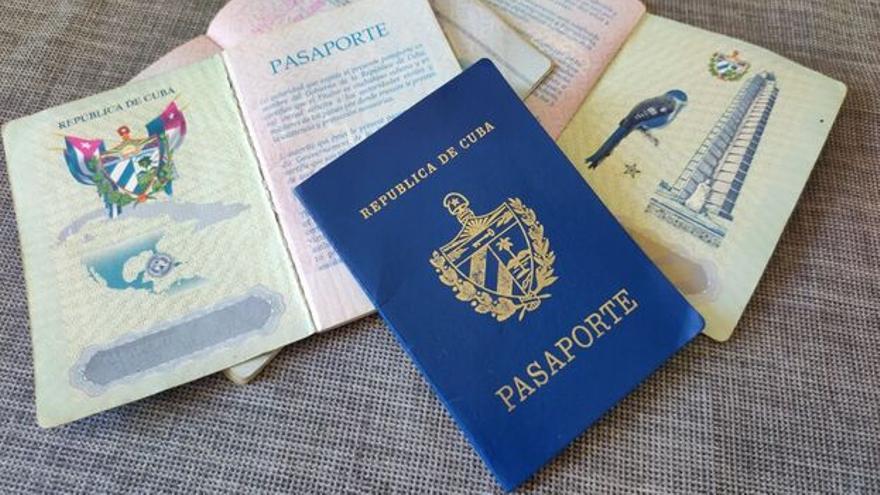
Cubans commonly buy ticked to places where they don’t need a visa and then ask for asylum in a different country on a stopover. (14ymedio)
EFE (via 14ymedio), Berlin, 23 July 2023 — The number of Cubans seeking asylum in Germany multiplied by eight during the first half of the year compared to the same period of 2022. “The number of asylum applications from Cuban nationals this year, as of July 2, 2023, has increased compared to the same period last year, from 73 to 607,” a spokesman for the Ministry of the Interior confirmed to the newspaper Bild.
According to the media, Cubans use a mechanism that consists of buying a plane ticket to a destination for which they do not need a visa, for example Belgrade or Dubai, with a stopover in the German city of Frankfurt.
There, where transiting passengers do not need a visa, they appear at the Federal Police and apply for asylum.
According to the spokesman, in 2022, 302 Cubans were identified who mainly used this transiting privilege to apply for asylum. continue reading
He added that “not even half” of these Cubans follow the law; that is, they do not later show up at the corresponding center of the immigration office “after expressing their desire for asylum with the Federal Police” at the airport and registering their data.
The newspaper points out that about 300 Cubans have disappeared in this way.
“It is unacceptable that the Schengen border code can be undermined by a simple trick, with a stopover flight. The right of asylum and Schengen rights must be urgently reviewed,” demanded the head of the German police union, Heiko Teggatz, in statements to Bild.
The newspaper points out that about 95% of asylum applications submitted by Cuban citizens are rejected. In 2021, 38 asylum requests from Cubans were registered; last year, 187.
Bild also recounts the case of the González family — father, mother, and two children — and two other Cubans who had left Havana on May 27 on the Condor airline bound for Dubai via Frankfurt, where they were intercepted in the transiting area by the Police.
In statements to the Police, the woman confessed that they wanted to emigrate illegally to Spain, for which they had to seek asylum first in Germany. Then they would be picked up at the reception center by smugglers who would take them to Madrid by car, and who had charged them 25,000 euros (27,750 dollars) for the service.
Translated by Regina Anavy
____________
COLLABORATE WITH OUR WORK: The 14ymedio team is committed to practicing serious journalism that reflects Cuba’s reality in all its depth. Thank you for joining us on this long journey. We invite you to continue supporting us by becoming a member of 14ymedio now. Together we can continue transforming journalism in Cuba.
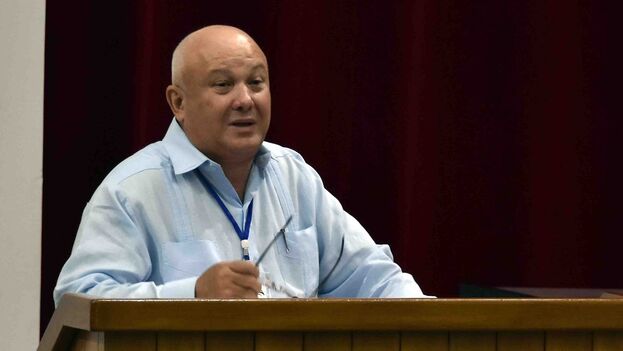
Cuban Vice Prime Minister Jorge Luis Tapia. (@AsambleaCuba/Twitter)
14ymedio, Yoani Sánchez, Havana, 22 July 2023 — A few days after standing in a very long line, I had to walk through the streets of the San Leopoldo neighborhood in Havana, avoiding the bodies of dead chicks, thrown from the balconies, with their necks outstretched and their feathers still a tender yellow color. I had spent a whole morning in line to buy those tiny beings who, according to the official discourse, were going to save us from famine.
Only one of those chicks survived two weeks in our house. He died malnourished and sick, due to our inexperience as poultry farmers and the lack of food to give him. We couldn’t take a bite of that starving, gray creature, perhaps because it had ended up looking too much like us. Three decades later, the nightmare repeats itself, but this time with the breeding of fish.
Cuba’s unpopular Vice Prime Minister Jorge Luis Tapia has summoned us, speaking before the National Assembly of People’s Power, to create ponds in our backyards and dedicate ourselves to aquaculture. I am not going to dwell on the authoritarian and despotic tone with which he has launched his demand, because it is the typical way in which the bureaucrats of the Cuban Communist Party (PCC) speak to us, as if they were addressing soldiers and not citizens, as if the country were an immense barracks and we were Compulsory Military Service recruits.
Tapia, who has left the worst of reputations – for being inefficient, corrupt and oppressive – wherever they have placed him as leader of the PCC, has not the slightest idea of what he is ordering us to do. According to his explanation, in a few square meters we could create the pond that will take us out of the crisis and make our kitchens overflow with fish and our plates with fins. In a country with a serious problem of housing overcrowding, thinking that families can have space for something like this exceeds naivety to become evil. continue reading
To this we must add the issue of water. In a nation where thousands of homes only receive their water through tanker trucks and the pipes of so many homes have not seen a single drop for months, it would be worth asking Tapia how we are going to fill the pond. If they have made life difficult for those who built a little pool in their patio to cool off in summer, then what will they do to someone who dares to create a lagoon with tilapia and clarias.
But the main difficulty lies in the food. Tapia, from his bureaucratic ignorance, must think that fish live off the air. If families do not have enough to give their children a snack, what food will they have to satisfy the hunger of the small fry that will not grow without nourishment, will not mature, and will not be ready to – in turn – be devoured by us. All his words are complete and utter nonsense or, worse still, a villainy launched by a man who obviously does not have to dedicate himself to fishing on his terrace to be able to eat snapper whenever he wants.
I have no doubt that there are already neighbors in my building who are calculating the quantity of tench that could fit in the huge water tank that supplies our 144 apartments. Perhaps some seasoned cederista* will take the initiative to turn the deposit into a spawning, rearing, and fattening industry. Voluntarism can lead to these extremes, but decades of failure have already proven that animal food does not spring from will.
Like those chicks from my adolescence, in the Special Period, it will begin to rain scrawny fish from the balconies and rooftops. They will fall to the street, without anyone daring to pick them up, too similar to ourselves to touch them.
*Translator’s note: The term ‘cederista‘ derives from the initials C-D-R for Committees for the Defense of the Revolution, and is used to designate a member of that organization.____________
______________________
COLLABORATE WITH OUR WORK: The 14ymedio team is committed to practicing serious journalism that reflects Cuba’s reality in all its depth. Thank you for joining us on this long journey. We invite you to continue supporting us by becoming a member of 14ymedio now. Together we can continue transforming journalism in Cuba.
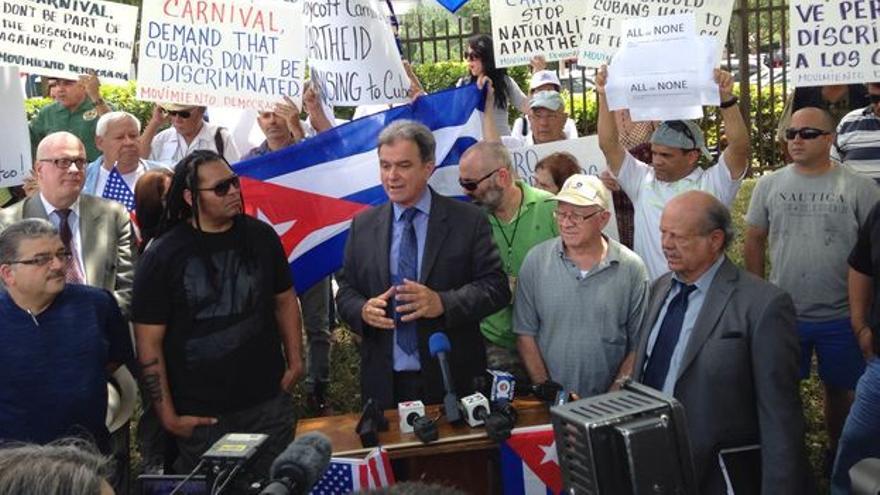
Ramón Saúl Sánchez (center), leader of the Democracy Movement, during a protest in Miami. (14ymedio)
14ymedio, Pedro Corzo, Miami, July 22, 2023 — The topic that I will address below is an issue that has not been dealt with much, if at all, by the so-called Cubanologists in exile, a very complex curia that brings together academics and experts in the Cuban plot, as well as explorers and posh opportunists, not to mention other specimens, part of the congregation, who provide services to the enemies of Cuba’s freedom.
In the United States, there is a significant number of Cuban citizens who are threatened with deportation, for having violated some legislation in force in their fight against the totalitarian Castro regime, the real threat to this nation and to those who defend freedom and citizen rights.
These people did not commit crimes for personal gain, but rather to destroy the staunchest enemy of democracy and freedom in the hemisphere. They are fighting the main promoter of a political model that violates all the rights of the citizens of the country that ensnares, as is the case in Nicaragua, Venezuela and Bolivia and is a real threat to many of our republics, such as Honduras, Argentina, Brazil or Mexico, without the rest of the countries ceasing to be among their objectives.
The deportation of any citizen to Cuba entails serious dangers for their well-being and life, but when that extradition is of a staunch enemy of the regime, as is the case of Ramón Saúl Sánchez and other compatriots residing in this country, we can be sure that they will be subjected to the most criminal and abusive practices that the henchmen of Castroism are capable of carrying out, without excluding death from their extensive recipes of terror. continue reading
Ramón left the Cuba he loves so much, although he barely knew it, when he was only 12 years old. His life has always been marked by exile with all that this implies of uprooting and family separation, and taking precedence over all conditions is his commitment to fight for freedom and democracy for his country.
That obligation led him to be during his youth to become one of the most notable and committed activists in the confrontation with totalitarianism, getting involved in the only form of struggle that the dictatorship made possible, overthrowing the dictator by violent methods.
Sánchez told a journalist from the EFE agency the causes of the setbacks he suffered in such a precise way that no one should have any doubts about his integrity and commitment to the rights of all. His truth is reiterated in Cuba despite the decades that have elapsed: “My homeland lives the terrible solitude of oppression, the tearing of families and the violation of its sovereignty.”
Sánchez, for acting in accordance with his convictions, went to prison for four and a half years. He refused to testify before a federal grand jury investigating an alleged 1980 attack on despot Fidel Castro in New York. Ramón’s civic conscience led him to be a conscientious objector to the denunciation that was demanded of him. He simply acted like so many other citizens who are opposed to participating in a war for reasons of conscience.
Ramón spent more time in prison than many criminals, but it did not affect his spirit, on the contrary, he came out of prison strengthened in his ideals and with a new vision of the fight for democracy that many did not understand at first. His perseverance and sacrifice have been well received by those who do not make concessions to the insular tyranny.
Sánchez has become a remarkable civic leader, with a hemispheric vision of freedom that sets him apart. He is in solidarity with all the oppressed regardless of the border where he was born, he fervently believes in non-violence and, to make public the demand for his rights and those of others, he has carried out several hunger strikes and returned to prison.
This conscientious objector risks being deported. His activism for many years is shown in civil disobedience and in public demands in favor of those who seek protection in this country and in organizing flotillas of boats to protest in the vicinity of Cuba, because his enemy is Castro’s totalitarianism, not the United States of America.
________________
COLLABORATE WITH OUR WORK: The 14ymedio team is committed to practicing serious journalism that reflects Cuba’s reality in all its depth. Thank you for joining us on this long journey. We invite you to continue supporting us by becoming a member of 14ymedio now. Together we can continue transforming journalism in Cuba.
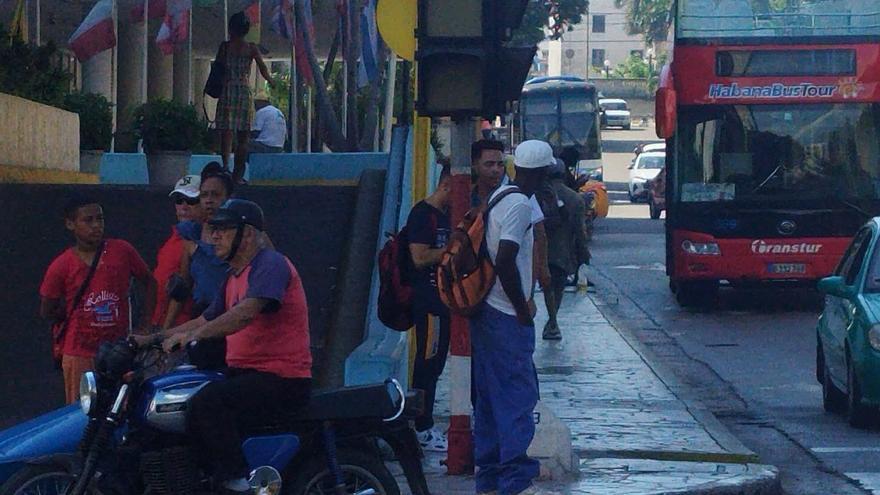
People cross on instinct: they wait for a brave soul to take the plunge and then everyone follows. (14ymedio)
14ymedio, Juan Diego Rodríguez, Havana, 19 July 2023 – The flow of traffic in a busy area like El Vedado in Havana is fast and constant. Anyone who tried to cross the street on Calle 23 this week, where the pedestrian traffic lights were all off, knew this only too well. The angry drivers’ car horns blare at those who, on the edge of the pavement, try to guess the right moment to cross.
Eight sets of pedestrian traffic signals out of action on Calles 23 and L has unleashed a traffic chaos. On Wednesday, an elderly lady in the crowd waiting to cross asked whether the lack of red/green signals was down to a power cut. “No, there is electricity señora. You can see how the traffic lights for the cars are working ok. But the pedestrian ones are all broken”, someone answered.
For months the people of Havana have witnessed the warning lights breaking down. First one goes, then another, then a few weeks later a stone hits the glass of a third one. And no one repairs the damage.
Finally, this Wednesday, every single one of the lights that are supposed to regulate the pedestrian flow on 23rd and L went off. Now people cross by instinct. It’s common for people to wait until some brave soul takes the plunge and then everyone follows. At other times the cars slow a little and the pedestrians decide it’s the moment to lunge forward.
As yet, there has been no police officer assigned to regulate the traffic while they fix the lights. The younger people are in a hurry, they just run and lose their fear of the traffic after a few attempts to cross. But the older people and children are always left behind, waiting.
Translated by Ricardo Recluso
____________
COLLABORATE WITH OUR WORK: The 14ymedio team is committed to practicing serious journalism that reflects Cuba’s reality in all its depth. Thank you for joining us on this long journey. We invite you to continue supporting us by becoming a member of 14ymedio now. Together we can continue transforming journalism in Cuba.
This Wednesday, in the middle of Vedado, a women waits to exchange handmade cheese for bars of soap. (14ymedio)
14ymedio, Juan Diego Rodríguez, Havana, July 21, 2023 — The neighbors of the Luyanó neighborhood, in the Havana municipality of Diez de Octubre, are more than tired. This July, the only products of the ’combo’ they have been able to buy are oil and detergent. And not even in the same store.
Cubans do not overlook the fact that the Government manages the calendar at will, to celebrate a propagandistically relevant day or to avoid “grievances.” Thus, Rosa’s daughter, Karla, points out how on July 11, the second anniversary of the historic protests in Cuba, and after weeks of transportation shortages, the buses multiplied on the streets of Havana, to the point that many of them were empty. “Now ten days have passed and there are no taxis. To get one is like the Way of the Cross,” complains the young woman. continue reading
The Government cannot hide the difficulties of supplying the population with the ’basic basket’. The president of the National Assembly of People’s Power, Esteban Lazo, referred to this last Tuesday, saying that the country “does not have the resources to continue the level of imports we have” and recognized that “practically 100% of the family basket is being imported.”
Since May, without going any further, in Guantánamo chicken is no longer available for those over 13 years old, and protests are frequent both on social networks and in private: “Neither the sausage nor the detergent has arrived in my store, the revolutionary model is increasingly broken,” Yusuan said as he left a warehouse in Centro Habana, where mortadella arrived: “half a pound per person.”
That they distribute the basket as promised by the authorities is nothing short of a miracle. “They said they were going to give a bottle of oil, 10 pounds of chicken, two packages of Mexican picadillo, a package of sausages and one of detergent,” explains Ernesto, a resident of Central Havana. “Sometimes they sell something else, like on one occasion two cans of condensed milk, but the ’combos’ are rarely complete.”
Although Ernesto’s situation is not good, like that of the vast majority of the population, he had to bring a few cans of beans that he got “on the left” for an old friend with two children who could only buy rice.
The habaneros take all this with humor and refer to the combos as the “modules of misery” or “the five heroes” for the number of products offered – chicken, picadillo, sausages, detergent and oil – a mockery of the five spies who were imprisoned in the U.S. until their release, a product of negotiations with then-President Barack Obama
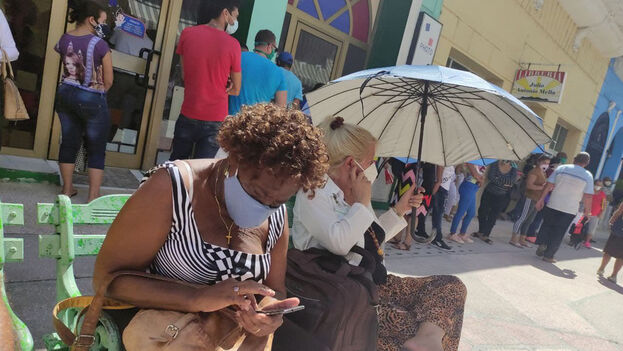
The shortage leaves scenes on the street, such as barter operations, not seen since the 1990s, during the Special Period. This Wednesday, in the middle of Havana’s Vedado district, two women proclaimed: “Cheese for exchange, cheese for exchange!”
Coming from another province, they explained to customers that they exchanged handmade white cheese for bath soap, scarce where they live. It is a product that provokes many complaints in the population because of its coarse quality, but it can be found in the informal market at a price between 130 and 150 pesos per bar.
Translated by Regina Anavy
____________
COLLABORATE WITH OUR WORK: The 14ymedio team is committed to practicing serious journalism that reflects Cuba’s reality in all its depth. Thank you for joining us on this long journey. We invite you to continue supporting us by becoming a member of 14ymedio now. Together we can continue transforming journalism in Cuba.
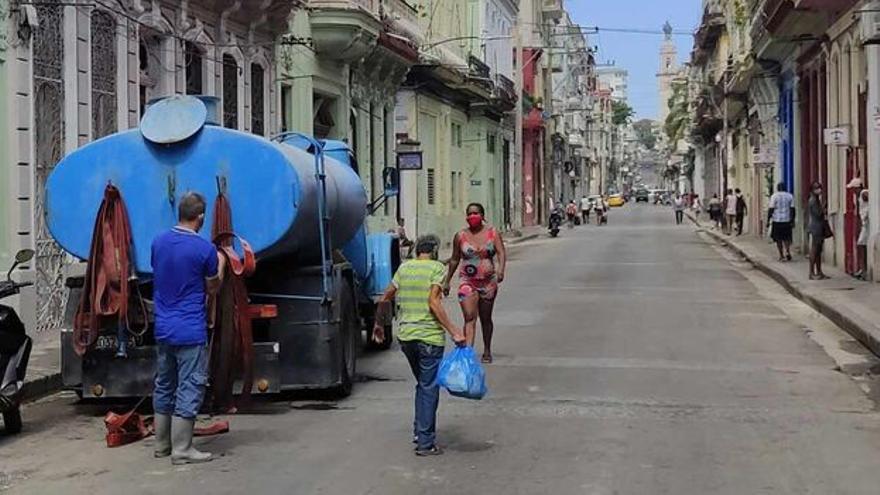
Almost a million Cubans are currently supplied by water trucks. (14ymedio)
14ymedio, Havana, 21 July 2023 — At least 156,000 people do not have safe and stable access to water service in Cuba, Antonio Rodríguez, president of the National Institute of Hydraulic Resources, revealed on Wednesday. During one of the sessions of Parliament, the official warned that the constant breakdowns of the Island’s aqueduct system due to obsolete equipment and damaged pipes, cause “substantial losses” daily of both water and money.
According to the Institute’s records, in Cuba there are 10.9 million inhabitants (98.6% of the total population) with coverage of the basic water service through aqueducts or pipes. Of these, 475,000 are “permanently” dependent on tank trucks.
Some 20% of the water available on the Island is dispatch through the aqueduct systems, where much of the liquid is lost due to the poor technical state of the hydraulic infrastructure.
About 2.07 million people receive water in their homes intermittently, every three or more days. Similarly, the families of 478 population settlements, where 2,000 Cubans live, have a totally or partially damaged aqueduct system. continue reading
Rodríguez reported that in the past month alone there were 260 breakdowns on the Island, which left more than 380,000 people without access to water. The situation led the inhabitants in the neighborhood of Guatemala, in Mayarí, Holguín, to take to the streets in the early morning of June 27 to demand the restoration of water after being without service for three months.
The crisis affected the population in Havana from the poorest neighborhoods to the inhabitants of the exclusive Miramar neighborhood, where the diplomatic headquarters are housed. The Government reported that the deficit in water service affected more than 200,000 families in the capital, 10% of the population.
The water deficit has also increased the number of thefts. A resident of Luyanó, in Havana, told 14ymedio that they must be alert so that the neighbors do not steal water from the residential connections with hoses. “You have to be aware at night, when the dogs are barking,” he added.
To alleviate the crisis, the president of the Institute said that 1,390 new pumps are expected in the next two years, and their operation will not depend on the National Electrical System. This machinery will provide service for 481,342 Cuban families.
Rodríguez acknowledged that the “tense situation” has not been resolved in the last five years due to difficulties in importing the parts to repair the electric pumps. The official pledged to solve the problem in the next three years, and more than 1.3 million dollars have been allocated to bring in the equipment.
However, the projections are not encouraging for Cuban families because the water level, both from the surface and underground sources, has been reduced with the drought. In Guantánamo, for example, the Hydraulic Samping Company confirmed that the aquifer mantle is scarce due to the characteristics of a poorly permeable soil.
This leads to more wells being drilled in search of water, without satisfactory achievements in many cases. According to a note from the provincial newspaper Venceremos, the company initiated a plan to dig six new wells in the face of the lengthening of drought periods.
Translated by Regina Anavy
____________
COLLABORATE WITH OUR WORK: The 14ymedio team is committed to practicing serious journalism that reflects Cuba’s reality in all its depth. Thank you for joining us on this long journey. We invite you to continue supporting us by becoming a member of 14ymedio now. Together we can continue transforming journalism in Cuba.
Cuba’s state communications monopoly, Etecsa, continues to make enemies due to slow navigation. (14ymedio)
14ymedio, Yoani Sánchez, Havana, 21 July 2023 — Neivy responds reluctantly. It is probably the umpteenth call that she has taken this Friday from the customer service desk of the Cuban Telecommunications Company (ETECSA). Faced with a client’s complaint about the lousy internet connection, the employee limits herself to repeating: “We have instability in the service.” Seconds later she hangs up the phone even though the conversation isn’t over.
The state monopoly Etecsa continues to make enemies. One of the most unpopular state companies in Cuba, comparable only in rejection to the Unión Eléctrica, it charges for a service that it barely offers. Access to the web through cellphones has become an ordeal for customers, captives in a market that does not allow competition with other companies.
“Thank you for everything, Etecsa,” user Adalberto Orta Pozo commented sarcastically this morning on Twitter. Next to his words was an image with a “FAST” icon, showing that his internet speed was just 340 kilobits per second (Kbps). At that speed, the ability of this Cuban to comfortably navigate the great world web, upload photos and videos or interact with others on social networks, is almost nil.
His publication attracted comments from dozens of ETECSA customer. Some took the opportunity to carry out the speed test and the numbers in various parts of the Island were even worse. In the newsroom of 14ymedio, at the stroke of noon, it was barely possible to connect at 160 Kbps. At that rate, Facebook pages do not load, it is impossible to watch videos online and readers are annoyed because the responses to their messages arrive late or never arrive at all.
Hay "inestabilidad en el servicio" de acceso a #internet, es lo que responde la empleada de @ETECSA_Cuba en esta llamada que hice al servicio de atención al cliente del monopolio estatal de telecomunicaciones. Para colmo me colgó antes de terminar la conversación… #Cubapic.twitter.com/BBkg7mghSy
At 3:22 p.m., the connection was a barely perceptible pulse of 51 Kbps at the headquarters of this newspaper. If this data is taken as an indicator of life, it would be necessary to conclude that the Internet is dying or almost dead in Cuba.
In addition, all these problems are happening seven months after the Arimao fiber optic submarine cable was connected between the port of Cienfuegos and the French island of Martinique. By April of this year, the first tests of its operation had already begun, but since then no senior official has publicly offered the activation schedule for the new connection. continue reading
The cable, a project between Cuba’s State-owned company and the French company Orange, extends over 2,500 kilometers and, according to the executive president of ETECSA, Tania Velázquez, would allow the expansion and diversification of the capabilities of the Internet connection and broadband services. When Cubans complained about poor connectivity a few months ago, some official voices always promised “here comes the cable” to appease the critics.
However, when the fiber reached our shores and the tests of its operation began the access to the web continued to deteriorate to the point that every day the connection seems to get worse. The discomfort of customers is immense, but the telecommunications monopoly only responds with evasions to its more than 7 million cell phone users.
Despite the poor service, ETECSA continues to launch monthly top-up offers with bonuses that include packages of several gigabytes to surf the web. “I lose the majority because the bandwidth is so low that even seeing an animated gif is difficult for me,” laments Yosiel, a young resident of Jovellanos, Matanzas.
From Miami, Yosiel’s family buys the top-up “every time they offer one with a bonus,” he explains. His sister contracted the Netflix service for him so that he does not have to watch the intractable official television programming, but “the image freezes.” The young man has dark circles under his eyes: “I stay up until after two in the morning to see if the connection improves.”
It is hard to believe that connectivity on the Island is at this point. The damage to the economy is enormous. “I have a food delivery business, customers can contact me by WhatsApp or Messenger but many messages arrive late and I lose money because of that,” laments Zuri del Prado, entrepreneur and manager of a cafeteria-restaurant in Havana.
“If I could contract with another company, I would do it because what is happening directly affects my pocket and my credibility,” he adds. “A few days ago we made a dinner for six people to deliver to a family, when we arrived they told me that it was a mistake because they had sent the message the day before and it had arrived 24 hours later. We lost the investment.”
A report published five years ago by The Havana Consulting Group calculated that in the period between 2018 and 2024 ETECSA’s total billing for cell phones would be approximately 4.431 billion dollars.
In this equation, however, it seems that the only one that does not lose is Etecsa.
A report published five years ago by The Havana Consulting Group calculated that in the period between 2018 and 2024, ETECSA’s total billing for cell phones would be approximately 4.431 billion dollars. It is very likely that this figure will be even higher due to the opening to web browsing from cell phones in December 2018.
How is it possible that a monopoly that obtains profits of such volume has not made the necessary investments to offer a quality service to its clients? How long is ETECSA going to continue to behave as an entity that does Cubans a favor by connecting them with the world, rather than as a public servant that owes information, transparency and efficiency to its users?
These are questions that remain unanswered. Those who expected that details about the Arimao cable would be given in the sessions of the National Assembly this week and that the ETECSA executives would apologize for the discomfort they cause their customers, kept their eyes on the television screen without ever hearing a prognosis or some mea culpa . Apparently these are not issues that matter to the deputies even though they make millions of people on the Island angry every day.
____________
COLLABORATE WITH OUR WORK: The 14ymedio team is committed to practicing serious journalism that reflects Cuba’s reality in all its depth. Thank you for joining us on this long journey. We invite you to continue supporting us by becoming a member of 14ymedio now. Together we can continue transforming journalism in Cuba.
Since 2020, Cuba and Venezuela have contributed to the U.S. migration crisis by just 5.8% and 5.5%. (EFE)
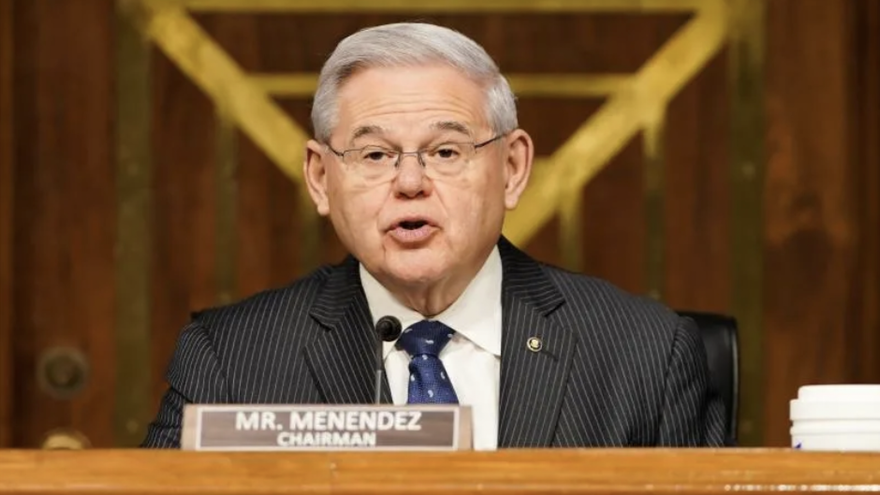
14ymedio, Havana, 21 July 2023 — Cuban academics Juan Antonio Blanco and Emilio Morales, who preside over the Cuba Siglo 21 organization, criticized on Thursday the content of two letters signed by U.S. members of congress and economists who accuse Democratic Senator Bob Menéndez of using a “false narrative” in his defense of U.S. sanctions against the regimes of Cuba and Venezuela.
Last May, a group of congresspeople led by Democrat Veronica Escobar sent a letter to the White House demanding that the Joe Biden Administration remove sanctions on Cuba and Venezuela under the pretext that the economic suffocation caused by this measure causes Cubans and Venezuelans to emigrate to the U.S.
Menéndez, who chairs the Foreign Relations Committee, responded by denying that there was a relationship between sanctions and the migratory stampede, which he attributes rather to the lack of human rights and the presence of “brutal dictatorships” that “have destroyed the economies of their countries.”
At the beginning of July, another letter criticizing Menéndez was signed by 50 economists and academics, among them the Pulitzer Prize winner Greg Grandin, repeating Escobar’s claim. In addition, it alleged that there was “no serious investigation” that supported the senator’s arguments.
Two articles published on the Cuba Siglo 21 website by Blanco and Morales have now been added to the discussion. Both academics discredit the proposal of the members of congress and economists, arguing that the regimes of Cuba and Venezuela are the “causes of the deplorable socioeconomic situation” of both countries. continue reading
“We must start by saying that Cuba and Venezuela are not, by far, the main countries that contribute migrants in this crisis that has occurred since Joe Biden entered the White House,” says Morales, who offers data from the U.S. Customs and Border Protection Office to support his argument.
Cuba and Venezuela occupy the fourth and fifth place respectively among the countries that send migrants. Since 2020, both have contributed to the migration crisis by just 5.8% and 5.5%, while Mexico (with 2,323,278 migrants), Honduras (690,888) and Guatemala (683,031) together represent 49.5% of the migrants who reached the U.S. in the same period. However, these three countries receive funding and investments from Washington and are not subject to embargoes or sanctions, which shows that blaming the U.S. sanctions for the exodus is a fallacy.
The causes of Cubans going into exile, Morales says, must be sought in government repression. The stampede “broke out after the dictator Miguel Díaz-Canel gave the order to repress the demonstrators on July 11, 2021,” he explains. The academics ignoring, in their letter to Menéndez, the effect of surveillance, fear and police violence on the Island turns them, in the eyes of Morales, into “goodies” who comfortably ignore the reality of the country and display, at the very least, their “intellectual shallowness.”
The problem of Cuba and Venezuela does not come from U.S. sanctions, but from the dictatorships that for decades “have internally destroyed their respective economies with the unpunished theft of state resources and policies of control that prevent their citizens from generating wealth,” Morales insists in his article.
Several examples offered by the academic refer to the Cuban economy that – even analyzing the official figures – is in the red. Morales says that it is enough to look at the income from the nine most important items of the Island’s economy – remittances, tourism, mining, medical services, tobacco, sugar, fish, seafood and agricultural products – to verify that they have been in progressive degradation since 2013.
“This decline is not due to the embargo, nor to the sanctions implemented by the Donald Trump administration against the Cuban regime, but to a regime with totalitarian political and economic institutions to which is added the ineptitude of the power elite and their government,” he summarizes.
For Morales, the $7 billion in food that Cuba imported from the U.S. between 2001 and 2023 shows that the embargo does not have much impact on the Cuban economy, but it is used by the regime to justify the shortages.
“In the case of Venezuela, something similar happens. The deterioration of the Venezuelan economy is not due to the sanctions imposed by the Donald Trump Administration, but to the embezzlement and corruption of Chavismo, which led Venezuela to financial bankruptcy,” he added.
The conclusions of Morales and Blanco are identical and defend the position of Menéndez, who insists on intensifying his position towards the island’s regime. Both ask the academics who signed the letters against the senator to demand, rather, the return of freedoms to the citizens of Cuba and Venezuela, their right to generate wealth and to express themselves freely. Otherwise, they conclude, their position makes them accomplices of two of the most criminal dictatorships on the American continent.
Translated by Regina Anavy
____________
COLLABORATE WITH OUR WORK: The 14ymedio team is committed to practicing serious journalism that reflects Cuba’s reality in all its depth. Thank you for joining us on this long journey. We invite you to continue supporting us by becoming a member of 14ymedio now. Together we can continue transforming journalism in Cuba.
Deputies in Cuba’s National Assembly of People’s Power, this Wednesday. (Cuba debate)
14ymedio, Yoani Sánchez, Generation Y, Havana, 20 July 2023 — They breakdown the data. All negative. The sugar harvest plunges, food production declines and money to import basic products is scarce. Right now, in Cuba’s National Assembly in the Palace of Conventions in Havana, standing in all its immensity between the seats and the raised hands of the parliamentarians, is the elephant of the urgency of a change in the system. Everyone feels its presence and prominence, but no one dares to mention it.
Instead of the courageous gesture of acknowledging that the country took the wrong course six decades ago and that imposing a centralized model led us to the abyss we are now in, the delegates continue to insist on recommending measures, adjustments and more controls to get out of the crisis. But with each intervention and each new figure announced, the X-ray of that terminal patient that is the Cuban economy becomes clearer. It is also becoming clear that the model decreed by the Communist Party of Cuba (PCC) leads only to failure and that the authorities do not have the audacity or the capacity to improve our lives.
They spend hours and hours justifying themselves, going to great lengths to explain the evils that the done to them by the climate, by the proximity of their neighbor to the North, or by the international price of wheat flour, but they lack the courage to say what so many of us think: this system must be changed, dismantled and replaced by another that has fewer slogans and more realities. Nothing that is done within the laws and economic postulates of the PCC will be able to stop the nation’s fall into the abysses of misery and the irreversible deterioration of its infrastructure. continue reading
The pachyderm stretches, trumpets, shakes its ears among the parliamentarians. Some almost brush his trunk when they ask why, despite the new agricultural guidelines, the rice consumed on Cuban tables comes almost entirely from abroad. The president of the Assembly, Esteban Lazo, clings to the animal’s tail when affirming that “we are already very tired of programs, measures, studies, diagnoses.” However, no one says the “elephant’s” name, all avoid defining as “failure” those decisions that have fed and fattened the huge mammal in the middle of the room.
____________
COLLABORATE WITH OUR WORK: The 14ymedio team is committed to practicing serious journalism that reflects Cuba’s reality in all its depth. Thank you for joining us on this long journey. We invite you to continue supporting us by becoming a member of 14ymedio now. Together we can continue transforming journalism in Cuba.
The President of Cuba’s National Assembly of the People’s Power, Esteban Lazo. (@AsambleaCuba/Twitter)
14ymedio, Havana, 18 July 2023 — On Tuesday, Cuba’s Parliament held a session to take the pulse of the national economy for the current year and evaluate 2022 results. The outlook, judging by the data offered by the Vice Prime Minister for Economy and Planning, Leticia Morales, is discouraging: 45.48% annual inflation, only 1.8% growth — they had predicted 3% — barely 3% overall recovery and colossal losses in almost all relevant sectors.
The numbers enraged the President of the Assembly himself, Esteban Lazo, who launched into a diatribe against the inability of leaders to manage well and concluded that the government has “no money”. “We are already very tired of programs, measures, studies, diagnoses. And where is reality? And where is the solution to the problem? he asked before the disconcerted faces of parliamentarians.
“Today, the country does not have the resources to continue the current level of imports. Practically 100% of the ’family basket’ is imported.” “We don’t produce rice. . .100% of the beans are being imported,” enumerated Lazo, noting that in 2017 and 2018 they had these products, to spare.
Vice Prime Minister Morales, detailed the Island’s alarming financial situation, they were able to generate — in the first half of 2023 — only $1.282 billion dollars by exporting goods and services, meeting 37% of their target, which translates to a loss of $94 million, the effects of which will be noticeable in “activities that require hard currency.”
Cuba todo lo importa, no produce nada de nada. «¿Hasta cuándo vamos a estar en esta situación?». ?
No lo ha dicho ni un medio independiente ni un opositor, sino Esteban Lazo, presidente de la Asamblea Nacional de #Cuba ?.
Cuba imports everything, it does not produce a thing. “How long will we be in this situation?” / It was not the independent media nor an opponent saying this, but rather Esteban Lazo, President of the National Assembly in #Cuba. / What is your opinion of Lazo’s words?
With regard to Gross Domestic Product, a data point not revealed by Morales — although last December the Minister of Economy, Alejandro Gil, predicted it would exceed 2.2 billion dollars — stated that not only were the 2019 pre-pandemic levels not reached, but there is a gap of 8% and, in some parameters, it declined to negative numbers. “The primary activities report negative values of 34.9%, the secondary -20%, and social -4.9%,” he explained. continue reading
“All this in the context of shortages and limitations to access fuel,” in addition to the “distortions with a clear trend toward dollarization and, in the case of non-state economic actors, with the retention of hard currency abroad to pay providers, without going through the national banking system,” he snapped.
Exports from micro, medium and small enterprises (mipymes) increased to 6.3 million dollars, but that is almost entirely due to the sale of charcoal (representing 0.2% of the country’s exports). Morales recognized that they should “push” the work of mipymes more and facilitate their access to raw materials with “fiscal and tributary policies” as incentives.
Detailing the Cuban business landscape, the Vice Prime Minister highlighted that there are 16,253 entities in the country: 2,422 state businesses, 5,138 cooperatives, 103 mixed enterprises, 8,590 mipymes and 596,000 self-employed people.
Important gains were made in the first half of the year, but in the same areas: tobacco, rum, and shellfish exports. However, neither sugar nor charcoal produced the expected revenues. One sector which has been unexpectedly disgraced is nickel, the exploitation of which is led by Sherritt, a Canadian company to which Cuba owes 362 million dollars.
Morales bemoaned that telecommunications, managed by Etecsa, a state monopoly, also reported a decline in revenue and a decline in “collection of foreign currency.” The explanation, she added, is the increase in the sale of services in pesos. “This is good for the population, but affects revenue,” she complained.
With regard to tourism, there isn’t room for optimism either: Cuba received, she said, 1.3 million visitors — 80% of the target for 2023 — but this estimate does not come remotely close to the 2019 figure. “In the case of domestic tourism, there have been 2.9 million tourists to date and we expect 7.6 million tourists by the end of the year,” she added.
Regarding inflation (45.48%), Morales confirmed what all Cubans can attest to: that 8% of inflation is concentrated in food, beverages, and transportation. To contain it, she promised — without details — a “macroeconomic stabilization program” with “diverse actions in specific areas.”
Several delegates took the floor to comment on the Vice Prime Minister’s report, and highlighted the tasks that always remain for the Cuban economy: the tension between the U.S. dollar, the peso and the freely convertible currency (MLC); the mediocrity of state businesses and the laborious rise of mipymes; and the lack of food sovereignty.
Far from the reality faced on Tuesday in Parliament is what happened last December, Alejandro Gil declared without a shred of doubt, “2023 will be better than 2022.”
Translated by: Silvia Suárez
____________
COLLABORATE WITH OUR WORK: The 14ymedio team is committed to practicing serious journalism that reflects Cuba’s reality in all its depth. Thank you for joining us on this long journey. We invite you to continue supporting us by becoming a member of 14ymedio now. Together we can continue transforming journalism in Cuba.
A pregnant woman receives medical care in Cuba. (Interpress Service)
14ymedio, Havana, 19 July 2023 — The Cuban Parliament reported on Tuesday that in the first half of 2023 there were 7,953 pregnancies corresponding to women between 12 and 19 years of age, out of a total of 41,761 reported nationally. The situation is more worrying in the rural context, where, say the deputies, early mothers have a specific profile: poor, black and out of work.
The figure, which represents 18.9% of the total number of pregnant women in the country so far this year, exceeds by 291 (3.7%) the 7,662 early pregnancies of the same period in 2022. If the cases are analyzed by province, the percentage is even more alarming; 22.7% of those born in Las Tunas are born to underage mothers, while in Camagüey the number is 21.4%, in Granma, 20.4% and, in Holguín, 20.3%.
For Arelys Santana Bello, president of the Parliament’s Youth Care Committee, “social factors” intervene in the upturn of precocity. In the Cuban countryside, it is common for a minor to feel forced to have children, either to get out of poverty – if the father is able to respond economically for the child and his mother – or to emigrate, if the father is a foreigner.
“In the places visited by the deputies, mestizo and black adolescents, living in rural environments, detached from study and work, in low-income homes and in precarious conditions, were more prone to early pregnancies,” she explained.
There are other social factors that affect the problem, such as lack of access to sexual and reproductive health services, Santana said. The official also mentioned the “influence of gender inequities,” which limit the woman’s decision to terminate a pregnancy. continue reading
She also regretted that, although educational and social communication actions are “prioritized,” these are “insufficient” due to the complexity involved in convincing rural minors to “adopt responsible behaviors.”
Adolescents resort less to the use of contraceptive methods than adult women, she said, leaving in the background the low availability of these supplies in the Island’s pharmacies.
In Cuba, teenage pregnancies not only have serious consequences for women’s health but also have a profound socioeconomic impact on families. After pregnancy, many young women are pressured to get married and have children, reducing their access to higher education or a decent job. On many occasions, the children end up being raised by grandparents.
The solutions to this problem that Parliament raised on Tuesday once again focus on the promotion and education of sexual health through the media and on the promise of strengthening the 168 municipal family planning services by adding staff and renewing the supply of contraceptives.
The deputies also proposed that emphasis should be on the continuity of studies for pregnant adolescents, who usually see their educational process interrupted. Similarly, it was proposed to create a maternal home in each municipality that doesn’t have this type of center.
Yamila González Ferrer, vice president of the Union of Jurists of Cuba, added that the issue is also legally complex. Marriage between a minor – usually a girl – and an adult remains, under Cuban law, a crime: “It is a crime of rape, because she is a minor. We need our doctors and teachers to be trained,” she concluded.
She also criticized the fact that, often, it is the parents of the teenager who encourage the relationship with older men and early pregnancy, despite the fact that voluntary interruption is legal.
For his part, Antonio Aja Díaz, director of the Center for Demographic Studies of the University of Havana, pointed out that fertility in Cuba has been decreasing in the last five decades. After the baby boom in 1960, the number of pregnancies began to decline, beginning in 1978. Currently, the general fertility rate on the Island is 1.4 children for each woman of childbearing age (15-49 years old), a figure that Aja relates to the indicators of developed countries and that he does not hesitate to attribute to the “policies of the Revolution.”
Commenting on the increase in the number of pregnant minors, Aja could not sustain his optimism and agreed with Santana and González: the alarming situation is a reflection of the “social problems” of Cuban families.
Translated by Regina Anavy
____________
COLLABORATE WITH OUR WORK: The 14ymedio team is committed to practicing serious journalism that reflects Cuba’s reality in all its depth. Thank you for joining us on this long journey. We invite you to continue supporting us by becoming a member of 14ymedio now. Together we can continue transforming journalism in Cuba.
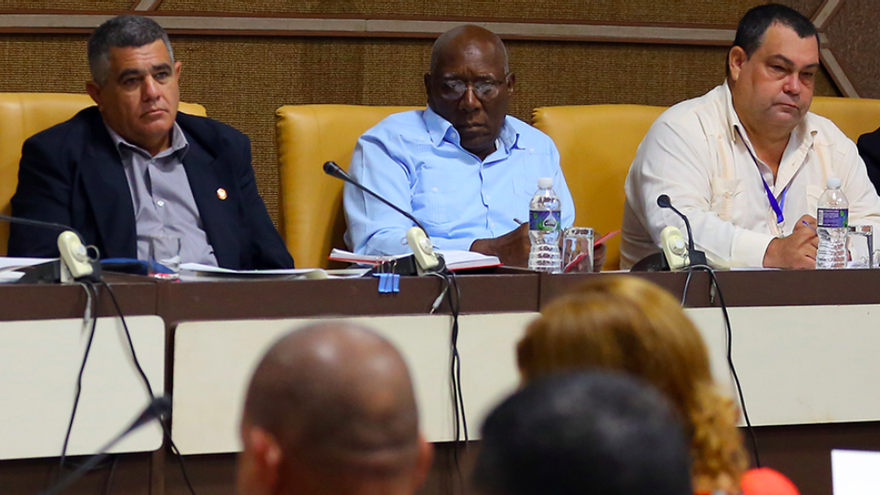
A sleepy Salvador Valdés Mesa chaired the debates on the agricultural and food situation in Parliament. (Cubadebate)
14ymedio, Havana, 20 July 2023 — The comments of readers in the official Cuban press have become the sounding board of widespread unrest in a country corroded by inflation and scarcity. Faced with the inability of the authorities to manage the economy, citizens mock the parliamentary debates on price controls, which Cubadebate describes as a “complex but decisive battle for the future of the Revolution.”
“They can no longer continue to justify all their mistakes by mentioning the blockade, while some become millionaires at the expense of the sweat of those who work. If we don’t do something, this socialist revolution has very little left,” says a reader with the pseudonym pjodalr. Like him, dozens of users are expressing their frustrations.
It was no wonder, being one of the most sensitive issues for Cubans, that the voluntarist perspective of the leaders and the absence of solutions caused a flood of disagreements. Vladimir Regueiro, Minister of Finance and Prices, acknowledged to the deputies the lack of control of inflation, but then shielded himself behind the international panorama.
The price index, he said, grew by 39% at the end of 2022, while since the beginning of 2023, it has grown by 18%. If the percentage is compared to that of the first half of 2022, prices have increased by an alarming 45%. The minister indicated that there is a governmental “lack of objectivity” when it comes to prices and acknowledged that many times they were legislated without even knowing if the fixed cost was “real.” continue reading
After the intervention of Regueiro, the president of Parliament, Esteban Lazo, again placed the problem – as he did during the opening of the sessions – in the structural: “If there is no supply and production, we will not achieve effective control of prices,” he said.
The Parliament also discussed on Wednesday the unfortunate state of the agri-food sector. The situation is summarized in two words: “non-compliances and decreases,” says the report presented to the deputies. Without fuels, fertilizers or insecticides, the agricultural production has been catastrophic: 68% compliance with the plan. The production of meat, milk and eggs also failed.
For readers, the leaders live in a “futuristic” world, a “utopia” that never considers the present reality. “The unstoppable dollar and galloping inflation,” summarizes user Gilberto Reyes. “What is the State’s solution for the employee who has no money at all, or for retirees?”
“Pork meat at almost 500 pesos; a pound of rice at 200 pesos; a liter of oil, 700 and 800 pesos; what price controls are we talking about then?” said the reader identified as R. Meanwhile, user José Antonio Ruiz pushes his disgust to the limit: “It’s much ado about nothing. The same issues, the same reasons for the failures, the same explanations to try to alleviate the dissatisfactions of the population, the same justifications for the problems … without even being able to talk about expectations in the short term that give way to hope.”
“The only thing that has gone down in price is beer, and that has been achieved by the private enterprises, not the State,” mocked the reader Pepe, while another described the situation of the informal market as “total anarchy.” Some readers complained about Cubadebate’s censorship of their comments, such as Selma González, who reflected on the uselessness of the police in the face of crime in a comment that was “correct and adjusted to the subject” that the media eliminated.
The conclusion, after several days of parliamentary discussion, is clear: “What a waste! So much uncertainty!”
Cuban economist Pedro Monreal, who has closely followed the talks in Parliament, criticized the “nonsense” of the deputies’ opinions and their inaccuracies.
And he concluded: “It could have been the way the press reports it, but what we read today about the ’discussions’ in the committees of the National Assembly is reminiscent of a sitcom. It’s not clear if it is a problem of technical incapacity or of ’directives’ that have been taught.”
Translated by Regina Anavy
____________
COLLABORATE WITH OUR WORK: The 14ymedio team is committed to practicing serious journalism that reflects Cuba’s reality in all its depth. Thank you for joining us on this long journey. We invite you to continue supporting us by becoming a member of 14ymedio now. Together we can continue transforming journalism in Cuba.
Main entrance of the Juan Gualberto Gómez de Varadero International Airport. (Facebook)
14ymedio, Havana, 19 July 2023 — This Tuesday, 18 Cubans received some bad news. At Juan Gualberto Gómez de Varadero International Airport, passengers were unable to board the Condor airline flight to Frankfurt. In the German city, travelers would make a stopover to continue to Istanbul and later to Dubai, but they could not even complete the check-in process.
“We were told that the details of our second flight did not appear in the computer system,” one of the Cuban passengers who could not board the plane tells this newspaper. “Our first trip appeared on the computer without a problem, but since they didn’t manage to locate the second one, they didn’t even check us in,” said another traveler, on condition of anonymity.
“We paid more than 1,000 euros per person for a ticket. In my case I came from Santiago de Cuba, and now we don’t know what is going to happen to us, if they are going to return the money or reschedule the flight. Nobody says anything,” laments the man, who had to pay “more than 5,000 pesos for a private room” to stay one night in Varadero waiting for a solution.
Several crew members from the Condor flight, which took off at 10:45 at night, tried to intercede for the 18 Cubans and even “called Germany directly to solve the problem, but they couldn’t get the details of our second flight so they didn’t t allow us to board the plane,” he explained.
“We don’t understand the reason because we even have the reservation number and all the details of the second and third flights. Condor’s representatives told us that they couldn’t find the data. They didn’t even take our suitcases, and we never got to the boarding area,” he explains. continue reading
This Wednesday several of these travelers returned to the airport in search of answers, but so far no Condor employee has been able to tell them what will happen to their flights. “We have a 30-day tourism visa for Dubai, so there is no problem with that country. It’s outrageous that we haven’t been allowed to get on that plane.”
It’s not the first time that something like this has happened. Last November, a group of passengers who intended to travel to Belgrade from Varadero was rejected by Condor. Most were migrants who took advantage of the visa exemption that Serbia then provided to Cubans, to embark on the migratory route to countries in the European Union.
“We can confirm that on November 22, a total of 22 passengers were not accepted to board the plane from Varadero to Frankfurt, since we received information that their trip to Serbia was at risk as far as their entry into the country was concerned,” Magdalena Hauser, the airline’s director of communication, told this newspaper.
This year, despite the free visa in force until mid-April for Cubans, the situation of several groups of passengers from the Island who were not allowed to enter Serbian territory was also reported. They remained for days in overcrowded conditions at Belgrade international airport, and many were deported.
At the end of March, the consul and political advisor of the Serbian Embassy in Havana, Jelena Zivojinovic, confirmed to 14ymedio that from April 14, Cubans would need a tourism or work visa to travel to their country. The measure, aimed at containing illegal emigration, may be revoked “in the future” if the citizens of the Island “demonstrate” that they can travel to the Balkan nation and return to Cuba, the diplomat said at the time.
Translated by Regina Anavy
____________
COLLABORATE WITH OUR WORK: The 14ymedio team is committed to practicing serious journalism that reflects Cuba’s reality in all its depth. Thank you for joining us on this long journey. We invite you to continue supporting us by becoming a member of 14ymedio now. Together we can continue transforming journalism in Cuba.
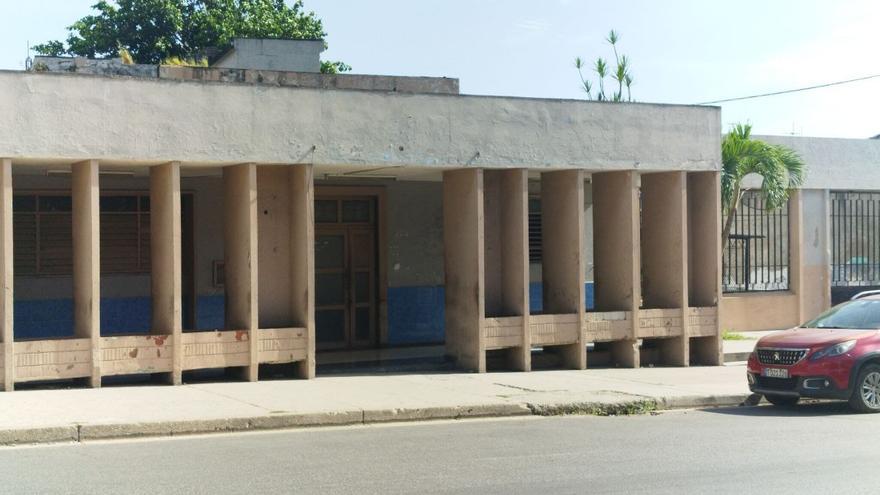
With its doors closed and an empty outdoor entrance, the funeral home remains abandoned and without hope of resuming its functions. (14ymedia)
14ymedio, Juan Diego Rodríguez, Havana, 18 July 2023 — The residents of the Luyanó neighborhood in Havana have been without funeral services for two and a half years. Complaints have already begun to materialize in posts and comments on social media. However, with its doors closed and an empty outdoor entrance, the funeral home remains abandoned and without hope of resuming its functions.
“The deceased are sent to San Miguel del Padrón or La Víbora,” a neighbor — who witnesses how, and how often, someone comes by the premises to ask about the restart of services — tells this newspaper.
“Since the pandemic began, they announced that they would no longer be accepting deceased. But the pandemic is over and the funeral home is still completely closed,” she laments.
In funeral homes in other neighborhoods of the capital, the situation is very reminiscent of the times when health restrictions prevented more than two people from attending a burial. The explanation? The transportation crisis. “It is very difficult to go to a wake at a funeral home that is not the one in your neighborhood, if you have no transportation. People are very limited, especially older people. Now everyone has to settle for offering their condolences to the family, while the mourners are left practically alone in the room with the deceased.” continue reading
In funeral homes in other neighborhoods of the capital, the situation is very reminiscent of the times when sanitary restrictions prevented more than two people from attending a funeral
A Facebook post by a group of Luyanó residents questioned the measure of having the memorial services for the deceased held in other centers, if the neighborhood has its own funeral home. “They always have a different problem. When the bathrooms are backed up, leaks appear; they must be repaired, painted, or the cafeteria has no water. It’s all a lie,” commented an enraged user.
“It is our funeral home, where we have always watched over our relatives, friends and all our people from Luyanó, why can’t we have this funeral service available?” lamented another Internet user.
It is not the first time that the population has complained about the lack of funeral services on the Island. From corpses that must wait hours –sometimes days– for a hearse to transport them, to the shortage of coffins to bury them, the bureaucracy of death in Cuba becomes increasingly suffocating for those who must deal with it.
In the Sancti Spíritus province, the construction of a crematorium has been expected for at least two years. With an investment of just 5 million pesos, the project could ease the burden of the relatives who transport their deceased to Ciego de Ávila or Villa Clara to comply with the wishes of the deceased to be cremated.
However, so far, the project has seen two location changes, several complaints from architects and no facility has been built.
“This is about advanced technology that requires two gas burners: one at the bottom, which is where the first cremation of the deceased is carried out, and a second, located in the tower where the gases that can rise into the atmosphere can be burned, so that only vapor comes out,” Yoel Aquiles Martínez, director of the province’s Provincial Unit of Necrological Services, told the Escambray newspaper.
Now everyone has to settle for sending their condolences to the family, while the mourners are left practically alone in the wake room with the deceased
The crematorium would also provide incineration services for medical and biological waste derived from hospital care, such as surgical remains and chemical and biological products. The managers do not say, however, what has been the fate of this waste so far.
The facility, initially projected to be built in an area chosen by specialists and architects on the border with Jatibonico, is now planned to be built 300 meters from the La Rosita residential area, because this would reduce construction costs.
Although the director of Public Health in the province has already authorized the new location, it has been rejected by the Hygiene area, which alleges that the expulsion of toxic gases derived from the cremation processes could harm the health of the residents of the area.
While Sancti Spíritus remains one of the four Cuban provinces that lacks a crematorium, institutions extend the timing with their internal confrontations. However, official sources, once again, point to the embargo as the culprit.
Translated by Norma Whiting
____________
COLLABORATE WITH OUR WORK: The 14ymedio team is committed to practicing serious journalism that reflects Cuba’s reality in all its depth. Thank you for joining us on this long journey. We invite you to continue supporting us by becoming a member of 14ymedio now. Together we can continue transforming journalism in Cuba.

 EFE (via 14ymedio), Havana, July 23, 2023 — On Saturday, Cuba President Miguel Díaz-Canel defended before the (unicameral) Parliament the missions of Cuban doctors abroad, despite the “dirty campaign” of the United States.