
Complaints in Ciego de Avila, Cuba, That All the Pink Shrimp Goes for Export

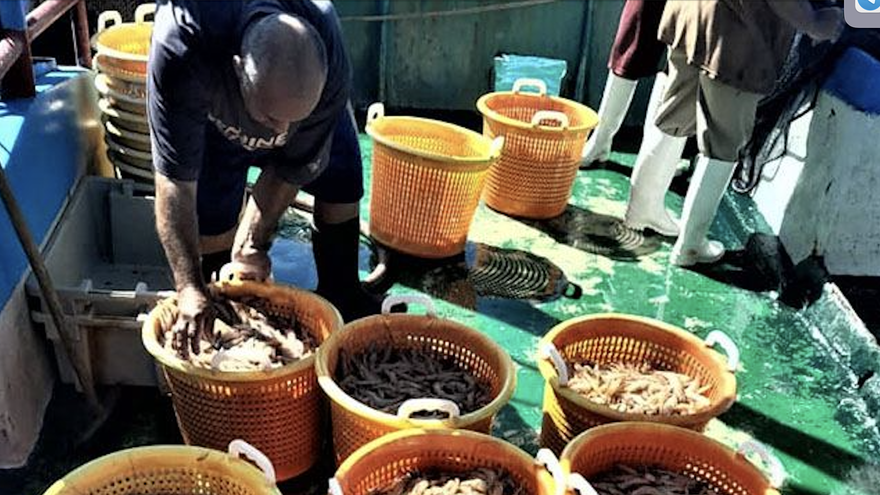
The shrimp boats of Ciego de Ávila hope to take advantage of the lucky streak and exceed the total production planned for the first half of 2023. (Invasor)

14ymedio bigger14ymedio, Havana, 1 July 2023 — It had been five years since the shrimp fleet of Ciego de Ávila – six heavy ferro-cement boats – did not meet the semi-annual goal of 94 tons of pink shrimp. However, nowhere in the long report in the local press about them this Saturday is it guaranteed that this food will arrive, even in minimal quantities, at the Cuban table. The goal is the same as always: export.

Local leaders admitted that the money to buy food for the entire state fishing sector depends on the success or failure of the fishermen and the subsequent sale of the product abroad. That the shipment was complete by the end of May is a good sign: it was still possible to work in June and make an additional profit.

The passage of Hurricane Irma in 2017 marked the beginning of bad luck for the shrimpers, who usually celebrate the fulfillment of the plan with a small party in the port of Júcaro. With timidity, the director of operations of the Industrial Fishing Company of the province, José López Calderón, said that the sale of cargo in the international market “favored” the consumption of seafood for the people for the rest of the year. However, the leader did not explain what part of the 94 exportable tons the people of Avila will receive.

Judging by Invasor’s report, the only fishermen who benefit from the work do so during working hours. A boat “goes on a cruise for 20 days, and a good part of the food expenses for the crew can be  provided by the shrimp, and, to a lesser extent, by the aquaculture productions,” López explains. continue reading

As for the money from the sale of the shrimp, says the head of finance of the Fishing Company, Neyci López, it is destined – although not in its entirety – for “spare parts, repairs to the industry and paint for the boats.” But you can’t be “categorical” when it comes to calculating profits, he warns, since shrimp prices “float” on the world market.

Something remains, the leaders said, for the people. “We add about 28 tons each month; of them, 8.9 go for [people with prescribed] ’medical diets’, in addition to contributions to educational centers and Public Health.” It was not clear if they deduct that amount from the 94 tons planned for export or if it would come out of a surplus.

Among the factors that allowed the plan to be fulfilled this year, the authorities point out, is the repair of the boats, cabins and implements above the waterline of the ships. The most serious repairs, they say, have to be done in national shipyards, and this has not been possible.

Another negative factor has been the fuel crisis that affected the entire country and prevented greater movement of the boats. The profit, they say, could have been greater. However, they celebrate the triumph: “Júcaro reinvented itself,” is the slogan.

Invasor concludes its report with a voluntarist comment on the infinite possibilities that the sale of the precious shrimp will provide the Cuban State. However, it cannot avoid a bitter note: “We could not avoid the temptation, not at all culinary, to echo the popular voice when it inquires: what purpose do exports serve?”

Translated by Regina Anavy
____________

COLLABORATE WITH OUR WORKThe 14ymedio team is committed to practicing serious journalism that reflects Cuba’s reality in all its depth. Thank you for joining us on this long journey. We invite you to continue supporting us by becoming a member of 14ymedio now. Together we can continue transforming journalism in Cuba.
Cuba Eliminates the Controversial Repatriation Requirement for Athletes Residing Abroad

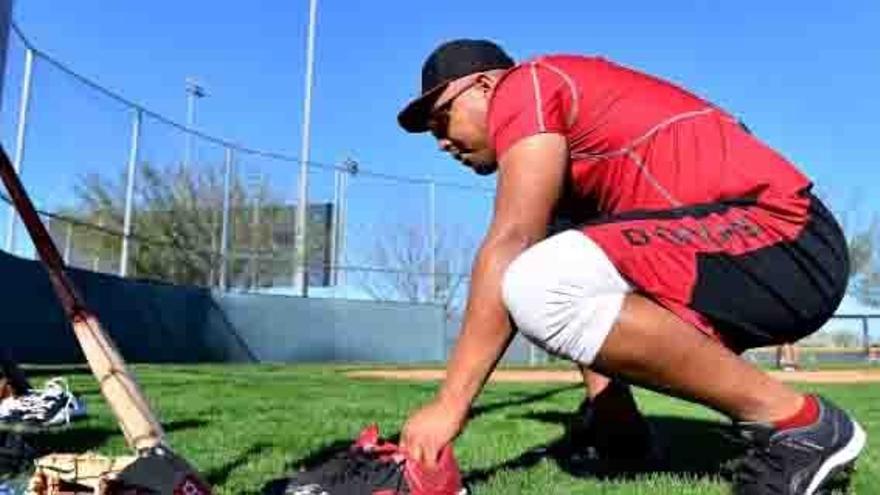
With the elimination of the repatriation requirement for athletes on the Island, baseball player Yasmany Tomás, “The Tank,” will be able to play with the Industriales team. (Facebook/Yasmaní Tomás)

14ymedio bigger14ymedio, Havana, 29 June 2023 — Among the controversy over the desertions, this Thursday Cuba’s National Institute of Sports, Physical Education and Recreation (Inder) announced the elimination of the repatriation requirement for Cuban athletes residing abroad. The demand was an impediment for those who decided to emigrate to another country and wanted to participate in an event organized on the Island.

The official media Jit recognized that this requirement had been the generator of the greatest debates in baseball. It was indicated that it will be up to the different national commissions to update the regulations of their competitions, and this decision takes effect immediately.

The most recent case is that of Yasmany Tomás, “The Tank,” who had expressed his interest in returning to Cuba and playing with the Industriales team, but the repatriation requirement prevented him from doing so.

This player, who played four seasons with the Arizona Diamondbacks and also joined the Mexican team of Los Mochis, was informed that with the elimination of the controversial measure, he will be able to play with the Industriales in the playoffs.

“Havana has just informed Tomás’ family that he is authorized to play in the 2023 playoffs,” Por La Goma posted on Facebook.

The repatriation process, which was authorized in 2013, has been used by emigrants who want to buy a home on the Island, reside in the country after retirement or regain access to certain social services, but it also implies that the person can be “regulated” with a ban on going abroad, tax obligations and legal duties. continue reading

On the other hand, Denilson Milanés, one of the four soccer players who left the Cuban soccer team in Miami, was accused of “treason” by his father Adilson Milanés, who under the auspices of Inder, works in Costa Rica as a coach of beach and court volleyball.

Adilson Milanés said he was “betrayed” by the escape of his son Denilson along with three other soccer players in Miami (USA). (Facebook/Adilsón Milanés)

“My son betrayed me and his grandmother,” said this native of Cienfuegos on his social networks. “Please Denilson, come back,” he asked. Adilson’s words, along with his studies at the Camilo Cienfuegos Military School, generated controversy and seemed to emanate from officialdom, from a member of the Revolutionary Armed Forces.

Since his desertion, Denilson Milanés has not offered any comments. In the face of Internet attacks, he clarified that his reaction had to do with politics. “In my post I said that I was betrayed,” he emphasizes. “You don’t know why. They want to politicize everything.”

So far, there are 33 dropouts of Cuban athletes in 2023. The figure does not surprise Raiko Arozarena, the brother of the naturalized Mexican baseball player Randy, who arrived in Mexico on a raft in June 2015. “It’s something we see as common,” the athlete said in an interview for the media covering the Gold Cup. “It has happened with several sports teams, that players arrive in foreign countries and stay,” he said.

Raiko Arozarena said that in the morning they trained, and at breakfast they began to tell people. “We saw that the boys were missing, that they stayed” at the place of practice. “When we had to travel to Houston, we noticed that Roberney Caballero, Denilson Milanés, Neisser Sandó and Jassael Herrera were not there.”

This Wednesday it was also confirmed that the former baseball player and director of the Island’s team, Roger Machado, arrived in the United States a month ago. The journalist Yordano Carmona specified that his arrival took place through humanitarian parole. “With the shortage in Cuba right now, they are even left without the dictatorship’s figureheads. Indeed, Roger Machado has been in West Palm Beach for more than a month through humanitarian parole. How great you are USA!”

Machado, the reporter said, is remembered for celebrating the Communist Party and the “90th birthday of the leader of the Cuban Revolution, Fidel Castro.”

Translated by Regina Anavy

____________

COLLABORATE WITH OUR WORKThe 14ymedio team is committed to practicing serious journalism that reflects Cuba’s reality in all its depth. Thank you for joining us on this long journey. We invite you to continue supporting us by becoming a member of 14ymedio now. Together we can continue transforming journalism in Cuba.

The United States and Mexico Discuss a Refugee Program That Could Benefit Cubans

The United States could benefit Cubans and other migrants with a shelter program. (EFE)

14ymedio bigger14ymedio, Mexico City, 2 July 2023 — The United States might extend the legal avenues for migration to Cubans, Haitians, Nicaraguans and Venezuelans. The plan, according to Reuters, will allow people who meet the requirements to obtain refugee status to do so through the U.S. “refugee resettlement” program that is only available to applicants from abroad.

Unlike those migrants who apply for asylum after arriving in the United States under the condition of “refugees,” with this variant people receive authorization to enter the country, obtain work immediately and receive benefits such as housing and employment aid. Another benefit is that they can apply for permanent residence within a year, which offers more stability than other options.

Four officials confirmed that the governments of the United States and Mexico are discussing the plan. This program will be available to those migrants who prove that they suffer “persecution on the basis of race, religion, nationality, membership of a certain social group or political opinion.”

In April, the Biden government said it intended to admit 40,000 refugees between 2023 and 2024. As of May 31, about 3,400 had arrived, which shows that the pace would have to accelerate a lot to reach the goal. continue reading

In order to be eligible for the program, people have to prove that they were in Mexico before June 6. A source from the Ministry of Foreign Affairs, who remained anonymous, confirmed to 14ymedio that there have been several meetings between the two governments on the migration issue, but specified that “so far no agreement has been reached.”

Since January, the US government of Joe Biden implemented the humanitarian parole program. Despite the flood of applications and the difficulties in getting an appointment, as of May, 29,000 Cubans have benefited. The figure was given by Blas Nuñez-Neto, Acting Undersecretary of Border Policy and Immigration of the U.S. Department of Homeland Security, who also announced that there will soon be new provisions for the family reunification process.

In Mexico, the official of the foreign ministry pointed out that applications for refuge increased by almost 30% in the first quarter of 2023, to a record 37,606, according to the Mexican Commission for Refugee Assistance. In the figures published in May, there are 4,215 natives from the Island who have joined this program.

The coordinator of the Jesuit and Refugee Service, Karen Martínez, established that Chiapas is the southern state of Mexico with the highest reception of refugee applications, pointing out that in Tapachula there are about 26,000 foreigners this year and, of that number, 40% are refugees.

Chery Agnes, a migrant from Haiti, joined this day of peaceful mobilization against discrimination. This woman was a soccer player in her country, and her dream is to continue playing this sport where she is given an opportunity.

“I like everything, I’m a soccer player and I work with my body because I’m a model,” she told EFE. “I am a lesbian and am a very peaceful person, and I am here to show that we have rights,” she added.

Translated by Regina Anavy

____________

COLLABORATE WITH OUR WORKThe 14ymedio team is committed to practicing serious journalism that reflects Cuba’s reality in all its depth. Thank you for joining us on this long journey. We invite you to continue supporting us by becoming a member of 14ymedio now. Together we can continue transforming journalism in Cuba.
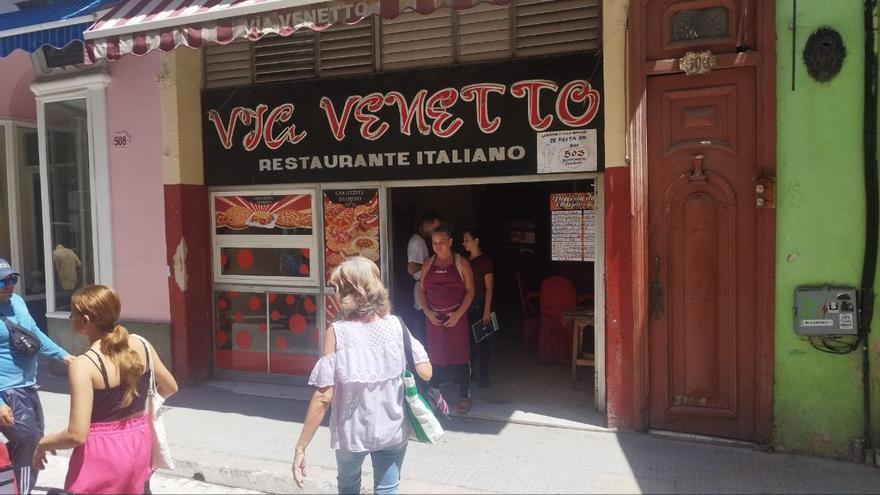
Competing Pizzerias on Havana’s Obispo Street

The sweaty waiters at Via Venetto impatiently check their watches, smoking and chatting, hesitantly fearful of the swarming flies. (14ymedio)

14ymedio bigger14ymedio, Juan Diego Rodríguez, Havana, June 29, 2023 — No one shows any interest in having lunch at Via Venetto, whose interior is pitch black and flies buzz around the pizzas on display. The restaurant is located on Obispo Street in a downtown area with constant foot traffic that should make it an ideal spot for any food service establishment. The shabby appearance of this formerly state-run operation — it was rented out long ago to private individuals — stands in contrast to the liveliness of its completely privately owned competitor just across the street, which always has a line outside.

Free of Via Venetto’s lineage, the rival pizzeria is bursting with energy. Though also under private management, it is unburdened by any ties to the state. Though tiny and nameless, the place is well-stocked and its prices are reasonable, making it possible to have a good meal here.

A young waiter dispatches customers’ orders with lighting speed. Meanwhile, across the street, the waiters at Via Venetto impatiently check their watches as they stand outside, smoking and chatting, hesitantly fearful of the swarming flies who have come to devour their pizzas.

“They’re like the soles of flip-flops,” observes one of its few customers, eloquently comparing their pizza’s tough dough and scanty cheese with rubber footwear. They are certainly cheaper, he concedes, but anyone who eats there knows what why kind of pizza he is getting: flavorless and low-quality.

A few steps away, the young woman at the modest storefront offers several types of cheese, ham, soft drinks and pizza, which are handed while still warm to customers, who prefer to eat standing up rather than seated in one of Via Venetto’s mortuary-red upholstered chairs. “It’s no secret”, notes another passing observer, frightened just by the sight of the place. “Every private individual who partners with the state ends up like the crab: walking away backwards!”

____________

COLLABORATE WITH OUR WORKThe 14ymedio team is committed to practicing serious journalism that reflects Cuba’s reality in all its depth. Thank you for joining us on this long journey. We invite you to continue supporting us by becoming a member of 14ymedio now. Together we can continue transforming journalism in Cuba.
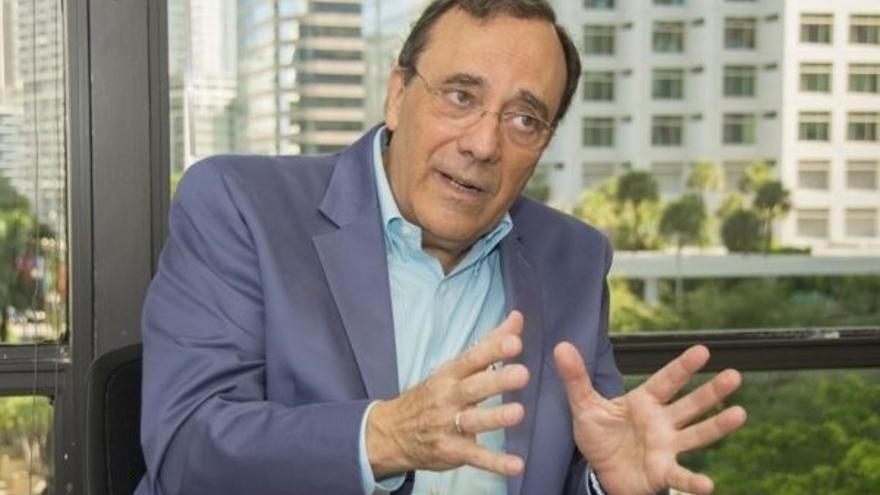
Carlos Alberto Montaner, the Cuban Who Taught Us to Debate

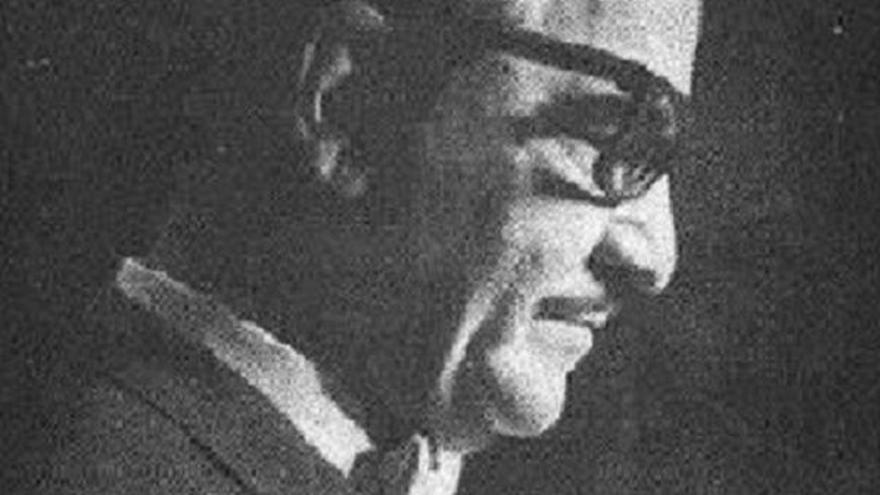
The writer and journalist Carlos Alberto Montaner has died after being diagnosed with a neurodegenerative disease. (Archive)

14ymedio bigger14ymedio, Havana, Yoani Sánchez, 30 June 2023 — I had read him in those ‘plain-paper covered’ books that passed from hand to hand in Cuba in the 1990s. Later, on our Island where censorship was practiced in all its forms, several videocassettes with some of his participations in foreign television programs slipped through. He had a way of speaking and arguing so different from the leaders who were yelling at us from the tribunes that there was no way to take your eyes off the screen. Cultured, calm, smooth and with prodigious verbal ability, Carlos Alberto Montaner practiced an exercise that had been lost in national political life: debate with respect and arguments.

It was not for nothing that Fidel Castro hated him so much. Compared to the man of letters, versatile, disciplined, and who listened attentively to his interlocutor, our tropical caudillo seemed more hysterical, coarse, and authoritarian. In a hypothetical oral duel between the two, it was easy to determine who would most convince the audience, most move the audience and wield the most reliable data. The fear of meeting Montaner at some international event and coming out worse from an exchange of phrases must have tormented the dictator for decades, who always wanted to be a writer and only managed to become a crazy orator without any poetic flight.

The official discourse presented the exile, who escaped from the island in 1961, as the “black beast” of Castroism, the public enemy one of the nation and coined that he was a violent terrorist because he could not be defeated in the field of words. They ensured that several generations of Cubans did not read his texts at school and, even so, they did not manage to prevent people from knowing him in the country where he had been born in that distant 1943.

The official speech presented the exile, who escaped from the Island in 1961, as the “black beast” of Castroism, the public enemy of the nation

When I opened my Generación Y blog, in April 2007, one of the first attacks I received from the spokesmen for the regime was that of an supposed training that Montaner had given me in Spain, to return to the island and start publishing a blog. At that time, I was afraid and indignant that they lied with such impunity, but today it only makes me laugh and proud to see that, although I didn’t even know that man from Havana with his elegant bearing and tall stature at that time, with that campaign of firing squads against my reputation, they were actually linking my name to his forever. continue reading

With the passing of the years and a long fight to recover the right to travel outside my country, I finally met the author of the Secret Report on the Cuban Revolution. I was surprised by the tone of his voice when we shared a debate table in Madrid, the affability of his character, the immediate affection that he professed to every Cuban who approached him, the willingness to help his compatriots and the absolute lack of rancor in his attitude . That was not, at all, the man that Cuban State Security had painted with a very broad brush.

Later I met his family, he gave me several of his books and we continued talking about Cuba, his great obsession. The day Fidel Castro died, in November 2016, he was the first person my husband and I called from Havana to break the news. I saw him clarify more than once that the time had passed for him to dedicate himself to politics or integrate a government, although I also witnessed many people who approached him and said: “You have to be the next president of Cuba.”

Whenever we saw each other, he asked me about the young people on the Island, he expressed his hopes that the new generations would not have been able to completely eradicate the desire for freedom.

He had, like few relevant figures, the good sense to feel and act accordingly. Whenever we saw each other, he asked me about the young people on the Island, he expressed his hopes that the new generations had not been able to completely eradicate the desire for freedom. He was right. On July 11, 2021, we dialed his number again to confirm that he had not been wrong. Although with his death on June 29 in Madrid he was not able to see the end of the regime, he did experience the hope of those popular protests, the largest and most extensive in the entire history of our country.

His recent farewell column showed part of his greatness: it was a tour of his desires, anxieties, and expectations. While his archenemy had died consumed by anger and publishing insane reflections, Montaner left magnified: lucid, respected by the intellectual community and with the humility of one who knows that a lifetime is finite but every second counts. This Thursday he left with the peace of mind of having contributed with all his talent and energy to his land, to that Island to which he could not physically return but to which he returned, time and time again, through the writing.

Have a good trip, friend, the Cuba of the future will be more like your dreams than the current nightmare.

____________

COLLABORATE WITH OUR WORKThe 14ymedio team is committed to practicing serious journalism that reflects Cuba’s reality in all its depth. Thank you for joining us on this long journey. We invite you to continue supporting us by becoming a member of 14ymedio now. Together we can continue transforming journalism in Cuba.
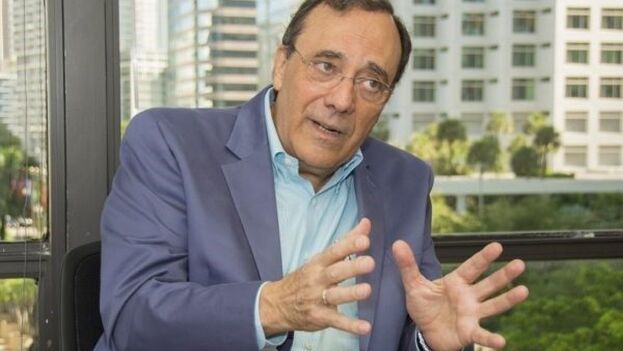
Cuba Has Lost Carlos Alberto Montaner

Carlos Alberto Montaner would have been the best president of the Republic of Cuba at any moment when there might have been a transition to democracy. (Photo capture from YouTube)

14ymedio bigger14ymedio, Reinaldo Escobar, Havana, 30 June 2023–“What qualifier should I use to win the title of top toady?” I asked Carlos Alberto Montaner one day. “Illustrious,” he replied, and we could not stop laughing.

I met him in 1996 during my first trip to Spain. I called the number for the Playor editorial offices and a secretary transferred me to him. “I am a Cuban journalist passing through Madrid, and I would like to speak with you,” I said by way of introduction. Following a brief pause he replied, “I’ll expect you here tomorrow afternoon.”

Being that Montaner was in the top tier of “enemies of the Revolution,” I assumed that before entering his office, located near the Puerta del Sol square, his bodyguards would search me and that certainly there would be cameras monitoring my visit. But such was not the case. Montaner himself opened the door and invited me into his office. “Do you work for Granma?” he asked, and when I told him that I was an outcast from official journalism, he made the first joke that started the bond of humor we shared: “Then I’ll notify the Marines and the CIA that they can call off the operation.”

At the conclusion of that first encounter, he invited me to have a coffee at a nearby kiosk, where he confessed to me that this act — which he would repeat every day — was his therapy against nostalgia for Cuba. continue reading

I have read all of his books and most of the articles he published throughout his long career. Every time we would meet in Miami or Madrid he would ask me specific questions about Cuban issues, of which he was always deeply informed. For many, including myself, he would have been the best president of the Republic at any moment there might have been a transition to democracy. Once, when he was in his seventies, he said that he he was already too old to aspire to such political responsibilities. In May of this year, already having lived to 80, and suffering from a cruel disease, he retired from the mission of writing columns.

Today I have learned that he will never be in Havana celebrating with friends the end of the dictatorship. If I get to witness that outcome, I promise to raise a glass to him — for his ideas, for his courage, and for his brilliant intelligence.

Goodbye, my illustrious friend.

Translated by: Alicia Barraqué Ellison 

____________

COLLABORATE WITH OUR WORKThe 14ymedio team is committed to practicing serious journalism that reflects Cuba’s reality in all its depth. Thank you for joining us on this long journey. We invite you to continue supporting us by becoming a member of 14ymedio now. Together we can continue transforming journalism in Cuba.
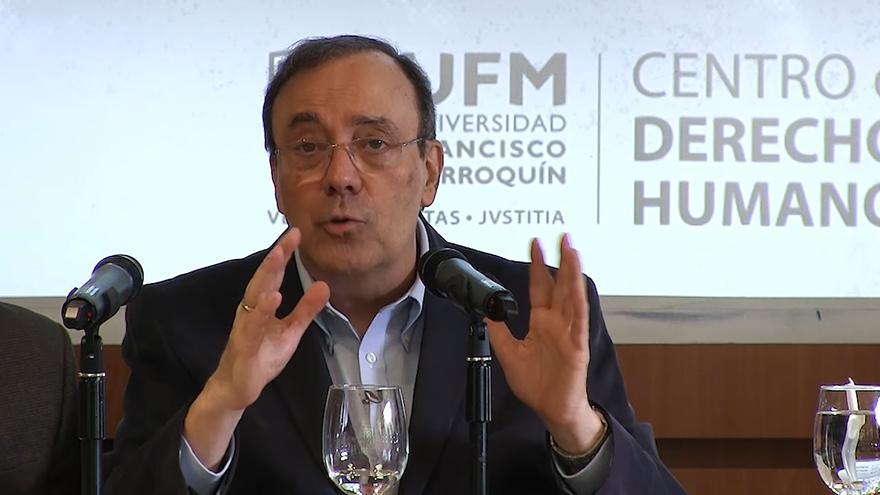
Carlos Alberto Montaner Dies in Madrid Without Having Fulfilled His Dream of Seeing a Free Cuba

Writer and journalist Carlos Alberto Montaner has died after being diagnosed with a neurodegenerative disease. (Archivo)

14ymedio bigger14ymedio, Madrid, 30 June 30, 2023 — The writer and journalist Carlos Alberto Montaner died this Thursday at his home in Madrid, where he lived since October 2022, “peacefully and accompanied by his loved ones after facing a neurodegenerative disease,” according to a statement issued by his family.

In the statement, his wife Linda, his children Gina and Carlos and their granddaughters Paola, Gabriela and Claudia express their gratitude “to the Spanish public health professionals, to the Right to Die with Dignity Association and to all the relatives and friends who showed so much affection to him in the final stretch of a prolific life marked by the defense of individual freedoms.”

Carlos Alberto Montaner was diagnosed in the Madrid public hospital Gregorio Marañón, as he himself said in his last farewell column, of Progressive Supranuclear Paralysis (PSP), a rare disease of the Parkinson’s family that has no cure and whose origin is unknown.

In May, the author made the decision to publish a text in which he reviewed his life, dedicated to the vindication of democracy and political pluralism by writing, the best thing he knew how to do and that, in fact, he did in the pages of some of the best newspapers in America and Europe.

Carlos Alberto Montaner supported the birth of 14ymedio by signing its manifesto of support, and for this newspaper it has been an honor to have his signature on a regular basis. He departs, however, without achieving his dream of seeing a free Cuba. continue reading

His farewell will be an intimate and private act, according to the family, which closes with a phrase from Montaner himself, published in his memoir, Sin ir más lejos [Without going any further]. “The time has come to recapitulate. We have to pack our bags. Disappearing is an ungrateful activity that is only justified because it is the only irrefutable proof that we have lived.”

Translated by Regina Anavy

____________

COLLABORATE WITH OUR WORKThe 14ymedio team is committed to practicing serious journalism that reflects Cuba’s reality in all its depth. Thank you for joining us on this long journey. We invite you to continue supporting us by becoming a member of 14ymedio now. Together we can continue transforming journalism in Cuba.
Jose Angel Buesa, the Cuban Poet Ignored by Castrismo

José Ángel Buesa published numerous poems, which today fill Cubans with pride, both on and outside the island. (Verbum)

14ymedio bigger 14ymedio,  Jorge Hernández Fonseca, Miami, 26 June 2023 – It is estimated that there are more than three million Cubans (and descendants of Cubans) in exile. One of them was, in his day, José Ángel Buesa. Very early in the Cuban communist revolution, a romantic poet disaffected with the emerging dictatorship was one intellectual too many for a regime which required unconditional support, and a man with Buesa’s integrity could not, in any way, give that. His romanticism collided head on with the firing squads and the Acts of Repudiation of this violent era and he had to exile himself.

The poet passed through the motherland, Spain, and then tried to establish himself in the Canary Islands, from where destiny took him back to a place nearer to home – El Salvador. From there, even closer again, he settled in Santo Domingo in the Dominican Republic where he became a university professor and published numerous poems which today fill Cubans with pride, both on and outside the island. Reading Buesa’s work was forbidden in Cuba for generations. His romanticism was deemed “not good for a people that had to hate the enemy”.

Nevertheless, we have heard from the island recently that there is now a growing affection for the poet. The need for dollars, that the dictatorship suffered from as a consequence of their uselessness and inefficiency, has brought about the publication of Buesa’s poems in high quality print, for sale in Freely Convertible Currency (MLC) – that is, to tourists; but, as the prohibition has been lifted, hearing them even on official radio Cubans are going crazy for his poems – Cubans that didn’t even know that they had a poet of such calibre, born in Cruces but forced into exile as a persona non grata.

We Cuban exiles are no strangers to the critical polemic aimed at the romantic poets. Whatever the personal circumstances of each person, that controversy doesn’t imply censorship of any poetic tendencies, because there is room for everyone, as demonstrated on the island, which censured Buesa over many decades, wanting to tip the scales against him and favouring materialism in literature, and now this Buesomania explodes in their hands simply because of the tenderness of his poems and their depth in singing about love.

José Ángel Buesa deserves a seat of honour at the table of contemporary intellectuals but the Cuban dictatorship isn’t going to grant it because his poetry is the very negation of the philosophical and social policy that they have implanted in a totalitarian manner. Because of this, it is the duty of all good Cubans in exile, in whatever profession, to pay the homage deserved to Buesa, so that he may finally rest in peace in his grave in Miami.

Translated by Ricardo Recluso.

____________

COLLABORATE WITH OUR WORKThe 14ymedio team is committed to practicing serious journalism that reflects Cuba’s reality in all its depth. Thank you for joining us on this long journey. We invite you to continue supporting us by becoming a member of 14ymedio now. Together we can continue transforming journalism in Cuba.
‘The Private Company is of the Revolution’, the Cuban Government Tells tothe United States

“Companies that work with independence and creativity promote economic and social development on the Island,” said the U.S. Embassy in Havana. (14ymedio)

14ymedio bigger14ymedio, Madrid, 29 June 29, 2023 — The private company, anathema in Cuba for more than 60 years, has become, from one day to the next, a lifeline of the regime and a new reason for friction with Washington.

In some unusual statements, this Thursday, Johana Tablada, he Cuban Foreign Ministry’s Deputy Director General for the United States, boasted that the private sector “emerges and develops under the policies of the Cuban Revolution, discussed and approved by the citizenry.”

The official’s Facebook post – collected by the Prensa Latina agency – alluded, without saying it specifically, to a tweet two days ago from the U.S. Embassy in Havana, which promoted on its networks an extensive report on micro, small and medium-sized enterprises (MSMEs) in Cuba, published last week by The Miami Herald.

The link was accompanied by the message: “There is a significant growth of the private sector in Cuba! The private sector is on its way to buying more than a billion dollars in goods by the end of 2023. Companies that work with independence and creativity promote economic and social development on the Island.”

On the same subject this Thursday, WLRN, from South Florida, dedicates a chronicle to the incipient Cuban businesspeople, saying that Cuban capitalism is becoming a reality. Cuban capitalists hope that U.S. aid will be real. According to the author, “Cuba’s communist economy is sinking, but its capitalist entrepreneurs are growing, and the United States wants to associate with them before Russia does.”

Faced with this, Tablada lashed out against the United States for “illegal coercive measures of an intensified blockade that hinder income, banking transactions, trade and investments and that torture the Cuban population,” and for “the financial siege and persecution for fraudulent inclusion of Cuba on the terrorist list.” continue reading

Those journalistic notes, however, not only took the Ministry of Foreign Affairs by surprise but also part of the exile, which sees the proliferation of new private companies on the Island as a “fraud,” as Rosa María Payá harshly expressed.

For her part, businesswoman and activist Saily González responded with a long thread to the “various inaccuracies” and “some fallacies” which, in her opinion, the Herald report incurred. “A country in transition? Where to? Towards an economic model similar to the Russian oligarchy, I suppose,” she tweeted, echoing one of the phrases of the report and alluding to the growing fear of an opening of the Cuban economy to the Russian one, given the latest agreements between Havana and Moscow.

Inside the Island, as this newspaper has noted, the distrust of these new businesses comes from the high prices and the fear that they will be managed by people close to the regime.

Interviewed in this regard by the Herald, Catholic activist Dagoberto Valdés, founder of the magazine Convivencia, stated that although he understands that “the economic actors closest to the circle of power” may be those who arrive at the “caramel” in a “piñata effect,” he says that it is “mathematically impossible” that the almost 8,000 private businesses “are directed by relatives of government officials.”

Reinaldo Escobar, editor-in-chief of 14ymedio, also referred to a “piñata” in the gathering of Radio Martí, Las Noticias como Son, saying that the private company has been “kidnapped” by those who rule, “in a very easy way: as they have all the power, they are those who tell someone yes and someone no, who allow thing and not another.” However, he said that it was “a conquest of the people who are critical of the Government” and a demand “that did not come from above, but from below.”

Translated by Regina Anavy

____________

COLLABORATE WITH OUR WORKThe 14ymedio team is committed to practicing serious journalism that reflects Cuba’s reality in all its depth. Thank you for joining us on this long journey. We invite you to continue supporting us by becoming a member of 14ymedio now. Together we can continue transforming journalism in Cuba.