Month: February 2012


Country of Pixels Contest 2011 / Polina Martínez Shvietsova


Country of Pixels Contest 2011 / Ihoeldis Michael Rodríguez


Country of Pixels Contest 2011 / Lia Villares


Country of Pixels 2011/ Karel Bofill Bahamonde


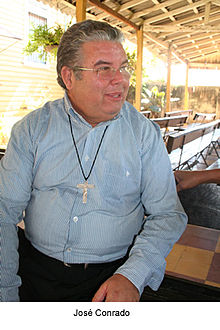
Fr. José Conrado to Raúl Castro Ruz
 Open Letter to General of the Army Raúl Castro Ruz,
President of the Republic of Cuba
Written by: Fr. José Conrado
5 February 2009
Dear Mr. President:
Fifteen years ago I dared to write to the then head of the Cuban State, Dr. Fidel Castro Ruz, president of our country. The gravity of that hour drove me to do it for the good of the fatherland. The seriousness of this time compels me to write to you to share my current concerns. Must I describe the situation of our country? The economic crisis affects every household and makes people live in misery, asking themselves: What am I going to eat or what am I going to wear? How am I going to get the most elemental things for my family? The difficulties of everyday life become so overwhelming that they keep us mired in sadness and hopelessness. Insecurity and widespread feelings of helplessness lead to our becoming amoral, hypocritical and two-faced. Anything goes because nothing has value, except survival at all cost, which we later discover is “at any cost.” Hence the dream of Cubans, especially the young, to abandon the country.
It would seem that our country is at an impasse. As a man of faith, however, I believe that God never puts us in completely desperate situations. I firmly believe that our journey as a nation and as a people, will not end at an inevitable precipice, at a reality of irreversible misfortune. There is always a solution, but it takes courage to seek it and to find it. In your recent appeals and urgent calls to work with tireless tenacity, I believe I recognize a particular and accurate perception of the gravity of the moment, but also, that you think the solution depends on us. But as the slogan-turned-into-a-joke said… “It’s not enough to say let’s go, we need to know where.”
We have lived blaming our reality on the enemy, or even on our friends: the fall of the communist bloc countries in Eastern Europe and the United States trade embargo have become our scapegoats. And that is a convenient but misleading way out of the problem. As Miguel de Unamuno said, “We tend to entertain ourselves in counting the hairs in the Sphinx’s tail because we are afraid to look into his eyes.”
It is not enough, General, to solve the problems, certainly serious and urgent, of food, or of shelter, which so many compatriots have in the recent hurricanes, “With their poor chattels: fear, grief.” We are at such a critical time that we must consider a profound review of our beliefs and practices, our aspirations and our goals. And here we might, with all due respect, remember the words our national apostle José Martí wrote to Generalissimo Gómez in a somewhat similar situation: “One cannot found a people, General, as one commands an encampment.”
The world is changing. The recent election of a black citizen to hold the presidency of a country formerly known as racist and a violator of the civil rights of blacks, says that something is changing in this world. The laudable and fraternal concern of our brothers in exile before the weather phenomena that have recently beaten our people, and their generous, selfless and immediate assistance, are signs that something is changing here. The Cuban government that you lead today must have the courage to face these changes with new approaches and new attitudes.
Our country responded with courage when a foreign government sought to meddle in our national problems. However, when it comes to the violation of human rights, not only governments, but even individuals, ordinary citizens, within or outside the country, have something to say. In his Letter from a Birmingham Jail, Martin Luther King said: “Injustice anywhere is a threat to justice everywhere. We are caught in an inescapable network of mutuality, tied together in a single garment of destiny. Whatever affects one directly, affects all indirectly.” We have to have enormous courage to recognize that in our homeland there is a constant and unjustifiable violation of human rights, which is reflected in the existence of dozens of prisoners of conscience and the battered exercise of the most basic freedoms: speech, information, press and opinion, and serious restrictions on freedom of religion and politics. Failure to recognize these realities does no favor to our national life and makes us lose self-respect in our own eyes and in the eyes of others, friends or foes.
The cause of peace, both domestic and foreign, and the prosperity of the nation itself, are grounded in the unconditional respect for these rights that express the supreme dignity of the human being as a child of God. And to keep quiet about this weighs so heavily on my conscience that I am not able to bear it. And for me, this is my way of serving the truth and of being consistent with the love I feel for my people.
I confess, General, the disgust and sadness it has caused me to know that our government has rejected, apparently for ideological reasons or political differences, the help that the U.S. and several European nations wanted to send for the victims of the hurricanes that hit our land. When one falls into misfortune, (and that can happen to anyone, including the powerful), it’s time to accept the help that is offered, because this aid reveals a depth of goodwill in the face of pain, of human solidarity, even in those we considered our enemies. Giving the opponent the opportunity to be good and to do what is just can bring out the best in ourselves and in others, making us change old attitudes and heal damaging resentments. Nothing contributes more to peace and reconciliation among peoples than this giving and receiving. The phrase of St. Francis de Sales is valid in interpersonal relationships and between countries, “More flies are caught with a drop of honey than a barrel of vinegar.” As stated by His Holiness John Paul II during his visit to our country, “Let Cuba open itself to the world and let the world open itself to Cuba.” But if we continue with closed doors, no one will be able to enter, no matter how much they wish to. A sign of hope, for me, is the participation and the greater space which has been given to CARITAS to help our people. That deserves a special recognition and is a positive and hopeful change.
Believe me, Mr. President, I do not write to submit a list of complaints and grievances about the national situation, but if I were to do so the list could be very, very long. In truth, I have wanted to speak with you Cuban to Cuban, heart to heart. A priest who was a great friend of mine, now deceased, used to say: “A man’s worth is the worth of his heart.” At your wife’s funeral, seeing you surrounded by your children and grandchildren, moved to tears, I noticed that you are a sensitive man. And I think there is more wisdom in the heart of a good man than in all the books and libraries in this world; as the song goes: “That which feeling can accomplish, knowledge has not been able to do, nor the highest conduct, nor the broadest thought.…” Therefore I appeal to your sense of responsibility, to your kindness, to tell you be not afraid, be bold in taking a new and different path in the world that is showing so many signs of change for the better. As I said to your brother 15 years ago, all Cubans are responsible for the future of the fatherland, but because of the office you occupy, because of the power you now have, the responsibility falls on you in a special way.
If you decide to embark on this journey of hope, count on me, General. I will be in the first row, to give to Cuba, once again, the only thing I have: my heart; and to you, my honest hand and my unselfish collaboration. So we can make Martí’s dream a reality, to have a fatherland, “With all and for the good of all.”
I want to end with the words of our current Pope, Benedict XVI from 1968: “Even above the Pope as an expression of binding ecclesiastic authority, is one’s own conscience which must be obeyed first, if it becomes necessary, even against what ecclesiastical authority says.” If that applies to ecclesiastical authority, whose origin I consider divine, it applies to all other human authority, however powerful it may be.
With my best wishes,
José Conrado Rodríguez Alegre, Fr.
Pastor of Santa Teresita del Niño Jesús
Country of Pixels 2011 / Olvein González Luna


Guilty by Conviction / Laritza Diversent
 Humberto Gonzales Otaño 56 years old, a jeweler in San Miguel, died violently on the morning of September 14, 2010. Two men entered his home while he and his wife slept.
On 28 November the Court of Havana tried six “marginals” from Mantilla, one of the poorest neighborhoods of Havana, accused of organizing and executing the murder of Tarzan, Goldsmith’s nickname.
The hearing begins. The Court, the prosecution and defense lawyers take as a given the findings of the case, as if all present were aware of what happened the night they killed the jeweler.
The accused continue with their statements. Pedro Valerino Acosta, Jesús Daniel Forcade Portillo, Leonardo Rodríguez Díaz, Ramón Echevarría Fernández, Leonardo Wiliam Limonta Rojas and Juan Enrique Galindo Madán, one by one address the panel of five judges.
All except Valerino Acosta acknowledged planning a robbery at the home of the victim, on at least one occasion. They gave up because the dogs there and at the neighbor’s house were barking loudly, the prosecutor said in his indictment.
The night of the murder González Otaño’s wife fed the dog, but there was no barking. Nobody knows what happened to the dogs. Neither the court nor the defense counsel were curious. They discuss the documentary evidence. Most of them consist of the defendants’ criminal records.
The prosecutor says that none of the defendants study or work, they associate with antisocial elements, disrespect the rules of social coexistence, are bullies, disturb the peace, use obscenities, have been investigated by the Ministry of the Interior, and do not participate in the activities of mass organizations, despite belonging to them.
“Pompi” speaks, as Pedro Valerino Acosta, 29, is also called. According to his version, he gave Daniel and Ramon a contact to a jeweler in San Miguel, who sold clothes and exchanged U.S. dollars for convertible pesos.
Police say all proposed to rob the place and the prosecutor asked for 18 years imprisonment for murder and 15 for robbery with violence and intimidation of people.
Tarzan, the man considered the best paid in gold in Havana, was described as an elderly person, a fat, sick millionaire. Pompi visited his home with Eduardo Sierra, one of the witnesses who testified at that trial. Nobody questioned the investigator/interrogator on the case, Captain Yoelkis Cespedes Ramos, because this person was dismissed as a suspect, as he knew most of the defendants.
Galindo Madan and Limonta Rojas, both 27 years old, did not participate in the crime, but were with Daniel and Ramon one of the times they tried to burgle Tarzan’s house. The prosecution claims that they were the organizers of the plan and for Limonta Rojas, known as the “Black”, they asked for a penalty of 20 years imprisonment for the murder and 15 for theft.
The wife of the victim, after police inspected the site, found a flashlight on the bed among some clothing. She recalled that when they robbed in her home she suddenly was woken up by blows to the face. A man sitting astride her illuminated her face and threatened her with a knife. She gave the flashlight to a man named Luisito to make it available to the investigators of the case.
The expert specialist in “odorology” found a smelly print on the flashlight. Samples coincided with the odor of Juan Enrique Galindo Madan. For him, the prosecution called for a penalty of 22 years in prison for the murder and 15 for theft. No one asked how they obtained positive results for “Pica,” Galindo Madan’s nickname, if prior to the analysis the flashlight was handled by several people.
Leonardo Rodriguez, 49, Daniel, 29, and Ramon, 40, allegedly carried out the attack. Mrs. Fernandez and her neighbor told the court there were two attackers but they did not recognize anyone. Police say they entered the house through the bathroom window. They didn’t see Leonardo because he kept watch. For them, the prosecution asked for 25, 30 and 27 years imprisonment respectively on charges of murder and 15 for the crime of theft
The witnesses begin to testify. The victim’s wife enters the room nervously. Mrs. Esther Fernandez Almeida, 60, received permission from the Cuban authorities to leave the country in March, despite being a key witness in the case. She returned home and testified at the trial. No one asked about her trip outside the island.
She told the panel how she pushed away the weapon her assailant was threatening her with, injuring both her hands. Unexpectedly, she said that she fainted after being hit by the attacker. The prosecutor says in his charge that she saw them beat her husband, even though she was blindfolded and the room lights were off. No one asked how long she was unconscious.
Fernández Almeida told the police she had been married to Humberto more than 40 years and they had two children together. Before the judges’ panel she said it was 20 years. In another statement she confessed they married in 1970, when he was 16 and she 19, and they divorced in 2003. In 2008, they remarried. Nobody asked the investigator in the case why she was dismissed as a suspect.
Tarzan’s wife recounts how her husband, with a punch, toppled the the suspect looming over him. His heaviness prevented him from sitting up. She ended up on the floor when the one on top of her leaped up, with the knife in hand. And in the fall she broke the glass on the night table. Miraculously, none of the attackers was injured. All the blood and fingerprints in the crime scene belonged to the victims.
The prosecutor stated in his indictment that “Cundo”, a nickname for Jesus Daniel, and “Bobo”, a nickname for Ramon, pressed strongly on the neck of their victim, after hitting him with an iron. Tarzan told them that the money was in the kitchen. Captain William Sourt Guilarte, the crime expert who participated in the collection of evidence, testifies. He could not explain to the defense why there were no traces of prints there.
Ms. Fernandez Almeida said she heard the aggressor who threatened her husband say, “Saul, do I kill him?” to make him to tell where the money was. She told the court that seven months after the murder she took part in a test and recognized the voice of “Bobo” and that of “Narra,” as Leonardo Rodriguez is known.
Esther recalled her husband asking the attackers not to place tape on his mouth because he could not breathe and they tied him by the feet. Tarzan confessed that he kept his money under the mattress. The attackers fled the scene, with jewels having a value, according to the prosecution, of 206,193 Cuban pesos, though none were recovered.
Humberto Gonzales Otaño died from the injuries caused by his assailants, says the prosecution. Forensic Medicine certified the direct cause of death as mechanical asphyxia by suffocation caused by pressing on the neck and blocking the orifices.
His wife said she moved the 5 foot 7 inch, 440 pound jeweler to be able to give him two pills. The neighbors also affirmed they saw him alive, but they weren’t permitted to rescue him. Including one who described him as in a state of shock.
The forensic experts did not attend the trial. We will never know how the Mr. Gonzalez Otaño, after a fracture of the thyroid cartilage (Adam’s apple) swallowed two tablets or spoke to refuse breaking down the doors to help him as his wife said. Those present did not know whether his death was prolonged and immediate.
The assailants wore gloves. However, four odorous traces found were positive for “Cundo” and “Bobo”. The results were also positive for a person who was not charged, named Ariel Cruz Hernandez. The detail is not mentioned at trial.
In the audience participating as a witness is a forensic expert in the specialty of “odorology.” He says the smell of a person is unique and could be impregnated in objects, even wearing gloves. “The objects touched by the aggressors are introduced into a sealed nylon bag to preserve the odors,” he explains to the panel.
“Afterward they are compared with fragrant impressions from suspects, using a canine technician,” he says. The young man says that a trace of smell is as reliable as DNA. No defense attorney objects.
In the inspection of the crime scene traces of odor arose in two of the four pieces of rope used to tie up the victims. No one asked why the odors of Gonzales Otaño and his wife were not on the ropes they were tied with.
The court and the parties commented on the other two witnesses requested by the defense, who were not presented at trial. Advocates continue with their reports. One of them asks for immediate acquittal of all defendants. The audience, mostly relatives of the accused, applauds. In a fit of hysteria, the president of the First Chamber of the former Court of Havana expels all of them without any warning.
In a single session of about five hours, they discussed the evidence for the prosecution. It became clear that the defendants intended to steal. An intention that according to Cuban criminal law is not punishable, when the subject brings the matter to the attention of the authorities.
“Easier said than done goes a long way and there is no evidence that incriminates,” anyone would say. But Pedro, Jesús Daniel, Leonardo, Ramón, Leonardo Wiliam and Juan Enrique, know what the outcome will be. The trial was conclusive for sentencing. There is no doubt that the court by conviction will declare them guilty.
February 2 2012
Blue, Tinted Blue / Rebeca Monzo
 I’s lovely blue wrapper bodes well for what’s inside, but it’s not so, nor is it about the title of that famous song. What concerns us today is a scam, that is spreading through all the establishments in the neighborhood, and perhaps others, and comes factory sealed: Turquino Gourmet coffee, a packet of 250 grams, price 3.60 CUC.
Several people have already been victims of this deception. The first two cases were two doctors at the 19th of April Polyclinic in Plaza: both received it as gifts from their patients, two separate packages of Turquino coffee, probably bought at the kiosk that sells in convertible pesos just in front of that health center.
Another three cases are my acquaintances in the neighborhood, who bought it in the establishments Di tú and La Mariposa, also found to be falsified. Inside is a strange mix, odorless, brownish, that looked nothing like ground coffee.
Even a friend brought me a gift package in this cute blue container, and seeing the expression on my face, she immediately explained: The coffee is the greatest, although the package says Turquino, what’s inside is Serrano, from the local seller, who explained when I bought it. She said that at the time she “resolved” it, the only packages they had in the factory were those of Turquino. Brew it with confidence because I tried it and it’s really good.
For half a century we hear the same rhetoric: the New Man, exemplary workers, Revolutionary integrity, the Committees for the Defense of the Revolution surveillance, respect the people, uncorrupted inspectors, and so forth.
Gentlemen, as long as there are two currencies and the state pay poverty wages, in a peso devalued twenty-four times, when the basic necessities must be purchased in a currency in which they don’t pay you your salary nor your retirement, as long as the verb “resolve” is synonymous with stealing, you can not stop talking about the crime.
Until the system does not change, we will continue singing the same song: Blue, tinted blue.
February 3 2012
Like Dogs and Cats / Regina Coyula

We all know the phrase. But look at my pets: a simple example of how a pre-establish idea can be broken.
February 3 2012
159th Birthday / Rafael León Rodríguez
 The First Conference of the Communist Party of Cuba passed, with neither pain nor glory for most Cuban citizens. As I had warned President Raul Castro, only matters of interest to the membership were addressed, scorning an interesting opportunity for those who truly would try turning the country into the right direction: that of freedom, pluralism and democratization of society.
The visit of President of Brazil passed in the same way. Only of interest to the class in power, oligarchs of the new type. Business, agreements and advice on these. Nothing of social issues; of civil rights, of human rights. No recommendations or comments on this: only business. It seems like the militants of the left undergo a metamorphosis when they enter the government. So much facing to the right, in the end, to act in their own image and likeness. On this we already have the experience of more than fifty years of suffering the former local guerrillas in power.
And Marti as a pretext. Marti, the most universal of all Cubans, as an alibi. Nothing to do with the foundation of one party to conduct the necessary war for the independence of Cuba, ending the nineteenth century, with the continued imposition of one party to lead the Cuban dynastic dictatorship now in the twenty-first century. And the sculpture of Marti sculpture in the Civic Plaza received once again, the wreath of a visitor, this time from the president of Brazil. It seems no coincidence that the bust of the Apostle of Cuba is looking down.
4 February 2012
COUNTRY OF PIXELS CONTEST 2011 / Alain López Martínez
alainlopez@isa.cult.cu


Yoani Sanchez in El Pais (Because of Articles Like This She is the Best Journalist of All) / Orlando Luis Pardo Lazo
Between Indiscipline, Rudeness and Obscenities / Fernando Dámaso
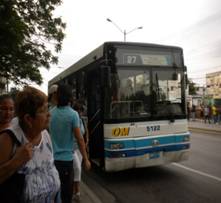
To go out into the street is to be constantly tripping on social indiscipline, vulgarity and obscenity. It is not a problem of a neighborhood or an age, or even of sexes, as it happens in Old Havana, Central Havana, Cerro, Vedado or El Nuevo Vedado, both children and youth, adults and even elderly , whether one or the other sex.
The so-called bad words (some argue they do not exist, but it depends on how they are used), and when I say bad words I refer to the most vulgar and obscene imaginable are heard as part of any out loud conversation, as in a bus, in a shop, a clinic, school or just on the street, regardless of those present, be they women or children, as if in Spanish they were the only words that exist. Sometimes, poorly masked, they form part of the lyrics of some popular songs.
What’s going on? Is it that the social deterioration is also bottoming out? A person who is very close to me often said: The material misery generates moral misery. I think he is right. What is the point of so many universities, institutes, schools, etc., if their graduates and students demonstrate every day, lack of civility (a little word of fashion) and extreme rudeness and vulgarity? The instruction may be good, but the education is abysmal. I must say that it not just a youth problem, but also adults who have fallen into the bad fashion. Among the many things lost, is it that we have lost the sense of shame?
To live in a civilized society we must respect social norms. Nobody has the right to violate them and, worse, to impose their violations of others. The shouting, marginality, vulgarity, disrespect, lack of discipline and many other social ills seem to be sitting squarely in the city, and given what you see (no one does anything against them), they have taken up permanent residence.
The authorities seem not to care about it: while containing no political implications, they look the other way. By this wrong path, the life of society becomes increasingly difficult, to say nothing of robberies, assaults in public and even physical assaults, which are not lacking in this vineyard of the Lord.
It seems that, for now, the only solution for the citizen is to stay home, become a hermit and go out as little as possible. But we all know that this can not be the solution. Some responsible people, for a long time, have warned of these negative phenomena, but have been ignored. So far it has been like plowing the sea, with occasional boring message on television, or a short article in a newspaper from time to time. At what moment do they foresee updating the social model to responsibly address these ills of our socialism?
December 10 2011
University Reform Without Autonomy / Dimas Castellano
On the 50th anniversary of the University Reform enacted in January 1962, the newspaper Granma published on Monday, January 9, 2012, an article entitled University and Society by Armando Hart Dávalos, in which he proposes that “after the triumph of the Revolution university reform was essential to realizing the final link between the university and the people and the new national socio-economic reality … “
In the article he omits the most significant: the history that led to the loss of University Autonomy as the nerve center of civil society. This simplification of the antecedents allows Hart to confer a definitive character on the reform of 1962, as if social processes have a point of closure.
Jose Ortega y Gasset, in Mission of the University and other related essays, declared: “Man inherently belongs to a generation and every generation is not installed in any place, but with great precision on the previous. This means that it is forced live up to the times and especially to the height of the ideas of the time.”
Between the nineteenth and early twentieth centuries, Father José Agustín Caballero, Tomás Romay Chacón, Félix Varela, José de la Luz y Caballero, José Martí and Enrique José Varona, among many others, made strenuous efforts to situate education at the height of its times. It follows that education reform is an ongoing process that does not support “definitive” and that from this continuity emerged University Autonomy as unavoidable necessity of modernism.
In the Republic, Carlos de la Torre, in his inaugural speech as Rector of the University of Havana in 1921, outlined a program to reform the university and achieve University Autonomy, which for him was: “to authorize the University to manage in all its affairs in full independence, except as regards the management of its funds.” The following year the Rector of the University of Buenos Aires, Joseph Maples, gave a lecture on “the evolution of Argentine universities,” in which he explained the process begun with the manifesto of Cordoba, 1918, which led to a university reform whose centerpiece was the autonomy and the involvement of students in university government.
In this context a group of Cuban students published a manifesto in which they called for the formation of student association, which was founded in December 1922 under the name of Federation of University Students (FEU). Subsequently, on January 10, 1923, the fledgling federation issued the Document of the University Reform Program in Cuba, which called for “The status of the university and its autonomy in economic and educational matters.” To remedy the situation, Enrique Jose Varona proposed creating a commission composed of professors and students to study the project, which upon acceptance led to the establishment of the Joint Commission, composed of the Rector, teachers and members of the FEU and recognized by Presidential Decree.
The project was analyzed by the Joint Commission, the Rector, the Board, teachers and students who went to the Presidential Palace and submitted to President Alfredo Zayas, the bases of the bill for University Autonomy. Zayas, before the force of the reform movement, legally recognized the FEU and authorized the creation of the University Assembly, composed of professors, graduates and students. The advance led reform in October 1923, at the First National Student Congress, which demanded the repeal of the Platt Amendment and agreed to establish the José Martí Popular University to open the doors of the higher educational establishment to the workers.
During the government of Gerardo Machado the University Assembly was dissolved and the FEU outlawed, but the struggle continued. Finally on September 10, 1933, after the fall of Machado, the Government of the Hundred Days, led by Ramon Grau San Martin issued Decree Law 2059 of October 1933, which enacted University Autonomy. Subsequently, the failure of the March 1935 strike, the University was taken over militarily and the government revoked the autonomy.
In 1939, under President Federico Laredo Bru, University Autonomy was restored and the Constituent Assembly was convened which adopted and drafted the Constitution of 1940, which, in Article 53, upheld the constitutionality of the Autonomous University as follows: “The University of Havana is autonomous and shall be governed in accordance with its Statutes and the Law by which they will be tempered.” Thanks to this they could form the forces that faced the military coup of 1952, though Fulgencio Batista overthrew the dangerous University Autonomy with the repeal of the Constitution of 1940.
In January 1959, rather than the promise of restoring the 1940 Constitution, as we read in History Will Absolve Me, it was reformed, without consultation, to confer to the Prime Minister the powers of Head of Government and to the Council of Ministers functions of Congress, an amendment similar to what Batista had done with the statutes that replaced the constitution after the 1952 coup. It then proceeded to dismantle civil society and all its instruments, including the University Autonomy.
To accomplish this, the Supreme Council of Universities was created, made up of professors and students from three universities in the country and government representatives. This Council developed the draft University Reform presented on January 10, 1962. That same year, the Cuban Communist leader, Carlos Rafael Rodriguez, in an article published in the press, stated that the new university would be governed jointly by teachers and students, but said, “to the extent that the university revolution is the work of a real revolution and that socialism presides over the transformations, we can not think of teachers and students as two opposing groups… A professor of revolutionary consciousness, guided by Marxism-Leninism and a member of that ideology for years [he was referring to Juan Marinello], will have no need of the watchful presence of students with him in the governance of the University, because he will have the maturity to approach problems of higher education with certain criteria. “
Thus, University Autonomy, without having been lawfully repealed, in fact ceased to exist. Since then the University, one of the most important sources of social change in our history, was rendered inoperable for that purpose. One of its worst consequences is that under such control, the State raised the slogan of “The University is for the revolutionaries,” which resulted in the expulsion of hundreds of students and teachers who did not share the ideology of the system.
The result could be no other. With the intention of giving finality to a changing process, the University, with the loss of autonomy, ceased to be nerve center of civil society. Therefore, the changes that are taking place in the economy have to be complemented by changes in the rights and freedoms, including University Autonomy, which is an inescapable necessity to put the University in step with the times.
(Published in Diario de Cuba on Monday, January 16, 2012: http://www.diariodecuba.com/cuba/9112-reforma-universitaria-sin-autonomía)
January 20 2012