Don’t Play With The Ticket List / Fernando Dámaso

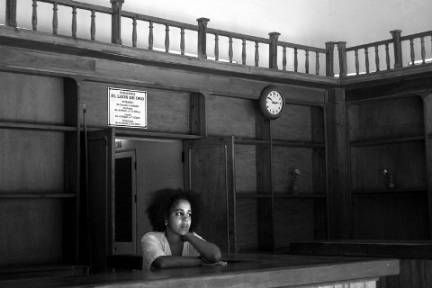
Photo: Rebeca

The authorities in my country are addicted to using general statistical figures to show the success of its economic, political and social model. I refer to the figures that may seem positive, as the negative ones are ignored as nonexistent. The first appear in big headlines, and all around them, is mounted a great media spectacle, which sometimes lasts days to weeks.

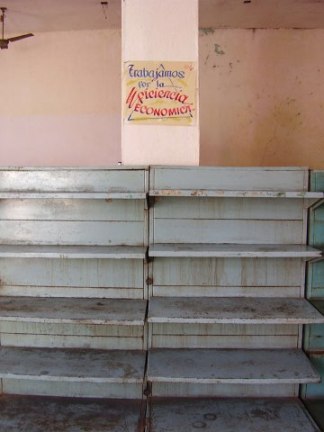
So the average citizen finds that the generation of electrical energy increased tenfold over that produced in 1959 or that infant mortality is 4.9, equal to that of Canada. What is not said in the first case is that 53 years have elapsed, then the population was six and a half million inhabitants and is now almost double; that home appliances using a lot of electricity were not prohibited (kitchens, toasters, ovens, etc.); that the streets, avenues, parks and shops in towns and cities were illuminated every night; that there were neon signs and air conditioners everywhere; that there were no annoying blackouts; that there were industrial plants which produced what the country needed; and that a kilowatt cost cents.

Now, with so much energy generated there should be no problems, but the opposite happens. Does it evaporate? Is it lost at sea?

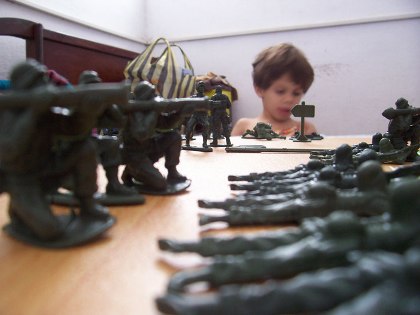
Photo: Rebeca

In the second case, the comparison is ignoring the fact that Canada has about one hundred times the land area of Cuba, with hard to reach places and more than double its population and, therefore, to achieve this indicator means more resources and greater effort.

It’s like comparing ourselves with Brazil (85 times the land area and 10 times more inhabitants) and India (32 times the land area and 60 times more inhabitants), to name just two examples.

As a neighbor of mine says: Do not play with the ticket list. Statistical data comparisons should be made between similar phenomena since, otherwise, it distorts reality. To try to equate Cuba with the major countries (by extension, population and natural resources), being a small country (by extension, population and natural resources) is not logical and is only done with the political objective of confusion.

It’s like in boxing, putting a flyweight to compete against a heavyweight; or baseball, a college team against the Major Leagues. Nobody with half a brain, one would think to do it: the results would not admit comparisons.

Undoubtedly, it is important what has been done in education, health and sports during the past fifty years, but not everything works as well as officially stated, and little would have been achieved if, during their fifty-six years, the Republicans had not laid the foundations and developed all these systems.

Moreover, it is difficult to predict what could have been achieved, perhaps without many social traumas and losses, if we had continued on with the Republic. In addition, other existing bases and development acquired (in agriculture, industry, transport, etc.) have been reversed and led to failure. Give to Caesar what is Caesar’s!

This mentality of believing ourselves to be a great power and the center of the world, when reality shows the opposite, is what has led us from failure to failure. It happened in livestock, in the sugar, coffee, citrus, fishing, textile industries, the merchant marine, transportation and in almost everything.

Because they wanted to excel at all costs without the necessary foundation for this, each plan has proved a Pharaonic fiasco greater than the previous one, and has set back the country, creating poverty, unemployment and the continuing exodus of young professionals.

Statistics are positive or negative indicators, but only when assessed honestly and responsibly. Using them for propaganda to manipulate public opinion, and to make them seem what they are not, in addition to being childish, is unwise.

February 2 2012

Country of Pixels / Regina Coyula

What a pleasure to see the photographic exposition. I chose the ones I like the best, I don’t have to agree with the jury. It was difficult for me to pick 10. Some I loved for their beauty, others for the polysemy of the image. The authors will have to forigve me, but they gave me all the photos together to they are posted without titles.

And another thing. Many people and many new faces. To see it click here.

_DSC3529 [640x480]

2-El eco

3-f5-walfridolopezr

5-SOLUCION TRIUNFAL Tunas

6-OLVEIN-00

7-sombras

8-020

9-El-futuro

February 6 2012

IN THE DEATH OF THE HEART / Orlando Luis Pardo Lazo

LOOK AT ME DEATH, AND DO NOT CRY FOR YOUR LOVE

[Short video of the tanks on the train]

When Orlando Zapata Tamayo died in Havana, I went to the Playa del Este to die a little too me. En route 462 we saw a convoy of trucks loaded with tanks. Tanks of war to the capital, against the capital city, many, many, with the hatches open without any protection or canvas from the cameras of Google Earth. Ostentatiously desperate tanks to go into battle against the only enemy of the Cuban Revolution: the flesh of the Cubans …

This fucking night Wilman Villar Mendoza died in Santiago de Cuba. I went back home, sad and not wanting to pose as if I wouldn’t lie down to sleep (mediocre death of my mornings), when at the intersection of Fábrica and Vía Blanca, at the Paso Superior, I saw again, as into a nightmare of Rodolfo Walsh: tanks of war in all their glory, terrible, endless, rolling now on a rickety train that departed from Havana, who knows if toward this other Havana accused of being “heroic yesterday and hospitable always” …

These armor-plated and I have a hidden appointment in some revolutionary square of this country. I will give gladioli in their scavenger swan beaks. I’ll make graffiti from semen in their heartless liners. I will finally crush their leather skulls before the international press that will not dare to say so much as a peep later (that is, not to tweet …).

These soldiers of green death and I have an appointment of weak light in any one of these catacombs we dug collectively just as the Special Period in Times of Peace was announced …

There is no dialogue more beautiful than the metal lattice of the free electrons (bullets, missiles). Even the smell of rust seduces mammals: it reminds us that the fetus floats in blood. Memory molecules. Do not make patriotic poets with me, fuckers. I am a biochemist. I know whereof I speak. The vital spark, the quantum breath of energy, a pixel of freedom. What we never glimpsed before. A biography of truth. The nostrils excited as the soul of a shark about to chomp his victim. How to transcribe now this lunatic laughter at the height of his euphoric rage. Aargh …

Men and women everywhere have loved you. I was free and I apologize for this insult to your dignity. Now look elsewhere. No more words. An act, a gesture, at least a shrug …

I already hear the stampedes from my keyboard. And there are no buildings that fall under the criminal exhaustion of the morning. It’s the future, the future that is announced as a culmination of exquisite corpses at close range. We die, we die without pain, compatriots, because from the wicked initial anthem the homeland contemplated us with hatred, remember? …

January 20 2012

Bad Handwriting in La Joven Cuba (27) / Regina Coyula

For Harold in response to Culture, Identity and “Cubanness”

Another posting I like that could have give three independent posts. I’m Cuban but I don’t live under a rock, this is the century of globalization, it we look, the only thing political boundaries have brought is war. I like baseball, Cuban music, I’m a great dancer, adore coffee and pork, but I also live football, rock, American series, and Rioja. Does that make me less Cuban? Lezama knew Greco-Roman culture perfectly, he was a scholar in American poetry, it would seem an alien, but does anyone doubt his intense Cuban identity?

Leave the country does not erase the signs of identity, in many cases it reinforces them. It is not that Cubans live in ghettos clinging to a country that no longer exists except in memory, there is something inherent which manifests itself in certain foods, celebrations, customs. At the other extreme, a so-called “proletarian tradition” of putting the bride’s bouquet on a monument failed; a replica of the USSR where all the families suffered a death in the war, so that tribute was personal. And is it that identity is not decreed, it happens.

I suspect everyone who claims for himself total patriotism. Teaching the History of Cuba has contributed to a damaging confusion. Everything will be put in its place.

February 5 2012

WHEN I’M 59 / Orlando Luis Pardo Lazo

WHEN I’M 59

It’s not lacking much, for sure (I recently turned 40).

The other half of my life is getting closer and time in Cuba continues coagulating or, worse, crystallizing in an Era even more atrocious, almost feudal.

The people are mostly dead, but still living.

Wear and tear mines the will.

Fear doesn’t even need to express itself: facing the fear we’re paralyzed, muscular anomie gnaws at us or, worse, a dystrophy of the will.

We look ourselves in the face and don’t know who we see.

It’s the end. It’s the end. It is the end.

Maybe it’s a relief, perhaps a reward for our apathy.

Cuba tired and corroded.

Long ago we deserved to disappear as a nation.

Who feels nostalgia for that future time that never was? Who wants to live forever?

There is something of madness in the amiability of the people, something anachronistic in our solidarity by inertia.

I see the cars crossing the remaining avenues, the adulterated smoke ascending between the hovels and the edifices of my Havana of the soul. I see the accelerated ticking of the digital traffic lights. I see how the moon still goes out of focus if I don’t half close my no longer myopic eyes. There is something defective in my capacity to look, something that doesn’t read well the real things within me. And it’s congenital, an error without which I could not survive.

I marvel that Cubans still speak in Cuban. I am always surprised that the words allow us the illusion of participating.

It’s false. It’s false. It is false.

We understand only the movements of the lips. We pay attention only because we are spying on the sensuality of the other in every conversation. Because we are violators or bodies or, worse, of cadavers. Because the death of any Cuban diminishes us.

We never diminished ourselves.

Like a cannibal population, we grow exponentially. Only a State Security could control the telluric energies of this amorphous mass. We need the dogs of the press, bloodthirsty sadists, experts ready to hang treason on our necks to wrest a confession (or before the wall of the firing squad or in the air conditioned customs of the international airport).

To be our same selves would be an unpayable sin for our poor lost people. I love them for this I ask without irony for their perpetual imprisonment. We are not guilty. We don’t deserve the punishment of freedom.

When I am 59 what will I say to my grandchildren?

Lies, lies. Without children, orphaned of father and with a mother living until after the final consequences, today it’s obvious that at 59 I myself will be my grandson. I’m intimidated. I think increasingly worse. My words lose weight. I can hardly complete a sentence. It’s been ages since I had an idea. Sometimes I copy them, sometimes I imitate them, sometimes them.

Lies, lies When I’m 59 no one will remember us. The dead deserve at least the decency of our forgetting.

We live the irreconcilable, the hollowness, the unrecordable.

The actors are done for. The protagonists calming. The extras touch our elbows, baffled. What will we paint in the next scene? Where are the cameras and microphones that will follow us and from where will this light collimate now?

Lemmings.

The rest of my days and my columns will be a tunnel. I don’t read myself nor I. Nor God. I do not agree with anything in any prayer. The arrows are sunk deep in my cranium. They are hunting me. In every interrogation power asks the lemmings about me. The serial assassins usually are not interested in the herd. It’s the loquacious leader’s head they want to serve. And they will manage, the cowardly cowardice of the interrogators, and they will chew my mystery in the cheeky accomplice of the world. They have more time than Revolution.

Don’t save me time. Don’t dare such an insult.

I saved time myself earlier.

It’s not lacking much, for sure (I recently turned 40).

January 21 2012

Tracey Eaton’s Interview with Claudia Cadelo

Tracey Eaton, a Florida-based journalist, has been traveling to Cuba for a long time, and more recently has been undertaking a series of interviews with Cubans ranging all across the ideological spectrum. He has now begun the work of subtitling these videos in English.

Here are links to Tracey’s blogs/sites: Along the Malecon; Cuba Money Project; Videos on Cuba Money Project; Video Transcripts; Along the Malecon News Updates.

OF THE COMBAT RUN, PORTENTIOUS PORTERS / Orlando Luis Pardo Lazo

"Hail Caesar, we who are about to die salute you."

THE DEATH OF THE PORTERS

No one in Cuba thinks about them, of course: they are the first killed anonymously, the porters, the gatekeepers, the doormen in every patriotic adventure of our most newsworthy pistol packers.

It is the doorman of the Moncada Barracks (he’s just one example) in a drunk post of the early morning carnival of Santiago de Cuba, a Sunday in July 1953, when the people of Cuban dressed up as soldiers of the dictator to also enjoy a license to kill.

And it is, in the same indecent decade, the spring doorman of the Presidential of Palace in Havana (it’s just another example), with his belly opened and his guts hanging out from the treacherous fire of the students jumping out of a Trojan florist’s delivery van (funeral omen).

There are more, of course, many dead deserved more: those are the expendable people of our History, those marked for death and not a peep out of them (and without some erudite scholar who dares to speak for them either).

Even less is the fate of the ancient mothers incumbent on us, left childless and without any right of redress (victims muted by the horror), nor do we know anything of their partners widowed early by the adventures of the gloomy gunmen (guys without aim, it seems, because they never killed who they bragged they killed), not even worth thinking about their offspring orphaned in the name of the proletariat of this country, always so ready when it’s time to destroy (but incapable of producing, for example, a single happy family).

Today, January 28, suicide Saturday when one feels like occupying the public plaza or climbing on a martyr’s statue in Central Park and shouting “How sad it all is,” while we make peepee out of pure panic, I remember this promiscuous plague of porters, those human beings or human zeros who paid the price of our present with their half-illiterate cadavers midway through life.

Nobody ever asked them anything. Bang bang period. An infertile grave without dates (-). Blur and the New Man. They were the dead weight of the entire raging country. Debased.

It’s so difficult then to remain standing this tedious afternoon in the door of my house.

January 28 2012

DEATH DIES / Orlando Luis Pardo Lazo

If we have to kill, we kill.” In Cuba in the nineties that statement was heard on more than one occasion, always in the voice of the cops in the process of repression, never political repression but of conflicts of tumultuous types, including the night of broken glass in a movie theater in the middle of the Havana Latin American Film Festival.

This was in the most intractable years of the Special Period in Times of Peace. After the turn of the century and the millennium I remember hearing it again. At first, I got my hopes up about the civic and humanistic education the National Revolutionary Police must be receiving. Then testimonies began to appear about the word “copyright” having been a part of the interrogations of the secret security organs. Finally, the anachronism implicit in the grammatical construction became obvious. Technically, “they had to kill, and they killed.” I would dare to conjugate it as “they will continue to have to kill, and they will kill.”

There is the Death Penalty to prove it, this fossilized euphemism of our obsolete Penal Code,as flamboyant as at the beginning of the Cuban Revolution. The truth is legalized death is not painful for nothing among our populace. In recent months, given the dizzying spiral of robberies and crimes in the capital, it sounds like chance that Raul Castro will have to apply with an iron hand the “stick” (ie, the shooting of the prisoner tied to a pole, a practice that the current President exercised).

Year after year I come closer to the guilt of my colleagues, remnants of the scientific and cultural field (I am a biochemist and writer). The come to leave the country in my person, worried about a wasted destination (mine; that of the country matters to none of them). Paradoxically, with no little pain, but without remorse, I recommend to all of them to leave Cuba behind. That saving their lives saves the imaginary memory of our nation. That the Cuba of the soul can only survive far from the Cuban of the body. That nobody deserves to be executioner, nor victim in this low intensity massacre. Nor even a witness.

Three decades after the disgusting acts of repudiation during the mass exodus from the port of Mariel in 1980 (I experienced in the Pioneer flesh of the first girl I loved), I agree incredibly with the government slogans from then: Let them go, let them go …!

I have a motive of moral superior force. I believe in the inviolability of human life (and of all life) and I know full well that many of my colleagues would end up condemned to ostracism in Cuba that could radicalize them and earn them a prison sentence for which they are absolutely not prepared and where the most natural thing in the world would be to die (by the rampant violence among inmates, by the incurable diseases in these complex conditions, by the terminal sadness of a wasted destiny (theirs; mine no longer matters to me).

Our demagogues, on the island as in exile, it costs them money to acknowledge it, but the democratic transition in Cuba first has to be demographic. In fact, more than a fifth of our population is already cosmopolitically free. Few of the little republics of Latin America can boast of such an index of civilization.

The native land does not also have to be the land of the cemetery. The liquidator logic imposed on the masses from the elite is as insulting as it is inevitable and merges with the liquidator logic imposed on the elite from the masses. There is no realistic life in that permanently tense climate between arrogance and despotism. Cuba as carrion. If they have to kill, let them kill each other, compañeros.

At this point my colleagues promptly embraced me in tears of gratitude and leave. The feeling they leave me with is that of having been their savior. Seriously. The Cuban state stigmatizes death. I exile them to life.

January 23 2012

Tracey Eaton’s Interview with Dimas Castellanos

Tracey Eaton, a Florida-based journalist, has been traveling to Cuba for a long time, and more recently has been undertaking a series of interviews with Cubans ranging all across the ideological spectrum. He has now begun the work of subtitling these videos in English.

Here are links to Tracey’s blogs/sites: Along the Malecon; Cuba Money Project; Videos on Cuba Money Project; Video Transcripts; Along the Malecon News Updates.

Tracey Eaton’s Interview with Orlando Luis Pardo Lazo, Part 3 of 3

Tracey Eaton, a Florida-based journalist, has been traveling to Cuba for a long time, and more recently has been undertaking a series of interviews with Cubans ranging all across the ideological spectrum. He has now begun the work of subtitling these videos in English.

Here are links to Tracey’s blogs/sites: Along the Malecon; Cuba Money Project; Videos on Cuba Money Project; Video Transcripts; Along the Malecon News Updates.

A Prohibited and Persecuted Specter / Fernando Dámaso

Photo: Peter Deel

In an article published in the official national press, of course, about the radio spectrum spaces, under the suggestive title of “Bandits against radio-electronic sovereignty,” we note that the material has been prepared on request by the journalist who signs it, because the data offered on offenses and crimes are not in the public domain, not to mention that it is written in a scolding and threatening style.

The protection of the radio spectrum spaces is a task for the State in any country in the world, which doesn’t mean that it prohibits its use by citizens, under the absurd pretext that it is an act of national security, and a powerful shield for the defense of sovereignty.

In a world increasingly integrated and globalized, the old concept of sovereignty has fallen quite into disuse. Using the pretext of yore, teams like DIRECTV satellite receivers, DISNETWORK satellite dishes, BLACKBERRY cellular, satellite cards, computer towers, hard drives, etc. that anywhere in the world can be purchased legally, here are illegal and even granted the status of enemy weapons.

It’s nothing new: short-wave radios (absent in our stores), tape recorders, typewriters and even paper and pens, as in the sadly remembered Black Spring of 2003, have also been so classified.

To perform the important task of enforcing the prohibitions in the country there is a so-called Control and Supervision Agency, assigned to the Ministry of Informatics and Communications, which provides staff and technical resources for this. I suppose that with the rapid technological development worldwide, where each day brings computers and sophisticated communications, the task will not be easy, in addition to lacking a future. To try, in the XXI Century, to raise a curtain against access to information, is wasting time and resources.

In the update of the model they have recently been rescinded old prohibitions relating to self-employment and the purchase and sale of cars and homes. Why not do the same with these? They are so absurd as to be rendered ineffective. Furthermore, they could obtain similar results by: removing the illegalities.

If citizens can access the media they want and need, so as to not fall behind in today’s world, buying them in a shop, not going to some bandit who offers them on the black market, or stealing or diverting them from state facilities. The reasoning is simple. In all the sports facilities an old slogan appears: “Sport, the Right of the People.” Why not also the INTERNET? If anything, I believe, we will not have to wait another 53 years to eliminate these arbitrary prohibitions. Just give it time.

November 22 2011