According to a report by Ehrlich Maritime Security, the area is not one of the main maritime drug-trafficking routes and therefore considers the repeated occurrence of this type of operation “anomalous.”
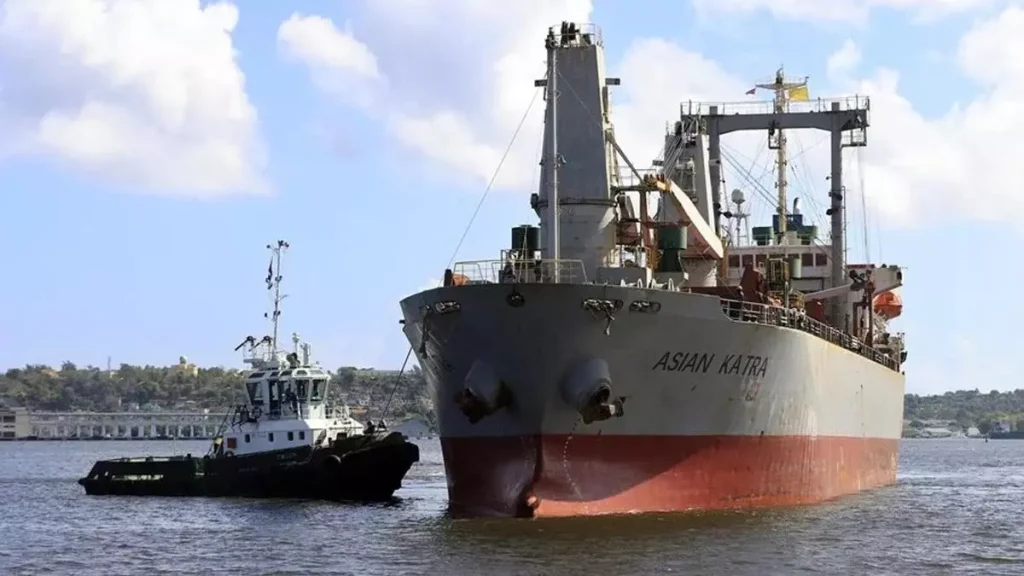
 14ymedio, Havana, September 14, 2026 – The U.S. has maintained an aerial surveillance presence off Mexico’s Atlantic coast in recent months, an activity that a Mexican maritime intelligence company considers “unusual.” According to its interpretation, these flights are tracking vessels suspected of breaking the oil blockade imposed on Cuba by Washington.
The firm is Ehrlich Maritime Security, and it analyzes the matter in its monthly report Mexico’s Maritime Domain Dispatch. According to the report, last month was the ninth consecutive month in which U.S. surveillance flights were recorded off the Yucatán Peninsula. The text points out that the Bay of Campeche and the Yucatán Channel are not main maritime drug-trafficking routes and therefore considers the repeated occurrence of this type of operation in the area “anomalous.”
According to the analysis, signed by the firm’s director, Christian J. Ehrlich, the missions could be aimed, at least in part, at locating and tracking specific cargo ships and oil tankers suspected of participating in irregular activities or that could be seeking to evade U.S. sanctions. However, it clarifies that this has not been confirmed by Mexico’s Secretariat of the Navy or the U.S. armed forces.
Analysts emphasize that this type of military operation is usually framed as joint security tasks between the two countries
Among the aircraft detected are the Boeing P-8 Poseidon and the MQ-4C Triton drone, used by the U.S. Navy for maritime patrol, intelligence, surveillance and reconnaissance missions. Analysts emphasize that this type of military operation is usually framed as joint security tasks between the two countries, and is normally coordinated with the armed forces. However, that has not been the case here. The report cites a documented precedent that may explain the reason for these flights.
Last January, Reuters and Politico magazine revealed that at least a dozen MQ-4C Triton drone missions had flown routes that coincided with those of Mexican oil tankers headed for Cuba, just when the White House was pressuring Mexico to cut off those shipments. A Mexican official quoted by Reuters said at the time that the drone activity was impossible to interpret as anything other than a warning.
The last Mexican vessel to dock on the Island was the Ocean Mariner, on January 9, with 80,000 barrels of crude oil, and since then it has only sent humanitarian shipments without fuel.
Ehrlich Maritime Security insists that these flights do not fit conventional counternarcotics patrols: maritime drug trafficking activity is concentrated off Chiapas, Oaxaca, Guerrero and Michoacán, in the Pacific, not in the Gulf. But the flight routes documented since last December are concentrated along the coast where the oil export infrastructure is located and in the Yucatán Channel, rather than extending toward the Caribbean, where the bulk of the U.S. counternarcotics operation known as Operation Southern Spear is concentrated.
The report also records the rescue, on August 20, of the Cuban vessel that had been adrift for nine days after leaving Pinar del Río bound for Yucatán. The Mexican Navy’s Ninth Naval Zone rescued 16 people: 12 adults and four children.
The authors of the analysis link that increase in emigration to the deterioration of conditions on the Island, and they anticipate that this type of rescue will continue to be common in the area for the rest of the year.
Translated by Regina Anavy
______________________
COLLABORATE WITH OUR WORK: The 14ymedio team is committed to practicing serious journalism that reflects Cuba’s reality in all its depth. Thank you for joining us on this long journey. We invite you to continue supporting us by becoming a member of 14ymedio now. Together we can continue transforming journalism in Cuba.