The Holguín establishment is introducing the sale of private products on consignment while the supply of medicines falls to a minimum.
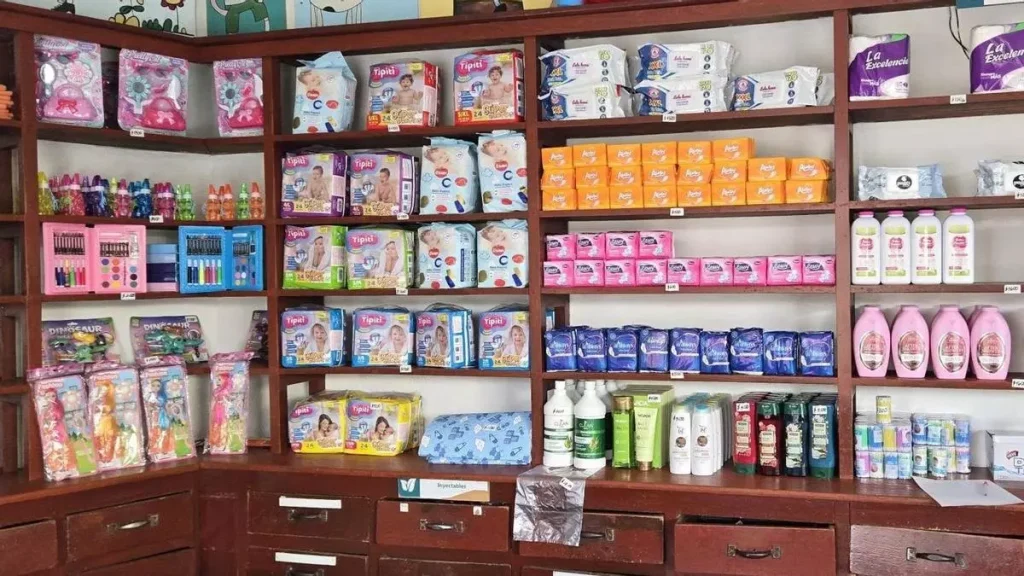
 Miguel García, Holguín, September 14, 2026 – For decades, entering a Cuban pharmacy meant finding bottles, boxes of tablets, bottles of alcohol, cotton and the occasional hygiene product. Then came shortages, long lists of unavailable medications and lines to obtain an antibiotic or a painkiller. But the establishment known as Peralta Pharmacy, in the Holguín neighborhood of the same name, has taken another step in the evolution of the species: now it looks like a variety store.
“In the medication section there were only a few bottles of eye drops,” says a customer who entered the establishment this Monday thinking it still sold pharmaceuticals. The surprise was greater because barely ten days earlier she had passed by, and “it wasn’t like this, you could still not see that it transformed into a little store.”
A general look confirms the metamorphosis. Behind the long wooden counter, the shelves now display disposable diapers, shampoo, deodorants, soaps, cosmetics, feminine hygiene products, toothpaste and household items. There are also toys, dolls, children’s makeup sets, combs and even small plastic containers. Everything is arranged with an abundance and colorfulness that contrast with the proverbial emptiness that has characterized State pharmacies for years.
The pharmacy provides the space and its staff handles the direct sale to the public; in return, a portion of the profits ends up in the hands of the State
The change does not mean, however, that the establishment has been leased to a private individual. The formula chosen is more complicated: a “consignment sale” contract allows self-employed workers to place their merchandise there. The pharmacy provides the space, and its staff handles the direct sale to the public; in return, a portion of the profits ends up in the hands of the State.
The operation even has its own geography within the establishment. On some shelves, signs remain reminding customers of the establishment’s original function: “Natural and chemical dispensary products,” “Injectables” and “Solid pharmaceutical forms.” Below, however, reality has changed its prescription. Where medications would normally be expected, there are colognes, hair products and toiletries.
Even the façade retains the large “Pharmacy” sign, enough for any unsuspecting neighbor to enter looking for some drops for blood pressure, an antipyretic or some medication to relieve pain. Once inside, they may not find any of that, but they will have better luck if they need diapers, a doll or a children’s makeup set.
The transformation of Peralta Pharmacy sums up a paradox that extends throughout Cuba. While the healthcare system is going through a severe shortage of medications and supplies, State establishments are seeking income by opening their counters to private merchandise that can actually make its way onto the shelves.
At least, the shelves are no longer empty. It is a visual victory that is not insignificant in times of scarcity. The only drawback is that, behind its sign, what is hardest to find is precisely the medicine.
Translated by Regina Anavy
______________________
COLLABORATE WITH OUR WORK: The 14ymedio team is committed to practicing serious journalism that reflects Cuba’s reality in all its depth. Thank you for joining us on this long journey. We invite you to continue supporting us by becoming a member of 14ymedio now. Together we can continue transforming journalism in Cuba.