Photovoltaic equipment purchased from the neighboring country rose from $500,000 in 2025 to $6.3 million so far this year.
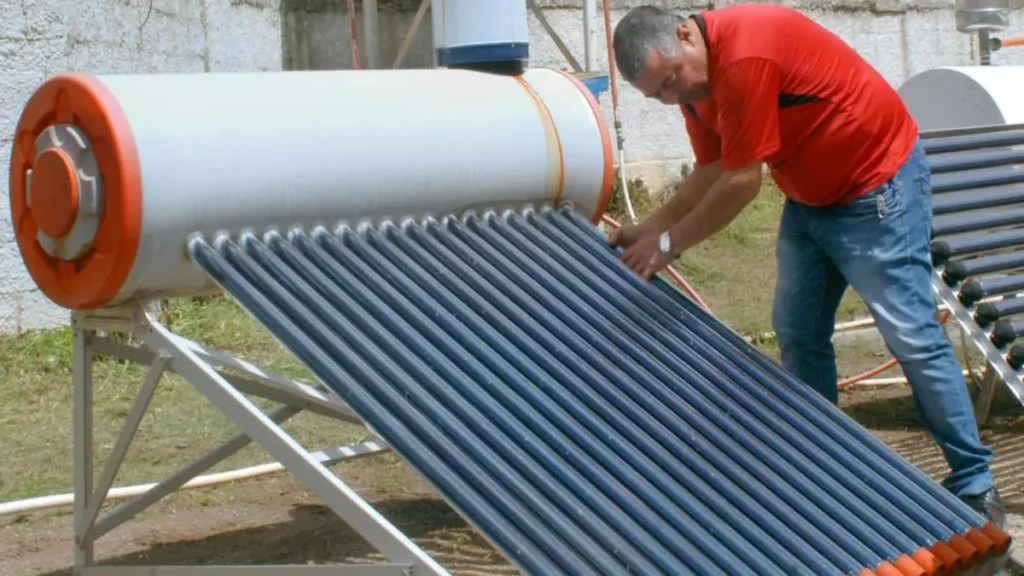
 14ymedio, Madrid, October 7, 2026 – The U.S. and China are fighting another small battle in Cuba: photovoltaics. Although the Asian giant is an incomparable exporter both worldwide and specifically to the Island, a combination of proximity, the liberalization of measures, and the Cubans’ pressing need have turned the northern neighbor into a growing supplier.
According to data from the U.S.-Cuba Economic and Trade Council (Cuba Trade), compiled by the economic portal Bloomberg, so far this year the U.S. has exported solar cells and modules worth $6.3 million to the Island, 1,070% more than the $500,000 exported the previous year. In addition, this represents more than 185 times the total for 2024.
“It is somewhat ironic that Cuba could become an important renewable energy export market for U.S. companies,” John Kavulich, president of Cuba Trade, told Bloomberg. “Especially considering the White House’s unfavorable stance toward renewable energy.”
“It is somewhat ironic that Cuba could become an important renewable energy export market for U.S. companies”
The outlet specifically recounts the case of La Campana, an events venue located in the municipality of La Lisa that has invested $10,000 to become independent not only from the national electric system, but also from the noisy generator they used for 15 years and for which finding fuel was becoming increasingly difficult and expensive.
A relative of the owner living in the U.S. was the one who sent him, through the CubaMax shipping agency, the 5-kilowatt-hour lithium batteries he needed, previously purchased on Amazon. As Bloomberg recounts, while the Island suffered its seventh nationwide blackout of the year last September, the guests continued partying under La Campana’s lights and did not even know what had happened until they left the venue.
China is by far Cuba’s main supplier of solar energy equipment. In 2025 alone, Beijing sent $117 million worth of photovoltaic equipment to the Island, compared to just $5 million in 2023. At the beginning of 2024, the Cuban regime announced the construction of 92 solar parks by 2028 through contracts with two Chinese companies. Of that total, more than 50 have already been completed.
Added to this are the 10,000 kits delivered directly by the Cuban government in two batches of 5,000, which have been installed in medical centers, isolated areas, and facilities serving vulnerable populations. In addition, in 2025 Cuban authorities spoke of a donation that could be used to build another 22 photovoltaic parks of 120 MW, seven of which already have the initial equipment needed to begin construction.
In this way, China, the world’s largest exporter of this technology, is responsible for nearly 80% compared to 1% for the United States. It has become the main contributor to the change in the Island’s energy matrix by selling to the State, which also markets the equipment at retail through Copextel to private individuals and businesses.
Bloomberg points out that, in contrast to the growth in sales from the U.S., imports from China have slowed. It bases this on exports recorded through the end of July, when the value of sales had reached $19.5 million, little compared to the aforementioned $117 million in 2025. Although half a year remains to be added, the decline is significant, at 83%, although the agency is comparing an entire year to seven months according to the report.
The U.S. represents a much smaller figure when taking into account that China has exported solar equipment worth three times as much, but another factor to consider is the recipient. While Beijing is a state-level supplier, kits for private individuals and private businesses arrive from U.S. ports.
While Beijing is a state-level supplier, kits for private individuals and private businesses arrive from U.S. ports
In 2021, the Island’s government authorized duty-free imports for Cubans, a measure that was expanded in mid-2025 to companies, which have since been exempt not only from paying customs duties but also airport fees, all in an attempt to expand renewable energy amid an extreme energy crisis. In 2026, the situation has worsened with the end of Venezuelan oil deliveries and the U.S. blockade of crude shipments to Cuba from any country.
In August, the authorities also published a resolution authorizing the private sector to generate and sell electricity produced in this way, by allowing it to sell its surplus to the State.
No solution has been sufficient to alleviate the serious national energy crisis, among other reasons because the weakness of the thermoelectric plants prevents them from robustly compensating for the fluctuations inherent to renewable energy. In addition, the lack of batteries capable of storing electricity generated during daylight hours renders the solar parks ineffective in the middle of the night, during peak hours.
“Solar energy is a good investment as long as it is done intelligently, something that, unfortunately, they are not doing at the moment,” Jorge Piñón, a researcher at the University of Texas Energy Institute, told Bloomberg.
“The reason Cuba has not stopped, collapsed, or ground to a halt is because the economy has shrunk almost to the same extent as the volume of fuel it used to import,” Kavulich concludes.
Translated by Regina Anavy
______________________
COLLABORATE WITH OUR WORK: The 14ymedio team is committed to practicing serious journalism that reflects Cuba’s reality in all its depth. Thank you for joining us on this long journey. We invite you to continue supporting us by becoming a member of 14ymedio now. Together we can continue transforming journalism in Cuba.