At least 24 graduates of the Nelson Mandela-Fidel Castro program remain unemployed in the Eastern Cape, and the authorities attribute it to budget problems
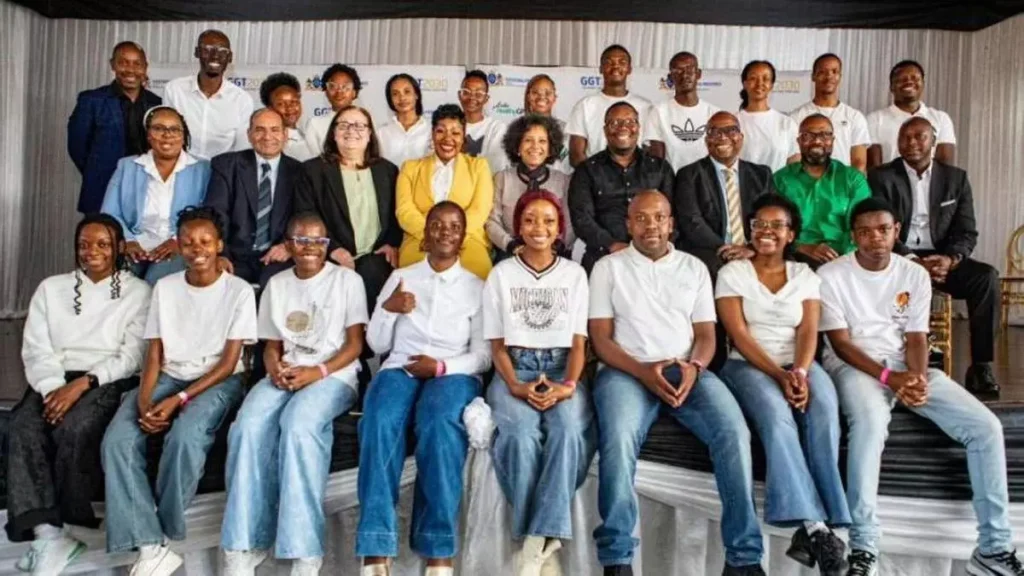
 14ymedio, Madrid, October 6, 2026 / The hundreds of thousands of dollars that South Africa invests in the Nelson Mandela-Fidel Castro student collaboration program with Cuba are not proving very useful in strengthening the African country’s public health system. According to the Eastern Cape provincial health department, at least 24 doctors who trained on the island cannot obtain a job in public facilities due to a lack of budget to meet the demand, as the local outlet The Herald reported this Tuesday.
The publicly funded program provides for students to complete a medical degree in Cuba and “for the doctors to work within the [South African] public service for a number of years equivalent to those for which they were funded,” explained Siyanda Manana, spokesperson for the South African Department of Health. The official also confirmed that approximately 17.9 million rand – more than a million dollars – has been spent on this program over the last four years. “If we are unable to employ doctors, they are released from their contractual obligations,” she added.
However, some of the professionals who graduated from Cuban universities, and who have also already completed their community service, have been looking for work for three years and are disappointed by the lack of a solution to a scheme that funds their training in Cuba but which, nevertheless, cuts the budget for the jobs they could find in their own country.
The problem of vacant posts in health institutions that lack authorized funding from the Treasury was acknowledged this year by the South African Parliament as a “human resources paradox”: the country has more than 1,200 unemployed qualified doctors while there are 2,147 vacancies without confirmed funding. Because of this situation, some graduates of the Cuban program have spent years applying and traveling to interviews for posts that ultimately cannot be funded.
If the posts are not funded, why are doctors repeatedly subjected to interviews for positions that cannot be filled?”
Two unemployed doctors who trained at Cuban universities were interviewed by The Herald on condition of anonymity.
The first recounted that his training included seven years of study, a two-year internship, and another year of community service. “We made sacrifices, spent years away from our families, and endured difficult training because we believed in a vision bigger than ourselves,” he said, referring to the promises the program made to them.
The reality he has encountered after his training has been different: “We are repeatedly guided through recruitment processes, called for interviews, and asked to compete for positions, only to discover that some of these are supposedly not funded.”
The doctor is demanding that the health department publish information on funded posts, vacancies, and staffing needs, and develop a plan to employ doctors where necessary. “If there are genuine financial constraints, the government must be honest with us. If the posts are not funded, why are doctors repeatedly subjected to interviews for positions that cannot be filled?”
“I am considering going back to school to get another degree in a different field, because medicine has failed me without even giving me a fighting chance”
The second interviewee says the situation has already discouraged him so much that he has thought about abandoning the medical profession altogether: “As I speak, I am considering going back to school to get another degree in a different field, because, clearly, medicine has failed me without even giving me a fighting chance.”
He also recalled how the Nelson Mandela-Fidel Castro program had promised them that it could improve their family’s circumstances and allow them to serve their community. However, he laments: “Ten years of training, only to stay at home.”
According to official data, more than 3,243 South Africans have been trained under the Nelson Mandela-Fidel Castro program. Last July, 19 students completed their training at Cuban medical universities, and it was announced that another 18 young people from the South African province of Gauteng would leave for Havana to train as part of the program.
A written response from South Africa’s Ministry of Health, released by MP Haseena Ismail in 2022, revealed that training South African students in Cuba cost that country’s department $121,082 per course, not counting the 18 months of training that graduates complete afterwards.
“I come from a home steeped in poverty. I know what it is like, but this is serious, worse than my own situation at home”
A report published last week by the South African outlet Daily Maverick, based on the testimony of a student, describes the poor hygiene and food conditions that the program’s scholarship holders endure in Cuba. “I come from a home steeped in poverty. I know what it is like, but this is serious, worse than my own situation at home,” the young woman confessed, describing problems with water shortages, the lack of sanitation, and the food crisis at the facility that housed her in Cuba.
MP and Democratic Alliance spokesperson Haseena Ismail told the same outlet that “the Cuban medical training program raises serious questions about cost, value for money, and outcomes.” For his part, South African Department of Health spokesperson Foster Mohale acknowledged that “no supervisory visit has been carried out since 2022,” due to “mounting financial pressures and strict austerity measures,” referring to cuts and restrictions on public spending.
The bilateral agreement to launch the Nelson Mandela-Fidel Castro Collaboration Program was signed in 1996. “The program was established to address the excessive concentration of health personnel in urban areas and in the exclusive private sector, as well as to increase the number of qualified health professionals,” said Naledi Pandor, Minister of International Relations and Cooperation, in 2021 during a parliamentary debate on Cuba.
Translated by GH.
______________________
COLLABORATE WITH OUR WORK: The 14ymedio team is committed to practicing serious journalism that reflects Cuba’s reality in all its depth. Thank you for joining us on this long journey. We invite you to continue supporting us by becoming a member of 14ymedio now. Together we can continue transforming journalism in Cuba.