Díaz-Canel’s visit to the neighborhood brings police, plainclothes agents, and a stay-at-home order that disrupts even the most basic tasks.
 14ymedio, Havana, Yoani Sánchez, Generation Y, October 6, 2026 / This Tuesday my house is still my house, but the boundary of my home has shifted to the ground floor of the building.
Miguel Díaz-Canel participated in an official event nearby, and, as so often happens when a high-ranking official is in this part of Havana, the neighborhood’s appearance changes. Unfamiliar faces appear: police officers, plainclothes agents, people who have been standing in the same spot for hours doing nothing a neighbor would consider normal. Some are watching the street; others, the entrance to the stairwell.
I could describe this day as a complaint about police surveillance, but that would only tell barely half the story. The other half is more mundane and, perhaps for that reason, explains better what it means to be locked up.
To live in Cuba today requires a very close relationship with the street. You don’t do a weekly shop and store everything neatly in the pantry. You go out because bread has appeared, because someone said eggs are being sold cheaper on the corner, because you need to find medicine, recharge your phone, sort out some paperwork, ask about something that wasn’t there yesterday and might not be there tomorrow either. Daily life is a series of small excursions into the outside world.
Preventing someone from leaving their home isn’t just about taking away a few hours of freedom. It is about disrupting a domestic routine held together by a thread.
That is why preventing someone from leaving their home isn’t just taking away a few hours of their freedom. It’s altering a domestic routine held together by a thread. What in another country might be postponed until tomorrow, here can become unavailable in the blink of an eye.
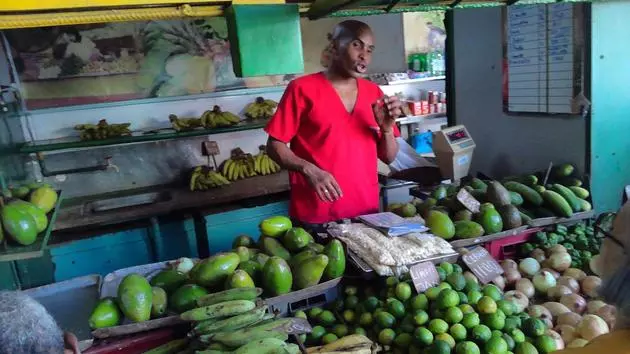
There is a miniscule dimension of control that barely surfaces in grand discourses about rights, repression, or authoritarianism. It is something much simpler. Today, someone decided I can’t go out to buy an avocado.
And the avocado suddenly acquires an unexpected political dimension.
Also the detergent that needed to be sought out, the pending visit, the dog that needed a walk, the conversation that could only happen face to face. Power enters life in this way, not always with a spectacular blow, but by disrupting a shopping list, postponing hugs, and reducing the food on our plates.
If I had a doctor’s appointment, one of those that can take months to get, I’d have to choose between missing it or trying to explain to an agent of the political police that my body also has its own agenda. If today were the deadline for some paperwork, I’d sit on the balcony watching the hours pass by while an office, just a few blocks away, opens, serves customers, and finally closes.
I also couldn’t get a fan essential for sleeping during blackouts repaired, or keep an appointment with someone who might have crossed half the city to see me. I couldn’t even take out the trash at its time. In Cuba, where almost nothing can be resolved with a phone call, a click, or a home delivery, being physically present remains an indispensable requirement for surviving the bureaucracy and shortages.
All because, just a few meters away, someone important needed to pass by. To ensure the movement of one, others are immobilized. The government motorcade moves along an unobstructed street; but behind some doors, life is on hold.
______________________
COLLABORATE WITH OUR WORK: The 14ymedio team is committed to practicing serious journalism that reflects Cuba’s reality in all its depth. Thank you for joining us on this long journey. We invite you to continue supporting us by becoming a member of 14ymedio now. Together we can continue transforming journalism in Cuba.