It is natural that the millions of Cubans who have acquired American citizenship see the future of Cuba linked to the country where they have been able to prosper.
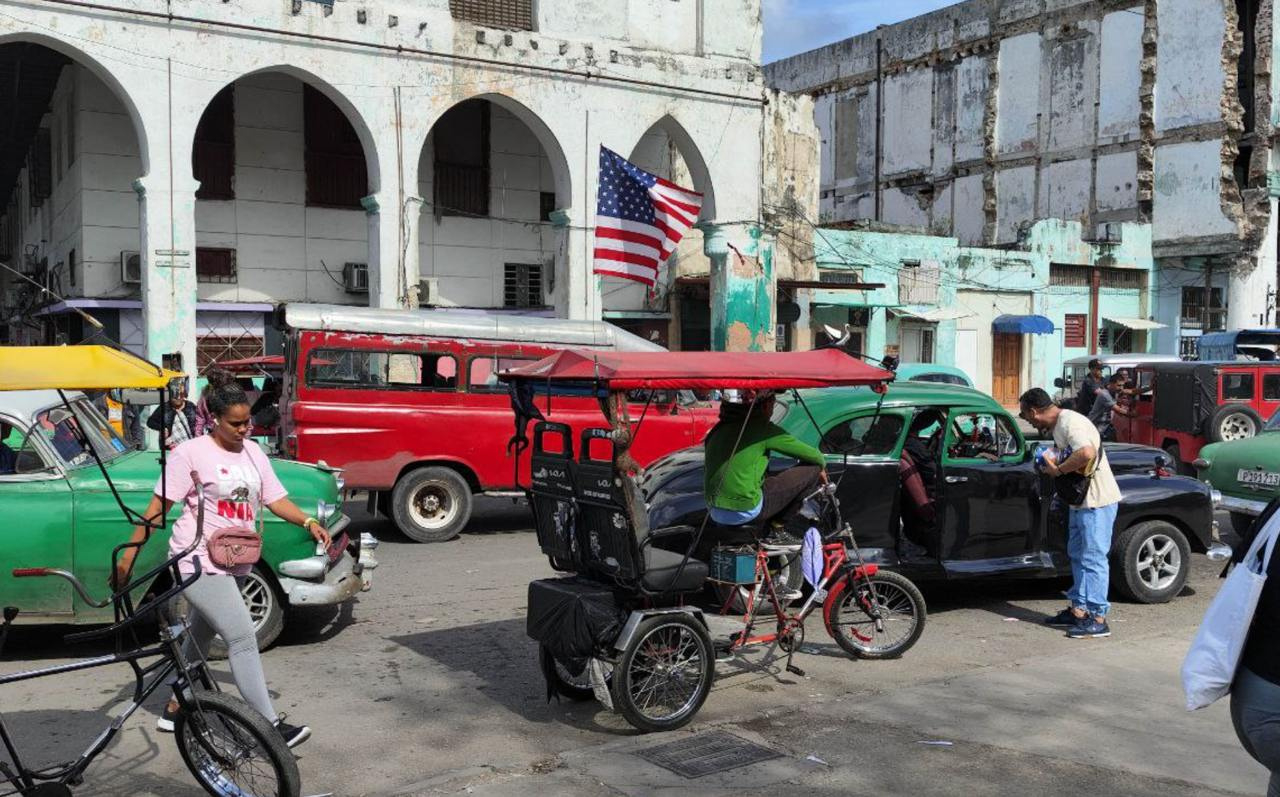

14ymedio, Yunior García Aguilera, Madrid, 28 March 2025 — The Castro-communist regime, whose narrative has been fundamentally based on its dispute with the United States, has always used the specter of annexationism as an argument in its favor. According to its theorists, the northern power desperately desires to seize Cuba, even today. To support their thesis, they use old theories such as the “low-hanging fruit ” of John Quincy Adams (1823), the Monroe Doctrine (America for Americans), and the doctrine of Manifest Destiny. On the other hand, the regime’s opponents have been repeatedly labeled “lackeys of the Empire” or, simply, as annexationists. In this way, Castroism hides behind a supposed defense of national sovereignty to legitimize itself.
One might suspect that Cuba’s State Security itself has been responsible for spreading annexationist sentiments among a segment of the exile community and the opposition to bolster its narrative. And while I have no doubt this is perfectly suited to their narrative, I also don’t ignore other reasons why this current of thought has all the fuel it needs to spread spontaneously.
Let’s be frank, annexationist thinking has existed among Cubans for more than two centuries. Its origins date back to the late 18th century, within the Creole slave-owning bourgeoisie. On the one hand, they were disappointed with the decline of Spain, feared abolitionist pressures from England, and were terrified by the slave revolutions taking place in the region. This sector saw in its allegiance to the southern United States an opportunity to maintain the stability of the slave economy. Even our flag has an annexationist origin, designed by the Venezuelan Narciso López, a staunch defender of that movement.
Within the United States itself, rejection of the idea of Cuba becoming part of the Union was growing.
However, within the United States itself, rejection of the idea of Cuba becoming part of the Union was growing. Perhaps the most striking reflection of this contempt for this option was the article “Do We Want Cuba? ” published in The Manufacturer in 1889. The article praised the land but despised its inhabitants.
White Cubans were categorized as an inferior race, effeminate, lazy, morally deficient, and naturally incapable. The main argument used to justify our inability to be free was precisely the continued failure of our rebellions.
Black Cubans were treated even worse, with the argument that they were “clearly on the level of barbarism.” According to the article, the only possibility of annexation was to completely replace the population. But even so, they feared that the Anglo-Saxon race would degrade under the effects of the tropical sun.
Obviously, the pamphlet was rejected by Cuban patriots, especially José Martí. The annexationist tendency gradually declined, while support for the independence ideal grew. Later, during the Republic, the rejection of the Platt Amendment would be one of the driving forces behind an increasingly nationalist outlook among Cubans.
Then came the Revolution, capitalizing on and radicalizing a supposed nationalism, although in practice it turned the island into a satellite of another foreign power: the USSR. The oversaturation of anti-American discourse, out of exhaustion, provoked the opposite effect in a large part of the Cuban population, resurrecting annexationist thinking.
While in the rest of Latin America the word “gringo” is often used to refer to Americans, in Cuba the word “yuma” is used, which has a connotation that is far from pejorative. The average Cuban tends to see in the US, and especially in Miami, an image that contrasts completely with the precariousness and misery they suffer on the island. On the other hand, it is only natural that the millions of Cubans who have acquired American citizenship over the decades see Cuba’s future inextricably linked to the country where they have been able to prosper.
In short, annexationist thinking not only has historical roots but is also a direct result of the political, economic, and social failure of the Castro regime, as well as the continued mass exodus of Cubans to the United States.
For my part, leaving aside any ideological bias, I don’t believe the American powers are seriously considering the possibility of annexing Cuba. The current US president, when he talks about expanding his territory, looks more to the north: to Canada and Greenland. This administration, when it looks south, doesn’t see any ripe fruit or anything like it. It goes and dreams… of very high walls.
I don’t think the American powers would seriously consider the possibility of annexing Cuba.
There are reasons to believe that the majority of the Cuban opposition desires a free and independent country. Beyond our differences, I believe the prevailing vision is a future Cuba that maintains a normal relationship with its northern neighbor, without renouncing our sovereignty. However, we cannot turn a blind eye to the differing opinions growing in certain exile communities.
Finally, and to dispel any doubts about the regime’s hypocrisy when it uses the word “sovereignty,” it is enough to recall Díaz-Canel’s words after his last visit to Moscow. The hand-picked dictator said he was deeply moved when Lukashenko reminded him that Cuba “was also a former Soviet republic.” He told this to Ramonet, his eyes watering with nostalgia. And he repeated it to Bruno Rodríguez Parrilla, moved and with goosebumps, from the presidential plane. When talking about annexationism, this anecdote cannot be forgotten either.
____________
COLLABORATE WITH OUR WORK: The 14ymedio team is committed to practicing serious journalism that reflects Cuba’s reality in all its depth. Thank you for joining us on this long journey. We invite you to continue supporting us by becoming a member of 14ymedio now. Together we can continue transforming journalism in Cuba.