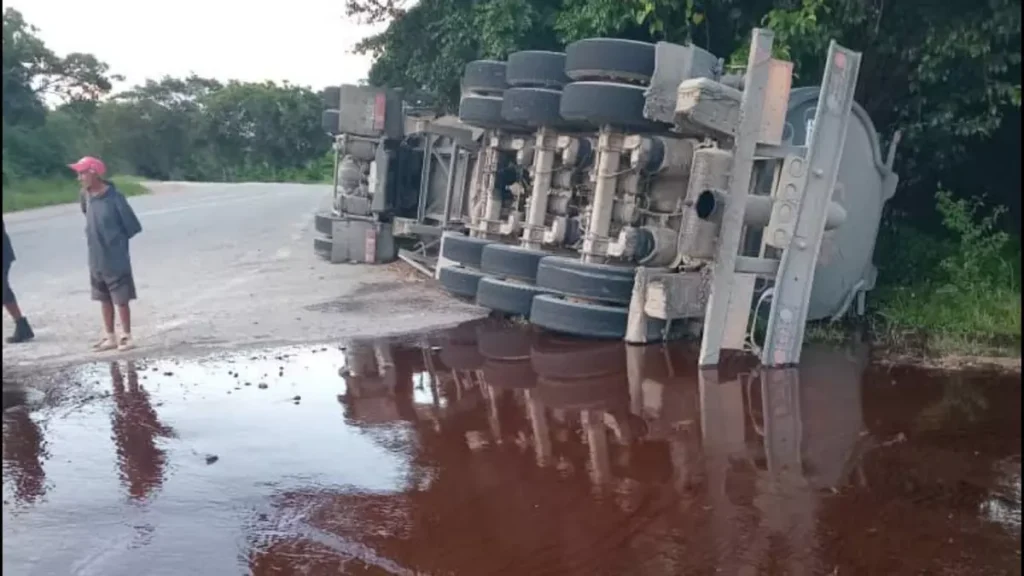
Of these, 14 are in the Melanio Hernández sugar mill in Tuinucú, and six are in the Uruguay, located in Jatibonico. The repairs in the workshop of this last mill, says the report, “have been slowed down by electricity problems associated with the lack of a transformer and the power blackouts that occur on work days.”
The Sancti Spíritus provincial newspaper reports that Ferroazuc, the State company in charge of transporting the raw material to the mills, “intends to get about 130 cars ready,” an effort which it recognizes is “challenging in the midst of limitations and the time remaining before the start of the harvest.” Escambray warns that “Ferroazuc’s efforts in Sancti Spíritus need to advance further.”
which the author, Juan Soto Cutiño, concludes the article.
“Given all the complexity of a harvest, it is not feasible to mobilize all that equipment”
The article explains why the provincial government put the Antonio Guiteras mill at the head of the campaign instead of the Majibacoa mill. The Guiteras is “in better technical condition and easier to repair, with a competent labor force and a history of producing that is recognized by the country.”
Eddy Felipe, a representative of Azcuba in the province, added that it was also because of the low availability of cane to harvest for the Majibacoa mill.” There are only 130,000 tons of cane considered “fit to be processed,” the article continues, a quantity that at a rate of 4,550 tons per day and with 70% of the potential capacity of the mill, “would last for only 24 days of operation.”
“Let’s face it,” says Periódico 26. “Assuming all the complexity of a harvest — from the preparations to the start-up of the large agro-industrial chain that it belongs to — it is not feasible to mobilize all this equipment with the high cost involved, just to work a few days and produce a little sugar.”
In addition, the Majibacoa is carrying out two campaigns in which it is not even producing sugar but cane syrup, the same as the Colombia mill, which has survived four campaigns on the basis of this unrefined mixture. Cane syrup is used to produce rum, says the newspaper, and with a classification that is very much in demand and well-priced. Considering current conditions, this is very healthy for the economy of this sugar company.”
The fourth sugar mill in Las Tunas, the Amancio Rodríguez, is, according to Periódico 26, “the most critical and worrying case. It has been completely inactive for several years, and as can be seen on the ground, this situation could last for who knows how long.”
Therefore, it proposes to establish as a priority the planting of sugarcane. But the progress of this activity is also a disaster. The program, which includes 97.8 hectares of the Colombia, 143.8 hectares of the Amancio Rodríguez, 562.6 hectares of the Majibacoa and 1,092.5 hectares of the Guiteras, “is experiencing delays, to a greater or lesser extent, in all these companies.”
Juan Soto Cutiño recalls with nostalgia “those times when the Sugar Union organized competitions on weekends, even in Boyeros, and there were frequent mobilizations in support of the planting. The political and administrative directors of the municipality demanded concrete figures from the agencies of the areas to be planted, and the Union of Young Communists took up the challenge as a shock task.” But he is not deceived: “I recognize that present circumstances are in no way similar to those in the past.” Then he concludes by referring to the US embargo: “It would be a mirage to imagine great results amid the circumstances aggravated by the blockade*.”
“It would be a mirage to imagine great results amid the circumstances aggravated by the blockade”
That there wasn’t enough cane was something the residents of Artemisa warned about last month. If “the routines” do not change there will be no sugar, they asserted. Then, the official press of the province found that “history repeats itself. A panoramic view in any municipality with the cane tradition of Artemisa shows hectares of weeds where yesterday there was cane, so that only 47% of the cane expected for this period has been planted, 814 hectares of a plan for more than 1,700,” detailed the report.
The 2024/2025 harvest turned out to be the worst in Cuba’s history, although the real figures are unknown because the regime does not provide them. Last August, the Spanish agency EFE made a count based on the provincial press and concluded that, at best, they are more than 10,000 tons below the terrible harvest of 160,000 tons produced the previous year.
Fifteen sugar mills participated in the campaign, and 10 reported their results to the official media: a total of 95,584 tons. The remaining five did not disclose their production figures, but it is known that they all targeted 52,068 tons of sugar. That is, if they had complied with the plan, the harvest would have amounted to 147,652 tons.
This is far from the 8.5 million tons that the Island produced in the mid-1980s, when there were Soviet subsidies and sugar was still considered an economic engine and its main export.
President Miguel Díaz-Canel’s late August meeting with Zhang Anming, deputy general manager of the giant Guangxi State-Controlled Capital Operations Group Limited — the leader in sugar production in China — with the goal of exploring “joint projects,” indicates that Cuba is also counting on China for the recovery of the sugar industry.
However, the officials have published nothing else about this.
______
*Translator’s note: There is, in fact, no US ‘blockade’ on Cuba, but this continues to be the term the Cuban government prefers to apply to the ongoing US embargo. During the Cuban Missile Crisis the US ordered a Naval blockade (which it called a ‘quarantine’) on Cuba in 1962, between 22 October and 20 November of that year. The blockade was lifted when Russia agreed to remove its nuclear missiles from the Island. The embargo had been imposed earlier in February of the same year, and although modified from time to time, it is still in force.
Translated by Regina Anavy
____________
COLLABORATE WITH OUR WORK: The 14ymedio team is committed to practicing serious journalism that reflects Cuba’s reality in all its depth. Thank you for joining us on this long journey. We invite you to continue supporting us by becoming a member of 14ymedio now. Together we can continue transforming journalism in Cuba.
 14ymedio, Juan Ernesto Cambiaso, Panama, 23 October 2025 — With my lungs tired from blowing out so many candles on my 81st birthday cake, I find it necessary to redo the list of pending subjects to find a way to address them. It is not easy, because my physical stamina has diminished, my gait has slowed, my balance isn’t the same, and my health has sent warnings that must be heeded.