Cuban Prosecutor’s Office is Seeking up to Nine Years in Prison for Six People for a ‘Cacerolazo’ Protest in Villa Clara

Among the accused is the writer and independent journalist José Gabriel Barrenechea

For the past 10 months, Barrenechea has been imprisoned at La Pendiente Penitentiary in Santa Clara. / Facebook

14ymedio biggerEFE/14ymedio, Havana, 24 September 2025 — The Cuban Prosecutor’s Office is seeking up to nine years in prison for six Cubans for peacefully banging pots and pans — a cacerolazo — in protest of blackouts during a trial that began Wednesday in the Villa Clara provincial court.

The defendants, including Cuban intellectual and independent journalist José Gabriel Barrenechea, are accused of public disorder, according to the final conclusions of the Prosecutor’s Office’s brief, to which EFE has had access.

Five of the defendants have been in pretrial detention since a few days after the events in question occurred on 7 November 2024.

The trial began in the afternoon, with the defendants’ statements. Activists and family members denounced the arrest of longtime Cuban opposition figure Guillermo ‘Coco’ Fariñas as he was traveling to the courthouse to attend the hearing.

According to the prosecution’s brief , the defendants—with three cauldrons “that could not be seized”—led a cacerolazo in the town of Encrucijada (central Cuba), taking advantage of “the power outage caused by the country’s energy crisis.”

The action, with “incessant blasts” and “high decibels,” was accompanied by repeated shouts of “Turn on the power, we want power.” This, the Prosecutor’s Office argues, resulted in “disturbing the public peace” and “obstructing vehicle traffic on public roads.” continue reading

The Prosecutor’s Office is requesting six years in prison for Barrenechea.

With this description, the Prosecutor’s Office is requesting nine years in prison for two of the defendants, six for Barrenechea, five for another, and four for a final suspect. For the sixth defendant, they are seeking five years of restricted liberty.

The six defendants are all men, originally from Encrucijada, and range in age from 26 to 53. None have a criminal record.

Barrenechea was arrested a few days after the protest. His request to be released pending trial was rejected, and he was only allowed to leave prison to attend his mother’s funeral (but not to visit her, as she was already seriously ill).

On June 25, the Prosecutor’s Office submitted a request to the Provincial Court of Villa Clara for a six-year prison sentence for the journalist, a contributor to this newspaper. The document details that Barrenechea’s “crime”—they initially sought to charge him with sedition—during the peaceful demonstrations after 48 hours without electricity in Encrucijada, was shouting “Turn on the power, we want the power,” in unison with other protesters, and urging “those present not to desist from their actions.”

The document adds that the journalist “shows total disaffection for the revolutionary process and its top leader.” It also notes that he is a citizen with no criminal record, but that he “associates with people of poor moral character and social conduct, and has no recognized employment relationship.”

The document adds that the journalist “shows total disaffection for the revolutionary process and its top leader.”

For the past 10 months, Barrenechea has been imprisoned at La Pendiente Penitentiary in Santa Clara. The facility is “known for its extremely overcrowded conditions and for housing all types of prisoners,” according to the Foundation for Pan-American Democracy’s Complaints Center. His stay there has represented “a serious risk to his life,” the organization emphasized in a statement days after the journalist’s arrest.

While in prison, the journalist suffered the death of his mother, Zoila Esther Chávez, who depended on him, and was only allowed to attend her funeral for an hour and a half.

Amnesty International’s Cuba researcher, Johanna Cilano, addressed the trial on social media this Wednesday. “Protest is a right; no one should be imprisoned simply for exercising their human rights,” she asserted.

Cilano linked this case to two other recent trials in Cuba, such as the one following the Bayamo protests of March 2024, in which 15 people were sentenced to up to nine years in prison for protesting.

____________

COLLABORATE WITH OUR WORK: The 14ymedio team is committed to practicing serious journalism that reflects Cuba’s reality in all its depth. Thank you for joining us on this long journey. We invite you to continue supporting us by becoming a member of 14ymedio now. Together we can continue transforming journalism in Cuba.

Matanzas, Cuba: “If You Want a Rental With Guaranteed Running Water, It Won’t Go For Less Than 20,000 Pesos a Month”

Between price increases and payments in dollars, Maura and her granddaughter carry their lives on their shoulders every few months in Matanzas.

Most landlords in Matanzas now require rent payments in dollars, even though the average salary barely exceeds 6,000 pesos. / 14ymedio

14ymedio bigger14ymedio, Julio César Contreras, Matanzas, Cuba, September 23, 2025 — The boxes still hold clothes, and in one corner some kitchen utensils are piled up. Maura and her granddaughter’s life fits into suitcases and bags, always ready for the next move. Living from rental to rental means never completely unpacking, because all it takes is for the owner to raise the price, or decide to repossess their home, for the routine to once again become domestic exile. The rise of the dollar on the informal market has caused the price of other people’s housing to skyrocket.

In just six months, Maura has had to move twice. This Sunday, at age 64, the woman set out again to explore the neighborhoods of Matanzas in search of a space that meets their basic needs. “The only way to find something is like this, walking and asking around,” she says with resignation. She left her small house in the town of Carlos Rojas behind a long time ago. “There’s no future for my daughter there, and she’s studying at the university. My daughter, the one in the United States, is the one who pays the rent. But even with that help, we’ve had to look for something cheaper: we barely have enough for the basics.”

continue reading

In March, it seemed like luck was on her side: she managed to rent a detached house in Peñas Altas for 15,000 pesos a month. However, just a month and a half later, the landlord showed up demanding a rent increase of $50, a little over 21,000 pesos at the current exchange rate. “The house barely had the basics, and the worst part was that he gave us ten days to come up with the payment. Otherwise, we’d have to leave. In the end, we had to pack everything up again. Today, a similar place, with one bedroom, bathroom, kitchen, small living room, and a few appliances, costs twice as much,” she laments.

“Between my girlfriend and I, we earn 12,000 pesos a month, and that’s barely enough to live on in La Marina.”

The situation isn’t unique. Yordan, who moved from Jovellanos to work for an MSME [micro, small, medium-sized enterprise], knows the rules of the game well. “Between my girlfriend and me, we earn 12,000 pesos a month, and that’s barely enough to live on in La Marina,” he says. His rental: a house with a zinc roof, was handed over empty. “We even had to bring the bed. Now the owner asks for two months’ advance, but if we find something before then, we’ll leave. It’s a mess,” he admits.

The couple has found, during their search, that prices are rising overnight. “A month ago, we saw a small house near the pediatric ward: they were asking 8,000 pesos, and now it’s going for 10,000. It only has one room, one bed, and an electric stove, but the power doesn’t go out there often. That makes it expensive,” Yordan explains. The water supply is another factor: “Where we are, we have to store it, because they turn it on every four or five days. If you want a rental with guaranteed running water, it doesn’t go for less than 20,000 pesos a month.”

Without contracts, tenants are at the mercy of their landlords. Most now demand payment in dollars, even though the average salary barely exceeds 6,000 pesos. “I work in Versalles and I can’t even dream of living there,” adds Yordan. “Small houses cost $100, and the best-equipped ones, $150. Besides, since it’s an illegal business, there are no signs: they get it through contacts, almost secretly.”

Some opt for a desperate solution: sharing a roof with almost strangers to share expenses.

At the same time, scams are proliferating. Sandra, a nursing student, knows this from experience. “They post rentals on social media. When you write to them, they tell you that to access a WhatsApp group with many listings, and you have to pay between 500 and 1,000 pesos. Then you realize it’s a trap: they post two or three houses a week, with fake phone numbers. I fell for it once, it was enough,” she says.

The young woman, a third-year student, is looking for a room near Faustino Pérez Hospital, fed up with the appalling conditions of the student residence. “The most I can pay is 10,000 pesos. But if I convert it, that’s barely $24. And with the peso falling every day, everything is more difficult.”

Some opt for a desperate solution: sharing a roof with near-strangers to share expenses. Sandra doesn’t rule out doing so with a school friend. “Anything,” she says, “rather than continuing in a bunk bed, eaten away by mosquitoes, unable to shower, and hungry.”

____________

COLLABORATE WITH OUR WORK: The 14ymedio team is committed to practicing serious journalism that reflects Cuba’s reality in all its depth. Thank you for joining us on this long journey. We invite you to continue supporting us by becoming a member of 14ymedio now. Together we can continue transforming journalism in Cuba.

The Cuban Cecil Aldana, is the Leading Scorer for Ecuadorian Women’s Soccer

The 22-year-old, originally from Bayamo, arrived in Ecuador three years ago and plays for the Guerreras Albas team

Cecil Aldana Tamayo has been the top scorer of the tournament. / Radio Bayamo]

14ymedio bigger14ymedio, Havana, Andy Lans, September 23, 2025 — Cuban soccer player Cecil Aldana Tamayo dazzled in the 2025 edition of the Ecuadorian Superleague, finishing as as the top scorer and runner-up as part of the Guerreras Albas de Liga de Quito team.

During the regular leg of the tournament, Cecil guided her team to finish second with 17 wins in 22 games. Thus, the Guerreras Albas qualified for the semifinal in which they prevailed with scores of 2-0 and 3-0 respectively. Aldana scored four goals in both games to lead the team to the first national final in its history in the women’s field. As for the title, the League succumbed to the Dragonas of Independiente del Valle with a defeat of 0-2 and a 1-1 tie.

An interesting panorama for the player of just 22 years old, originally from Bayamo (Granma Province), who arrived in Ecuador three years ago

Aldana’s 29 goals in the Superleague 2025 earned her the status of top goal scorer of the tournament. She scored the same amount as the Cuban forward for Guerreras Albas in their two previous Superleague seasons, 12 in 2023 and 17 in 2024; in total, 58 goals after three years on the Ecuadorian League circuit. It’s an interesting scenario for the player of just 22 years old, originally from Bayamo (Granma Province), who arrived in Ecuador three years ago and, according to close sources, signed a contract with her club and will listen to offers.

She also plays with the Cuban National Team in the U17 category and is characterized as a technically exquisite attacker, with an extraordinary scoring instinct. She is good at defining the arc of the ball with both her head and her legs. No other Cuban-born professional soccer player is as dominant in their league.

Translated by Regina Anavy

____________

COLLABORATE WITH OUR WORK: The 14ymedio team is committed to practicing serious journalism that reflects Cuba’s reality in all its depth. Thank you for joining us on this long journey. We invite you to continue supporting us by becoming a member of 14ymedio now. Together we can continue transforming journalism in Cuba.
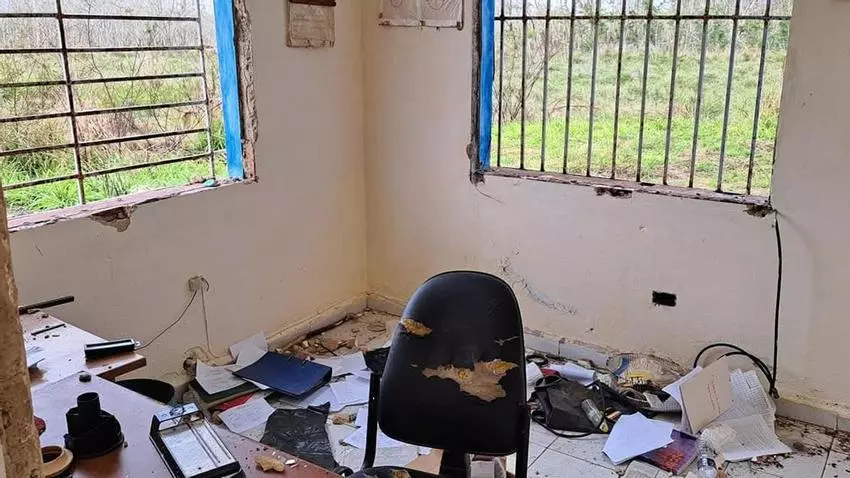
A Fever of Unknown Origin Runs Through the City of Matanzas

Dengue, chikungunya and oropouche are hitting neighborhoods such as Versalles, La Playa and Pueblo Nuevo amid the shortage of medications

On Tuesday morning, several health centers in Matanzas opened with crowded emergency rooms. / 14ymedio

14ymedio bigger14ymedio, Matanzas, Julio César Contreras, September 24, 2025 — In Versalles, Matanzas, the count is made house by house. “There are three patients living there, two in this one, including a child, and here we now have four with symptoms,” describes a neighbor while pointing his finger at the crumbling facades of the neighborhood. Uncertainty spreads with the fever: no one knows for sure which virus is knocking them down, and the shortage of medications further fuels the fear.

On Tuesday morning, several health centers in the city opened with crowded emergency rooms. Patients with headaches, high fever and general discomfort filled the corroded metal benches of the emergency rooms, such as the one at La Playa Polyclinic where Isaac seeks answers. “It’s been three days since I got rid of this pain behind my eyes. I did not want to come here because it wastes the whole morning and they don’t have medicine, but I really feel bad,” confesses the 43-year-old man, who also suffers from diabetes and hypertension.

The health authorities have already confirmed what was feared: dengue, chikungunya and, to a lesser extent, oropouche are circulating in Matanzas. Isaac’s statement reflects the vulnerability of thousands. “Since 2023 we have no family doctor available. What we do have is a garbage dump at the corner of my house, near El Tenis, and a ditch with sewer water. With so much dirt, it’s a miracle that we’re still alive,” he says angrily. continue reading

“Since 2023 we have no family doctor available. What we do have is a garbage dump at the corner of my house.”

Just a few days ago, TV Yumurí published on Facebook an epidemiological alert for the city of Cárdenas that triggered alarms in the population, due to the circulation of viruses transmitted by the Aedes aegypti mosquito. The report warned about “the high incidence of chikungunya, taking into account the disability it causes in people, while a second variant of dengue is also circulating.”

The same scene is repeated In the city of Matanzas. The virus has hit hard in Versailles, La Playa and Pueblo Nuevo. Nancy knows it well: last night her 11-year-old son developed a fever and leg pains. “I understand that these are symptoms of chikungunya, but he already had dengue last year and was hospitalized. I was afraid that he would vomit again like last time and brought him immediately to a pediatrician,” she recounts, holding the little boy’s hand.

Andrés Lamas Acevedo, director of the Provincial Center for Hygiene and Epidemiology in Matanzas, denied that there was a mysterious disease in Cárdenas, after weeks of reports of communities decimated by a condition that the sick describe as very debilitating, causing joint inflammation, high fever and general discomfort. The local press has acknowledged that “last week was the highest number of fevers this year” in the province.

Julio Ernesto Hernández Sánchez, director of Medical Assistance in Matanzas, said that there are 298 beds for patients with dengue, distributed in various areas. / 14ymedio

For his part, Doctor Julio Ernesto Hernández Sánchez, director of Medical Assistance in the province, said that there are 298 beds for patients with dengue, distributed in various areas, from minimum to critical care. However, the scene inside the Hospital Pediátrico Eliseo Noel Caamaño reflects another reality: “They did not want to treat me because it doesn’t give remission. Right here, in a provincial hospital, they don’t even have syringes in the emergency room. So what can you expect from a polyclinic? I’m not leaving here without a diagnosis and treatment,” protests Nancy.

As if that were not enough, the population faces a health crisis from the prolonged blackouts and the shortage of drinking water, which makes it difficult to maintain household hygiene. A resident from La Marina denounces the official improvisation: “When the situation gets worse, they say they will fumigate. That lasts as long as the fuel. After that, nothing.” He lives in front of a huge pool of stagnant water that covers all of Jovellanos street, a mosquito breeding ground. “My son and daughter-in-law are in the hospital with joint pain. The cause is right under our noses,” he says.

The Provincial Health Directorate warns that, according to historical trends, cases will continue to rise until October, when a plateau will be reached and then, hopefully, a decline. But Manuel is suspicious: “This can only be solved with a complete sanitation of the city. If not, it will get out of hand and become an epidemic.”

Translated by Regina Anavy

____________

COLLABORATE WITH OUR WORK: The 14ymedio team is committed to practicing serious journalism that reflects Cuba’s reality in all its depth. Thank you for joining us on this long journey. We invite you to continue supporting us by becoming a member of 14ymedio now. Together we can continue transforming journalism in Cuba.

An Epidemiological Alert Is Published in Matanzas, Cuba With the Increase in Disease

Residents of Cárdenas complain about the accumulation of garbage in the city as outbreaks of chikungunya and dengue increase

Many blame the government for the insalubrity and proliferation of mosquitoes, consequences of the lack of garbage collection, the blackouts and the poverty. / 14ymedio

14ymedio bigger14ymedio, Matanzas, September 22, 2025 — An epidemiological alert due to the circulation of viruses caused by mosquitoes of the genus Aedes Aegypti and announced in Cárdenas, Matanzas, has triggered alarm among the population. TV Yumurí posted on social media about “the high incidence of chikungunya, which causes disability, while a second variant of dengue is circulating.”

The report described the increase in cases as “remarkable” and added that it is cause for commotion among residents of the city, “with symptoms present in all Popular Councils.” Although no deaths have been reported or seriously ill patients, several comments suggest that there are cases of deaths. One person who comments is Israel Roche, who gives his own grandfather and a neighbor as examples.

In Colón, another of the municipalities most affected by the epidemiological crisis, Olga’s family has seen “all my relatives fall one by one into bed,” says the woman, the only one in her household who hasn’t been infected yet. “It causes a lot of pain in the joints, and when it seems that it’s gone it comes back, and for patients who suffer from high blood pressure it makes it shoot up,” she reports.

“Several samples have been sent to the IPK, and the results confirm the presence of Covid”

“My mom, who is almost 90 years old, had a hard time and still has trouble walking,” she explains. ” We took her to the polyclinic but the doctor who treated her could do little; he told her to rest and drink a lot of continue reading

liquid.” Jagüey Grande, Jovellanos, Los Arabos, Santa Marta and Las Guásimas are some of the most affected localities in the province.

“There is no leadership here,” warns a taxi driver living in Santa Marta, who survives by carrying tourists between nearby Varadero and the provincial capital. The man points to the lack of hygiene and the scant spraying against mosquitoes as the main causes of the current health problems suffered by residents in the area. “In Varadero they have fumigated, but the planes and trucks don’t come this far.”

It is also reported on the official page that “several samples have been sent to the IPK (Institute of Tropical Medicine), and the results confirm the presence of Covid or other viruses caused by Aedes.” They add that all health clinics are activated, and conditions have been created to increase the reception of cases in the hospital.

Similarly, fumigation campaigns are announced “even with the shortage of fuel and other inputs needed to fumigate.” Residents of Cárdenas have reacted by complaining about the large amounts of garbage that accumulate in landfills and the lack of clearing of large areas of grass, which are a habitual source of mosquitoes.

The health authorities in the municipality called for extreme care at home and to go to health institutions for any symptoms. They also warned that the greatest risk today is for people with diabetes, hypertension, asthma and other chronic, non-communicable diseases, because of the possibility of “triggering severe complications due to drug shortages.”

Residents of Matanzas remember that the province was one of the most affected during the pandemic, generating the hashtag “SOS Matanzas”

Yaniel Mesa, a young doctor, commented that Jagüey Grande presents the same picture as Cárdenas: “I think all 13 municipalities are equally affected” he wrote. Mesa holds the government responsible for the unhealthiness and proliferation of disease, consequences of the lack of garbage collection, the blackouts and the poverty. “My whole family is ill with a fever of 102.2 degrees, headache, myalgia and arthritis of the large joints. Plus, there is no Metamizole or acetaminophen for pain and fever,” the doctor added.

Residents of Matanzas remember that the province was one of the most affected during the pandemic, generating the hashtag “SOS Matanzas,” which mobilized Cubans inside and off the Island. The territory has also been one of the most affected by the blackouts and water pollution.

The alarm spreads not only to other municipalities in Matanzas but also to other provinces. From Holguín, neighbors report to 14ymedio cases with similar symptoms, without frequent investigations, as in previous outbreaks. They also complain about the increase in mosquitoes and jenenes (gnats) as well as diseases that have begun to be called “covidengue,” since they present symptoms that combine those caused by dengue and Covid-19.

Translated by Regina Anavy

____________

COLLABORATE WITH OUR WORK: The 14ymedio team is committed to practicing serious journalism that reflects Cuba’s reality in all its depth. Thank you for joining us on this long journey. We invite you to continue supporting us by becoming a member of 14ymedio now. Together we can continue transforming journalism in Cuba.

Some National Series Games Are Postponed Due to Lack of Accommodation and Transportation Problems

A few days before this tournament started, some players did not have important parts of their uniforms

The series between Las Tunas and Ciego de Ávila runs the risk of failure /Jitddd

14ymedio bigger14ymedio/SwingCompleto, Havana, September 23, 2025 — The baseball game between Las Tunas and Ciego de Ávila, which was scheduled for this Tuesday at noon as part of the National Series, has been postponed and may not be played until next Friday. The cause: unforeseen problems with the hotel capacity in the Las Tunas area, according to journalist Pavel Otero postig on Monday.

The three-day delay in the schedule for the game could be the least of the evils, since, according to the same reporter, “it is yet to be confirmed” whether the game — and the series — will actually take place. The decision could put the baseball calendar in a predicament, as there are no dates for recovering suspended games.

Fans on social media responded to the journalist’s post and questioned the work of the organizers. “How it is possible that there is no accommodation for the most important event in our country months in advance? The lack of ethics, professionalism and organization now exceed the limits, but no: ‘it is the fault of the blockade.’ “ continue reading

“How it is possible that there is no accommodation for the most important event in our country”

This series is not the only one affected by off-field issues. Pavel Otero also reported that the Industriales team in Havana “had a delayed maritime transport from Nueva Gerona to Batabanó and, because of this, had to walk to Bayamo.” Hours later, he reported that the team arrived in town at 5:00 am, so, at least for this Tuesday, that series was also postponed.

It had already been reported on other occasions that baseball players must deal with housing conditions and even meals that are far from optimal, which eventually affects their performance. A few days before this tournament started, the players did not have important parts of their uniforms and sports equipment.

This delay in the games occurs just days before the start of National Series 64, which, for the first time, began in September, when historically it started in March. The National Institute of Sports, Physical Education and Recreation (Inder) reported last October that it would change the date for both the Third Cuban Baseball Elite League and the National Series.

Next, he said that the reason was to prevent the games from being played “in the months of higher temperatures, with the consequent benefit for their rivals.” However, media such as Escambray pointed out days later, in the context of the “economic war” in which the Island lives, that carrying out the Third Elite League and the 64 National Series would be “counterproductive.”

In the context of the “economic war” in which the Island lives, to carry out the Third Elite League and the 64 National Series would be “counterproductive”

For the Sancti Spíritus newspaper, these events require “important logistics of all kinds, which the country today does not have.”

To justify the postponement of the Elite League, which was contested at the end of each year and changed to last March, Escambray said that “it is inconsistent to carry out an event that has not yet proved its full validity after taking place again, at least not in a country which is debating between distributing a drop of fuel for electricity generation and ambulances, or how to establish guarantees for a low price for the rice and sugar in the family basket and the inputs to produce food and medicine that is missing in the pharmacy.”

The official newspaper even gave as an example the cancelation of three editions of the Olympic Games due to world wars -conflicts that left, in total, about 85 million dead — and the case of Tokyo 2020, which was postponed for a year due to the pandemic: “As far as I know, the Elite League of baseball does not even come close to those events in importance.”

According to the same article, with those “few resources that the country has” this year’s National Series would be prioritized, “which demands an even stronger logistical framework and which is, in short, the main socio-cultural event that Cuba has.”

Translated by Regina Anavy

Cuba Recovers From an Uncertain Start and Beats Argentina in the Pan American Baseball Championship

Led by Jorge Luis Pimienta, the athletes will face Nicaragua this Tuesday, which has two defeats against Venezuela and Mexico

The Cuban team after beating Argentina in the Pan American Baseball Championship / WSBC

14ymedio bigger14ymedio / Havana, September 23, 2025 — After a disastrous first game, Cuba won its second game in the Pan American Women’s Softball Championship, which guarantees three tickets to the 2026 World Cup. This Monday, the team, “with strength and good pace,” won 7-2 against Argentina, as reported by the official news source CubaDebate.

Coach Jorge Luis Pimienta, from Camagüey, could not afford a second consecutive slip, after a chaotic debut against host Venezuela that shook the Cuban team with an 11-0 defeat last Saturday.

Against Argentina, the manager was forced to push his team and replaced Adriana Carrazana after she allowed two runs. However, despite the addition of Alien Garcia, it was not until the fifth inning that the Cubans responded.

“Eleyenni Estupiñán tied the score with an inside hit, and Libya Elvira Duarte took advantage of a sacrifice fly,” at continue reading

Jorge Luis Carneiro Stadium in La Guaira, according to the official media.

This Tuesday, Cua faces Nicaragua, which has two consecutive losses in the event taking place in Venezuela. / Jit

Pimienta leads a team that the Secretary General of the Federation of Cuban Women, Teresa Amarelle Boué, said is “a reflection of how Cuban women have earned the right to decide.” The official recalled that seven entries were obtained in this sport.

Cuba, ninth in the world ranking, faces Nicaragua this Tuesday, which has lost to Venezuela (4-0) and Mexico (11-1). On Wednesday, Cuba will play Nicaragua.

The manager will remain with his base for this game: Libia Duarte, captain of the team, escorted by Yessica Herrera and Elianny Estupiñán.

Cuba’s best international result in women’s baseball is the bronze medal it won at the first Pan American Women’s Baseball Championship held in Venezuela in 2009, 16 years ago.

According to data from the World Confederation of Baseball and Softball, women began playing baseball in Cuba in the 1940s. The organization points to Mirta Marrero and Luisa Gallego as part of a team called Las Águilas. At that time, “Pioneers founded a women’s baseball governing body (Women’s Baseball Sports Organization) in 1947, but the organization no longer exists.”

Translated by Regina Anavy

____________

COLLABORATE WITH OUR WORK: The 14ymedio team is committed to practicing serious journalism that reflects Cuba’s reality in all its depth. Thank you for joining us on this long journey. We invite you to continue supporting us by becoming a member of 14ymedio now. Together we can continue transforming journalism in Cuba.

A Gang Led by a Cuban Is on Trial in Spain for Laundering Drug Money

The prosecutor is requesting prison sentences of more than 200 years and fines totaling more than 47 million euros for the thirty defendants.

Money seized from the criminal organization in the so-called Operation Gunpowder, in 2021. / Capture/National Police

14ymedio bigger14ymedio, Madrid, September 22, 2025 — Around thirty people who were part of a criminal gang led by a Cuban face trial this Thursday in Palma de Mallorca for laundering drug money in Cuba. The prosecutor is seeking prison sentences of more than 200 years and fines totaling more than 47 million euros for the defendants, reports Europa Press.

For a dozen of the accused, the Public Prosecutor’s Office is seeking six years in prison and a €3 million fine, and for nine others, five years in prison and a €900,000 fine. The rest face sentences ranging from two to five years and fines of €6,000 to €300,000.

According to the indictment, the gang, between at least 2018 and 2021, formed an organized structure whose purpose was to acquire assets of varying magnitude in Cuba. They also made transfers to Cuba, the United States, and the Dominican Republic through front men.

According to the same document reported by the Spanish press, the illegal activity was primarily based on unjustified bank transfers through a company located in the Canary Islands, as well as money transfers directly to foreign accounts. False invoices were also issued and money was sent through transfer agents and call centers. In total, between 2019 and 2021, the gang transferred more than half a million euros in drug proceeds. continue reading

According to the Prosecutor’s Office, the accused wove a network of front men, many of them residents of the Island, who served as intermediaries to hide the final destination of the money.

According to the Prosecutor’s Office, the defendants wove a network of front men, many of them residents of the island, who served as intermediaries to conceal the final destination of the money. They also used split bank transfers and false invoices to acquire properties and vehicles in Cuba, in order to give the profits derived from drug trafficking a legitimate appearance.

To launder money in Spain, the leader of the criminal group used the identities of elderly people to create shell companies, devoid of any activity, which allowed him to pretend that the members of the criminal organization were working in the construction sector, according to the police.

Security forces dismantled the gang in 2021, when they arrested around 60 people, including its leader, a Cuban nationalized as Spanish, born in 1973 and identified by the initials YGL.

As part of that operation, officers carried out various searches, seizing nearly €400,000 in cash, more than three kilos of cocaine and 60 kilos of cutting material, as well as a multitude of accessories and luxury items. Twelve of the defendants were sentenced to various prison terms in January 2024 for crimes against public health, membership in a criminal group, threats, and concealment.

But YGL’s background goes back much further. The first major police operation against his organization was Operation Legendario in 2011, which dismantled a clandestine laboratory in Palma de Mallorca and seized cocaine, lidocaine, phenacetin, and large sums of cash. YGL was then in Cuba with his wife, OBF, where he was allegedly arrested following a traffic accident that killed one person, although he continued sending orders to his network. His wife was arrested upon returning to Spain to try to recover the organization’s money.

“It is the most important operation against money laundering that we have carried out in recent years,” said the head of the Money Laundering Group at the time.

YGL reappeared at the head of an even more sophisticated network in 2021. In June of that year, Diario de Mallorca published the results of Operation Pólvora, which culminated in the arrest of 60 members of the organization. The investigation revealed that the network not only trafficked cocaine, but had also set up a money laundering system that diverted more than one million euros to Cuba, the Dominican Republic, and the United States.

“This is the most important anti-money laundering operation we’ve conducted in recent years,” said Inspector Francina Veny, head of the Money Laundering Group, who led the case. Investigators detected small transfers to accounts in Cuba to avoid bank alerts, as well as real estate and luxury vehicle investments on the island.

Operation Pólvora was carried out in three phases: the first, in September 2020, led to the arrest of 28 people, including YGL, and the dismantling of a laboratory where the drug was adulterated and stored before distribution. The second, in November, focused on sales outlets controlled by the Goros clan; and the third, in December, took the police to Galicia, where they arrested the supplier of the chemicals used to cut the cocaine.

The main defendant has displayed coldness and cynicism, even mocking the police when they seized €360,000 in cash from him, insinuating that it was an insignificant sum. The investigation also reveals a violent leader obsessed with controlling his business. A court ruling records how he threatened one of his partners: “I’m plotting against you until I get you, I swear on my daughter’s life that you’ll drown in your sleep, when I get you, try to get my money.” And to another of his clients, he said: “I’ll stick a knife in your mouth, just so you know, and I’ll go quietly and laugh every day for years there in that cell.”

The full identity of the defendants is withheld under Spanish law, but the Prosecutor’s Office describes a hierarchical organization with family members, intermediaries, and front companies responsible for the importation, adulteration, distribution, and laundering of the proceeds. This Thursday’s trial will allow the Prosecutor’s Office to present new evidence regarding Operation Pólvora, including bank transfers, house searches, and testimony from several front men who facilitated the transfer of money to Cuba.

____________

COLLABORATE WITH OUR WORK: The 14ymedio team is committed to practicing serious journalism that reflects Cuba’s reality in all its depth. Thank you for joining us on this long journey. We invite you to continue supporting us by becoming a member of 14ymedio now. Together we can continue transforming journalism in Cuba.

19,000 Tons of Rice Arrive in Havana, Origin Unknown

Cubans have not received rice through the ration book for months, and are asking when the imports became news.

The ship, whose origin has not been disclosed, will disembark for at least 10 days in Havana before departing for Cienfuegos. / Ministry of Domestic Trade

14ymedio bigger14ymedio, Madrid, 22 September 2025 —  The latest shipment of rice to arrive at the port of Havana is of unknown origin, but weighs a significant amount. Up to 19,000 tons, Canal Caribe announced in a report broadcast on the news this Saturday, while the Ministry of Domestic Trade estimated the amount of rice ready to be unloaded at 16,000 tons, along with 5,000 tons of rice powder for animal feed.

The president of the Gemar group explained that stevedores are working to unload 1,000 tons per day at the Andrés González Lines terminal, reaching 11,000 tons over a period of about ten days, if expectations are met. This cargo is destined for the provinces from Pinar del Río to Matanzas. Once the operation is completed, the ship will head to Cienfuegos, where it will drop off the remaining cargo for delivery to other territories, including Isla de la Juventud.

Meanwhile, the report says, in the eastern zone, work is underway in the same endeavor with another vessel, about which nothing has been specified, but a vessel will depart to the port of Vita to supply the basic ration system food basket of Holguín and one other, which was due to be prepared this Sunday, bound for the port of Níquero (in Granma) and the transport of goods to Baracoa, Guantánamo.

The video emphasizes that, once the product is distributed, it will be sent to the various points of sale, and there is coordination between all the provinces to ensure this happens. “This is one of the links in the port-transport-internal economy chain. Its priority is food imports purchased by the Cuban government and donations from friendly countries that reach the nation,” a voiceover states.

“The truth is, we’ve sunk so low. Simplistic news like this has been turned into achievements of the Revolution.”

“The truth is, we’ve sunk so low. Simplistic news like this has been turned into achievements of the Revolution. A disgrace. Maintaining a continue reading

country based on donations is condemning the population to the greatest poverty,” one on-line commenter reacted. Although it hasn’t been stated whether this shipment was donated, some of the largest shipments received recently came from Vietnam and China, which have declared their donations and occasionally held ceremonies to receive the ship or product.

For this reason, most of the comments on various organizations’ social media accounts regarding the news followed a similar line. “Misery as news is sad. This kind of news isn’t normal. This should be a normal part of everyday life, not something to highlight,” opined one commenter.

Among the reactions are dozens of comments asking when the product will arrive at the ration stores, as many provinces have accumulated delays of up to three months, while in MSMEs [small private businesses] and markets, prices range between 180 and 280 pesos per pound.

Cuba harvested approximately 80,000 tons of rice in 2024, barely 11% of its consumption, which is why it has been forced to pay significant sums of money when the grain does not arrive as donations. Countries such as Uruguay, Canada, and Colombia sell grain to the island, although there have been many cases in which ships were left waiting for several days due to payment problems. According to authorities, rice imports are the largest expenditure of any food import, amounting to more than $300 million annually.
____________

COLLABORATE WITH OUR WORK: The 14ymedio team is committed to practicing serious journalism that reflects Cuba’s reality in all its depth. Thank you for joining us on this long journey. We invite you to continue supporting us by becoming a member of 14ymedio now. Together we can continue transforming journalism in Cuba.

After Years of Complaints From Tobacco Producers, Tabacuba Buys Fuel Trucks To Guarantee the Harvest

The State wants to avoid “intermediaries” and make sure that the fuel reaches the tobacco companies.

Some of the trucks moved to Pinar del Río / Radio Guamá

14ymedio bigger14ymedio, Havana, September 21, 2025 — The news published week after week in the official press about Tabacuba begins to have a pattern: fearing that tobacco production will fall and with it the large hard currency revenues it generates, the State has begun to provide resources to ensure this year’s harvest. Last Friday, the local radio station Radio Guamá reported that Pinar del Rio now has five new trucks, from the Chinese brand Howo, to be used to delivering fuel to the tobacco companies.

The vehicles are added to others that the company already made available to the producers in 2024, making a total of 11. The objective, the official press tirelessly repeats, is to “eliminate intermediaries in the process and avoid diversions.”

“The Tabacuba business group provided Pinar del Río with a new batch of fuel trucks that guarantee direct delivery to the farmer on his farm,” said Radio Guamá, which avoided clarifying whether it was delivered to the local government, to Cupet or, most likely, if the trucks are under the control of the company.

The trucks, the authorities predict, “will have a great economic impact, because before the implementation of the measure, studies concluded that farmers were only receiving 40% of the diesel intended for the growing.” It is not clear where the rest went. continue reading

Tabacuba also delivered “12 tractors — also Howo — with trailers, which will ensure the extraction of resources destined for tobacco activity from the port of Mariel to the different territories.” The fact that the company wants to make sure that the logistics of tobacco also runs on its own creates doubts about its confidence in State “intermediaries” to take care of such a valuable product as cigars and even the delivery of resources to the farmers.

In total, said Marino Murillo, president of the group, it is expected that at least 7,000 growers will benefit from the new acquisitions

In total, said Marino Murillo, president of the group, at least 7,000 growers are expected to benefit from the new acquisitions. “We now have the fuel for the new campaign. It only has to be distributed and used efficiently. The fewer intermediaries, the more efficiency. And with these fuel trucks, we will have an advantage. The fuel will be loaded into Cupet’s large tanks, and we will deliver it directly to the producer’s farm,” he said.

As a final gesture, adds the press, Tabacuba donated two solar panels to the province’s funeral homes.

The sudden deployment of resources to assist the tobacco growers, who have been complaining for years about the lack of means to care for the crops, is part of a “financing scheme implemented by the group,” explained the authorities. As part of that plan, the first Freely Convertible Currency (MLC) supply store exclusively for tobacco growers was also opened on Friday in Pinar del Río.

Murillo himself was present at the inauguration and celebrated the more than “100 inputs and products necessary to ensure the tobacco production and improve the living conditions of producers” were made available to growers. The shared images show mostly common hardware items such as brushes, hammers and screwdrivers, more useful for the machinery than for the harvest itself, and which easily fill a list of 100 products.

The most attractive offers, which sparked interest among those who saw the publication on social networks, are water pumps and especially power generators, although the models exhibited use diesel, a fuel that is difficult to obtain.

La prensa oficial también mencionó que los kits de paneles solares, cemento y aparatos eléctricos también se comercializarán

The official press mentioned that solar panel kits, cement and electrical appliances will also be sold

The official press mentioned that solar panel kits, cement and electrical appliances will also be sold at a different location.

A few weeks before, in early September, a “development program for the growers of Sancti Spíritus began, for the intensive production of covered tobacco,” which is grown under a cloth cover that filters sunlight.

The initiative “now brings together some 20 producers,” for whom the company provides all the “scientific and technical advances necessary to obtain high-quality covered tobacco for export.” The process goes from planting the seeds to curing the tobacco, in steps detailed by the development director of the Tobacco Collection and Profit Company, Geisa Calero de la Paz.

To this investment is added another stimulus that the press promoted with a lot of hype. At the end of August, Tabacuba delivered six modern Mercedes-Benz to growers in order to “encourage tobacco production,” although the cars were paid for out of their own pockets and in MLC.

Translated by Regina Anavy
____________

COLLABORATE WITH OUR WORK: The 14ymedio team is committed to practicing serious journalism that reflects Cuba’s reality in all its depth. Thank you for joining us on this long journey. We invite you to continue supporting us by becoming a member of 14ymedio now. Together we can continue transforming journalism in Cuba.

A Lineman Dies Upon Making Contact With a High-Voltage Cable in Artemisa, Cuba

Cleivi Pujada Castro died while repairing a circuit of the Playa Baracoa substation, in Bauta

Lineman for the Cuban Electric Union. / Facebook/UNE

14ymedio bigger14ymedio,Havana, September 22, 2025 — Lineman Cleivi Pujada Castro lost his life last Friday while performing repair work on a circuit of the substation Playa Baracoa, in Bauta, Artemisa Province. The Electric Union of Cuba (UNE) worker died after coming into contact with a high-voltage line, according to a report from a colleague.

“Yesterday there was a fatal accident in which my colleague and brother Cleivi Pujada Castro lost his life. I am surprised, because he was always very strict about security measures,” colleague Alden Daniel García posted on Facebook. According to his account, Pujada Castro made contact with a 7,800-volt line, which caused his death.

News of his death revived complaints about the precarious conditions in which employees work in the electricity sector, subject to shortages that, combined with the deterioration of the network, increase the risk of accidents.

This is not an isolated case. Earlier this month, lineman Osmani Hernández Madroza, 35, suffered severe burns while repairing a breakdown in San Miguel del Padrón, Havana. The specialist in electricity protection made contact with a broken driver, which left him with serious injuries in both arms. continue reading

This event added to a chain of incidents which show no signs of abating

This event added to a chain of incidents which show no signs of abating. Also, this same month saw the death of Carlos Rafael López Ibarra, a turbine operator at the Antonio Maceo (Renté) thermoelectric plant in Santiago de Cuba. The 33-year-old man could not survive the severe burns suffered a week earlier during the repair of a steam pipe in unit 5 of the plant. An escape of steam caused the burns, which, according to unofficial sources, affected 89% of his body. “With deep pain we communicate the irreparable loss of our comrade… We convey our deepest condolences on behalf of the Directorate of the Electric Union and all its workers,” said the state company.

Similar cases have marked recent years. In March 2024, Leonel Carroso Machín, a lineman of the Havana Electric Company, died after falling from a pole in Boyeros. Although he was taken to a hospital for surgery, he did not survive.

That same year, in October, a fire on the Turkish Belgin Sultan power barge, anchored in Havana Bay, left eight people injured: three Cubans and five Turkish employees of Karpowership. Days later, foreign workers Halil Karadeniz and Fuat Türkyilmaz died in the Hermanos Ameijeiras hospital from their injuries.

Every accident that comes to public attention intensifies criticism of the UNE for the hazardous conditions in which its employees work, with insufficient or no protective gear. One year ago, the company itself shared images of workers removing ashes inside a boiler without gloves, masks or glasses, which reinforced the perception that the high accident rate is not accidental.

Las estadísticas oficiales confirman la gravedad de la situación de inseguridad en los entornos laborales: en 2024, 52 cubanos murieron en su centro de trabajo, es decir, uno por semana. Aunque la cifra total de accidentes disminuyó de 1.498 en 2023 a 934 en 2024, el índice de fallecidos por cada mil lesionados se disparó de 33,7 en 2023 a 53,3 en 2024, un aumento cercano al 60%.

Official statistics confirm the seriousness of the situation of insecurity in working environments: in 2024, 52 Cubans died at their workplace; that is, one per week. Although the total number of accidents decreased from 1,498 in 2023 to 934 in 2024, the death rate per thousand injured jumped from 33.7 in 2023 to 53.3 in 2024, an increase of nearly 60 percent.

Translated by Regina Anavy

____________

COLLABORATE WITH OUR WORK: The 14ymedio team is committed to practicing serious journalism that reflects Cuba’s reality in all its depth. Thank you for joining us on this long journey. We invite you to continue supporting us by becoming a member of 14ymedio now. Together we can continue transforming journalism in Cuba.

Ten Cuban Players Attend the European Baseball Championship

Spain, the current tournament champion, has seven Cuban players among its ranks

Ernesto Martínez Jr. joins the roster of France (Facebook)

14ymedio bigger14ymedio, Havana, September 22, 2025 —
The European Baseball Championship, which began last Saturday in Italy, Belgium and the Netherlands, has a strong presence of Cuban players. Ten players born on the island represent four different teams, including Spain, the current champion of the event, whose roster is more than 50% Cuban.

The Spanish team, which won 15-0 against Sweden last Saturday, has seven players in its ranks: catcher Omar Hernández, outfielders Frank Hernández and Félix Stevens, and pitchers Pablo Luis Guillén, Carlos Sierra, Royd Hernández and Rubén Menes. In addition, there is William Escala, born in Miami but with a Cuban father. Also, on the coaching team is Néstor Pérez Jr. from Matanzas, who played seven seasons in the minor leagues with Tampa Bay.

Spain, which seeks to defend the title won two years ago in the Czech Republic, lost its second game 9-1 this Sunday, precisely against the Czechs. William Escala, whose father is Cuban, played in this game. In Spain’s last game this Monday, they won 2-1 against Germany and are waiting to know their future, once all the games have concluded. continue reading

Noel González is on the Italian team, which began with a resounding 18-0 victory against Switzerland

Noel González, from Holguín, is on the Italian team, which began with a resounding 18-0 victory against Switzerland; he will play his second European tournament with them. After finishing ninth in the disputed edition two years ago, the Italians intend to return to the podium, something they have not achieved since 2021, which is an outstanding debt for the second team to win more times in the history of the competition with 10 championships, only behind the Netherlands, which has 24.

Another Holguín player will be part of the contest, but with the colors of France. Ernesto Martínez Jr. leads the roster and will have his second participation in a European tournament with that team. In the past, in the Czech Republic, he hit .286, with a home run and three RBIs. He is also the only player of his team with a contract in the major leagues, since the rest of the players are part of teams from the Netherlands, Italy and France.

Finally, Raxon Martínez Miranda from Pinar del Río is playing with Belgium and experiencing his first international event with that country. He was not in his team’s debut on Saturday, which lost 16-8 to Austria, although he played on Sunday against Hungary (19-9 victory) and is playing this Monday against Croatia (game in progress).

Raxon Martínez Miranda, from Pinar del Río, is playing with Belgium, experiencing his first international event with that country

Raxon left Cuba after marrying a Belgian citizen about five years ago. He has played for Belgium in the first division of baseball in the 2022 to 2025 seasons (in the first three championships with the club Brasschaat Braves and in the last one with Deurne Spartans). The 29-year-old pitcher played in Cuba’s U23 National Championship in the 2019 sixth edition and had 60 turns at bat; he scored 10, with 11 hits, two triples and four RBIs.

If Spain manages to win, it would be the third European Baseball Championship in their showcase. For this edition, the tournament — which opened in 1954 — has the participation of 16 countries. The final round will be played from September 25 to 27 in Rotterdam. The semi-finals are scheduled for Friday, September 26, followed by the bronze medal match and the final next Saturday.

Translated by Regina Anavy
____________

COLLABORATE WITH OUR WORK: The 14ymedio team is committed to practicing serious journalism that reflects Cuba’s reality in all its depth. Thank you for joining us on this long journey. We invite you to continue supporting us by becoming a member of 14ymedio now. Together we can continue transforming journalism in Cuba.

Zenaida and Manuel Return to the Freedom Tower 60 Years Later

Thousands of Cuban refugees passed through this Miami building, which is now being reopened as a museum of the exodus.

The Freedom Tower, located on Biscayne Boulevard in Miami. / 14ymedio

14ymedio bigger14ymedio, María Casas, Miami, 21 September 2035 — A food delivery robot passes by the imposing facade. Around it, skyscrapers and cranes dominate the landscape. Much has changed in Miami since 1925 when the building that houses the Freedom Tower was completed, a structure that opened its doors to thousands of Cuban refugees and is now reopening as a museum commemorating an exodus that has continued unabated for six decades.

Zenaida and Manuel arrived this Saturday afternoon at the gate through which, without having met yet, they had passed as children. The news of the reopening of the Freedom Tower last week reached the ears of these two septuagenarians and, wearing a white dress for her and an impeccably ironed shirt for him, they decided to return to the place where “they gave me the first hug when I arrived here,” Zenaida tells 14ymedio. “They handed out bags of powdered milk that were a blessing,” Manuel adds.

Located on Biscayne Boulevard, the Freedom Tower underwent a profound renovation that took two-years and cost $25 million. The project included significant structural repairs but, above all, a redesign of its collections, adding extensive audiovisual material, voices, testimonies, and the ability to interact with some of the exhibits, creating a museum tailored to each visitor.

With a deep sigh, Zenaida and Manuel begin their tour. About twenty people have gathered for a guided tour, which will end with a tasty cortadito or a glass of champagne, according to their taste. In October, the tower will reopen to regular visitors, but for now, these groups, who tour its spacious halls, enjoy a more intimate and serene experience.

The project included significant structural repairs but, above all, a redesign of its collections, including the addition of extensive audiovisual material. / 14ymedio

Closed since 2023 and declared a National Historic Landmark 15 years earlier, the building retains many of the architectural elements from its original function as the headquarters and printing plant of The Miami News. Most visitors this Saturday opt for the stairs instead of the elevator and end up in a vast hall with columns and large windows. Zenaida and Manuel clasp hands; the place is familiar but much changed.

“I was very little, but I remember my mother was very distressed,” recalls the native of Manzanillo who came to the United States in 1965. Meanwhile, the guide shows several replicas of the tower placed throughout the room, which function as information stations with videos and holograms that review the most important moments of the building. “They helped my aunt fix a tooth here,” adds Zenaida.

The group is diverse. There are a couple of tourists who look like they’ve just stepped off one of the cruise ships that arrive weekly at the port of Miami, several Americans, and many Cubans, most of them over 65. The city Manuel arrived at in 1963 “wasn’t like anything here; it’s another world,” reflects the exile from Luyanó, Havana. There are also some refugees who have joined the tour with their children, who have probably never set foot on the island and whose primary language is English.

“Look, look, she looks like your grandmother,” says a woman dressed in green, accompanied by a teenager who looks up from his phone to look at one of the photos. In the image, a very thin woman with a sad expression stares directly into the lens. The young man responds with a brief “OK” and returns to a TikTok video. The group moves to another room with books full of illustrations about Florida, its original inhabitants, and the multiple cultures that have shaped the Miami that many today call the City of the Sun or the capital of Latin America.

On one of the walls, a text clarifies that to be at a “crossroads” is to find oneself at a “connective node that acts as a meeting point.” This is what the city has become, a place that in official Cuban propaganda continues to be the target of the most virulent adjectives and the most irate accusations. The island in flight has nurtured and shaped a city where all kinds of accents are now heard, and where people eat yuca with mojo sauce and arepas, fried plantains, and tacos.

“We were going to have all this in Havana,” the woman dressed in green reiterates, trying to draw the teenager away from the screen. Through the window, a huge skyscraper occupies a large part of the landscape. The guide quickens her pace and enters another room with a large screen showing a video of faces and testimonies from exile. The past in black and white, the present in color.

The group is diverse. There are a couple of tourists who look like they’ve just gotten off one of the cruise ships that arrive weekly at the port of Miami, several Americans, and many Cubans. / 14ymedio

Objects pile up in the following rooms. There are suitcases, bags, travel documents, children’s clothes, and a doll, as well as photographs of balseros, rafters. Dozens of Cubans crowded onto a flimsy boat, and others perched on a truck converted into a vessel. Also visible are shirts, a wedding dress, books, and a fan. These were the few belongings the exiles were able to take with them. Most arrived with only the clothes on their backs.

“They took everything from my father: the apartment building he rented, the pharmacy, and the cars,” Manuel tells this newspaper. “My mother even had to leave her wedding ring behind because at the Havana airport they told her she couldn’t take it out.” A prosperous businessman in Cuba, Manuel’s father arrived in the United States penniless. “He had to start from scratch, but he had a flair for business, so in less than ten years he was running several car repair shops,” Manuel says.

The most moving moment for the couple is the room that recreates the registration office of the Emergency Center for Cuban refugees, which was founded in the 1960s in the tower. The office was used to process and document exiles and provide them with medical and dental services. The chairs arranged in rows, the signs in English and Spanish, and the old telephone in the corner bring a wave of emotions to Zenaida.

“It was like that, there were a lot of women with children,” she says. “They gave my family a few dollars to start, and with that, we were able to rent an apartment that was a tiny thimble; there was barely enough room for all of us to fit in.” Within a few years, they moved to Kansas City, where shortly after, her father started a photo development and printing business. “We made good money, and when we had enough to buy a house, we returned to Miami because this was the place we liked and that reminded us of Cuba.”

Zenaida and Manuel have never returned to the island. “We’ve been gradually removing the family we had left there; the last one we brought back was a great-niece with her two children.” From Manzanillo and Luyanó, they receive snatches of stories. “My family’s house is an office used to recruit young men for military service,” she says. “The place where I spent my childhood in Havana fell into ruin,” he laments.

Many of those who left in the 1960s and 1970s never returned to the island. / 14ymedio

In one room of the museum, a Singer sewing machine draws the group’s attention. Even the teenager leaves TikTok and tries to decipher the purpose of the object that, in a display case, seems so important. Sewing was a source of employment for many of the Cuban emigrants who came to the US. “My mother paid for our studies by making everything on her machine and ended up opening a shop selling elegant dresses,” another elderly woman explains, responding to the guide’s comments.

A large wall filled with faces offers another moving experience. Visitors can choose to listen to the testimony of any of the hundreds of people who look down on them from the walls. The voice of writer Luis Felipe Rojas speaks of living without fear and the importance of telling the truth. The exile, harshly repressed in Cuba for his work as an independent journalist, maintains that his children will be better human beings because they have grown up in an environment where they do not have to pretend or feign an ideology.

Zenaida’s eyes are red, and Manuel’s pace is slower. The tour is over, and she opts for a coffee, while he enjoys champagne. Outside, it is starting to rain.

____________

COLLABORATE WITH OUR WORK: The 14ymedio team is committed to practicing serious journalism that reflects Cuba’s reality in all its depth. Thank you for joining us on this long journey. We invite you to continue supporting us by becoming a member of 14ymedio now. Together we can continue transforming journalism in Cuba.

The Unusual Speed of Catching the Alleged Murderer of a Police Officer Causes Astonishment Among the Population

The suspect was arrested in Remedios with a knife and the victim’s service pistol, allegedly used to commit the crime.

Images of the captain’s funeral circulated on social media. / Facebook/Henry Omar Pérez

14ymedio bigger14ymedio, Havana, September 21, 2025 — The Cuban police have captured in record time the alleged murderer of Captain Leonel Mesa Rodríguez, chief of sector in Caibarién, Villa Clara, who was found dead on a road on Friday morning. The arrest occurred just one day after the crime, at 4:45 pm on Saturday in the city of Remedios, as confirmed by the Ministry of the Interior in a post on social networks. It was also reported that the detainee was carrying the officer’s pistol and a knife, both used in the murder.

The authorities did not give details about the detainee’s identity. Initially it was said that he was a “butcher and trafficker of cattle,” which generated suspicion among citizens. “They don’t give his name and surname like they usually do, it’s very strange,” one reader wrote in the comments at the foot of the official post on Facebook. Other users expressed their bewilderment at the speed of the process: “How fast! And for the ordinary Cuban they spend years, and nothing.”

Many of the comments called for a severe penalty or even capital punishment for the aggressor, an expectation that the authorities have shown themselves willing to meet. “The detainee will be subjected to the appropriate criminal proceedings, with the rigor established by revolutionary justice and according to the magnitude and gravity of the act committed,” said the ministry in its official note.

The rapid and severe justice for the murderer contrasts with the slowness and indifference of the authorities when confronting less conspicuous crimes against ordinary citizens. The disparity did not go unnoticed: “I am shocked to see how quickly they arrested this guy when there are other crimes that are just as cruel that are still unresolved.” “What a surprise!” another internet user mocked. continue reading

The death of the captain has been an opportunity for the regime to close ranks around its police forces

The death of the captain has been an opportunity for the regime to close ranks around its police forces and send a message of unity and strength. Mesa’s coffin, aboard a military vehicle, travelled the streets of his hometown, Taguasco (Sancti Spíritus) with a guard of honor, in a solemn ceremony that is interpreted as a warning to the internal enemy.

Numerous photos of the funeral circulated on social media. A Cuban flag was draped on the coffin, and each floral offering had the name of someone with ties to Army General Raúl Castro and President Miguel Díaz-Canel.

Senior officials from the Communist Party of Villa Clara and Sancti Spíritus, as well as from the Ministry of the Interior, also attended the funeral.

The official spokesman Henry Omar Perez, of Villa Clara, who has been one of the most active in disseminating information about the murdered policeman, as well as one of the most “combative” in his messages, described Mesa as a “colossus” of public order, a man who “day and night traveled to the most remote parts of the city of Caibarién in the effort to effectively fulfill the missions assigned to him.”

Mesa, who joined the Ministry of the Interior in 2004, was recognized with multiple distinctions; 12 medals were displayed at the funeral. Among them were the “Internationalist Fighter in Ethiopia” and more recently, the “Praise of Virtue,” awarded last June. At 62, he was still patroling his assigned area without relief, the official press points out. According to Colonel Eddy Sierra Arias, head of the General Directorate of the National Revolutionary Police Force, Mesa was an “example of values, commitment, sense of belonging, hours of wakefulness and the tireless fight against crime.”

https://www.facebook.com/henryomar21/posts/2626961970977300?ref=embed_post

“There is no doubt: if he were not a police officer, he would not have moved a finger,” said a reader in the face of the flood of praise that officialdom has dedicated to the captain. Just hours after the crime, the official narrative was already clear: it was a “vile act, an infamous outrage,” as Henry Omar Perez, known for having access to insider information from the police, wrote in a second publication, where he described the killer as “a coward unable to face the greatness of Leonel.”

However, unofficial reports have also emerged that offer different nuances and refer to him with the nickname “Quick Lime,” alluding to his alleged abusive methods as head of sector.

Leonel Mesa Rodríguez was found on the morning of Friday “with six stab wounds and a shot in the head,” allegedly with his own firearm, at the Popular Council La Reforma of the municipality of Caibarién. Videos circulating on social media showed his body lying on the road, while several officers diverted traffic.

Within a few hours, his death generated an avalanche of reactions between those who ask for a tough hand on the aggressor and those who fear that the murder of a police officer will return Cuba to the dark times of the executions. The tension of the case is concentrated in a sentence by Raúl Castro that supporters of the regime have revived on social networks: “He who kills by the sword, dies by the sword.”

Translated by Regina Anavy

____________

COLLABORATE WITH OUR WORK: The 14ymedio team is committed to practicing serious journalism that reflects Cuba’s reality in all its depth. Thank you for joining us on this long journey. We invite you to continue supporting us by becoming a member of 14ymedio now. Together we can continue transforming journalism in Cuba.
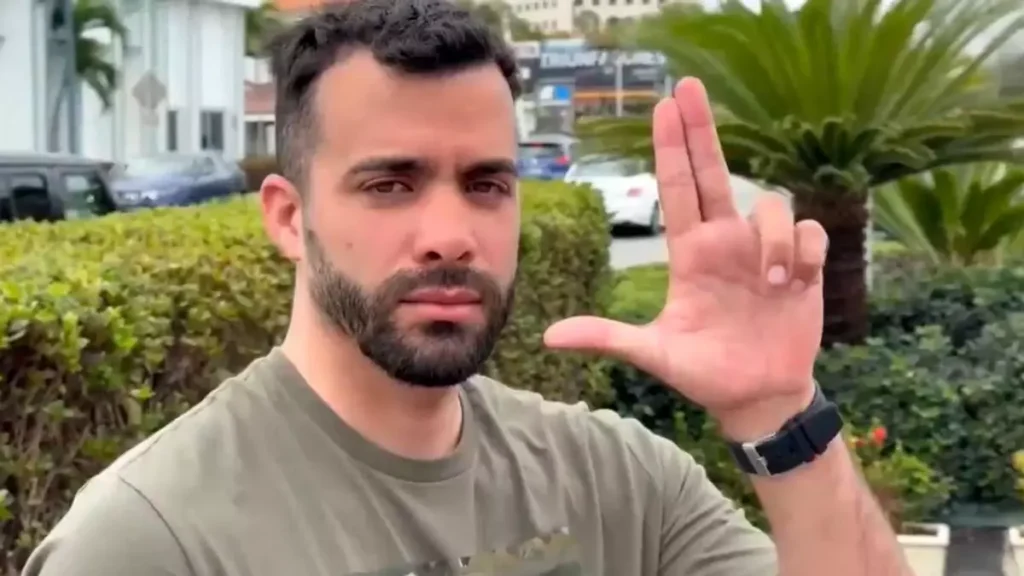
Cuba Extends the Tariff Exemption for Medicine and Food Until January

The measure is renewed because food and commodity shortages “persist”

The regulation entered into force in 2021 and has since been postponed several times. / Cubadebate

14ymedio bigger14ymedio /EFE, Havana, September 20, 2025 — The Cuban government extended for another four months, until January 31, the duty exemption on food, medicines, toiletries and power generators that enter the country without commercial purposes, the official press reported this Saturday. The regulation had already been extended once this year, in April.

According to the Gaceta Oficial, “limitations in the supply of food and other goods in the country persist.” This initially led to exemption from customs duties on basic necessities. However, the text blames the “hardening of the economic, financial and commercial blockade and the impact on the economic sphere of the measures taken during the Covid-19 pandemic for the gradual recovery of the country.”

The customs value limit of $200 to $500 is maintained for imports made by people through shipments

The regulation entered into force in 2021 and has since been postponed several times. It maintains the limit of the Customs value from 200 to 500 US dollars for imports made by people through shipments. As for those brought to the Island by travelers themselves, the authorities state that the articles must be presented to customs by natural persons in packages separated from personal baggage in order to receive the tariff benefit.

According to an official press report published at the beginning of the year, in 2024 there were 118 violations by “people who use these benefits for profit and not to satisfy personal and family consumption,” a warning that Customs released again this Friday. At the end of the first quarter of 2025, the figure was already 104 violations, and the confiscation of  8,978 kilograms of medications, food and toiletries .

The importation of food and medication without tariff limits was a measure adopted following the  Island-wide anti-government protests of July 11, 2021 (’11J’), which had among its main causes the shortage of basic products and the prolonged electricity cuts.

Translated by Regina Anavy

____________

COLLABORATE WITH OUR WORK: The 14ymedio team is committed to practicing serious journalism that reflects Cuba’s reality in all its depth. Thank you for joining us on this long journey. We invite you to continue supporting us by becoming a member of 14ymedio now. Together we can continue transforming journalism in Cuba.