Even Natural Remedies are Disappearing From Cuban Pharmacies

“They don’t have any jars on the shelves, they don’t have anything”, say people who just want some plant-based syrups

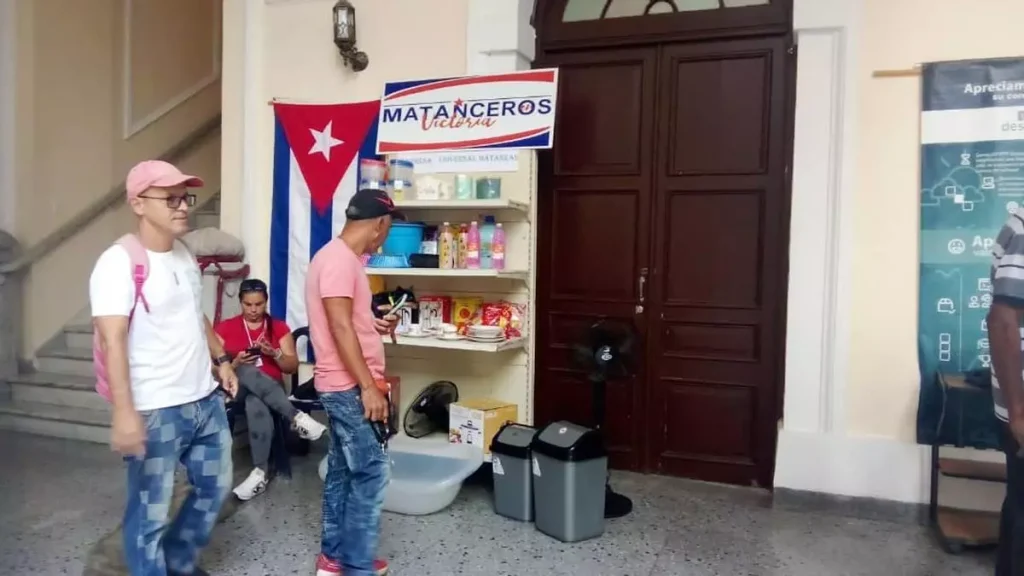
Pharmacies of natural or alternative remedies that are well stocked with products are already a rarity in Cuba. / 14ymedio

14ymedio bigger14ymedio, Julio César Contreras, Matanzas, 29 July 2025 (delayed translation) – A sign with huge capital letters saying “NO ENTRY” stops Ramón in his tracks as he approaches the door of the natural medicine chemist on Calle Milanés / 2 de Mayo in Matanzas. It’s not that he expected some modern shining establishment, but the accumulated dust on the windows, the cardboard signs hanging from a shabby table and the disinterested expression of the assistant, more absorbed in their phone, all give the impression of abandonment rather than a thriving health establishment.

“I’m looking for some ginger syrup for my digestive problem”, he says, quietly, as though asking for something clandestine. The reply comes back as hard as his stomach discomfort: “There isn’t any”. Ramón isn’t surprised. “If national sugar production isn’t even enough to meet normal everyday consumption needs, how can you expect it to be enough to make natural medicines?”, he says, more resigned than annoyed.

“If national sugar production isn’t even enough to meet normal everyday consumption needs, how can you expect it to be enough to make natural medicines?”

In the glass cabinets where there ought to have been jars containing extracts, packets of infusions or plant-based creams, the only thing to be seen are hand-written signs, some wrinkled up, others faded by the sun. The prices – still containing cents – are a rarity in a country with hyperinflation: sour broom extract at 6.67 pesos, rosemary, 12.67, plantain, 3.00. But the signs that have not yet been removed from the wall are like ghosts: products that used to be on sale but are no longer available and possibly never will be. The assistant, without looking up, mumbles that they can’t be produced for lack of raw materials. No jars, nor sugar nor alcohol. Nor technicians in the lab that remains closed like a poorly conserved continue reading

museum piece.

Consumers find low prices irrelevant if the products aren’t available. / 14ymedio

Miguel, another regular customer, came in search of camomile syrup, the only thing of its kind remaining in the shop. Beset by a dry cough, he recalls that: “they used to make the medicines themselves right here. There was a good variety and there was good customer treatment. All that’s gone now and there’s no courtesy to make you feel you’re at least being attended to”. As a regular consumer of the cough syrup Imefasma – the classic natural extract of ginger and honey – he complains that there aren’t even any containers to put it in. “They don’t have any jars, they don’t have anything”, he says. “What good are low prices if there’s nothing available to buy?”

The outlook for this small pharmacist reflects a more general, and major, collapse. According to official data, more than 70% of basic medications were affected in 2024 and the situation has been getting worse. Of 651 products reviewed, 461 are either unavailable or have only limited availability. And the problem extends to natural remedies too, which were earlier promoted by the authorities as “sovereign” alternatives in the face of the pharmaceutical industry crisis.

In provinces such as Camagüey the authorities have admitted publically that the production of onion, oregano and honey syrups has suffered along with the collapse of the national sugar cane crop

In provinces such as Camagüey the authorities have admitted publicly that the production of onion, oregano and honey syrups has suffered along with the collapse of the national sugar cane crop. The annual target of 370,000 jars of Imefasma has barely reached 26%. And more generally, only 56% of planned natural medication production has been achieved. The health authorities, which in earlier times incentivised the sowing of medicinal plants, are now seeing empty pharmacies gathering dust and traditional formulas disappearing from the laboratories.

To all of this is added the problem of electricity. The pharmacy on Calle Milanés / 2 de Mayo, like many others, cannot stock anything that requires refrigeration. The sentence “come back next month” has lost all logical sense after the months have rolled by and the shop windows remain empty. Some patients go into the mountains in search of plant leaves, others resign themselves to homemade infusions. “We’ll have to look for the herbs ourselves or die for lack of remedies”, says one lady leaving the shop empty handed.

Translated by Ricardo Recluso

____________

COLLABORATE WITH OUR WORK: The 14ymedio team is committed to practicing serious journalism that reflects Cuba’s reality in all its depth. Thank you for joining us on this long journey. We invite you to continue supporting us by becoming a member of 14ymedio now. Together we can continue transforming journalism in Cuba.
“This Is Not Havana, but Send the Military To Collect Garbage,” Cubans Demand in Holguín

From several provinces, Cubans demand a mobilization like the one in Havana

Mountain of garbage in Holguín. / 14ymedio

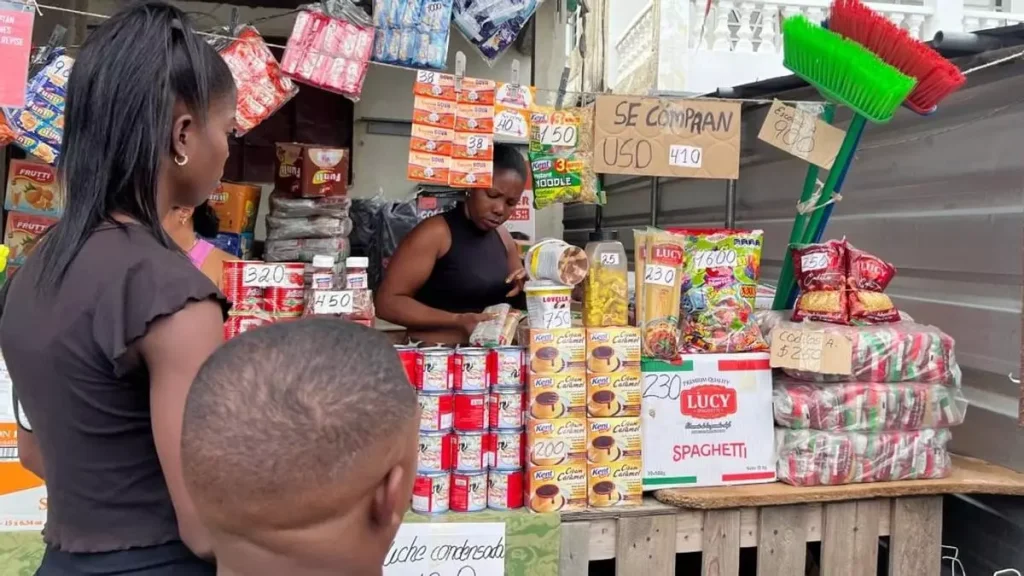
14ymedio bigger14ymedio, Holguín, October 6, 2025 — The “offensive” that took place this weekend with the garbage collection in Havana is having an undesirable effect for the authorities. From several provinces, residents are calling for a similar mobilization in their territories to remove the mountains of waste from the streets. In the city of Holguín, with more than a troop of military conscripts and militants from the Union of Young Communists, people are demanding a long-term strategy to end the problem of waste accumulation.

Next to the bakery in the neighborhood of Pueblo Nuevo and very close to the high school and Alberto Sosa González pre-university, waste has been accumulating for weeks before the worried look of the neighbors and the feast of the black vultures. A few meters away from a children’s childcare center, the garbage dump barely lets you walk down the street, and its stench forces you to speed up when walking nearby. “Tell Díaz-Canel to send the Special Forces battalion!” yelled a grumpy bread seller who tried to pass with his bike, loaded with merchandise, through the narrow space between the rubbish and the sidewalk.

“Here they suffocated most of the private people who had horse carts and provided the garbage collection services.”

The images of the volunteer work carried out this Saturday in the Cuban capital with foreign ministry staff, soldiers, neighborhood organizations and even high officials dressed in their impeccable clothes have been like salt in a wound for the residents, who complain about the constant neglect of their province and the lack of resources to keep Community Services running. “Here they suffocated most of the private people who had horse carts and provided the garbage collection services. They raised the cost of all supplies and they took off,” says a neighbor from Pueblo Nuevo.

For the woman, the current situation needs more than a “momentary burst.” She demands that, although “this is not Havana, send the military to collect the garbage.” In the brief few minutes when the neighbor approaches the dump to check its extent, the mountain of waste grows a little more. A nearby private business dumps several empty boxes that once contained frozen chicken; a young man throws away the debris from a demolition, and another passer-by throws some freshly pruned branches out of a garden. The spectacle, now increased, greets the teenagers leaving the nearby school when the bell rings, putting an end to the morning.

Translated by Regina Anavy

____________

COLLABORATE WITH OUR WORK: The 14ymedio team is committed to practicing serious journalism that reflects Cuba’s reality in all its depth. Thank you for joining us on this long journey. We invite you to continue supporting us by becoming a member of 14ymedio now. Together we can continue transforming journalism in Cuba.
Between Dirty Water and Garbage a New Market Is Built in Holguín

The market will be occupied mainly by self-employed workers who had to leave the nearby Feria de los Chinos

The polluted Jigüe River passes near the area where the market is built. / 14ymedio

14ymedio bigger14ymedio, Holguín, Miguel García, October 12, 2025 — “A pigsty” is how the neighbors describe the new market for the sale of food and other products that is built a few meters from a polluted stream and surrounded by a huge garbage dump on Cuba street, between Carbó and Mendieta, in Holguín. In recent days, the walls of the kiosks have been rising to the same extent as popular discontent grows for the short distance between beans and sewer water, bread and waste of all kinds.

The city is filling up with this type of candonga [practical joke] complains Heriberto, a resident in the neighborhood of the market that will house, basically, the self-employed workers who had to move from the nearby Feria de los Chinos. “They had tents there, and when the official press complained about the hygienic conditions, they were told that they had to dismantle them and have ended up here, where the filth is even worse.”

The Jigüe River, with its sewage from industrial and residential discharges, spreads its stench throughout the area, near the Vladimir Ilyich Lenin General University Hospital. When the kiosks are finished, they will offer both imported and domestic food. Sacks of rice, sugar in bulk and boxes of frozen chicken quarters will be sold within a short distance from the bags of garbage, the piles of construction waste and the miasmas carried by the swollen stream.

What’s worse is that this is authorized by the local authorities,” warns a neighbor. / 14ymedio

“What’s worse is that this is authorized by the local authorities,” says a neighbor. The women thinks that economic precariousness has given rise to this kind of improvised sale with a poor infrastructure. “It eventually ends with the customer taking home a product that has been in contact with flies and germs in that environment,” she summarizes. To her surprise, some of her acquaintances do not see the contradiction in offering food in such a dirty place. “We are used to living surrounded by crap, that’s what happens.”

In a few weeks, the kiosks will be ready to sell pork loin, wheat flour and malangas. Customers will have to overcome the mud and grime to take that food home.

Translated by Regina Anavy

____________

COLLABORATE WITH OUR WORK: The 14ymedio team is committed to practicing serious journalism that reflects Cuba’s reality in all its depth. Thank you for joining us on this long journey. We invite you to continue supporting us by becoming a member of 14ymedio now. Together we can continue transforming journalism in Cuba.

The Residents of Hanabanilla, Cuba Live to the Rhythm of Boats

In the middle of the lake, a home restaurant (paladar) offers visitors local products: chicken, lamb, goat, pork and fish

The boats and barges are part of the ecosystem. / 14ymedio

14ymedio bigger14ymedio, Darío Hernández, Hanabanilla (Villa Clara), October 12, 2025 — Surrounded by hills and lush nature, the Hanabanilla reservoir, in the heart of the Escambray, is an idyllic landscape away from the garbage and insalubrity of Cuban cities. The area is poor in the old way: they build their own houses with real palm wood and raise animals that are then served at the table. Some remote villages have not even received electricity.

Life is not easy for the residents, but people have always lived in Hanabanilla, even on the islets in the middle of the lake, and are accustomed to moving around in boats and fishing to eat. “For the people on this side, the little boat comes early in the morning at 7:00, picks them up and takes the children to school. And at 4:00 in the afternoon, it returns them,” explains one of the residents on the reservoir .

The hamlets have been around for decades, and in the ’50s, when “an American” wanted to build the hydroelectric power plant that Fidel Castro then nationalized in the ’60s, they were the protagonists — according to the official Ecured report — of “one of the most shameful scenes in the history of Cuba with the eviction of the humble farmers who inhabited the Siguanea Valley. They were mostly Galician emigrants, dedicated, fundamentally, to the cultivation of coffee.”

Even on the islets in the middle of the lake, there have always been people accustomed to moving around in boats. / 14ymedio

In the old village “there were houses, schools, shops, everything. The American who was going to build the dam bought the houses from the people who lived below,” the neighbors recount. Despite fierce criticism of the “Yankee” project, the Revolution continued the work on the dam and also turned it into a tourist enclave. “All this was done by the Americans; only a few engines were missing. In 1961 the Revolution shut it down and continue reading

then brought in some Czech engines” to start up the hydroelectric.

Around Hanabanilla, and under the influence of Fidel Castro, numerous businesses emerged that are now in decline due to the low influx of travelers. Some, however, survive, and the paladar El Guajiro, of wide renown among residents and anyone who has ever visited the lake, is an example. The only way to reach the rustic restaurant is by boat, and, as soon as the visitor approaches the shore, he hears the sizzling of hot oil and smells the odor of roast beef.

The shack, made entirely of wood, serves everything that is missing in Cuba, for prices between 1,800 and 2,000 pesos: “chicken, lamb, goat, pork steak or fried pork and fish.” Each dish is served with its portion of rice, snacks and salad, and everything, as the cook himself says, is produced in the paladar. “We produce the pigs ourselves, also the cassava, malanga… The lake gives us the fish: trout and tilapia,” he says with pride.

The guajiros of Hanabanilla live to the rhythm of the boats

Before, he recalls, they even saw deer on the hills that came down to drink at the shore. “I caught them before by swimming, right here in the lake. These are the things (the fish) that are being lost. If I don’t catch them, someone else will,” he reflects.

The possibility of exploiting resources in the area is a relief for the residents. According to the man, who lives at times between the lake and the village of Cumanayagua, “here [in the hamlet] you can live without electricity. Down there [in the village] I can’t live without it: mosquitoes, despair, having nothing to cook with. Not here. Coal is used here permanently, for everything.”

Businesses like El Guajiro, one of the first paladares, founded “before 2012” according to its owner, mark the day to day on the lake. “You arrive at the hotel [Hanabanilla] or anywhere on the lake and tell the boatman ‘I want to eat at Guajiro’s House’ and come to Guajiro’s House to eat. They have to bring them here, and then we give lunch to the boatman,” explains the worker.

The paladar also has other workers, who, when they have shifts all day, stay to sleep in a small house near the restaurant, made, like all the others, of wood.

The boatmen are a whole guild of neighbors who know each other and have been crossing the lake for years. / 14ymedio

The boatmen are a whole guild of neighbors who know each other and have been crossing the lake for years. They also have their own businesses and do the tourist routes to the different corners of the lake. “We give excursions to Jibacoa, from Jibacoa to the canopy, and we return to the waterfall and Guajiro’s House. The other excursion that we have is the one that goes to Nicho, (part of the Topes de Collantes nature park)” says one of them.

The canopy, through which visitors hang from a thick cable over the lake, is a very recent attraction. Installed just last year, it is “the longest in Cuba, in the Jibacoa-Hanabanilla park,” says one of the managers, dressed in gloves, helmet and harness.

The boats and barges are part of the ecosystem. Each family has its own, some motorized, others with oars. The boatmen, surrounded by ancient and Taino names such as Hanabanilla, Jibacoa and Cumanayagua, choose to name their boats with more modern names like Natalia or Príncipe.

The boats come and go from the Hanabanilla hotel, a multi-storey building that Fidel Castro ordered to be built. / 14ymedio

The boats come and go from the hotel Hanabanilla, a multi-storey building that Fidel Castro ordered to be built, and which with the passing years and deterioration is losing more and more charm. The majority of tourists who pass through the area still arrive there.

When night begins to fall, the hotel is filled with music and the noise of the kitchen even though it is mostly empty. On the shore, a few boats, two or three, wait at a tiny floating dock, hoping that some visitor is encouraged to take a tour on the lake, although the demand is almost as small as the boats themselves. However, many prefer to hire private boatmen.

With the passage of time and the decline of the hotel complex, the engines break, there are irreparable gaps in the hulls, and the boatmen depart. The hotel itself has become a graveyard for boats. In its surroundings, dozens of boats rest face down, becoming a refuge for lizards, snails and small animals.

Translated by Regina Anavy

____________

COLLABORATE WITH OUR WORK: The 14ymedio team is committed to practicing serious journalism that reflects Cuba’s reality in all its depth. Thank you for joining us on this long journey. We invite you to continue supporting us by becoming a member of 14ymedio now. Together we can continue transforming journalism in Cuba.

From Cuban Military Service to the Cuban Countryside: Granma Province Delivers Land in Usufruct to the ‘Demobilized’

The 2,269 hectares granted are for the cultivation of tobacco, coffee, cane and for livestock.

Another 96 youngsters about to finish military service are ready to obtain land. / La Demajagua

14ymedio bigger14ymedio, Havana, October 9, 2025 — The need to increase the labor force on the island, affected by mass emigration and disenchantment with State jobs, has led the government of Granma province to give land in usufruct to 300 young men just out of compulsory military service. Another 96, who are not yet released, have signed up to receive land when they are “demobilized” by the armed forces.

La Demajagua, the official press, did not make it clear whether the imminent farmers were offered benefits, but it is certain that they are not talking about greater freedom when working their land. Spread over the 13 municipalities of the province, the boys have already registered the 2,269 hectares [5,600 acres or 8.7 square miles] granted in total to various endeavors: “52 in agricultural enterprises, another 54 in basic units of cooperative production, 142 in credit and service cooperatives, and 18 in agricultural production cooperatives,” said La Demajagua, adding that this “link” to the State gives the farmers “the possibility of obtaining bank loans, contracting and marketing their products, and purchasing supplies.”

The land handed over also has predetermined purposes. The crops to be cultivated are coffee and tobacco, products normally dedicated to export and currency collection, as well as sugar cane — a crop in critical debacle — and for raising small and large livestock, whose products have also disappeared from national markets. continue reading

Finally, said La Demajagua, the initiative will also include 132 young people from the “job insertion plan of June, for those who go to the municipal registry and are offered the delivery of available land.” According to the media, a similar measure began in 2011 to put young service graduates to work, and Granma was the first province to carry out this process.

Spread over the 13 municipalities of the province, the boys have already registered for the 2,269 hectares granted in total to various institutions

The regime’s allergy to the “bums” and “pariahs,” as it has come to call the unemployed, is something that its leaders have been unable to get rid of for more than six decades. Now, with the Island lacking a labor force, getting young people to work for the State is like solving both issues at once.

“It’s a weapon deployed against unemployment once again in this territory, where 2,203 people, until a week ago disconnected from study and work, have returned to the classrooms,” celebrated Granma this Wednesday, alluding to Guantánamo.

Although some seek to graduate from high school and others enter university, most will “train as technicians in different specialties — 32 in total — which take priority and are needed in upper Granma province,” wrote the Communist Party media.

“From this effort, the Guantánamo health services will receive nurses and anesthesiologists; new transport railways will see the light, as well as inspectors in the electrical branch and linemen who will reinforce the work of Etecsa [the State telecommunications monopoly],” added the media, which did not hide that the main objective is “to inject manpower into strategic sectors in which Guantánamo has a deficit.”

As before, those involved were not entirely free to choose the areas in which they would work. The province, which visited the unemployed “house to house,” made a list of options that respond to specific needs of the territory. “The courses, which are also open to those who have chosen to join the Ministry of the Interior, involve the University of Guantánamo in the training of graduates in Accounting and Finance, Management for Development, as well as in Law, Primary Education and Preschool Education,” it added.

While looking for the labor force it needs, the State has begun, for the umpteenth time, to fill vacancies with university students

While looking for the labor force it needs, the State has begun, for the umpteenth time, to fill vacancies with undergraduates. On Monday, at the University of Medical Sciences in Havana, students were called to form a work contingent of teachers due to the shortage of teachers in the schools. “We have more than a thousand students engaged in this work in several provinces, although we expect the number to increase in those territories where there are the greatest complexities,” Education Minister Naima Ariatne Trujillo Barreto told Juventud Rebelde.

The plan is for university students to fill vacancies at secondary and pre-university levels throughout the island*. For this, said the minister, it is necessary to “encourage and increase the interest of young people who already participate and eliminate certain bureaucratic obstacles that hinder the recruitment of the newly interested.”

The Medical Science students are the same ones who also, year after year, are sent to carry out inspections against disease vectors in the neighborhoods all over the island.

An employment survey published last July by the National Bureau of Statistics and Information stressed that Cuba has one of the lowest unemployment rates in the region (1.7%). However, the numbers in the report themselves reflected a different reality: more than half of Cubans over 15 are not working or looking for work.

Of the 8,433,226 Cubans aged 15 or over in 2024, 4,227,333 persons were not part of the labor force, compared to 4,205,893 who were (50.1% versus 49.9%), and of these, 69,333 were unemployed. This represents an employment rate of just 49 per cent, one of the lowest in Latin America and the Caribbean, where the average last year was 58.9 per cent, according to the International Labor Organization.

*This program is called “Educating for Love”

Translated by Regina Anavy

____________

COLLABORATE WITH OUR WORK: The 14ymedio team is committed to practicing serious journalism that reflects Cuba’s reality in all its depth. Thank you for joining us on this long journey. We invite you to continue supporting us by becoming a member of 14ymedio now. Together we can continue transforming journalism in Cuba.

‘I’m in shock, I Can’t Believe it,’ says Nobel Peace Prize Recipient María Corina Machado in a Conversation with Edmundo González

The former presidential candidate says the Nobel Peace Prize recognizes the struggle for democracy in Venezuela.

Edmundo González speaks with María Corina Machado from his home in Madrid. / Screenshot.

14ymedio bigger14ymedio/EFE. Madrid, 10 October 2025 — María Corina Machado’s first reaction to being awarded the Nobel Peace Prize was astonishment. “I’m in shock,” “I can’t believe it,” she said in a video posted on social media by Edmundo González.

González, the Venezuelan opposition leader and former presidential candidate, who now lives in Madrid, posted a message on X saying that this award is a recognition of “the struggle of a woman and an entire people” for “freedom and democracy” in Venezuela.

“Our beloved Maria Corina Machado, winner of the 2025 Nobel Peace Prize! Well-deserved recognition of the long struggle of a woman and an entire people for our freedom and democracy. Venezuela’s first Nobel Prize winner! Congratulations @mariacorinaya, Venezuela will be free!” he wrote.

The message was accompanied by the conversation the two had as soon as they learned of the decision.

Hours later, the Norwegian committee released the video in which the opposition leader was informed of the decision, minutes before the formal announcement. Machado, initially shocked, composed her voice to emphasize that this is an “achievement” and “recognition” for all the Venezuelan people.

“This is an achievement for the entire society. I’m just one person, I don’t deserve it,” she stated. “I feel honored, overwhelmed, and very grateful on behalf of the people of Venezuela.”

The opposition leader, who still doesn’t know if she will be able to attend the ceremony, told Kristian Berg Harpviken, director of the Norwegian Nobel Institute, that it would take her “much longer to believe what I just heard” and was cautious about the future of her struggle.

“We are not there yet. We are working hard to achieve it. I’m sure we will win. This is the greatest recognition for our people, and they deserve it,” she said.

Later, in a letter published on her X account, Machado insisted on receiving the award “in the name of the people of Venezuela, who have fought for their freedom with admirable courage, dignity, intelligence and love.”

The Nobel Prize, she explains, is a “unique boost that injects energy and confidence into Venezuelans, both inside and outside the country, to complete our task.”

In the missive, she recalls that Venezuelans have suffered “26 years of violence and humiliation at the hands of a tyranny obsessed with subjugating its citizens and breaking the soul of the nation,” whose machinery of oppression has been “brutal and systematic, characterized by detentions, torture, forced disappearances, and extrajudicial executions that constitute crimes against humanity and state terrorism.”

However, she continues, “the response of the people has been firm and unyielding.” She asserts, “Today we are very close to achieving our goal.” The Nobel Prize, she explains, is a “unique boost that injects energy and confidence into Venezuelans, both at home and abroad, to complete our task,” a “support” that “demonstrates that the global democratic community understands and shares our struggle,” and a “firm call for the transition to democracy in Venezuela to be achieved immediately.”

Also speaking from Madrid, Leopoldo López said that, equally, he considers this a recognition of “a people determined to change.”

“Congratulations to Maria Corina Machado for this well-deserved recognition of your courage and tireless fight for democracy, freedom, and human rights,” said López, who has been in exile since 2020.

The opposition leader noted that “nothing and no one will stop us until we achieve a free and democratic Venezuela.”

Vente Venezuela, the political movement of María Corina Machado, considers the Nobel Prize to be an “incentive” that “recognizes and exalts” the struggle of all democrats and of an entire people for freedom.

“It’s an indescribable feeling, it is recognition of years of work by María Corina and, obviously, a team. And, in the end, I think it’s recognition of the struggle of a people,” José Antonio Vega, coordinator of Vente Venezuela and the opposition coalition Comando con Venezuela en España, told EFE on Friday.

“In Venezuela, we are fighting against a regime that, years ago, declared war on its citizens (and the Western world), and we have had to confront it,” he explained. “And the fight is precisely that, to rescue peace, tranquility, since nearly nine million Venezuelans have had to emigrate to achieve the peace that was denied to us there.”

Beyond all the awards, her greatest reward is that of her own people, “who legitimized her at the polls,” he commented, referring to the July 2024 presidential elections. The people continue to support her, accompanying her because “they recognize in her courageous, responsible, and consistent leadership,” Vega added.

The island’s first reaction comes from the Council for Democratic Transition in Cuba, which expressed its “deep joy” for the “tireless struggle for a democratic transition,” which makes it an “inspiration for other nations like Cuba that fight for freedom.”

“For us, as Cubans, this award also represents a shared hope: that courage, commitment, and the civic and peaceful struggle for democracy are possible paths to achieving freedom for our people,” it added. “Today we join the Venezuelan people in this well-deserved recognition, and we reaffirm that the cause of democracy and human rights is a common cause. The cause of freedom for Venezuela is also the cause of freedom for Cuba.”

In Europe, EU leaders have expressed their congratulations to the winner. “This award honors not only your courage and conviction, but also every voice that refuses to be silenced. In Venezuela and around the world,” said EU President Ursula von der Leyen on social media. Similar comments were made by Portuguese Social Democrat Antònio Costa, President of the European Council, and by the President of the European Parliament, Roberta Metsola of Malta, who recalled that the European Parliament’s 2024 Sakharov Prize went to Machado and González Urrutia.

Leaders such as German Chancellor Friedrich Merz and French President Emmanuele Macron also expressed their congratulations, as did the presidents of Panama and of Colombia, Gustavo Petro, who said he hoped the award “will help your country achieve dialogue and maintain peace.”

The UN Human Rights Office emphasized that the recognition “reflects the clear aspirations of the Venezuelan people for free and fair elections, civil rights, and respect for the rule of law.”

“The High Commissioner for Human Rights (Volker Türk) has consistently upheld these values,” added Thameen Al Kheetan, a spokesperson for the office, in a press conference.

The spokesperson emphasized the UN office’s desire to “maintain a dialogue in good faith with the Government of Venezuela and all parties involved, based on mutual respect.”

“We remain firmly committed to continuing to work to defend and protect the human rights of all Venezuelans, both within the country and abroad,” he added, lamenting that in July the Venezuelan National Assembly declared High Commissioner Türk persona non grata .

The spokesperson for the United Nations European Headquarters in Geneva, Alessandra Vellucci, joined the congratulations at the same press conference and noted that the Norwegian Nobel Committee has recognized Machado for “her promotion of the democratic rights of the Venezuelan people and her struggle to achieve a just and peaceful transition from dictatorship to democracy.”

____________

COLLABORATE WITH OUR WORK: The 14ymedio team is committed to practicing serious journalism that reflects Cuba’s reality in all its depth. Thank you for joining us on this long journey. We invite you to continue supporting us by becoming a member of 14ymedio now. Together we can continue transforming journalism in Cuba.
Silence in Miraflores for the Nobel Peace Prize, Rejection on ‘Cubadebate’, and Disgust at the White House

Florida Republican Members of Congress call the award winner the “new Simón Bolivar,” while the Spanish far left calls her a “coup plotter.”

María Corina Machado and her team at a demonstration in Caracas in August of last year, following the election that was snatched from Edmundo González Urrutia. / EFE/Miguel Gutiérrez

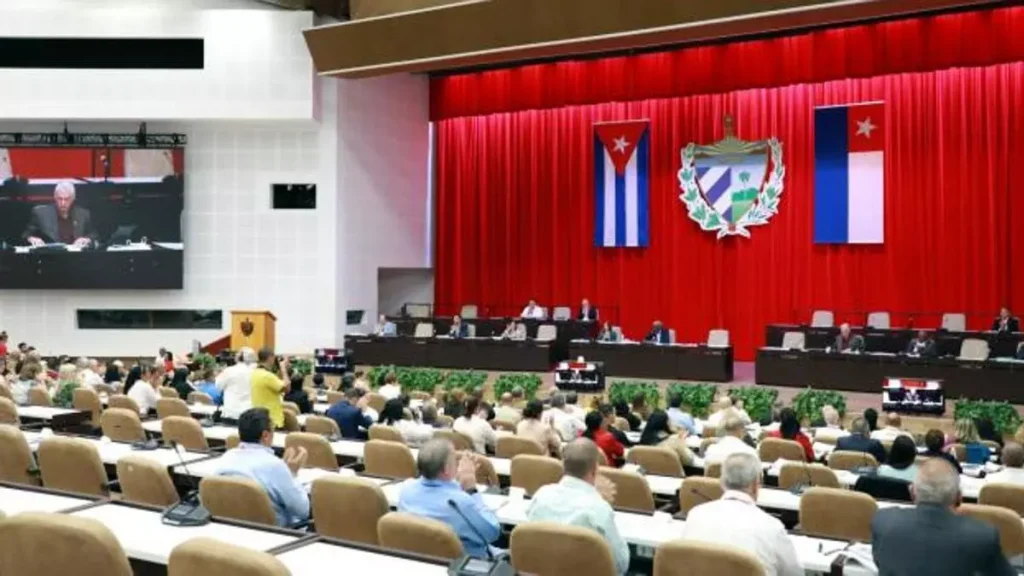
14ymedio bigger14ymedio, Madrid, October 10, 2025 –  The joy this Friday of the Venezuelan opposition, the Norwegian Committee itself and numerous democratic countries over the awarding of the Nobel Peace Prize to María Corina Machado contrasts with the US Administration’s disgust at Donald Trump not having received it, the indignation in the Cuban regime’s press, and the silence of some governments, such as that of Venezuela.

“Nobel Peace Academy joins the anti-Venezuela strategy and awards María Corina Machado,” headlines Cubadebatemany hours after the news broke and without even its own text, simply reproducing an article published in Almayadeen.

The article criticizes the Nobel Committee for awarding the prize to the Venezuelan “without taking into account her political background, her ties to sectors of the fascist far right, her promotion of sanctions against the Venezuelan people, and her support for foreign pressure on Venezuela.”

It criticizes the “leader” – thus, with ironic quotation marks – for “attempts at destabilization and calls to disregard the election results.”

Furthermore, it criticizes the “leader” – thus, with ironic quotation marks – for her support for the “economic sanctions imposed by the United States and the European Union on her country” and for the “attempts at continue reading

destabilization and calls to disregard the election results.”

With respect to those elections, the results of which have been challenged by independent observers and much of the international community, Cubadebate says: “The opposition she leads then claimed victory in the 2024 elections, held with the candidacy of her puppet, Edmundo González Urrutia, currently exiled in Spain after an arrest warrant was issued against him.”

Just after 3:00 p.m. this Friday, the Cuban president finally spoke out on social media. For Miguel Díaz-Canel, “the politicization, bias, and discrediting of the Norwegian Nobel Peace Committee has reached unimaginable limits.” The also First Secretary of the Communist Party called Machado “a person who instigates military intervention in her homeland” and took the opportunity to endorse Maduro, whom he called the “legitimate president” of Venezuela.

For his part, Steven Cheung, advisor to the President of the United States and White House Communications Director, accused the Nobel Committee on Friday of putting “politics before peace.”

“President Trump will continue to make peace deals, end wars, and save lives. He has the heart of a humanitarian, and there will never be anyone like him who can move mountains with the sheer force of his will,” Cheung added in a tweet.

According to Bloomberg, Trump himself, who has not spoken publicly, did call Machado privately. The Venezuelan leader, in an English-language message published on X, dedicated the award to the US president for his
support of the opposition’s cause. “I dedicate this award to the long-suffering people of Venezuela and to President Trump for his determined support of our cause!” the former congresswoman wrote in her post, which included a direct dedication to the US head of state in English.

Machado maintained that the Venezuelan opposition is on the “threshold of victory” and that “today more than ever” it counts on the U.S. president, the people of Latin America, and the “democratic nations of the world” as its main allies in “achieving freedom and democracy.”

In recent weeks, President Trump had vehemently demanded the award, reiterating that he had ended several conflicts: Cambodia-Thailand, Kosovo-Serbia, Democratic Republic of Congo-Rwanda, Pakistan-India, Israel-Iran, Egypt-Ethiopia, and Armenia-Azerbaijan. This Thursday, he added another achievement to eight: the ceasefire in the Gaza Strip, although experts point out that he has not promoted any formal peace treaty and that, in several of these conflicts, only fragile truces were reached.

Even more eloquent is the silence of Marco Rubio, who signed a letter last year to support Machado’s nomination for the Nobel Prize

Even more eloquent is the silence of Secretary of State Marco Rubio, who last year, as a senator, signed a letter supporting Machado’s nomination for the Nobel Prize, which was ultimately awarded today. Rubio was part of a group of eight Republican legislators who sent the letter to the Norwegian Nobel Committee on August 26, 2024, one month after the Venezuelan elections, in which the opposition denounced fraud by Nicolás Maduro, and requested the award for Machado.

On the other hand, several Republican congressmen from Florida, such as María Elvira Salazar and Rick Scott, did celebrate Machado’s award, calling her a “liberator” and a “new Simón Bolívar.”

Neither the Maduro government in Venezuela nor that of Miguel Díaz-Canel in Cuba have commented on the matter. The latest statement from the Cuban Foreign Ministry regarding its oil ally was issued this Thursday, but it only alludes to the Trump administration’s deployment of ships in the Caribbean to combat drug trafficking, which Havana is attacking as an “escalation” prior to an “imminent aggression.”

“No comment,” was the response regarding Machado’s Nobel Prize from Mexican President Claudia Sheinbaum, also an ally of the island. “We have always spoken about sovereignty and the self-determination of peoples, not only out of conviction, but because the Constitution establishes it, and I would stop there with my comment,” she added during her regular morning press conference.

“It’s not up to me, of course, to assess the decision taken by the Nobel Committee.”

In a similar vein, the Minister of the Spanish Presidency, Félix Bolaños, spoke without mentioning María Corina Machado by name: “It’s not up to me to assess, of course, the decision taken by the Nobel Committee. I do say that Spain is always a country committed to human rights, to democracy, to peace, which prevails throughout the world, and Spain worked intensively to secure the release of the person who has been awarded the Nobel Peace Prize during the time she was in prison, and therefore, on that subject, there is little more to say.”

Bolaños has been the only member of Pedro Sánchez’s Socialist government—for whom the Spanish Minister of Territorial Policy and Democratic Memory, Ángel Víctor Torres, also claimed the Nobel Peace Prize—to comment on the award to the Venezuelan. Both Sánchez and his Foreign Minister, José Manuel Albares, have maintained a conspicuous silence, which has been noted by the Spanish press and the opposition.

“The 2025 Nobel Peace Prize not only honors a personal feat. It sends a decisive message to the world: the path to peace is democratic firmness, not complicity with tyranny,” wrote Alberto Núñez Feijóo, leader of Spain’s Popular Party, on his social media. He lashed out: “That is why Sánchez hasn’t congratulated her yet. Not only have they awakened from their dreams, but they have also been held up to the mirror of their infamy.” He added: “Spain will once again have a government that distances itself from the dark interests of Sánchez and Zapatero and defends freedom with the courage of María Corina Machado.”

The message referred to former President José Luis Rodríguez Zapatero of the PSOE, officially the “international mediator” between Maduro and the opposition, who has been singled out for suspicion of having economic ties to the Caribbean regime.

“The truth is that to give the Nobel Peace Prize to Corina Machado, who has been trying to stage a coup d’état in her country for years, they could have given it directly to Trump or even posthumously to Adolf Hitler,” said Pablo Iglesias.

Finally, members of the far-left Podemos party, who have never hidden their sympathy for the Bolivarian leaders, have been directly aggressive. “The truth is that to give the Nobel Peace Prize to Corina Machado, who has been trying to stage a coup d’état in her country for years, they could have given it directly to Trump or even posthumously to Adolf Hitler. Next year, let Putin and Zelensky share it. If nothing else…” wrote former Spanish Prime Minister Pablo Iglesias on social media.

“The level of discredit that international institutions that aspire to represent humanity have experienced in recent years is extremely high. The Nobel Peace Prize is now being awarded to coup plotters and war criminals,” said Ione Belarra, a Podemos representative and party general secretary.

Machado has remained in hiding within her country since her last public appearance on January 9, on the eve of Maduro’s inauguration, when she led a protest in Caracas to defend González Urrutia’s claimed victory in the 2024 presidential election, as Maduro was declared the winner of that election by an electoral body controlled by officials aligned with Chavismo.

All Nobel Prizes are endowed this year with 11 million Swedish kronor (997,000 euros, 1.2 million dollars) and will be awarded on December 10 in a double ceremony: in Oslo for the Peace Prize, and in Stockholm for the rest.

The committee hopes the opposition leader will be able to travel to the Norwegian capital within two months to collect the award, although it emphasized that it is too early to say and that a “serious” security issue must first be resolved.

____________

COLLABORATE WITH OUR WORK: The 14ymedio team is committed to practicing serious journalism that reflects Cuba’s reality in all its depth. Thank you for joining us on this long journey. We invite you to continue supporting us by becoming a member of 14ymedio now. Together we can continue transforming journalism in Cuba.
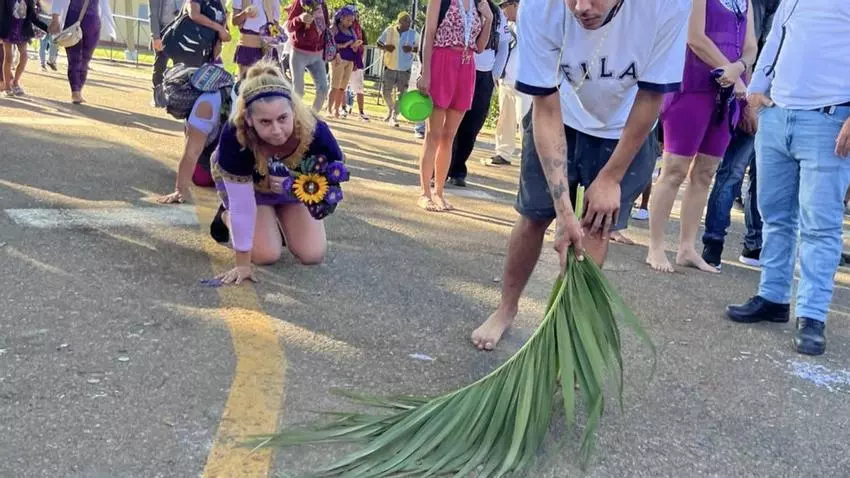
Cuban Government Admits There are Cubans ‘On Their Own’ Fighting in the Ukraine War

Havana denies that there are between 5,000 and 20,000 Cuban combatants in the Russian Army.

Group of Cubans recruited to fight on the Russian side in Ukraine. / Mario Vallejo/Facebook

14ymedio bigger14ymedio/EFE, Havana, 11 October 2025 –The Cuban Foreign Ministry asserted this Saturday that it is “not participating” in the war between Ukraine and Russia, although it acknowledged that some Cubans are recruited through organizations with no ties to Havana or are participating “on their own.” “The Cuban government categorically confirms that Cuba is not part of the armed conflict in Ukraine, nor is it participating with military personnel there or in any other country,” the Foreign Ministry stated.

The statement adds that “the Cubans participating on both sides of the armed conflict have been recruited through organizations that do not reside” in Cuba, “nor have any ties to the Cuban government.” It also asserts that it has no information on the Cubans who “have participated or are participating on their own in the military forces of both sides in the war.”

“What is irrefutable is that none of them have the encouragement, commitment, or consent of the Cuban State for their actions,” the Foreign Ministry stated.

Four days ago, Cuba denounced the ‘presure’ from the US on other countries to avoid voting in favor of the resolution it presents annually at the UN against Washington’s embargo

Four days ago, Cuba denounced the “pressure” from the US on other countries to avoid voting in favor of the resolution it presents annually at the UN against Washington’s embargo. Foreign Minister Bruno Rodríguez did not specifically mention the reason for his statements, Reuters reported, but based on an internal State Department cable to which it had access, Washington’s main argument is that Cuba “actively” supports Russia in the invasion of Ukraine, “with up to 5,000 Cubans fighting alongside Moscow’s forces.”

In this regard, Havana responded this Saturday that these are “false accusations” from the US and “a slanderous accusation continue reading

that began in 2023 by some media outlets, without providing any evidence or basis, and clearly performing an entrusted service.”

“The Cuban government, in accordance with its national legislation and international obligations, has a zero-tolerance policy for mercenarism, human trafficking, and the participation of its nationals in any armed confrontation in another country, all of which constitute crimes with very severe penalties under the national legal system,” it stated. It also added that in the last two years, 26 people have been sentenced to prison terms of between five and 14 years for the crime of mercenarism in the country.

Last July, 14ymedio published a report on the arrest of 11 Cubans in Matanzas accused of mercenarism after purchasing tickets to travel to Russia in 2024. All those detained are being investigated for their alleged intention to participate as soldiers in the service of the Russian Army in the war against Ukraine.

Among those arrested is Amaury, a former member of the Ministry of the Interior, resident in Havana, and trained as a sniper.

Among those arrested is Amaury, a former member of the Ministry of the Interior, resident in Havana, who has trained as a sniper and driver in FAR [Cuban Revolutionary Armed Forces] units. Another detainee, known as Tasé, is from Baracoa and was part of a supposed mixed martial arts team. He was traveling, according to his version, to participate in a “cultural exchange” in Russia, an alibi repeated in other similar cases. All but one of the detainees have ties to the Armed Forces.

At a US Congressional hearing last September, Andriy Yusov, a spokesman for Ukrainian military intelligence, gave the number of Cubans killed in the war: “40 confirmed by name.” He also estimated that 20,000 were fighting on the Russian side against Ukraine, along with 250 whose contracts had expired but who remain in Russian units.

“We have identified at least 20,000 Cubans recruited by Russia. More than 1,000 have been verified by name and contract. Many of them died without their families receiving compensation,” he stated. The data would place the island as the largest supplier of foreign fighters to Putin’s camp, after North Korea, he maintained. However, although it is unknown how many troops Pyongyang has sent to Moscow, Seoul has estimated two waves: one of 10,000 soldiers to Kursk in 2024 and another of 6,000 more this spring.
____________

COLLABORATE WITH OUR WORK: The 14ymedio team is committed to practicing serious journalism that reflects Cuba’s reality in all its depth. Thank you for joining us on this long journey. We invite you to continue supporting us by becoming a member of 14ymedio now. Together we can continue transforming journalism in Cuba.
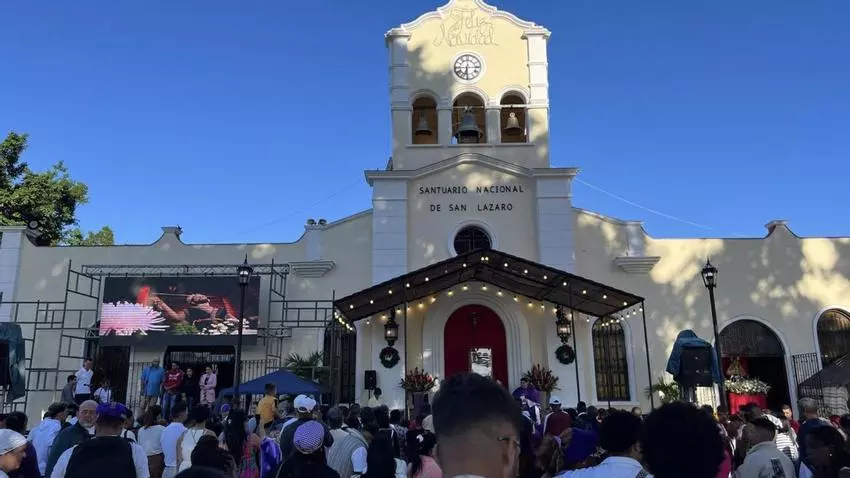
Cuban Farmers Can Barely Guarantee Water for the Animals and Their Own Homes

Faced with the farmers’ demands, the authorities replied that “there are more important companies” to attend to first

Farmers can barely guarantee water for the animals and their own homes. / Adelante

14ymedio bigger14ymedio, Havana, October 11, 2025 — For more than two weeks, Amarilys and Gustavo have been without electricity in their home in the Cuban municipality of Florida, Camagüey. Heavy rains in late September caused serious damage to the infrastructure of the poles that bring power to the farmers associated with the Martyrs of Barbados Basic Cooperative Production Unit (UBPC). Since then “the blackout has been total and we are desperate,” the woman tells 14ymedio.

“We have complained everywhere but no one gives us a date for restoring the power,” she explains with anguish. ” All this is costing us money and health; even the animals are suffering because we don’t have electricity to pump water.” Her situation is even more dramatic because “there are two elderly people in the family. One is now bedridden and suffering a lot, because without a fan they can’t sleep, and without power, the food in the refrigerator goes bad.”

The heavy downpours of September 23 and 24, coupled with a severe local storm, put a dent in an electrical supply system that was already showing multiple failures. “We experienced severe flooding in Florida those days; people had to get their belongings to safety as best they could.” The weather has remained unstable, and this Thursday the rainfall brought “rain on top of damp,” says Amarilys, and not only from the water that fell from the sky.

“They say that the rains make it difficult to repair the fallen poles that left us without light and that there are other priorities of companies more strategic than our UBPC.” With about 25 associated families, including usufructuaries and owners, the entity specializes in milk production and sugar cane cultivation. Right now and until the end of next January, the so-called cold campaign is taking place in Florida, with crops, vegetables, rice and fruit being planted on more than continue reading

3,200 hectares of land distributed among state enterprises, cooperatives and other entities.

“The UBPC is the largest cooperative in the municipality for milk delivery and the most important in the cultivation of sugar cane”

“The UBPC is the largest cooperative in the municipality for milk delivery and the most important in the cultivation of sugar cane,” explains a family member who prefers anonymity. “Several demands have been made for the restoration of electricity, and the answer given is that there are more important companies.” The source clarifies that “the farmers are going through a hard situation because they can’t even give their animals water or recharge lamp batteries.”

“There are more than 100 people affected,” estimates the woman, who maintains close communication with relatives in the area. “The farmers have asked that as long as this situation lasts they allow them to deliver cheese [already made and easier to keep even with the lack of power] instead of milk, but they [the State] does not accept this possibility,” she explains referring to the government’s demands.

“The milk cart picks it up at 5:00 in the morning, so farmers must get up at 3:00 in the morning to milk,” she complains. “Their lamps aren’t charged so milking is a headache, because due to the rains the mud is horrible.”

Until a few years ago, the UBPC delivered the cane to the Argentina mill, but after the paralysis of that industry they began to bring the cane to the Carlos Manuel de Céspedes sugar mill. “Last year there were problems with milling for lack of water,” says Amarilys, who has several family members working in the nearby sugar factory. “Now, with these rains the fields are flooded, and it is very difficult to plant at this stage, and everyone is very upset with the lack of electricity.”

The hopes of the families affected by the long blackout are now focused on “the sun coming out, so everything is dry and the electricity company can work and bring us power.”

The hopes of the families affected by the long blackout are now focused on “the sun coming up, so everything is dry and the electric company can work and bring us power.” Expenses are high. “You have to cook only what you are going to eat that day because you can’t save anything. When I buy chicken I have to buy the small packages because the big ones would spoil, and that ends up being more expensive.”

Together with her husband, Gustavo, the woman tries to do “everything possible while there is sunlight.” When night falls “here you can’t even see your hands because the lamp batteries are now at zero.” This Saturday makes exactly 17 days since the last time the light bulbs hanging from the ceiling went on in their house. “I wouldn’t wish this on my worst enemy,” says Amarilys.

The weather, however, drives away the dreams of the woman and the rest of those affected. “The network of rain gauges of the National Institute for Water Resources in the province of Camagüey recorded significant rainfall accumulations during the last three days, influenced by the permanence of a trough over the territory and the transit of tropical waves to the south,” warns an update published this Saturday. The forecast is that the situation will remain very unstable in the coming days.

Translated by Regina Anavy

____________

COLLABORATE WITH OUR WORK: The 14ymedio team is committed to practicing serious journalism that reflects Cuba’s reality in all its depth. Thank you for joining us on this long journey. We invite you to continue supporting us by becoming a member of 14ymedio now. Together we can continue transforming journalism in Cuba.

Maria Corina Machado Wins the Nobel Peace Prize

The Norwegian Academy highlights her struggle “to achieve a just and peaceful transition”

Archive photo of the Venezuelan opposition leader María Corina Machado. / EFE/Ronald Peña

14ymedio bigger14ymedio, Madrid, October 10, 2025 — The Norwegian Academy has awarded the 2025 Nobel Peace Prize to the Venezuelan opposition leader María Corina Machado “for her tireless work in promoting the democratic rights of the Venezuelan people and for her struggle to achieve a just and peaceful transition from dictatorship to democracy.”

Jørgen Watne Frydnes, chairman of the Norwegian committee, began the announcement at 11:00 am with these words: “The 2025 Nobel Peace Prize is awarded to a courageous and committed peace advocate: a woman who keeps alive the flame of democracy in the midst of a growing darkness.”

Next, Watne, a human rights lawyer by profession, gave the name of the Venezuelan opposition leader and justified the decision, which was taken by considering Machado, 58, “a figure of unity in a political opposition that was previously divided.”

“As leader of the democratic movement in Venezuela, María Corina Machado is one of the most extraordinary examples of civil courage in Latin America in recent times,” the committee said.

“As leader of the democratic movement in Venezuela, María Corina Machado is one of the most extraordinary examples of civil courage in Latin America in recent times,”

According to the document, read during the brief but ceremonial act, the Venezuelan opposition found a point of consensus in the demand for free elections. “This is precisely the essence of democracy: our shared will to uphold the principles of popular will, even if we disagree.”

The committee has described briefly but harshly the situation in Venezuela, which it has referred to as a country that was “relatively democratic and prosperous,” which has evolved into “a brutal and authoritarian state now suffering from a humanitarian and economic crisis. The majority of Venezuelans live in extreme poverty, while a few at the top get rich. The state’s violent machinery is directed against its own citizens. Almost eight continue reading

million people have left the country. The opposition has been systematically repressed through electoral fraud, legal persecution and imprisonment.”

The committee highlighted the political work that Machado has done, first as the founder of Súmate, defending judicial independence, human rights and popular representation. “She has spent years working for the freedom of the Venezuelan people.” Despite this, she found her candidacy blocked, and it had to be taken over by Edmundo González Urrutia.

The chairman of the committee recalled how the election campaign for the presidential elections of July 2024 took place, in the midst of risks, arrests and torture, with the support of hundreds of thousands of volunteers who helped document the election result “before the regime could destroy the ballots and lie about the result.”

The text unequivocally supports the electoral victory of the Venezuelan opposition and recalls that there was support from international observers. “However, the regime refused to accept the election result and clung to power,” it adds.

From X: In the past year, #NobelPeacePrize laureate Maria Corina Machado has been forced to live in hiding. Despite serious threats against her life she has remained in the country, a choice that has inspired millions of people. When authoritarians seize power, it is crucial to recognise courageous defenders of freedom who rise and resist. Democracy depends on people who refuse to stay silent, who dare to step forward despite grave risk, and who remind us that freedom must never be taken for granted, but must always be defended – with words, with courage and with determination.

The Norwegian Committee, through the Venezuelan opposition, has defended democracy, which it considers “in retreat” worldwide. “Democracy is a prerequisite for lasting peace. Yet we live in a world where democracy is in decline, where more and more authoritarian regimes defy the rules and resort to violence. The iron control of power by the Venezuelan regime and its repression against the population are not unique in the world. We see the same trends worldwide,” it states. Although 2024 was an eminently electoral year around the world, the committee has highlighted that these processes are becoming less and less free and fair.

“Last year, Mrs. Machado was forced to go into hiding. Despite serious threats to her life, she has remained in the country, a decision that has inspired millions of people. When authoritarians take power, it is crucial to recognize the brave defenders of freedom who rise up and resist. Democracy depends on those who refuse to keep quiet, who dare to step forward,” said Watne.

According to the committee, María Corina Machado meets the three criteria set out in Alfred Nobel’s will for the selection of a Nobel Peace Prize: uniting the opposition, not wavering in her resistance and supporting the transition to democracy.

With this decision, Machado becomes the seventh Latin American to receive the award. She is preceded by the Argentines Carlos Saavedra Lamas and Adolfo Pérez Esquivel, the Mexican Alfonso García Robles, the Costa Rican Oscar Arias, the Guatemalan Rigoberta Menchú and the Colombian Juan Manuel Santos.

Translated by Regina Anavy

____________

COLLABORATE WITH OUR WORK: The 14ymedio team is committed to practicing serious journalism that reflects Cuba’s reality in all its depth. Thank you for joining us on this long journey. We invite you to continue supporting us by becoming a member of 14ymedio now. Together we can continue transforming journalism in Cuba.

Cuban Official Accuse Private Tricycle Drivers in Cienfuegos of ‘Speculating’

According to the official newspaper ‘5 of Septiembre’, these vehicles transport 80% of the passengers in the province

Many circulate without a license to transport people. / 5 de septiembre

14ymedio bigger14ymedio, Havana, October 10, 2025 –This Friday, the official press of Cienfuegos launched a diatribe against the drivers of private electric tricycles. Although at a time of “extinction of urban buses” vehicles represent a relief in passenger transport, their presence in the province has gone out of control and spreads “disorder, chaos, speculation, scams, excessive fees to the people and collisions that can be avoided.”

For one kilometer of road, 5 of Septiembre criticizes, from Avenue 36 to the funeral home of the capital city, the drivers can charge 200 pesos per passenger, an amount that the newspaper calls “irrational,” which increases if the route extends just five more blocks. The “urban road landscape, depressed” by the lack of public transport and fuel, has been the perfect scenario for speculators to proliferate, and fares rise without any price cap.

The newspaper also wonders why, despite the number of tricycles that have been added to the city’s routes, prices do not go down. The answer, it argues, is because they agree “to charge more and more for really insignificant stretches.”

“It is known today that about 80% of the movement of people here is done thanks to these electric tricycles. From their inception, the Ministry of Transport identified them as a real possibility to move personnel, authorizing their conversion for this purpose, provided that the standards and the same requirements for each electric vehicle were met. Thus, their presence in the cities has multiplied, both legal and illegal, on and off the main arteries.”

However, what is unacceptable, the newspaper stresses, is that the streets of Cienfuegos become an “uncontrolled jungle” thanks to them

However, the newspaper stresses that what is unacceptable is that the streets of Cienfuegos become an “uncontrolled jungle” thanks continue reading

to them. “Their owners have added them to the local fauna on wheels, competing with private and state transport, in the struggle to see who gets paid more in very short stretches.”

These actions are to the detriment of citizens, it claims, “already bored by so many failed inventions that only affect their pocketbooks.” The reason for the high fares, the drivers defend, is the high price they pay not only for the vehicle but also its batteries, which are usually of poor quality and don’t last long.

As if that were not enough, 5 de Septiembre claims that many “circumvent” the traffic laws and circulate without a license to carry passengers. “There are hundreds that circulate without such a license, something that can be seen in the poor driving by some of the drivers,” adds the newspaper.

This may be due, it admits, to the “sometimes very long” delays in the technical testing of tricycles and the certification required for them to serve as public transport, which leads drivers to start driving without the necessary permits.

In many cities, as in Cienfuegos, it is the private ones that transport the largest mass of passengers daily

Sold on online platforms, mostly in dollars, the electric tricycles have been widely purchased by Cubans whose families abroad can afford to buy them. Business owners and MSMEs* also started buying them to use in the movement of goods. Recently, they have become vehicles to carry passengers with the approval of the State, which lacks the means to take care of public transport on its own.

In many cities, such as Cienfuegos, it is the private sector that transports the largest mass of passengers on a daily basis, since buses have disappeared, and the State tricycles, imported from China and distributed throughout the country in small quantities, usually do not last long or don’t suffice.

Even with the “help” of private individuals, transport in Cuba is at its worst. According to data published in September by the National Statistics and Information Office (ONEI), in the first half of this year, 407.9 million passengers were transported in the country, 10.2% fewer than a year earlier.

Not only does the number of people being transported by conventional means decrease but there are also fewer travelers using “alternative means,” such as animal-powered cars, bicitaxis, trucks and private cars. Between January and June 2025, there were 169.1 million, compared to 191.5 million in the same period of 2024, some 11.7% fewer.

*Translator’s note: Literally, “Micro, Small, Medium Enterprises.” The expectation is that it is also privately managed, but in Cuba this may include owners/managers who are connected to the government.

Translated by Regina Anavy

____________

COLLABORATE WITH OUR WORK: The 14ymedio team is committed to practicing serious journalism that reflects Cuba’s reality in all its depth. Thank you for joining us on this long journey. We invite you to continue supporting us by becoming a member of 14ymedio now. Together we can continue transforming journalism in Cuba.
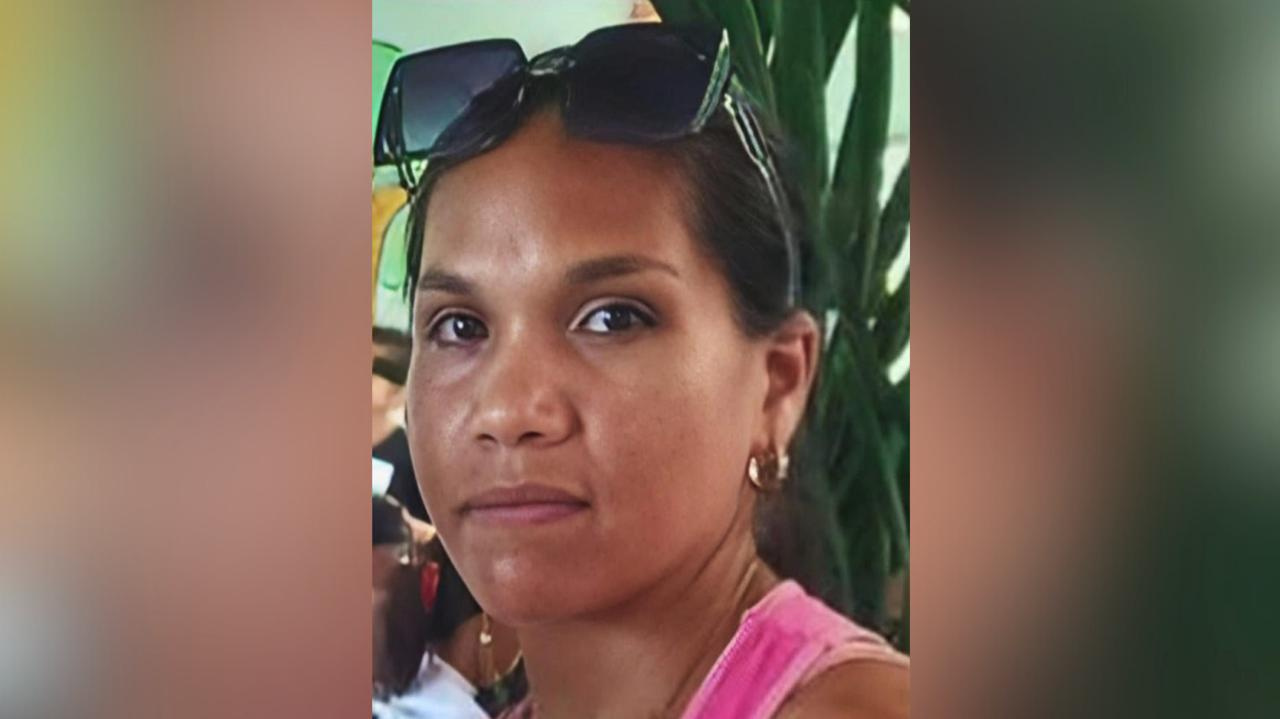
‘To Resolve’, the Art of Survival in Cuba

The RAE dictionary does not yet recognize the meaning of the verb that defines life on the Island under real socialism.

Admiration does not fall on those who work hard, but on those who solve the best problems. / 14ymedio

14ymedio bigger14ymedio, José A. Adrián Torres, Malaga (Spain), 5 October 2025 — Cuba—like so many other nations—proudly displays its national symbols: the national bird, the tocororo; the national tree, the royal palm; the national flower, the white butterfly. And even a musical group, with the mordacity that comes with Creole humor, dared to add to the list what should be the national mammal: the pig.

But the island also has an emblem that no other country would dare proclaim and that doesn’t appear in civics manuals or on propaganda posters: its national verb. That verb, which isn’t conjugated in the dictionaries of the Royal Spanish Academy (RAE) with the precise meaning it has in Cuba, but which has explained daily life for more than three decades: To resolve.

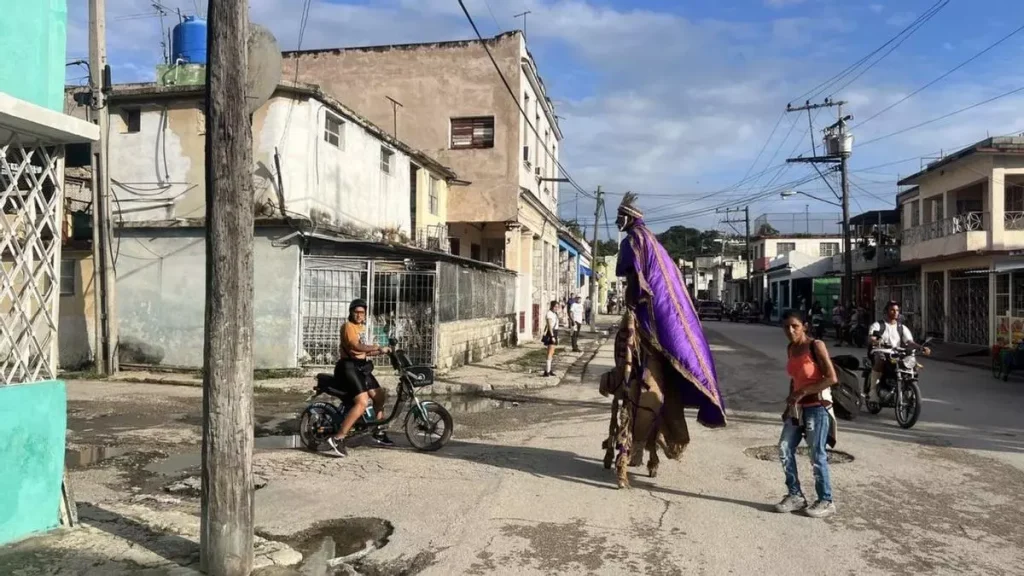
Because if anything has characterized the average Cuban since the Special Period, it’s the need to solve problems. To resolve is not “solving a problem,” as the Academy in Madrid still insists. Solving problems, in Cuba, is finding what is missing, with ingenuity, connections, or cunning. Solving problems means putting food on the table when the state doesn’t guarantee it; it is getting gasoline in the shadow of the Cupet*; it is finding a spare part for the old Lada; it’s “inventing” whatever comes along. Solving problems isn’t a technique: it is an art of survival.

Before getting to that verb, it is worth remembering that Cuba has given the world much more than official symbols. Its music crosses borders: from Lecuona to Formell, from son to mambo, from danzón to bolero, leading to the omnipresent salsa and reggaeton that resonate on every corner today.

Its literature left universal names: Martí, Carpentier, Lezama, Padura. Even sports were patriotic: baseball, adopted on the island and transformed continue reading

into a continental passion—until the more recent arrival of soccer fans.

And in language, the island and its Caribbean neighbors added treasures that the RAE eventually accepted: huracán from Taíno; guateque for the campesina festival; maraca and bongó for instruments that are now universal; and ñángara, which already sounds like an ideological relic—although some will remain.

The verb crystallized in the 1990s, when the collapse of the Soviet Union left Cuba without subsidies, and with an economic black hole.

But alongside these established contributions, the most “essential” is missing, the most genuine, the one that encapsulates the experience of several generations: To resolve. This verb crystallized in the 1990s, when the collapse of the Soviet Union left Cuba without subsidies and with an economic black hole. Where there was scarcity, nothingness appeared. And with it, the obligation to invent, scrounge, and hustle. The Special Period transformed millions into acrobats of ingenuity and gave them a verb that governs their lives to this day.

An old Cuban friend, who endured those years with resignation and now lives in Miami, summed it up this way: “Cubans don’t steal, my friend; they take what’s coming to them. It’s just that they haven’t gotten it yet.” The phrase encapsulates a twisted but coherent ethic: the State promised, failed to deliver, and the citizen feels entitled to take what they need. They don’t steal: they resolve.

And among the middle-ranking “cadres,” those second-tier leaders and rank-and-file militants, another recurring justification circulated when it came to “interfering” in something: “Cadre, defense is allowed.” It was like saying: ” You can be unfaithful, but not disloyal.” My friend claims to have heard it thousands of times. Phrases like that shaped the socialist morality of the “New Man,” in which to resolve was articulated with egalitarianism and other supposed “values” of the Revolution.

This ethic has disrupted the scale of prestige. In Cuba, true prosperity lies not in a university diploma or an academic degree, but in access to the circuit of the resolvable. The social pyramid is inverted—although perhaps it would be more accurate to say that there is no pyramid, but rather that there are only those at the top and those at the bottom: doctors and engineers survive on symbolic salaries, while the hotel bartender, the taxi driver who charges in dollars, or the person who handles tourism contacts earn more than a doctor in Physics. Medicine is prestigious, but tourism—and remittances and other junk—resolve, at least until recently they did. And everyone knows that.

That’s why on the island the national verb is conjugated like a calling card: “How do you resolve it?”, “Did you resolve it?”, “That guy really resolved it.” The admiration falls not on the one who works hard, but on the one who resolves it the best. It becomes a national championship of cunning, where cheating ceases to be shameful and becomes a social virtue.

The cost, of course, is high. To resolve erodes any notion of legality, merit, or professional ethics. It normalizes living on the blurred borders of what is permissible, turning “invention” into a system and precariousness into a culture. To resolve is the verb of lack, but also the shield that justifies everyday deception.

The cost, of course, is high. To resolve erodes any notion of legality, merit, or professional ethics.

The paradox is that a country that enriched Spanish with musical and Taino voices, that contributed poetry, rhythms, and universal symbols, has been reduced to a verb that the Academy doesn’t recognize with the nuance that the Cuban street brings to it. It would be fair to add:

To resolve, in Cuba: refers to the art of surviving under real socialism.

That definition would say more than many official reports. After all, dictionaries capture what people use and experience. And Cubans have been conjugating that verb in the present tense for over thirty years: “I resolve, you resolve, he resolves.” In the plural, it sounds even clearer: “You all resolve.” And those who go into exile continue to carry it with them, as a mark of origin: they resolve in Miami, Madrid, or Cancún.

Meanwhile, the island continues to present its symbols: the tocororo, the royal palm, the white butterfly, the pig as an informal emblem. But more than any other symbol, what defines Cuba today is a verb. And that verb, ironic and sad, is not to sing, not to dance, not to dream: it is to resolve.

*Cupet – for more, see here.
____________

COLLABORATE WITH OUR WORK: The 14ymedio team is committed to practicing serious journalism that reflects Cuba’s reality in all its depth. Thank you for joining us on this long journey. We invite you to continue supporting us by becoming a member of 14ymedio now. Together we can continue transforming journalism in Cuba.
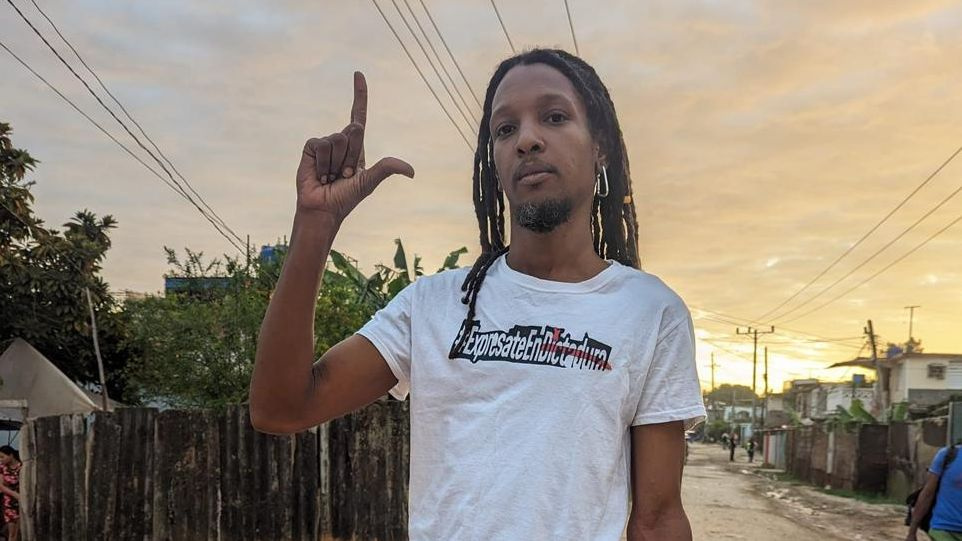
For the First Time in History, One in Five US Residents is Latino

The annual increase in 2024 was two million people of Latino origin

Latino American worker Leonardo García Venegas, in Baldwin County, Alabama (USA). / EFE/Institute of Justice

14ymedio biggerEFE (via 14ymedio), Miami, October 8, 2025 — For the first time in history, one in five U.S. residents is of Latino origin, for a total of 68 million people, according to a report Tuesday from the Latino GDP project of the University of California Los Angeles (UCLA) and California Lutheran University.

The study found an annual increase of two million people of Latino origin in 2024 by analyzing updated data from the Census Bureau, which reports a total of 340 million inhabitants in the United States.

This means that the Latino community grew by 2.9% from 2023 to 2024, a rate equivalent to 5.8 times the increase in the population of other origins, the report detailed.

To explain the increase, the study cited “natural population change,” which results from subtracting deaths from births, implying a cumulative growth of 3.2 million Latinos from 2020 to 2024, compared to a decrease of 1.3 million people from other demographics over the same period.

The report also noted a record year-over-year increase of 5.5% in the Latino workforce in 2024 to 35.1 million workers.

“This is an extraordinary difference of 4.5 million people. Latinos withstood the extraordinary challenges of the (COVID-19) pandemic and were responsible for maintaining the positive natural population continue reading

shift in the United States overall,” the report noted.

The report also noted a record year-over-year increase of 5.5% of the Latino workforce to 35.1 million workers in 2024, an increase of 46.5% since 2010, a growth rate 7.2 times faster than the rest of the population.

The labor force participation rate among Latinos also reached a record high of 69%.

“Time and again, we find that hard work, self-reliance, optimism, and perseverance are characteristics that underlie the strength and resilience of Latinos in the United States,” said Matthew Fienup, executive director of the Center for Economic Research and Forecasting at Cal Lutheran.

These findings follow another study in April by Latino GDP, which revealed that the gross domestic product (GDP) of Latinos in the United States reached $4.1 trillion, the fifth highest in the world, ahead of India.

But this study also comes after it was revealed that the United States lost 1.4 million migrants in the first six months of the Donald Trump administration, marking the first decline in the immigrant population since the 1960s, according to a Pew Research Center report in August.

____________

COLLABORATE WITH OUR WORK: The 14ymedio team is committed to practicing serious journalism that reflects Cuba’s reality in all its depth. Thank you for joining us on this long journey. We invite you to continue supporting us by becoming a member of 14ymedio now. Together we can continue transforming journalism in Cuba.

Guantánamo, a City Turned Into a Garbage Dump

Residents fear that the epidemiological crisis affecting other provinces will spread to their city.

Garbage collection truck in the city of Guantánamo. / 14ymedio

14ymedio bigger14ymedio, Guantánamo, 9 October 2025 —  “There’s garbage everywhere,” Guantánamo resident Héctor López Pérez summed up with dismay. The trash piling up everywhere has turned a city that was once considered “among the cleanest in Cuba” into a series of mountains of waste that mar its streets and threaten the health of its inhabitants.

With the epidemiological alert caused by the outbreak of dengue, chikungunya, and oropharynx in the province of Matanzas, residents of Guantánamo fear that the presence of these diseases will also gain ground in their homes. “The carts don’t come to collect the garbage,” Alain Lobaina Laserie warned 14ymedio, faced with the reality of street corners littered with waste.

Among the inhabitants of the city, which produces 1,200 cubic meters of solid waste per day, there is a widespread belief that the ‘Ordering Task‘ was the final blow to the private workers who worked with their carts collecting garbage. “They changed the payment system, with the currency exchange they implemented, and they all disappeared because their wages went down,” emphasizes Héctor López Pérez, adding: “Everything has gone up for the horses, from grass to horseshoes.” continue reading

Among the city’s inhabitants there is a widespread belief that the Ordering Task was the final blow to the private workers

Implemented in January 2021, the Ordering Task was presented as a necessary monetary and exchange rate reform that sought to eliminate the dual currency (CUC and CUP) and restructure income, prices, and subsidies. However, it ended up contributing to the devaluation of the peso, triggering inflation and fueling popular unrest.

The sector’s own executives acknowledge that “they have experienced various reorganizations,” and only this year did the municipal company convert from a budgeted unit to a business entity, a status that should give it greater flexibility in hiring staff, managing salaries, and other initiatives that can help revive the diminished workforce and purchase supplies.

Earlier this year, Rodolfo Sánchez Suárez, a hygiene specialist at the Municipal Communal Services Company, admitted to the local press that the entity only had “six tractors and three specialized garbage collection carts, and of these, only two of the former and one of the latter are operational; the remaining equipment is idle due to a lack of tires and spare parts.”

Since then, the situation has only worsened, and Guantanamo residents are trapped between the inefficiency of the Municipalities and the waste piling up everywhere. “There isn’t any, there isn’t any, and everything is just nonsense,” warns López Pérez, tired of hearing the same explanation that the country doesn’t have the foreign currency to import everything from gloves for employees to compaction trucks.

Overflowing garbage dumps in Guantánamo. / 14ymedio

For Eriberto Téllez Reinosa, the problem lies in the fact that the authorities are completely overwhelmed by a problem that has been growing in severity in recent years. “The system can no longer support” waste management in the current situation, says the man, who sees no solution through state mechanisms that have consistently demonstrated their inability to efficiently handle waste collection.

Horse-drawn carts, run by private individuals, would not solve the whole problem either. “The specialized cart not only collects waste, but also compresses it, allowing it to maximize the amount it can transport in a single trip. It is capable of collecting up to 60 cubic meters of compressed garbage, while tractors use open carts, with a loading capacity of only 17 cubic meters per trip,” warned the newspaper Venceremos last January .

At the end of August, faced with the worrisome situation, official media outlets once again addressed the issue, appealing to the “collective conscience” of Guantanamo residents and urging them not to wait for community services to do their part. “Preventing an epidemic outbreak is easier than dealing with its consequences later,” they warned, but the time for focusing on precaution seems to be over. The viruses are already here, and the consequences are being felt now.


Guantánamo, a city turned into a garbage dump / 14ymedio

____________

COLLABORATE WITH OUR WORK: The 14ymedio team is committed to practicing serious journalism that reflects Cuba’s reality in all its depth. Thank you for joining us on this long journey. We invite you to continue supporting us by becoming a member of 14ymedio now. Together we can continue transforming journalism in Cuba.

Medical students Are Removed from Their Dormitories in Matanzas to Make Room For Sick Children

  • The province is reorganizing its services to monitor the sick, while the population is reluctant to go to emergency rooms because of their condition.
  • At least three other provinces are taking action, including Havana.
The students had to leave school abruptly, according to some reports. / 14ymedio

14ymedio bigger

14ymedio, Matanzas, October 9, 2025 — The dormitories of the University of Medical Sciences in Matanzas have been emptied and converted into a makeshift hospital to deal with the epidemiological situation in the province. As confirmed by 14ymedio in a visit to the center, near the Faustino Pérez hospital, students have been sent home to make room for pediatric care rooms. Some were still seen around on Thursday with packages and backpacks. While they were leaving, the sick children who could not be treated in the Eliseo Noel Caamaño Provincial Pediatric Hospital, which was 100% full, were being brought by bus to the university for admission.

On social media, several people have alluded to the “abrupt expulsion” of the university students. “Now they have taken the students from Medical Sciences, whose building is next to the Hospital Faustino Pérez, to extend both the pediatric ward and the hospital itself because they are overwhelmed,” commented a woman on Facebook at the bottom of the epidemiological article published daily by Dr. Francisco Durán.

Reporter Niover Licea also published a comment from a student. “We were ordered to evict without notice. It’s disrespectful. There is no food for those who stay, and they want to solve at once what they did not prevent from the beginning. This crisis will end when we are all sick.” According to him, the university authorities asked the students to be discreet and warned them against possible reprisals for disseminating data on the health situation.

The provincial newspaper, Girón, indicated on Wednesday afternoon that the capacity of the Provincial Children’s Hospital Eliseo Noel Caamaño is at 100%. “We have a complex epidemiological scenario where arbovirosis joins other viral infections, such as rotaviruses that cause diarrhoeal diseases, which increases the demand for care,” said the center’s director, Anaelis Santana Alvarez.

The university is near the Faustino Pérez Provincial Hospital. / 14ymedio

Currently, there is a reinforcement of the distribution of patients and human resources, possibly –although it is not indicated– as a result of the dispatch of health personnel that the authorities announced last Monday. Dr. Santana stated, however, that the total occupancy of the hospital is nothing more than the result of protocols requiring compulsory admission of children under 10 years old with fever and suspected arbovirosis, “regardless of whether they present complications or not.”

The staff reinforcement plan includes, in any case, specialists and emergency room residents as well as students to assist in consultations. The hospitals of Cárdenas and Colón have been mobilized to provide care for children over age five “without warning signs,” in order to decentralize care and alleviate the burden. The Eliseo Noel Caamaño Hospital is, therefore, left with those who do present such warning signs and infants under one year, in addition to the most serious symptoms, which according to the directive have not occurred so far.

“There has been no lack of resources to care for the children, nor does the province have serious or critical arbovirosis,” he said, while categorically denying that there are cases of cholera, as has circulated on social networks. “The current diarrheal disease is caused by seasonal rotavirus.”

Julio Ernesto Hernández, director of Medical Assistance in the province, said that there are 75 beds in Matanzas to care for feverish patients and they are ready to expand by 100 more. “The fundamental thing for the population is to go to the doctor when continue reading

there are any symptoms,” he said, the same idea that had previously been highlighted by the director of the pediatric department. He expressed his confidence in the system and a vigilance that, in his opinion, works, so that there have been no deaths, while asking the families to remain calm, because the specialists are trained for their task.

The citizens’ distrust is not, in any case, in the doctors. The lack of drugs and reagents to detect the specific disease is now a cause of discomfort and disgust among the population. However, the main obstacle in this scenario is the poor hygienic condition which exists in many hospital centers and which profoundly discourages patients from seeking help.

The lack of drugs and reagents to detect specific diseases is now a cause of discomfort and disgust among the population

In this respect, households are not much better protected either. Julio Ernesto Hernández urged the population to “maintain general measures in housing, self focus, adequate intake of liquids and to watch for possible warning signs.” However, the lack of running water in countless houses, together with the garbage that floods the streets, do not create the best scenario for halting the spread of this type of disease.

“After the capital, the dirtiest city in garbage collection is Matanzas. Do not invest more money in making parks and allocate the budget to clean up the city: that is quality of life, that is vector zero. Please, are there no leaders with vision in the 21st century? The formula is easy: clean city, zero diseases,” reacted a user on the site of the newspaper Girón.

More than 100 people responded, warning that the epidemiological situation in the city has been serious for weeks and the reaction is late and precarious. “One arrives with sick children and they abuse you and leave you lying there, not to mention the poor hygiene in bathrooms and clinics,” reproached another. Many comments reveal family-wide contagion.

Although the epicenter of this panorama is Matanzas, the rest of the island is not saved, and Havana, in particular, is worried because of its its high population and density. The authorities have continued to report sanitation work, including the removal of garbage, which already has reached 90,000 cubic meters, compared with 35,000 at the weekend. The capital city is also facing a viral outbreak, and new reports are coming to this newspaper every day: patients with very high fevers, severe muscle aches and rashes.

Sources from the Hospital Clínico Quirúrgico Salvador Allende, better known as La Covadonga, told Cibercuba on Wednesday that a public health commission visited the center with the idea of enabling it for patients of arbovirosis

It has not been officially reported, but sources from the Hospital Clínico Quirúrgico Salvador Allende, better known as La Covadonga, told Cibercuba this Wednesday that a Public Health Commission visited the center with the idea of enabling it for patients with arbovirosis, similar to the Matanzas pediatric hospital, but for adults. For this, it would be necessary to close the departments of Internal Medicine, Ophthalmology, Urology, Orthopedics and Geriatrics, in which patients with dengue, chikungunya and other diseases transmitted by mosquitoes would be admitted. The six operating rooms would remain open, but outpatient consultations would be suspended if the plan is implemented.

Ciego de Ávila has also announced, in this case formally, a strengthening of surveillance for the same reason. For the time being, efforts will focus on fumigation and waste clearance, especially in the most affected areas: Morón, Ciego de Ávila and Venezuela. The decision is taken on the basis of the spread that leaves two health areas as the epicenter of the disease, the Belkis Sotomayor polyclinic in the capital city and the Morón South polyclinic.

The same strategy is planned, for now, in Bayamo, Granma province, where there are many cases of arbovirosis. There, the authorities have required the population and companies, state and private, to comply with their part in “the strategy of sanitation and disposal of sewage, weeds and landfills,” including the obligation to facilitate the entry of health personnel who carry out door-to-door searches. Otherwise, remember, there will be “the imposition of fines or other punitive measures in cases where necessary.”

Translated by Regina Anavy

____________

COLLABORATE WITH OUR WORK: The 14ymedio team is committed to practicing serious journalism that reflects Cuba’s reality in all its depth. Thank you for joining us on this long journey. We invite you to continue supporting us by becoming a member of 14ymedio now. Together we can continue transforming journalism in Cuba.