A Dozen Women Close a Street in Regla, Havana, Due to the Lack of Water

Within a few minutes, uniformed police officers and plainclothes officers began to arrive on the block.
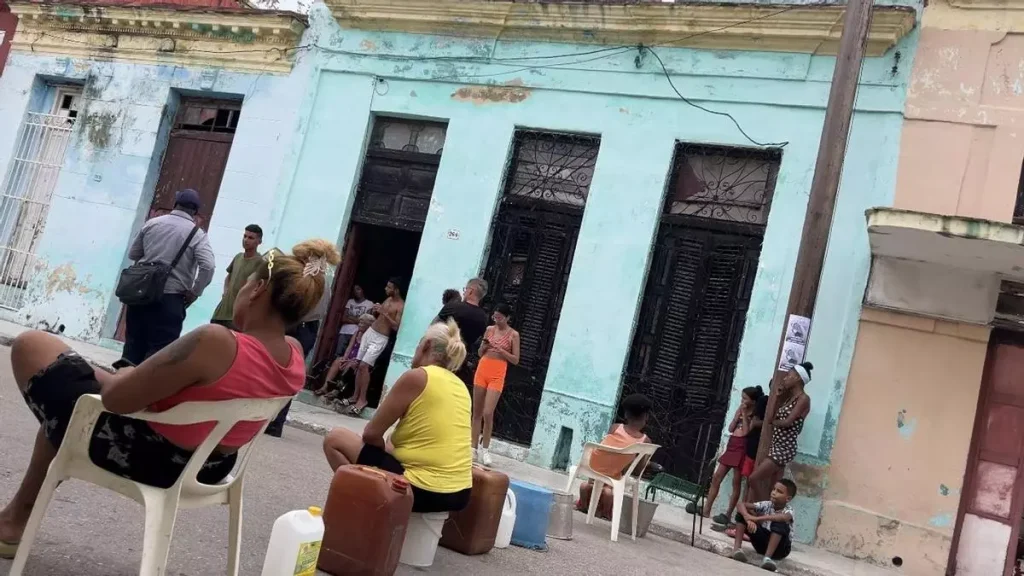

Residents of Martí Street, between Pereira and 27 de Noviembre, blocked the passage of vehicles with buckets, chairs, and empty containers. / 14ymedio

14ymedio bigger14ymedio, Darío Hernández, Havana, 17 October 2025 — A dozen women blocked a street in the municipality of Regla, Havana, on Friday afternoon to protest the lack of water. Residents of Martí Street, between Pereira and 27 de Noviembre, blocked vehicles with buckets, chairs, and empty containers after nearly a month without a water supply, according to 14ymedio.

“The only water here is delivered by truck,” a local resident told this newspaper, adding that water trucks don’t arrive frequently either. “One of those women is the mother of an 11J protester,” the resident said of one of the protesters. Within minutes, uniformed and plainclothes police officers began arriving on the block.

In a video posted on social media, a heavy police presence is seen, along with a uniformed officer arguing with one of the protesters. “You should have gone to the government, which is right there,” the officer claims, criticizing the woman for leaving the institutional site before being attended.
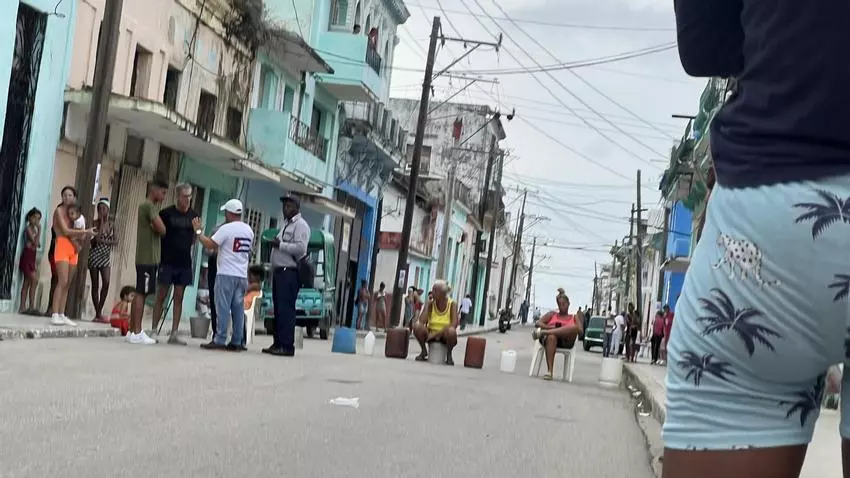
Street closures have become increasingly common in Cuba. / 14ymedio

Street closures, whether to protest the poor condition of housing or to denounce the lack of water supply, have become increasingly common in Cuba in recent years. In Havana, lines of people are frequently seen blocking traffic, demanding everything from a solution to their housing problems to the arrival of a water tanker truck to alleviate the water shortage. continue reading

At the end of September, a dozen women blocked Monte Street, just a few meters from Fraternidad Park. Magalys Anglada Mena, daughter of US-based activist Ariadna Mena Rubio, led the demonstration. Moments later, a truck arrived at the scene, guarded by police. Anglada subsequently received a police summons.

The protest was similar to one staged nearly two years ago by other mothers nearby, and for the same reason, it highlights the critical water supply situation in the capital, which has worsened in recent weeks and affects almost every municipality.

The women were outraged by a problem that affects every aspect of their lives.

Last July, also in Regla, a dozen women and their children blocked access to vehicles on Calzada Vieja between C and D, protesting the fact that water hadn’t reached the area for almost four months. After futile complaints and bureaucratic procedures, the protesters, from the Unión neighborhood, decided to take action.

Under the intense sun, with temperatures in Havana exceeding 30 degrees Celsius that day, women expressed outrage over a problem that affects every aspect of their lives, from food preparation and personal hygiene to caring for young children and the elderly.

Shortly after the protest began, a water tanker truck arrived at the scene to supply residents with supplies. This arrival helped break up the demonstration and allowed vehicle traffic to return to the street.

Protest in Regla, Havana, over the lack of water. / 14ymedio

____________

COLLABORATE WITH OUR WORK: The 14ymedio team is committed to practicing serious journalism that reflects Cuba’s reality in all its depth. Thank you for joining us on this long journey. We invite you to continue supporting us by becoming a member of 14ymedio now. Together we can continue transforming journalism in Cuba.

María Corina Machado, the Nobel of Perserverance

One doesn’t reach Machado’s current position without having suffered personal losses and difficult emotional trials along the way. / EFE

14ymedio bigger14ymedio, Yoani Sánchez, 10 October 2025 (delayed translation) — Friday could not have started better. The Norwegian Nobel Committee awarded opposition leader María Corina Machado the 2025 Nobel Peace Prize “for her tireless work promoting the democratic rights of the Venezuelan people.” The recognition puts the spotlight on Latin America, where three long-standing authoritarian regimes—in Caracas, Havana, and Managua—had come to believe that impunity and international silence would allow them to control their nations until the end of time.

In several government palaces, today’s coffee must be tasting much more bitter. The delay in the reactions of Nicolás Maduro and the Castro regime, who have not commented as of this writing, betrays the surprise they have felt at the announcement. Perplexed and annoyed, the spokespersons for both authoritarian regimes also seem to have frozen, waiting for their superiors to dictate the script they should follow in their statements. No wonder. Machado’s Nobel Prize is like salt in the wounds for all of them.

At just 58, the Venezuelan opposition leader has a long road ahead to do much for her country and the entire continent.

At just 58, the Venezuelan opposition leader has a long road ahead of her, and with the renewed prestige this award brings, she can do much for her country and the entire continent. Not only is the democratic opening in Venezuela ahead of her, which will inevitably come despite Maduro’s intentions, but she can also help drive political change in other countries in the region. For a long time the cause of peoples subjugated by totalitarian continue reading

regimes, supposedly leftist and wrapped in a rhetoric “of the humble and for the humble,” has merited a boost. What happened this Friday is that consecration. The plight of more than 40 million people, under the thumb of these three satrapies, will once again receive the attention it deserves.

But this is, especially, a personal gratification. One does not reach the position Machado holds today without suffering personal losses, harsh emotional trials, successive pressures to go into exile, and an intense boycott of her political career. An intense campaign of reputational destruction has been launched against her, attempting to paint her as a terrorist who called for social confrontation. Her actions before, during, and after the elections more than a year ago shattered the entire image that official Venezuelan propaganda tried to plaster on the minds of voters and the international media. Serene, firm, and with constant calls for calm and peaceful action, the Venezuelan established herself as a leader of nonviolence.

Perseverance has been her greatest virtue. While many grew weary along the way, the opposition leader continued her activism. When exile knocked on the door of so many, she stayed in her country. While the world looked the other way and Miraflores bathed in petrodollars, the industrial engineer never lost hope that Chavismo would not last forever. Her Nobel Prize is not just a medal of gleaming metal; it is an award forged in tenacity. The perseverance of María Corina Machado is a breath of hope for all of us who live under the long night of a dictatorship.

________________________

Editor’s Note: This article was originally published on DW.

____________

COLLABORATE WITH OUR WORK: The 14ymedio team is committed to practicing serious journalism that reflects Cuba’s reality in all its depth. Thank you for joining us on this long journey. We invite you to continue supporting us by becoming a member of 14ymedio now. Together we can continue transforming journalism in Cuba.
The Cuban Regime Survives Thanks to Our Paranoia

It is paradoxical that activists who proclaim “freedom for political prisoners” quickly join defamatory campaigns.

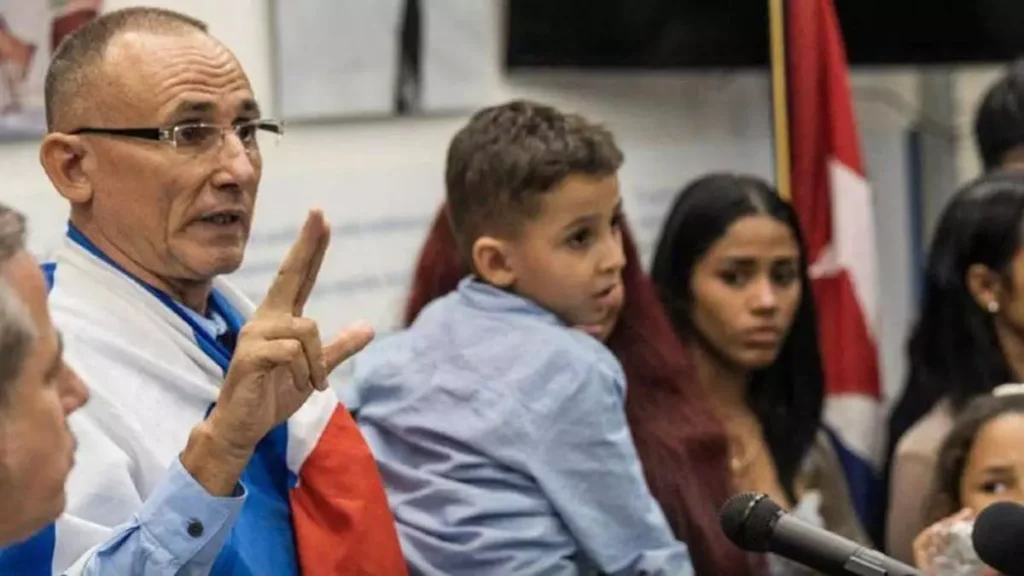
The regime fears that if it moves even a millimeter from its position, the entire building could collapse. / 14ymedio

14ymedio bigger14ymedio, Yunior García Aguilera, Madrid, 18 October 2025 —  In recent days, two Cuban political prisoners recently returned to exile—José Daniel Ferrer, leader of the Patriotic Union of Cuba, and Luis Robles, sentenced to five years in prison for holding a banner with the word “freedom”—have been targeted. What is most disturbing is that many of these attacks come from sectors of the opposition itself.

It is paradoxical that activists who proclaim “freedom for all political prisoners” quickly join campaigns of insults, suspicion, and conspiracy theories against those who paid for their dissent with years in prison.

In Ferrer’s case, it was predictable that State Security would attempt to undermine his leadership and prevent him from forging a consensus in exile. With the younger Robles, they seek to demotivate him, damage his testimony, and warn other Cubans that the community demanding your freedom today may tomorrow call you a “traitor” without considering your sacrifices.

The regime survives, in large part, thanks to this mutual distrust. Paranoia demobilizes, discredits, isolates, and causes both Cubans on the island and international institutions to lose confidence in the opposition. continue reading

In totalitarian contexts, distrust reaches extreme levels, as the fear of infiltration by regime agents is real.

During my interrogations in Cuba, my interrogators almost never sought concrete information: they wanted to sow discord. They tried to alienate me from activists like Luis Manuel Otero Alcántara, Maykel Osorbo, Tania Bruguera, Manuel Cuesta Morúa, and Ferrer, and I know they did the same with all the others.

In totalitarian contexts, mistrust reaches extreme levels, as the fear of infiltration by regime agents is real. Direct penetration by undercover agents is a constant and early practice, perfected by organizations such as the Soviet KGB and the Stasi in the German Democratic Republic. Beyond simple surveillance, these agents actively intervened in the internal dynamics of opposition groups, fostering rivalries, spreading rumors, and promoting tactics that compromised the anti-repression organization.

It is true that in the Soviet Union in the 1920s, the Cheka even created fake opposition organizations to attract, identify, and neutralize genuine dissidents, as occurred in the famous Operation Trust. These strategies sought not only to infiltrate but also to fabricate a controlled opposition. However, over time, counterintelligence evolved toward less daring methods. The greatest risk of fabricating a fake opposition lies in the ” boomerang effect,” losing control of the organization and its leaders.

One of the most notable examples of this effect is the terrorist Osama Bin Laden. During the 1980s, the CIA supported the Afghan mujahideen to weaken the USSR, creating an environment that allowed Bin Laden to consolidate his position and later found Al Qaeda. This temporary alliance later transformed into a direct threat to the US, demonstrating that strategies based on manipulation or instrumentalization can produce enemies more dangerous than the original objective.

State Security, a disciple of the KGB and the Stasi, doesn’t usually take too many risks. Every time I read about the “fake change” theory, I wonder if we are aware of the stale conservatism of the Cuban leadership, the advanced age of its leaders, and their innate rejection of any change, even if it’s “fake.” We forget that this regime hasn’t even been able to mutate toward the Chinese or Vietnamese models, that Díaz-Canel chose the word “continuity” as his motto, and that the “replacement cadres” are particularly mediocre, lacking in originality, and dogmatic.

Its undercover agents have been mostly “people in the line of fire,” whisperers, without much relevance or prominence.

I don’t rule out that, in the future, they could plan something similar to a “fraudulent change.” But, so far, neither the official rhetoric nor international alliances point in that direction. The regime fears that, if it shifts even a millimeter in its position, the entire edifice could collapse. That’s also why it takes decades to implement even less daring economic reforms.

Cuban counterintelligence agencies have preferred more orthodox tactics. They have avoided the direct creation of groups or leaders, preferring to infiltrate, gather information, generate rumors, influence decisions, and dynamite organizations to destroy them from within. Even the level of repression varies capriciously from one opposition figure to another, fueling theories and suspicions. Their undercover agents have mostly been “people in the ranks,” whisperers, without much relevance or prominence, precisely to avoid the boomerang effect.

Although all democratic movements in totalitarian contexts suffered from the problem of division, there are some examples of successful organizations. The cases of Solidarity in Poland and Charter 77 and the Civic Forum in Czechoslovakia demonstrated that alliances and consensus, regardless of political affiliation, can overcome the divisions fabricated by power.

The Cuban regime has transferred its strategy to social networks, creating not only defenders of the system, but also false “radicals,” from anonymous profiles.

These unifying agendas allowed ideological or social differences to take a backseat. The broadness of the coalition, combined with a nonviolent strategy and massive popular mobilization, largely neutralized the security apparatus’s ability to exploit internal fractures. Unity, in these cases, was not the product of deep ideological affinities, but of pragmatic negotiation around shared objectives.

The Cuban regime has studied these examples and is working to prevent us from putting them into practice. It has extended its strategy to social media, creating not only defenders of the system, but also fake “radicals” from anonymous profiles whose mission is to attack other opponents, promote conspiracy theories, and sabotage alliances.

After more than six decades of dictatorship, Cuban society faces enormous difficulties practicing tolerance, respect for differences, and consensus. And it does so in a world where extreme polarization threatens even consolidated democracies. It would be tragic if paranoia—that seed the regime cultivates with such precision—were to prevent us from achieving freedom in Cuba, before democracy, in other latitudes, begins to wither away.

____________

COLLABORATE WITH OUR WORK: The 14ymedio team is committed to practicing serious journalism that reflects Cuba’s reality in all its depth. Thank you for joining us on this long journey. We invite you to continue supporting us by becoming a member of 14ymedio now. Together we can continue transforming journalism in Cuba.

What is Happening to Cubans? The Deadly Price of Disunity

Breaking the communist siege will not be possible with hatred between brothers.

Our strength is wasted trying to find the speck in someone else’s eye. / Social Media

14ymedio bigger14ymedio, Jorge L. Léon, Houston, 17 October 2025 — It is our disgrace. Máximo Gómez, the Generalissimo, coined it in his famous phrase: “Cubans either never arrive or they go too far.” And it is true. In this long stretch of our history, we have never arrived on time.

Yesterday, José Martí was accused; today, insidious plots are launched against José Daniel Ferrer. What is happening to us? What mysterious inclination prevents us from uniting forces? Why, instead of supporting those who fight, do we always seek those who fall? Why do envy, suspicion, and gossip become more powerful tools than love of country?

History shows that intrigue has never led to freedom. Tyranny survives — and grows stronger — because we Cubans have not learned to unite. For more than six decades, this regime has survived by feeding off our divisions, our slander, and that sad obsession with looking for traitors around every corner.

If just one time we raised a single voice, if all our arms were raised in a single gesture, no wall would resist the thrust of the Cuban people. But our strength is wasted trying to find the speck in someone else’s eye. If anyone suspects a traitor, let them present proof. If they don’t have it, let them remain silent, because dishonoring a patriot—one who has suffered imprisonment, exile, and beatings—is an undignified act that only benefits the executioner. continue reading

But more terrible than poverty is the moral fracture, that habit of degrading one another.

I will never give in to intrigue. I will not listen to those who denigrated Martí yesterday and who denigrate José Daniel Ferrer today. Intrigue does not take sides; intrigue is treason.

Today the nation is bleeding. The prisons are full, hunger is suffocating, and hopelessness is multiplying. But more terrible than poverty is the moral fracture, this habit of degrading one another, of serving the enemy with rumors, with suspicion, with cowardice disguised as criticism.

Either we rise up now — all together — or we will die in the extreme misery imposed by this sick ideology of communism. Enough of the intrigues and the schemers. The sacred task of this hour is to rise up with one fist.

If someone works for the enemy and there iss evidence, report it. If there is no evidence, let your conscience be your guide. Because if we don’t unite, this breed of criminals will wipe out an entire people.

History does not forgive the tiid or the disunited. It is now up to us to rebuild the nation from the depths, to unite the campesino, the worker, the intellectual, the exile, and those who resist within. Breaking the communist siege will not be possible with hatred among brothers, but with the moral strength of a people who have decided to live free or die standing. As José Martí wrote: “When there is division among the good, the wicked triumph.”

____________

COLLABORATE WITH OUR WORK: The 14ymedio team is committed to practicing serious journalism that reflects Cuba’s reality in all its depth. Thank you for joining us on this long journey. We invite you to continue supporting us by becoming a member of 14ymedio now. Together we can continue transforming journalism in Cuba.

The Tobacco Growers of Pinar Del Río Are Leaving Tobacco and Planting Food

Farmers demand a share of the “fresh dollars that go into the State coffers”

We are experiencing one of the worst times in the sector in terms of farmers’ incomes, profitability and indebtedness.” / Cubadebate

14ymedio bigger14ymedio, Havana, October 18, 2025 — The month of October is an ordeal for the tobacco farmers (vergueros) of Pinar del Río. The heavy rains of recent weeks have complicated the early stages of the tobacco campaign, a battle now taking place in the seedbeds. The lack of inputs and the authorities’ refusal to pay producers in dollars also complicate the picture.

From the municipality of San Luis, Orestes predicts that they will have a diminished harvest when the campaign ends. ” We are experiencing one of the worst moments in the sector in terms of income, profitability and the indebtedness of farmers. Anyone here who is not committed on one side is committed on the other,” the farmer tells 14ymedio.

In addition to the rainfall that has flooded plots and compromised the development of seeds, Orestes points out the lack of foreign exchange as among the greatest difficulties he is experiencing on his farm. The land has been owned by his family for almost a century, and the planting of tobacco had been the main agricultural activity until reality forced them “to plant more food in order to survive.”

“We are still paid for part of the tobacco we deliver in MLC (freely convertible currency), and, of course, right now that currency is in the pits,” he says. This week the virtual currency is traded at 200 pesos, less than half the dollar exchange rate, which has now reached 468 pesos. Every day that passes means less for the MLC.”

The vegueros‘ constant demands that they be paid in dollars seem to have fallen on deaf ears, and the disappointment of the farmers is affecting their decision to use their tobacco plantations to sow other products that they can market more freely. continue reading

In 2024 the Spanish-Cuban company Habanos S.A managed to raise 827 million dollars

The hardships of the farmers contrasts with official figures, which point to tobacco as one of the few businesses that thrive on the Island despite the crisis, and the Regime’s propaganda claims to treat the sector with care. In 2024, the Spanish-Cuban company Habanos S.A managed to raise $827 million, $106 million more than a year earlier, which represented an increase of 14.7% in revenues shared by the two partners. The achievement was attributed to the more than 4,700 cigar sales points it has worldwide, the main ones in China, Spain, Switzerland, the UK and Germany.

“One thing is the international market and another is Cuba,” says Orestes. “Right now they are giving a stimulus in national currency and a small rebate to producers of shade-grown tobacco that is planted early.” In this technique, the leaves are crimped onto a string after being harvested and hung upside down on posts covered with translucent fabric so that they dry slowly in the sun. “But the Cuban peso is not encouraging.”

In San Juan y Martínez, another of the main tobacco growing centers of the province and part of the so-called Pinareño tobacco massif, the opinion is shared by Juan José and his family. “There is very little enthusiasm, because this stimulus that is being given — at most 30% above the gross value of sales from the producer to the State — is very little compared to the expenses we have to just begin planting.”

“There is a strike on the part of many farmers, who without solvency are unable to start the campaign and move to food crops,” he says. He sees a more profitable option in the cultivation of yucca, malanga, tomatoes and beans. The percentage of land devoted to these products is increasing on his farm, but this October, the penalization for those who choose to reduce the amount of land used for tobacco threatens to be harder.

“We have been told that the inspectors are going to check everything and fine those who are planting something else”

“The tobacco company intends to solve everything with threats of repressive actions against those who use the terrain destined for tobacco for something else,” warns the veguero. The message sent by the authorities in the sector is clear: “We have been told that the inspectors will check everything and impose fines on those who are planting something else. Even those with land in usufruct can lose it if they don’t comply with what is established.”

Another of the threats that have been received by tobacco companies in Pinar del Río is the cancelation of credits already approved if they insist on devoting part of their plots to other crops. “The truth is that the approval of credits goes very slowly, and the amounts are insufficient. On average, under the calculations that are made, they could cover more than 40% of a campaign’s expenses, but due to irregularities in the balance sheet and current inflation, they end up covering only 25% of the costs.”

Access to inputs also hampers the campaign. Recently, Marino Murillo Jorge, president of Tabacuba, opened a supply store in Las Ovas, in the municipality of Pinar del Río, with hardware, masonry and electrical components for sale in MLC. The authorities boast that the tools have a price “25-30% cheaper than the current domestic market,” but for Juan José the discount is insufficient.

“The Las Ovas store has many problems of access and connectivity to make payments in MLC”

“For this measure to be favorable, it must never be less than 70 per cent,” he states. The rebate should also include the cost of repairing the tobacco curing sheds.” The Las Ovas store has many problems of access to and connectivity to make payments in MLC,” explains the veguero, who has not seen the promise that this type of trade would also extend to San Luis and San Juan y Martínez.

“Here more than 50% of the producers intend to expand the planting of food and get rid of the tobacco, because they lack the fight to continue in the field,” he says. “Many are now planting the tobacco areas with food under the justification that they will join the late planting of tobacco, after January, but everyone knows that if we don’t get the food we need for the family first it is impossible to face the tobacco campaign.”

For Juan José, everything could change in the coming weeks if the sector authorities increase the incentives or decide to cross the red line they have maintained in relation to the payment in currencies. “This is the flagship of export, the item that brings fresh dollars to the State coffers, and we also want some of that money in a real currency.”

Translated by Regina Anavy

____________

COLLABORATE WITH OUR WORK: The 14ymedio team is committed to practicing serious journalism that reflects Cuba’s reality in all its depth. Thank you for joining us on this long journey. We invite you to continue supporting us by becoming a member of 14ymedio now. Together we can continue transforming journalism in Cuba.

A Great-Nephew of Fidel and Raúl Castro Is Promoted to Deputy Prime Minister

  • Óscar Pérez-Oliva Fraga heads the strategic Ministry of Foreign Trade
  • A technocrat who combines family legacy, Party discipline and continuity
An important detail distinguishes Pérez-Oliva from most of his colleagues in the Council of Ministers: he is not a member of the National Assembly. / Cubadebate

14ymedio bigger14ymedio, Havana, October 18, 2024 — The Cuban government announced this Friday the promotion of Oscar Pérez-Oliva Fraga to the position of Deputy Prime Minister. The appointment, approved by the Council of State on the proposal of the President and with the approval of the Political Bureau, reinforces the trend that the highest responsibilities in the country are concentrated in figures closely linked to the political and economic power.

At the top of the Cuban regime there is no place for surprises or outsiders. Although official media have omitted any reference to his family ties, Pérez-Oliva is the grand-nephew of Fidel and Raúl Castro, son of biologist Mirsa Fraga Castro and grandson of Ángela Castro, sister of the founders of the Revolution. He is also the nephew of José Antonio Fraga Castro, who presided over the powerful company Labiofam until 2014.

His surnames, therefore, are not foreign to the upper power structure. The new generation of technocrats, to which Pérez-Oliva belongs, moves within a closed elite that combines family legacy, Party discipline and absence of public questioning of the prevailing model.

Now he assumes the responsibility of Deputy Prime Minister, replacing Ricardo Cabrisas Ruiz, who died in mid-September

With a degree in electronics engineering, Pérez-Oliva has spent his entire career within State structures. He headed the Maquimport Company – – one of the key State importers — subsequently took over the Business Evaluation Directorate in the Mariel Special Development Zone, and later was promoted to Deputy Minister and First Deputy Minister in the portfolio he has been directing since May 2024. Now, a little more than a year later, he adds the responsibility of Deputy Prime Minister, replacing Ricardo Cabrisas Ruiz, who died at the age of 88 in mid-September.

The area managed by Pérez-Oliva is strategic. In the midst of the productive decline and the collapse of government revenues, continue reading

the Government has relied on foreign capital as a lifeline. His portfolio is responsible for attracting investment, managing contracts and, above all, controlling the gateway of foreign exchange to a system that desperately needs it. In fact, it is a post with more real power than many social ministries.

An important detail distinguishes Pérez-Oliva from most of his colleagues in the Council of Ministers: he is not a member of the National Assembly. In a country where legislative “elections” are closed processes and controlled by the structure of the Party itself, this condition shows that its power does not come from any popular mandate — although symbolic — but directly from the Party leadership.

If this situation is maintained until the “elections” of 2028, Pérez-Oliva could become one of the most visible faces of the executive without having passed through Parliament. Nor would it be an isolated case, as several ministers and senior officials have held key positions without being deputies, confirming the practical irrelevance of the legislature in actual decision-making, although being a member of parliament would be indispensable to the office of President of the Republic.

His technical and reserved profile fits perfectly into the logic of “continuity”

Pérez-Oliva’s promotion does not point to a change of course. The Government maintains a strategy of recycling mid-level cadres who have grown up within State structures, without incorporating external voices or figures with some degree of autonomy. His technical and reserved profile fits perfectly into the logic of “continuity” that has dominated the political scene since Miguel Díaz-Canel Bermúdez took over as president.

During his ministerial tenure, Pérez-Oliva has not presented any proposals for significant opening or structural reforms. He has defended the policy of attracting foreign capital under iron State control and has reiterated the official discourse that the US embargo is responsible for domestic economic problems, avoiding any mention of planning errors and the lack of legal safeguards for investors.

In view of the renovations planned for 2028, the leadership is betting on managers who can guarantee the continuity of the model without internal challenges. In this sense, Pérez-Oliva is an ideal person: disciplined, with a family pedigree, without his own political base and with experience in a strategic economic area. He is a new face for an old structure that remains immovable.

Translated by Regina Anavy

____________

COLLABORATE WITH OUR WORK: The 14ymedio team is committed to practicing serious journalism that reflects Cuba’s reality in all its depth. Thank you for joining us on this long journey. We invite you to continue supporting us by becoming a member of 14ymedio now. Together we can continue transforming journalism in Cuba.
The U.S. Embassy Warns of Increased Robbery and Violence in Cuba Amid the Economic Crisis

The message includes a series of recommendations to avoid becoming a victim of crime.

The Embassy’s warning not only calls for caution, but also instructs its citizens to “be good witnesses.” / 14ymedio

14ymedio bigger14ymedio, Havana, October 18, 2025 /  Cuba’s economic crisis is reflected not only in shortages of food, fuel, and medicine. The collapse is also reflected in an increase in crime. This Friday, the U.S. Embassy in Havana issued a security alert on its official social media account, warning its citizens about an “increase in robberies and violent incidents” on the island.

The warning comes at a particularly sensitive time for the population, with increasingly prolonged power outages and inflation that has driven up the prices of basic goods. “The deteriorating economic conditions have led to an increase in robberies and violent incidents, including knife robberies, minor attacks on mission vehicles, and home invasions and theft of property,” the diplomatic note states.

The message includes a series of recommendations to avoid becoming a victim of crime: lock doors and windows at night, remove valuables from patios and balconies, keep cell phones charged, and avoid displaying cash in public places. The Embassy also advises people to “limit alcohol consumption” and “never accept drinks from strangers.”

Although the Cuban government avoids openly acknowledging the increase in violence and common crime, citizen reports and social media posts highlight a reality that many residents experience daily.

For months, users in various provinces have shared testimonies of street robberies, home burglaries, and assaults on drivers and passengers in private vehicles. The deterioration of public safety is exacerbated by fuel shortages and constant power outages. Power outages, which in many places have lasted for more than 30 hours at a time, create fertile ground for criminal activity.

The diplomatic headquarters in Havana maintains its emergency telephone line active.

Neither the Cuban Ministry of the Interior nor the state press have published recent statistics on violent crime. The most recent official figures correspond to previous years and tend to be fragmented. The regime’s usual strategy has been to minimize the problem or attribute it to “media campaigns” abroad.

However, even in state-controlled media, signs of concern have crept in indirectly. Reports on police operations, warnings to the public, and the insistence on “increasing public vigilance” demonstrate that authorities, internally, recognize a rise in crime. “The blackouts are being used as a pretext for criminal activity,” the U.S. Embassy warned directly, in a tone that contrasts with the silence of Cuban institutions.

The feeling of vulnerability isn’t limited to marginalized neighborhoods. Central areas of the capital, traditionally considered safer, have also experienced an increase in robberies. Several diplomats and workers from international organizations have reported incidents in recent months, according to sources close to the foreign community on the island.

Insecurity is closely linked to economic collapse. With soaring inflation, wages in devalued peso, and a growing informal economy, crime has become a desperate means of survival for some. The Embassy’s warning not only urges caution but also instructs its citizens to “be good witnesses,” meaning to observe details of appearance, clothing, vehicles, and license plates if they witness a crime. This recommendation reflects an implicit recognition that incidents could increase.

The diplomatic mission in Havana maintains its emergency telephone line and reminds U.S. citizens that they can contact their consular section for assistance.

____________

COLLABORATE WITH OUR WORK: The 14ymedio team is committed to practicing serious journalism that reflects Cuba’s reality in all its depth. Thank you for joining us on this long journey. We invite you to continue supporting us by becoming a member of 14ymedio now. Together we can continue transforming journalism in Cuba.

continue reading

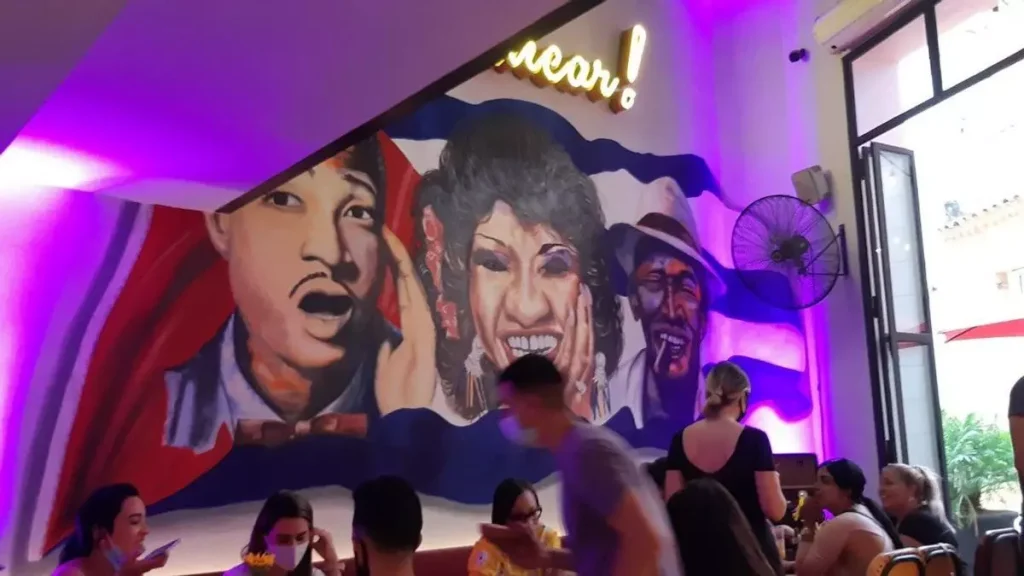
Cuban Regime Censors a Tribute in Havana to Celia Cruz on Her Centenary.

Specialist Rosa Marquetti warns that what happened “adds another chapter to the history of the application of political commissioner methods within Cuban culture.”

Mural of Celia Cruz, flanked by Benny Moré and Compay Segundo, at the Antojos restaurant in Old Havana. / 14ymedio

14ymedio bigger14ymedio, Madrid, 17 October 2025 — / The Celia Cruz centenary gala, organized this Sunday, October 19th, by the El Público theater group at the Cuban Art Factory (FAC) in Havana, has been canceled. The National Center for Popular Music announced this Thursday in a brief message that did not even mention the name of the Queen of Salsa.

“The programming subdirectorate of the National Center for Popular Music informs that the performance by the theater group El Público, scheduled for this Sunday the 19th at 8:30 p.m. in Nave 3 of the Fábrica de Arte Cubano, will not take place,” were the words chosen by the state agency.

Actor Danielito Tri-tri (Daniel Triana), who is part of the cast of the show, reproduced the official publication, attacking: “The tribute show to Celia has been censored, thanks to the same people as always.”

This Friday, Rosa Marquetti, a specialist in the life and work of the Guarachera de Cuba, who was born on 21 October 1925, commented on the cultural authorities’ decision in a long post, feeling “more pain than anger” about the incident and titling her text: Celia Cruz: the brilliance of a name in the face of cultural indigence. In it, she says that the “prohibition” of the tribute that El Público and the FAC intended to carry out “adds another chapter to the history of censorship and the application of political curatorial methods within Cuban culture.”

The musicologist reports that “some of those involved in this heartfelt initiative, after days of rehearsals and work, report incidents of personal summons, irrevocable orders, and threats anticipating negative continue reading

consequences for those who dare to disobey,” although none of those affected have yet published details of this pressure.

“They’ve been afraid of that voice for 60 years, trembling with fear at the mere mention or writing of its name.”

Likewise, she criticizes the “erratic statement from a bureaucratic entity that has nothing to do with the performing arts,” in which “they don’t even mention Celia Cruz’s name.” Regarding this, Marquetti adds: “They have been fearing that voice for 60 years, trembling with fear at the mere mention or writing of her name, terrified of her extraordinary power to summon people, knowing full well that her cry of “sugar!” and her joy are far more compelling and convincing than the bitterness and karmic negativity with which they impose orders, deal out blows, and threaten with the only thing they have: the force of the powers that be.”

Those same ones, the specialist continues, persist in trying “unsuccessfully” to tarnish Celia Cruz’s career, “attacking her, overwhelming her, inflicting upon her the misogyny and root racism that has characterized many of the decisions and policies in the cultural sphere, while she stood tall in the world as the greatest representation of all things Cuban, the most globally known, the most beloved, the most applauded, the most honored.”

They don’t forgive her, Marquetti explains, “her cimarronaje [‘runaway-slaveness’] in defending and displaying her right to think differently and act accordingly,” despite the fact that “the world today doesn’t remember, and many don’t even know, what her political stance was: they only remember her music, her voice, and her Cubanness, that is, her wonderful art.”

Directed by Carlos Díaz and written by Norge Espinosa, the show, announced by El Público, also featured the La Mansión Castillo restaurant. It was scheduled to take place in Nave 3 of the FAC. It would feature actors Estrellita, Lucho Calzadilla, Freddy Maragoto, Roberto Romero, Georbis Martínez, Brian Pérez, Chai Deivis Torres, and the aforementioned Danielito Tri-tri.

____________

COLLABORATE WITH OUR WORK: The 14ymedio team is committed to practicing serious journalism that reflects Cuba’s reality in all its depth. Thank you for joining us on this long journey. We invite you to continue supporting us by becoming a member of 14ymedio now. Together we can continue transforming journalism in Cuba.

Private Companies Have No Interest in Sponsoring Cuban Baseball

The Sports Law approved last July opened the door to investments, but no firm has approached the clubs

Sponsorships, in general, have not been successful in Cuban sports. / Jit

14ymedio bigger14ymedio, Havana, 16 October 2025 — The National Series baseball teams continue to fail to attract sponsors and advertising for uniforms and stadiums. More than two months after the Sports Law approved the opening of the program to state and private companies, none have approached the clubs. “The opportunity is legal,” Karel Pachot, legal director of the National Institute of Sports, Physical Education, and Recreation (Inder), told the program Bola Viva.

Pachot is certain that “if it is used as intended, it can yield the best results for all parties involved in this action.”

The current regulations, which were placed under the control of INDER, aim to generate revenue, a portion of which would be used to restore sports venues and guarantee resources to organize events, cover transportation costs, and provide food for baseball players.

For now, the outlook remains bleak. The lack of transportation, of water for the players, and of electricity has led to the suspension of games. Last June, the U-23 match between Cienfuegos and Mayabeque had to be canceled because “the bus that was supposed to take them to the stadium didn’t arrive,” according to reporter Fabián Morales. continue reading

“Theft, abuse, and constant problems are the daily bread of Cuban baseball. The incidents continue to accumulate, and it seems there’s no end to these evils,” explained the specialized media outlet Swing Completo.

Thus, Pachot appealed to companies, reminding them that they can all apply for advertising and sponsorship. “In the case of the National Baseball Series, the application is made through the Cuban Baseball Federation and the event’s Organizing Committee. These bodies submit the application to the appropriate authority.”

The [Cuban bottled water] company “Ciego Montero, for example, is a regular at some of our competitions, and has been a sponsor that has guaranteed the water,” explains Pachot.

The Cuban bottled water company “Ciego Montero, for example, is a regular at some of our competitions; it has been a sponsor that has guaranteed the water,” Pachot explains.

In the case of uniforms, the official emphasized that “they may allocate up to a third of their total surface area to sponsor logos, seeking to maintain a balance between team identity and economic needs.”

Based on the success of Cuban baseball, the measure is intended to be extended to other disciplines, including soccer, volleyball, and athletics.

Sponsorships, in general, have not borne fruit in Cuban sports. In 2021, authorities opened the door to privatizing the management of sports facilities. The first venue to pass into the hands of the “new forms of economic management,” as the federations called the non-state sector, was the iconic Estadio Latinoamericano, home of Havana’s  Industriales baseball team.

The goal is for these facilities to “be financially autonomous and self-sustaining,” said Juan Reinaldo Pérez, National Baseball Commissioner, at the time. The changes didn’t go as planned, and the facility underwent another renovation last March.

Now, work continues on the souvenir shops , restaurants, cafes, pizzerias, and ice cream parlors, as well as the arcade, screens, and tents in outdoor areas.

____________

COLLABORATE WITH OUR WORK: The 14ymedio team is committed to practicing serious journalism that reflects Cuba’s reality in all its depth. Thank you for joining us on this long journey. We invite you to continue supporting us by becoming a member of 14ymedio now. Together we can continue transforming journalism in Cuba.

As in Cuba’s Special Period, Authorities Hope the “Popular Rice” Will Reduce Imports

The Agricultural Group has set out to sow 200,000 hectares (494,212 acres), half of which are under the responsibility of “large enterprises and specialized centers”

Half of the projected figure -100,000 hectares- will be managed by “large enterprises and specialized centers” in Pinar del Río, Villa Clara, Sancti Spíritus, Camagüey and Granma. / Cubadebate

14ymedio bigger14ymedio, Havana, October 15, 2025 — The lack of production in Cuba is not easy to solve, but it usually finds compensation in a corresponding show of ‘voluntarism’. This is the case for rice, of which the Government intends to sow 200,000 hectares next year.

According to a note published this Wednesday in Granma, the task, “indicated by the highest leadership of the country” is of the “first order” and is expected to be launched this coming November. The program, reported the newspaper of the Communist Party of Cuba based on statements by Orlando Linares Morel, president of the Agricultural Group of the Ministry of Agriculture, aims to cover almost the entire country — 14 provinces, 133 municipalities and 23,000 producers.

Of the planned figure, half — 100,000 hectares — will be in the charge of “large companies and specialized centers” of Pinar del Río, Villa Clara, Sancti Spíritus, Camagüey and Granma. The rest will be devoted to the cultivation of the so-called “popular rice,” much criticized by experts for being inefficient, although the official report says nothing about this.

“Anyone can join this second modality,” says the official, “both for purposes of self-consumption and with intentions to contribute to industry and the national balance sheet.” The planting, he continues, “will be supported by national seed, while the Vietnamese side, which will participate in the program, will contribute its own seeds.” continue reading

The sowing, he continues, “will be supported by national seed, while the Vietnamese side, which will participate in the program, will contribute its own seeds.”

This refers to the projects in Pinar del Rio (in the municipalities of Los Palacios and Consolación del Sur) and in Artemisa Province, where the Vietnamese company Agri VMA is working on land under usufruct whose yields are much higher than those of the State: seven tons per hectare compared to the 1.5 average of the country..

The statements made by officials on October 7 in a meeting devoted to the subject made it clear that the private sector has become the main producer of rice on the Island, although the Round Table TV program acknowledged that, even with the non-State contribution, the future was bleak. According to the authorities, the current campaign will not be good, even with outside help.

In 2024, Cuba produced 80,000 tons of rice on 79,000 hectares, just over 10 per cent of its domestic consumption with a yield of just over one ton per hectare. By 2025, according to a report from Granma published last March, the goal was to plant 100,000 tons and obtain 100,000 tons of rice.

The latter would imply a growth of 20% compared to 2024, something complicated with the energy deficit. For the remaining 100,000 hectares of self-consumption and small production by 2026, the target seems unattainable under current conditions.

Last March, the Agricultural Group insisted on the need to develop, in some 70 municipalities, the cultivation of “popular rice,” a modality that “already proved its effectiveness during the hard years of the Special Period, in the 1990s.” The authorities’ aspire to return to agriculture with oxen because there is no fuel and no “technological package” to improve yields.

However, they acknowledged the inadequacy of domestic production to meet domestic demand and the need to import the product. “Last year, the rice harvested in the country was sold only in markets, fairs and some destinations of the Ministry of Internal Trade. But the basic basket [via the ration system] was 100% imported, and in 2025 it is also expected to be so,” said Orlando Linares.

That is why the fanciful intentions expressed in Granma this Tuesday are surprising. It also ensures that the State will provide the necessary fuel to producers, up to 70% “directly,” 10% in debit cards, and the rest in dollars, “in order to achieve deliveries and sales to industry, so they can count on cash to cover the high costs of cultivation and compensation for temporary workers.”

The plan even foresees the “accelerated introduction” of drones to increase performance and decrease water consumption. To “back up” the goal, they plan to use “the return of sales financing in US dollars from tourism and other sectors, which could help the rice program under current conditions, basically in the acquisition of tires, parts, tools and accessories for tractors, combine harvesters, industrial inputs and other resources.”

Today, the rice distributed in the basic basket comes from outside. On September 20, 19,000 tons of grain arrived at the port of Havana — without the national television revealing its origin — to be distributed throughout the country.

Translated by Regina Anavy

____________

COLLABORATE WITH OUR WORK: The 14ymedio team is committed to practicing serious journalism that reflects Cuba’s reality in all its depth. Thank you for joining us on this long journey. We invite you to continue supporting us by becoming a member of 14ymedio now. Together we can continue transforming journalism in Cuba.
The Control of Prices in Havana Is “A Dead Letter,” Recognizes the Official Press

Cubadebate proposes “basic measures” that “in the long run” regulate prices “naturally”

Prices on view in a private store in the neighborhood of San Agustín, in the municipality of La Lisa. / Cubadebate

14ymedio bigger14ymedio, Havana, Juan Diego Rodríguez, October 16, 2025 — After Cubadebate visited a market in Havana for a report published this Thursday on the price regulations established by the capital’s government just two and a half weeks ago, it reached an indisputable conclusion: the measure is now “a dead letter.” Very few businesses are complying.

Thus, for example, at the fair of the Palatine People’s Council in Old Havana, where, according to the text of the state media, “the value of products showed a direct relationship with inflation and with the price of the dollar on the informal market,” the prices were more expensive than those established by the authorities. Specifically,  doubled: papaya at 80 pesos per pound against the 40 stipulated; pumpkin at 50 pesos when it should be 25; and malanga at 150 when the fixed price was 75 pesos.

“No, we don’t have the chalkboard today, but there’s no charge for asking,” was the answer of one of the sellers to the reporter after she inquired about the official price list. Despite complaints from buyers, most were realistic about the measure. “Capping prices is like putting a band-aid on the wound. Nobody complies with the established price, and the inspectors are noticeable by their absence at best. At worst, the sellers buy them off with a string of onions, which is very expensive,” declared a woman identified as Monica.

“Capping prices is like putting a band-aid on the wound. Nobody complies with the established price and the inspectors are noticeable by their absence”

The problems now are similar. “All inputs to make the land productive remain scarce and sky-high. In addition, it is increasingly difficult to find workers who accept less than 10,000 pesos a month, and that makes everything more expensive. How can I sell the malanga at the price they say, if planting it alone costs a fortune?” asks Herminio, a farmer from La Salud, in Quivicán, Havana.

It is impossible for all the links in the business chain to sell at the imposed rate. “The problem is that we continue to buy at the same prices. The fuel is in US dollars; how can we travel to the countryside to buy from the farmers?” reasoned Pedro, another seller. “The continue reading

government lowers prices without taking those things into account.”

“A comprehensive strategy,” he proposes, would require “measures to tackle these root causes”

The situation is inescapable, despite the inspections that the official press claims have been reinforced and which, according to Cubadebate, has led to the imposition of thousands and thousands of pesos in fines. The solution, states the text, “goes beyond simple control. Although control is necessary, reports from farmers and sellers point to a structural problem: high production costs, intermediation and access to inputs.”

A comprehensive strategy, he suggests, would require “measures to tackle these root causes,” such as: “facilitating access to fertilizers and fuel at affordable prices, directly supporting producers in shortening the supply chain and promoting a stable supply that will eventually regulate prices naturally.”

The text goes so far as to state that the “divergence between the decree and the reality in the markets of Havana reveals that the current mechanism is insufficient.” The population is “caught in an impossible dilemma,” it continues: “either comply with regulations that are not fulfilled or pay abusive prices to be able to eat.”

“The resolution, well-intentioned on paper, seems to have been caught in a limbo between the decree and the land,” says the report, with a sense of reality unusual in the official press. “As long as the price of inputs and logistics continue to soar, the order to reduce them seems an imposition disconnected from the root of the problem: a production that does not take off and a chain of intermediation that the resolution fails to stop.”

Translated by Regina Anavy

____________

COLLABORATE WITH OUR WORK: The 14ymedio team is committed to practicing serious journalism that reflects Cuba’s reality in all its depth. Thank you for joining us on this long journey. We invite you to continue supporting us by becoming a member of 14ymedio now. Together we can continue transforming journalism in Cuba.
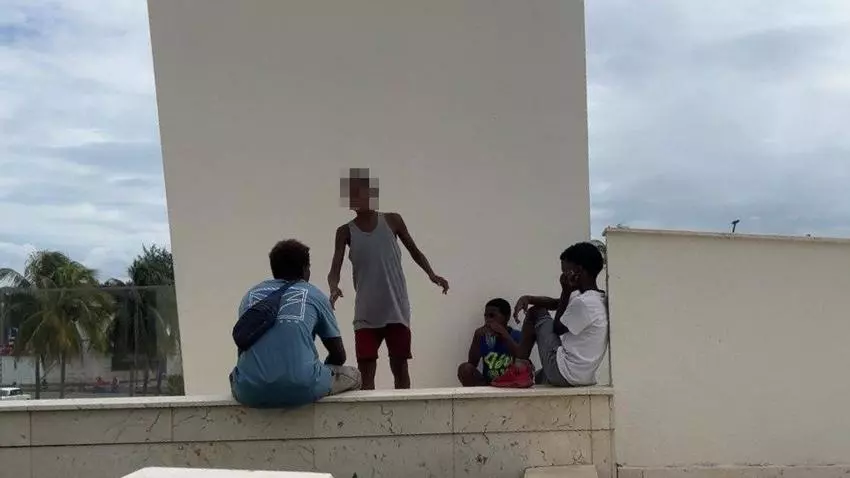
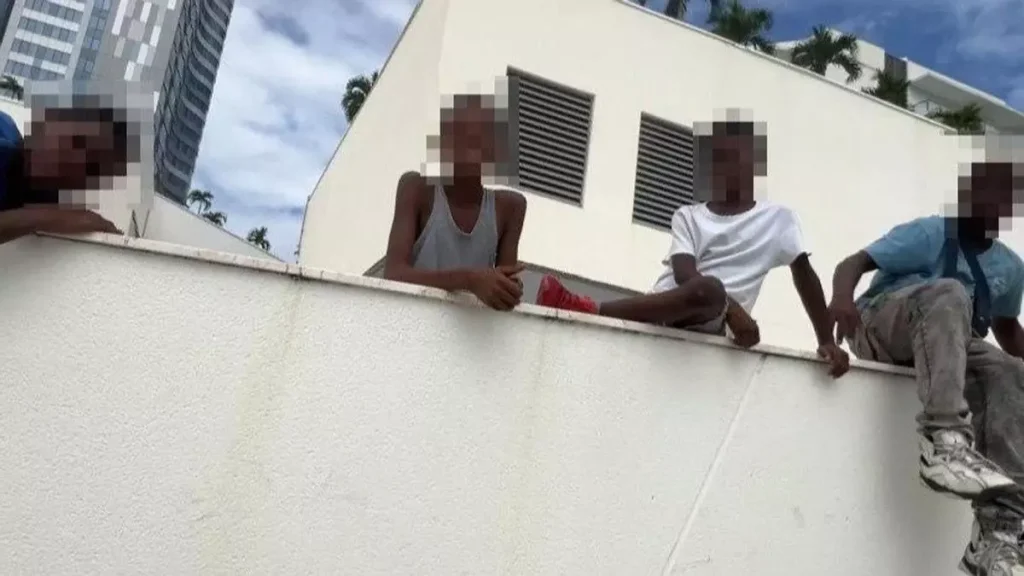
Four Street Children Survive in the Basement of Havana’s Largest Dollar Supermarket

The problem “has spread to several places, where children ask for money, even late at night,” admits deputy Carlos Miguel Pérez Reyes

When asked if they sleep there, two say yes, that they do it “under the stairs.” / 14ymedio

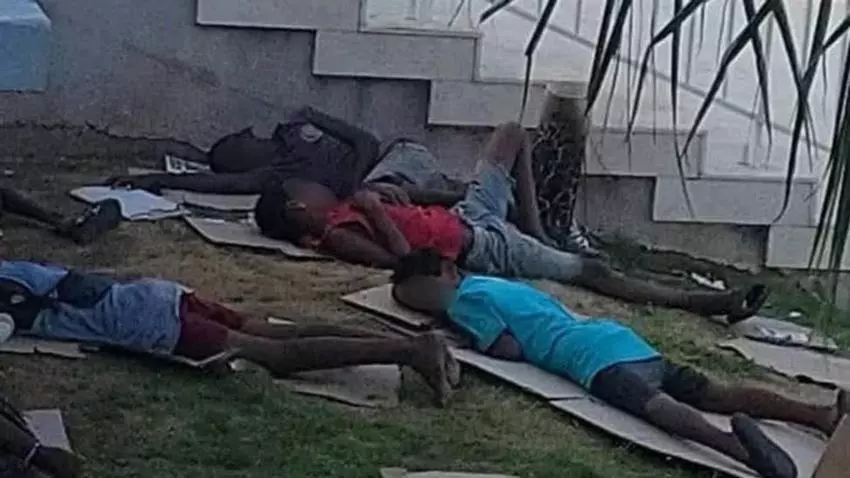
14ymedio bigger14ymedio, Havana, October 16, 2025 — “Those from the Minors* go by here.” says one of the four children that 14ymedio interviewed this Wednesday after photos were published on social networks where they appear sleeping on cardboard in the basement of the Gran Muthu Habana. This luxury hotel is adjacent to the 3rd and 70th dollar supermarket, opened earlier this year in the affluent neighborhood of Miramar.

When asked if they sleep there, two say yes, that they do it “under the stairs” and have no parents or other adults to take care of them.

How do they eat? They reply that they “eat from the carts.” They watch the exit door of the market, where people leave with carts to go to their cars. They depend on charity, customers giving them some money or something from their purchases.

The image of these children sleeping on cardboard, at the foot of a hotel offering luxury tour packages, is a reality that the official discourse has always tried to deny. The humanitarian crisis on the Island can no longer be hidden behind the “We are happy here” or “Children are the hope of the world” signs.

When they speak of “the one from Minors” they are referring to a worker of the Integral Training Schools or the driving schools. / 14ymedio

The children of the Gran Mathu are afraid, and when they speak of “the one from Minors,” they are referring to a worker from the Integral Training Schools or the driving schools, which depend on the Ministry of the Interior. There are 12 such institutions in Cuba, each with an average of 200 residents.

So far, on the official side, only the businessman Carlos Miguel Pérez Reyes, a member of Parliament for the municipality of Playa, has reacted to the complaint. “The Council for the Care of Minors of the Ministry of the Interior is the body responsible for these cases, and there are numerous complaints on file. This was confirmed to me by neighbors in the area, although I still have to review this issue in detail with the institution. The municipal authorities confirm that continue reading

this is a recurring problem that requires a comprehensive response,” said the man, who is also president of a private business, Dofleini Software.

The deputy also acknowledged that the problem “has spread to several areas, where children ask for money on a daily basis, even late at night.” He called on institutions to “provide a comprehensive treatment to the situation,” since “reporting and rounding up minors does not solve, by itself, the root of the phenomenon.”

These minors face violence, sexual abuse, exploitation, trafficking and criminalization. / Social Networks

The original publication generated a wave of comments among Internet users. Some also warned about the risks faced by these children: violence, sexual abuse, exploitation, trafficking and criminalization. “They are completely exposed. There is no responsible adult, no authorities to deal with. They are easy prey for any exploitation,” warned one user who claimed to have also seen children in the area.

In July 2025, the then Minister of Labor and Social Security, Marta Elena Feitó, was dismissed after declaring on television that “there are no beggars in Cuba,” a phrase that caused outrage inside and outside the country. The statement, perceived as a blatant denial of reality, exposed the official strategy of making poverty invisible rather than confronting it.

The presence of people in street situations is neither new nor unique to Havana. In recent years, economic decline has pushed entire families to live in public spaces. The lack of housing is compounded by inflation, food shortages and the collapse of social care systems. According to independent organizations, there are more and more children on the streets, many of them orphans or children of emigrant parents, under the care of elderly people who are ill, or children who come from broken homes.

Child begging in Cuba is already a proven fact and is spreading. / 14ymedio

Child labor is also increasing in Cuba. Denied or officially minimized, this phenomenon has become a palpable reality, driven by the economic crisis, the black market and social deprivations. In Las Tunas, for example, children and adolescents sell sweets, food or various articles on the streets, something that even the local official press was forced to acknowledge.

Although the State has laws prohibiting child employment and allows some regulated exceptions, in practice these rules are broken, with a lack of protection, extreme poverty and institutional omission. This brutal contrast between the letter of the law and the daily life of hundreds of children highlights the fact that more than an anomaly, child begging in Cuba is already a proven fact and is spreading.

Luxury and poverty in Havana: abandoned children live outside the doors of a dollarized supermarket

*Explained later in the article

Translated by Regina Anavy

____________

COLLABORATE WITH OUR WORK: The 14ymedio team is committed to practicing serious journalism that reflects Cuba’s reality in all its depth. Thank you for joining us on this long journey. We invite you to continue supporting us by becoming a member of 14ymedio now. Together we can continue transforming journalism in Cuba.
A Forgotten Crime of the Castro Regime, Cubana de Aviación Flight 495

Filmmaker Lilo Vilaplana and activist Reinol Rodríguez attempt to expose a crime that had the complicit silence of many, including authorities and numerous important press media of the time

Image from the documentary The Hijacking of Flight 495, made by filmmaker Lilo Vilaplana and activist Reinol Rodríguez. / Lilo Vilaplana

14ymedio bigger14ymedio, Miami, Pedro Corzo, October 12, 2025 — Decades have passed, overwhelming days and hours, to the point that those of us who live in these dark times hardly remember it.That is why it makes sense for the new generations of the hemisphere to know that Castroism has developed many of the most violent and criminal strategies known in the Americas.

It is very important to delve into the past. No crime should go unpunished and forgotten; hence, the importance of the work made by filmmaker Lilo Vilaplana and activist Reinol Rodríguez, with a historical documentary about ill-fated Flight 495 of Cubana de Aviación, from Miami to Varadero, which crashed in the vicinity of Nipe Bay after being hijacked by followers of Fidel and Raul Castro.

Rodriguez and Vilaplana try to expose a crime that had the complicit silence of many, including authorities and numerous and important press media of the time. The US Government itself declared that the event was outside its jurisdiction. Apparently, it was seduced by the paraphernalia of Castroism.

These two Cubans, committed to historical truth, thoroughly investigated the above-mentioned events and interviewed survivors of the disaster, including Omara González, a passenger on that flight.

The US Government itself stated that the event was outside its jurisdiction

Castroism was violent in the insurrection and much more so as a government. In its time they placed explosives in public places to force the population to stay in their homes, murdered police and military to provoke ferocious government repression, which must also be remembered, and which had as its climax the Castro strategy continue reading

of “the three Zs [C in Spanish]: zero cinema, zero cabaret and zero c… in reference to brothels.”

This threat was quickly confirmed by the explosion of a bomb placed in a woman’s abandoned purse in a cabaret in Havana, wounding several young women, one of whom had to have her arm amputated, according to writer Jose Antonio Albertini in a conversation. He was also one of those who attempted to rescue Flight 495 from oblivion in his WLRN TV program.

Violence sometimes ravaged the insurgent ranks themselves, as when two young students in the city of Santa Clara were carrying a bomb that fatally exploded prematurely.

The bombs and kidnappings carried out by the rebel forces in compliance with the disastrous orders of the Castro brothers pale before the horrendous crime that occurred on November 1, 1958, exactly two months before a darkness that has extended for 66 years and 10 months arrived in Cuba. It happened two days before the last pluralist, albeit fraudulent, elections in our history.

As a sign that the spiral of violence was ready to operate outside Cuba, Raül Castro issued Order 30 authorizing the kidnapping of US citizens, which led in June 1958 to 49 Americans, including 20 civilians, employees of the US-owned Moa nickel mining plant and 29 Marines being kidnapped in the Sierra.

Incomprehensibly, the painful events of Flight 495 were hardly mentioned among the Cubans. The rescue involved Gerardo Reyes, a notable Colombian journalist who dedicated 10 years of his life to an investigation that culminated in a book entitled Flight 495, in which he sees innocent people involved in complex situations that can end with their own death.

Cubana de Aviación Flight 495 was the first aircraft hijacked in US airspace

The passengers had no connection with the Cuban government and were not a political objective; simply, the kidnappers apparently intended to transport weapons, ammunition and perhaps money to the eastern guerrillas.

The trip to Varadero, just over 300 kilometers, 45 minutes long, never reached its destination. On board the Vickers Viscount turboprop, there were 16 passengers, including a pregnant woman.

The aircraft was captured by five young militants of the hapless July 26 Movement. It is claimed that they were following orders from Raúl Castro, and the operation ended in tragedy, according to the newspaper Gente in its edition of November 16, 1958. Seventeen people died, including six American citizens.

None of the guilty paid for the crime: another Cuban tragedy that “nobody wants to hear about and least of all see.”

Translated by Regina Anavy

____________

COLLABORATE WITH OUR WORK: The 14ymedio team is committed to practicing serious journalism that reflects Cuba’s reality in all its depth. Thank you for joining us on this long journey. We invite you to continue supporting us by becoming a member of 14ymedio now. Together we can continue transforming journalism in Cuba.

More Than 1,000 Cubans Have Served in the Russian Army and 96 Have Died, According to Kiev

Russia has attacked Ukrainian infrastructure with more than 300 missiles and 37 drones, according to Zelensky

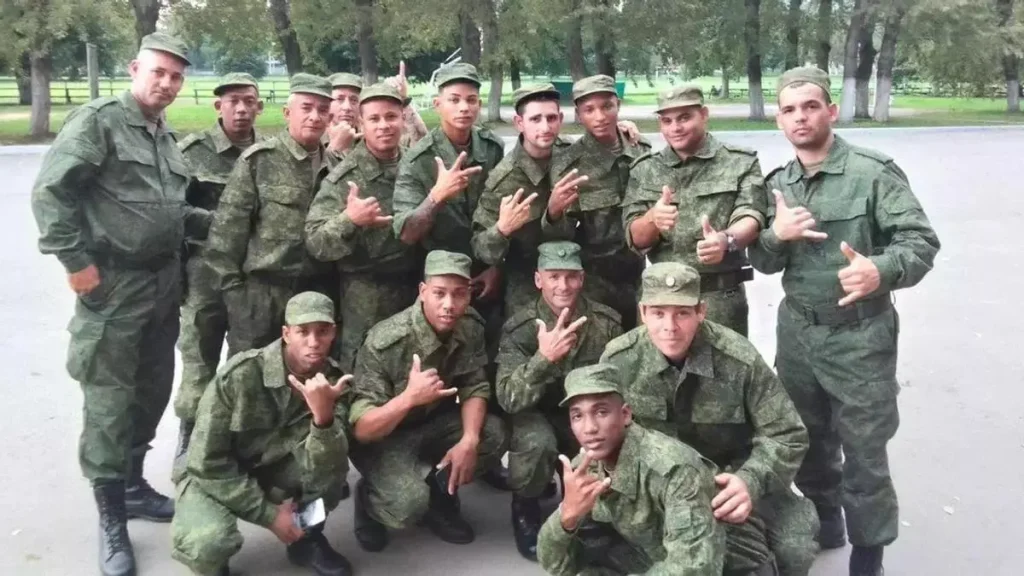
A group of Cubans recruited to fight on the Russian side in Ukraine. / Mario Vallejo/Facebook

14ymedio biggerEFE (via 14ymedio), Kiev, 16 October 2025 –At least 1,076 Cuban citizens are fighting or have fought so far in the ranks of the Russian Army in the war launched on February 24, 2022 by Russian President Vladimir Putin, according to figures provided by Ukrainian intelligence (GUR) to the Kyiv Independent.

According to the same source, 96 of those Cuban soldiers have died in hostilities or are missing.

The GUR also noted that Cubans recruited by the Russian Army receive two weeks of training in Moscow before being sent to the battlefield. The vast majority of these combatants perform assault or motorized infantry or dismounted roles.

Some of the Cubans who end up fighting come to Russia attracted by construction jobs posted on social media.

According to Ukrainian military intelligence, some of the Cubans who end up fighting come to Russia lured by construction jobs posted on social media. The process is carried out through private intermediaries.

Despite being an ally of Moscow, the communist regime in Havana has repeatedly denied any involvement in the recruitment of Cuban soldiers into the Russian army. continue reading

Both Russia and Ukraine recruit soldiers from third countries to reinforce their troops in the war.

Meanwhile, Russia attacked infrastructure in at least five Ukrainian regions last night with more than 300 drones and 37 missiles, Ukrainian President Volodymyr Zelensky announced on social media.

“Last night brought with it attacks against our people, our energy sector, and our civilian infrastructure,” Zelensky wrote, denouncing that some of the Shaheds used by Russia to attack were equipped with cluster munitions.

“Last night brought attacks against our people, our energy sector, and our civilian infrastructure.”

The Ukrainian president also condemned Russia’s subsequent attacks on the same sites, which were believed to have targeted medical and emergency workers responding to the victims of the initial bombing.

According to Zelensky, Russia attacked infrastructure in the central regions of Vinitsia and Poltava, and Sumi on Wednesday. In the northern region of Chernihiv, Russian bombing damaged a post office and injured one person. In Kharkiv, a region bordering Russia and in northeastern Ukraine, critical infrastructure and a Ukrainian emergency services headquarters were attacked.

The Ukrainian president recalled that Russia has attacked the country’s energy infrastructure almost daily this fall.

This latest bombing comes before Zelensky travels to the US to meet with President Donald Trump this Friday.

Zelensky called for “strong decisions” to force Russia to end the war. “And this depends on the US, Europe, and all the partners on whose power the end of the war depends,” the Ukrainian leader said in his message of condemnation.

Zelensky insisted that the “momentum” of the Middle East peace agreement forged by Trump must be used to end the war in Ukraine.

____________

COLLABORATE WITH OUR WORK: The 14ymedio team is committed to practicing serious journalism that reflects Cuba’s reality in all its depth. Thank you for joining us on this long journey. We invite you to continue supporting us by becoming a member of 14ymedio now. Together we can continue transforming journalism in Cuba.

Two Protesters From October 7 in Marianao Are Transferred to Preventive Detention in Cuba’s Valle Grande Prison

Yuniel Serrano Batista and another resident of the Pogolotti neighborhood were charged with “public disorder”

The demonstration, which took place at night, brought together dozens of residents who came out to demand the restoration of electricity service. / Screenshot / X

14ymedio bigger14ymedio, Havana, 14 October 2025 — Two of those arrested during the neighborhood protest on Wednesday, October 7, in the municipality of Marianao, Havana, were charged with “public disorder” and remanded in custody at Valle Grande prison. At least 15 citizens had been arrested in connection with that peaceful demonstration and taken to the detention center known as El Vivac, in Arroyo Naranjo.

As confirmed by Martí Noticias this Monday, one of those transferred to Valle Grande is Yuniel Serrano Batista, accused of allegedly setting fire to a garbage container. The name of the other person, who was arrested for trying to prevent Serrano’s arrest, is still unknown. Both are residents of the Pogolotti neighborhood.

The demonstration , which took place at night on 51st Avenue, brought together dozens of residents who came out to demand the restoration of electricity, which had been intermittent for four days, and to denounce the lack of water and freedoms. Chanting “We want light!” and banging on pots and pans, residents partially blocked the road, using burning containers and objects to provide light during the blackout.

At least 15 citizens had been arrested in connection with that peaceful demonstration and taken to the detention center known as El Vivac.

The police intervened within minutes. Witnesses reported that several patrol cars and plainclothes officers forcibly dispersed the protesters, arresting more than a dozen people.

The organization Cubalex denounces that the Cuban regime “has repressed protest participants and criminalized a legitimate act of dissent as a mechanism to silence citizen discontent in Cuba.”

Among those arrested was activist Liván Gómez, coordinator in Havana for the Union for a Free Cuba party. Gómez was arrested the day after the demonstration and accused of leading the protest, even though, as later continue reading

confirmed in recordings, he was not present at the event.

After reviewing the images, authorities decided to release him on Friday, October 11. However, Gómez was warned that he could be imprisoned if he was linked to anti-government graffiti that appeared in the area. “During the interrogation, they also accused me of being behind some posters. They made it clear to me that they are watching me,” the activist stated.

The transfer from El Vivac to Valle Grande usually indicates that the Prosecutor’s Office has formalized the charges and that the detainees could face trial. This step further complicates their legal and personal situation, as it implies further isolation, greater state control, and difficulties in accessing defense counsel and family visits. In political or protest cases, it also acts as a deterrent to the rest of the community.

The month of October has been marked by increased social tension in Cuba.

Although most of those arrested have been released in recent hours—some with fines and others with warnings—the fact that two protesters have been sent to pretrial detention in Valle Grande, one of the capital’s most frequently used prisons for opponents and protesters, demonstrates that “social protest is treated as a crime, not as an expression of a citizen’s right,” Cubalex noted.

In recent weeks, this newspaper has documented an increase in spontaneous demonstrations in neighborhoods of Havana and other provinces, motivated by the energy crisis, water shortages, and the lack of official responses.

The previous week, a group of residents in the Casino Deportivo neighborhood banged pots and pans during a power outage, in an area historically privileged for not experiencing prolonged power outages. Days earlier, women with children and empty buckets blocked Monte Street to demand water. Although they were confronted by police officers, a water truck arrived on the scene shortly after.

The month of October has been marked by heightened social tension in Cuba. Daily blackouts, which in many areas exceed 12 hours without power, have exacerbated the population’s frustration. Added to this are inflation, food and medicine shortages, the spread of epidemics, and political repression.

____________

COLLABORATE WITH OUR WORK: The 14ymedio team is committed to practicing serious journalism that reflects Cuba’s reality in all its depth. Thank you for joining us on this long journey. We invite you to continue supporting us by becoming a member of 14ymedio now. Together we can continue transforming journalism in Cuba.