
‘Thanks to Independent Reporters, Cuba Now Has Its Own Voice’

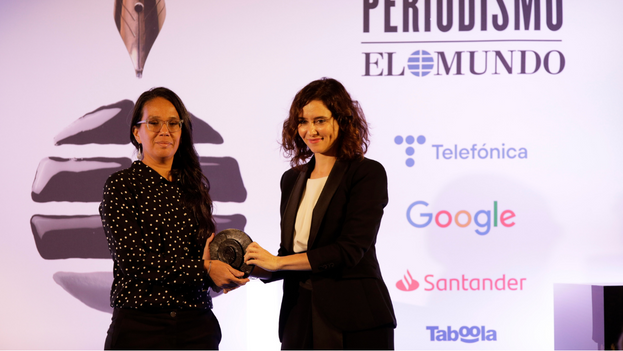
Escobar receives her award from Isabel Díaz Ayuso, president of the Community of Madrid. (Alberto Di Lolli/El Mundo)

14ymedio bigger 14ymedio, Madrid, Havana, 19 October 2022 — Cuban journalist Luz Escobar, member of the editorial staff of 14ymedio and winner of the Press Freedom Award of the Spanish newspaper El Mundo, declared on Wednesday night that, thanks to independent reporters, Cuba has “its own voice.”

The award ceremony of the XX International Journalism Awards, chaired by Isabel Díaz Ayuso, president of the Community of Madrid, was held at the Museo Nacional del Prado. During the celebration, exiled Russian reporter Alexey Kovalev, director of investigative reporting at the Meduza newspaper, also received the Best Labor Journalism Award.

Escobar alluded in her speech to the difficulties Cubans have in leaving the Island, subject to the control of the regime and as “hostages of a power that treats us like small children who are forbidden to travel.”

She also pointed out that, in Cuba, the word “journalist” is equivalent to that of “enemy,” and she described the ruling media as “propaganda spaces for the only party allowed. In the faculties of journalism, we are taught to revere the Government without questioning, and the list of prohibited subjects is too long for one article,” she said.

On the dangers of the profession, Escobar denounced the “strangulation of the press” by the Government, whose objective has been to “impose a single narrative about what was happening inside and outside the Island.” “Assassinating journalism,” she said, has been the task of those who have been plotting a “triumphalist story about the national situation” for six decades, while attributing to Europe and the rest of Western democracies a “catastrophist” panorama. continue reading
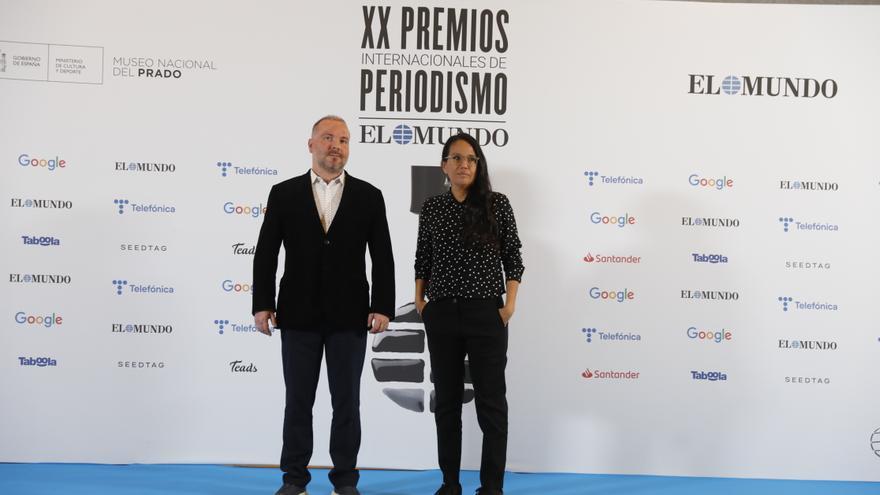
Luz Escobar and Alexey Kovalev, winners of the XX International Journalism Awards. (Alberto Di Lolli/El Mundo)

As examples of the regime’s media manipulation, Escobar said that the phrase “special military operation” that the official media gave to the Russian invasion of Ukraine, following direct instructions from the Kremlin, justified the conflict and denigrated opposition reporters like Kovalev.

Independent journalism was born as an alternative to that story, she said. According to Escobar, its origins are in the regime’s prisons, “when a political prisoner sent the first piece of paper, precariously written, to report a beating,” issued “a complaint through a restricted phone call” or “painted a symbol on a wall.”

Founders such as the poet and journalist Raúl Rivero, one of those convicted during the so-called Black Spring of 2003, or her  own father, Reinaldo Escobar, censored by the regime in 1988, have served as inspiration when it comes to assuming the “high personal, family and social cost” of her work.

Escobar denounced the arbitrary arrests, threats and police cordons she has suffered in her own house, in addition to  campaigns to “destroy my reputation.” “After July 11, 2021,” she said, “Cuban authorities have become much more susceptible to information,” and are paying greater attention to social networks and independent media content.

In addition to a thorough repression against those who expressed their desire for change and freedom on that date, the regime has forced dozens of reporters to renounce their profession in what the journalist described as “a twist of censorship.”

However, “we have shattered the regime’s old monopoly of recounting reality,” said Escobar, who also alluded to her work in the 14ymedio newsroom, which continues publishing “despite the repression, threats and blocking of its website on Cuban servers.”

The newspaper has helped to “elevate press standards on the Island” and demonstrates that “journalism can inform with immediacy and quality.”
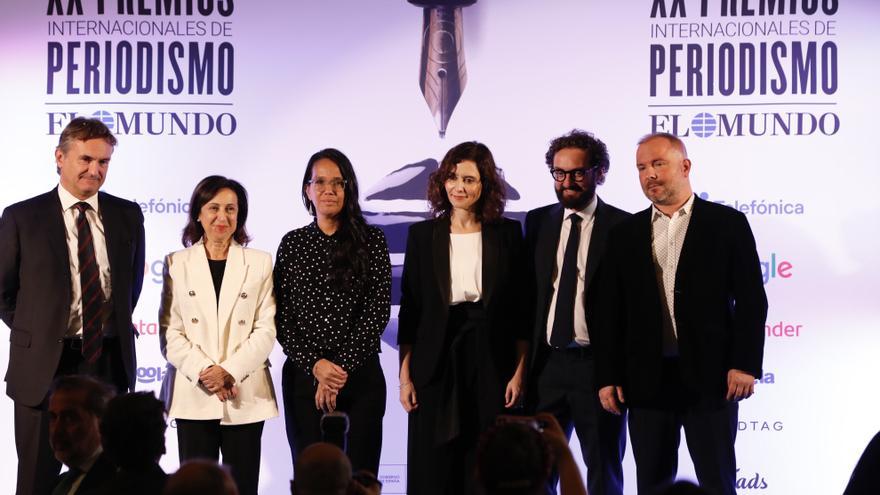
The winners along with the organizers of the ceremony, President Ayuso and the Minister of Defense of Spain, Margarita Robles. (Alberto Di Lolli/El Mundo)

For his part, Alexey Kovalev, forced into exile after legislation from the Russian Parliament that criminalized independent journalism, stated that Putin’s war against Ukraine “is based on a lie,” so his job is to defend the truth. The reporter, whose family remains in Moscow, thanked El Mundo for its recognition of the importance of the free press.

In praise of the winners, Isabel Díaz Ayuso pointed to Escobar and Kovalev as “examples of journalism as a fourth power and commitment to freedom.” “Democracy is not something that is conquered forever but must be defended, and this isn’t possible without freedom of the press,” she added.

She claimed that in international spaces it’s necessary to “call things by their name,” which implies “saying that Cuba is a dictatorship and its government, tyrannical.” As for Escobar, she said that in addition to being a journalist, she is a mother, something that the regime has used against her. She also commented that those responsible for El Mundo had to make numerous arrangements so that the reporter could attend the ceremony with her daughters.

The award reception dinner, organized by Joaquín Manso and Marco Pompignoli, directors of El Mundo and the Unidad Editorial group, respectively, was attended by Escobar’s family and colleagues, in addition to Cuban activists and intellectuals Dagoberto Valdés, Yoandy Izquierdo, Yunior García Aguilera, the Venezuelan politician Leopoldo López, and the Spaniards Adolfo Suárez, Jr., Inés Arrimadas and Edmundo Bal.

The guests also attended the temporary exhibition “Another Renaissance,” in the Prado Museum, which has collected the work of Spanish artists in Naples at the beginning of the Cinquecento, the 16th century period of Italian art that reverted to classical forms.

Translated by Regina Anavy

____________

COLLABORATE WITH OUR WORKThe 14ymedio team is committed to practicing serious journalism that reflects Cuba’s reality in all its depth. Thank you for joining us on this long journey. We invite you to continue supporting us by becoming a member of 14ymedio now. Together we can continue transforming journalism in Cuba.
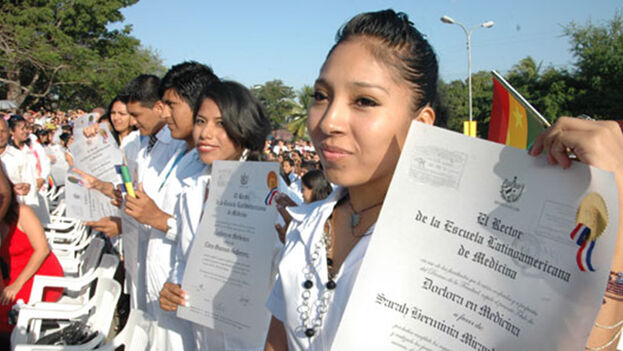
Cuba Charged Bolivia Millions of Dollars for 5,000 ‘Free’ Medical School Scholarships

A group of Bolivian health workers who graduated in Cuba. (UPEA)

14ymedio bigger14ymedio, Havana, 18 October 2022 — The 5,000 medical scholarships that Cuba touted in 2015 as a donation to Bolivia, cost Evo Morales’s government millions of dollars. The Island charged “registration for each student, annual tuition, room and board, transportation, health insurance and even for the students’ clothes,” a report from El Deber uncovered.

Annex IV of the confidential report, accessed by the Bolivian media outlet, indicates that the Island received $1.5 million as payment for the students’ room and board, as well as $17,000 dollars per person for tuition and another $1,000 for registration.

The information, which was corroborated by the Foundation for Human Rights in Cuba, confirms that Morales’s government signed aggreements, but “not for donations received nor to benefit from the implementation of programs, but rather to provide economic assistance” to the Island.

The awarding of 5,000 scholarships was part of the 11 points signed by leaders Evo Morales and Fidel Castro on December 30, 2005.

A decade later, on September 6, 2015, Cuba’s ambassador to Bolivia at the time, Benigno Pérez Fernández, representing Minister of Public Health Roberto Moralez Ojeda, and former Bolivian Minister of Health, Ariana Campero Nava, classified the agreement as “confidential.” continue reading

Bolivia and Cuba committed to “not divulge, share or make public any information exchanged between them or to which they had access during the implementation of the agreement, so long as the information was not already in the public domain, required by law or through mutual agreements between them.”

The program came to light in 2012. The Executive Committee of Universidad Boliviana denounced that a portion of the group who received scholarships and “graduated” on the Island, which did not exceed 1,600 “did not even complete 70% of the core subjects required in the Bolivian academic system,” published Radio y Televisión Martí.

Universidad Boliviana confirmed that the graduates on the Island not only did not comply with the “minimum requirements to practice their profession” but also, despite that, the government of Evo Morales hired some of them.

The Bolivian Minister of Health at the time, Juan Carlos Calvimontes, argued that the posts filled by the health workers trained in Cuba were those that Bolivian doctors did not want to cover.

Calvimontes confirmed that of the 5,000 alumni who received scholarships since 2006, most spent six and a half years studying. Others, without saying how many, stayed an extra year of obligatory social service on the Island and six more months in Bolivia.

Bolivian doctors trained in Cuba. (Ministerio de Relaciones Exteriores de Bolivia)

The controversy has followed Bolivia’s relationship with Cuba. In January 2020, Bolivia’s attorney general arrested and accused Carlos de la Rocha, — who was acting national coordinator of the government’s health program under former president Evo Morales — of corruption for alleged anti-economic behavior, not fulfilling his duties, and aggravated robbery.

After the scandal, the Colegio Médico de Bolivia [Bolivian Medical School] requested an investigation into the funds earmarked by Morales’s government for contracting doctors from the Island. “We are discovering that state funds were squandered, deposited in individual bank accounts, supposedly, to pay Cubans when these resources should have been in a government account,” said the president of the Colegio Médico de La Paz [Medical School in La Paz], Luis Larrea.

After Evo Morales left power, Cuba withdrew more than 700 “cooperators” it had in that country. After their exit, data began to emerge: only 205 of the 702 Cubans that were on the medical mission in Bolivia had medical degrees, according to revelations by the Minister of Health of the Andean country, Aníbal Cruz. Most were technicians or drivers.

Translated by: Silvia Suárez

____________

COLLABORATE WITH OUR WORKThe 14ymedio team is committed to practicing serious journalism that reflects Cuba’s reality in all its depth. Thank you for joining us on this long journey. We invite you to continue supporting us by becoming a member of 14ymedio now. Together we can continue transforming journalism in Cuba.
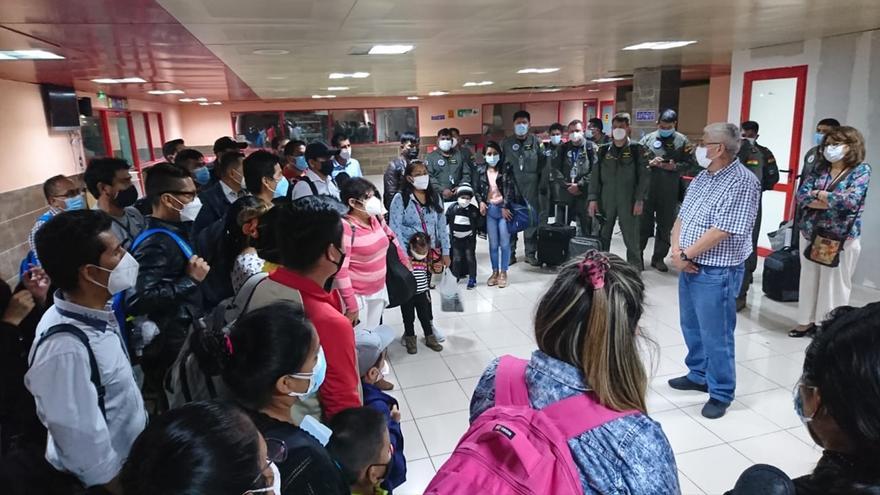
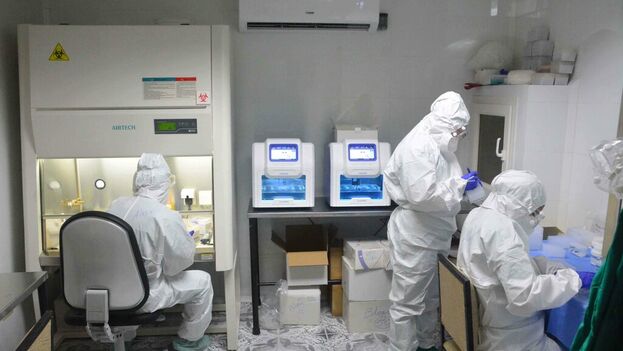
Staff at a Hospital Lab in Havana Have Left the Country

The labs at Havana’s Salvador Allende Hospital, also known as Quinta Covadonga, are unstaffed.

14ymedio bigger14ymedio, Havana, 17 October 2022 — Havana’s Salvador Allende Hospital, located in the Cerro district, will open its emergency room on Monday without the required staff. That means doctors will not be able to order lab tests due to an alarming shortage of workers. Sources at the hospital, also known as Quinta Covadonga, report that its young that lab technicians resigned en masse and without warning in order to “leave the country.”

The island, which is currently in the midst of a dengue fever epidemic, has also long suffered from a serious shortage of medical testing supplies, which has prevented doctors from correctly diagnosing the disease. Now there are not even enough staff to perform the tests.

“In Cuba we can’t afford to get sick anymore. This is serious,” confesses the same source, noting how pointless it is to ask for reinforcements because “every Havana hospital has a staff shortage.”

The news comes on the same day as the opening of the Medical Tourism and Wellbeing Fair in Havana, which will run until October 21. The event serves as an opportunity for Cuban Medical Services (CSM) to promote the country’s health care industry to potential clients. continue reading

The staffing shortage contrasts with the ongoing export of healthcare workers to countries such as Mexico. On October 13, the government of Andres Manuel Lopez Obrador announced the imminent arrival of eighty-four Cuban doctors as part of a contingent hired to reduce “the shortage of specialists.” There are currently 436 Cuban healthcare workers assigned to various Mexican states, which include areas of the country that are remote or are experiencing violence.

Last week the European parliament debated an agreement signed in August for 497 Cuban doctors to be sent to the southern Italian region of Calabria to alleviate a shortage of qualified personnel. Several parliamentary deputies signed onto a letter from Prisoners Defenders to Calabrian governor Roberto Occhiuto, reminding him that Cuba’s overseas healthcare workers labor under almost slave-like conditions. The Madrid-based human rights organization also noted that these workers do not enjoy full rights in the countries to which they are sent and that they receive less than 20% of the salary the Cuban government receives as payment for their services.

In August Occhiuto justified the agreement, saying efforts to fill vacant positions for doctors had been unsuccessful. “There are not enough doctors in our hospitals. There are not enough doctors in Italy,” he said. “All the regions are doing their best to recruit them and they are not succeeding. What are we supposed do? Close the hospitals? Close the emergency rooms?”

In spite of the shortage of healthcare staff, the Cuban government does not seem inclined to make any effort to retain those it has trained. Last week 14ymedio reported that medical schools were experiencing the same ongoing exodus as the rest of the country.

The situation is perhaps most serious in Artemisa province, where more than twenty medical students from one class left en masse. The students at the school — formerly one of the country’s most prestigious, whose graduates were among the country’s best paid — grew increasingly alarmed at how difficult it was becoming to treat patients without adequate means or medications.

They also saw their quality of life dramatically declining, especially in contrast to self-employed service workers, who were earning much more money. They were also being forced to work ever longer shifts due to staffing shortages. And to top it off, they were not allowed to leave the country because they were performing work considered strategically important by the state.

____________

COLLABORATE WITH OUR WORKThe 14ymedio team is committed to practicing serious journalism that reflects Cuba’s reality in all its depth. Thank you for joining us on this long journey. We invite you to continue supporting us by becoming a member of 14ymedio now. Together we can continue transforming journalism in Cuba.
Up to 10 Years in Prison for 14 Demonstrators at the 11 July 2021 Protests for Trying to ‘Destabilise’ the Cuban State

Pictures broadcast by Cuban state television, of the 11 July demonstrations in Havana municipality San Miguel del Padrón. (Captura)

14ymedio bigger14ymedio, Havana, 19 October 2022 — A total of 14 people put on trial for going on the streets on 11 July 2021 in San Miguel del Padrón, in Havana, have been sentenced to almost 10 years in prison for crimes of public disorder, criminal contempt, violent affront and incitement to crime. According to news agency EFE, who claim to have had access to the sentencing (pronounced by the municipal tribunal of Arroyo Naranjo on 30 September) two were given five years ’correctional labour’ instead of a custodial sentence.

The judges decided that amongst the proven facts, those who were sentenced (not named by the Spanish agency) had protested in a “violent and aggressive” manner, had thrown stones at police and had called on others to join them, “principally through social media”, in order to “destabilise the rule of law and social justice”. In addition, reads the text, they “shouted disrespectful and offensive phrases and slogans” against the president, Miguel Díaz-Canel.

The public prosecutor had originally called for sentences of up to 14 years in prison, but, as in other judgements on the peaceful 11 July protests which have been carried out on the island since the end of 2021, and which have been denounced as “farcical” by a number of international organisations, the tribunal slightly reduced their demand for higher sentences.

Immediately following that Sunday last year, the official media attempted to discredit the country-wide demonstrations, calling them “riots”, and accusing the demonstrators themselves of being “criminals”. As far as the protest in San Miguel del Padrón itself is concerned, a state television broadcast showed an interview with a supposed victim of the stone-throwing, who reported having “suffered all manner of shouting and counter-revolutionary chants”.

In videos posted on social media, a number of youths can indeed be seen throwing stones, but with their targets well out of reach.

Prisoners Defenders, in their most recent report, published on 10 October, put the number of prisoners sentenced at 739, some of them with up to 30 years in prison. In total, the NGO, based in Madrid, had verified 1,026 political prisoners and prisoners of conscience in Cuba. For their part, the independent Proyecto Inventario has registered around a hundred detentions since 29 September. continue reading

Despite the repression, the protests have continued on the island, the main driving force and motivation over most recent weeks being the scheduled power cuts.

Translated by Ricardo Recluso

____________

COLLABORATE WITH OUR WORKThe 14ymedio team is committed to practicing serious journalism that reflects Cuba’s reality in all its depth. Thank you for joining us on this long journey. We invite you to continue supporting us by becoming a member of 14ymedio now. Together we can continue transforming journalism in Cuba.

Despite its Enormous Benefits, Etecsa Runs Out of Resources

Etecsa is one of the few Cuban entities that generates large earnings, and, nevertheless, it is in crisis. (14ymedio)

14ymedio bigger14ymedio, Natalia López Moya, Havana, 17 October 2022 — With its blue logo, air-conditioned offices and no competition in the national market, the Cuban Telecommunications Company (Etecsa) is experiencing a paradoxical situation: it is one of the few national entities that generates a large income, and, even so, it is in a difficult financial situation.

“We’re tying pieces of cables together in order to solve the breaks,” complains José Ángel, a worker of the state monopoly, a company that is experiencing “the worst crisis since its creation,” an employee of the Plaza de la Revolución municipality tells 14ymedio. “The bosses still have privileges, but we are without the resources to serve customers.”

José Ángel lists everything they lack. “There are no landlines to replace the old ones; we lack the boxes to install inside homes; the supply of cables is also having many problems, and even mobility is affected by the shortage of fuel.” The rosary of hardships stimulates the desertion of employees who once saw in Etecsa a “comfortable and privileged” place to work.

“This has changed a lot in recent years. They used to sell us products at a preferential price, but that happens less and less,” says a worker at the customer service office located in the Trade Market. “Here we are a little better because this place is very central and works like a display window, but in the other municipalities they can practically not even turn on the air conditioning.”

Every 15 days, Etecsa launches a cell-phone recharge promotion with extra bonuses to be paid from abroad. In 2019, computer science graduate Luilver Garcés Briñas estimated that on each of those occasions the state monopoly could be earning more than 7 million dollars from abroad. continue reading

But most of that hard currency isn’t invested in the telecommunications infrastructure. “About 90% of what Etecsa collects leaves the company in a large item marked “undefined,” clarifies another employee linked to the accounting area, who prefers to remain anonymous. “With what remains, it’s very difficult to maintain a quality service because we can’t make large investments.”

The lack of liquidity is also beginning to take its toll on Etecsa with its foreign investors. “In 2022, for the first time in 15 years, we haven’t been able to fulfill our financial commitment to Nokia,” the Finnish company that has worked on the Island to implement part of the data service for cell phones. “Investors are pressing us like crazy, but there’s no money,” says the accountant.

“A point has been reached where a large investment has to be made to improve connectivity, because the submarine cable with Venezuela is not enough now,” adds the source, who assures that alternatives are being sought with the Government of Andrés Manuel López Obrador. At the same time, he says: “Although negotiations are in the works with Mexico for the possible laying of another cable, such a project will need investments, and the company is not able to make them right now.”

“The problem is that cell-phone usage has grown very fast, and we went from almost zero to approaching the 8 million cell phones we have right now. Customers are increasingly making use of data, downloading and uploading videos, making video calls and watching movies on the Internet, and all that is overtaxing the infrastructure we have, which is not expanding and improving at the speed needed,” he explains.

Bad news will continue to accumulate for the monopoly. Etecsa has not updated the exchange rate between hard currencies and the Cuban peso, as state exchange offices have done since last August. The delay in assuming the new exchange rates brings many distortions, including for immigrants, who find it better to send euros or dollars in cash to their family in Cuba to pay for a recharge, instead of paying for the service from abroad.

“A recharge from the United States costs between 20 and 23 dollars, and my relatives in Cuba receive 500 pesos of fixed amount, plus the bonuses that Etecsa promotes,” explains Indira, an immigrant from the Island who has been in Miami for a few months. “That same amount of money in Cuba is equivalent to about 4,200 or 4,500 pesos, enough to put eight packages of 500 pesos and still leave money for a smaller package.”

“Every day that passes without Etecsa correcting this great difference, more people here realize it and prefer to send the money for the recharge directly to the relatives,” says the young woman.

In the customer service center, the phone rings and the operator says: “Good morning, Marilú is taking care of you, how can I help you?” On the other side of the line, a subscriber complains with an annoying tone that his landline has not been working for three months and that he has reported this five times. “I’m going to put it on the list, but right now we don’t have supplies for repairs,” the employee says.

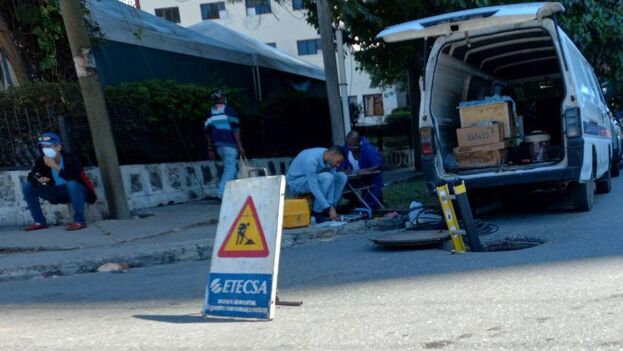
Calls with similar claims will continue for the whole day. In his daily report, José Ángel receives calls to attend to breakdowns in his municipality. “I’m going to see what happens, but if you need cables or boxes I can’t do anything. I’m only going to fulfil the formality that we review the problem,” he says while driving a van with a half-deleted Etecsa logo.

Translated by Regina Anavy

____________

COLLABORATE WITH OUR WORKThe 14ymedio team is committed to practicing serious journalism that reflects Cuba’s reality in all its depth. Thank you for joining us on this long journey. We invite you to continue supporting us by becoming a member of 14ymedio now. Together we can continue transforming journalism in Cuba.
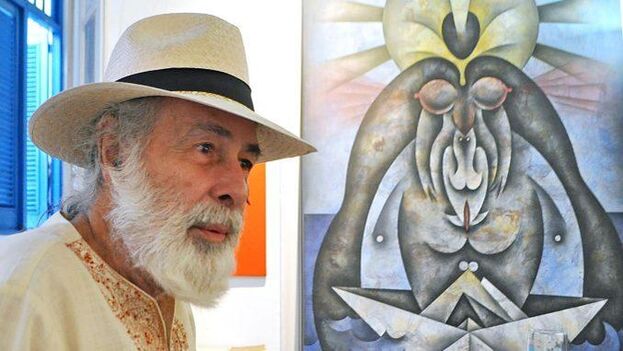
Cuban Painter Juan Moreira, Illustrator of Don Quixote, Dies

The painter Juan Moreira illustrated the edition of Don Quijote that was produced in 1972 in Cuba, replacing the Frenchman Gustavo Doré’s illustrations. (Prensa Latina)

14ymedio bigger14ymedio, Havana, 18 October 2022 — The plastic artist Juan Moreira, known for being the first Cuban painter to illustrate Don Quijote de la Mancha in a Cuban edition, died this Monday in Havana at the age of 83, the Ministry of Culture confirmed to official media.

Born in Havana in 1938, he assisted the Chilean painter, José Venturelli, in designing the murals of the Hotel Habana Libre and the buildings where the official agency Prensa Latina was founded. He also created portraits of friends, ornamental designs and paintings with erotic content. He was a member of the Union of Writers and Artists of Cuba (UNEAC) and the International Association of Plastic Artists.

His works have been exhibited in museums in Havana and in galleries in Poland, Austria, Jamaica, Germany, the United States and Canada. There are also pieces by the Cuban artist in the personal collections of King Emeritus Juan Carlos of Spain, former U.S. President Jimmy Carter, and in the United Nations building in Geneva.

The press, which praised the artist who remained “firm to the Nation,” recalled that he was a drawing teacher at the San Alejandro Professional School of Plastic Arts, where he directed more than twenty personal exhibitions and collective shows.

Moreira received the first Drawing Award from the Provincial Salon of Teachers and Instructors of Plastic Arts in Havana in 1973. A decade later, in 1984, he received an honorable mention in the Biennale de Pintura Kosice, in Czechoslovakia. In 2001, he was awarded third prize in the painting competition of the Nicomedes García Gómez Foundation, held in Segovia, Spain.

Translated by Regina Anavy

____________

COLLABORATE WITH OUR WORKThe 14ymedio team is committed to practicing serious journalism that reflects Cuba’s reality in all its depth. Thank you for joining us on this long journey. We invite you to continue supporting us by becoming a member of 14ymedio now. Together we can continue transforming journalism in Cuba.
The Cuban Opposition Expresses Solidarity With Ukraine and Rejects Havana’s Support for Moscow

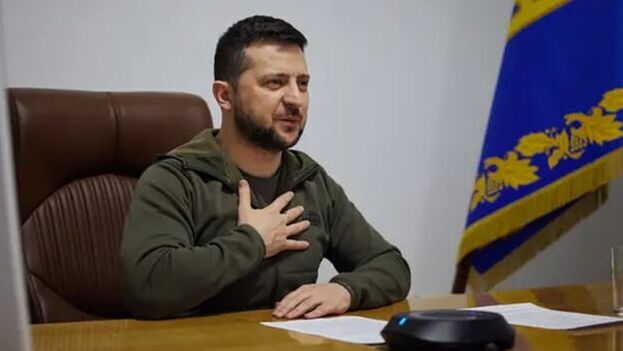
The D Frente collective addressed a letter of solidarity to the Ukrainian president, Volodymyr Zelensky. (EFE)

14ymedio biggerEFE (via 14ymedio), Havana, 18 October 2022 — A coalition of opposition groups from Cuba has expressed “solidarity” with Ukraine in an open letter to its president, Volodymyr Zelensky, rejecting their country’s support for Russia.

The D Frente collective, which brings together Cuban dissident groups “opposed to the totalitarian system prevailing in Cuba,” says in the letter that “a considerable part of Cuban civil society has seen with deep pain and concern” the “justification” and “support” of Havana for the Russian invasion.

They emphasize that Moscow’s February decision to attack Ukraine is “in frank violation of the principles of international law, the self-determination and sovereignty of its people, the peaceful and negotiated solution of disputes, and a breach of peace and good neighborliness.”

The signatories assure Zelensky that “the Cuban people are not their government.” Havana has not condemned the invasion, has not applied sanctions against Russia and has abstained in the votes on the issue at the United Nations. The official media on the Island replicate Moscow’s terminology and narrative about the war.

The letter refers to Ukraine’s Soviet past in which “citizens and aspirations were ignored. There are many of us who don’t feel represented by our leadership and who also reject the position of our government regarding this unnecessary and cruel conflict,” it states. continue reading

In the letter, D Frente applauds the “courage, deep love and attachment to their culture, sovereignty and territorial integrity” of the Ukrainians and conveys to Zelensky “our most sincere respect and feelings of solidarity towards your people and your government.”

“We are convinced that a plural, democratic and totalitarian-free Cuba, in which the rule of law and the will of the Cuban people prevail, would categorically reject the acts of aggression against your country and make every effort to achieve a peace in which the legitimate aspirations of the Ukrainian people are respected,” they say.

Bilateral relations between the Governments of Cuba and Russia are politically and symbolically close, but not economically or commercially so.

Translated by Regina Anavy

____________

COLLABORATE WITH OUR WORKThe 14ymedio team is committed to practicing serious journalism that reflects Cuba’s reality in all its depth. Thank you for joining us on this long journey. We invite you to continue supporting us by becoming a member of 14ymedio now. Together we can continue transforming journalism in Cuba.
The United States Will Donate $2 Million to Those Affected by Hurricane Ian in Cuba

A shipment of humanitarian aid from the United States that arrived in Santa Clara, Cuba, in 2021. (Archive/Customs of Cuba/Facebook)

14ymedio bigger14ymedio, Havana, 18 October 2022 — On Tuesday, the United States Department of State announced  that it will provide humanitarian aid of 2 million dollars to those “in need in Cuba” who were affected by the passage of Hurricane Ian in September.

A statement signed by the institution’s spokesperson, Ned Price, reported that the United States will send the aid through the United States Agency for International Development (USAID), to “international partners who work directly with Cubans whose communities were devastated by the hurricane.”

“We are currently reviewing requests from organizations such as the International Federation of Red Cross and Red Crescent Societies (IFRC) to provide this assistance,” the statement details.

The U.S. authorities said that they will continue to “monitor and evaluate the humanitarian needs” of Cubans in coordination with organizations and the international community. “We will continue to look for ways to provide significant support to the people of Cuba, in accordance with U.S. laws and regulations.”

At the beginning of October, it became known that Cuba had sent an urgent request for help to Joe Biden’s Administration, after the crisis caused by Ian, according to an article published in The Wall Street Journal. continue reading

At that time, after an exchange of mail between the two governments, Havana had not asked for a specific amount of money, so Washington was still evaluating the extent of the damage, although a formal request had not been received from the Island.

Within a few hours of the article being published in the U.S. newspaper, the Cuban government confirmed that it maintained contact with the United States regarding the material damage suffered by Hurricane Ian.

“The Governments of Cuba and the United States have exchanged information about the amount of damage and the regrettable losses caused by Hurricane Ian in both countries,” the Cuban Foreign Ministry said on the social network Twitter.

Hurricane Ian crossed the western end of Cuba from south to north on September 27, with heavy rains and winds of up to 125 miles per hour, leaving five dead and heavy material damage.

For reasons not fully clarified, the passage of the hurricane generated a complete blackout on the Island, damage to 200,000 homes and a serious impact on crops and infrastructure.

Translated by Regina Anavy

____________

COLLABORATE WITH OUR WORKThe 14ymedio team is committed to practicing serious journalism that reflects Cuba’s reality in all its depth. Thank you for joining us on this long journey. We invite you to continue supporting us by becoming a member of 14ymedio now. Together we can continue transforming journalism in Cuba.

The ‘Cazerolazos’ Protests in Cuba Continue, This Time in Las Tunas for the Second Night in a Row

In Last Tunas, a crowd, which included older people and children, faced off with authorities Monday night. (Screen capture)

14ymedio bigger14ymedio, Havana, October 18, 2022–A total of 23 people remain in detention in Cuba for participating in the latest cazerolazos — protests featuring banging on pots and pans. According to estimates Justicia 11J on Tuesday, since September 29th 52 people have been arrested for protesting, primarily for the restoration of electricity during the scheduled power outages.

Since these demonstrations began, on June 14th, the number of detainees totaled 152; along with those of July 11th 2021, they reach “at least” 1,753 (counting those who have been released), said the justice organization.

Justicia 11J highlighted the cases of Ovidio Martín Luna, Milena González Martín and Sulaine Almenares Videau, arrested on Monday for protesting on Sunday night in the neighborhood of Vista Hermosa, in Santiago de Cuba.

Almenarez Videaux, an activist member of Cuba’s Patriotic Union (Unpacu) and mother of two children, aged six and three years, and a nine-month-old baby, was taken to a detention center with them, according to claims made by several activists on social media. continue reading

In Aguada de Pasajeros (Cienfuegos province), Justicia 11J also underscored that Carlos Rolando Gómez Rosell, arrested for demonstrating on October 12th, has been beaten by police and is on a hunger strike. According to his wife, whom the organization cites, “he is being investigated for possession of three pounds of meat from his own horse.”

Despite the repression, Cubans continue rebelling against the government. On Monday it was, for the second consecutive night, in Las Tunas, which until now had been one of the provinces least likely to protest.

In a video shared on social media, one can hear, in sheer darkness, the sounds of screams and banging on pots. The protest occurred, according to users, in the neighborhood of Buena Vista. In another, a crowd, which included older people and children, faced off verbally with authorities, to whom they complained for lack of power. “How long will they go on talking?” asked a resident who stated, “We’re demanding our rights — electricity, food, water.”

Through October 15th, Proyecto Inventario, an independent organization, had documented 200 protests since July 14th, when the daily blackouts began.

Translated by: Silvia Suárez

____________

COLLABORATE WITH OUR WORKThe 14ymedio team is committed to practicing serious journalism that reflects Cuba’s reality in all its depth. Thank you for joining us on this long journey. We invite you to continue supporting us by becoming a member of 14ymedio now. Together we can continue transforming journalism in Cuba.

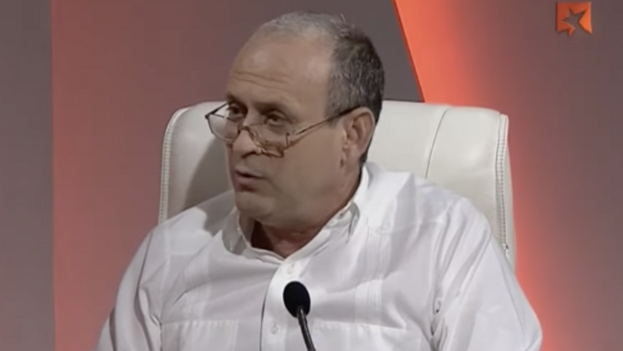
The Blackouts Cost the Cuban Minister of Energy and Mines his Position

Liván Arronte, recently dismissed as Minister of Energy and Mines, in an appearance on the Mesa Redonda [Roundtable] TV program. (Screen capture)

14ymedio bigger14ymedio, Havana, 17 October 2022 — The Cuban Minister of Energy and Mines, Liván Arronte Cruz, and the director of the Electric Union of Cuba (UNE), Jorge Armando Cepero Hernández, were dismissed from their respective positions this Monday. Without mentioning the names of those dismissed, in a brief note, Cubadebate reported that Vicente de la O Levy will be the new minister, and Alfredo López Valdés, the new director of the UNE.

“Both were general directors of the Electric Union at other times. Likewise, Alfredo López Valdés previously held the position of Minister of Energy and Mines, and of Industries,” the text states.

These dismissals make Cubans fear that the promised solution to energy shortages will not occur in December.

The deposed Arronte, who had been in office since 2019, had become in recent months a media figure, in the middle of the unprecedented energy crisis that the country suffers, being the main figure of authority who went out to give explanations about the daily scheduled blackouts that the population suffers, for example in programs such as Mesa Redonda.

It should be noted that this ministry is under the orders of Deputy Prime Minister Ramiro Valdés. continue reading

The UNE had predicted, again, a huge energy deficit, which on Monday would cause a “simultaneous blackout” of 41% of the service. According to his daily statement, the electricity generation capacity at peak time will be 1,941 megawatts (MW) for a maximum demand of 3,200 MW, and the deficit would be 1,259 MW, 65% of the maximum generation capacity. However, the “allocation” — which will be disconnected — the state estimates, will be more: 1,329 MW.

There are 11 nonfunctional thermoelectric units. Last Friday, less than 24 hours after it was connected, Antonio Guiteras left the system again, in Matanzas.

With the blackouts come numerous protests. Project Inventory has registered 176 since July 14. The Prosecutor’s Office has already threatened to charge the protesters with “vandalism,” as they did after the mass protests of July 11, 2021.

On October 7, the organization Justice 11J published an update on the detainees, based on the statements of their relatives and other information. According to the NGO, they will be prosecuted for the crimes of public disorder, contempt and resistance, although it cannot accurately provide the number of people imprisoned, which is around 30 according to several organizations.

Translated by Regina Anavy

____________

COLLABORATE WITH OUR WORKThe 14ymedio team is committed to practicing serious journalism that reflects Cuba’s reality in all its depth. Thank you for joining us on this long journey. We invite you to continue supporting us by becoming a member of 14ymedio now. Together we can continue transforming journalism in Cuba.
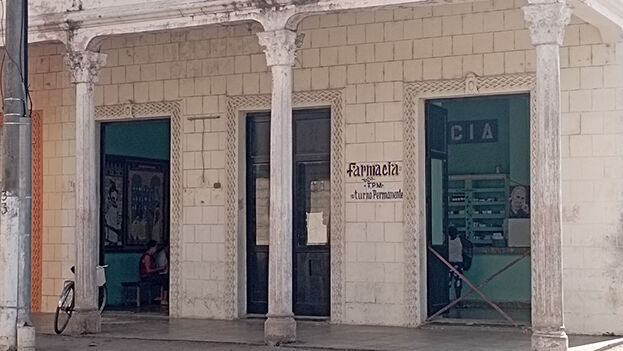
Hallelujah! Cuban Pharmacies Suddenly Stocked with Medicines about to Expire

Medications that are about to expire have been made available for sale by the government. (14ymedio)

14ymedio bigger14ymedio, Yankiel Gutierrez Faife, Camajuani, 16 October 2022 — On Friday a crowd of locals gathered in front of an old mansion that now serves as a pharmacy. As if by magic, the store shelves were filled with medicines that have not been seen for months. The sudden abundance generated suspicion. Where did all these drugs come from?

An employee provided a simple answer: “They’re about to expire.” The scene was repeated in nearby towns such as Taguayabon as well as municipalities such as Remedio and Santa Clara. The outrage of those waiting in line quickly grew.

Why did public health officials wait so long to provide these drugs? What warehouse were they being stored in and why are they about to expire. Frantic over having to process and sell the medications, pharmacies in the province are trying to make them available to customers as quickly as they can.

Outside the pharmacies, people openly express their frustrations. “Bad management, like everything else,” says Ramon, one of the residents, “I don’t understand why there was nothing before and now it’s here in record time. It’s because they had it in storage.” continue reading

Miguel, another customer, suspects the drugs came from the National State Reserve Warehouse, where the government stockpiles medications to deal with critical shortages. “I asked the employees and even they don’t know where they came from,” he says. “All that matters to them is that they sell them before they expire.”

“They should lower the price,” argues another customer, who observes that Cubans will consume any medication, even if it is out-of-date, as long as it does not “look funny,” is not off-color and is not visibly disintegrating.

“Yesterday, my sister-in-law told me that medicines would be available,” says Yudit. “So today I got up early to see if I could get paracetamol, loratadine, diazepam and chlordiazepoxide. But it was no use. I was only able to get some paracetamol tablets, for 3.40 pesos, and loratadine, which cost me 8.60.”

Unsurprisingly, the situation is not unique to Villa Clara. As soon as word got out, lines also formed in front of the pharmacies in Sancti Spiritus and Havana.

“It’s not that they’ve expired; it’s that they’re about to expire,” explains Juan, an allergy sufferer from Sancti Spiritus “But a lot of drugs are still not available. I still can’t buy ketotifen, montelukast or any other antihistamine.”

Maria Eugenia’s hands are sweaty and her eyes dart from side to side. For months the 65-year-old Havana resident has been unable to get the medications a doctor prescribed for her persistent anxiety, from which she has suffered since her husband died several years ago and her son emigrated, leaving her alone on the island.

“I can’t go without chlordiazepoxide,” she says. “At the pharmacy where I am supposed to get it, several of us are in the same situation. Our nerves are shot and we can’t get the medication we need.”

Recently, Maria Eugenia waited in line from midnight till the pharmacy in Central Havana, where she has to buy the medication she urgently needs, opened the next morning. “They said they had to set aside some of the nerve pills for people who have a heart disease. But it was a lie.”

By dawn, she says, “It looked like a line of crazies because you could clearly see the huge anxiety on all our faces. But when the pharmacy opened, the employees told us they had not received any of our medications.

Frustrated and desperate, Maria Eugenia turned to the black market, where she paid 350 pesos for twenty chlordiazepoxide tablets. “They were made in Cuba so they must have been stolen from some store or pharmacy,” she speculates. She noted that the expiration date on the bottle was October 2022.

“I am going to go ahead and take them because I don’t have any other option,” she says. I don’t have the luxury of waiting to find some other tablets that aren’t about to expire and I cannot get by without this medication. I go out every day knowing I have a few pills in my bag. Just knowing that calms my anxiety.

Many Cubans cope by anticipating these situations: “You have to pester the doctor and ask for your prescriptions every month. You never know when the medicines are going to arrive and you have to be prepared.”
____________

COLLABORATE WITH OUR WORKThe 14ymedio team is committed to practicing serious journalism that reflects Cuba’s reality in all its depth. Thank you for joining us on this long journey. We invite you to continue supporting us by becoming a member of 14ymedio now. Together we can continue transforming journalism in Cuba.
A Small Child is Killed and Three Others Injured in a Building Collapse in Old Havana

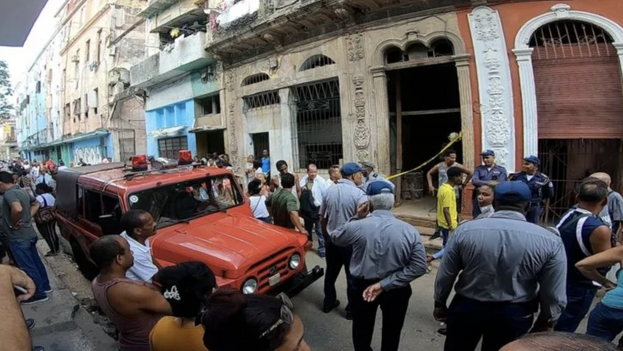
Rescuers and police in front of the building which partially collapsed in Old Havana. (EFE/Felipe Borrego)

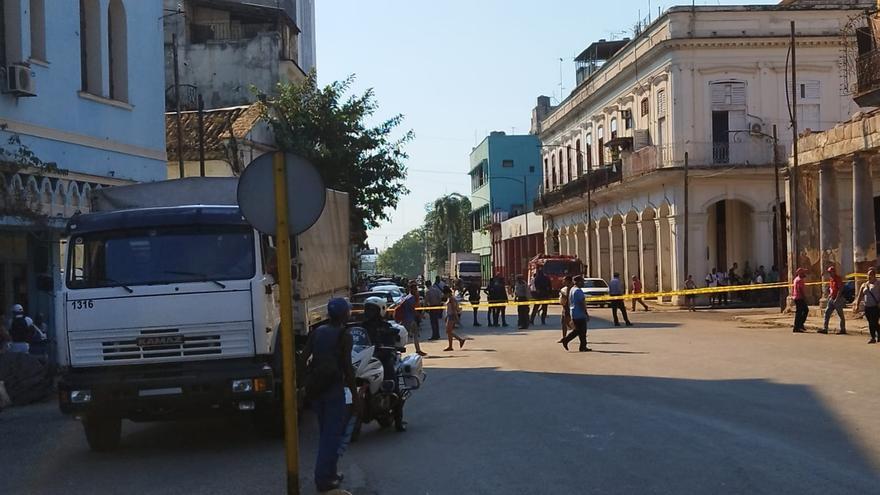
14ymedio bigger14ymedio, Juan Diego Rodríguez, Havana, 17 October 2022 – A child died and two women and another child were injured in the latest building collapse in Old Havana on Monday. The four were trapped beneath the roof, which had fallen down onto them in the early hours of the morning in their home on Calle Sol, between Egido and Villegas.

A crowd which had gathered in front of the police cordon applauded, just after 9.30 am, as the emergency services rescued the girl alive, but hours later the People’s Assembly of Old Havana reported her death. “We regret the loss of life of the minor under 5 years old named Ismary Orozco Castellanos, as a result of the collapse that occurred this morning in building No. 466 in Old Havana,” read the official statement. The woman and her four year-old son had been rescued earlier and taken to hospital.

“I was saying only yesterday, that roof is going to come down, that roof is going to come down”, one neighbour tells this newspaper, adding that he had warned the residents but that they hadn’t done anything. At the same time, he explains, recreating the scene, “This roof only has three wooden joists, that’s all, and there’s one missing here, and here, and here”.

Although many families are aware that they live in collapsing homes, they avoid evacuating for fear of their belongings being stolen or other people occupying their property.

Another neighbour adds that they’d been complaining for a long time about the dangerous state of the the building but that no one had taken any notice of them. “They’re all here today, the ones we complained to. They come along now, but they never did before“, she grumbles. continue reading

Yet another neighbour agrees that the building had been “bad” for a long time, and that she’d managed to “sort out another property” to move to, but for other people there was no alternative.

In addition, the neighbors complained to the Spanish news agency Efe that the cistern that supplies water to the building has been reported for contamination for more than a month to Public Health and the state company Aguas de La Habana, and “no one has come here to solve anything”.

The collapse happened in Calle Sol, between Egido and Villegas in Old Havana. (14ymedio)

Very close to where this building collapse occurred, in Calle Luz between Curazao and Egido, a stairway fell down last June and injured an elderly man who remained trapped until the fire service arrived.

At the beginning of this month, due to the intense rain that affected the west of the country, there were 60 reported building collapses in Havana, one of which caused the deaths of two people.

Central Havana suffers just as many building collapses, or partial collapses, as Old Havana does, but the authorities, who invest huge amounts of money in the construction of luxury hotels, do nothing to address the problem in this zone, where precarious housing conditions threaten the lives of hundreds of families.

Translated by Ricardo Recluso

____________

COLLABORATE WITH OUR WORKThe 14ymedio team is committed to practicing serious journalism that reflects Cuba’s reality in all its depth. Thank you for joining us on this long journey. We invite you to continue supporting us by becoming a member of 14ymedio now. Together we can continue transforming journalism in Cuba.
A Family of 20 Cubans Arrives in the United States Aboard a Speedboat from Cojimar

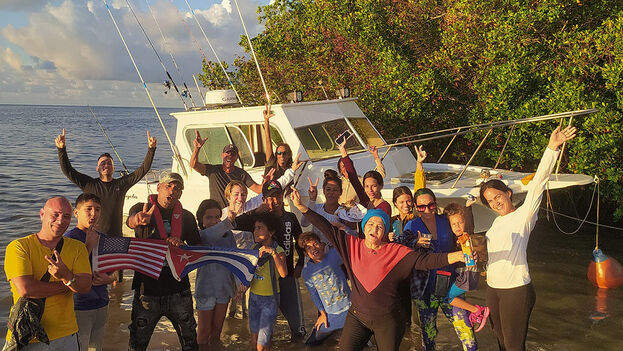
The group of Cubans left immigration headquarters and are already with their relatives, a Havana professor confirmed. (Facebook/V Sorjes Martín)

14ymedio bigger14ymedio, Havana, 17 October 2022 — A group of 20 Cubans who left the Island through the port of Cojímar (Havana) arrived in the United States, according to a post shared this Monday on Facebook by Professor V. Sorjes Martín. “Dream fulfilled,” said this habanero, who has studied engineering and law.

“We all left immigration today for our family homes,” said Sorjes Martín, who had “maintained a low profile” with some friends due to the imminent escape that was being planned.

Sorjes Martín, who among many other sacrifices had to sell his house to make the trip, said in a video that the crossing took 10 and a half hours, and there were times when the crew was “stressed. We had to go around three or four boats and finally a coastguard boat that fell behind and couldn’t catch us.”

The current situation in Cuba “with a tremendous amount of political problems,” commented Sorjes Martín, motivated this group to “flee.” The professor, who shared several images in which four children and a dog are observed, said: “Here everyone is family.”

On the speedboat, the habanero reported that the U.S. authorities will determine his fate. continue reading

So far in October, 205 Cubans have managed to make landfall in Florida, most on rustic rafts, although two of them arrived on October 12 on windsurfing boards. The latter “will be subjected to a deportation procedure,” warned the head of the Border Patrol of the Miami sector, Walter Slosar.

Just as the arrival of Cuban balseros [rafters] doesn’t stop, neither do the deportations, and the American Coast Guard repatriated 80 Cubans between Saturday and Sunday. The migrants were returned to the Island aboard the ships William Flores and  Paul Clark.

The repatriated balseros are part of six interceptions made in the vicinity of Key West, the Tavernier Creek sports fishing port, Marathon and Sugar Loaf.

The Coast Guard non-commissioned officer, Nicole Groll, urged Cubans to choose a safe and legal path to get to the U.S. “so that families don’t wonder where their loved ones are when they choose to migrate illegally.”

Translated by Regina Anavy

____________

COLLABORATE WITH OUR WORKThe 14ymedio team is committed to practicing serious journalism that reflects Cuba’s reality in all its depth. Thank you for joining us on this long journey. We invite you to continue supporting us by becoming a member of 14ymedio now. Together we can continue transforming journalism in Cuba.
The Argument of the Embargo and the Ridiculousness of the Cuban Communist Regime

A Cuban farmer makes extra money turning the invasive marabou weed into charcoal for export. (14ymedio)

14ymedio bigger14ymedio, Elías Amor Bravo, Economist, October 16, 2022 — When a government ignores economic problems, it does so for two reasons. Either because of incompetence, or because there are substantive reasons that prevent the adoption of appropriate measures to meet social demands. Or it can happen as in communist Cuba, where the two converge. For example, incompetence and ideological pressure are the factors that condition the terrible results of Cuban agriculture, with declines in GDP in the second half of the year that are above the average of the economy as a whole.

In other words, neither the “63 measures” planned for agriculture, nor the “94 of sugar” have served to change the trend of the two fundamental sectors of the Cuban economy. And, as always, in these cases, the state press directs its accusations to the U.S. blockade, holding it responsible for alleged millions of losses in agriculture, which are added, of course, to those of the other sectors.

Strangely enough, Cubans have experienced this sequence of events since the earliest times of Fidel Castro. Blaming the blockade has always been present, and now, when people can’t take it anymore, Cuban communists shamelessly unleash the embargo/blockade doberman again. The point is that this excuse is no longer believed by anyone in Cuba or in the rest of the world.

In an amazing way, the anti-blockade argument changes over time. Interestingly, the regime now says that “the blockade is the main obstacle to the implementation of the 2030 Development Agenda.” A false complaint, which aims to reach the United Nations forums where these issues are addressed, like the Summit on Sustainable Development Goals, held in the context of the 74th session of the U.N. General Assembly two years ago, where such a statement still has force.

Foreign Minister Rodríguez, increasingly irrelevant in international forums, seeing that friends are fewer and fewer, pulls this new story of the embargo/blockade and the 2030 agenda out of a hat. If this aptitude for defining insubstantial paradigms were applied to food production, maybe things would go another way.

Cuban communists, seeing themselves isolated at the international level, have returned to the charge against the impact of the economic, commercial and financial blockade, insisting that it slows the country’s economy and considerably affects  development in all sectors. They have now set their sights on agricultural production. And to that end, they have unloaded again a numerical figure that says the losses due to the blockade amounted to 270 million, 852 million, and 548 million dollars between August 2021 and February 2022, according to estimates by the Ministry of Agriculture. Almost nothing. continue reading

Where does that absurd figure come from? Specifically, it was the director of International Affairs of the Ministry of Agriculture, Orlando Díaz Rodríguez, who was in charge of making it known that the estimate, “summarizes the income not received by exports of goods and services, losses due to geographical relocation of trade, as well as from effects on production and services, monetary and financial ones and technological limitations.” Of course, optimistically, no one can beat them.

Income not received from exports is child’s play. The first thing would be to see if those exports have a demand or interest in the U.S., and they don’t seem to. The concept of “geographical relocation of trade” follows the same trend as always but is false. All countries look for the necessary goods and services wherever they are, and then transport them. As for the “allocations,” this is already known. The internal blockade of the regime is much more negative and has been so for 63 years.

The tireless Cuban communists accuse the 243 coercive measures adopted by the Donald Trump administration (2017-2021), still in force with the Biden administration, and say that “they put the brakes on the business system, which includes cooperatives and individual producers, making it impossible to position their products in the North American market.” False. There is nothing in the dispute that prevents independent producers from placing their sales in the U.S. market. The problem is the same as always: is there demand for those products? Cuban communists talk about tobacco, fresh fruit, honey and charcoal  as the products affected by the embargo, but could more of them even be produced? We doubt it.

According to the communist leaders, Americans have been deprived of these Cuban products and cannot purchase them because of the blockade. In particular, in the health sector, he alluded to Vidatox-30 CH, a homeopathic drug developed by Labiofam used as a complementary therapy for the treatment of cancer, which, due to the “criminal policy,” cannot be commercialized in the northern nation. As if the pharmaceutical industry in the U.S. didn’t have similar drugs, validated by the World Health Organization.

Not satisfied with everything said, there was also talk of the interest of entrepreneurs, producers and other “representatives of the agricultural sector in denouncing the blockade, as well as the measures that intensify it, and they’ve expressed their interest in cooperation, investment and commercialization with the Island.”

Do you know when they’re going to collect if they sell on credit to Cuba? The U.S. chicken producers and farmers already market their products under the current conditions [i.e. payment in cash at time of sale]. What reason is there to sell if they can’t collect until later? In addition, agriculture in Cuba needs to import animal feed, inputs, technologies and raw materials for the sake of food production for the people. What are they going to pay for it with?

It’s the same old song. The embargo is guilty of everything. They fall into the most absolute ridiculousness. More opportunities will come for accusing the embargo/blockade of all the ills of the Cuban economy.

Translated by Regina Anavy

____________

COLLABORATE WITH OUR WORKThe 14ymedio team is committed to practicing serious journalism that reflects Cuba’s reality in all its depth. Thank you for joining us on this long journey. We invite you to continue supporting us by becoming a member of 14ymedio now. Together we can continue transforming journalism in Cuba.
Exchange Market Analysis and State Intervention (II)

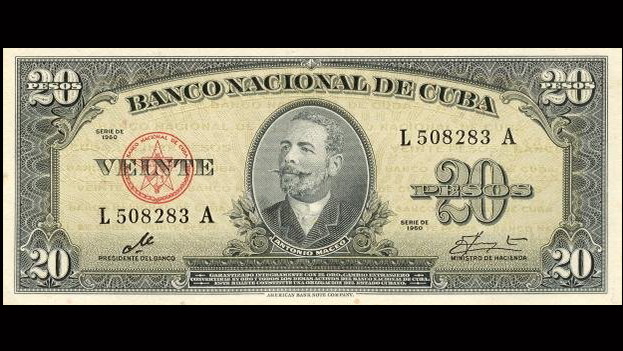
Cuban 20 peso note signed by Che Guevara.

14ymedio bigger14ymedio, Elías Amor Bravo, Economist, 17 October 2022 — When Cuban Minister of Economy and Planning Gil decided, unilaterally, two months ago, to create an exchange rate of 1×120 for the dollar relative to the peso in an attempt to counteract the trend in the informal market, it was soon observed that the limits imposed on the availability of currencies, the geographical scope and access to purchase, limited to natural persons, would cause more problems than solutions, since this process eliminated the basic principle of convertibility of the foreign exchange market.

The minister’s decision, far from redirecting the situation, alerted the informal market, which began an unprecedented escalation of the dollar to around 200 pesos. After all the failures, the authorities now intend to redirect the situation and position the foreign exchange market between the national currency and the foreign currencies, preventing the Cuban economy from being dollarized. It won’t be easy. A very valuable amount of time has been lost, and now the cost of the adjustment will be higher.

The minister is determined to control all the currencies that enter the economy to channel them into the state coffers, and as they are fewer and fewer, decisions are increasingly risky. We remember that the stores that only accept payment in MLC (freely convertible currency) were adopted as a temporary and necessary solution to maintain socialism, and they are still there after more than two years. Everything that is proposed for a while ends up becoming permanent. And that’s how it goes.

On the other hand, there is concern among Cubans about what may happen with the peso exchange rate in the coming months. Those who have stocks in this currency don’t know whether to change now, at 190-200 per dollar, or to wait and see. The uncertainty is great, because the functioning of the informal market deviates from the conventional schemes that explain the trends in the value of currencies, and there is no anchor for the analysis. In any case, it doesn’t seem that the leaders are going to change the conditions of the environment that have led to this situation, so things will continue in the same way. continue reading

So, in the face of the current exchange rate crisis of the peso, which the authorities are unable to reverse, there are messages in the official press regarding the fact that the Cuban peso should be the center of the financial system, including an inclusive price system for all economic actors and a market that works with a certain level of wholesale and retail offers. So, why don’t they succeed?

The foreign exchange market is considered one of the essential elements in the recovery of the convertibility of the national currency, but it’s much more than a nominal exchange of currencies. In fact, the official thesis points out that its absence was a great obstacle to the full use of productive capacities, limiting the country’s economic growth. The foreign exchange market is a reflection of other balances or imbalances that affect the relative value of the currencies. It’s not an isolated entity.

The directors of the Central Bank of Cuba rightly consider that the foreign exchange market involves the possibility of connecting the national currency with foreign currencies, through a well-founded exchange rate and that, in addition, this should be reflected in practice, in the relations that are established between economic agents, both state and private. The inconvertibility that occurred after the approval of the rate of 1×24 meant the emergence of alternative mechanisms to access foreign currencies, such as the dollarization of the economy in informal markets. The leaders want to set limits on this, since it opposes the objective of increasing the purchasing capacity of the national currency.

From this perspective, the official position assumes that the non-convertibility of the currency generates imbalances, because economic actors cannot meet their currency needs with the national currency at the current official exchange rate. When this process is carried out in a disorderly manner, it puts the economy in a complex situation, and an example of this is the current scenario of the dollarization and development of the informal market, which the authorities want to stop.

On this point, the official vision emphasizes the need to correct the sources of imbalance that gravitate on the foreign exchange market, mainly those associated with large national currency issues to support the fiscal deficit. So, they suggest that through an orderly and coherent intervention, using the economic policy instruments that the state has as a regulatory body, a foreign exchange market can be implemented that responds to the purposes of convertibility.

The directors conclude that macroeconomic stability is essential to be able to grow, and that growth is what allows the expansion of productive capacity, which enables the economic development of the country, and in that development lies the possibility of building socialism. To achieve this objective, a set of structural transformations that lead to the full convertibility of the national currency must be implemented on the fly. The question is the same as always: what structural transformations?

Translated by Regina Anavy

____________

COLLABORATE WITH OUR WORKThe 14ymedio team is committed to practicing serious journalism that reflects Cuba’s reality in all its depth. Thank you for joining us on this long journey. We invite you to continue supporting us by becoming a member of 14ymedio now. Together we can continue transforming journalism in Cuba.