Ode to Caballero / Ángel Santiesteban

Rufo Caballero won admiration for his objective and perceptive criticism. All the artists understood, even when his judgment was negative toward the work in question, that the only thing he worried about, and defended above all else, was creativity, which he respected to the point of adoration. Whoever managed to discern and assume his point of view generally rose in office.

He became a popular character through TV programs and his appearance on a video clip, made so we could share it with the rest of the social spectrum. He balanced his role as a sharp critic with the capability to be sympathetic, and, especially, with a language that made no concessions, he knew that the spectator would understand the reasoning behind his points of view.

On the launching of my book Happy Are Those Who Cry, he told me beautiful things that I won’t repeat, I keep them to myself to call up in depressed moments, and I remember his sharp observations in each literary task.

In the days when I opened my blog and the state launched its institutional and repressive attacks, he met a mutual friend in Cienfuegos, who asked him which country I had gone to. He responded, none, I was still in Havana, and just a few days before we’d had a conversation and, as an aside, I let him know how hard it would be for me to live somewhere else.

Rufo was surprised because he had no idea that these truths were said from inside, “an artist, especially, knows all that he loses when he confronts the system.”

Afterward we saw each other on some corner in Vedado and were happy, he told me he was “a living ghost or a badly buried dead person,” and we laughed. Later he was more himself, he let me know that he respected my point of view because he understood that it was a personal necessity for me to communicate, to get myself out of the poison the majority was swallowing without breathing so as to suffer as little as possible.

Now that Rufo Caballero is not here physically, we have to be satisfied with his spirit, his vast works, and his proven goodness.

22 January 2011

Once Again, Stoic Waiting / Reinaldo Escobar

In the years 1986 and 1987 an unusual enthusiasm proliferated, in our country, for what was happening in the Soviet Union. The weekly News from Moscow, which for years had piled up in the kiosks, came to be sold in the black market for 20 times the cover price. In October of 1988, at a meeting of the students from the School of Journalism, the then youngest prince Carlos Aldana predicted that the restless perestroika boys were not looked upon kindly by the leaders of the Revolution, but Pepito, the sage protagonists of our best political jokes, had already alerted us to this: “What is expected of us is stoicism.”

Having have had more than 20 years to meditate on that time, our leaders announced some changes whose main purpose is to keep the socialist system afloat. On the night of October 12, 1960, Fidel Castro announced that 382 large corporations, many of them American, “and also the banks,” would be nationalized. At dawn on the 13th, the controllers were to make themselves available at each one of the confiscated entities. In another speech, on March 13, 1968, he proclaimed the nationalization of all private businesses. That same night, from their encampments, the new administrators of “Ecochinche” (which is what people then baptized what could be called the Empresa Consolidada de Chinchales*) emerged to take, by assault, the last remnants of capitalism. The speech on the university steps had not yet ended before the lights went on in bars and nightclubs to let the customers know that the party was over, because all these establishments would be closed as part of the Revolutionary Offensive.

The velocity was dizzying because it was the pace of demolition. Everyone knows that a building that took years to erect can be demolished in day, or even hours or minutes if explosives are used. Now it’s about searching through the rubble to look for usable bricks and that takes time. Raul Castro’s speech before the National Assembly of People’s Power to detail the nature of the changes proposed was in December, the Communist Party “Congress” will be in April, and then we will have to wait for the measures to be implemented, with a long view and short steps, as those who have reached old age are wont to say.

Pepito hasn’t shown up and in the absence of his ingenuity for naming things we seem to be, once again, waiting stoically. What I don’t know is if the patience will last.

*Translator’s note: “Chinchales” is a slightly derogatory Cuban term for small businesses. “Empresa Consolidada de Chinchales” translates as “Consolidated Small Businesses Company.”

24 January 2011

Of the Cable, a Fiber / Yoani Sánchez

It is getting close, but it hasn’t arrived; they announced it but it’s not concrete. We may be able to see it soon from Punta de Maisi, nevertheless it seems so distant and remote to us. For more than two years the fiber optic cable between Cuba and Venezuela has been the carrot dangled before the eyes of the inhabitants of this disconnected Island. Its thin threads have served as an argument against those who insist that the web access limitations have more to do with political will than lack of bandwidth. We have paid attention to the sluggish wanderings of the umbilical cord that will connect La Guaira with Santiago de Cuba, the boat that brought it from France, and the news which announced it will increase our data, image and voice transmission speed by three thousand times. But something tells us that this cable already has a name, an owner and an ideology.

With its 640 gigabyte capacity, the new tendon will be particularly devoted to institutional projects monitored by the government. When the official press mentions its advantages it stresses that “it will strengthen national sovereignty and security,” but not one word is directed to the improvement of the information spectrum for citizens. At a cost of 70 million dollars, this underwater connection seems destined more to control us than to link us to the world, but I am confident we will manage to upset its initial purposes. In these times, when several installations from the so-called Battle of Ideas have been converted into hotels to raise foreign currency and there are warnings that unprofitable businesses will be liquidated, it is quite likely that many of the digital pulses will reach the hands of those who can pay for them. With authorization or without, connection hours will be sold — to the highest bidder — in a country where diversion of resources is a daily practice, a strategy for survival.

When we are connected with Venezuela along the seabed, it will be even more immoral to maintain the high prices for access to the vast World Wide Web from hotels and public places. They will also lose the justification for not allowing Cubans to have accounts at home, from which we can slip into cyberspace, and it will be more difficult to explain to us why we can’t have YouTube, Facebook and Gmail. The pirated connections will increase and the black market for films and documentaries will feed on those megabytes running across our island platform. In workplaces with Internet the employees will also use it to register with the U.S. visa lottery, surf foreign sites looking for work, and engage in lovers’ chats. They won’t be able to prevent our use of the cable for things very different from what is planned by those who bought it, those who believe an Island can be neatly tied up — with no loose ends — with a simple fiber optic cable.

“For a fag, fear is always best.” / Iván García

He lost his high heels in the race. And the unprecedented tropical downpour, furious and fleeting, spoiled his vermilion make-up, which dripped from his pleated dress, staining the imitation leopard skin.

The bright beam of a 400 watt light, focused intently from an idling police car, provoked a stampede of stunned homosexuals, caught red-handed in the middle of intercourse in a dark Havana park.

Cordoba Park, in the heart of the La Vibora neighborhood, has become a permanent plaza for discreet gays, scandalous transvestites and brave sodomites who do not believe in weather without the predictions of the Cuban Meteorological Institute.

That night, the guards in the patrol car are in a bad mood. STOP! they shout through a megaphone. The homosexuals disappear in seconds. But the transvestite on high heels can’t escape.

He tried running barefoot while holding his dress up. In his rush, he put his foot in a grating and got trapped. The cop, a black guy from Eastern Cuba, was fed up with the chase, completely soaked in the rain, and his military boots were full of mud. He looked at the anguished fag and screamed at him:

“Why are you running?! Maybe you committed a crime! You should have stayed put! Give me your identity card!”

The cop threatened to take him to the nearest police station. Trembling with fear and cold, his make-up smeared, in a barely audible voice, the transvestite answered:

“If you’re gay and a police car shines a powerful spotlight in the middle of having sex, the first impulse is to run. Things may have changed, but for a fag in Cuba, fear is always best.”

The two cops cut short the dialog. They frisked the transvestite and an imitation leopard skin wallet fell to the ground. Among the cosmetics something metallic and shiny rolled. A knife. It was the trump card for the nocturnal guards. “Now you’re fucked, faggot. Possession of a weapon,” they said, gloating, and handcuffed him without mincing words.

From their hideouts, the group of gays and sodomites watched the scene. Minutes later they returned to the gazebo in the unlit park, converted into the biggest homosexual inn under the open sky in Havana. This time, fear didn’t do their friend any good.

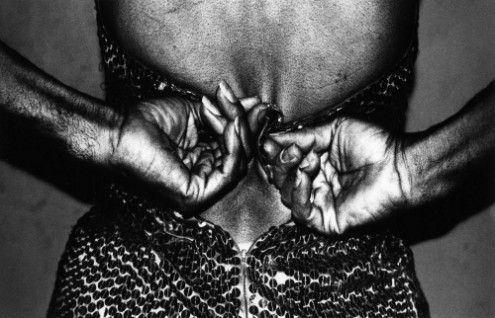
Photo: Cuban transvestite, by Marcello Bonfanti, AP. Word Press Photo 2005 Photo Prize.

23 January 2011

Rebirth of Flavors / Yoani Sánchez

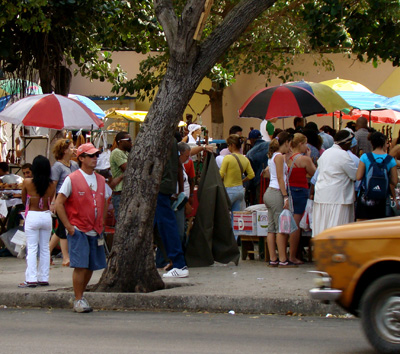
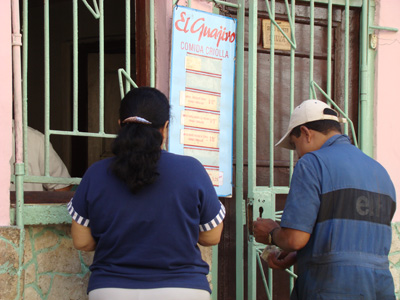
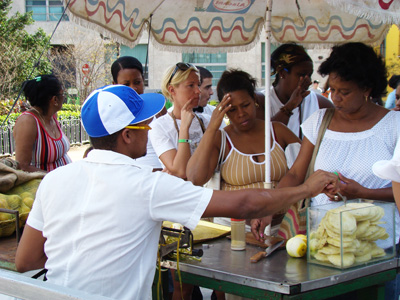
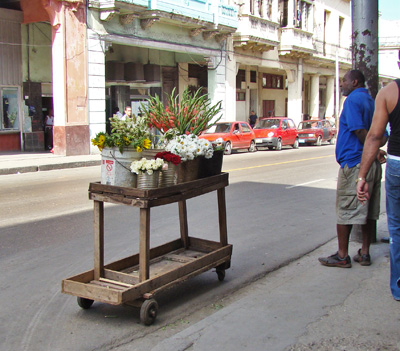
Timid colored awnings spring from nowhere and under newly opened umbrellas fruit smoothies and pork rinds are sold, while the doorways of some homes are turned into improvised snack bars with striking menus. All this and more is growing in the streets of my city because of the new flexibility for self-employment. Some of my neighbors are making plans to open a shoe repair, or a place to repair fridges, while avenues and plazas are being transformed by the efforts of private initiative. Some remain cautious, however, waiting to see if this time the economic reforms will really take hold and not be shut down as happened in the nineties.

If it depended only on the political will of our leaders, we wouldn’t be experiencing in this awakening of citizen inventiveness. The Revolutionary Offensive of 1968, though long-ago, is still fresh in everyone’s minds; that time they expropriated everything that was left, down to the polishes and brushes of the shoeshine boys. But the liquidity and productivity crisis now facing the country has forced the authorities to take emergency measures, among them defining 178 areas in which people can be licensed for independent work.
We experienced a similar revival after the social explosion in August 1994, which came to be known as the Maleconazo — named after the famous seawall around Havana — where riots broke out. After that day, when discontent and frustration led thousands of Habaneros to head for the Malecon with sticks, stones and shouts, something changed in our lives.

The disturbance was quickly controlled by shock troops, but the defeat did not really fall on the disorganized and desperate groups who broke windows; the loser of that revolt was the Cuban government. Within a few weeks popular pressure led Fidel Castro to authorize something he detested even more than his neighbors to the north, the growth of small private enterprises.

He reluctantly allowed us to rent rooms in our homes to tourists, to take out licenses to drive private taxis, to create restaurants inside homes, and to offer our services as clowns at children’s parties. Soon, the face of cities and towns began to change. The fresh breeze of individual effort swept away years of state monopoly.

The ice cream made by those improvised merchants was much tastier than that from the State factory, the ham and cheese sandwich sold from the window of an apartment wasn’t adulterated like those in the State centers, and many foreigners preferred the warmth and kindness of a family restaurant over the aluminum and glass structures in the official hotels.
The new private entrepreneurs made it clear to us how centralization had lowered the bar of service quality, and they brought out traditional recipes we had almost forgotten. Despite the straitjacket and the high taxes imposed by the Ministry of Domestic Trade, despite the constant inspections and absurd prohibitions on selling certain products, many of these businesses were able to survive and grow. It required a thousand and one tricks o the part of the owners, but they could count on the complicity of their customers who — without any formal agreement — brandished the premise of “Pay for services from the self-employed before giving your money to the State.”

Then the regime was “rescued” by new financial support from abroad, coming not from the Kremlin this time but from Caracas. A petroleum-tinged embrace breathed new strength into the deteriorated government apparatus and prolonged the life of a dying system. Able to rely on an economic lifeline of this magnitude, the Cuban state lost interest in local entrepreneurs; yes, they were paying taxes, but they were making too much money and gaining ideological autonomy.
And so came the moment to close the tap: no new licenses were issued, taxes were increased, and new restrictions were created, each more nonsensical than the last. Hundreds of restaurants closed, they cracked down on snack bars, and only the strongest survived. Self-employment became a rare phenomenon in a society returning to total state control.

As they had done with the Soviet subsidies, our leaders squandered a good part of the Venezuelan resources on ridiculous campaigns and events of a political nature. Those petrodollars were used to shore up an already exhausted ideology, while the sugar industry fell into the deepest slump since early in the last century. Meanwhile, the mining industry was hit with low world prices, and services drowned in the diversion of resources — a polite name for manager and employee theft — and lack of quality.

Now that the time has come to prepare the accounts, the debts to other countries are enormous and the financial red ink foreshadows the collapse of the system itself.

So now it is time, once again, to rethink the forgotten national entrepreneurs who had successfully prevented the complete shipwreck of the Island once before. Raul Castro himself announced the expansion of the number of licenses available for self-employment, and for the first time he tied the word “irreversible” to these reforms. He even confessed that a false egalitarianism had brought us to this point. The straitjacket that gripped individual initiative seemed to loosen.

The results are obvious. In just a few months we have recovered lost flavors, longed-for recipes, hidden comforts. More than 70,000 Cubans have taken our new licenses for independent work.

Despite the cautions from many, the still excessive taxes, and the absence of wholesale markets, small traders have started to raise their heads. You see them building their little stands, hanging colorful signs announcing their merchandise, rearranging their homes to accommodate a snack bar or a workshop. Most are convinced that this time they are here to stay, because the system is so suffocated it’s lost the ability to compete with them.

23 January 2011

BRILLIANT POST OF CLAUDITA CADELO / Orlando Luis Pardo Lazo

BRILLIANT POST OF CLAUDITA CADELO, originally uploaded by orlandoluispardolazo.

It seems there are no eighth circles that put an end to this girl while, in the country of the pedantic and tantrum-throwing inter-llectuals, the camping literary Cuban continues to lose his last historic opportunity to speak of Cuba from a future perspective. Claudia, you go girl! You smoke all of them! Cuban writing will have to rely on your good bad-girl traits.

Octavo Cerco – Spaces Taken

January 22 2011

Anti-Governmental Signs in San Miguel del Padron / Katia Sonia

Several anti-governmental signs appeared on the walls of official buildings January 17, in the Gardiola neighborhood in the municipality of San Miguel del Padrón.

On the “Panque Llave” bakery, located on Aleja between San Francisco and Dolores, one could read “Down with Fidel” and on the Food Warehouse, between 1º de Mayo and Circunvalación Streets, one could read, “They picked up the stallion to let the mare out*” an allusion to the brothers Fidel and Raul Castro. Several of the spectators predicted a public demonstration against the layoff measures being taken in the workplaces.

At each place there were Communist Party militants called to paint over the signs with dark paint, read out a statement, and sing the national anthem.

*Translator’s note: A more or less untranslatable and extremely insulting expression; the stallion is Fidel Castro and the mare is Raul Castro.

January 20 2011

ARGH$ÝOASIAjnd{QCHW%KFÉFOAWLFÚUBGWAEÑYN… / Orlando Luis Pardo Lazo

ARENAS FRIDAY

Orlando Luis Pardo Lazo

Twenty years. Anniversary of the adversary.

Suicide in the winter. Suicide to win the marathon against the doctors and politicians (often indistinguishable) and also to kick his reading public (which did not exist then) to cuss it out twenty years later. In other words, today.

Suicide when beauty does not reach. Opening the mind when the brain no longer helps us to imagine our war in absolute freedom. To eject our delirium from our paranoia, the pamphlet and the plot. To put the rope around one’s own neck, the gun to the temple, or the soft palate (under the plastic prosthesis), to throw oneself under the train, rush the pills down the the throat, balance feet on the rough edge of the roof — not of Havana but of New York, the city that never sleeps away its nightmares while in the tropics we snore away our nap or our hangover.

To kill oneself in development. Annihilate one’s young and spirited self, whore with a furious desire to fornicate. Argh. With gonadtropical irrigation and damp intestines and semen to donate to the “heinous sinners” of the Third World, according to the Old Testament of the New Man.

To kill oneself without love. In a single bed. Not I, not yet. Another limited Cuban did it for me. He left the world in one go on December 7, a venereal Friday in 1990, while Cuba was about to dynamite its triumphalist discourse and impose another (no less despotic) to palliate the debacle: Special Period, War in Times of Peace, Option Zero, State of Exception, Death or Death, We Shall Overcome…

I’m talking about Reinaldo Arenas. The writer. The curse of mediocrity.

His death coincided with that of a mulatto not as brave as this little white guajiro. Anniversary of another shot to the temple that is celebrated even on the front page of the newspaper Granma. Antonio Maceo and olé, who didn’t care for traitors, poets nor faggots (often in distinguishable). And Reinaldo Arenas hit a trifecta. He was proud to inhabit these unowned wastelands, these unclaimed niches of our nation, this materialistic marginalia bordering the madness of ass whippings and lucidity. ARGH. Zen phallusophy.

Correspondingly, the Isle of Ill Will burned him. Cuba vomited out Reinaldo Arenas and neither the accomplice guilt nor the Cardinal saved him. His biography was the only thing that generated hate and envy (and the pain of those least known, like his mother). His work was the only thing that generates a spasm in the hands and eyes, an arched, “How did this son of a bitch to write so well?”

Reinaldo Arenas came from the future and he knew it. And he said it. The loneliness of his mission was self-imposed, because a wounded wolf cannot avoid vengeance even to see the blood flow (more than milk). There are spirits which crystallize anger and laughter, sweeping the rest of local literature that lacks it, dulled between court and court, among the hymns of a kamikaze comandate and the operetta or the tantrum of a key proletariat of a Revolution. Phooey.

He died on this day in 1990, no one around me remembers the anniversary of his suicide, with AIDS in the U.S. (this Friday the 10th my first 38 Decembers killed themselves). Nor can anyone of my generation name the exact title of a single one of his novels except Before Night Falls, which is not a novel but a lousy movie, not as cartoonish and Castroesque, and to make it worse I believe it was Made in Hollywood.

Personally, my soul rejoices. Reinaldo Arenas did not deserve to be part of academic curricula that classify all “isms” into themes. Reinaldo Arenas has earned for his tin drum (a lieutenant on horseback ate the bronze) the medal of national amnesia, a trophy better than the cultured and complacent appointment of a long-haired minister, or even worse, of the thousand and one good little girls with enough time and goodwill to get his doctorate at the cost of his original manuscripts and a library of exile. Grrrrr.

Reinaldo Arenas fell first that Cuba, like those gods displaced by brutes which are the clinical signs of the fall of the rest of their civilization. There is not Cuba after Him, no one should consider themselves deceived. His suicide as sacrificial, sacred. He sacrificed himself to imagine an island the congenital immunodeficiency of an impossible, or at least breathable, island.

His work is apocalyptic and accelerated as this column and, as such, naive. It was bigger than the wise. It was a rotten atrophied limb, chaotropic (mushrooms poisoned against the demagoguery of the dragon).

Today it has been twenty years and still there is not the least sign of his resurrection. Reinaldo, this is done (!!), when one is convinced in life to be immortal. Defeated by the mass for being immoral. Dry quicksand where you fermented your blood in this archipelago of swamps or the initials GULAG/UMAP.

Cubansummatum est!

(Forgive me, for your sharp planes of light like precious jewels. Reading is the eccentric experience of an ahistorical horror. All my text is photophobic.)

December 7 2010

Spaces Taken / Claudia Cadelo


Yesterday, while waiting outside the Supreme Court for the results of the hearing on the case of the Cuban Law Association versus the Minister of Justice, I reflected — in the original sense of the word — about my ups and downs since that distant August day when I was also waiting outside another court, that time for the results of Gorki Aguila’s trial.

I never would have imagined that a few months later my blog would appear, that I would speak freely into a microphone — for less than a minute, but it’s the intention that matters — that later I would have to defend my right to enter a movie theater, an exposition, a concert. I remember that dark afternoon of November 6 and the Tweet I sent, thanks to which State Security was robbed of its impunity as it kidnapped Yoani, Orlando and me. I think, again, about Reinaldo at 23rd and G, like in a Russian film where the hero sacrifices himself at the end, facing a primitive stomping horde. I saw the faces — always the same ones — of those who over these last three years have lent their hands to repression, their tongues to perjury, their souls to hatred, and I sensed their unease.

I am a pessimist. I refuse to think that things are going to change tomorrow so as not to be disappointed later, and I repeat, over and over, “Even if it lasts twenty more years, I will keep writing.” But suddenly I made out a long road of freedom traveled. Torturous it has been, to be sure, but not more so than the satisfaction of seeing the man who once dared to lead a repudiation rally condemned to sitting on a park bench talking like a robot on his cell phone, his hands that once served only to beat people useless, now, to this ogre faced with the power of words, the power of friendship and faith in a democratic Cuba. That repressor who once screamed in my face, “This street belongs to Fidel!” looked at me, at me and my friends, walking along Boyeros. He learned that the street no longer belongs to a delusional old man. Like it or not, it belongs to me, to him, to all Cubans, and we are obliged to share it.

22 January 2011

The Elderly / Yoani Sánchez

He bought a box of strong cigars though he doesn’t smoke, a cloth bag for errands, though he already had one, and two boring copies of Granma on the same day. He did it to help the trembling ancients with their bloodshot eyes who sell endless bits and pieces on the streets of Havana. People with legs stiffened by arthritis, hair gone gray years ago, a cane to complete their spindly anatomy. Old men and women thrown into the informal market exhibiting their meager goods in the doorways of Reina, Galiano, Monte and Belascoain Avenues. Septuagenarians forced to sell their constantly dwindling ration quotas, sad-faced grandmas who eat thanks to the candy and peanuts they themselves sell outside schools.

Thousands of Cuban seniors — at the end of their lives — have had to return to work, this time facing illegality and risk. Hands shaking with Parkinson’s offer sugary snacks at bus stops, wrinkled faces offer razor blades for only five pesos. Their pensions are extremely low and the well-deserved rest they planned to enjoy has turned into jittery days hiding from the police. The system they helped to build cannot provide them with a dignified old age, cannot spare them from misery.

That ungainly octogenarian, dragging his feet to the corner, hawks sponges to scrub with and tubes of crazy glue to stick everything together. A passing girl checks the contents of her wallet. She doesn’t have enough for either one, but in the morning she returns to buy something, if only one of those national newspapers in whose pages the faces of the elderly are always happy and satisfied.

January 22, 2011

A Freed Black Man / Luis Felipe Rojas

Photo: Luis Felipe Rojas

I met Pedro Cruz Mackenzie when we were both taking university prep classes. It was during those difficult years which came to be known as the Special Period. In between classes we would entertain ourselves by collecting oranges, bananas, and any other source of food we could get to ease that hunger which was so common at that time. His academic talent and his skills for “sneaking” into math and chemical experiments earned him much fame in that place. Upon finishing the course, he was one of the recipients of a Medical scholarship.

Many years later, our paths once again crossed. He did not become a doctor, and he was not able to become a faculty member of any university. He soon grew tired of so much misery, of getting to class with ripped shoes, and of not counting on any real support to inspire him to study. He abandoned his strictness midway through his Cuban university career. Now, he clandestinely sells merchandise on the beach, he gets his hands on any souvenir that he can, trying to sell them in order to purchase clothes for his kids. Whenever the opportunity arises, he runs errands and delivers merchandise from one place to another.

However, he has also joined the struggle to denounce Human Rights violations in Cuba. While the police have him under constant watch, he denounces Cardet, the chief of the Police Sector in the neighborhood of Melilla in Santa Lucia, Holguin. Cardet is a soldier in charge of prosecuting disaffected youths, and Pedro tells me that, in conjuction with the president of the Committee for the Defense of the Revolution (CDR) of Yamagual, he has taken note of all those young people who “don’t want” to work agriculture or construction for 8 hour days for just 6 Cuban pesos. The officers claimed that such youths will shortly go to trial.

“I don’t have the list of all the names, with myself included,” Mackenzie tells me on some notes written on a yellowish paper, “some are too scared to give me their names. But as soon as I find them out, I’ll send them to you or tell you over the phone — you can be sure of that,” he concludes.

The thing is that my friend from back during the difficult years, Pedro Cruz Mackenzie, lives at the entrance of the Tourist Pole of Guardalavaca, in Holguin. This Pole is a special reserve for foreigners who decide to vacation in this area of Cuba. The strict police control, the lack of employment for those who are not trustworthy enough in the eyes of the regime to be able to work in their hotels, along with the sharp contrast in lifestyles between hospitality and tourism employees and those who do not have access to such currency or tips given by tourists is a very difficult and incomprehensible fact. “If something happens to me (he is referring to being jailed) please denounce the situation quickly so that my wife and kids can be visited by some of the Human Rights people,” that is one of the final phrases written in the letter by my friend Pedro, another one who has decided not to wear the shackles of this modern slavery.

Translated by Raul G.

January 21 2011

Time to Time / IntraMuros

By Natalí Peguero Díaz

A teacher showed us very old photos of my town. None of us could recognize the majority of the places in them, although most were the most central of the town. Images of buildings such as la Casa de la Tertulia, the old wooden mansion that served for a long time as a school, stores and private businesses (as many as two or three in a single block), and the park with its gazebo that the grandparents miss so much.

Someone was impressed with the quantity of goods in a store, and the professor, one of those people who has a justification for everything, said yes, there were many things but they weren’t for everyone, those were bad times because the money didn’t stretch far enough to eat, but thanks to the Revolution everything changes. It’s true. Everything changed.

Today my town doesn’t shine as it once did. La casa de La Tertulia changed its name, and now sports a large sign that says, “in danger of collapse,” and all that is left of the old wooden house is the floor and an enormous vacant space that has been turned into a trash dump. Some of the old stores remain, of course, but only the old building, there’s no longer anything in them for anyone.

When I am a grandmother, I will also show the photos that I am taking now of my San Cristóbal and when my grandchildren ask, I will also tell them that things were bad.

San Cristóbal, Pinar del Río. b. 1992

January 20 2011

Doctor Explosion at the Research Center on Aging / Katia Sonia

The Research Center on Aging (CITED), located in the Surgical Hospital Calixto García in the capital, conducted an analysis of the Economic Guidelines, at 3:00 pm on January 13, setting off an explosion of statements from the medical corps working there.

Once the introduction of the presentation was underway, Dr. Horacio Tabares, orthopedic specialist, interrupted demanding an explanation for the support and insufficient pay for the medical personnel working at this national center, “I need someone to explain to me why children over seven cannot have milk and why as doctors we have no right to breakfast unless it’s a sip of coffee, while we have to face five, seven and even eight hours of surgery where we are playing with human lives. When you explain these points to me, then we can go on to talk about the economic guidelines.”

Dr. Erick, a resident in geriatrics, commented on the lack of nursing personnel in the critical care ward, where the nurses work 48 and even 72 hours without any relief. He also asked why the menu consisted of peas and cornmeal every day.

The analysis of the document was delayed because the participants left the session.

January 20 2011