Message from Ramiro Guerra / POLEMICA: The 2007 Intellectual Debate

I have just received your message about Pavon’s unbelievable appearance on national television a few days ago; I saw the commercial for it, but I couldn’t bring myself to get unnecessarily irritated by watching him in view of the revulsion I feel for this man. He is in the habit of coming out from time to time like a phantom from the dead, in important places, and then disappearing afterwards. A few years ago he turned up in the corridors at UNEAC [Writers and Artists Union of Cuba] and I let Aurora Bosch know, who was the then president of the Dance Section, that she could not count on my presence there as long as that person was walking around the floors of UNEAC.

Some time passed, which I have forgotten about now, and she let me know that he had disappeared and I could return to the institution. I didn’t bother looking for the programme in which the person would appear, unconsciously rejecting the possibility which you now point out, that “a revival” may occur with the additional appearance of the deservedly-forgotten Serguera, partner-in-crime of the cultural disaster of the 70’s. All that had to happen was for him, whose name I have forgotten, to appear, take the reins of the performing arts at that sad opportunity, and he swept the theatre into the shadow of the Revolution. The dance also suffered the setback of making me disappear, although, strangely, I believe that I was one of the few who kept a salary which should have gone to pay into a ghostly bag which was created and was kept going for various years in equally phantasmal parts of the area of the National Opera Council.

Important names from the theatrical movement were “peremptorily” sent to the Ministry of Work, where the only options for work they had was filling holes in the road or digging graves in the cemetery. The puppet theatre was mercilessly destroyed and its beautiful puppets were sent to Cayo Cruz to the rubbish dump which then existed in the bay. And the Camejos were especially harassed and erased from the national culture.

Meanwhile, my work, el Decálogo del Apocalipsis, which was supposed to have opened, according to the invitation printed in beautiful bright red with the date 15th April 1971, after a year’s hard work and enormous expense in costumes and scenery and should have been an important milestone in the development of contemporary dance in Cuba, and whose absence has been regretted by following generations of art school graduates in this area, who lost the model dances I promoted over 12 years and which marked the successful development of a dance movement rooted in a national identity but also informed by the vanguard movements of the era.

A lot has been written about this phenomenon by the choreographers who followed me, especially Marianela Boan, inheritor of my creative work with her group Danzabierta.

What you have told me in the message I received has opened my eyes to the danger, which seems fundamental in these days of possible changes in the direction of the country’s cultural policy, of the appearance of those phantoms from the past who want to return in an opportunistic search for new laurels.

The fact that the national tv dragged them out of the grave of oblivion gives us notice of a new storm.

Ramiro Guerra

Translated by GH

The Prodigious Milligram / Yoani Sanchez

The Prodigious Milligram. Image taken from here.

When I was in high school two of the many words used as insults shocked me. One of them was “self-sufficient.” Its stigma came from the mea culpa processes to join the Young Communists Union, where the candidates criticized themselves for not behaving — always — as part of a collective. Another pejorative terms was “conscious” or “aware,” which in that context referred to someone too intellectual, too devoted to books, too engaged in learning. The good students were labeled “super-conscious” and the natural leaders who emerged in each group also felt the taint of self-sufficiency. Better not to excel, not to overexert yourself… these disqualifiers seemed to warn us.

Worshiping individual mediocrity generates mediocre societies. Vilifying the talented and entrepreneurial hinders the development of a nation. Professional capital is not constructed only with titles, degrees and post-graduate degrees, but with the need that arises from a population that reveres knowledge. It is also imperative that intelligence is not something to be hidden, almost with embarrassment or shame. We are all potential scientists and discoverers, in need of an environment where our capabilities find respect. A country of scientists should be able to show off its laboratories and vaccines; but also ensure that ordinary people can patent their achievements and be rewarded — materially and spiritually — for their ingenuity.

There may be many university graduates in Cuba, but as long as these people do not find true social and legal recognition and salaries commensurate with their work, we can hardly call ourselves a nation of science. It’s sad that more statues are raised and more plazas dedicated to people who have wielded machetes or weapons, than to those who have saved lives with their microscopes and syringes. The prodigious milligram* of knowledge needs an environment where it can multiply. That fertile soil that carries the seed of education, the irrigation to imagine a better life through scientific discovery and the essential fertilizer of freedom.

* “An ant censured for the subtlety of its loads and its frequent distractions, found one morning, on straying once again from the road, a prodigious milligram. Without stopping to think about the consequences of the discovery, it took the milligram and put it on its back. Happily it discovered that it was the perfect load just for her. The ideal weight of that object gave her body a strange energy: like the weight of their wings on the bodies of birds.” (Taken from “The Prodigious Milligram,” Juan José Arreola, Complete Works, Mexico, Alfaguara, 1997)

** Thanks to Universal Thinking Forum for provoking this reflection … and much more.

The post El miligramo prodigioso appeared first in Generación Y by

6 October 2013

Why Don’t Cubans Want to Have Kids? / Ivan Garcia

1-MATERNIDAD-620x330In its official discourse, the government suggests with pride that Cubans have gone from being housewives to being academics with ambitious projects.

The regime alleges that most women postpone motherhood until they have passed 30 years of age, the same as in the First World, for the sake of their professional careers.  Opponents and dissident journalists point in another direction.

They assert that it is a problem more of an economic nature than professional pretensions.  After Fidel Castro took power in January 1959, the doors of the working world opened to many women who lived maintained by their husbands, raising children, completing domestic chores and listening to radio soap operas.

But in spite of women having a more relevant role in all spheres of public life — except in politics, where they are a distinct minority — since 30 years ago, they have on average less than one child by the conclusion of their reproductive years.

I consulted 18 childless women aged between 19 and 43.  Also six mothers with young children about the difficulties and shortages in raising a baby.

The figures are disturbing.  The Cuban people are aging.  And decreasing.  More people die than are born.  Other bad news is that less than one girl is born for each woman capable of bearing children.

Let’s review some numbers.  The average age in Cuba is 38 years.  In 2025 it will rise to 44.  By then more than 26% will be more than 60 years old.

In 2030, 3.3 million people will exceed that age.  Currently the group of Cubans older than 60 is 17.8%.  Greater than the segment of children under 14 years which is 17.3%.

The gap, according to analysts, has to grow.  Emigration is one of the factors that hampers maternity in Cuba.  More than 30 thousand people leave each year for the United States or somewhere else on the planet in order to improve their precarious living conditions.  The majority of those emigrants are young women and men with good academic training.  It is a tragedy.

Yudelis, a 21-year-old university student, is clear.  ”One of the causes of women not wanting to have children is the economic situation, which is burning.  I myself live in a house with three different generations.  My parents, my grandparents and I.  My boyfriend has the same situation in his home.  If we were to marry and try to have children, where would we live?”

Yudelis finds only one answer:  ”To emigrate, nothing else occurs to me if I want to start a family.  If I wait for things to improve economically in Cuba, I would never have children.  It’s been bad since I was born.  I do not believe things will improve in some five years.”

Eighty-five percent of the 18 women surveyed who do not have children think that the economic factor is key to not starting a family.  Eleven of them live in homes with numerous family members and without the best conditions (62% of dwellings on the island are in fair or poor condition).

 Elsa Lidia, 41-years-old, still has no child.  She watches the calendar with worry.  ”I don’t have much time.  But I live on a tenement, in a little room with a barbecue.  Five of us live in 30 square meters.  My parents’ room is separated by a plasterboard partition.  My sister and I sleep on the bed.  My brother sleeps on a cot in the living room.  I have a had a formal relationship for years.  My partner wants to have children.  But how?  With my salary of 450 pesos (20 dollars) as a mid-level technician I will never be able to aspire to buy myself an apartment with a price of 10 to 20 thousand dollars.”

The future for Elsa Lidia is a bad word.  ”I have no family abroad.  My life project is day-to-day.  When I think what is going to become of me in five years I panic.”

Some of the women surveyed who still are not mothers live in good houses, are high-caliber professionals, and receive dollars from relatives living abroad.

“But I do not want to raise my child surrounded by uncertainty.  With the anguish of whether I will be able to feed him well, buy him clothes, shoes, toys…  With my salary I cannot guarantee a good level of life.  It is very difficult to have a family in Cuba in the current economic conditions,” says Sulia, an architect.

I was investigating with mothers who have children 5 years and under.  After the flower bouquet and the unmatched emotion of childbirth, four of six consulted suffer deprivations in raising them.

And it is not a medical problem.  During pregnancy the State guarantees a daily dose of iron and vitamin complex called Pre-natal.  In the neighborhood offices or clinics they keep track.  They advise them about adequate weight and they receive free advice about how and for how much time to breastfeed the future baby.

Even through the lean ration book they offer them an extra quota of three pounds a month of beef and fish.  And some extra kilos of root vegetables.  Maybe those attentions, rare in a poor Third World country, have provoked the Save the Children organization, with headquarters in London, for the second consecutive year to consider Cuba as “the best country in America to be a mother.”

Probably the British NGO ignores the problems that begin after birth.

I spoke with Yadira, a young computer science graduate.  ”I have had three abortions.  I took contraceptive pills.  But even so I got pregnant and it was dangerous for me to undergo another D and C.  I cannot stand another.  We fixed the room as we could.  The family gave me a crib.  Through the ration booklet, the State offers you 10 meters of antiseptic cloth and gauze to make diapers, baby cologne, a pair of shoes, a cream for the baby, three soaps and a baby bottle, among other things.  It costs 85 pesos.  But it is not enough.  If the child gets sick, as mine is, problems increase.”

The pediatrician recommended that Yadira buy in one of the foreign currency stores the formula NAM by Nestle; each can costs more than 4 CUC.  ”The baby was consuming two or three cans a month.  We had to sell personal articles to be able to buy them for him.”

According to the consulted mothers, some with more solvency than others, the advisable thing is to save no less than 600 dollars and to be able to guarantee a proper layette.  The prices of strollers, playpens and walkers are sky-high.

One rocking cradle between 110 and 130 CUC.  A playpen between 80 and 140 CUC. The stroller between 60 and 180.  A crib mattress exceeds 50 CUC (the average salary in Cuba is 20 dollars a month, and one CUC, with exchange fees and taxes, is a little less than one dollar).

“Add to all that, as he grows, food, clothes, shoes toys, walks and birthdays.  Even having the money, there are articles that are scarce and cost a lot I work to get them. One does not regret having a child, but in Cuba it is very hard,” says Yadira while her two-year old son sleeps rocking in an iron chair.

 Iván García

Photo:  Hospital Materno Ramon Gonzalez Coro de Havana.  Taken from The Hard Test of Maternity.

Translated by mlk

5 October 2013

Growing Presence of the Dengue Fever Mosquito in Santa Clara / Yoel Espinosa Medrano

SANTA CLARA, Cuba, October 1, 2013, Yoel Espinosa Medrano / www.cubanet.org.- This city has a total of 657 foci of the Aedes Aegypi mosquito, 133 more compared 20 days ago, according to official data.

Juan José Pulido, director of Public Health for the area, reported on provincial radio that the situation is alarming because the current infestation rate is 1.01% with a tendency to increase, and the target rate is 0.05%. It has been exacerbated by the hundreds of homes with multiple infected sites.

The mosquitoes flourish mostly in containers where people store water.

The official did not report on the number of people infected with dengue fever.

The most affected areas are Marta Abreu, Santa Clara and Nazareno. Meanwhile, in the Arnaldo Milian Castro Provincial Hospital and the José Luis Miranda Pediatric Hospital there are dozens of people in isolation rooms and a large number being treated in their homes, supervised by a physician and community nurse .

Unofficially it is known that at least 5 people have died from this cause, including a pregnant woman.

“In the city there is also an increase in outbreaks of diarrhea, caused mostly by water pollution due to failures, both in the supply networks and in the plumbing; septic dumping the street is also an area of ​​concern, although the local party and government have made ​​a great effort to solve it,” reported Juan José Pulido.

From Cubanet

1 October 2013

From Material Ruin to Moral Ruin / Rebeca Monzo

Clinic 20

Unfortunately, the entire country has been impoverished as a result, among other factors coming to light, of living for many years on a survival diet. The medical field has not been exempt from this phenomenon. Medical professionals are paid low salaries and have to exercise their profession under the precarious conditions of today’s health care centers. They must also deal with a shortage of prescription drugs, which forces them to constantly keep abreast of which medicines “are in” and for sale so that they know which they can prescribe for their patients.

As a result the interaction between doctors and patients has, for three decades now, been marked by too much familiarity and, on occasion, excessive displays of confidence. In most cases there has been a loss of the mutual respect and ethical behavior that should should exist between doctor and patient. Because they are obliged to seek treatment at a clinic near where they live rather than one they might prefer, patients do not complain about mistakes and mistreatment by some physicians and healthcare workers for fear of reprisal.

A few days ago my friend from Nuevo Vedado, Patricia, went with her pregnant daughter to Clinic 20 for a follow-up visit. They arrived early and were the first ones there. Gradually the small waiting room began filling up. A doctor arrived after 9:00 AM but offered no apologies for being late, saying in a voice loud enough for everyone to hear only that she had had to “put up” with a long line to buy cigarettes.

She then went into her office and moments later looked through the door while motioning to a woman who was accompanied by her husband. They had come in after my friend’s daughter, who was actually first in line. “Come on,” she said. “Let’s get this visit with your whore over with.” After finishing with the patient, she came out again and said, “I’m going to smoke a cigarette and take a break.” And with that, she sat on the low wall outside and began smoking away.

My friend and her daughter left the place fuming. A few days later they received a visit from their family doctor and the nurse from the clinic, who wanted them to explain why the patient had left the clinic without being seen by the doctor there. Since they are required to provide ongoing maternity care, it was an action that had gotten them into trouble with the clinic’s directors. My friend took the opportunity to tell them that it was she and her daughter who had been harmed as a result of the disrespect shown by this doctor and that, of course, they should inform her superiors because she would be doing so through other channels.

This, unfortunately, is only one small demonstration of the point to which doctor-patient relationships have arrived, because both are stubborn in overcoming daily so many difficulties and scarcities that regrettably have been affecting behavior, ethics and social coexistence.  None of this justifies the actions described here, but what can be deduced from it all is that in the training of new doctors, professional ethics continue to be unfinished business.

6 October 2013

About Alfredo Guevara’s Words / POLEMICA: The 2007 Intellectual Debate, Maria de las Mercedes Santiesteban

The first thing you notice about the document presented by Alfredo Guevara is its dreadful wording. A man, who has always prided himself on his clarity and intelligence, has written a text which is hard to read, repetitive and unoriginal. The first, very long, paragraph demonstrates this:

The Writers and Artists Union of Cuba [UNEAC] interprets and takes on that ethical, Martiana [pertaining to the ideas of José Martí] and Fidelista [pertaining to the ideas of Fidel Castro] lesson, of opposing, by use of its authority and prestige, the impunity of that abuse of power demonstrated by our television in trampling on its ethical obligations and developing or trying to advance a plan which is in opposition to the cultural policy of the Revolution, a policy of respect and praise for creative freedom and intellectual work, and the intellectual qualities which make it possible.

It isn’t clear what is “the plan which is in opposition to the cultural policy of the Revolution”. Up to now, what they were criticising and questioning was, in the first place, the appearance of the “grey triad” composed of Pavón-Serguera-Quesada and everything they might stand for in terms of a set-back to the national culture. Guevara goes off on another track and accuses the television of “trampling on its ethical obligations”; practically accusing them of being traitors although he quickly makes it clear that all the programs dreamed up by the “great communicator” are just fine: he does not want people to in any way to misunderstand what he is saying.

Further on, another confusing paragraph:

“… it is the people who deserve to be, who are, and who must be, the real protagonists in the war of ideas, if an instrument, which has ended up being usurped in certain respects, is not to develop another campaign of praising vulgarity, imitating the worst programs put out by the Empire (the US), and which favours the destruction of our language, which is the reflection of the clarity, structure and exercise and expression of thought.”

Why? On the basis of what premises? We don’t know.

Guevara never mentions the names of Pavón-Serguera-Quesada, nor acknowledges any awareness that the centre of the debate is the general cultural policy of the country; many want to take it further than that, and demand that the problems in the production sector are looked at. Guevara directs his attack at television, which seems like a good idea to me, because a large part of the programming is rubbish and vulgar.

But where has Guevara been all this time? Why has he decided to criticise it now if this problem has existed for years? Why is he diverting, or trying to divert, the centre of the debate? Could it be because he is afraid that the snowball is growing too big and that, in a moment of such tension, unprecedented in the history of these forty nine years, people are going to question the very essence of the system, as happened in 1991 during the phony and manipulative “Appeal to the 4th Party Congress”?

Cuban television is a ruthless media, intolerably politicised, with a rigid news bulletin structure and the added irritation that every time they want to do so – which has been frequently – they interrupt the simple entertainment programs to insert the transmission of long boring political events. Many people leave the television switched on, without sound, waiting patiently until the function ends and the soap opera starts. But, as far as the people who direct the television are concerned – who are not the directors of the television but the ideologues, or The Ideologue, of the Party – that doesn’t matter very much.

In order to get a bit of fresh air, people have invented lots of ways of avoiding the tedious official refrains. I remember that in 1993 Havana was filled with home-made satellite dishes which, angled towards the Habana Libre Hotel, caught the Miami channels. This was abruptly interrupted because the government was not going to put up with the people having a different source of information. continue reading

What is happening now is something similar and thousands of people, for the “modest” price of ten convertible pesos, are enjoying “alternative broadcasts”, watching different news programs and forgetting all the day-to-day hustle and bustle. Those programs, it’s true, for the most part, are dreadful, in terribly bad taste: as Guevara correctly puts it, they are the “glorification of vulgarity, mimicking the worst of the programs put out by the Empire”.

What’s strange in all this is not “the foreign channels”, as they’re called, what’s worse and more worrying is that people are willing to pay the equivalent of an average monthly salary to watch such productions. Why doesn’t anybody ask themselves what happened in all of those years of “wholesale” culture?

Why, after all that genuine effort which the country made to elevate the cultural level of the people, what they want is to watch the worst television from the United States? (and, by the way, the best programs offered in our television are also from that country, like the Discovery Channel and National Geographic documentaries, just to give two examples).

Guevara continues:

The highest authorities in our executive, such as the Ministry of Culture and the Party, have been aware, from the start, of my indignant rejection, which I have expressed directly, as it is my business to do, from the very start, in relation to the repeated mistreatment to which the Cuban intellectuals have been subject and, in practice, the intelligence which the Revolution has awoken, making it part of our education, so that it may be, and has started to be, the most important asset in our society in this epoch, the first century in which knowledge becomes the most important spiritual, economic and social area of wealth.

What is “the repeated mistreatment to which the Cuban intellectuals have been subjectthat Guevara talks about? The presence of the “ash-grey-looking trio” or “the belligerent, usurping ignorance” of the television functionaries? It isn’t clear. Guevara assures us that he has rejected it with indignation, I don’t doubt it, although we don’t know where or when he did it.

Finally, he ends up with a very serious accusation:

What has happened now is not just an affront to the Cuban intelligencia, to our culture in its artistic expression, it has been – it is – a trap laid for Fidel and Raúl by mediocrity and belligerent ignorance; a game played by interests determined to confuse and divide.

A trap for Fidel and Raul? A game played by interests determined to confuse and divide? The trap is treason and in our country that is a capital offence, with the aggravating factor that now, the Comandante can’t even defend himself. The people who run the television have been named by the “highest executive”, as the mass media are a very powerful weapon for the transmission of ideology, among many other things. So, those people who run those media want to confuse and divide? Is Guevara talking about some kind of conspiracy, is there some kind of “micro fracción” [a sector of the left in 1960’s Cuba regarded as a threat by Castro] which has infiltrated our TV channels?

Although confused, that doesn’t stop Guevara’s accusations from being very serious – he energetically supports the “Declaración del Secretariado de la UNEAC”, a document most people consider inadequate, stupid and nothing special. Fortunately, the debate carries on. Let’s hope that all the injustice, abuse of power and dogmas are reversible, for the good of our culture and all of us.

María de las Mercedes Santiesteban

Havana, January 22, 2007

Translated by GH

Forming Citizens is Not a Task for Dictatorships / Miriam Celaya

miriam 1-octubre-niños-con-raul1-300x217HAVANA, Cuba, September, www.cubanet.org – Official statistics, as accommodating as they are misleading, have led to international recognition for Cuba’s educational system, but they mask the poor quality of teaching our schools, the insufficient qualification of the graduates, a state policy of automatic promotion from grade to grade, and the general corruption that contaminates teachers, students and parents.

Each educational experiment implemented by the regime has been crowned by failure, however, the authorities continue to deny public participation in finding solutions to a problem that affects the whole of society and political interests beyond the hallways of power.

The Revolutionary teacher

Contrary to what the government preaches, Cuba’s Republican period was marked by remarkable development and diversification in education. There was also progress in overcoming illiteracy.

According to the census of 1953, 23% of Cubans over 10 were unable to read and write, a figure favorable to the standards of the time, and although there was a sharp contrast between rural (41%) and urban (11.6%) illiteracy, educational levels were much higher than those of many countries which today are among the most developed in the world.

The Law on the Nationalization of Education (June 6, 1961) established free public education and suppressed private education. With it all private schools and their property were transferred to the State, charged from that point forward with educational programs.

Also in 1961, the literacy campaign sent hundreds of thousands of young people into rural areas as teachers. The Handbook of literacy was to guide them “technically and politically” [1], with the Learners Booklet containing “24 themes on core issues of the Revolution, with definitions of the words used.” [2]

It was the beginning of the indoctrination of the masses and of the teachers, and the start of a trend that would be harmful to Cuban education: the improvisation of “educators” through brief courses, with no real training or vocation, in spite of the previous long and rich pedagogical tradition. The era of the Revolutionary teacher had been born.

Schools of education

In the ‘70s, specialized pedagogical schools emerged, such as the Manuel Ascunce Contingent and the Salvador Allende Primary Teacher Training School, for the training of secondary and primary teachers, respectively, and by the end of that decade, the Enrique José Varona Pedagogical Institute, which in its glory years came to graduate high-level teachers with a specialized instruction in all branches of education.

Also in the ‘70s the Schools in the Countryside became widespread, a boarding school system for secondary and pre-university levels, along with several technological specialties. Official policy replaced the role of parents in the education of the children, for that of the State, dealing a devastating blow to the family as a source of ethical and moral values.

At the same time, the educational process, subject to official ideology, promoted the teaching of an apocryphal national history and a false cultural identity in terms of legitimating “Revolutionary” power rather than the formation civic values, thereby burdening the culture and eroding national values.

Despite its limitations, the school system was able to extend instruction to all layers of the population, increased access to historically disadvantaged social groups in the population and created awareness of education as a right, but in exchange for a unprecedented ideological indoctrination in the nation.

After the demise of the Soviet Union and its subsidies that supported the educational plans of the government, the economic crisis of the ‘90s caused high levels of student dropouts and the exodus of thousands of teachers to more profitable occupations. Dozens of schools in the countryside where they formed the “New Man” were closed, ending abruptly the most spectacular failure in the largest educational experiment in the history of Cuba.

Before the crisis

Currently there are no traces on the Island of what was once a relatively developed educational system. In the last decade, the successive courses for “emerging” teachers, also known as “instant teachers,” have exacerbated the deterioration of education.

Government policy continues to address the education of an entire nation as if it was about war campaigns and battles and tries to overcome the problem through improvised measures, such as the return of more than 2,000 retired teachers to the classroom, or the authorization of tutors, usually retired teachers.

The superior results of students whose parents hire the services of professional educators demonstrate the superiority of the private sector. These ‘informal’ education pathways, with their successes and limitations, signal the beginning of a return to the coexistence of a network of private educational instruction, along with the public education system accessible to all.

The myth of social equality

The myth of “social equality” has been broken in the creation of differences of access opportunities between students according to whether they can or not afford this tutoring from the private education sector.

One of the factors hampering the recovery of the quality of education in Cuba remains the constant emigration abroad of both teachers and professors, along with thousands of professionals and technicians who once were the backbone of the training of students.

It is estimated that just in the last 30 years around 15,000 doctors, 10,000 engineers and more than 25,000 college graduates have emigrated, as well as a large number of technicians and skilled workers in a permanent process of disinvestment that affects educational base of numerous technical specialties, many of which have even disappeared.

In addition to emigrating, tens of thousands of teachers were sent abroad on “internationalist” educational, depriving many Cuban classrooms of the better qualified teachers, replaced by “emerging teachers” barely literate themselves, with disastrous consequences for the quality of teaching.

It is not the task of dictatorships

Currently, Cuba has returned to specialized teacher training for primary education, a four course career with approved secondary studies, as in the Normal Schools before 1959. In the capital they have taken over the former headquarters of the Normal School teachers.

There is a long road ahead before any recuperation of the education system can begin, as there must be the investment of substantial financial resources as well as the participation of all interested stakeholders and the opening of alternative forms of education, including the return of private, secular and religious education, without undermining public education.

There have been proposals from spaces within civil society to overcome, to some extent, the profound challenges of the education of present and future generations, but they have been rejected by the government .

However, sooner or later the educational system will be forced to transform itself with the changes that are occurring in the Cuban reality. The growth of independent sectors will end up influencing the renewal of education in the nation.

Half a century of experiments have proved that forming citizens is not a task that belongs to dictatorships.

[1] Garcia Gallo , GEORGE GASPAR . The Fight Against Illiteracy in Cuba. In: Socialist Cuba, No 2, Year I, October 1961, pp. 69-81

[2] Ibid

From Cubanet

1 October 2013
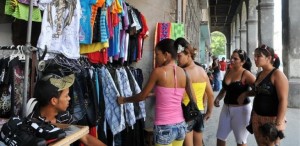
Entrepreneurs Fear Losing Investments / Victor Ariel Gonzalez

Cuentapropismo-Cuba-internet-300x146HAVANA, Cuba, October 4, 2013, Victor Ariel Gonzalez / www.cubanet.org.-  In the heat of what appears to be a crusade against clothing and shoe retailers, this reporter interviewed vendors in the capital who expressed their worries about recently enacted measures and warnings issued by the Ministry of Labour and Social Security (MTSS) in the media. According to the newspaper Granma, “as part of the new arrangements to go into effect as of Thursday, September 28, MTSS officials affirmed that the sale of industrially manufactured products, or products purchased abroad by seamstresses or tailors (…) will constitute an infraction and lead to the charge of a misdemeanor against those who perform this activity.” ( Granma, page 8, October 2, 2013).

A week has passed and the vendors continue on in their usual places “waiting” for them to come and close them down. The first complaint from one of them was the lack of foresight on the part of the government: since they started issuing licenses to seamstresses and tailors a vast network of clothing sellers has appeared who considered themselves enabled within the legal framework; some entrepreneurs mortgaged their small family fortunes and created an entire employment sector. The authorities remained silent, watching as the activity prospered.

“And now they’re going to close us done, after I put my money into it?” asked a trader who did not want to be identified.

Facing the fear of permanent closure, some are lowering their prices to recoup at least some of their investment in the shortest possible time. One self-employed woman suggested that at least they should establish a window for getting rid of the merchandise they already have.

Everyone agrees that they would liked for a State wholesale market to have been created, so as not to have to go shopping in Mexico, Panama or Ecuador, the leading suppliers of the independent market on the Island. But the Cuban government takes the opposite path and insists on disrupting this market niche.

“They say we have to change our mentality, but they keep doing the same things as always,” said one of those affected in reference to the current official discourse, which contrasts with the announced measure.

Interestingly , in trying to interview venders at the Gaya shop on Carlos III Avenue, they refused to express an opinion on the grounds that “they had been directed” not make any statements. This shows that there is also fear on the part of the authorities towards the negative reaction triggered by the enactment of new legislation in the coming days, when the inspectors and police visit the bazaars one by one.

Referring to the possible problems that may arise, another respondent felt that it will be difficult to get some people to accede to the orders without protest, especially those who have put all their effort into their business. In any event, clearly the government will arrange things so that the discontent does not become a moderately important popular movement.

After all, it isn’t the first time they decided to remove a visible group of individuals who are successful in their private economic management.

Victor Ariel Gonzalez

From Cubanet

4 October 2013

Prison Diary LVIII: Setback Two Centuries

The dictatorship of the Castro brothers has set us back 200 years, forgetting the freedoms established in the Constitution of Cadiz, whose first copies arrived at the Port of Havana, in the schooner Cantabrica, that 13 July 1812, and which included freedoms of the press, assembly and speech.

The following year, on February 22, 1813, the Parliament abolished the Inquisition.

How happy we would be to live in that era, because compared to the present we are at a total disadvantage.

After Fernando VII was acclaimed king and took office, he ratified his declaration that he would not ratify the Constitution and he would veto the laws of the Parliament, and so, the emancipation obtained was reversed, a point of similarity in the eras. There are no differences between Fernando VII, Fidel and Raul Castro.

Cuba needs to return to living in those years of intense development of civility, of rights, which with the coming of totalitarianism in 1959, leading to the fiercest extremes.

We hope that Cuba will soon sign the UN Covenants, then, an opening with run through the archipelago like a river of freedom.

Ángel Santiesteban-Prats

Prison settlement of Lawton. September 2013

4 October 2013

Cuba Professionalizes Sports / Ivan Garcia

deporte-cuba-620x330Now we know why the national baseball season didn’t start in October. The delay was not due to the rains, as reported by the sports authorities.

The plot was different. Technocrats and political mandarins put the finishing touches on a project that would allow better wages for athletes. The new rules will apply starting November 3rd, when the winter baseball season begins.

It was imperative to change the concepts governing sports in Cuba. After Fidel Castro abolished professional sports in 1961, a pyramid of schools and training centers was created to fashion high-performance athletes.

Funded by a deposit of rubles, material resources, and coaches from the now-vanished USSR and other Eastern European nations, the sports movement in Cuba experienced a spectacular increase in quality.

The island was always a pool of talent in baseball and boxing. But after 1959, sports that were exotic to Cuban fans, such as water polo, handball, Greco-Roman wrestling, or judo – thanks to coaches who arrived from the cold or from the thug state of North Korea – made it possible for Cuba to win Olympic, PanAmerican, and World medals in those disciplines.

Others like basketball or volleyball, greatly accepted in the university and school setting, took off dramatically. Like the litter of communist countries with the USSR at the head, Cuba used sport as a showcase trying to prove the superiority of the Marxist-Leninist system over modern Western capitalism.

There were plenty of champions. They came in series, like sausages, from the sports schools. Beef was missing and misery was socialized, but the average Cuban was proud of their achievements in sports.

They labeled the entire feat with the term ”amateurs.” Something that was false. By amateurs only they had a salary. They played, trained, and competed throughout the year just as their professional counterparts.

But they earned workers’ wages. With the arrival in 1990 of the “special period,” a static economic crisis lasting 23 years, sports took a nose dive. The propaganda bubble burst, in which Fidel Castro saw the athletes as warriors and the competitions as battlefields.

Low wages – an athlete earned a salary according to his or her profession – was the key to nearly a thousand athletes leaving their homeland, from 1991 to now.

To this was added the stupid policies that prohibited athletes from playing on professional teams and managing their finances without official authorization. The six-figure salaries that some Cuban ball players earn in the Major Leagues was and remains an incentive for young talents who want to try their luck in the best baseball in the world.

The bleeding had to be stopped. The new regulations can certainly reduce the desertions in sports like volleyball and others, where the main circuits are in Europe and are not affected by the laws of the U.S. embargo, and the athletes don’t have to defect from Cuba in order to compete.

But it remains to be seen whether the signing of athletes will be handled by a representative designated by the player or by the state enterprise Cubadeportes, charging very high fees.

Either way, it is a leap forward. A first step. A positive one, if we see that 70% of elite athletes live in poverty.

It is good that a player earns a salary in line with the cost of living in Cuba. They contribute to the major national entertainment for five months of the year. Doctors, teachers, and other professionals, should be similarly compensated, but that’s another story.

The new regulations do not say how training conditions will be improved, stadiums will be repaired, or athletes will be provided with a balanced diet.

Neither do they explain how the whole new salary framework of the National Series will be funded. Will they create companies that see the sport as a business or will the state continue to subsidize the sport?

It is already a fact that the regime of General Raul Castro has buried a hundred meters underground the “amateur sports” falsehood. It was logical. It constituted a burden on the impoverished local economy.

These new measures also send a message to the magnates of the Major Leagues in the United States: Cuba wants to participate in the Big Show. They have now opened the gate.

Iván García

Photo: Taken from Martí Noticias

Translated by Tomás A.

1 October 2013

Visiting the USA / Mario Lleonart

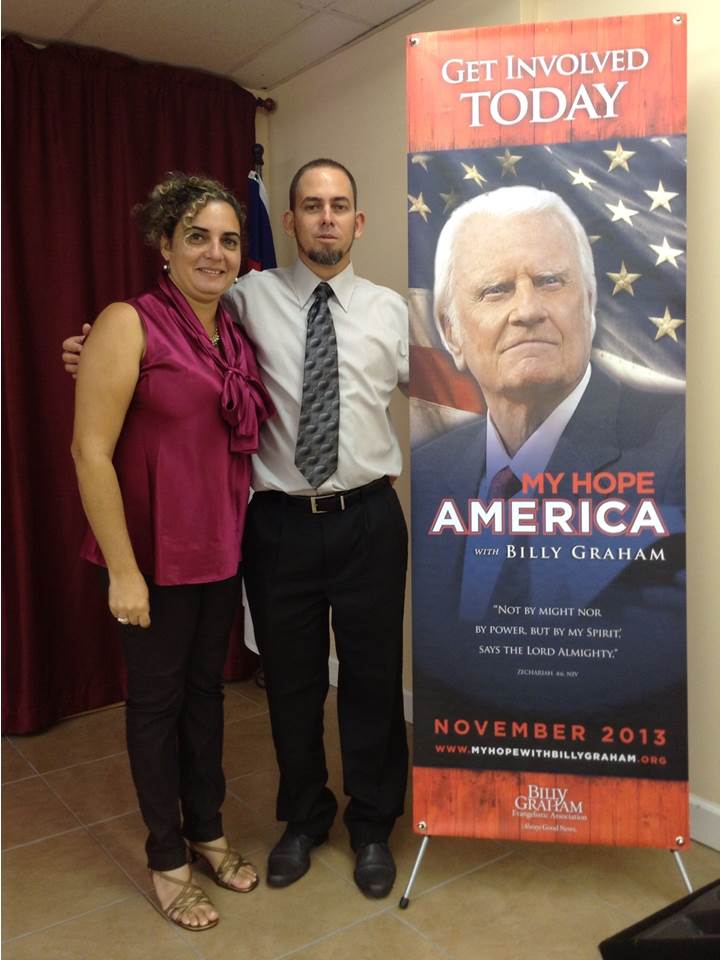
Alongside a national poster campaign announced in November by Billy Graham.

Contrary to predictions since 9/11 my wife and I are in USA.  It has been so intense that the time to write in my blog Cubano Confesante has been null.  But now is the time, in the midst of a tight agenda I will attempt to stamp a few lines where we’ll provide testimony, at least the most important parts of our stay in the nation of our admired Billy Graham.

Translated by – LYD

1 October 2013