The Return to Illegality / Fernado Damaso

Some years ago, when they started granting licenses to engage in a few types of self-employment, some people who had been working in the underground economy to supply families with fresh and powdered milk, yogurt, butter and cheese, fish and seafood, meats, clothing and other products and articles, as well as serving meals from home, on hearing that they could now do this legally, told me that didn’t have the least bit of confidence in the government and would continue to do it in their own way.

They kept their word, and despite the persecutions, fines and forfeitures, still continue to do so. Given recent events involving some self-employed workers who are now prohibited from carrying out their activities, it seems that they were right.

This new step back by the authorities, one more in their continued retreat, is going to throw thousands of Cubans on the street, people who will now have to return to inventing some way to make a living and survive, with all the resources they invested lost, abandoned by the government that says it protects them.

As nobody accepts dying of hunger by decree, some are looking for new businesses, and others, the most optimistic, are returning to illegality, strengthening the development of the black market.

I don’t know if the authorities, worried about maintaining absolute control at all costs, have assessed the economic, social and political consequences of their latest blunder. With these absurd measures, to speak of progress shows a lack of respect for the citizenry and also strengthens the disrepute in which they are held by ordinary Cubans, who, in practice, respect them less every day.

A government entrenched in power for over half a century, keeping the same leaders in the top jobs, does not change: it only repeats itself, repeating its same mistakes.

11 November 2013

More About Gonzalez Coro Hospital / Rebeca Monzo

1-1384189416_cable-de-la-habitacic3b3n-al-bac3b1p-copy2-1384189416_ventana-bac3b1o3-1384189417_poceta-con-tupicic3b3n4-1384189417_pantry5-1384189418_lavamanos-con-salidero6-1384189419_inodoro-y-cesto-papeles7-1384189420_espejp-y-lc3a1mparaFinally Patricia is a grandmother. Her daughter was admitted a few days ago to Gonzalez Coro Hospital, formerly the Sacred Heart Clinic, in Vedado, Havana, because her baby was born underweight, something very common lately.

She took some photos that helped me to offer this testimony with regards to the comfort and hygiene of this hospital.

Another of the surprises awaiting the new mother were the disputes between other patients, due to the theft of cigarettes. She doesn’t smoke, but she had to breathe the smoke from cigarettes shared between the mothers and the health care workers who cared for them.

11 November 2013

What “Buenos Dias” Didn’t Say / Reinaldo Escobar

Early in the morning the program “Good Morning” featured a segment called “Good Sense” dedicated to the topic of how Cubans behave in public places. Sports facilities, lines, buses and others.

There were man-on-the-street interviews and phone calls. They talked about public insults to referees and athletes, what happens at concerts at La Tropical where things may end with machetes, they mentioned family violence as well as in schools where children are often the victims. The “celebrity” guest was a psychologist who explained the different kinds of violence, including physical, where she enumerated insults, threats and intimidation.

After listening to the usual opinions about how education should be shared between the school and the family, and some on-street interviews, I found stunning the absence of any discussion of a transcendentally important issue when talking about violent and aggressive behavior by Cubans in public: that is, the repudiation rallies.

How can the official media criticize a behavior that is promoted by government institutions without making any reference to this obvious contradiction?

Fool that I am, I turned to the telephone numbers displayed on the screen to solicit audience opinions. I had the good fortune to be dealt with by the program director (or by a woman’s voice who identified herself as such). Trying not to fall into what I was criticizing and as moderately as I was capable of, I snapped at the poor woman my concerns. She thanked me for my participation in the segment and I, fool that I am, continued to stare at the screen until the final goodbyes, without hearing any mention of my opinion.

I already said I was a fool, don’t remind me again, but even if I’d tried I couldn’t have written this post without some commentator criticizing me for having kept my opinions to myself.

In the end, I’m left with this question: Isn’t it a demonstration of violence to use the power of the editors to annul my humble participation?

11 November 2013

My Kitty Vinagrito / Yoani Sanchez

To the memory of Teresita Fernández.

Why did that song of the kitty Vinagrito touch our souls so deeply? I don’t think the answer is the children’s visual wasteland we experienced in the seventies and eighties, filled almost entirely with the productions Made in the USSR or other Eastern European countries. Nor is it found indirectly in the human search for recognition, already so brilliantly described in The Ugly Duckling by Hans Christian Andersen. No, it wasn’t just that, although these, too, could be enumerated as some of the reasons to repeat the catchy chorus.

The story of Vinagrito, the cat rescued from the street, had that sweet sensitive side missing from so many socialist camp cartoons. These were sober, tragic or instructive enough, but they lacked the melodrama spiced with touches of humor and ridicule that define the Cuban identify. With his name alone — a diminutive of the vinegar used in cooking — the crazy-haired feline already made us love him and mock him at the same time. There, we found a story of rejection, redemption and transformation. Vinagrito managed to become what no one expected of him: a beautiful and happy pet, calmly dipping his whiskers in his milk.

It was hard not to identify with the “ugly and skinny” guy picked up off the street, when so many of us also felt that the “outside” represented a loss of self and the end of the individual. Vinagrito returned — instead of us — to a home with the warm embrace of a family, surrounded by attention. He was rescued, while we were lost. He ended up at home, while so many of us were leaving for a dorm, a camp, a platoon. He meowed to the moon… while we chased an ideological mirage.

It was nice to have his tail and his taste for the fish, without him everything would have been so much more boring.

11 November 2013

Disrespect for the Dead / Josue Rojas Marin, Cuban Law Association

Josue Rojas Marin

The brother of Juan Miguel Herrera Machado died some years ago, and on exhuming him, he found that the remains of eleven of his loved ones had disappeared from the family vault.

Given the horrendous knowledge he headed to the cemetery administration, where through the manager he learned that the vault now had another owner.  He immediately went to the National Revolutionary Police (PNR) and filed a complaint.  Some days passed with no answer, so he went again and found Prosecutor Leonardo Moreno Torres, of the township of Nuevitas, Camaguey, who oversaw the unit, and again related to him the events.  Months passed without a reply.

Devoted to his purpose, he approached the Chief of Prosecution of the township and who told him that by dealing with an atypical case he had to wait for a special process, that he saw no crime in what he related.  He again waited some more months, until he sought the free service of our Cuban Law Association and we took on his complaint.

In the medium term a criminal process was initiated against those responsible and they were sarcastically sentenced to light penalties.  Today we confront a second phase in the case because the tribunal did not rule on the location of the remains and the Prosecution which had the constitutional duty to carry out the investigations seems to have no interest in giving an objective answer to Juan Miguel in spite of his constant demands.

Translated by mlk

8 November 2013

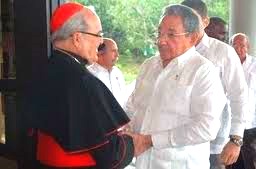
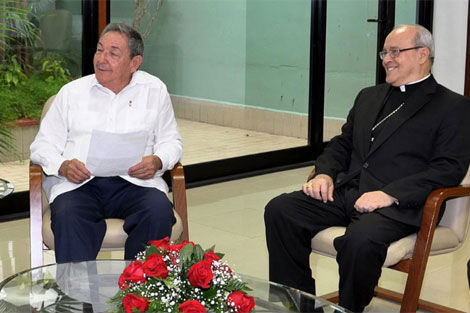
Who Will Succeed Cardinal Ortega? / Reinaldo Emilio Cosana Alen

Havana, November 2013 — Cardinal Jaime Ortega turned 77 on October 18 of this year. Canon law sets the retirement age for cardinals at 75. Pope Benedict XVI asked Cardinal Ortega to postpone his retirement but Benedict is no longer in charge at the Vatican. Time has passed and the Cardinal is looking exhausted. Finding his replacement can no longer be put off.

Numerous questions arise. Who will be his successor? What might his relationship with a dictatorial government be? Will he retain Ortega’s policies? Will he maintain a middle-of-the-road position or will he shift in favor the opposition?

Applauded by many and criticized by others, Cardinal Ortega is a saint to some while others criticize him for a lack of energy, for caving in to government pressure and for remaining silent in the face of acts of repudiation against peaceful dissidents, most notably the Ladies in White.

The Catholic Church has made several announcements of prisoner releases. On February 11, 2011 it announced “the impending release of opposition figure Elías Biscet, one of Cuba’s most prominent political prisoners. Biscet, who was serving a twenty-five-year sentence for crimes against the independence and territorial integrity of the state, is one of several opposition figures who have rejected exile as a condition for release from prison.”

Cardinal Ortega was a spokesman for those pardoned and served as the inmates’ “mediator”, or more precisely a “facilitator,” arranging the release and expatriation of nearly two hundred political prisoners.

During that time the church and the government developed close ties after half a century of conflict and political strife. This seems to have been the main reason that Benedict XVI did not accept the cardinal’s retirement as proscribed by canon law.

Ramona Muñiz Hernández — the 84 year old director of a Catholic congregation, the Daughters of Mary, and resident of Tarará in Eastern Havana — told us, “You have to acknowledge the cardinal’s patience. The ’beasts’ have been tamed. There was no other way to confront the government.

“This is a government that, when I worked as a hair dresser in a state-run hair salon, docked 70 pesos from my 280 peso paycheck for being Catholic, for going to mass and for not hiding my beliefs. I could not live without God.

“When Jaime Ortega, who is now Cardinal Ortega, and Troadio Hernández, the current pastor in Bejucal, were seminarians studying for the priesthood, the government took them and others out of school and forced them into obligatory military service. They spent three years interned in camps on the Isle of Pines. It was almost like being banished.”

“The Church put up a tremendous fight, and Jaime and Troadio were able to return to the seminary and finish their studies. Ortega is from Matanzas, the only child of Catholic parents. He has always fought against the ’beasts’ with kindness and love for God. How many relatives of political and common prisoners have been been able to survive because the Church quietly gave them two hundred pesos a month? It is always engaged in works of charity. Many people never find out about this. The cardinal does good, and triumphs! He is a saint.”

Ortega was archbishop of Havana when he was named a cardinal in 1981. He paved over differences between the church and the communist government to gain authorization for visits to Cuba by John Paul II and Benedict XVI.

Ortega was the architect of the lavish celebration of the 500th anniversary of the appearance in the northeastern Bay of Nipe of Our Lady of Charity of El Cobre, the patroness of Cuba. The pilgrimage of the virgin’s statue across the island — beginning in Cobre, where she is venerated, and ending in Santiago de Cuba — served to significantly revive the Christian faith of the Cuban people after half a century of state-imposed Marxist doctrine.

Because of the cardinal’s involvement, Cayo de la Virgen and Playa Morales — two sites on the virgin’s trek after her appearance in the Bay of Nipe — were recently declared national monuments. Other locations were designated “sites of historic interest.”

December 25, Christmas day — long eliminated from the official calendar — was reinstated as a holiday after Pope John Paul II petitioned Fidel Castro to do so during his pastoral visit to Cuba, asking that “Cuba open itself to the world.” Will they retain the day of rest?

The archdiocese regained possession of the splendid church in Tarará, which had been confiscated and turned into a warehouse and later into a mundane nightclub. It was a move that had the hallmarks of efforts by the cardinal, who will soon leave behind a controversial legacy bathed in light and shadow. Ultimately, Pope Francis and time will have the last word on Cardinal Ortega and who his successor will be.

cosanoalen@yahoo.com

Cubanet, 6 November 2013

Through Havana with Laura / Tania Diaz Castro

Laura is a Cuban woman who has lived in Spain for more than twenty years. She speaks like a Spaniard. She looks like a Spaniard. Her husband, children and grandchildren are Spaniards. But in spite of the passage of time and the distance separating us, she still considers me her best friend. Or so she tells me.

She is a little older than me, though we are both elderly. Nevertheless, we began planning a trip to Havana.

“Like old times,” she told me.

“Like old times,” I said.

Because those times remain in our memory and form part of our experience. The adventure of visiting Havana — that beloved city of ours that continues to struggle for survival in spite of the neglect and apathy brought on by half a century of socialism — is something I just have to tell you about.

We got into an almendrón, a taxi fashioned out of one of those old 1950s American cars, in Séptima de Santa Fe, a coastal town outside of Havana. We asked the driver to drop us off at Galiano and Zanja streets, located in the very heart of the Cuban capital.

What we saw would impress anyone. At the intersection of these two streets is El Curita Park, named in honor of Sergio González, who today is considered a pillar of the “July 26th Movement.” In March 1958 he was shot to death by Batista’s police for having committed numerous terrorist acts.

Though it was during working hours, we counted several hundred young people of both sexes in the park and its surroundings. They were standing or sitting on its low walls, or leaning on cars, engaging in an odd way of wasting time, or worse. They were fishing for pesos. The commotion spoke all too clearly about the lack of employment opportunites from which our society suffers.

“What do they sell?” I asked an old vagabond who extended his hand to us, asking us for monetary help.

“Anything, ladies,” he said to us:  sex, drugs, jewelry.  Whatever you need.  But be careful.  If you deal with one of them, you will be lost in a heartbeat before the eyes of whoever, through the mysterious stairs of this neighborhood.

We entered an old family restaurant that in previous years I had visited on Aguila and Dragones, inside a small dwelling, without natural light or air, but where they served, for only 30 Cuban pesos, a little more than a dollar, a magnificent creole meal composed of black beans, well roasted pork meat, white rice and a typical dessert.

My friend Laura seemed horrified by the place and we left.

“Let’s enjoy a good Spanish meal,” she said.

And a bike-cab took us through the famous Prado, while its driver told us that in the back of all those wide gates, which seemed in good shape, there were as many uninhabitable tenements as in any slum neighborhood of the city and that the water was in such short supply that many bathed in the dirty waters of the Malecon, in spite of the danger that this represented.

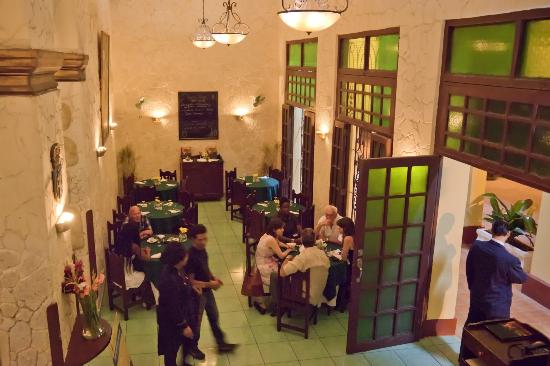
On the Malecon, between Genio and Crespo, the driver stopped and we entered the restaurant of the Castropol Asturian Society, founded in Cuba in 1929.

My old friend was right. A good meal is better enjoyed in a comfortable and agreeable place. There we enjoyed some delicious chickpea fritters which I recommend to my Cubanet readers.

Tania Diaz Castro

Cubanet, November 8, 2013

Translated by mlk

Soccer and Soap Operas / Yoani Sanchez

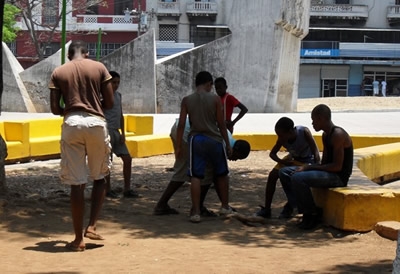
Children and teens playing in the street. Photo: Luz Escobar

“When the teachers aren’t listening, what do the students in your classroom talk about?” I asked my son a few months ago. He barely paused before answering. “The boys talk about football and the women about telenovelas,” he replied, sure of himself. I confess, I expected more. I had imagined slightly risqué topics like sexuality, or problems such as drug use or, in some cases, political controversies. But no, the long minutes of the breaks between one class and another are dominated by Messi, Cristiano Ronaldo, and the latest wickedness of the Brazilian soap and its heartthrob who shows his face on the small screen every week.

My first reaction was dismay. “If, at the most rebellious age, this is what they talk about… we’re in bad shape.” But then I stopped myself. I was not going to fall into what older people had warned me of when I was a teenager. “Your generation is lost,” they told me, followed by an enumeration of everything they themselves had accomplished. So, before answering Teo, I tried to understand why the reality of the country, its serious problems and possible solutions, occupy so little time — or none — in our young people’s conversations. Apathy, escapism, indifference… were some explanations. After the initial moment of disappointment, I felt relief. Comforted knowing that even this inertia is a way of bringing the current system to an end.

The Cuban model needs people who applaud wildly, committed soldiers, ideologically convinced individuals. Indolence will never be the soil where rebellion grows, nor will it foster partisan fervor. As I’ve said many times, “I prefer apathy over fanaticism.” From apathy, one can wake up, from fanaticism, I have my doubts. Frivolity is also corrosive to a sober and outdated totalitarianism.

These young people of today, they still have plenty of time for their civic consciousness to awaken.

10 November 2013

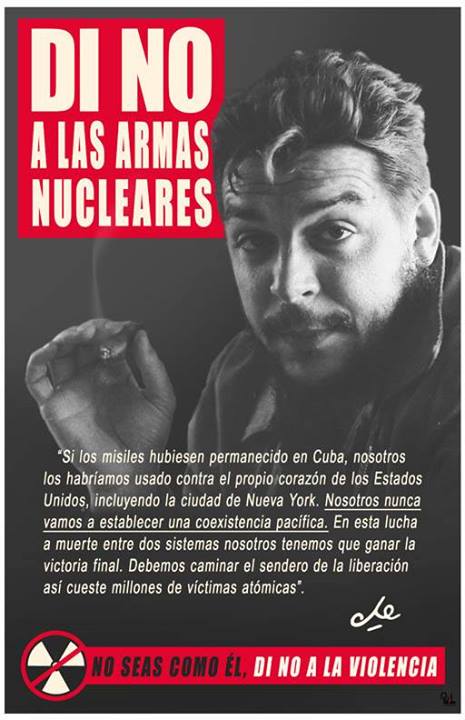
Don’t Be Like Che… Say NO to Nuclear Arms / Rolando Pulido

1458519_745165288831672_880585212_n
Poster by Rolando Pulido

SAY NO TO NUCLEAR ARMS

“If the missiles had remained in Cuba we would have used them against the very heart of America, including the city of New York. We are never going to establish peaceful coexistence. In this struggle to the death between two systems we must gain the ultimate victory. We must walk the path of liberation even if it costs millions of atomic victims.” Che

DON’T BE LIKE HIM. SAY NO TO VIOLENCE.

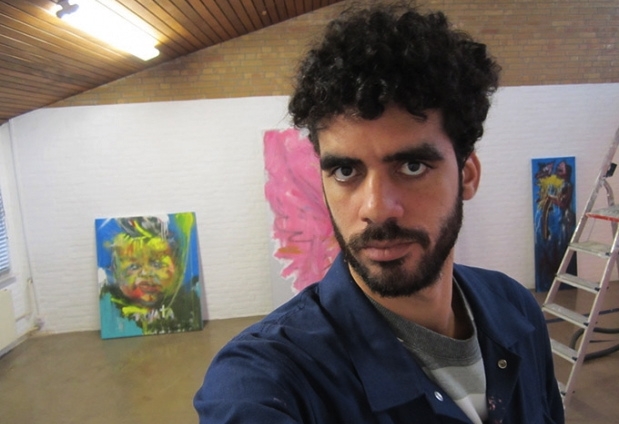
El Sexto, Artist Non Grata / Maria Matienzo Puerto, Danilo Maldonado

The sixth WHAT? People wondered when his graffiti started appearing around the city. And then it was more than a signature. But the irreverence is unforgiven. State Security is not about to understand this punk aesthetic, much less the art of graffiti. The forces of order are too serious.

For them, Danilo Maldonado, alias “El Sexto” (the Sixth), is a criminal who dirties (even more) the city, A coarse guy who makes everything into a joke and has no fear. So of course, there must be war. He can’t spray graffiti, much less exhibit in a gallery. This would be to accept him as an artist. And he isn’t one. He is a citizen non grata who although abroad, continues to suffer some consequences.

In this interview he talks about the most recent censorship of his work and announces his return to the Island after completing his Shelter City: the Hague fellowship, awarded by Justitia et Pax.

For El Sexto, what are the boundaries between art and social and political activism?

For me the boundaries between art and social and political activism sound like restrictions, and restrictions, to me, sound like a lack of freedom to create, and what’s more, they sound like communism.

I like the idea of breaking boundaries: and this fits with my beliefs, with what seems solid to me. I’m constantly at war with myself trying to better myself. I tell myself I have gotten this far, why not go further. If I do graffiti at night, why not do it in the day. If this is who I am, why hide. So I want to defend those who share my art, no matter what, why not do it.

I don’t understand why people put themselves in cages. For me, art is in everything. A can do a lot, even cross the lines of politics which I also believe in an art although it is practiced with lack of sincerity in my country.

People love to set boundaries, but art and politics are a game in which we ourselves impose the boundaries, not those who would limit us. So breaking them is good, because it’s the first step to finding the interior freedom that we’re lacking.

I hear you’ve set aside graffiti and started to conceive of your work in galleries. When will we see your exhibition at the Christ the Savior Gallery?

Yes, I’ve set it aside because I work all the time, so I get to experiment with canvas, cardboard. Recently I had the chance to put together at least sixteen canvases of 6 feel by eight feet, several cardboards, photographs and sculptures, for an exposition in Christ the Savior Gallery.

But as you know, my work makes the galleries panic, even the independent ones, so I’ve only exhibited at La Paja Records, and at Estado de SATS; later in the Christ the Savior Gallery, in a Graffiti Festival where I will have the chance to do a two-person exhibit with the graffiti artist and fine artist José Ernesto Rodríguez,
son of Silvio Rodriguez.

At that time, like always, it was under pressure. And they lost–only–the photos of my pieces take by the photographer Marcel.

However, when I’d put together this much work, Otari Oliva was very excited to see that finally it was possible for me to have a personal exhibition. And excited because Christ the Savior Gallery would be the first independent gallery — not associated with “activists” or “politics” — according to him — to show my work. So I left them in his house with everything arranged for September.

During that time, Otari sent me emails asking to postpone the expo until October because he was still arranging travel and such… but the same month, on 21 September, there was an exhibition held in Christ the Savior, of Ernesto Oroza.

Needless to say that made me sad. I did not understand why, if this date was planned for my first exhibition, someone would have a show before me. But fine, we went back to setting a date for October, in the first five days.

And again, emails from Otari saying that he was getting too much pressure, and that State Security wanted to see my works. What he told me was that he refused and preferred to remain silence and not to talk to the media because he’s afraid that what happened to Estado de SATS would happen to the gallery. And he also said that Chris the Savior was cultural, not political. But above all, that I should wait for everything to calm down without saying a word about my situation.

That reminded me of the attitude taken every day by the Cuban government and its repressive philosophy, “the place and time.” So I was left frustrated that couldn’t see my work and deserved an explanation. Once again, I’ve been censored by State Security and the fear some people have of keeping their word and not fighting tooth and nail for what is worthy and what they love, art.

Does that mean censorship in Cuba gains space, because who can confront them, make them give up? Do you think art and independent spaces could make a difference?

Of course. Those who have managed to snatch a scrap of earth for freedom are the independent spaces and if they give in… They [State Security] already have the formula: “I scare you a little and you give in and now everything’s fine.” But I think if someone has managed to create an independent space and proclaim it as such, then they acquire certain responsibilities, and one of them is not to be an extension of State censorship.

To what extent can you limit this negative? Have you thought about changing strategy? This could be a good turning point for how visual arts are perceived on the island, but that, I think, must be done from within.

Sometimes I feel pessimistic, especially when I see how some people behave. People do not understand that the struggle has to be waged from within Cuba. I do my work without forgetting my family. My language and my reality are there.

Then on your return how do you see Danilo as an artist? Do you go back to the streets, or maintain this change of perspectives?

The streets would love to see the last of me, but that’s beyond me, it’s my therapy. From the first graffiti I couldn’t turn away from the street. Here in the Netherlands I’ve also gotten in trouble, don’t think it’s just in Cuba.

However, sometimes I take a rest or change tools. I play with video, performance, painting, photography… I love being tested with other materials, it’s also another space outside the official, it’s simply to grow as an artist, as a human, to find other languages to express an idea. I’m just telling you there will be surprises, for the Cuban streets and for the galleries as well, why not?

More photos are here.

María Matienzo Puerto | Havana

From DiariodeCuba.com | 9 Nov 2013

Opponents Urge Obama Not to Negotiate with the Cuban government / Guillermo Farinas, BertaSoler

obamaThe U.S. president , Barack Obama, on a visit to Miami to raise money for the Democratic Party, met Friday for the first time with Guillermo Fariñas and the leader of the Ladies in White, Berta Soler, both winners of the Sakharov Prize, who asked him not to negotiate with the Cuban government “regardless of exile and the people of the island.”

At a press conference after concluding the meeting with Obama, Fariñas said the president assured him that in his next three years in office that was not going to happen. It is very important that “the world’s largest democracy recognize the Cuban dissidence,”  said Fariñas.

The opponent reiterated that the President was waiting, via email, for a series of proposals to change the Cuban reality.

Fariñas said his meeting with the president established that there is a commitment from the United States to recognize the peaceful struggle in Cuba.

The leader of the Ladies in White, Berta Soler, for her part, said that in less than ten days she had met with the President and the Vice President of the United States whom she called on for moral and spiritual support for freedom in Cuba.

“We want Cuba have the same freedom that the United States has,” Soler said adding that everything the Cuban government tells the United States “is a big lie.”

The Lady in White reiterated the lack of freedoms in Cuba, but despite this, “I am a free woman,” she said.

Cubanet, 9 November 2013

A Succession from Castro to Castro / Juan Juan Almeida

Historical data show that long before Colombus, America had already been discovered.  Leif Eriksson, son of Erik the Red, was a Viking explorer who in the year 1003 managed to arrive at a land that he baptized as “Viland” and which, according to his description and remnants found, could be Newfoundland.

Zheng He, the famous Chinese military man, according to his travel log, between 1405 and 1433 touched the coasts of the American continent on several occasions.  Khashkhash Ibn Saeed Ibn Aswad was a Muslim sailor who crossed the Atlantic Ocean and returned to Europe with evidence of his trip in the year 889.  We are also familiar with the legend of Hui Shum, a Buddhist monk who by around the year 485 was preaching on the Yucatan Peninsula.

The Hindus speak of Votan, a mythological navigator who lived among the ancient Mayans. The presence of kumara on the Cook Islands, a native American plant, very similar to yams, has been cited as evidence that the native Americans could have come to Oceania. And as if that were not enough, recent scientific studies document the discovery of cocaine and American nicotine remnants in the bodies of Egyptian mummies.

Nevertheless, and in spite of this information, 12 October 1492, continues marking the history books.  Sometimes, with insistent repetition, we waste time searching for a day, or a dated event, in order to build a greater uproar than that caused by the arrival of a late train at the station.

The same thing happens to us Cubans.  There are more than a few enthusiasts trapped in the tricks of the almanac: they agree that if we had not had a 10 October 1868, our story would not have gotten to a 10 February 1878, a 24 February 1895, nor a 20 May 1902; nor would we have suffered a 10 March 1952, a 26 July 1953, a 13 March 1957, and much less a 1 January 1959.

Personally I think that the mentioned events occurred just as we know them today.

But history aside, and much in spite of those who only look back with the respectable, repeated and less boring eagerness of constantly theorizing in order to try to straighten out a world that already is not round, today looms the moment of being able easily to predict what the Cuban government has parceled out and designed for us as a future, that which is called “reforms.”

The question is, “Where are we going?”  The answer: next December 2, when the military promotions are made known, and with whether or not Colonel Alejandro Castro Espin will rise to General or not.

A promotion that, on one hand, could create discontent and division in the military hierarchy; and, on the other, reveal to us if the so-called “measures for updating of the model” is the road towards the aftermath of the so-called Castro era, if there are openings that lead towards a (militarized) social democracy where they go on imposing little by little on the liberties of each individual or if there have only been subtle maneuvers directed at the reshuffling of the State structure which only guarantees a succession in which Cuban power passes from hand to hand, from Castro to Castro.

Each country’s government has the right to design its peoples’ tomorrow; in the same way, the people have the legitimate right to accept the future scheme or to reject it.

Translated by mlk

6 November 2013