After two weeks of illness, I contemplate a Cuba that seems to have plummeted even further.
 Two weeks of convalescence is a long time. In those days, a body can become exhausted from fighting fever and pain, a neighborhood can sink even deeper into the health crisis, and a country can plummet even further than it was the last time I walked its streets. I feel like the end of July and the beginning of August have been stolen from me, bringing me back to a moment where everything is worse than when I left it.
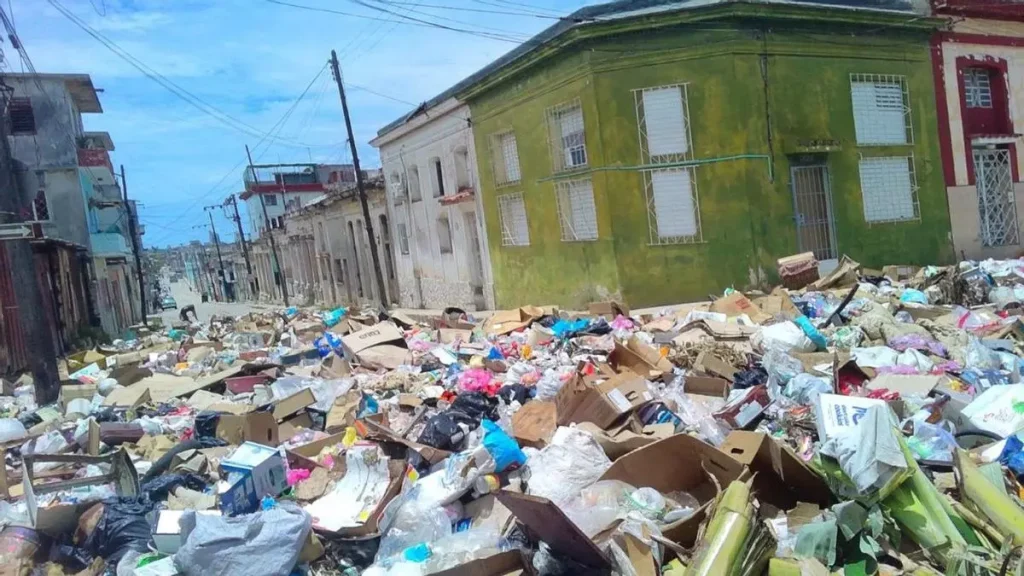
From the rooftop, I can see the trash dump on the corner of Factor and Conill, which has become a veritable country. It has hollows, peaks, burnt areas, a growing ecosystem of flies, mosquitoes, and rodents, as well as regular visitors rummaging through the garbage looking for food. My sense of smell barely functions because of the virus that has kept me in bed these past few days. It is almost a blessing, because I’m told the air smells of rotting waste and burnt filth.
I haven’t dared to go down the 14 flights of stairs. I still don’t have the strength. Waiting for the electricity to come back on so I can use the elevator might be pointless. The most recent blackout lasted 28 hours. When the power returned, we were so exhausted we didn’t even have the energy to celebrate. With aching joints and eyes red from the illness, I rushed to connect the backup batteries, turn on the washing machine, and try to store water. This crisis doesn’t care about ailments.
With joint pain and eyes reddened by the illness, I rushed to connect the backup batteries, turn on the washing machine, and try to store water.
A neighbor says that we are being punished with long hours without electricity so that on August 13, the centenary of Fidel Castro’s birth, we can have electricity all day and thus give thanks for the gesture of allowing us to drink some cold water, bathe with a light bulb on, and even soften some beans in the electric pot.
My brain is still working very slowly, so I don’t get the irony. I’m numb, but I feel rage. The rage hasn’t subsided, not even with the swollen joints or the headaches.
I read the news. There are demonstrations for the victims of earthquakes, calls to alleviate hunger in conflict zones, and appeals to ensure the safety of thousands of people caught up in surging migrations. I don’t read a single headline about the declaration of a national state of emergency in my country. No mention that the Cuban authorities have publicly acknowledged the catastrophic situation we are experiencing, which would allow for the implementation of urgent protocols to save our lives—the lives that are still standing.
There is a lack of field hospitals because the country’s healthcare facilities have neither the supplies nor the conditions, or sufficient staff to confront the epidemiological crisis we are experiencing. Food distribution points are urgently needed to curb the hunger that is claiming lives. It is also urgent to distribute drinking water, medicine, and basic supplies to alleviate the power outages and prevent those currently on the brink from succumbing in the coming weeks.
My friend died early this morning. It has affected me deeply. Always optimistic and always supportive, she passed away at a very dark time for Cuba. I think about her life, but also about all the difficulties her family will have to face now, after her death. Because dying doesn’t put an end to problems; rather, it begins another path of difficulties, from transporting the body in a city where a liter of gasoline costs around 3,000 pesos, to buying a bouquet of flowers amidst an official crackdown on private businesses that has kept many shops and businesses under lock and key.
Last night was the least bad of the last two weeks. The pain in my legs wasn’t too bad. Tomorrow will be better, I tell myself, though I don’t really believe it. When the numbness from the painkillers wears off, my nose is working properly again, and my feet can once more explore the streets, what kind of country will I find?
The “Havana Chronicles” series can be read here.
______________________
COLLABORATE WITH OUR WORK: The 14ymedio team is committed to practicing serious journalism that reflects Cuba’s reality in all its depth. Thank you for joining us on this long journey. We invite you to continue supporting us by becoming a member of 14ymedio now. Together we can continue transforming journalism in Cuba.