Health workers’ salaries are not enough to cover the cost of getting between their homes and the health centers
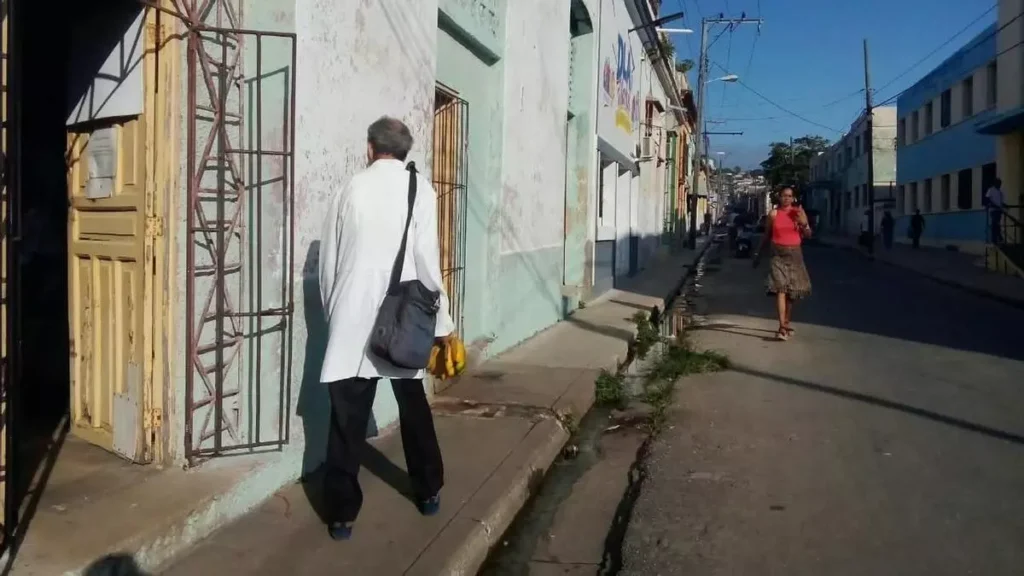
 14ymedio, Julio César Contreras, Matanzas, November 28, 2026 / The white coat, which for decades opened doors and inspired admiration in Cuba, is not enough to stop a tricycle [pedicab or motorized tricycle taxi] on the streets of Matanzas. Under the November sun, the health workers’ uniforms stand out against the city’s peeling facades, skirt the puddles of sewage and dodge the uneven sidewalks. Some carry a backpack on their back and others take advantage of the walk to do some shopping, like the doctor walking along with a small bunch of plantains in his hand.
“Who would have thought that after two internationalist missions I would have to walk across half the city to get home because I don’t have enough money to take a tricycle?” asks Fabián, who has just come off a 24-hour shift and has more than three kilometers ahead of him to his home, in the Simpson neighborhood. “My shoes don’t last six months, but you have to choose between feeding your family or walking around on worn-out soles.”
“Who would have thought that after two internationalist missions I would have to walk across half the city to get home because I don’t have enough money to take a tricycle?”
His well-earned professional prestige ends at the hospital doors. Once out on the street, he is just one more Matanzas resident who has to juggle the 7,000 pesos he earns a month. A shared taxi from the Faustino Pérez Hospital to Peñas Altas costs 500 pesos. Fourteen trips would be enough to wipe out his salary.
The financial hardship reminds him of his days as a new graduate, when he would stand at the side of the road waiting for some driver to take pity on him. “After 26 years of professional practice, I still have no way to get around, leaving home an hour early to climb the hill at René Fraga Park and get there on time to see patients who are not to blame for what I lack,” he says.
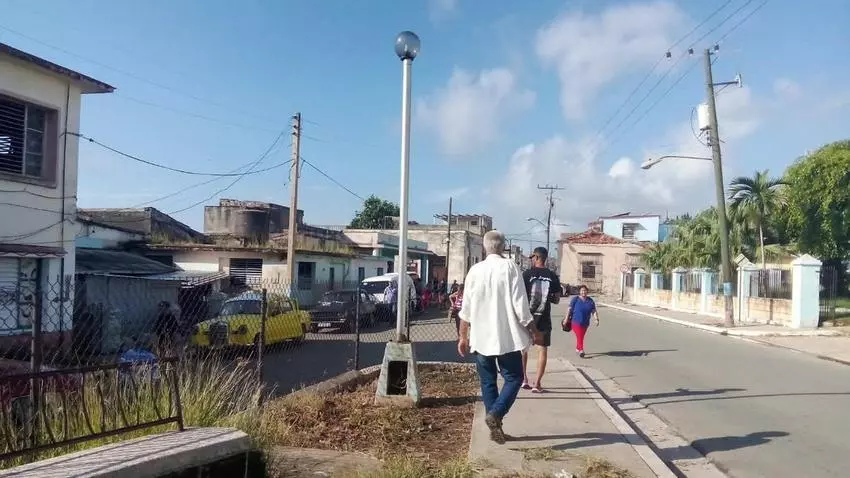
In September 2025, according to figures released by the official newspaper Girón, only 63 of the province’s 129 buses were operational. In February of this year, the authorities acknowledged that urban and inter-municipal transportation had come to a standstill due to lack of fuel. Health workers, supposedly among the priority sectors, have ended up depending on their legs.
While in Havana the Transmed bus service is showcased by the Government as an achievement, Mayra walks several blocks from the polyclinic on Contreras Street to the Viaduct stop, in search of the cheapest transportation.
“When I open the door of my house with my feet aching, the first thing I see is my nursing degree hanging on the living room wall, and I wonder if so much sacrifice has been worth it,” the nurse, who also teaches, tells this newspaper.
“When I open the door of my house with my feet aching, the first thing I see is my nursing degree hanging on the living room wall, and I wonder if so much sacrifice has been worth it”
Two and a half weeks after payday, Mayra has to walk back home to the La Playa neighborhood. She does so after eight hours of work, split between caring for patients in the morning and the classes she teaches in the afternoon.
“The Public Health bosses do have cars at their disposal to go wherever they want. The fuel crisis is for us, the mere mortals, who get a pat on the shoulder and have to keep walking however we can.” Close to retirement, she would rather walk on doctor’s orders than because her wallet forces her to.
Young faces are also plentiful among the white coats making their way across the city. They carry backpacks, chat and still find reasons to laugh during the walk.
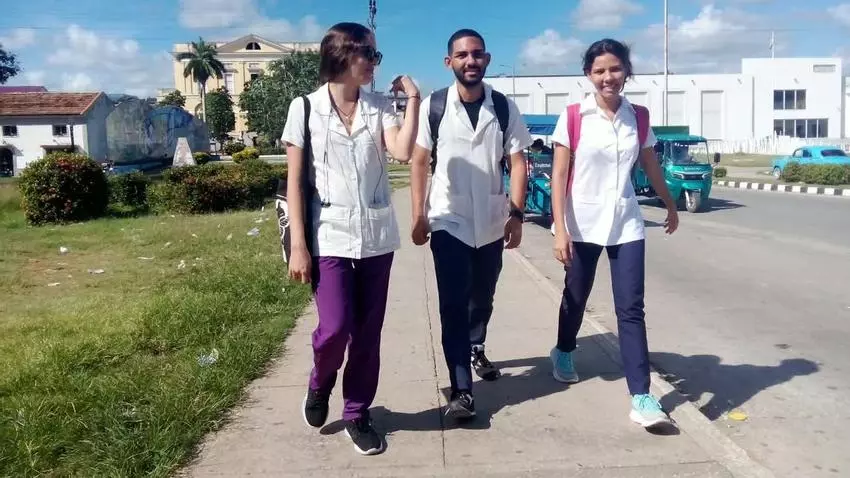
“If I don’t have the cash in hand, neither my university ID nor my uniform gets me on the bus,” explains Abdiel, a second-year Medical Sciences student who also works nights at a cafeteria. He lives in Carbonera, about 15 kilometers away, has barely three changes of clothes and spends 2,000 pesos a week on fares, not counting his trips within the city.
He is just as likely to climb up the side rail of a truck as to flag down a state car. Mondays and Fridays are the worst days and, after three or four in the afternoon, fares go up.
“Those of us students who live far away have a really hard time getting to school. Things are tough,” he stresses.
In the city of bridges, where every slope forces you to calculate how much strength you have left, university training, internationalist missions and years of experience weigh less than a 500-peso bill. The Cuban medical powerhouse has holes in its soles.
Translated by GH.
______________________
COLLABORATE WITH OUR WORK: The 14ymedio team is committed to practicing serious journalism that reflects Cuba’s reality in all its depth. Thank you for joining us on this long journey. We invite you to continue supporting us by becoming a member of 14ymedio now. Together we can continue transforming journalism in Cuba.