The record number of foreign degrees recognized in Spain has driven applications for the 2027 medical specialty examination, with Colombia and Ecuador contributing nearly 4,000 more candidates than the previous year.
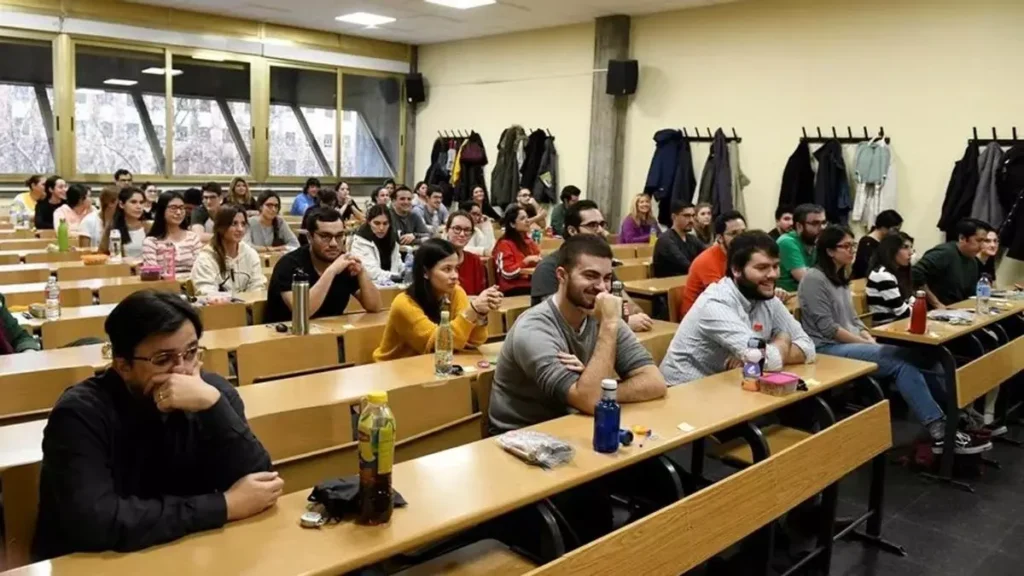
 14ymedio, Madrid, November 17, 2026 – For the first time since the Resident Internal Physician (MIR) examination was established in Spain, foreign applicants outnumber Spanish nationals. The 2027 application period has registered 24,142 applications, of which 12,569 correspond to doctors from other countries, compared to 11,573 Spanish nationals. This reversal, which reflects the growing presence of Latin American professionals, also includes a Cuban contingent: 614 doctors from Cuba have applied to take the examination.
According to provisional data published by the Ministry of Health last Friday, foreigners account for 52.1% of applications, a proportion that contrasts with just one year ago, when Spaniards represented approximately 70% of admitted applicants. The growth is concentrated particularly in Latin America.
Colombia tops the list of foreign countries, with 3,265 registered applicants, compared with 1,347 in the previous examination cycle. Ecuador has 2,597, nearly four times the 670 registered last year. Together, the two countries account for 3,845 additional candidates. They are followed by Peru, with 1,057 applicants; Venezuela, with 917; Bolivia, with 832; and Cuba, with 614. The Cuban figure, in fact, has nearly quadrupled since 2023, when 172 candidates were counted.
The figure does not mean, however, that all these professionals have the same conditions for obtaining a position. In fact, the system distinguishes between foreigners who already have an administrative status allowing them to compete without restrictions and those who are subject to the quota reserved for non-EU nationals.
In 2025, the Ministry of Universities favorably resolved more than 30,000 applications from doctors from outside the European Union
Behind the increase is, to a large extent, the acceleration of procedures for recognizing foreign university degrees. In 2025, the Ministry of Universities favorably resolved more than 30,000 applications from doctors from outside the European Union, an extraordinary figure compared to the pace of previous years.
Degree recognition is the procedure through which Spain certifies that a degree obtained in another country meets the academic requirements necessary to practice a regulated profession. In the case of Medicine, it allows foreign professionals to work as doctors in Spain, but it does not automatically grant them a medical specialty.
To obtain one, those whose specialization has not been recognized must pass the MIR, the national examination that provides access to specialized healthcare training in Spanish hospitals and health centers. For several years, delays in processing applications had left numerous foreign doctors waiting to fully enter the labor market.
The increase in approvals has released a substantial pool of professionals who can now apply for the examination. This does not mean that thousands of new doctors have suddenly arrived in Spain, but rather that many graduates who were already in the country or had been waiting in their countries of origin have managed to complete the administrative process they needed.
Recognition of a degree does not guarantee an MIR position either. Candidates must pass the examination and choose from the available specialties and locations according to their ranking and the positions offered.
For the 2027 examination cycle, 9,676 medical residency positions have been offered. Of these, 968 are reserved for non-EU applicants subject to the 10% quota
For the 2027 examination cycle, 9,676 medical residency positions have been offered. Of these, 968 are reserved for non-EU applicants subject to the 10% quota.
According to data released by Secretary of State for Health Javier Padilla, 7,363 applicants are subject to this limit, compared with 16,779 who can compete outside the quota. The difference is significant: while candidates not subject to the reservation face a ratio of 1.93 applicants per position, among those covered by the quota the ratio rises to 7.61.
At the same time, foreign nationality does not necessarily mean being subject to this restriction. Citizens of EU countries and non-EU nationals who have certain residency status in Spain can compete on equal terms with Spaniards. By contrast, those arriving from countries outside the European Union without an administrative status that exempts them from the quota must compete for the reserved positions.
The change has fueled a controversy that goes beyond competition for MIR positions. Criticism has focused, among other issues, on differences between Spanish medical school curricula and those of some Latin American countries, both in the distribution of theoretical and practical training and in academic credit systems. Representatives of Spanish medical faculties have argued that these differences must be taken into account to ensure that the education received is equivalent.
The General Council of Official Medical Associations (OMC) has expressed concern about the speed and criteria of the procedure. Among its proposals is the introduction of an Objective Structured Clinical Examination (OSCE), a practical test that would make it possible to assess the competencies of foreign doctors before recognizing their degrees. It is also calling for greater participation by professional medical associations in the evaluations.
The Ministry of Health, however, has ruled out the possibility that the increase in applicants will, by itself, cause problems with the examination. The director general of Professional Regulation, Miguel Ángel Máñez, has indicated that the main risk lies not so much with the MIR as with the possibility that the availability of doctors with recognized degrees will encourage their hiring without a recognized specialty, particularly in services that are struggling to fill vacancies.
The debate highlights a contradiction in Spain’s healthcare system: while it needs professionals to address staffing shortages, it must also ensure that degree-recognition procedures and access to specialized training maintain the same quality standards.
For Cuban and Latin American doctors seeking to develop their careers in Spain, the increase in degree recognitions represents an opportunity that for years was hindered by bureaucratic delays. For Spanish applicants, by contrast, the record number of applications creates a situation of greater competition for positions that remain limited.
Translated by Regina Anavy
______________________
COLLABORATE WITH OUR WORK: The 14ymedio team is committed to practicing serious journalism that reflects Cuba’s reality in all its depth. Thank you for joining us on this long journey. We invite you to continue supporting us by becoming a member of 14ymedio now. Together we can continue