During the nine hours I was detained in a police station, I heard the farewells of those who would be expelled for not having an address in the capital on their identity card.
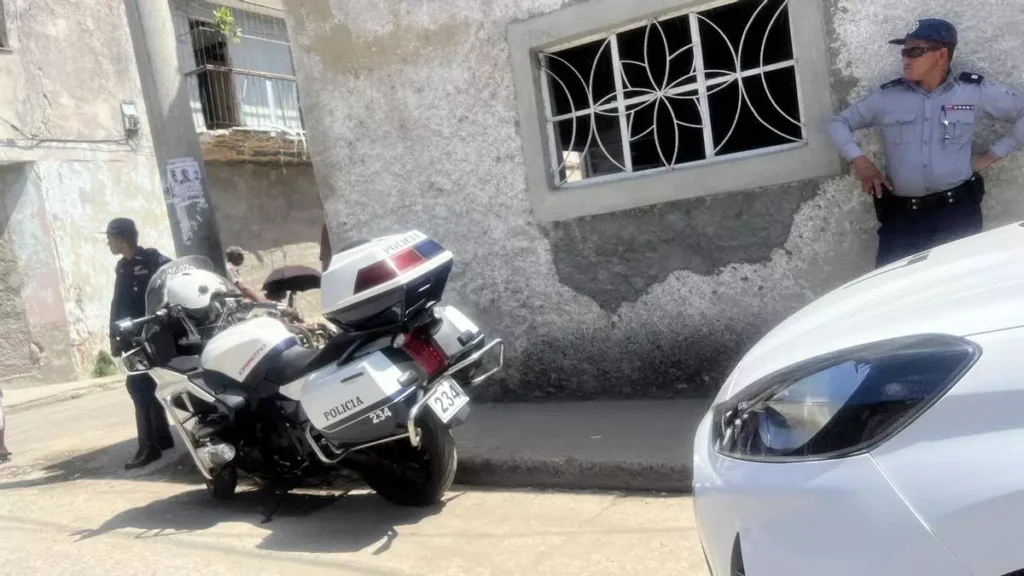
 14ymedio, Yoani Sánchez – Journalist, founder and director of 14ymedio, Havana, November 6, 2026 / “Bring me all my clothes and shoes, they’re going to deport me,” a young man says on the phone in the holding cells of the 4th Police Unit, in Havana’s Cerro neighborhood. His voice reaches my cell from the hallway of this underground level, accessed from the back of the station. The air smells of urine, the locks clang, and each phone call allows me to piece together a fragment of the country.
The jailer, who is called El Jimagua [The Twin], paces back and forth between the bars. Orders, protests, and the metallic clang of doors fill the air. Some detainees enter, others leave to make their only phone call. Some regain their freedom; others receive the news that they will be sent to the El Vivac detention center and then back to their home provinces. The words “illegal” and “deportation” are repeated so often that they come to dominate the brief vocabulary of confinement.
In the nearly nine hours I spent there, I counted more than a dozen cases. They were mainly young men from eastern Cuba, detained because their identity cards didn’t have a Havana address. From the police activity and the conversations I overheard, it seemed like a machine capable of processing dozens, perhaps hundreds, of people each day. I couldn’t verify the number, but I could hear the consequences.
That phone call contains the story of an entire family: a mother, a little boy waiting, and someone who won’t arrive in time to pick him up.
“Tell my mamá to go get the boy, I left him with the neighbor next door and I won’t be able to come back. They’re going to deport me,” says another voice, more mature. That call encapsulates the story of an entire family: a mother, a little boy waiting, and someone who won’t arrive in time to pick him up.
Sometimes they can’t even leave their cells to make a call. Then El Jimagua acts as an intermediary. The detainee shouts from behind bars, the jailer relays the message over the phone, and a family member answers from somewhere in the city. Three voices for a conversation we all listen to in silence. That’s how I get to know my fellow inmates, through their urgent needs, their goodbyes, and the instructions they have to cram into a single moment.
Another detainee manages to get to the phone, but he faces an obstacle. He can’t remember a single complete number to call. Mobile phone contact lists have atrophied the memory of many, accustomed as they are to tapping on a name without having to recall the digits. The man presses a few buttons and freezes. He tries again, but still can’t complete the sequence. “The only numbers I remember are those of people who have left the country or died,” he laments. He puts the receiver back. He has lost his only chance to let someone know he’s in jail.
El Jimagua calls a detainee. He’s been given bail of 50,000 pesos and will be released. But he’s not one of the “illegals.” Those have no way to avoid “deportation.”
In my cell, the walls hold other testimonies. La Mora del Cerro, Yunieski El Cabilla, and Yantiel, who circled his name, left evidence of their presence. Near the door are tally marks: four vertical lines crossed by a diagonal, repeated in at least six groups. Someone had plenty of time to keep count of every day they spent there.
The prisoners have broken off fragments of tiles to scrape off the paint and write. One proclaims himself “El Rey de La Timba”; another, “Papito, the best of El Canal.” Deprived even of their shoelaces, they cling to the neighborhood, to their nickname, to the tribe that identifies them.
It is all the more brutal to hear that so many Cubans are treated like garbage in their own land.
Another door opens. El Jimagua calls out to a detainee. They’ve set bail at 50,000 pesos, and he’ll be released. But he’s not one of the “illegals.” Those have no way to avoid “deportation,” even if they pay millions of pesos. In a few hours, I too will be freed from my confinement, after an arbitrary arrest.
Although my identity card says I live in Havana, I belong to another group of third-class citizens. I am a thought illegal, an intruder in the territory of permitted ideas, a Cuban they cannot deport because they haven’t yet found a way to expel me from their own conscience.
Read more Havana Chronicles here
______________________
COLLABORATE WITH OUR WORK: The 14ymedio team is committed to practicing serious journalism that reflects Cuba’s reality in all its depth. Thank you for joining us on this long journey. We invite you to continue supporting us by becoming a member of 14ymedio now. Together we can continue transforming journalism in Cuba.