What Can an Independent Lawyer do in Cuba? / Laritza Diversent

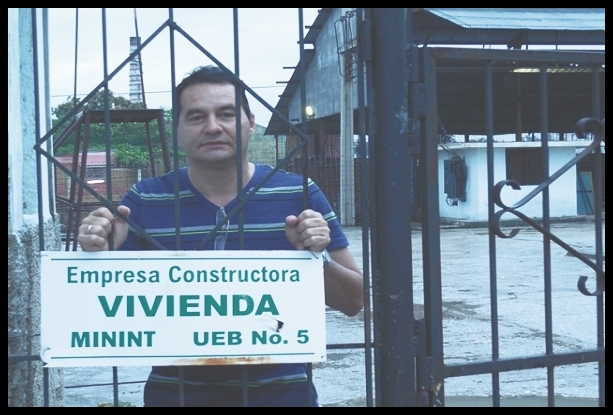
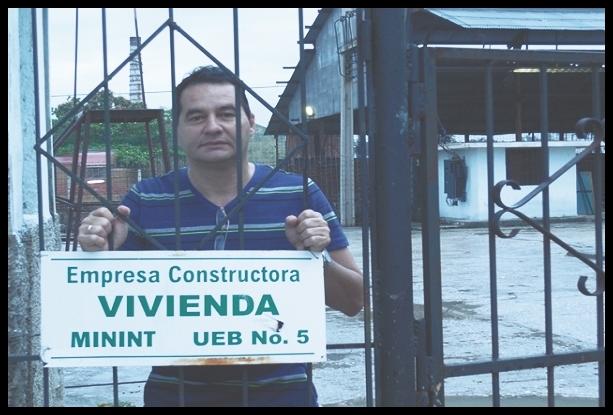
In Cuba, professionals can’t work for themselves in the specialty in which they graduate. Legal counseling and consulting are not recognized as self-employed activities, the only actions that a lawyer can perform independently. The few that make this decision have to do it for free.

It’s also difficult to form an autonomous association. The red tape required to legalize a non-profit organization assures that the State has absolute control over it.

To these limitations economic dependence is also added. The lawyer who doesn’t work for the State doesn’t earn anything. In order to survive, in a system where the economic crisis is permanent, independent lawyers collect extra honoraria, even when the regulation on the practice of advocacy, among other causes, considers it a serious shortcoming to receive honoraria that are not established or are better than those officially approved, whether in cash or in kind. A double morality is imposed by these conditions on the practice of advocacy in Cuba, and with it comes total submission to the system.

See Artículo 59.3 inciso c, Resolución No. 142/84 “Regulation on the practice of Advocacy and the National Organization of Collective Law Firms.”

From Jurisconsulto de Cuba, by Laritza Diversent

Translated by Regina Anavy

9 June 2014

Being In Prison is Worth It / Angel Santiesteban

Cartoon by Garrincha: 

“Excuse me, but we have a writer who they say beat his wife. Of course there is talk about him.”

“Dude, do I look like a marriage counselor or something?”

“It’s just that this writer is a dissident, you know?”

“Where is that abuser?!”

Seated in the door of my cabaña, many people ask me if it’s worth being a prisoner, and without doubt I say yes.

Here inside I see the internal and profound face of a society submerged in the horror of survival. Furthermore, it permits me to do a unique sociological study; it’s an exceptional experience. Seen in this way the suffering of confinement doesn’t hurt. To this I add the use of time spent in reading and writing.

I am sure that with my imprisonment the government, and particularly the Castro brothers, are the ones who have been harmed the most, because they left in evidence the credibility of the “reforms” that they wish to sell. They showed how they try to deceive the world in order to obtain financing for the ruined Cuban economy. continue reading

My truth and my rights are my armor, and with that I feel invincible before the dictatorship; I also add my illusion that one day I’ll know who planned to silence and humble me, which, no doubt was thought up by Raul Castro and his son, Alejandro, after my first “Open letter to Raul Castro,” which I wrote in November 2012. Also I’ll know who covered up the order, and those who have been willing accomplices in the cultural milieu, and even those who – inside the same opposition – made a pact of silence in exchange for some privilege.

What will be infallible is that sooner or later, all the truth that today we can’t even imagine will be known. Then it will be like opening a book and seeing peoples’ souls. That is my awesome tranquility, and like the Arab, I sit in the door of my cabaña hoping to see the cadaver of my enemies pass by. If before this I have to pay with my life, I shall equally hope for it, because they will purge my death.

What’s certain is that – in one way or another – they won’t escape paying for their injustice to me and to the hundreds of activists who they have beaten, imprisoned and assassinated. The Castros know that this moment is inevitable, and for that reason they are working now. They are pretending to make a transition that apparently satisfies “everybody” when Raul Castro leaves power, but they are leaving secure the threads that move the country, in politics and economics, to avoid being judged for crimes against humanity.

Ángel Santiesteban-Prats

Lawton prison settlement. May 2014.

Follow the link to ask Amnesty International to declare Angel a prisoner of conscience.

Translated by Regina Anavy

9 June 2014

Amir Valle, the Apple of theDiscord / Angel Santiesteban

He was introduced to me in 1986, in a meeting of young writers that I attended, invited as an observer, in the Alejo Carpentier Center. I believe I was the last writer who arrived at the then so-called “Generation of the Newest.” There I knew those who later would be my brothers in the profession, and we would share literary, existential and family conflicts.

Jorge Luis Arzola was as thin as a thread of water; his shyness was complete and competed with his naivety. Their first images are those that I’ve always remembered. They remain frozen in my memory: Guillermo Vidal, Jose Mariano Torralbas, Alberto Garrido, Daniel Morales, among others.

Amir came to Havana to finish his journalism studies, which made us closer. He brought that form of rebellion of the literary group, ” Six of eighty,” that State Security, at such early ages, had added to their black list, and they were persecuted, interrogated, and their families were summoned before the Political Police. They were marginalized from literary activities in the province. Once you show your dissent, they never forgive you, although they dissimilate and even smile.

Amir was watched since that time and they never trusted him; they stayed on alert, suffering his literary triumphs, his prolific work.

The writers of preceding generations warned us. In particular, they told me that I shouldn’t trust Amir, that he was not my friend, that he was deceitful, that surely he would betray me, and even his condition of being from Santiago served them to sow discord.

Amir left the country — or they made him leave — and for his political detractors it was a relief. He never stopped contacting us, keeping up with our lives and experiences. In an interview of me that Amir did for his digital magazine, “Otro lunes,” (Another Monday) he raised hives among Cuban officials, and some told me about his nonconformity, but always dropping a hint that he wanted to harm me.

When I opened my blog he appeared very worried. He told me, “Be careful about what will happen, little brother.” He supported me at each terrible accusation, and we suffered together, like brothers do.

From my entrance into prison, Amir has kept representing me and promoting my books, and has taken care of every detail that has to do with my person; and in a great irony, those who betrayed me were those who counseled me to be careful of my brother writer. What’s sad is that they did it out of fear and to obtain benefits, because I heard what they thought of the Regime, and I am sure they are more radical that I am.

That’s the sad reality of the Cuban intellectuals, and at the same time, the immense happiness I have to be able to count on a brother like Amir Valle Ojeda.

Angel Santiesteban-Prats

Lawton prison settlement. May 2014.

Have Amnesty International declare the dissident Cuban Angel Santiesteban a prisoner of conscience. To sign the petition, follow the link.

Translated by Regina Anavy
2 June 2014

Cuban Talent Bound for the Cannes International Film Festival / Angel Santiesteban

Movie Magic

Finally, by means of my son’s cell phone, in his visit to me in past days where they keep me locked up, I could appreciate the short film, “Death of the cat,” from the Cuban director Lilo Vilaplana, living for more than a decade in Colombia, the place where he took — in addition to his talent, profession, some friends and his family — the resentment he suffered in his own body, consistent with totalitarian processes, and that now, as a mature creator, he feels the duty to expose, first as literature, and now in film.

The traumas Lilo lived, which he carried in his soul like a pregnant mother who travels, started to emerge in that second homeland — Colombia — which opened its arms to him before his blast of talent and work in movie production.

After a decade of successes, now he can give himself the luxury of producing these shorts; this one in particular. He based the screenplay on one of the tales from the compendium, “A Cuban account,” that would see light, also, after he emigrated. continue reading

Many viewers would be confused about its geography and would think that he shot the whole film in Havana, since at the beginning you see the character Armando walking through its streets, in the brilliant interpretation of Albertico Pujol, who was filmed by another colleague, at Lilo’s request, because of his impossibility of entering Cuba.

Later the brilliant editing would splice harmonically with the rest of what was filmed in Colombia, thanks to the plausible scenery of the excellent professionals who thought about the most minute detail, and who helped give the coloring of Cuban reality at the end of the decade of the ’80s of the past century — on the eve of announcing officially the so-called “Special Period,” which would uncover the worst hardships ever experienced by the Cuban people, and which, with one sudden pull, changed the perspective of a nation deceived and repressed for decades.

In the interest of putting the story in context, it’s worth remembering that Lilo chose the day after the execution of the Hero of the Republic of Cuba, Brigade General Arnaldo Ochoa, a circus spectacle of the Castro brothers to distract the people, make them forget their hardships and so they wouldn’t take to the streets in protest. It was also a lesson for the military high command – a message, no less important – to remove the danger of those who had feathered their nests, and who imitated the habits of the Castro brothers, their mentors, for whom “life was to enjoy as it would produce.”

Ultimately, once the officials were punished for “deviating from the ethical principles that the Revolution pursues,” as the official press said, that had to stop once with the denunciations of the U.S. government, which accused Fidel Castro of being part of the international narco-trafficking that introduced drugs in his country.

Those men who could testify about the Regime’s consent to participation — and with the most distinguished “capos” like Pablo Escobar himself — sealed an ignominious chapter, and, as if it were no small matter, exterminated those who could create a seditious plan against its government, and compete with his brother, Raul Castro, for military power.

In the middle of this national paralysis, the artist that grows inside Lilo takes care of little things, apparently unimportant to most people, in order to reflect on art, as on hunger, the need for a political transition, the loss of values in society, family separation and painful scars, exposed in this case, in the character of Armando, who doesn’t have news about the son who launched himself into the sea on a raft. Much time has gone by not knowing his whereabouts, and Armando supposes that he didn’t manage to reach the coast of Miami and lost his life.

The story crosses the thin line between social denunciation and artistic setting, between melodrama and sensitivity, achieving, happily, a graceful outcome that avoids the trap of trying to tell about suffering through each actress, actor and production team, excepting the young actor, Camilo Vilaplana, who, thanks to his parents, managed to grow up far from that social catastrophe. Finally he manages to banish, although he always suggests, the conviction of those guilty of the desperate reality; that indictment is left in the hands of the public, in particular the Cuban public.

Without making it obvious, either, he arouses that fine humor inevitable in Cubans although the worst happens. The cat is the trophy for their real salvation and their goal: to incorporate meat into their source of food proves vital, and, in this case, the black pussycat is converted into a symbol of evil, because, in addition, it’s a retaliation against the oppression he feels from his owner, the neighborhood informer.

The masterful performances of Jorge Parugorria as Raul, Alberto Pujol as Armando, Barbaro Marin and Coralita Veloz, as Camilo and Delfina, respectively, raise the setting, in a joint brilliance, to a dignified height, artistically speaking, which leaves a taste of sadness and at the same time of pleasure.

We appreciate the effort of the Vilaplana family and the artist friends who joined the project, because in the death of the Armando character, we kill part of the shadow that still follows us from those hardships, and we feel the suffering and tears of Raul and Camilo, in a full exercise of personal exorcism.

During these days, the short film has been invited to participate in the Cannes Festival, in spite of the pain of seeing our lives reflected on the screen, and knowing that the dictatorship that is guilty is still in power after more than half a century. Each time that Cubans wander through the world in search of freedom and opportunities, they overcome the fear of being oppressed. In any corner of the planet where Cubans try to hide, they triumph, above all with the weapon of art, the most powerful of all.

May they receive my hug and my gratitude for the unmerited dedication, from their brother Angel, from the prison settlement of Lawton.
Ángel Santiesteban-Prats

Lawton prison settlement. May 2014.

Editor’s note: Trailer of “The Death of the Cat”

This masterful short, that I had the immense privilege to see in a sneak preview and which I predict will have an absolute success, will be released in a few days at the International Film Festival in Cannes, France, which will take place between the 14th and the 25th of May. Its presentation will be in the Short Film Festival. Before being released, it has already received excellent critiques, like this one from the prize-winning writer and journalist, exiled in Berlin, Amir Valle:

The death of the cat is one of the most demolishing and most Cuban shorts in the history of Cuban cinematography. I can’t believe that it can say so much about the national drama of the island in such little space, since beyond the anecdote itself (which I’m not going to give away since the film hasn’t even been released), the psychological representation of each one of the characters is simply the essence of that human animal into which we Cubans were converted in the middle of that crisis, which now is becoming eternal. If you add to that the fact that the trauma occurs in 1989, just hours after the execution of General Ochoa, the keys to unraveling the story increase exponentially.

“The death of the cat is the first story of the book A Cuban tale, by Lilo Vilaplana, a book that Lilo himself knows to be imperfect: “I see it more as small screenplays, like stories for screenplays,” he told me upon giving me a copy. And although he’s right, it’s necessary to say that for any writer who is already a success (and Lilo should feel satisfied on this account) in this book of nine stories there exist three pieces that are first-rate on a literary level, like “The empty house,” “Gumara,” and “Cuban soap opera,” stories of effective forcefulness, well-narrated dramatically and with messages of a profound Cubanness.

“The atmosphere of marginal asphyxia created by Lilo in the short, The death of the cat, is reinforced by the excellent performances of four respected Cuban actors: Albertico Pujol, Jorge Perugorria, Barbaro Marin and Caralita Veloz. The tragi-comedy that hides under the skin of the characters they embody will make you believe the powerful message of that which, only in appearance, is one more of the human and heartbreaking stories that can happen in a tenement in Cuba.

“Lilo, I know fearfully, showed me a work still unfinished: ’I have to work on the colors, the light, set up the sound track,’ he told me, and although from the first moment I knew that I was seeing the skeleton of what The death of the cat would be, I felt profoundly impacted by the quality of the acting (with a thunderous applause for Albertico Pujol in the final scenes), by the accurate insight of the screenplay into the psychology of the characters, enjoying the counterpoint of the tragic and the comic of each one, but above all by the multiplicity of messages that are transmitted in so little time: something that, with apologies to other Cuban filmmakers, seems to be missing a lot in our cinema and our television, where every time (barring very rare exceptions) they impose more nonsense, sexuality for sexuality’s sake, as a hook, the censored Communist media, or simulation and deceit. The death of the cat is a short that is overwhelming by its criticism, funny but reflective. It makes you think. And we Cubans need to think to understand the causes of our misfortune.”

Have Amnesty International declare the dissident Cuban, Angel Santiesteban, a prisoner of conscience.
Translated by Regina Anavy

10 May 2014

Prostitution: Made in Cuba? / Angel Santiesteban

Mariela Castro. Photo: EFE

The news spread through the international media, except for Cubans, of course, because it pertained to the “secret,” a word that in the last days, after the congress of journalists, has been fashionable. To top it off, they were the same political leaders who tried to blame the communicators for informing without their consent, and even more, without their will.

What’s certain is that in Ecuador they have discovered a network of trafficking of Cuban women, who — deceived by the dream of getting to Miami — were taken off the island and later obligated to sell their bodies in a chain of brothels. continue reading

Fate again mocks these women, who prostitute themselves in Cuba in exchange for almost nothing. The majority are cheap, who work on the dark corners of the barrios. A few make it to the big leagues, which is access to tourism.

Always victims — be it in Havana or in Quito — the Cuban government should influence their legal situations, and shouldn’t make expatriation mandatory for them. In particular, it’s Mariela Castro, from Cenesex, who should take care of the fate of these young women, those who suffer and pay for the social whims imposed, first by her uncle, Fidel, and now by her father, Raul. To be saddled with their last name is a stigma that would take several generations to clean.

Ángel Santiesteban-Prats

Lawton Prison Settlement. April 2014.

Have Amnesty International declare the dissident Cuban, Angel Santiesteban, a prisoner of conscience. Sign here.

Translated by Regina Anavy

13 May 2014

Open Letter to Leopoldo Lopez / Angel Santiesteban

Dear Leopoldo, my brother in struggle,

I write to you from another prison, in Havana, in the claws of the brother dictators Fidel and Raúl Castro.

First of all, I want to send you my moral support. Right now, you need it more than I do, since your country is hanging on by a thread to becoming a totalitarian state like ours, from which we have been suffering for more than half a century.

I admire your upright position in defense of your ideals and dreams for a free country where democracy governs and justice and the rule of law reign supreme.

I have your wife and children in my prayers so that God protects them and maintains the courage with which they support you unconditionally, and so that He returns you soon to your home, next to them, from whom they never should have separated you. continue reading

I am filled with emotion at the solidarity of the deputy, Maria Corina Machado, meanly stripped of the office that the people assigned to her, and of the governor Henrique Capriles, who together with millions of his compatriots has not forgotten you, nor left you alone. This support — that you certainly deserve, for your ideals and the way in which you defend them — perhaps tomorrow can be intended for them, because the government of the puppet Nicolas Maduro, like that of Cuba, doesn’t pardon or forget those who raise their voices against his regime and its abuses.

Many Cubans, by the corresponding share of responsibility that touches us, feel ashamed of the Cuban government that, without hiding in the wings, orders and manipulates Venezuela’s plans, because their interest — it’s no secret — is born from their thirst for oil, their need to count on Venezuelan oil to stay in power.

As on our island, they already have devastated everything, from the economy up to human values. Now – by the death of your people – they have thrown their sharp fangs over your country. They are vampires of fuel, opportunistic parasites who act like those terrible mutant viruses that risk everything up to the end, hanging on to the body of the chosen victim.

In the same way that they harm your country –and it is part of your demands and claims — they continue oppressing us. Clearly, if you can’t contain and avoid the permanence of the Chavistas in power, your nation will be submiited to the biggest misery that you could ever imagine, and will suffocate itself more each day, submitting to an empire of injustices and constant repression.

I pray to God that you stay healthy so that your social light doesn’t go out, and you continue setting an example for those millions of compatriots who today are already struggling for their future, an example also for those of us who observe, expectantly, from the rest of the world, the struggle of the worthy Venezuelan people for their freedom.

Hopefully we can soon raise a glass for the freedom of our people. The dreams that we share today are the seeds of what we will later call reality.

Receive my hug and admiration for surrendering your freedom in the urgent demand we all have.

Ángel Santiesteban-Prats

Lawton Prison Settlement. May 2014.

Have Amnesty International declare the dissident Cuban Angel Santiesteban a prisoner of conscience.

To sign the petition follow the link.

 Translated by Anonymous and Regina Anavy.

9 May 2014

A Hero and a Villain / Angel Santiesteban

The citation document sent to Angel Lazaro Santiesteban Prats to put him in prison.

To be a Cuban dissident in prison — who doesn’t tremble at denouncing the Castro dictatorship — and to be designated by Reporters without Borders as one of the “100 Heroes of Information,” is not only an immense honor but also makes Angel Santiesteban-Prats worthy of some “benefits” that only Raul Castro’s state security knows about and can grant.

And yes, Angel Santiesteban — before knowing that he was one of the 100 Heroes — suspected that something had happened. Mysteriously, that day Officer Abat came to the settlement to order the guards to have more control and security over him. Later, when he knew about this, he understood that it was apprehension and fear that made them send the officer to order such measures. continue reading

Not being satisfied with increasing the harassment of Angel, they decided to “honor” him. Nor were they original in this; they repeated a “detail”: The next Friday again all the prisoners would leave on pass, and Angel would remain alone with all those jailers, which the poor Cuban people are obliged to pay. He must be a very important prisoner to make them pay so much for the salaries of his many “guards,” a privilege that he shares with Raul Castro himself.

But before State Security knew that they held a hero in prison, already they strove to transcend the brilliant Kafka, speculating on new chapters of “The Trial” against Angel.

Not even Franz himself would have been able to imagine that the review of the judgment, delivered on July 4, 2013, to which they never responded, was archived because one paper was missing. They would respond when the state investigated. Then they went back to start the proceedings. This time the Court answered the Minister of Justice, who was the one who accepted the request for review, that the number 444/2012 didn’t correspond with the name of Angel Santiesteban.

They said that from the First Chamber of State Security, which was where it materialized. They are blatantly delaying the delivery of the file; they are hiding it because they know that they don’t have any proof that sustains the claim. This coming week, the attorney, Lourdes Arzua, who replaced the disabled Amelia Rodriguez Cala, returned to present herself in the Department of Revision of the Ministry of Justice, in order to point out and insist on the petition of the file from the Tribunal. Now we will see what they come out with this time. The capacity they have to manipulate and violate the law is infinite.

These days they have also confiscated a legal construction that Angel had in Vedado, Plaza Municipality. Part of the money he earned from his books went into that construction. Before going to prison, they had already seized an apartment, also in Vedado; it went to State Security. He didn’t want to denounce it because he felt ashamed to raise his voice for material goods when his country has lost things that are needed more: liberty and spirituality.

Raul Castro, you have not taken me seriously when I told you so many times that the free world has its eyes on Angel Santiesteban. There can only be heroes if there are villains. You yourself already have recognized that he is a political prisoner when you offered him “freedom” in exchange for renouncing his political position. You never imagined that an intellectual would not cede to blackmail and violence to make him desist from his convictions.

All that arbitrariness and violations of his rights do nothing but increase his strength and demonstrate that all those denunciations are true. Only a dictatorship imprisons those who oppose it; only a dictatorship uses Justice as a weapon to impart vengeance.

If you were a democratic president in a country where rights prevailed, Angel or anyone could call you a dictator or whatever occurs to them, and they wouldn’t go to jail for that. A democratic president can be upset or angry about what is said about him, but just by being the leader of a democratic state, he knows that this is the price he pays for having power in a system where freedom and rights prevail.

Only some days ago, you yourself said at the closing of the Eighth Congress of UNEAC, that “it’s very good that everyone has said what they think, although I do not agree; but I respect those who disagree, because I am an absolute enemy of unanimity.” Pretty words, certainly. Now comes the moment to put them into practice.

Grant Angel Santiesteban a fair trial with all the procedural guarantees; return to him the goods that were confiscated without a reason; free him until this new trial is held, when he will be absolved, because there is no proof against him and he DIDN’T commit any of the crimes that they impute to him. Show that your regime is not a dictatorship; free all the political prisoners and stop the harassment and the use of violence against the dignified Ladies in White; call for free and multiparty elections; stop the harassment of the independent press and all its journalists.

It’s up to you to show that you don’t erase with your elbow what you sign with your fist.

The Editor

Have Amnesty International declare the dissident Cuban Angel Santiesteban a prisoner of conscience.

To sign the petition, follow the link.

Translated by Regina Anavy

3 May 2014

Are the Castros Using Civil Crimes to Imprison Their Opponents? / Angel Santiesteban

The Cuban writer and blogger, Angel Santiesteban-Prats, imprisoned since 2013 by the Castro brothers’ regime, spoke from prison in an exclusive interview with “Zoom to the News” of NTN24.

The dissident, who is serving a sentence of five years for supposed charges of inter-family violence, criticized the Castro regime and said “I don’t believe in the alleged intention of political opening.”

He even claimed that “as in my case, the Castros are using civil crimes to imprison their opponents.”

“In no moment will there be an opening for a national consensus”: Santiesteban.

[site manager: Our apologies, this video is not translated.]

Translated by Regina Anavy

6 May 2014

Behind the Scenes of the First of May / Angel Santiesteban

The May Day parade in Cuba

“I have little to lose by going,” I heard him say to a civil worker in the military enterprise where they keep me stowed away. “And I say little because if I lose that, I’ll be up in the air.”

Those who were listening shook their heads in agreement; it was a general fact. “My son studies at the university,” said another. “He has to fake it until he graduates. He even has to be a militant in the Young Communists in order to open doors and be trusted, and when they give him the first opportunity to travel, he will stay.”

There was a poignant silence. “We have to do what we can,” said the first guy. “The little we have is a pittance; we have to care for it more than if we had a lot. I can’t give myself the luxury of losing even a hair.”

“The parade, I’m going to the parade,” said the single man. “I will repudiate…I’m going to scream and kill if it’s necessary. I have to survive.”

Ángel Santiesteban-Prats

Lawton Prison Settlement. April 2014.

Have Amnesty International declare the dissident Cuban Angel Santiesteban a prisoner of conscience.

To sign the petition, follow the link.

Translated by Regina Anavy

7 May 2014

Angel Santiesteban Among the 100 Information Heroes of Reporters without Borders

Angel Santiesteban’s struggle is not in vain.

The more the dictatorship tried to silence him by shutting him away in its miserable concentration camps, his strengths only continued to grow, so that now he is not alone in being recognized for his excellent literary work. The dictatorship established him in world history as one of the umpteen heroes who, like he, set themselves as a model, each minute, each second, in order to fulfill their sacred duty to defend liberty and the rights of all.

continue reading

When an organization of the caliber of Reporters Without Borders, which doesn’t back down one second in its work of protecting those people–famous or unknown, be they journalists by profession or not–who day by day contribute to illuminating the world and giving an account of reality in all its forms, includes Angel on the list of the “100 Heroes” who put their ideals “at the service of the common good” and set the example of courage, then the ruinous intents of all those who tried to convert him into a delinquent “home invader and woman beater” dissolve into nothing, from the dictator Raul Castro through his political police and his “justice,” up to those tiresome colleagues and former “friends,” members of UNEAC (Cuban Writers and Artists Union), and the rest of the fauna out there who swarm to put Angel’s reputation on trial.

What an immense honor to be part of that list of “100 Information Heroes”! How different it is from that list of “the five assassins“!

The writer already had reached international dimension with his award-winning work; now, thanks to the dictatorship, he has attained also the status of defender of liberty, democracy and human rights.

From my humble place as the editor of the blog, happy to return to Angel the voice that they try to stop by imprisoning him, enabling all his posts and denunciations to be published and spread around the entire world, I can do no less than thank immensely Reporters Without Borders for their invaluable support and solidarity that shows every day they support Angel; and Dictator Raul Castro, since without his intervention, none of this would have been possible.

Proudly,

The Editor

Reporters without Borders publishes the list of the “100 Information Heroes.”

Published Tuesday, April 29, 2014.

On the occasion of the World Day of Freedom of the Press 2014, Reporters Without Borders publishes for the first time a list of “100 information heroes.”

Gifted with exemplary courage, these “100 heroes” contribute by their struggle or their work to promoting the freedom, as stated in Article 19 of the Universal Declaration of Human Rights, of “investigating and receiving information and opinions, and disseminating them without limitation of borders, by any medium of expression.” The “100 heroes” put their ideal “at the service of the common good,” and thereby have set an example of courage.

“World Press Freedom Day–whose creation was promoted by Reporters Without Borders–should be the occasion to recognize the courage of these journalists and bloggers who, by their vocation, every day risk their security and on occasion their lives,” said Christophe Deloire, Secretary General of Reporters without Borders. “The ’Heroes of Information’ are a source of inspiration for all the women and men who aspire to freedom. Without their determination and that of all similar people, it simply would not be possible to expand the area of freedom,” he added.

The list of Reporters Without Borders–which naturally is not exhaustive–is a recognition and homage not only to the 100 persons cited, famous or unknown, but also to all the journalists–be they journalists by profession or not–who day by day contribute to illuminating the world and giving an account of reality in all its forms. This initiative has the object of demonstrating that the struggle to defend and promote freedom of information gives intense support to the victims of aggression, but also serves to erect figures who can serve as models.

The list of the “100 Information Heroes” includes women and men of all ages (from 25 to 75 years old) and all nationalities (65 countries). The youngest, Oudom Tat, is Cambodian; the oldest, Muhammed Ziauddin, Pakistani. Iran, Russia, China, Eritrea, Azerbaijan, Mexico and Vietnam are represented by at least three heroes for each one. On the list of the 100 appear such different personalities as Anabel Hernandez, author of a best-seller about the collusion of Mexican politicians with organized crime; Ismail Saymaz, a Turkish journalist who has faced some 20 lawsuits for his reporting; Hassan Ruvakuki, imprisoned for 15 months in Burundi for having reported on rebel movements, and Gerard Ryle, director of the International Consortium of Investigative Journalists, who contributed to the development of global journalistic investigations.

Some journalists perform their work in democratic countries. This is the case with Glenn Greenwald and Laura Poitras, Americans who reveal the massive surveillance of the American and British intelligence services. Others exercise their profession in more authoritarian regimes, like the Iranian journalist Jila Bani Yaghoob. Not all are journalists by profession. The Vietnamese citizen journalist Le Ngoc Thanh also is a Catholic priest. Many of them, like the Italian journalist who specializes in organized crime, Lirio Abbate, has made corruption and criminality in his country his battle horse. That’s the case of Peter John Jaban, a radio operator in Malaysia, who during a long period lived exiled in London; of Serhiy Lechtchenko, a Ukranian investigative journalist, and of the Bulgarian, Assen Yordanov, who often receive death threats. Among those portraits, Reporters without Borders also included activists like Maria Pia Matta, who from the World Association of Community Radio defended for close to ten years the freedom of expression for community radio in Latin America and the Caribbean.

Courage is the common denominator of all these personalities. In Uzbekistan, the authorities didn’t have any doubts about torturing Muhammad Bekjanov to obtain his confessions; the journalist is detained for 15 years. He isn’t receiving medical attention despite suffering from tuberculosis. Eritrea found itself in last place on the World Classification of Press Freedom 2014 of Reporters without Borders; it’s the seventh time it occupies this position. In this country, Dawit Isaac has been in the dungeons of the dictator Isaias Afeworki for 13 years. Mazen Darwish, founder of the Syrian Centre for Media and Freedom of Expression, who received the Prize for Press Freedom 2012 (“Journalist of the Year”) from Reporters without Borders, finds himself imprisoned for more than two years by the regime of Bachar el-Assad.

Translated by Regina Anavy
29 April 2014

The Fake UNEAC Congress / Angel Santiesteban

(Image taken from the Internet)

Once again, the official intellectuals are summoned to “participate” in another Congress of the Union of Writers and Artists of Cuba (UNEAC), to be used as political reaffirmation for the Regime, since they won’t do anything else, the same as on previous occasions.

Some will bleed for their suffering, the officials will pretend to listen, and it will even appear that something will be done in this regard, when the reality is that they will forget the problems, and they will remain only in the memory of those who are present.

The dictatorship, as it always does, will allow the media to publish or televise some sentimental intervention, to make us believe that it has been a space for free debate, and thus hide the hand of censorship that they constantly apply to us.

Those elected know that they would never be able to say what they hide, their true thinking with respect to the dictatorship, and as in a double game, they will also pretend that the first task is to save the culture, when in practice they only save their lifetime stay in power.

Those intellectuals — the majority — entered into the process when they were very young; today they are a litter of oldsters brought to heel who ooze from the wounds made by Fidel Castro and who have overcome profound humiliations: they carried out cynical condemnations and then couldn’t appear physically in society.

I remember when in the “war of the emails” — as a result of some negative characters returning to public view, repressors in the cultural sector in the ’70s — the majority of intellectuals attacked that possibility, and when the government understood that the protest was growing, they ordered the ringmaster, Abel Prieto, to block the bulls, and that they be the ones who watch the affair.

There were hundreds of letters, first nationally and then from every corner of the planet where there was a Cuban who had been harmed by those people. No one ever said that the guiltiest of all was Fidel Castro. They only permitted themselves to judge the people, pure fallen trees that already weren’t of interest to the State, like the comandante Papito Serguera and Luis Pavón, among others.

I dared to say, in my only email that I dedicated to the matter, that we do nothing by condemning the officials who were removed suddenly, when the intellectual author, Fidel Castro, was still in power, that those who they attacked now were no more than repressors, executioners who executed under the orders of the Castro brothers.

Now they had to endure the pretense that they, omnipotent leaders, didn’t know about the purges in the cultural sector, the persecution of homosexuals or artists who shaped some critical revelations in their work. The intellectuals – even in their letters – were not capable of questioning the centers of Military Units to Aid Production (UMAP).

They played their false roles of bulls seated on the steps while they watched the master of the toreros in the ring and the firefighter in the cultural sector, Abel Prieto, manipulate the affair behind closed doors with some conferences, to drain once and for all the spiteful feelings provoked by the constant reactions.

It will be another congress without solid contributions to the cultural process that strengthens the cultural sector.

Ángel Santiesteban-Prats

Lawton Prison Settlement. April 2014.

Please follow the link and sign the petition so that Amnesty International declare the dissident Cuban Angel Santiesteban a prisoner of conscience.

Translated by Regina Anavy
14 April 2014

The Solitude of the Barracks Multiplies My Strengths / Angel Santiesteban

When the 20 convicts who accompany me go out on pass for family reunions, I send them off with the joy that spreads to me from their happy faces. They are barely gone when I plunge myself into literature. Nothing will hurt my exorbitant creation, not even the knowledge that they will deny me the passes I should get according to the Penal Code. They return to violating my rights, now as a prisoner serving a wrongful conviction.

How could I be bored with the quantity of work that awaits me? I remember that night of November 8, 2012, when we were arrested and taken away by the Santiago de Vegas police, after being beaten in front of the police station of Acosta, where we were demonstrating our disagreement with the unjust detention of Antonio Rodiles.

Sharing a cell with the dissident Eugenio Leal, they released me at midnight, but scarcely had I advanced 100 meters when in the darkness of that road–and like a childish game–some seven guards who were waiting for me surged from behind the bushes to announce that I had to return to the cell. I did it happily, since my brothers in struggle remained there, and I felt humiliated at having been the only one to be set free.

Now neither do they notice in me any anxiety, except that which provokes me to want freedom for the prisoners of conscience that today they keep in different prisons throughout the island, the dream of democracy with the disappearance of the totalitarian regime, and free literary creation. Outside of that, nothing drives away my peace.

I am happy in this life because I have learned that I want to struggle even with my fingernails; it’s the way to grapple with the need to comply with our conscience, feelings, family education and patriotic readings.

All that impels me to leave the path of masks with which an artist can live in a dictatorship. I simply ripped up the immorality with which you survive in the Regime, and I decided to renounce everything I had obtained. I presumed a pure honest talent.

Beginning then, of course, I received the answer that totalitarian regimes have for these cases: first the threats, later the direct rebuff, beatings, fractures, censorship, the diabolic mechanism of the “injustice” of the organs of State Security, hidden behind courts that answer to their designs, and, finally, prison.

All that has only served more to multiply all my strengths, hopes, dreams, and my creativity. Now I am more conscious of the need for my country to attain the rights proclaimed by the United Nations in the Universal Declaration of Human Rights, whose Pacts the Regime still hasn’t ratified in spite of having obtained a seat on the Human Rights Council of the United Nations.

The solitude of the barracks is a great stimulus for dedicating myself to writing, and the constant vigilance of the uniforms around me adds to my verve. I know they are beaten because they search for a way to get rid of my power without receiving punishment for their offenses.

Angel Santiesteban-Prats

Lawton Prison Settlement. April 2014.

Have Amnesty International declare the dissident Cuban Angel Santiesteban a prisoner of conscience.  To sign the petition, follow the link.

Translated by Regina Anavy

6 April 2014

Honor for Reporters without Borders / Angel Santiesteban

Dear Christophe Deloire,

Secretary General of Reporters without Borders,

“Honor to those who deserve it,” said our José Martí, anticipating my mother, who inculcated in my education the culture of gratitude.

Many at the start of my imprisonment have stayed at my side in this passage that has lasted more than a year; but Reporters without Borders has been the most outstanding, when, from the beginning, after reading all my proofs presented in the alleged “trial” that they carried out, and later augmented in the Review, they decided to support me without flinching one iota in my defense.

In a personal letter, where I also thanked them for their honest and brave stance, I described to them the feeling that embraces us when, from the darkest cell, behind bars, abused by the henchmen of the dictatorship, we get a sign of encouragement from the organization that you lead, calling on the totalitarian President of State to restore the rights that were taken away.

In my personal case, it provided me this extra strength, after two weeks in the hole on a hunger strike, that made me feel happy for what I do although they advised me and begged that I consider my life first and never choose starvation as a way of struggle.

In spite of the suffering of being deprived of the most valuable thing for a human being, freedom, and of missing our families and the free consumption of art, we feel worthy of such luck, if the state without rights persists in our faces.

I want a country without censorship, and when that happens, we will be living a new political, social and cultural stage, for the Cuba we need to build with the force of everyone. Until then, a grateful hug to you and your work team, especially to the warm and selfless work of Camille Soulier and Lucie Morillon, always attentive to what is happening on our continent with the lamentable regression in the matter of freedom of expression and the persecution of professionals of information, particularly their compromise with Cuban journalists.

All your work is laudable and fundamental for the quest for personal and civic liberties of those of us who humbly wish to contribute a light of truth from the center of total darkness.

Angel Santiesteban Prats

Lawton prison settlement. April 2014.

So that Amnesty International declare the dissident Cuban Angel Santiesteban a prisoner of conscience,  please follow the link to sign the petition.

Translated by Regina Anavy
23 April 2014

The Summer when God Slept: “Novels From the Drawer” Prize Winner reprinted for International Distribution

(Photo courtesy of Neo Club Press)

I have the pleasure to announce that my work, which won the 2013 International Franz Kafka Novels From the Drawer Prize 2013, “The Summer when God Slept,” will be reprinted in coming weeks by Neo Club Editions, an independent publisher located in Miami and directed by the Cuban writer Armando Añel.

Owing to the fact that the original edition, printed in the Czech Republic, according to the rules established for the award, is destined for the Cuban reader on the island, I agreed with Neo Club Editions to make this second edition, which will consist of a greater number of copies, with the idea of reaching what I consider, in addition to Cuba, natural markets for my work: Miami and Spain. The book, furthermore, will be available in ebook format and paperback through Amazon’s channels of international distribution.

Idabell Rosales – president of Neo Club Editions – together with Armando Añel, heads this project so that those of us who are censored and excluded for political reasons from cultural promotion in Cuba can publish our works in freedom and let them be known outside our country.

Thanks to this important and necessary idea, for example, a door has been opened wider to international promotion of the poetry of the writer Rafael Vilches Proenza, a friend enraged by the repression, which already on two occasions threw out works that he had in cultural institutions in Holguín and Santa Clara. The publication of the beautiful poem, “Café Amargo” (“Bitter Coffee”), besides rescuing the work of a writer censured for not bowing to official impositions, is an act of literary justice for one of the most outstanding poets of my generation.

When there’s another reunion on the island to celebrate another Congress of UNEAC in which, same as in the previous ones, no substantial change will happen that hasn’t already been predetermined, because now it’s known that the guild of creators responds only to the interests of the State and thus is converted into a useless and deceptive organization,

I will celebrate – thanks to the project and the generosity of Armando and Idabell – that my novel will be able to be read in the rest of the world, the same as the valuable Cuban literary production of Cuban writers in exile that Neo Club Editions includes in its catalogue.

Angel Santiesteban-Prats

Lawton Prison Settlement, April 2014

Have Amnesty International declare the dissident Cuban Angel Santiesteban a prisoner of conscience.

Translated by Regina Anavy
11 April 2014

Angel Santiesteban’s Work Again Recognized in France

The dictator Raul Castro continues stubbornly to make the world believe that he’s bringing to Cuba an opening that in reality doesn’t exist. He continues being the same dictator as always, violating the rights of all Cubans, submitting them to misery, censoring the press, harassing, beating and imprisoning peaceful opponents.

Angel Santiesteban, unjustly imprisoned, has completed one year after a rigged trial for some crimes that his ex-wife and mother of his son invented together with the political police. They sought to silence his critical voice against the dictatorship, but they have not succeeded. No punishment, beatings or prison itself has made a dent in him.

And by keeping him locked up, the dictator hasn’t prevented his literature from continuing to be recognized in the world, which condemns the injustice against him.

Again in France, this time in Marseille, his book of stories, “Laura in Havana”, published in 2012 by L’Atinoir, will be presented before the public.

Raul Castro continues violating his own law, taking away Angel’s passes that he is supposed to get every sixty days. It doesn’t matter to Angel, because when his companions go to visit their families, he takes even more advantage of the time and the calm to continue writing.

The Editor

A meeting

We invite you to a convivial meeting with Jacques Aubergy and Rasky Beldjoudi, Saturday, April 12, at 5:00 p.m. at the Maison Pour Tous de la Belle de Mai (House For All of the Belle of May).


Jacques Aubergy is a translator, bookseller and publisher. His publishing house, L’Atinoir, publishes authors of noir fiction and Latin American writers.

He will speak to us of his trade, how he chooses his books, and will make us know intimately and with passion some marvels of Latin American literature chosen by him.

He will also present the book, “Laura in Havana,” a collection of ten short stories by Angel Santiesteban-Prats, published by Atinoir.

Angel Santiesteban Prats is one of the greatest Cuban authors, presently in prison after having openly criticized his country’s system. His imprisonment has generated strong support from Reporters Without Borders and the world-wide community of bloggers.

An enthralling book

“The Eleventh Commandment” is a book by Rasky Beldjoudi, a resident of the Belle de Mai.

The name Rasky Beldjoudi will surely mean nothing in particlar to you. You have never noticed him, although it’s very probable that you have already seen him on Caffo Square or perhaps, one day, sitting next to you on bus 32.

However, Rasky is impressive, muscular, and his Belgian accent with a Kabyle (Berber) accent leaves no one indifferent. Since his infancy, Rasky has accumulated difficulties. From scholastic failures to precarious employment, he knew years of struggle and the hell of drugs.

In spite of an uneven road and a life story that is sometimes not very glorious, he succeeded in rising above the circumstances of his life and has just published “The Eleventh Commandment”: an enthralling autobiography, written in a remarkable style, full of humanity, and unbelievably touching.

Nicolás ROMAN BORRE

Saturday, April 12 at 5:00 p.m.

Maison Pour Tous de la Belle de Mai

6 Blvd. Boyer, 13003 Marseille

Free admission

Event organized by Brouettes & Compagnie, the association CIN-CO and the Maison Pour Tous de la Belle de Mai.

Translated by Regina Anavy
4 April 2014