Chronicle of a Free Man’s Arrest / Cubanet, Roberto Jesus Quinones Haces

Se-completó-la-operación-de-arresto

They do not show me the arrest warrant. My mother begs me to go; I hug her and leave with them for the police station.

Cubanet.org, Roberto Jesus Quinones Haces, Guantanamo, 8 Cuba 2015 – Five thirty-five in the morning on Monday, October 5, 2015. I get up, go to the bathroom, brush, put the coffee pot on the electric burner. The day seems like any other until some harsh knocks on the door tell me that I may be wrong.

I open the door. A group from the Ministry of the Interior (MININT) is in the doorway of my home. Between uniformed and plainclothes officers there are 19 people, not counting those remaining in the surrounding area where there are also special troop members, as I will later learn.

A young military officer who introduces himself as Captain Gamboa informs me that they have come to carry out a search. I ask for the warrant, and he shows it to me at a distance. I try to read it but he quickly withdraws it. Nevertheless, I manage to see that the objective is to find objects related to my “subversive activity.” That’s what they call my work as an independent journalist. continue reading

In my room they find my personal calendar and some books, a broken cell phone and one that works, a Canon camera that I have not used for lack of a USB cable and a laptop that my brother who lives in the United States sent to me. In my work room they find a desktop personal computer, property of the Catholic Church of Guantanamo, which my wife, my nephew and I call “the tractor” due to its years of use.

They also confiscate some twenty CDs, four flash drives – among them one of my mother’s, which contains several episodes of “Case Closed” and dozens of chapters of a Mexican soap opera – a music record by Compay Segundo and another of jazz, an issue of the magazine Cuban Culture Encounter and another of Coexistence, a magazine managed in Pinar del Rio by Dagoberto Valdes. Added to the list of ‘subversive objects’ are 700 dollars that I have been saving to repair my house.

At eleven thirty in the morning, they finish. Then I discover that the search warrant is not signed by any prosecutor, but it is already too late; I made the mistake of letting them enter.

The arch-bishop of the dioceses arrives, Monsignor Wilfredo Pino Estevez, and witnesses the moment when I ask Captain Eyder to show me the arrest warrant. He answers that if I want an arrest warrant, he can make it right then. I protest. My mother, a 77 year-old woman, gets nervous. The officer says that if anything happens it will be my responsibility. She begs me to leave, I hug her, and I leave with them for the police station. The street is full of onlookers.

At MININT’s Provincial Operations Unit they bring me prisoner garb and assign me number 777. I tell Captain Gamboa that I am not a number but a human being and that if they call me by that number, I will not respond. “Then we’ll get you,” he says.

In 1999 I spent 49 days in one of these cells. I see that nothing has changed except that now a young nurse takes my blood pressure and asks several questions about my health. Then they take me to the cell that has no water and is equipped with cement beds and a hole for defecating in view of the four inmates who welcome me.

They call for lunch. I do not go. I manage to sleep some. At about five in the afternoon a guard opens the door, looks at me and says: “You, come.” I leave. They photograph me and take my fingerprints. Captain Eyder receives me in the interrogation room. He accuses me of publishing news containing truths but also lies, that I am not a journalist. Later Captain Gamboa and Colonel Javier will tell me the same thing. I answer that between 1986 and 1990 I published film criticism and cultural articles in the Venceremos newspaper, an official publication of the Communist Party in Guantanamo, and no one said then that I was not a journalist, that Cuban cultural history demonstrates that hundreds of writers practiced journalism.

They threaten me with another jail and show me Complaint 50 from 2015 in which I am accused of Dissemination of False News against International Peace because, according to them, my articles seek to disrupt relations between Cuba and the United States. I did not know I was so important.

At one point in the interrogation they assure me that they are not going to return some of my items of property, that it depends on my behavior and that thanks to the generosity of the Revolution, they are going to set me free.

At about eleven at night they give me a Warning that I do not sign because they do not give me a copy. For the same reason I did not sign the Registration Record or the other documents.

I return home. My mother is sleeping under the effect of a sedative but awakens. I feel great pain when she hugs me and cries. Some moments later she asks me: “Did you eat?” and goes to the kitchen.

My children and siblings who live in the United States, where my wife is travelling, call me. They tell me that they learned what happened on the news. They ask me not to continue. I want to tell them that the only thing that sustains me is this freedom, but I remain silent. Such confessions can sound pompous.

Then everything is silent. The day ends as if my routine had been completed.

About the Author
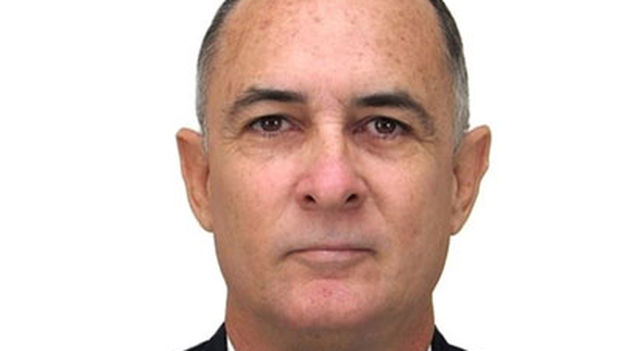
Journalist Roberto de Jesus Quinones

Roberto Jesus Quinones Haces was born in the city of Cienfuegos September 20, 1957. He is a law graduate. In 1999 he was unjustly and illegally sentenced to eight years’ incarceration and since then has been prohibited from practicing as a lawyer. He has published poetry collections “The Flight of the Deer” (1995, Editorial Oriente), “Written from Jail” (2001, Ediciones Vitral), “The Folds of Dawn,” (2008, Editorial Oriente), and “The Water of Life” (2008, Editorial El Mar y La Montana). He received the Vitral Grand Prize in Poetry in 2001 with his book “Written from Jail” as well as Mention and Special Recognition from the Nosside International Juried Competition in Poetry in 2006 and 2008, respectively. His poems appear in the 1994 UNEAC Anthology, in the 2006 Nosside Competition Anthology and in the selection of ten-line stanzas “This Jail of Pure Air” published by Waldo Gonzalez in 2009.

Translated by Mary Lou Keel
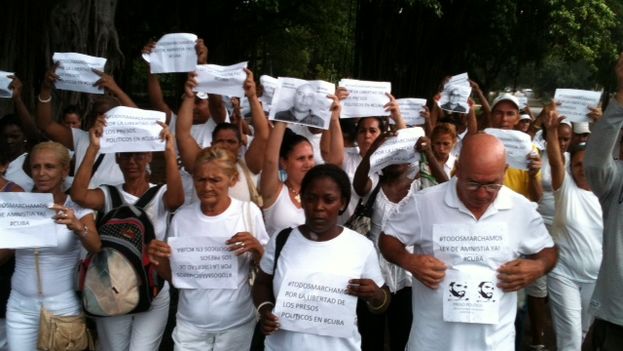
“They Want To Frighten Me and Other Independent Journalists” / 14ymedio

Journalist Roberto de Jesus Quinones

14ymedio, Havana, 7 October 2015 – The Cuban political police intend to prosecute lawyer and journalist Roberto de Jesus Quinones for a crime called “spreading false news about international peace,” according to what the independent journalist told this daily a few hours following his release after having been arrested October 5.

Monday a group of almost 20 people entered Quinones’ home in Guantanamo, presenting a search warrant that authorized the seizure of “means for subversive activities.”

The independent journalist was arrested, and they informed him that a file is being prepared where there appears a complaint against him based on the crime listed in the fifth section of Chapter III of the Penal Code, “Crimes against International Peace and Law.” continue reading

The rule stipulates that “whoever spreads false news for the purpose of damaging international peace or endangering the prestige or credit of the Cuban state or its good relations with another State, incurs a sentence of imprisonment of one to four years.”

“They told me that they are going to analyze any evidence they find in the confiscated objects: a laptop, a tablet, my cell phone, several books, my schedule, my phone book, the calendar where I write what I have to do, several documents and some 60 discs with films or installation programs, so that after they analyze their contents they will decide what course the process will take,” said Quinones.

As a lawyer, the reporter is also a member of the organization Corriente Agramontista. “They were always telling me to stop writing for Cubanet if I did not want to get into trouble,” he explains. “That makes me think that the basic point is to scare me and by extension other independent journalists,” he adds, although he says he has the impression that “the current political context is not favorable for them to imprison anyone for political reasons.”

According to Quinones, there is now in his neighborhood “a very unfavorable opinion towards the political police,” because he maintains that he has “a lot of prestige in the neighborhood, and the arrest operation was outrageously disproportionate.”

“What I have written and published is that I think that in any kind of negotiation, both sides must make concessions and that the United States has not demanded compliance on the part of Cuba with respect to rights and democracy,” he says regarding his opinions about the re-establishment of relations between the two countries.

Nevertheless, he explains: “Of course I cannot oppose the improvement of the condition of the Cuban people, but I believe that the United States, as a democratic power, cannot economically favor a Government that subjects its people the way the Cuban government does.” Because of opinions like that, “they tell me that I am systematically discrediting the Cuban government, and currently that works against foreign relations.”

In December 2006, Quinones finished a sentence of three years for falsifying documents in the process of buying and selling a home, although, in his opinion, the true cause was that he was practically the only lawyer in the province who dared to defend dissidents. After that time, he was no longer admitted to any collective firm, and they also discriminate against him in the Cuban Writers and Artists Union (UNEAC), an organization to which he belongs in his capacity as a writer and art critic.

He adds that on five occasions he has sought membership in a law firm, and they have not even answered him. Moreover, he says he recently told the president of the Writers Association that if he does not convene a meeting to explain the discrimination to which he is subjected, he will submit his resignation from UNEAC.

The journalist expresses strong determination: “I told my interrogators that I would continue writing for Cubanet. I cannot let them frighten me.”

Translated by Mary Lou Keel

“Wave of Political and Social Repression” in September, according to CCDHRN / 14ymedio

Ladies in White during their march this Sunday (Angela Moya)
Ladies in White during their march this Sunday (Angel Moya)

14ymedio bigger14ymedio, Havana, 5 October 2015 – This September there were at least 882 arbitrary arrests for political reasons, according to a report by the Cuban Commission on Human Rights and National Reconciliation (CCDHRN). The figure is the highest in the last 15 months, says the independent entity which also warns about an increase in “physical assaults against peaceful opponents by police agents and their collaborators.”

The cases of physical violence reported and verified y the CCDHRN reached 93, “while there were 21 in August.” The Commission, chaired by human rights activist Elizardo Sanchez, points out that “September did not lack many acts of harassment and vandalism, either.” These include “house arrests and extrajudicial bans on movement,” says the text of the report.

As “a true wave of political and social repression” there were “353 arrests of peaceful dissidents to prevent them from participating in massive gatherings” with Pope Francis.

The opposition sector was not the only one that suffered police raids, and the CCDHRN reiterates that “an undetermined number of beggars, panhandlers and other homeless people who seek alms on the streets or search for food or anything else in trash dumpsters were interned without judicial order.”

The case of the three from the Patriotic Union of Cuba (UNPACU) who “managed to breach the police cordon and approach Pope Francis” in Havana’s Revolution Plaza, is singled out with interest in the report. Zaqueo Baez, Maria Anon and Ismael Bonet “have been jailed for 15 days, under subhuman conditions, in the hands of the secret political police, without access to defense attorneys and without formal charges.” The CCDHRN “is prepared to propose that they be internationally adopted as possible Prisoners of Conscience.”

Translated by Mary Lou Keel

Raul Castro Tells UN that Human Rights Are ‘a Utopia’ / Diario de Cuba

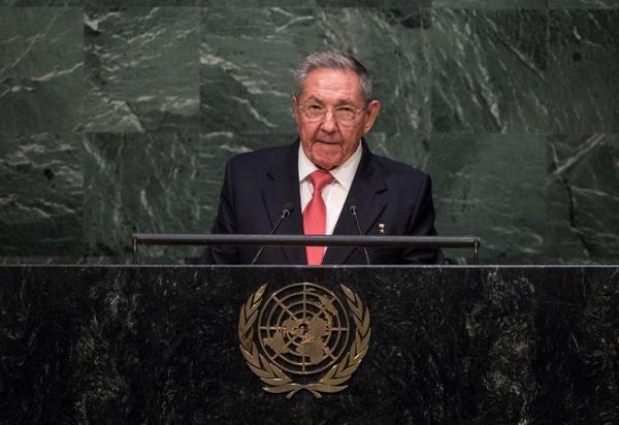
Raul Castro on Monday, September 28 at the UN General Assembly in New York (MINREX)

The general stands in defense of Latin American populist governments and criticizes democracies with parties “alien and distant from the aspirations of the people.”

diariodecubalogoDiariodeCuba.com, New York, 28 September 2015 – General Raul Castro affirmed this Monday, in his speech before the General Assembly of the UN, that the enjoyment of human rights is “a utopia,” and he criticized the fact that, according to him, “their promotion and protection is distorted.” “They are used as a selective and discriminatory way of imposing political decisions,” he remarked.

The ruler began his speech with reference to the “unacceptable militarization of cyberspace and information technology.” And he lamented that since the emergence of the fundamental charter of human rights, there have been “constant wars and interventions, forcible overthrows by government forces and soft coups.”

In this sense, he defended the freedom of countries to choose their own political, economic, social and cultural system, and he explicitly defended the governments of Nicolas Maduro and Rafael Correa, respectively. continue reading

The general asserted that the cause of the conflicts is found in “poverty,” originating, according to what he said, “in colonialism first and imperialism later.”

“The commitment assumed in 1945 to promote social progress and elevate the standard of living for people and their economic and social development is still a chimera,” he emphasized, pointing out that “795 million people suffer hunger, 781 million adults are illiterate, 17,000 children die every day of incurable illnesses, while military expenses are 1.7 trillion dollars worldwide.”

The ruler indicated that “with only a fraction of this amount they could solve the most pressing problems that afflict humanity.”

Castro also asserted that “even in industrialized countries social welfare states have practically disappeared” and added that “the electoral systems and parties depend on money and publicity.” They are, he said, “increasingly alien and distant from the aspirations of the people.”

Part of his address focused also on warning of the ravages of climate change and particularly the serious consequences for “small island nations.”

Castro also spoke of migration problems without reference to the Cuban problem. Instead, he appealed to the European Union to “assume its responsibilities” in the current humanitarian crisis “that it helped to create.”

As on previous occasions, Castro reminded us that the normalization of relations between the United States and Cuba will be completed with the end of the embargo, the end of broadcasts by Radio and Television Marti, the return of the Guantanamo naval base, and reparations for damages caused to the Cuban people by sanctions. He also asked for the end to “subversion” programs directed at promoting changes on the Island.

Translated by Mary Lou Keel
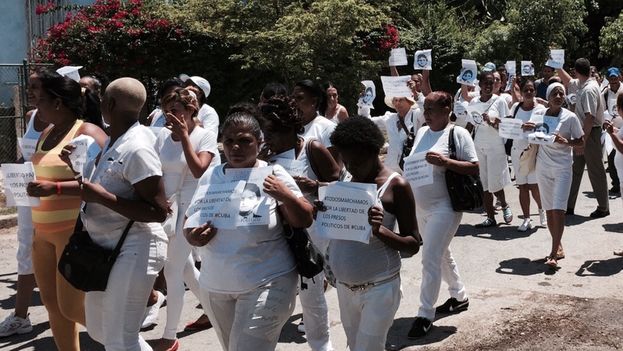
Repression of Science

Oscar Antonio Casanella Saint-Blancard, bio-chemist, researcher for the National Institute for Oncology and Radiobiology, speaks of how he is pressured and prevented from fully carrying out his work because of his friendship with dissidents.
Oscar Antonio Casanella Saint-Blancard

Oscar Antonio Casanella Saint-Blancard, bio-chemist, researcher for the National Institute for Oncology and Radiobiology, speaks of how he is pressured and prevented from fully carrying out his work because of his friendship with dissidents.

diariodecubalogoDiariodeCuba.com, Waldo Fernandez Cuenca, Havana, 25 September 2015 — It all started because of a party for his best friend, Ciro Diaz, at the end of 2013. Ciro Diaz, besides being a graduate in Mathematics from the University of Havana, has just one remarkable characteristic: He is a dissident and member of the band Porno for Ricardo. Soon came the threats from State Security to make him a prisoner if he engaged in the activity.

Then came the accusations at work of his being “mercenary” and “annexationist*.” But at no time was this young man, a bio-chemist by profession, intimidated, and he resisted the wishes of his oppressors. Oscar Antonio Casanella Saint-Blancard has kept his ties of friendship with Ciro and other opposition figures.

Casanella made his case known to the independent project Estado de Sats and was also arrested during the wave of repression unleashed by the performance by activist and artist Tania Bruguera at the end of last year. Since that time his harassment by State Security has continued, principally at his place of employment: The National Institute for Oncology and Radio-biology (INOR) where he serves as a researcher. continue reading

We talked about his current work situation and the plight of the Cuban health system. In spite of the difficulties he has lived through, Oscar has never lost his smile, and he maintains the same composure as always, which has lead to his repressors to try to corner him.

What situation are you in right now?

Right now I am subjected to psychological warfare in the workplace. Not just me, but also my co-workers, and it hurts me more for them than for myself because I have already overcome my fear, but my colleagues have not.

What does the psychological warfare consist of?

The doctor and deputy director of research for INOR, Lorenzo Anasagasti Angulo, has been pressuring and coercing my co-workers, above all the laboratory managers, to not let me into the various labs of the Center. He explains that there is a labor rule that says that access to these places is restricted, and that is true, but it only applies in my case, because the other researchers enter and exit the various labs without any restriction, while my access is impeded. I think I am treated very differently and discriminated against.

That is not the only thing that has happened to you…

Before this, in June of this year, I prepared a course on Bio-computing for students at the University of Havana and researchers from the INOR, and after my immediate boss had approved it, even though teaching personnel had reserved a hall for me to teach the classes, when this was all coordinated with the Biology Faculty so that students of that school could receive this training, this gentleman, Lorenzo Anasagasti Angulo, did not give me the authorization to teach the class.

But it did not stop there, he also coerced many employees of the Oncology Institute to not attend the course, and he has told them on more than one occasion not to talk to me. All these actions were not enough for him, and he told me: “Oscar, get this into your head; I am going to make sure that you have no future in this institution and I am going to make everything as difficult for you as I can.”

This gentleman, together with a member of the Communist Party from the Pedro Fernandez Cabezas Institute, has threatened to expel me from the Center just because of my ties with opposition figures. Also, Anasagasti has pressured my colleagues to deliver the copy of the lawsuit and letter that I sent to Raul Castro where I reveal the articles and laws so violated by the State Security officers, agents of the PNR and members of the PCC and where I demand the President of the country leave me in peace.

The deputy director asked my colleagues to destroy all this documentation and said that it was “enemy propaganda.” So, to demand adherence to Cubans laws is, according to Doctor Anasagasti, “enemy propaganda.”

As if that were not enough, just a month ago Lorenzo Anasagasti appeared with two State Security officers at the home of Doctor Carlos Vazquez, head of the Board of the Oncological Tumor Devices, in order to sound him out and tell him in a threatening tone: “We’re checking up on you.”

Lorenzo Anasagasti is a collaborator with the repressors, which makes him another repressor who occupies a job at the Institute of Health which has nothing to do with these issues. This is a person in service to the Cuban political police and for him that function is more important than the professional development and education of the INOR. This gentleman has demonstrated that he prefers no thesis be carried out if I participate in the statistical analysis of an academic project in the Institute.

I also am a Molecular Biology teacher for a module that is taught to doctors who are specializing in Oncology, and I have to interact with a person who coordinates that course, but Anasagasti has demanded that person prohibit me from accessing his laboratory and pressured him to not even talk to me. In this way the interaction between researchers and workers, so necessary to offering high quality training for the country’s future oncologists, is made more difficult. The development and quality of teaching are sacrificed for the sake of repression.

Some foreign mission doctors are familiar with the dispossession of their fees by the Cuban government, and they justify it on the grounds that the country invests that money primarily in oncology resources. What is your opinion of this matter? Do you believe that is really so?

It is true that cancer treatments are expensive anywhere in the world and that, for being an underdeveloped country, the country’s situation is not one of the worst. But really the duties that the doctors, researchers, nurses and service personnel perform does not correspond at all with the wages that they earn and the conditions under which they work.

Currently the volume of patients seen in Cuba by a single doctor is abusive. It is a situation that affects the doctor as well as the cancer patient, who has to wait long hours to be seen, and now the quality of the attention and treatment is not the same. This is mainly due to a stampede, a very big exodus of professionals to the outside, and this causes a work overload for those who remain, although those from the INOR who emigrate the most are the recent graduates, not doctors, who barely stay two years between their graduation and their exit abroad.

I worked some years ago on research about brain tumors and, of the specialists who carried out the research with me, all left the country. There was one point when INOR had no neurosurgeons or neurologists. Another interesting element is that when I started to work at the Institute in 2004, there was free internet access for all researchers, and the situation, 11 years later, is very different. In my department I do not have access to the internet, and I work in Bio-computing. They have restricted access to the internet only for department and laboratory heads, but there is less access than there was 11 years ago.

In spite of the promises that the Government has made to doctors about economic improvements like better wages, the chance to buy a car, a laptop, etc., several of the doctors at my workplace are very pessimistic, because they listened to the words of Chancellor Bruno Rodriguez Parrilla at the press conference about the embargo on September 16, which confirmed that Cuba was not going to change its internal politics. “Maybe I improve my life, but my relatives who are not doctors are going to continue with the same deprivations,” one of them told me. That’s why they have decided to abandon the country at the first opportunity that is presented.

*Translator’s note: An “annexationist” is someone who advocates Cuba becoming a part of the United States.

Translated by Mary Lou Keel

Education Launches a New Offensive against the “Weekly Packet” / 14ymedio, Orlando Palma

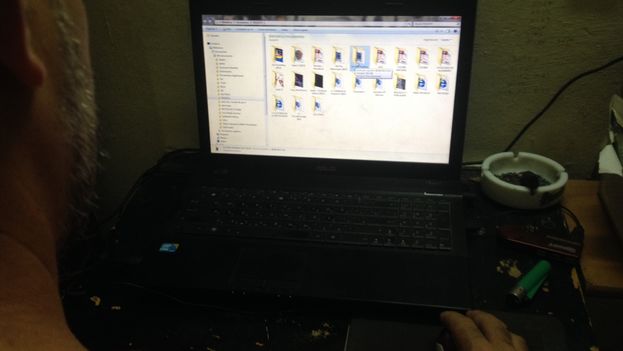
A Cuban accessing the “Weekly Packet” from his laptop at home (14ymedio)

14ymedio bigger14ymedio, Orlando Palma, Havana, 25 September 2015 – Under the name To Educate Yourself, the Ministry of Education announced Thursday a collection of documentaries, films and music that it will begin distributing monthly in its learning facilities during the current academic year. In open competition with the illegal weekly packet of audio-visual material, this official rival seeks to establish itself as “an attractive offering of Cuban education” through content of “good taste.”

The compendium is aimed at those among whom the weekly packet is a hit. The majority of Cuban children and teens frequently watch cartoons, video clips, series and films that are distributed on the black market. In order to compete with those materials, the Ministry announces that its offering has “a search engine so that the user is not lost searching among more than a terabyte of data.” continue reading

The new product will include courses and tutorials for the self-study of foreign languages, computation, agriculture, and masonry, as Barreto detailed. Some materials will be accompanied by animated graphics and a tool to display video, text and photos at the same time, reported the official.

However, the official announcement did not address how copyrights will be managed on To Educate Yourself. Cuban television and national media frequently overlook payment for rights to films, concerts and musical recordings, especially those coming from the United States, which are the majority.

Divided into folders, like its rival alternative, the file will contain a section called Learn to Look with “expert commentaries and interesting facts so that the young form critical judgment about what they are watching,” Barreto specified.

The Cinesoft manager added that a second packet aimed at teachers and entitled The Teaching Library will also be distributed every fifteen days and will consist of books, articles and theses.

Given the serious material problems which plague labs in many of the country’s learning centers, To Educate Yourself will include a collection of virtual labs for Physics, Chemistry and Biology so that “when [the students] truly perform the exercise, there will be less risk that they will break some implement or spill a substance.”

This is not the first time that the government has tried to compete with the weekly packet. Distribution in Youth Clubs of the Backpack, a collection of audio-visual materials, began in August 2014; so far it has had a poor popular reception.

Translated by Mary Lou Keel
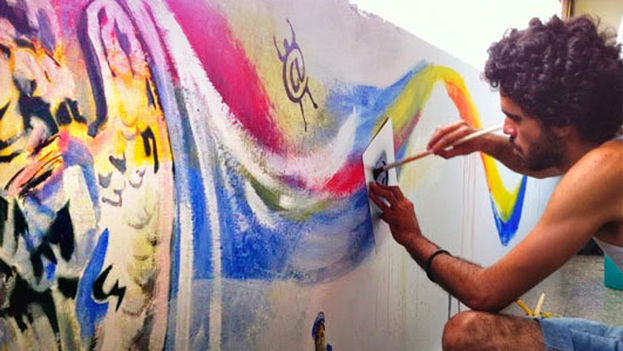
3,522 Pardoned in order to Cover Up Cuba’s Sad Reality / 14ymedio, Marlene Azor Hernandez

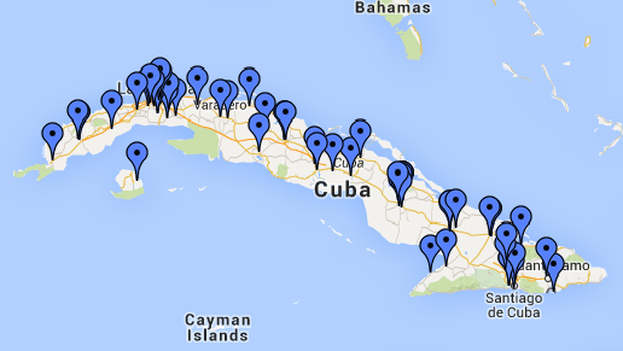
Map of prisons in Cuba drawn up by the Cuban Human Rights Observatory

14ymedio, Marlene Azor Hernandez, Mexico City, 18 September 2015 – The pardon of 3,522 ordinary prisoners in Cuba is excellent news, above all for their relatives. At the beginning of July something similar occurred when the Pope visited Bolivia, Ecuador and Paraguay. In the first two countries, the governments also took the measure with respect to the incarcerated, but it was not of this breadth. In Ecuador 24 inmates benefitted from the measure; in Bolivia there were no pardons, but hundreds of the more than 5,000 prisoners in the most populous jail in the country, Palmasola, would finally be sentenced and be visited by the Pope in his tour of the country.

Ecuador has more than 16 million residents, a penal population of 21,000 prisoners and 24 penitentiaries. In Cuba, for a population of 11 million residents, there are at least 200 jails, and the penal population is estimated at 70,000 prisoners. It seems that the elevated number of pardons is due also to prison overcrowding on the Island. continue reading

The Cuban government has staged “a positive coup” in international politics, above all with respect to those countries and institutions that need gestures from Havana in order to be able to give it their support. For a curious observer, the pardon figures raise other questions in the wake of the announcement.

In Bolivia, Ecuador and Paraguay, there are no political prisoners because public demonstrations in the street and freedom of association, movement and expression are guaranteed. That is not the case in Cuba where the dissenters suffer long jail sentences, beatings, and moral stonings on Cuban television.

The Cuban Penal Code, like that of the Soviets in the 1930’s and perhaps the North Korean one, punishes “illegal” exit from the country, contempt (resisting warrantless arrest) and the so-called “pre-criminal dangerousness,” that aberrant legal concept that is applied to crimes not yet committed. The gag law also remains in effect (Ley 88) which penalizes the mere fact of speaking against the government or publishing in the international press (as happened in the Black Spring of 2003 when 75 people were sentenced to 20 and 25 years in prison). None of these criminal laws exist in Bolivia, Paraguay or Ecuador, although censorship of the non-government press does exist.

In the Cuba that Pope Francis will visit there are today some 60 political prisoners according to the Cuban Commission on National Human Rights and Reconciliation (CCDHRN), and civic and political activism is prohibited. The pardon of the 3,522 prisoners will try to cover up this sad reality.

Translated by Mary Lou Keel
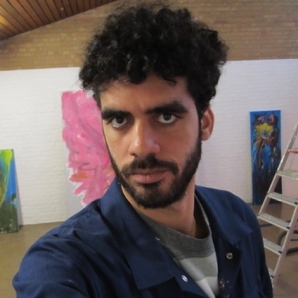
“El Sexto,” on a Hunger Strike and in a Punishment Cell / Cubanet, Camilo Ernesto Olivera

Maria Victoria , “El Sexto’s” mother (photo by the author)

The artist’s mother denounces her son’s treatment

Cubanet.org, Camilo Ernesto Olivera Peidro, Havana, 17 September 2015 – Danilo Maldonado, “El Sexto,” is being held in a punishment cell, and his hunger strike continues. His mother, Maria Victoria Machado, managed to visit him on Wednesday afternoon in the Valle Grande Prison, located on the outskirts of the Cuban capital.

During these days when the temperatures in Havana get very high, “the jailers give him water only twice a day,” said Maria Victoria to Cubanet. The artist’s mother says that “eight days after the beginning of the hunger strike, Danilo has spent four in the punishment cell. They hold him incommunicado wearing only underwear. He has refused to put on the prisoner clothing.”

“I have no reason to put it on because I have no reason to be a prisoner,” responded Danilo to the officer who informed him that he had to wear the uniform, according to Maria Victoria’s account.

On Tuesday afternoon, two State Security officers visited her. Their objective was to convince Maldonado, using her, to abandon his strike. Maria Victoria’s answer was that “she supports her son and stands firmly by him.”

The agents told her “that he just played into the hands of ‘the enemy’.” But Machado told them that “those whom you label that way, they are the only ones who have helped me in all this time that my son has been a prisoner.”

According to Maria Victoria, her son told her that the hunger strike is “to the end.” He said that he is prepared physically and mentally to sustain it until they give him “an immediate release, because the only other option is death.”

The performance and graffiti artist Danilo Maldonado Machado, “El Sexto,” has been a prisoner since last December 25. Police arrested him that day when he was headed to Havana’s Central Park. He was carrying two pigs with the names Fidel and Raul painted on them. His intention was to release them in that central location as part of a performance entitled “Animal Farm.”

His case file was “lost,” according to the prosecution. However, they notified his mother three days ago that the document had been “recovered.”

They accuse Danilo of the supposed crime of “contempt” against public figures of State power.

Translated by Mary Lou Keel

Twelve Cubans Arrive on Miami Beach by Boat / 14ymedio

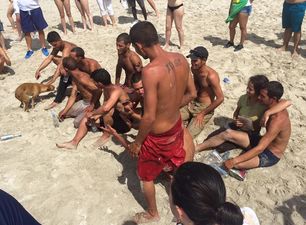
14ymedio bigger14ymedio, Miami Beach, 15 September 2015 – Twelve Cubans from Caibarien, Villa Clara, arrived in Miami Beach on a rustic boat this Tuesday a little before noon, after spending six days on the high sea, two of them in a storm.

The group of 11 men, one woman – all young – and a dog named Chiquita, arrived in a tourist area near the Ritz-Carlton Hotel, a few blocks from Lincoln Road. Tourists and residents of the area congregated on the arrival of the boaters in order to offer them clothes, water, food and money. “We hear on the news that things in Cuba are improving, but this really shook me to see Cubans still escape from the country via the sea. There is something wrong in that,” said a European tourist to a 14ymedio contributor who arrived at the scene.

Tourists and area residents helped the 12 Cuban rafters who arrived today in Miami Beach. (Oscar Alfonso)

Oscar Alfonso, a lifesaver for the City of Miami Beach, said that on stepping foot on American soil they all “started to hug and kiss the ground.” One of the rafters had spent 56 days in jail in the Bahamas after having been intercepted by that country’s coastguard. A few days ago he returned to Cuba and when he arrived in Caibarien he decided to once again launch himself on the sea with his friends.

Another of the rafters had tried to cross the Straits of Florida 20 times and on this journey he managed to make it. The group spent three days without food and the last two days, adrift, they had given themselves up for lost.

Alfonso, who was working at his post on the beach when the rafters arrived, said that one of them told him it was “the most exciting experience of my entire life,” and added, “there are things that happen to you, it’s incredible the desperation a person has to have to cross the sea.”

They landed singing Willy Chirino’s iconic song Ya viene llegando (Our Day is Coming) and an American gave them an American flag, which they waved.

A resident of Miami Beach decided to take the boat home to preserve the history of Cuban rafters.(14ymedio)

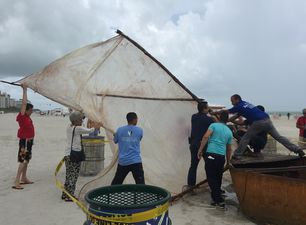
The boat – with a nylon sail and mast made from a guayaba tree – on which the Cubans arrived was moved by local police from the shore to the sand near the walkway. Betty Ortega, a Cuban resident of this city, was on the scene when the boaters arrived and told the police to leave the raft. “I told them that they could not take it because this is part of our history,” she said to this newspaper.

The police granted her request and gave her four hours to get the boat off the beach. Ortega will take it home; she still does not know what she will do with it, but she wants to make sure that this part of Cuban history “is told to the world.”

Since October 2015, 31,000 migrants have arrived in the United States, 30% more than the year before, according to figures from the Office of Customs and Border Patrol (CBP).

Translated by Mary Lou Keel


The Ladies in White Live through Another Day of Repression / 14ymedio

The Ladies in White march through the streets of Havana Sunday (14ymedio)

14ymedio bigger14ymedio.com, Havana, 13 September 2015 – This Sunday, 42 Ladies in White, accompanied by 21 activists from different political groups, walked down Havana’s Fifth Avenue, in the Miramar neighborhood. Finishing their usual route and subsequent meeting in Gandhi Park, next to Santa Rita Parish, the group was arrested by police and other plain-clothes forces, according to reports to 14ymedio by several eyewitnesses.

Together with the women from the human rights movement were other opposition figures such as Jose Daniel Ferrer, leader of the Patriotic Union of Cuba (UNPACU) and Antonio Gonzalez Rodiles from the opposition group Estado de Sats. The current whereabouts of those arrested is unknown, and their cell phones give the message “turned off or out of area.” However, the leader of UNPACU, Jose Daniel Ferrer, has been set free.

The Ladies in White had carried several banners demanding amnesty for political prisoners. A demand that has been the focus of attention for several opposition groups and that has gained strength before the upcoming visit by Pope Francis to the Island.

This week the Cuban government announced the pardon of 3,522 prisoners on the occasion of the Pontiff’s arrival in Cuba. Nevertheless, the opposition has criticized the fact that the list of pardoned prisoners does not include activists jailed for political reasons.

Elizardo Sanchez, who heads the National Human Rights and Reconciliation Commission, said in an interview with EFE that there are at least 60 people imprisoned “for political reasons or through politically conditioned proceedings.”

Translated by Mary Lou Keel

A Cuban and His Idea of Success / Cubanet, Iris Lourdes Gomez

IMG_8559

Cubanet.org, Iris Lourdes Gomez Garcia, 4 September 2015 – Felipe promised himself that this was going to be his year. He was tired of the buses, after so many years of heat, lines, bad smells, pickpockets and arguments, it was time to do something.

Since he could not aspire to anything else, he began by buying a bicycle. The simplest, the cheapest. Although he arrived everywhere in a sweat, it did not matter, because he had left behind everything described in the foregoing paragraph. Now he only depended on himself, his health and his strength.

After some time, he thought again that it was time to improve; after all – according to him – the success of a man is measured by his means of transportation. In due time, he could aspire to the greatest: a Mercedes Benz or a special Audi, but to get to that point, he would have to go step by step. continue reading

As his next step he decided to put a motor on the bicycle in order to avoid pedaling and sweating and to increase speed. They sold him one, with papers and everything, which had belonged to exterminators but which had been dropped from the center to which it had belonged. Cautiously, he asked several “ponies” (traffic cops) if that motor had problems, and after several negative replies from the officers, he bought it.

Once the motor was in place, the bike became a “riquimbili” which is what bicycles are called when they are propelled by gasoline. The transit police stopped him several times, and that was how he found out that there is a police unit, located at 21 and C in Vedado, that specialized in riguimbilis. He found out that in order to avoid pedaling he should have bought a motor whose papers expressly said “bicycle motor” because otherwise they took one and then another from him, and eventually they fined him. He also found out in the same police unit that there was a complaint against him by someone on his own block who was bothered by the sound of his means of transportation when he came and went.

From all that he learned about the transportation laws, buying and informers, what worried him most was the complaint the neighbor lodged against him because he was only beginning his road to success and for the moment the only thing he had achieved in life was transportation without sweat, without fighting with anyone, without having his pocket picked or smelling other people’s bad odors.

His worry was turning into horror because, if his neighbors out of envy complained to the police about him because of an old bicycle and crappy motor, stinky and loud, what would happen when he had a Peugeot or any useful car? Maybe these neighbors were capable even of hiring someone to damage it in some way: puncturing the tires, scratching the paint, implicating him in an accident. If they would file a complaint on him because of a riquimbili, then they would kill him when he had his Audi.

Felipe decided that it was not worth losing his life for a job in which they pay very little, and he resigned himself to continue – as he had done since he was born – transporting himself in the way that he was most familiar and that no one envies: the buses.

Translated by Mary Lou Keel

El Sexto Confirms from Jail His Hunger Strike / 14ymedio

Danilo Maldonado, known as El Sexto (The Sixth)

14ymedio, Havana, 27 August 2015 – In a telephone call this Thursday, artist Danilo Maldonado, El Sexto, confirmed that he is on a hunger strike. From the Valle Grande prison he also referred to his mother, Maria Victoria Machado, whom a State Security agent had told of his “speedy release.” The graffiti artist has made the announcement cautiously because it is not the first time that “they have tricked him with something like this,” Machado told this daily.

On August 24, El Sexto’s family waited outside the prison for hours for his release. Days before, an official from State Security had reported that date as the one on which he would be liberated. However, the prison authorities denied that “an order or paper allowing him to leave” had arrived. The graffiti artist advised that he would declare himself on hunger strike, although until today his situation could not be confirmed.

Wednesday at the Office of Attention to the Valle Grande Jail Population, Machado was assisted by an official who assured her that no one in the penitentiary center was on hunger strike. However, on exiting, relatives of other prisoners advised her that her son together with other prisoners had begun a fast.

El Sexto recently received the International Vaclav Havel 2015 Prize for creative dissidence, awarded in a ceremony organized under the framework of the Oslo Freedom Forum which he could not attend because he was in prison.

The artist has been imprisoned since last December on a charge of contempt for having tried to carry out a performance with two pigs painted with the names of “Fidel” and “Raul.” Eight months after his arrest he has not been taken before a court.

Translated by Mary Lou Keel

Graffiti Artist El Sexto Declares a Hunger Strike after Eight Months in Prison / Diario de Cuba

Graffiti artist El Sexto (Danilo Malodonado) (VOICE PROJECT)
Graffiti artist El Sexto (Danilo Maldonado) (VOICE PROJECT)

DiariodeCuba.com, Havana, 25 August 2015 – Graffiti artist Danilo Maldonado, El Sexto, declared a hunger strike Tuesday, according to his mother, Maria Victoria Machado, in statements taken by Radio Marti. As of August 25 he will have spent eight months in custody following his arrest and incarceration in the Valle Grande prison for the rebellious performance with the two pigs named Fidel and Raul.

In recent weeks, State Security had told the graffiti artist that he would leave jail on August 24, news that the jail authorities themselves denied Monday under pressure by relatives who appeared at the penitentiary center to seek explanations.

This Tuesday the Human Rights Foundation (HRF), which has awarded a prize to the graffiti artist for his artistic fight in favor of human rights, demanded his liberation.

“El Sexto is a prisoner for satirizing a family dynasty that for 57 years has arrogated to itself absolute power in Cuba, without holding a single democratic election and repressing any critical expression no matter how inoffensive it might be,” said the president of the HRF, Thor Halvorssen.

“Like the inhabitants of the farm [Animal Farm], in Cuba, artists like Danilo Maldonado, Tania Bruguera and Gorki Aguila, are systematically punished for refusing to live under the capricious tenets of a totalitarian regime lacking any sense of humor and repressing even the least manifestation of liberty,” Halvorssen said.

Translator’s note: Danilo is being held in pre-trial detention, he has not been tried.

Translated by Mary Lou Keel

Gangs in Havana, Crime Gains Ground / Cubanet, Ernesto Perez Chang

A member of the gang Blood for Pain shows us the marks used to identify the group (photo by the author)

The landscape could become very similar to those found in Central American countries where the issue is out of control

cubanet square logoCubanet.org, Ernesto Perez Chang, Havana 20 August 2015 – Hector arrived in Havana at the end of 2005. He was only 15 years old when he had to confront a city where its residents’ greatest ease came from knowing how to survive amid so much uncertainty. Today he is 25 years old, and he knows no way of subsisting other than prostitution, pimping and gangs.

Hector was living in Niquero, Granma Province, when bad luck invaded his home: his father died in a domestic accident while he was trying to re-fill a gas cylinder for cooking. A couple of years later, his mother got sick with cancer, and he had to leave high school in order to go to work on the farm of his paternal uncle who, besides paying him very little, abused him sexually and even forced him to prostitute himself.

Although he was only 12, his uncle took him almost every night to the home of a friend who paid 100 pesos [four dollars] in order to rape the little boy who, with time, came to accept that the world was that evil atmosphere that surrounded him and from which he could not escape but could only adapt in order to survive.

“Here you have to survive in whatever way,” says Hector. He has only agreed to speak with me about his life because he was asked by a mutual friend who is none other than the doctor to whom he has always gone in emergency situations. “He is the only guy for whom I give my life. The only one who has helped me without any self-interest since I came to Havana at age 15.” continue reading

Hector was a boy when he entered the world of prostitution and gangs. Today he has HIV (photo by the author)

Hector has HIV (Human Immunodeficiency Virus). They found the virus a couple of years ago when he was hospitalized due to gunshot wounds he received in a confrontation with other gang members from the Mantilla neighborhood in Arroyo Naranjo.

“Back then I was not in the gang [referring to the Diamond Gang which mainly operated in the areas surrounding Brotherhood Park and Monte Street up to the Train Terminal] but my cousin was. He had about ten transvestites who worked for him, but one was connected to a pinguerito [a man who lives from male prostitution] from Mantilla who was in the Blood for Pain [gang], because they are all queers there. (…) One day Lanier [the cousin] tells me that there is a party in Mantilla, and I go with him. I did not know that we could not enter Mantilla, and that is why I went, and we just went into the house and all hell broke loose. (…) They shot at Lanier and me, I took a shot in this leg and another in the back which almost left me crippled.”

According to Maria del Carmen Cordero, a sociologist participating in a study of the subject, although they tend to disband after a short time, five to ten new gangs emerge every year in Havana, made up mainly of adolescents who live in the poorest areas of the capital. An increase is also noted in the gangs composed of youth from the eastern provinces – especially from Granma (almost 40 percent of the youth) and Guantanamo (almost 30 percent) – who cannot aspire to a legal status in the city due to migratory laws that prosecute them as criminals.

“You have to keep in mind that, although some even have initiation rites and identity marks like specific tattoos, the gangs function as a kind of syndicate where the members get protection,” says Maria del Carmen who also explains what the protection consists of: “I have gathered statements from young people who say they have bribed police to let them operate in a certain area. (…) I don’t mean to say that there is a direct relationship with the policing institution, I don’t believe that exists as such, but that there are established relationships of compromise with the officers who usually patrol the streets.

“Those who walk around Brotherhood Park or Rampa by night – well, if they dare to do it – can identify the presence of gangs who control male prostitution and of transvestites, I have even seen transactions carried out, sex deals, in front of officers, and nothing has happened, which is a sign not of tolerance but of corruption. (…) If the boy, the girl, don’t join that syndicate, work becomes very difficult, getting shelter, connections. (…) Remember that they gather them up in trucks and deport them. Just like the dogcatcher with animals. It is a crime to be from eastern Cuba and spend more than the set time in Havana. Those regulations have created other phenomena related to regionalism, racism, the establishment of social hierarchies among Cubans themselves and have increased these ‘syndicates’ which is what the gangs are.”

Although black, Adrian uses the swastika to identify himself with his group (photo by the author)

Adrian, from Ciego de Avila, is 31 and for more than five years was tied to the Blood for Pain gang where he admits he committed several violent crimes but only under the influence of alcohol and drugs:

“There is a story about Blood for Pain. It is true that sometimes we told some new member to bug [wound with a knife] someone, whoever they wanted, but we did that for screwing around, you would start drinking, smoking a cigarette, and then see some wretch going by and we made the night with him. It’s not like people say, as if we were some criminals. (…) It is true that there were those who snatched a tourist’s wallet or camera, a gold chain, but that does not mean that it was the gang. What is always abnormal they want to say is by Blood for Pain. What is true about us is the transvestites and because they like that. Having the male that controls them, and I like that, to each his own.”

When Adrian was in jail, he broke ties with Blood for Pain to join a gang called The Angels, connected with drug dealing, pimping and male prostitution and which uses the swastika as an identifying mark although they say they do not agree with Nazi ideology. One curious detail is that some of its members are black, like Adrian himself who does not hide his racist thoughts:

“I am black, that is true, but I never hang out with blacks. I don’t know, but I have never liked hanging out with blacks. (…) The tattoo does not mean anything. I liked it, and I made it. So do those I hang out with. (…) I know what the Nazis did, but me putting that on myself does not mean I am like that. (..) I am not homosexual, but I like transvestites, and that is another thing, a transvestite is a woman.”

Although regional statistics do not classify Havana among the most violent cities in Latin America and the Caribbean, in recent years an increase in criminality associated with gangs has been noted. Psychologist Manuel Fabian Orta, who leads a group that assists adolescents with behavioral disorders, recognizes that the phenomenon could be on the rise and that, as a consequence, the landscape could become very similar to that of some Central American countries where the issue is out of control:

“The violence associated with criminal gangs is increasing and at a worrying pace. If something is not done soon, it will be like in El Salvador or Guatemala. That is what poverty brings. There is too much poverty. Spiritual and material. Family, social values, they have cracked, and a new mentality has emerged, a real “New Man” who does not believe in any value except money. Everything is fair game for getting it, and Cuban society, far from becoming a society with high values, as was supposedly the plan of the Revolution, turned into a boxing ring where one can only resist, fight, win, but in the worst sense of those words.

“Selling his body is not a problem for this “New Man,” losing his nationality is not either, and let’s not speak to them about national or cultural identity or of working for the future because they would understand nothing. The typical Cuban, the common man, only knows the present, the rest, as the young people themselves say, is ‘being dizzy’ (not being clever).”

The New Man: Group of medical students playing dice (photo by the author)
Criminal organizations, mainly made up of adolescents who fight as they can to survive, proliferate in the poorest neighborhoods (photo by the author)
Police asking for identification in Central Park. If they are illegal easterners, they are immediately deported (photo by the author)

EPC448.thumbnail (1)

Read here about the author: Ernest Perez Chang 

Translated by Mary Lou Keel

Arrested: 90 dissidents and Ladies in White Who Protested in Obama Masks / Diario de Cuba

Activists and Ladies in White in Gandhi Park. Havana, 9 August 2015. (AFP)

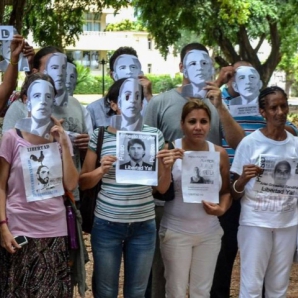
DiariodeCuba.com, Havana, 9 August 2015 – Some 60 Ladies in White and 30 human rights activists were arrested this Sunday in Havana where they protested while wearing masks with the image of United States President Barack Obama and carrying photos of political prisoners.

The Obama masks signaled the participating activists’ rejection of the Washington-Havana rapprochement, reported the AFP agency.

The report said that uniformed and plainclothes officers, accompanied by squads of official governmental protesters who were shouting, “down with the worms,” surrounded the dissidents and arrested them at about 14:00 hours (local time) when they were preparing to withdraw to their homes after the traditional Sunday march by the Ladies in White. continue reading

Obama “is to blame for what is happening (in Cuba), the Cuban government has been emboldened by the negotiations” with Washington, declared former political prisoner Angel Moya in front of the other activists on the plaza located across from the Santa Rita Church, where the Ladies in White customarily go on Sundays.

“That’s why we have this mask, because of his guilt,” added Moya, member of the Group of 75 and husband of Ladies in White leader, Berta Soler.

Obama must “put conditions on the Cuban government to stop the human rights violations,” Soler declared to the AFP.

“Really for us it would be very important if, when (US secretary of State John Kerry) arrived in Cuba on his trip for the official inauguration of the United States embassy, he were able to meet with some representation from (Cuban) civil society,” said Soler.

The opponents were aware that they would be arrested at the end of their meeting, and Moya recommended to the other activists that they offer no resistance, the AFP reported.
This is the seventeenth consecutive Sunday of repression against the Ladies in White and the activists who accompany them.

According to a Twitter report by activist Ailer Gonzalez, of the independent project Estado de Sats, accompanying the members of the women’s group were, among others, the grandmother of graffiti artist Danilo Maldonado (El Sexto), who has been in prison since last December without having been brought to trial; paroled writer Angel Santiesteban, artist Tania Bruguera, musician Gorki Aguila and photographer Claudio Fuentes.

Also there were activists Antonio Rodiles, Boris Gonzalez Arenas, Lia Villares, Egberto Escobedo and Camilo Ernesto Olivera.

From Gandhi Park, before the repressive operation, Gonzalez Arenas told DIARIO DE CUBA that 12 dissidents and Ladies in White were intercepted before arriving at Santa Rita Church.

Meibol Maria Sanchez Mujica, mother of prisoner Enmanuel Abreu Sanchez, who has been on a hunger strike for 88 days in a quest to regain his freedom, attended this Sunday’s activities of the Ladies in White.
Abreu Sanchez was sentenced to 12 years after an attempted illegal departure. He was accused of human trafficking, a crime he says he did not commit. Currently he is committed to the National Hospital.
As of this writing, the activists are beginning to be released.

Translated by Mary Lou Keel