This Wednesday a shortfall of 2,341 megawatts was reached – unprecedented, discounting total system collapses
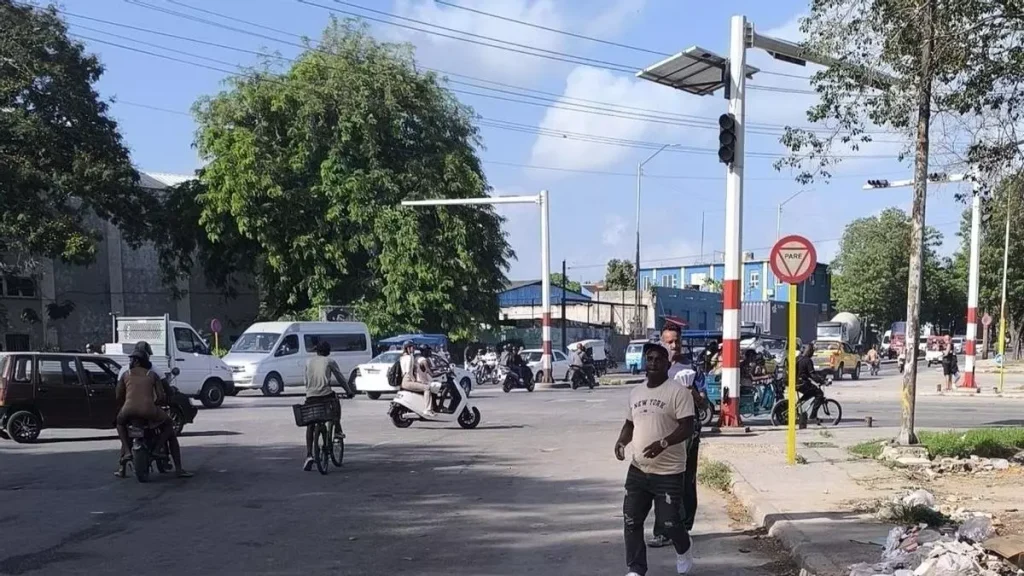
 14ymedio, Havana, July 9, 2026 / Three days after the most recent collapse of the national electrical system (SEN), it is barely noticeable that it is now connected. The continuous power cuts are announcement enough for Cubans, but they also have the authorities’ report: this Wednesday marked a new record deficit – discounting total system collapses – far surpassing the forecast.
For a peak demand of 3,100 megawatts (MW), a shortfall of 2,341 MW was recorded at 8:20 pm, “a figure higher than planned due to the failure of scheduled units to come online,” the Cuban Electric Union (Unión Eléctrica de Cuba) explains this Thursday in its daily report. This meant the absence of more than three quarters of the energy the country needed (75.5%).
Thursday’s forecast is not much better: as much as 2,260 megawatts (MW) will be missing out of the 3,200 MW that peak demand will reach, during the afternoon-evening peak hours. This will mean a shortfall affecting 71% of the entire country.
The day, in fact, has already begun dark – never more fitting a description: at six in the morning, availability was barely 880 MW against a demand of 2,730 MW.
No fewer than 11 of the 16 units the island has spread across various thermoelectric plants are shut down, whether due to breakdown or maintenance
No fewer than 11 of the 16 units the island has spread across various thermoelectric plants are shut down, whether due to breakdown or maintenance. This includes the country’s most important plant, the Antonio Guiteras thermoelectric plant (CTE) in Matanzas, and the most important ones in the east, the Felton plant in Holguín and the Renté plant in Santiago de Cuba.
If for ordinary Cubans these numbers have one translation – blackouts – for the regime they have another: possible protests. This is no small matter, with just two days remaining until the fifth anniversary of July 11, 2021. In recent days, as the energy crisis has worsened, demonstrations have multiplied.
14ymedio witnessed one of the most recent of these, this Wednesday and in broad daylight. Dozens of residents of the Havana municipality of Regla, exhausted not only by the lack of electricity but also of water, demanded answers outside the headquarters of the municipal Government and Party. Under an intense sun, this newspaper observed women with children, elderly people, men in flip-flops, mopeds, tricycles, a patrol of the Operational Guard of the Police, and several uniformed officers attempting to contain the tension.
Just yesterday the capital woke up bearing the marks of several other protests. At the corner of Belascoaín and Ánimas, in Centro Habana, ashes, stones, pieces of wood, charred cardboard, and remnants of burned trash remained on the asphalt. The images taken by 14ymedio show a street where the marks of a night of tension remain, amid widespread popular exhaustion.
Videos of pot-banging protests (cacerolazos), blocked streets, and burning trash have multiplied from various points around the city. In Centro Habana, residents took to the streets following blackouts that, according to reports circulated on social media, exceeded 80 hours. Protests were also recorded in the municipality of La Lisa, after more than 40 hours without power. In Alamar, in Habana del Este, groups of residents banged pots and pans and burned trash in the middle of the public street.
Translated by GH.
______________________
COLLABORATE WITH OUR WORK: The 14ymedio team is committed to practicing serious journalism that reflects Cuba’s reality in all its depth. Thank you for joining us on this long journey. We invite you to continue supporting us by becoming a member of 14ymedio now. Together we can continue transforming journalism in Cuba.