ETESCA Down on its Luck

One day before collecting their bonus in convertible pesos, known as CUCs, which the Cuban government usually pays to certain institutions, close to sixteen thousand employees from ETECSA, the only telecommunications company on the island, got their second piece of bad news for the month of July.

In the previous days, the company had already started discreetly “downsizing.” This is a nice way of saying they started firing the first few hundred employees so that, according to the company’s executives, “it becomes more efficient and streamlined.”

This new unemployment shock – euphemistically known in Cuba as “relocation” – is part of the plan for strengthening the economy drawn up by General Raúl Castro, the country’s president, who in April during a speech to the Congress of Young Communists, said it would affect more than a million workers.

The unemployment phenomenon, which is vehemently denied by high officials in the government, is nothing new. In 2002, the last year for which there is data, unemployment was 3.3%, but independent economists say the real rate was much higher and is currently over 25% of the Cuban workforce.

Years ago, the government used to pay 60% of their last salary in Cuban pesos to the unemployed during the first 3 months, and offer them training courses. Now, according to the recently downsized employees from ETECSA, they’ll be paid 60% of their former salary just for one month, and then they’ll be on their own.

Besides “downsizing,” the other piece of bad news arrived the day before they collected their CUC bonus, when a memorandum notified them that due to a coordination failure, starting in April, the needed amount of convertible money had not been assigned to ETECSA by the responsible government institutions.

Until July the company had been able to make payments drawing from its reserves of hard currency. But in July there was nothing left. Many employees are angry. On the island, the convertible peso is essential when it comes to buying the basics, such as food, cooking oil, and clothes.

Alejandro, 32, tells how discussions between the workers and their bosses have turned into arguments. “Insults, openly criticizing the government, and calls to stop work until we are paid in hard currency.”

A white collar ETECSA worker earns between 400 and 800 Cubans pesos plus 27.50 in hard currency. Adding it all up it’s less than 60 USD per month. Until the year 2009, the company was a joint venture between the State and an Italian partner.

The Italian partner paid all salaries to a government institution, in hard currency. “For instance, for an engineer the government received up to 2 thousand euros from its foreign partner, and then the state paid 50 the equivalent of fifty CUCs in a combination of hard currency and Cuban pesos. If that is not exploitation, I don’t know what is.”, says Diana.

But it might not be as bad as all that. Company executives have taken notice. According to office rumors they expect there to be a meeting in August where the government would give them the hard currency.

Together with the Tourism Ministry and the Institute for Civil Aviation, ETECSA forms the small group of Cuban institutions which make a profit. This is the reason many employees can’t understand the lack of money to pay their July salaries. The don’t know if they’ll ever be paid either.

Ivan García

Picture: ETECSA main office, in Aguila y Dragones, La Habana. Built in 1927, this building housed the Cuban Telephone Company.

Translated by: Xavier Noguer

While Waiting for Raúl Castro's Speech . . .


San Rafael Boulevard was swarming with pedestrians on Wednesday, July 7. Braving insufferable heat and humidity, an old newspaper vendor, his face unshaven, his clothes patched, loudly announced the news of the moment.

“Learn about the release of the political prisoners,” the old man shouted, while a line of fifteen or sixteen people bought the official newspapers Granma and Juventud Rebelde.

“That day I set a personal sales record.  I sold 340 newspapers; usually I don’t sell more than 80,” recalled the sidewalk news hawker. Two weeks later, news of the release of the dissidents is still being discussed.

Although the official media reported only a brief note, the ordinary people in those places of regular dialogue between Cubans – neighborhood corners, parks, workplaces, and taxicabs – continue to make comments, guesses and predictions about what might happen after the release of the political prisoners.

The best informed are those who pay 10 convertible pesos for an illegal cable antenna. And as is the norm in Cuba, they then activate “Radio Bemba,” a peculiar way of transmitting news by word of mouth, which usually functions best in closed societies.

In an antiquated jeep with eight seats, converted into a private taxi, a young man who identifies himself as Alberto, confesses to being connected to the cable channels. “Yes, I am informed,” he says, and starts telling about the freed dissidents. The passengers listen attentively. Alberto relates how the 11 political opponents who had arrived in Madrid spent their first few hours of freedom.

“They were going to be spread throughout different cities in Spain, some in Valencia, others in Málaga. One of them, named Normando, is not satisfied with the treatment received from the Spanish authorities, and believes that they are being treated like African immigrants. These Spaniards are for shit. When they emigrated to Cuba at the beginning of the last century, here we treated them like royalty,” said Alberto, unleashing a wave of opinions.

A middle-aged woman thinks that the dissidents went wrong. “I am a state official and I have traveled the world. The life of emigrants is difficult in any country. They’ll have to work hard if they are to thrive, because Spain also is in deep economic crisis. If they were such patriots they should have stayed in their country.”

Some respond in raised voices. Passions run high. On the island, these freed dissidents were completely unknown. The average Cuban, who has only coffee for breakfast and a hot meal once a day, often admires the Damas de Blanco and the value of the dissidents. “They say out loud what we don’t have the courage to say,” says one student.

But so much bad propaganda by the regime has had an impact in a certain sector of the population, which sees dissenters as part of the street-wise who have turned their differences with the regime into a cottage industry.

In a quick survey of 29 people – family members, friends, and neighbors, of both sexes, aged between 19 and 67, and different political affiliations – 26 welcome the release of the political prisoners from incarceration.

“It’s a positive sign, it could be the beginning of a new stage, where finally disagreements are decriminalized,” argues Robert, an engineer.

The news of the releases have had an unexpected competition, with the repeated appearance of Fidel Castro in public life. Since July 31, 2006, when he made his exit and was about to die, Castro I had been forgotten.

Few people read his routine “Reflections” in the press, where he addressed international political issues, and avoided the difficult economic, political, and social situation in the country.

Cubans have followed his appearances carefully. “He keeps on talking nonsense and prophesying misfortune, but he looks good physically,” says Armando, a cook.

His supporters are where he left them. “With the appearance of the Comandante things will get back to normal. The people follow him more than Raúl. Internationally, Fidel is a meaningful spokesman. With him we’ll put the crisis behind us and take a leap forward,” exults Luis, a retired military veteran.

On the street some doubt his mental capacities. “Yes, he looks in good health, but we don’t give a damn about the war in Iran. I think the old man has lost his marbles,” said César, who is unemployed.

In the middle of African heat, summer vacations, and the typical lack of material, either one of these news stories – the release of the political prisoners or the reappearance of the Comandante – would have aroused interest by itself.

Now, most expect that on July 26 in Santa Clara, in commemoration of the assault on a military barracks in Santiago de Cuba in 1953, General Raul Castro will launch a series of measures anticipated by the public, including repeal of permits to travel abroad, the possibility of buying cars and houses, and expanded self-employment.

Things do not look good in the lives of Cubans. To clean up the inefficient local economy, hundreds of thousands of workers have begun to be fired. Raul Castro could be the messenger of good tidings. Or bad.

Iván García

Translated by: Tomás A.

Fidel Castro Counterattacks

The bearded Castro is a loose cannon. He always has been. His behavior is unpredictable. Foreseeing his next move on the political chessboard is unimaginable even for people with the abilities of Nostradamus.

But something on the Cuban scene smells like it’s burning. There is a sort of forced cohabitation. Two-headed power. His brother, General Raul Castro, governs, but Fidel does everything possible to distract his management.

Castro I resists retirement. The only word is “Comrade Fidel.” In fact and law he remains the Only Commander. The glorious old man with delusions of being father of his country. The guy who sees more than anyone else. The world-class statesman.

A Caribbean soothsayer who equally predicts the path of a hurricane, the decline of U.S. imperialism, or his proverbial ability to foretell slaughters.

Now his laser points to a nuclear war between Iran and the Western nations. He is watching for it. Castro is a textbook narcissist. His gloomy reflections on the Middle East conflict interests no one in Cuba.

Ordinary people are focused on other things. On their own struggle. Trying to get two decent meals a day. And getting money however they can to buy clothes and shoes for their children and to repair their house.

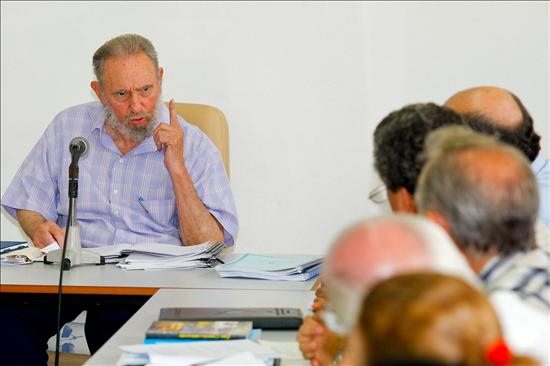
Castro reappeared just at the moment everyone had forgotten him. For the first time since 2006 he hit the streets. The strategy was to overshadow the real news: the release of 52 political prisoners. He returned to fray at the same time that news was announced.

Then, when seven prisoners of conscience were flying towards Madrid, the old guerrilla came to the fore in a television interview, chatting and predicting misfortune in his new role of necromancer.

In local circles the emergence of Castro I is being called a desperate gesture of leadership. And it is evidence of tensions and disagreements with his brother Raul.

The signs are not new. The rebellious and unrestrained language of Fidel has placed the government of Castro II in more of a problem. He is like the senile grandfather that the family tries to give the best care, but at the first opportunity manages to put them through a public embarrassment with his incoherent behavior.

I have no doubt of the respect that Raul feels for the historical figure of Fidel. The General tries to manage the island in his image. But when he wants to disconnect from the policies of his predecessor, the ghost of Fidel appears.

Now the Single Commander counts for little in the real politics of Cuba. Or anything. His brother had the foresight to fire two dozen ministers, officials and secretaries of the party in different provinces. He replaced them with leaders who had his full confidence.

Unlike Fidel, Raul is known to have much lower political talent. But he is a team player and appreciates his unconditional friends. Fidel only had interests. He was above everything. Raúl bases his government on the spirit of clan.

There is a key point that causes friction between the two brothers. In essence, both have the mentality of a dictator and Olympic contempt for democracy and the rule of law.

The brothers born on a farm in Biran, Holguin, like and want power. The means that each of them use to keep it is what raises concern in Castro I.

Fidel is convinced that his younger brother is inept, that without his help he would never succeed in the arena of political subtleties. And Raul intends to show the contrary.

It is time to let him govern. For Fidel to rest in a clinic and be devoted to writing about the topics of his choice or a memoir. But the One is reluctant to go out of style.

He does not want the authoritarian power with which he ruled for 47 years (1959-2006) to go to waste. The old Castro no longer has the support of the armored divisions and the salute of the generals.

But he mastered the art of words and knew how to manipulate the media. It is an uncomfortable burden. Especially at this time, when the General savored his political triumph with the release of 52 political prisoners. A couple of things can result.

As has often happened, the younger brother bows his head and let’s his idol take the reins of power. The General has already adapted and apparently feels comfortable as second fiddle.

The other is that Raul Castro wants to leave a legacy to the country and a consolidated power in the future for his immediate circle. And these are the upstarts in local politics who really hate the unpredictable output of Fidel Castro.

Although they only say it quietly. For now.

Iván García

Photo: European Pressphoto Agency.

Who Benefits From the Release of the Cuban Political Prisoners?


The recent release by the Cuban government of the 52 detained prisoners in the spring of 2003 can be interpreted in several ways. We shall examine some possible strategies or possibilities. And in all of them, the one gaining the most is General Raul Castro’s regime.

Certain national and international analysts think that the release of the nonviolent opponents displaces the fragmented internal dissidence. Maybe they are right.

In any case, the national opposition is weak, with a political project unknown to the majority of the population on the island and it is infiltrated to its marrow by the intelligence services.

To make things easier for the Castro government, in the last decade certain opponents have been focused on strife, nepotism, excessive profanity and an immeasurable protagonist role.

Among so much quarrel, corruption of certain leaders, warlordism and messianic projects that do not correspond with the reality of the country, and serve only so that American agencies give them money, which evaporates into questionable conduct, one can reach the conclusion that the release of the 52 opponents did not score points, nor will it pave the way for a possible dialogue between the government and the dissidence.

The Cuban dissidence is not at its best. It’s a trivial opposition. It hurts to say it, but that’s the way I see it. Its aims and premises are the same that the majority of the Cuban population wish. But its working methods have devalued.

The clever ones who work with General Castro did their math. The death of the dissident Orlando Zapata and the constant walks of the brave Ladies in White, together with the hunger strike of Guillermo Farinas, warmed the track and instigated critics across half the world.

Something had to be done. And it was Raul Castro’s loyal generals who lead the country. All the enterprises which function and generate an income one way or another are controlled by the olive-green entrepreneurs.

The antiquated Russian tanks have been, for many years, falling apart in the underground shelters. Just like the outdated MiG fighters and the antiaircraft guns. In the absence of a war against the North, which will never happen, the Cuban nomenklatura dedicated itself to business.

They learned marketing, costs and benefits. So that they could improve their financial situation on the island, they received big commissions and abundant diets from capitalist entrepreneurs. When they look at themselves in the mirror, they notice how much better they look in tailor suits, rather than in their rough military uniforms.

To these generals, who like to say Sir rather than colleague, who prefer the good table, Spanish wines and Scottish whisky to the sugarcane rums, they are the ones who encouraged Castro II to launch a truce.

They made a deal with the Cuban Church and the Vatican. With Spain, and underneath the table, with some sectors of the Obama administration.

They are willing to dialogue with any actor inside or outside the country, except with local opposition, for the simple reason that our dissidence, between the harassment of State Security, its quarrelsome language and its inertia, has dug its own political tomb.

Another of the variants, calculated with care by those who govern the destinies of the country, is that the economy is sinking with no remedy in sight.

If people still think that their future is in Miami or Madrid, that working is not worth it because wages are a joke in bad taste, that their pantries and wallets are empty and that the displeasure of the ordinary citizen towards the regime constant increases, then the policy change is imposed in an accelerated way.

For a logical and forceful reason. If the depressed living standards of Cubans are not improved, they will lose power. And they bet on controlled changes. They look at Vietnam and China. While they take advantage of the oil that the impertinent Hugo Chávez offers at a rock bottom price.

Next, the jails had to be emptied. It is a first step. Also the language moderated. Insults will be saved for better occasion. The generals believe that they have the situation under control with respect to the opposition. They calculate that their leading role is strengthened if they can bring a glass of milk, food and meat other than pork to the family table.

A dissidence with more a broader playing field could be a fertile ground for new proposals, in tune with the realities of the people. Even if they have no space in the media or public participation.

The government will continue to watch them with its bulldog face. But there are interesting loopholes. If 52 peaceful dissidents are released, going forward there would be no rational argument to imprison anyone just for writing or wanting to organize a political party.

The ball is in the opposition’s court. They will have to even the score. Right now they are losing 1 to 0.

Double Dealing

The Cuban revolution ceased to exist in 1976. The death certificate was signed when they put into force a rigid constitution and institutionalized the country with a questionable political-administrative division.

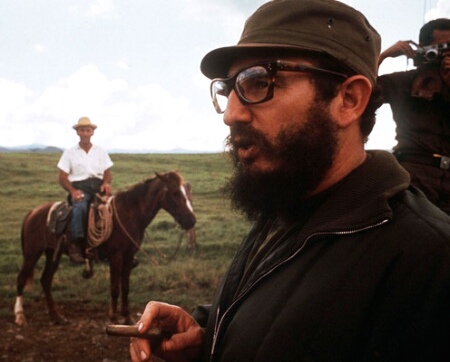
Farewell to the romantic phase of improvisation and a charisma-laden Fidel Castro, who in his uniform, travelled through fields and towns. And with a small group of escorts lunched at any cheap Chinese restaurant. With an everlasting Vueltabajo cigar and rough-framed glasses, the bearded one ruled the island from an olive-green jeep made in Russia.

What came next was pure political marketing. Castro continued to administer the country as a landowner manages his farm. But the republic entered the era of the gray five-year plans. With a mammoth bureaucracy hindering, rather than helping, the performance of Cuba.

He wove a dense network of myths and hackneyed speeches. Except for the commander, who has always been above the institutions and laws, the island lost spontaneity, the alleged generosity and that humanism which had shamed European intellectuals.

With the death by decree of the Revolution, and an absurd and inefficient regime, the stampede of the former flatters of the Fidelista project began.

Castro no longer walked the streets of the old part of Havana nor breakfasted in second-rate cafes. Already, he was no longer a human being. He was thought of as a God. Surrounded by the largest entourage any leader up to then had ever had.

Fidel spoke of the exploitation of man by man and the paying of poverty wages to their workers. He condemned the predatory imperialist wars of the U.S. against Third World nations, but in 1978, during the civil war in Ethiopia and Somalia, he supported the dictator Mengistu Haile Mariam. Only because this was in line with Moscow, then the faithful ally.

He intervened in civil and tribal wars in Africa. In the name of the revolution and proletarian internationalism, he enrolled thousands of Cuban soldiers in numerous military adventures.

Wanting to be the flag of the world’s left, Fidel Castro and the leaders under his command were unconcerned with the economy. Following a rigid political and economic plan, exported from the former USSR, the island became one of the poorest nations in the Americas.

In theory, tropical socialism is generous, productive and humane. But in practice, it does not work. World revolution is a joke in bad taste for ordinary Cubans who daily breakfast with coffee without milk.

Cuba today is a virtual game. The reality is spoiled with so much demagoguery. People live badly and want to live well. They have an empty fridge and want it full. In the wardrobe are old clothes and shoes, and at night the heat does not let them sleep.

The Cubans of the third millennium aspire to have air-conditioning, cable television, the ability to buy computers, connect to the Internet 24 hours a day or travel abroad without needing permission to leave. The regime does not want, or know how, to ensure that people have a decent life.

Gen. Raul Castro, the current president, has been given a real hot potato. A bankrupt country, thousands of Cubans unhappy with the status quo, and a luggage cart of slogans and mottos that have become worn-out clichés.

To change the state of things you must tear down the building. Leave it in ruins. Castro II is trying. He has sat down to negotiate with the Catholic Church. And he has opened the floodgate a little, trying to deport the majority of the dissidents who were incarcerated in 2003.

Cuba is pure mirage. Many of the native petty bureaucrats demand sacrifice and saving, but drink Diet Coke in their air-conditioned homes. The only thing that is different is that the Cuban system was not implemented by Russian tanks.

After Fidel Castro aligned himself with the communist ideology, the island started to march backwards.

The cry of the current Cuban leadership is about the “evil” U.S. and European Union. While talking about the longed-for world-wide leftist insurgency, they try to do business with Western businessmen and send to Tokyo, New York, London or Madrid to buy the latest thing in electronics.

The Cuban Revolution died in 1976. In 2010, it still maintains photos of Fidel Castro and Karl Marx in official dispatches. But secretly, they read the advice of gurus like Alan Greenspan or George Soros. In Cuba, one lives by double-dealing.

Ivan Garcia

Translated by: CIMF

The Castros’ Chess Game

After sorting through various possibilities, the Spanish journalist Lali Kazas and I agreed to rent a car and head to Ciego de Avila.
It’s the day they’ve announced the releases and extraditions to Spain of five political prisoners of conscience, among them is Pablo Pacheco, who used to call me from the prison to talk about baseball and football, among other things.

We got to the town on April 9, and went to the home of Oleyvis Garcia.  A few minutes later, without even wiping off the dust from the road, we knocked on the door.  A soldier in olive drab introduced himself and addresses Lali and me by name.

It was Colonel Mesa, from the Department of State Security.  When I call my mother to tell her this, she says to me, “Ivan, Mesa is the one who dealt with me in Villa Marista, the day after you were arrested on March 8, 1991.  He was a captain then, thin and not very tall.”

“I don’t remember.  The one I remember is Chaple, the one who was in the little room they sent me to the two times you visited me.”

“Mesa was in charge of your case and perhaps you didn’t speak with him.  How did he treat you and Lali?”

“He was very friendly.  He wanted to know how we knew about Pacheco’s release and we told him that we heard it on the radio.  Before he left, he gave us a telephone number to reach him in case a problem arose.”

And a problem did arise not long after the colonel left.  Oleyvis needed to go to the Western Union office to get money sent from the United States by Pacheco’s family.  The office closed at 4pm, so we drove her there.  But despite it not being 4 yet, it was closed. We checked and were told that the employee had not gone in to work that day.

We called Colonel Mesa and in a few minutes, the issue was resolved.  We don’t know where they found someone, but they opened up Western Union and paid Oleyvis the money, that very same night she had to travel to Havana with her son.  On Monday, July 12, when they’re already in the air, is the day that they will finally be with Pacheco.

My mother interrupts me.  She wanted to know if I was able to get any more information from the colonel concerning this odd process of prisoner releases, decided on by the hierarchy of the Catholic church, the Ministry of the Interior, and the Cuban government.

“Yes”, I told her, “But he told me that he didn’t know; that he just follows orders and the one that is responsible for them is General Raul Castro.”

At 6 in the morning on Sunday, I was awoken by my cell phone’s ring.  It was Pablo Pacheco, who had called me to say that he was with a military unit on the outskirts of Havana.  He was with other political prisoners who were being given medical checks and they were giving them first-rate care.  “The food is excellent; they’ve even given us beef.  We slept two to a room with air conditioning,” he told me.

I went back to sleep.  Four hours later, my cell phone went off again.  It was Oleyvis, Pacheco’s wife.  At that moment, both she and Jimmy, their son, along with other relatives, were being given a medical examination in a clinic of the Ministry of the Interior, on G and 19th Street, in the neighborhood of Vedado.

“We’re all being booked in the Instituto Superior Capitan San Luis, belonging to MININT (Ministry of the Interior), in Valle Grande, on the outskirts of the city.  We are being well fed and well treated, but we haven’t been able to see our husbands.  I think that before going to the airport, we are going to be greeted by Cardinal Ortega; I’m not sure if only the relatives or also the political prisoners”.

While he was still in Canaleta prison, Pacheco dreamed he was back home with his wife and son, watching the final match of the World Cup.  The three could watch it together and jump in celebration of Spain’s victory.

On the other hand, while not from there, it is in Havana that the Castros have begun their game of chess; with all of the pieces well controlled and well-played, among them the dissidents.  This is so nobody would even dare to take their king, and they will be the ones to declare checkmate.

Ivan Garcia

Translated by: Andrew Cuan

Every Night I Prayed to the Lord

The doctor Oleyvis García, 38, is convinced that God heard her repeated prayers. “Every night I prayed to the Lord, asking him to free my husband, said García, wearing faded light-blue shorts and a shirt in the colors of the Spanish football team.

Oleyvis lives in a dusty half-paved village street. Her home is over a doctor’s office. Nothing fancy. Cheap wood furniture in a narrow room painted a dull white color.

Until March 19, 2003, her husband, Pablo Pacheco Avila, 40, a freelance journalist, also lived there. That day, eleven police patrol cars and half a dozen cars from the State Security raided their house and arrested Pacheco.

Until today’s sun. Pablo Pacheco spent 7 years and 4 months behind bars. His crime, writing without permission what he thought should be the future for Cuba. Today all that is ancient history.

International pressure, the death of Orlando Zapata, the marches of the Ladies in White, the hunger strike of Guillermo Fariñas, and mediation by the Spanish Foreign Minister Miguel Ángel Moratinos, the Cuban Catholic Church and the good will of the General Raul Castro’s government, have allowed the 52 prisoners of the Black Spring to be freed.

Pablo Pacheco will be one of the first. On a blazingly sunny afternoon with no water on his cellblock to wash himself, the penal authorities called him into a small room. He had a phone call.

On the other end of the line, with his voice neutral and cordial, was Cardinal Jaime Ortega. In a few minutes, the Cardinal told him that if he wished, he could leave for Spain. Without conditions and with his family.

According to Pacheco, the highest representative of the church on the island, made it very clear that in any case he could return to his country when he wished. Pacheco agreed to leave his country.

Above all, he was thinking of the future of his son Jimmy who is 12. It was his son who suffered most from his unjust imprisonment. Oleyvis, his mother, always meant to hide the truth from him.

“I told him his father was studying, or traveling, that he would be back home soon,” Oleyvis related. The lie had short legs. The boy sense that something wasn’t right.

Every three months he carried, with his mother, a huge burlap bag with over 20 pounds of provisions, on a journey of over 200 miles to the Agüica prison in Matanzas province, where Pacheco was first held.

One morning, looking at him with his café con leche colored eyes, Jimmy asked his father, “Papá, why are you always surrounded by men dressed in olive green?”

He was seven. Pacheco knew he couldn’t lie to him, “Jimmy, your father is in prison for wanting a better future for all Cubans. My son, prison is not a dishonor when a person is in prison for a just motive,” Pablo told him, while giving him examples of famous patriots who had been in prison, like José Martí.

“That’s true, Papá, I’m proud of you,” he answered in a strong voice. Jimmy grew up without his father’s advice. He wanted to tell him that the girl in the last desk in the classroom stuck up for him. How much he missed not being able to go to the beach with him. Play baseball and football, his favorite sports. Climb a mango tree together, or hunt quail.

During these seven long years Oleyvis was both mother and father. In Cuba the family also suffers from the imprisonment of their loved ones. The long journeys to the prison, the lack of money, the loneliness and constant tension about their future, have prematurely aged Dr. García.

On the left side of her bed there has been an empty space for a long time. With wet eyes, Oleyvis thinks that Madrid will be a good place to rebuild their marriage and family life.

Before we leave, she asks us not to forget to thank, in her name, all the people who made the release of her husband possible. The friends and neighbors who always supported and encouraged her. And God, who heard her prayers.

Iván García y Lali Kazás

Meeting Once Again Postponed

It was pouring on the morning of February 23, 2003.  The independent journalist Pablo Pacheco and I had arranged a meeting at the Central Park in Havana.

Pacheco, a resident of Ciego de Avila province, nearly 500 kilometers from the capital, was passing by the city.  We would talk a lot by phone about our families and about politics, but mostly about sports, for we would write about it in our respective alternative press agencies.  The heavy rain did not allow us to meet up.

When he called me in the first days of March 2003, I told him, “During your next visit to Havana we’ll meet each other.”  It didn’t happen.  On the morning of Wednesday, March 19, Pablo Pacheco was detained by the political police, put on trial, and condemned to 20 years of prison.

He was one of the 75 prisoners of conscience of the Black Spring.  The world already knows about the absurd jurisdiction of those cases.  They were peaceful men whose only weapons were their pens and their words.  And as time passed, they became precious coins of trade for the Castro government.

On the afternoon of Saturday, February 21, 2009, nearly 6 years later, my phone rang while I was writing a post about the next baseball series for my blog, Desde la Habana (From Havana).  Surprise.  It was Pablo Pacheco calling from the prison of Canaleta in Ciego de Avila.

He was in good spirits, as if six long years had not passed, especially for Pacheco, who nightly slept behind bars.  He told me about his wife, he read me some poems, most were about his son, and also read me something he wrote about Cuban civil society.

He even had time to read me something about the baseball series, which he wrote in the boring and slow hours of his life in prison.  And I thought that no newspaper or website in the world would publish his stories or poems.  Just like most other prisoners, they write for themselves.  If anything, they write for their families or companions in struggle, also.

When I hung up, the tears came up to my eyes.  The last time I had cried was on November 25, 2003 when my mother, my sister, and my niece, all left for a hard exile in Switzerland.  I cried at the time because I thought that it was possible that I would never again see my mother alive, for she was 61-years-old when she left Cuba.  It was a trip with no return.

Now, I cried because a 40-year-old man could not see his only son grow up, all thanks to an intolerant government.  And also for the ill fortune when the rain impeded me from personally getting to meet my friend, Pablo Pacheco, on that 23rd of February 2003.

One year and five months later, on July 7, 2010, I received the great news that Pablo Pacheco was going to be released.  He would travel to Madrid together with his wife and son.  “I will finally be able to personally meet him,” I thought.  I prepared my bookbag and went off towards Ciego de Avila.

But bad luck followed me.  The trip was in vain.  The authorities of Havana are going to put Pablo Pacheco aboard the plane without being able to say goodbye to anyone.  It’s probable that I won’t even be able to hug him.  The appointment continues to be postponed.

Ivan Garcia

Photo:  Since I couldn’t photograph myself with Pacheco, I decided to take pictures of the books which he will take with him to Spain.

Translated by Raul G.

Time Stopped

It’s as if all the clocks had been stopped.  In unison, the same day at the same time. The unease is widespread around the Cuban political prisoners and their families.
Despite the official announcement that 52 opponents of the Group of 75 will be released, they still don’t know  exactly when those releases will occur. Much less who are the candidates to leave the country immediately and who in the coming months. And if it’s true that they will exchange their cells for exile.

Arnaldo Ramos, 68, sleeps little and badly. And he always has the same dreams: that his wife Lidia is preparing his favorite dish, while running her fingers through the long hair of their granddaughter Roxana.

Right now, all the prisoners of the Black Spring of 2003 are a bundle of nerves. A group of men who never should have been imprisoned.

I seem to see the doctor Oscar Elias Biscet, praying before bed, with the Bible at the head of his bunk in the Combinado del Este prison.

Or the reporter Ricardo Gonzalez Alfonso, full of aches, thinking about David and Daniel, his sons who aren’t little boys any more and after seven long hears he will see them as teenagers.

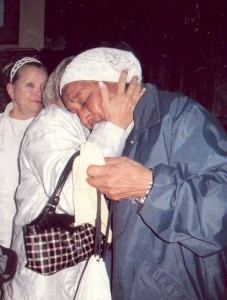
Either way, there are hopes. At this moment I can’t forget Reina Luisa, Orland Zapata’s mother. The hunger strike that cost the life of her son forced the government to reconsider its rigid postures.

In the solitude of their small and poor dwelling in Banes, Holguin, Reina knows that Orlando will not knock in the door carrying his duffel bag, like the rest of those released. She will not be able to hug hum, nor sit down and talk with him.

I also think of all the men and women of Cuba and in the world who in a loud voice, without fear, have called for democratic changes on the island.

In Madrid, a friend listens to the boleros of the singer Olga Guillot and drinks strong coffee, typing with two-fingers his chronicles for the newspaper El Mundo. Morón, his hometown, he keeps under his pillow.

This gesture, the result of three-party negotiations, could be a first step. Pablo Pacheco would like to watch Sunday’s final between Spain and Holland sitting next to his son. And I want to hug my niece, Yania, who left Cuba when she was 9 and just turned 16.

In this battles there are no winners. We have all lost something. And we all want change.

Iván García

Photo: Reina Luisa Tamayo is consoled by a Lady in White, shortly after the death of her son, Orlando Zapata Tamayo.

The "Castro List"

These have been remarkable days. From the time it was known that the Spanish Foreign Minister Miguel Ángel Moratinos had on his agenda the topic of releasing a significant number of political prisoners, people started to sit up and take notice.

Never before has a telephone been as important for me.  The uncertainty was making me crazy. Neither the mobile nor the land line were ringing. Surrounded by crackers, roasted peanuts and mango juice I sat glued to the Sony shortwave radio, listening the soccer games and waiting for the good news.

In the dissident sector there existed — and does exist — many doubts and misgivings.  And no wonder. The behavior of the Cuban government over the last 51 years is hardly something that inspires optimism.

Saturday, July 3, the rumors started.  Everyone was talking about the famous list. We called it, “Castro’s list.” The number that it comprised was like a charade. Some were saying no more than five would be freed. Others swore that a good sources assured them that all the prisoners of conscience would be out on the street.

Speculations came and went and I stayed in touch with the different families of the political prisoners. No one knew a thing. Not even a single figure of the opposition. Until the independent journalist Pablo Pacheo, sentenced to 20 years in April 2003, gave to a reliable tip.

Pacheco called me every week from Canaleta prison in Ciego do Avila. That afternoon it was raining cats and dogs in the capital and a tiny voice told me, “Ivan, be discreet, but officials from State Security told us that our stay in the cells is a question of days or weeks.”

But the news came as a surprise to me and in the least expected way, on Wednesday, July 7. While biting my nails to the quick watching the semifinal match between Spain and Germany, because the Iberians’ goal wasn’t coming, the telephone rang.

It was my mother, the journalist Tania Quintero, from the prudish and distant Swiss city of Lucerne, in a choked voice, telling me that the reporter in Cuba’s TVE just reported that the 52 remaining prisoners from the Black Spring of 2003 would be released.

I told her I would call back in ten minutes.  I wrote a note and read it over the phone. Then I called the various families who still didn’t know. Lidia Lima, wife of the economist Arnaldo Ramos, listened to me in silence. I thought the call had been cut off. But she was crying so hard she couldn’t speak.

Then I called to Ciego de Avila, to Oleidys Garcia, Pacheco’s wife. She was watching the soccer match with Jimmy, her 11-year-old son. She was mute. And then started to cry, nervously.

She said it didn’t matter if her husband was on the list. “What matters is that a new road has opened up…” she was telling me, when Puyol got a header, Spain scored, and we were so excited we decided to talk again in a minute.

In this hot and humid Havana, the names on “Castro’s list” are still unknown. The secrecy and paranoia is typical of the Cuban government.

Although no dissident should ever have been imprisoned, the gesture is appreciated. Palm branches for General Raul Castro, the Catholic Church, and the Spanish Foreign Minister, Miguel Ángel Moratinos.

Perhaps this news will help to save the life of the dissident Guillermo ‘Coco’ Fariñas. People close to Fariñas told me he was going to suspend his 125-day hunger strike.

Moratinos, a man who has been and continues to be sharply criticized by the opposition on the island and also from exile, despite his innumerable efforts to free the political prisoners, and to see Cuba once and for all on the democratic path, fulfilled his promise when he said the month of July would bring surprises.

Iván García

Photo: AFP

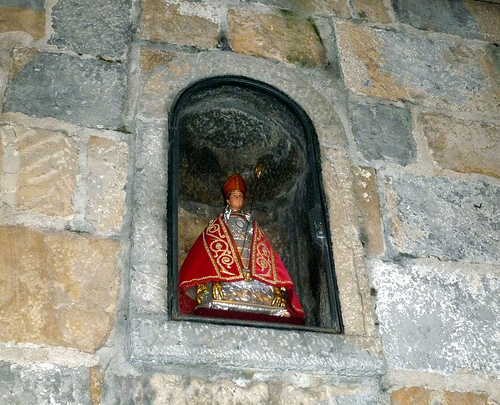
Saint Fermin Whom the Cuban Political Prisoners Will Not Forget

Saint Fermin, the patron saint of Pamplona, is not a saint of devotion in Cuba.  But this July 7, 2010, the 52 political prisoners of the Black Spring of 2003 and their relatives will never forget him.

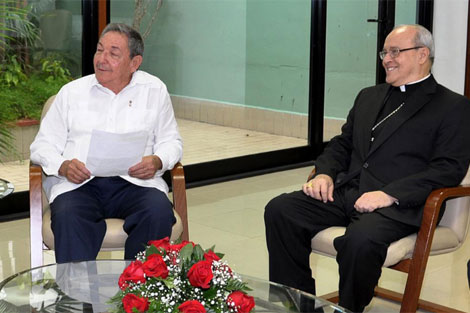
After many days of prayers and uncertainties, today something has happened.  A statement by Raul Castro himself has declared that the Spanish chancellor, Miguel Angel Moratinos, has been informed that the 52 prisoners that remained from the Group of the 75 and which were jailed 7 years ago, will be released.

The news that has been going around the world, while I write this post, had not yet been known to the majority of the internal opposition nor to the remarkable Ladies in White.  A very important part of this victory is due to them, and also to the name of Orlando Zapata Tamayo, which we will dedicate it to his mother, Reina Luisa Tamayo.

And if this news came just in time for someone, it is for Guillermo Fariñas, who we hope will abandon his hunger strike and will commence the slow recuperation process of his damaged body.

The names of the political prisoners who will leave Cuba are still unknown, as is whether it will be immediately or within the next few months, and if they will leave alone or accompanied by their closest relatives.  But today, in a telephone call from his son Jimmy, 11.

In and out of the island there have been, and will continue to be, many different opinions, in favor and against the negotiations between the government, the Catholic Church, and Spain.  Debate is healthy.  Let us continue debating.  Let us draw lessons from this and let us attempt to leave irreconcilable divergences aside, both in the opposition and in the exile.

Differences aside, for the family members of these 52 prisoners, July 7, 2010, the day of Saint Fermin, will be unforgettable.

In order to reach the end of a long path, it’s not always the best option to run.  Most of the time it is better to walk slowly.

Step by step.  And today, whether we like it or not, Spain and the Catholic Church, along with other mediators, have taken the first steps to empty the jails of this island of Cubans whose biggest crime has been to think differently.

Ivan Garcia

Photo:  joseliusgildela, Flickr.  Saint Fermin in the Cuesta of San Domingo in Navarra, Spain.

Translated by Raul G.

Moratinos Wants to Score a Political Goal

Everyone knows that the Spanish Foreign Minister has character. No one doubts that Miguel Angel Moratinos is a diplomat of the old school. Of those who don’t try to sugar coat the pill. A guy who speaks frankly and looks you in the eye.

But on the subject of Cuba he has achieved little. The Cuban government always has managed to fool the Iberian executive. Anyway. Above all the presidents of the Spanish Socialist Party (PSOE).

They are their favorite targets. The Castros delight in showing up the Spanish socialist leaders as fools. Felipe González knows this well. The Seville attorney always believed that in his game with Fidel Castro he held the winning hand.

The old guerilla, shaken by the collapse of the USSR and suffocated by the lack of hard currency in state coffers, lowered his head and seemed to listen to the political advice of his friend, who invited him to make changes on the island.

In the first change, Castro took off the mask and did the exact opposite of what he’d been counseled to do by the Baron of the PSOE.

I fear that the situation is different now. Not because the Castro brothers want to make a 180 degree turn in the state of things in this country. It happens that in this summer as hot as Africa there are few traps and alternatives left to choose from in the commandante‘s trunk of tricks.

The Castros are up against the wall. The economy raised the white flag a long time ago. After 51 years of authoritarian government, people want a different kind of life. The mandarins have two options: either make the urgent changes that Cuba needs, or lose power in the medium term.

And the throne is pancakes with honey for those who have enjoyed it for half a century. Moratinos does not plan to come in as a bullfighter to deliver the last thrust. No. He plans to come to the rescue. Provide oxygen and a decent way out of the debacle that has engulfed the regime after the death on hunger strike of the opponent Orlando Zapata.

Right now, the psychologist and independent journalist Guillermo Fariñas is on the brink of death after four months without food in a bed Arnaldo Milián Hospital in the province of Villa Clara, 300 kilometers from Havana.

The government can not afford another martyred opponent. Not at this time. Fariñas is demanding the release of 26 prisoners of conscience of the more than 200 found on the island, according to Amnesty International.

The United States, the European Union and half the world have also asked for this. And of course José Luis Rodríguez Zapatero and Foreign Minister Moratinos. The Castro want the pressure removed. They’re going to toss ballast overboard. They may release a significant number of prisoners. Perhaps all those imprisoned in March 2003.

Although it remains to be seen who will reap the political laurels. America is the permanent enemy. The sullen and impassive European Union has treated the government of Havana rudely in recent years. Then you look at Spain. In the end, it is the one with the key that can unlock the Common Position of the 27 European countries.

Either way, the PSOE is the least of the enemies. And Spain, with its habit of mediating in Cuba’s thorny problems, the perfect actor to score the goal. Moratinos is the man chosen by the Castros to sing the victory song.

Closed societies like Cuba are unpredictable. And it only takes an inappropriate word, an outburst on a bad day for the leaders or for distrust, and everything goes down the tubes.

In authoritarian governments the heart counts for more than reason. Moratinos is about to score a political goal. But he’ll need to keep a sharp eye out to be sure the government doesn’t spring a trap. And he falls out of the game. With the Castros, anything is possible.

The Cinema, Soccer and Vuvuzelas

Exciting atmosphere. It’s 2:10 in the afternoon and outside the Yara cinema, right in the heart of the central 23rd Avenue, there are hundreds of people with T-shirts, caps, flags and scarves for the Spanish and other countries.

Most of the fans are young students from the nearby University of Havana, who wait, biting their nails, for the second round match between the Spain of Iker Casillas and the Portugal of Cristiano Ronaldo.

Ubaldo Arias, 23, who studied this last year for a career in philosophy, is at the front of group supporting the Red Fury. Dressed in shirts of “Guaje” Villa, Fernando Torres and Xavi Hernandez.

They chant slogans. They are convinced Spain will be the new world champions. Some dark guys with their “canary” green and red mock them.

Arias and his band enter laughing, while fraternizing they tell them, “See you in the final.” There is still a stretch of competition. But the expected Spain-Brazil duel for the title is a real possibility.

A few minutes later the line forms. They start to sell tickets at two pesos (10 cents in dollars). The theater looks like a mini stadium.  It’s full.

On the big screen they’re showing the last game with Lithuania.  The room erupts with the racket of a thousand demons when the mustachioed Vicente del Bosque appears getting off the bus at the South African stadium.

The fans are chanting the names of the eleven Iberians, when they emerge on screen. “Ole, ole, ole Casillas, ole ole Tarzan Puyol, ” and so on until the 23 Spanish players get off the bus, on this island where it usually takes baseball to get most Cubans to their feet.

Since they started the second round matches, the theater management, ICAIC and the Institute of Radio and Television has the bright idea of showing the games on the wide screen.

People appreciate it. No alcoholic beverages are allowed inside. The various loyalties are discussed with passion and respect for the firm support of their different teams.

It’s true that Brazil, Argentina and Spain steal the show. But there are also, on the island, many rooting for The Netherlands and Germany. The good mood engulfs the bewildered tourists, who watch the enthusiasm with which Cubans enjoy the World Cup.

Latin American students are given their turn at the Yara cinema, to support the teams of their preferences. They are the coming generation. It could be the World Cup of America.

Four teams in the quarterfinals and a hunger for glory. It is not only Brazil and Argentina. Uruguay knows what it is to raise a cup and look askance at Julet Rimes’ trophy. Paraguay wants to make history.

But first they have to pass through comfortably placed Spain. While reaching the quarter finals, the different gangs enjoy the beauty of their triumph and suffer when their eleven goes tearfully back to the locker room.

No one can deny the good mood in the Yara. When David Villa scored the winning goal against Portugal that sent them into the quarterfinals, those in attendance, about two thousand of them, deliriously shouted GOOOOOOOOOAL.

At dark, many embraced. They jumped and shouted, “SPAIN! SPAIN!” These are the good things of football. The worse, the annoying high pitched noise of the vuvuzela. I don’t know how they managed to appear in Havana. But before such an event, someone passes them out. A World Cup is a World Cup.

Iván García

Photo: Kaloain Santos

Vacations, a Headache for Many Families

Summer vacation is here.  This means joy for children, adolescents, and young adults.  But many parents will have to take some aspirins.  If they managed to save some money in the moneybox during the last year, like 45-year-old Mario Guillen, then they might withstand the blow.

Guillen, a steel mill worker who works 10 hours a day in a factory on the outskirts of Havana and dedicates his free time to making steel windows and doors, is a cautious man.

When he shattered his red piggy bank, he counted 438 convertible pesos (that is nearly 330 dollars).  Sitting with his wife on a humid and rainy night towards the last days of June, they made some plans.

They have two sons, one is 10 and the other is 14.  Both are on summer vacation from school.  Guillen and his wife made their plans a month ago.  “We are thinking of taking our kids to the theatre, to the theme park, a quality restaurant, and the pool.  No beaches, they have told me that with oil spill in the Gulf of Mexico there have been numerous predatory marine animals that have migrated to our shores”, his wife, Mariana, worriedly states.

Rumors of fierce sharks and giant seals circling around the coasts off the beaches East of Havana really worry the parents.  According to specialists and the official press, all these rumors are false.  But some parents still harbor these fears.

The Guillen couple will also purchase provisions for the two months of vacation that their sons have.  Now, instead of feeding them once a day, they will need to also be given lunch and snacks.  “We’ll have to get some pork meat on the black market, in addition to fresh fish and chicken, rice, beans, oil, ham, sausages, and powdered soda.  We’ll spend nearly 150 convertible pesos (120 dollars) on that,” points out Guillen while he makes calculations on his old Chinese-made calculator.

At least the Guillen family has enough money to plan their kids’ vacations.  But if you ask Rogelio Ortega, a black man with huge eyes and a protruding belly, what recreational plans does he have for his 5 children, he’d stare back at you as if you were a strange creature.

“Same as always, lots of television. The boys could go play baseball or soccer on the streets, without shoes though, so they won’t ruin the few they already have. As for the girls, they’ll have to help their mom and grandma and play with their dolls.  If I get my hands on some money, I’ll take them to the coast on a random weekend so they could go for a swim between the rocks,” he explains in a very calm manner.

“You are not scared of a possible wave of sharks?”, I ask him. Ortega pats me on the shoulder and says:  “Those sharks are gonna have to be scared of my kids instead.  If they see it close to them, it’s most probable that they will probably eat it, fin and all,” he says while laughing.

Families like that of Rogelio Ortega are already familiar with what summer vacation means. More of the same. TV, one meal a day, and the kids having to deal with it whichever way they can. Their finances don’t produce enough for any other option.

For Junior Mendoza, 20, a university student, vacations just mean work.  “My parents don’t have the resources, I usually end up working in whatever clandestine job I can find for those two months. Sometimes I end up working at a cafeteria, an illegal cigarette factory, or even selling clothes and pacotilla (cheap merchandise).  I’m the salvation of my family during the vacations,” points out the young man with a piercing on his right ear.

For now, the World Cup serves as entertainment for the majority of Cuban families.  When June 11 comes around the series concludes, then that’s when the good stuff starts.  An abundance of worries, lack of money, and lack of provisions.  The government promised a wide variety of recreational options.  A wide billboard announcing TV programs, including 55 new series and nearly 500 films.  There will be sales of books, parties, fairs in public squares, and even some food offers.

Those who were able to save some money, like the family of Mario Guillen, will be aware of such events.  Those who don’t have even a cent, like the smiling Rogelio Ortega, could not care less about what they offer for the 2010 vacations.  For his family, summer is not a special event.  On the contrary.  It is a headache.

Ivan Garcia

Photo:  johnhope14, Flickr

Translated by Raul G.

The Cinema, Soccer and Vuvuzelas

Exciting atmosphere. It’s 2:10 in the afternoon and outside the Yara cinema, right in the heart of the central 23rd Avenue, there are hundreds of people with T-shirts, caps, flags and scarves for the Spanish and other countries.

Most of the fans are young students from the nearby University of Havana, who wait, biting their nails, for the second round match between the Spain of Iker Casillas and the Portugal of Cristiano Ronaldo.

Ubaldo Arias, 23, who studied this last year for a career in philosophy, is at the front of group supporting the Red Fury. Dressed in shirts of “Guaje” Villa, Fernando Torres and Xavi Hernandez.

They chant slogans. They are convinced Spain will be the new world champions. Some dark guys with their “canary” green and red mock them.

Arias and his band enter laughing, while fraternizing they tell them, “See you in the final.” There is still a stretch of competition. But the expected Spain-Brazil duel for the title is a real possibility.

A few minutes later the line forms. They start to sell tickets at two pesos (10 cents in dollars). The theater looks like a mini stadium. It’s full.

On the big screen they’re showing the last game with Lithuania. The room erupts with the racket of a thousand demons when the mustachioed Vicente del Bosque appears getting off the bus at the South African stadium.

The fans are chanting the names of the eleven Iberians, when they emerge on screen. “Ole, ole, ole Casillas, ole ole Tarzan Puyol, ” and so on until the 23 Spanish players get off the bus, on this island where it usually takes baseball to get most Cubans to their feet.

Since they started the second round matches, the theater management, ICAIC and the Institute of Radio and Television has the bright idea of showing the games on the wide screen.

People appreciate it. No alcoholic beverages are allowed inside. The various loyalties are discussed with passion and respect for the firm support of their different teams.

It’s true that Brazil, Argentina and Spain steal the show. But there are also, on the island, many rooting for The Netherlands and Germany. The good mood engulfs the bewildered tourists, who watch the enthusiasm with which Cubans enjoy the World Cup.

Latin American students are given their turn at the Yara cinema, to support the teams of their preferences. They are the coming generation. It could be the World Cup of America.

Four teams in the quarterfinals and a hunger for glory. It is not only Brazil and Argentina. Uruguay knows what it is to raise a cup and look askance at Julet Rimes’ trophy. Paraguay wants to make history.

But first they have to pass through comfortably placed Spain. While reaching the quarter finals, the different gangs enjoy the beauty of their triumph and suffer when their eleven goes tearfully back to the locker room.

No one can deny the good mood in the Yara. When David Villa scored the winning goal against Portugal that sent them into the quarterfinals, those in attendance, about two thousand of them, deliriously shouted GOOOOOOOOOAL.

At dark, many embraced. They jumped and shouted, “SPAIN! SPAIN!” These are the good things of football. The worse, the annoying high pitched noise of the vuvuzela. I don’t know how they managed to appear in Havana. But before such an event, someone passes them out. A World Cup is a World Cup.

Iván García

Photo: Kaloain Santos

Iván’s Blog: Iván’s File Cabinet