“Today We Are Prepared To Take Power,” Warns María Corina Machado

The opposition leader called for continued vigilance until the democratic transition is complete.


“This is the moment for the citizens. A transition that needs all of us,” Machado stated. / EFE

14ymedio bigger EFE/14ymedio, Madrid, 3 January 2025 —  Venezuelan opposition leader and Nobel Peace Prize laureate María Corina Machado called on citizens this Saturday to remain “vigilant, active, and organized” until the democratic transition is achieved, following the arrest of Nicolás Maduro and the collapse of the political leadership exercised by Chavismo. In a statement released through her official channels, Machado affirmed that “what had to happen is happening” and maintained that the country is entering a decisive stage after years of confrontation and resistance.

In her message, the leader stated that Maduro “from today onward faces international justice for the atrocious crimes committed against Venezuelans and against citizens of many other nations,” and asserted that, given his refusal to accept a negotiated solution, the United States government decided to act. “The time has come for popular sovereignty and national sovereignty to prevail in our country,” she declared.

Machado affirmed the beginning of a process aimed at restoring institutional order, freeing political prisoners, and laying the foundations for national reconstruction. “We have fought for years, we have given everything, and it has been worth it,” she said, while promising to work so that millions of Venezuelans who emigrated can return to the country.

The opposition leader maintained that Edmundo González Urrutia, whom the Unified Platform recognizes as the legitimate president following the elections of July 28, “must immediately assume his constitutional mandate.” She added that González Urrutia must be recognized as commander-in-chief of the National Armed Forces by all officers and soldiers, and affirmed that the citizenry is prepared to uphold the popular mandate. “Today we are prepared to take power,” she stated.

A process begins aimed at restoring institutional order and laying the foundations for reconstruction.

In the statement, Machado made specific appeals to different sectors. She asked Venezuelans within the country to remain vigilant and organized to carry out instructions that will be communicated “very soon” through official opposition channels. She asked Venezuelans abroad to remain mobilized, to activate governments and citizens around the world, and to engage them in the great operation of building a new Venezuela.

“This is the time for citizens. A transition that needs us all,” stated Machado, who closed her message with a call for unity, active calm, and sustained mobilization in what she described as decisive hours for the future of the country.

On Saturday morning, US President Donald Trump held a press conference in which he addressed the situation in Venezuela. Trump stated that the United States would temporarily assume control of Venezuela to prevent any official linked to Maduro from attempting to replace him or perpetuate structures of the previous regime. He explained that this measure would ensure control of the process and prevent a power vacuum. He also indicated that Washington would recoup, through oil production, the resources that—according to him—the United States lost in infrastructure during the years of the dictatorship.

Amidst anticipation and tension, Venezuela thus enters a transitional phase marked by uncertainty, citizen mobilization, and the redesign of political power. “Venezuela will be free,” Machado concluded.

____________

COLLABORATE WITH OUR WORK: The 14ymedio team is committed to practicing serious journalism that reflects Cuba’s reality in all its depth. Thank you for joining us on this long journey. We invite you to continue supporting us by becoming a member of 14ymedio now. Together we can continue transforming journalism in Cuba.

“Maduro Was in a House That Was a Fortress,” Trump Explains

U.S. special forces entered Caracas at dawn and removed the dictator without causing any fatalities

First photograph of Maduro after his arrest, shared by Trump. / Donald Trump Truth

14ymedio biggerEFE/14ymedio, Madrid, January 3, 2026 — U.S. President Donald Trump provided details this Saturday to Fox News about the capture of Nicolás Maduro in Caracas. In his first statements to the media, the president said that the Venezuelan leader “was in a house that was more like a fortress.” When U.S. troops arrived, “everything happened very fast and he didn’t manage to get to” the secure room.

According to Trump, Maduro and his wife, Cilia Flores, “have been indicted in New York. They were taken first to a ship, the Iwo Jima, and will continue on to New York. The helicopters took them. A good flight, I’m sure they loved it.” Although the president declined to reveal details ahead of a press conference scheduled for this morning, he indicated that it was a capture operation carried out “down to the last detail,” in which “everything was rehearsed.” They even “built a house identical to the one they went to,” with armor plating and reinforced security measures, as well as the hallways and stairways they needed to pass.

Trump’s remarks help complete the picture of what happened early Saturday morning, when Washington carried out bombings on Venezuelan territory. “We were going to carry out the attack four days ago, but the weather didn’t allow it,” Trump explained to Fox journalists. The president emphasized that U.S. special forces suffered no fatalities during the operation.

“I should say that two guys were injured but returned and should be fine. But no one was killed. We didn’t lose any aircraft; they all returned safely. There was one helicopter that went down, but continue reading

we brought it back to the United States,” Trump added. He is expected to provide more details in a broadcast scheduled for 11 a.m. Saturday from his residence at Mar-a-Lago in Florida.

The elite Delta Force pulled Maduro and Flores out of bed

According to U.S. media, the operation was carried out by a unit of the elite Delta Force, which pulled Maduro and Flores out of bed and took them to a helicopter.

Maduro was protected in a residence that “had steel doors and also what they call a ‘secure space’ made of solid steel.” However, the Venezuelan leader was unable to access that secure area within the house. For years, accounts have circulated about the presence of Cubans within Maduro’s closest protection circle, but so far Havana has not confirmed whether any Cuban military personnel were killed or injured.

As for what will happen next, Trump stated: “We are making that decision now. We can’t give someone else the opportunity to come out and take his place. So we’re making that decision now; we will be very involved in that.” Amid the surprise and confusion following the attack, Venezuela’s state media have entered a loop repeating recent statements by Vice President Delcy Rodríguez from Moscow and the brief remarks by Diosdado Cabello and Vladimir Padrino after the U.S. attack.

Fox News aired a segment of a press conference in which a reporter asked Trump whether it was true that “Maduro offered everything in his country, all the natural resources. He even recorded a message for you in English, offering mediation.” The president nodded and added: “He has offered everything, you’re right.”

Translated by Regina Anavy

____________

COLLABORATE WITH OUR WORK: The 14ymedio team is committed to practicing serious journalism that reflects Cuba’s reality in all its depth. Thank you for joining us on this long journey. We invite you to continue supporting us by becoming a member of 14ymedio now. Together we can continue transforming journalism in Cuba.

Cuba’s Council for the Transition Chooses a New Leadership After the Departure of José Daniel Ferrer

Manuel Cuesta Morúa assumes the presidency while Ferrer focuses on reorganizing the opposition from exile.

Manuel Cuesta Morúa assumes the presidency while Ferrer focuses on reorganizing the opposition from exile. / EFE

14ymedio bigger14ymedio/EFE, Havana, 22 December 2025 — The Council for Democratic Transition in Cuba (CTDC), one of the main platforms for articulating the Cuban opposition, announced this Monday the election of a new Executive for the period 2026-2028, in an internal process that marks the replacement of its historic president, José Daniel Ferrer, who went into exile in Miami last October.

The new leadership is headed by opposition leader Manuel Cuesta Morúa as president, accompanied by four vice presidents also residing in Cuba—Osvaldo Navarro, Juan Alberto de la Nuez, Marthadela Tamayo, and Félix Navarro, the latter currently imprisoned—and two vice presidents living abroad, Iris Ruiz and Elena Larrinaga. The leadership will formally assume its duties on January 10.

Ferrer confirmed to EFE that he will not be part of the new CTDC leadership, after having requested internal elections and submitted his resignation from all his positions within the organization. The opposition leader explained that his decision stems from the need to prevent his political activities from exile—which he defined as “non-violent in a broad sense”—from conflicting with the Council’s profile, which is primarily focused on legal and institutional proposals.

Although he is stepping down as president, Ferrer emphasized that he will remain a member of the organization and continue to support its initiatives. “We remain brothers and sisters, and I support the Council’s actions,” he stated, in an attempt to convey continuity and avoid any perception of a formal break with the platform he has led until now.

Ferrer also stated that his opposition activity is now focused on creating a census of dissidents on the Island and in exile.
In a statement released on Facebook, continue reading

the CTDC Electoral Commission highlighted that the elections were held between December 11 and 15, “under difficult communication conditions” and in a general environment that, from the regime’s perspective, does not favor “free citizen expression.” Of the 46 registered voters—including organizations and independent individuals—63% participated, a figure the Council described as an achievement given the circumstances under which the opposition operates on the island.

The statement emphasizes that the process was “organized, pluralistic, democratic and legitimate” and that it responds to one of the founding aspirations of the Council: to allow its members to express, through voting, diverse priorities and concerns within the same political space.

The change in leadership coincides with a new phase in the career of Ferrer, 54, who left Cuba for the United States more than two months ago after spending several years in prison for his opposition activities. During that time, he was considered a prisoner of conscience by Amnesty International. From Miami, the leader of the Patriotic Union of Cuba (UNPACU) affirmed that his priority would be to work for the unity of the Cuban opposition, both within and outside the country, a historically elusive goal marked by deep internal divisions.

Ferrer continues to lead Unpacu, one of the opposition groups with the most recognized track record in the country.

In his statements to EFE, Ferrer also affirmed that his opposition activity is now focused on “mobilizing political, social, and humanitarian activity” within Cuba, as well as on creating a “census” of dissidents on the island and in exile. This registry, he explained, would serve as the basis for attempting to organize opposition primaries and move toward forming a “common front.”

Ferrer’s departure from the presidency of the CTDC also highlights the difficulties faced by the Cuban opposition. Those operating from within the country are subjected to severe repression; and those operating from exile, with greater political leeway, tend to have less direct influence on daily life on the island.

Ferrer himself acknowledges this tension, justifying his resignation by citing the need to avoid interfering with the Council’s work, whose agenda includes projects such as a proposed amnesty law and the decriminalization of dissent, initiatives against violence, and the organization of citizen assemblies for political dialogue. The CTDC has also attempted, without visible results, to promote Vatican mediation in relations between Cuba and the United States.

Ferrer remains at the helm of UNPACU, one of the most established opposition groups in the country. It is worth remembering that in Cuba, the only legal political organization is the Communist Party of Cuba, which makes any attempt at an opposition coalition precarious, closely monitored, and constantly criminalized.

____________

COLLABORATE WITH OUR WORK: The 14ymedio team is committed to practicing serious journalism that reflects Cuba’s reality in all its depth. Thank you for joining us on this long journey. We invite you to continue supporting us by becoming a member of 14ymedio now. Together we can continue transforming journalism in Cuba.

The Number of Tourists Visiting Cuba This Year Will Be Under Two Million.

The sector’s revenue will reach $917.4 million, almost 25% less than expected.

Tourism is fundamental to the Cuban government’s economic recovery plans. / 14ymedio

14ymedio bigger14ymedio/EFE, Havana, 18 December 2025 — On Thursday, the Cuban government acknowledged that the tourism sector is facing a complex situation and that it will not meet its forecasts for revenue and international visitors by around 25 percentage points in each case.

The Minister of Economy and Planning, Joaquín Alonso, took stock of the situation of the former engine of the national economy when he addressed the plenary session of the National Assembly of People’s Power. According to his department’s calculations, the sector’s revenue will reach US$917.4 million, 75.8% of the forecast, and the number of visitors will be around 1.9 million, 73.1% of the state estimate for the whole year.

If confirmed, this number of travellers would be the worst annual record for the Cuban tourism sector since 2003, not counting the three years most affected by COVID-19. By comparison, the island attracted some 4.6 and 4.7 million visitors in 2017 and 2018, respectively.

This would be the worst annual record for the Cuban tourism sector since 2003.

The State Office for Statistics and Information recently reported that between January and October, the country received a total of 1,477,892 international visitors, 19.9 per cent fewer than in the same period in 2024.

The weakness of Cuba’s tourism sector, which has been the island’s economic engine for years, is mainly due to the serious economic and energy crisis affecting continue reading

the country – which has an impact on services and the visitor experience – the reduction in air routes and US sanctions.

Tourism is fundamental to the Cuban government’s economic recovery plans, due to its contribution to gross domestic product and the foreign currency it brings in, which is usually among the most important sources of income, along with professional services and remittances.

Tourism is fundamental to the Cuban government’s economic recovery plans.

Currently, the situation of tourism in Cuba contrasts with that of similar destinations in the Caribbean, such as Punta Cana in the Dominican Republic and Cancún in Mexico, which are recording record numbers of visitors following the pandemic.

In this context, the crisis in Cuban tourism coincides with a broader political, economic and social deterioration, marked by prolonged power cuts, shortages of basic services and internal tensions.

In recent weeks, several countries have also issued health warnings that directly affect travel to the island. The Spanish Ministry of Foreign Affairs warned of a serious epidemic with simultaneous outbreaks of dengue and chikungunya, recommending that people refrain from travelling unless they have been properly vaccinated.

Russia, one of the main source markets for Cuba in recent years, issued a similar warning through its Foreign Ministry, advising extreme caution and even reconsidering travel, amid growing concern reflected in the press and by tourists already in the country.

____________

COLLABORATE WITH OUR WORK: The 14ymedio team is committed to practicing serious journalism that reflects Cuba’s reality in all its depth. Thank you for joining us on this long journey. We invite you to continue supporting us by becoming a member of 14ymedio now. Together we can continue transforming journalism in Cuba.

Cuba Disguised Aid for the Chikungunya Epidemic in a Request for Help With Hurricane Melissa

The order included mosquito repellent products during the peak of the crisis

The government has not formally declared any type of health emergency. / EFE

14ymedio biggerEFE (via 14ymedio), Havana, December 17, 2025 — The Cuban government included supplies to fight the chikungunya and dengue epidemic affecting the island in an international appeal for aid following the devastation of Hurricane Melissa, but without specifying its true purpose, according to documents obtained by EFE.

The Ministry of Public Health sent a list to some embassies and United Nations agencies on the island that included large quantities of chemicals to combat mosquitoes, the vector for the transmission of both diseases.

That list for Melissa is dated October 27 — right in the peak week of the epidemic, according to official statistics released weeks later — even though the Cuban government would take 17 more days to first classify the outbreak as an “epidemic.”

In fact, the government has not formally declared any kind of health emergency, despite the evident strain on the hospital system. The number of cases registered in the epidemic has already surpassed 70,000, and the death toll has reached continue reading

47—mostly minors—according to the Ministry of Public Health itself.

Most of the deaths have occurred among minors

The list, titled “Major Needs for the National Health Service’s Response to Hurricane Melissa,” is a four-page table that includes multiple health-related chapters.

Under the heading of “Hygiene and Epidemiology,” the Ministry listed 200 tons of the larvicide Abate at 1%, and 40 tons of the insecticide cypermethrin at 25%. Both chemicals are particularly effective in combating mosquito infestations.

Independent experts consulted by EFE – both Cuban and foreign, from the academic and business worlds – agree that these amounts are very high and seem more intended for a national campaign than to contain possible mosquito breeding grounds after a hurricane.

They point out that for indoor fumigation with bazookas, the most common method in Cuba, between 5 and 10 milliliters of cypermethrin are used per liter of diesel. Consequently, the requested amount would be enough for between 666,000 and 1,333,000 bazookas.

In the case of Abate, the usual dosages vary between 5 and 50 kilos per hectare depending on the depth and contamination of the water. At an average of 20 kilos per hectare, the requested amount would be enough to treat 100 square kilometers of relatively deep water with organic matter.

The government has acknowledged that the crisis the country is suffering has affected the fumigation campaigns.

The Cuban government has acknowledged in recent weeks that the crisis the country is suffering has affected traditional fumigation campaigns and that the country has had problems with supplies and personnel to carry them out.

EFE contacted the Cuban government to inquire about the list, but has not yet received a response. The media also requested an interview with an official from the Ministry of Public Health, but this request has also gone unanswered.

To date, no country or multilateral agency appears to have responded to the Cuban request on this specific point.

____________

COLLABORATE WITH OUR WORK: The 14ymedio team is committed to practicing serious journalism that reflects Cuba’s reality in all its depth. Thank you for joining us on this long journey. We invite you to continue supporting us by becoming a member of 14ymedio now. Together we can continue transforming journalism in Cuba.

Maria Corina Machado’s Press Conference at the Nobel Institute in Oslo Has Been Cancelled

Diosdado Cabello lashed out against the award and called it an “auction” given “to the highest bidder”

File photo of Venezuelan opposition leader María Corina Machado. / EFE/ Ronald Peña R

14ymedio biggerEFE (via 14ymedio), Oslo / Caracas / December 9, 2025 – The press conference Venezuelan opposition leader María Corona Machado was scheduled to give this Tuesday at the Nobel Institute in Oslo, the day before receiving the Peace Prize, has been canceled and it is not possible at this time to predict how and when the former deputy will arrive in the Norwegian capital, the organization said.

The press conference “will not take place today,” said Erik Aasheim, spokesman for the Norwegian Nobel Institute.

“María Corina Machado herself has stated in interviews how complicated the trip to Oslo will be. Therefore, at this time we cannot provide any further information on when and how she will arrive for the Nobel Peace Prize ceremony,” which will be celebrated this Wednesday.

“We cannot provide any further information on when and how she will arrive for the Nobel Peace Prize ceremony.”

The press conference, initially scheduled for 12:00 GMT this Tuesday, was first postponed indefinitely. Finally, due to the opposition leader’s difficulties in reaching the Norwegian capital, the event has been cancelled.

Machado herself, who lives in an unknown location in Venezuela, had confirmed a few days ago to the Nobel Institute that she would travel to the Norwegian capital to receive the prize.

This Tuesday, her sister, Clara Machado Parisca, said in an interview from Oslo with the Colombian radio station Blu Radio that the Nobel laureate intends to be there and that they are waiting for her “with faith that she will arrive very soon.”

“Her wish is to be here and collect the award. That’s all I can tell you at this time. I don’t know anything else,” she added.

Her mother, Corina Parisca, her sister, and her daughter, Ana Corina Sosa, are already in Oslo and will be accompanied at the ceremony by her two sons, Ricardo Sosa Machado and Henrique Sosa Machado. “We are here for her, because of her, and with the full conviction that she will arrive and will be here to receive the award,” her sister added.

It is unknown how and when the opposition leader will leave Venezuela, amid the air connectivity crisis that Caracas is experiencing, without international connections due to the cancellations of several airlines that withdrew their flights because of warnings from US authorities about the danger of flying over the region, following Washington’s military continue reading

deployment in the Caribbean.

In addition to her family circle, representatives of the Latin American right are also traveling to Oslo to support the opposition leader.

The whereabouts of the Venezuelan opposition leader, who has been living in hiding in her country since the beginning of this year, remain unknown, and her appearance in Oslo would be her first in public since January 2025.

Argentine President Javier Milei took off yesterday on a special flight, while his Paraguayan counterpart, Santiago Peña, will arrive in the Norwegian capital on Wednesday for the official award ceremony.

Panamanian President José Raúl Mulino is already in Oslo, where he met with Machado’s family.

Also expected to attend tomorrow’s ceremony at Oslo City Hall is the Venezuelan opposition leader Edmundo González Urrutia, exiled in Spain. He ran against Nicolás Maduro in the July 2024 elections when Machado was barred from running.

The secretary general of Venezuela’s ruling United Socialist Party (PSUV), Diosdado Cabello, lashed out on Monday against the award, calling it an “auction” given “to the highest bidder”: “With respect to Oslo, I don’t know. We know nothing about that, we didn’t participate in that auction,” he affirmed yesterday.

Cabello preferred to focus on the pressure exerted by the United States with its unprecedented military deployment in the Caribbean and denounced the fact that the International Criminal Court has not ruled on Washington’s attacks against boats allegedly linked to drug trafficking in the Caribbean and the Pacific.

“The International Criminal Court is rude; its silence on massacres in different parts of the world is gross,” he added.

The opposition team conducted a detailed analysis of the Venezuelan Army and concluded that only a “limited” purge would be necessary, since only 20% of the officers are “irredeemable.”

He also rejected Panama’s offer to mediate between Caracas and Washington amid tensions between the two countries over the Panamanian government’s support for the Venezuelan opposition. “What the United States says goes,” he stated.

Amid these tensions, the Washington Post revealed that the Trump Administration reviewed the plans of Machado and her team in the event of Maduro’s departure from power, a plan that proposes creating forces to stabilize the country within the first 100 hours and 100 days after the current president’s exit and holding elections during the first year.

According to the newspaper, the opposition team conducted a detailed analysis of the Venezuelan Army and concluded that only a “limited” purge would be necessary, since only 20% of the officers are “irredeemable” and the rest are either opposed to Maduro or apolitical.

This information adds to Trump’s comments that he could soon begin ground attacks against Venezuela, fueling doubts about the scope of a possible Washington intervention under the guise of combating drug trafficking.

____________

COLLABORATE WITH OUR WORK: The 14ymedio team is committed to practicing serious journalism that reflects Cuba’s reality in all its depth. Thank you for joining us on this long journey. We invite you to continue supporting us by becoming a member of 14ymedio now. Together we can continue transforming journalism in Cuba.

With the Defeat of the Left in Honduras, the Cuban Regime Loses a Second Ally in the Region

The two right-wing candidates – one supported by Trump – are tied and have obtained 80% of the votes according to preliminary data.

Salvador Nasralla and Nasry Asfura (left) lead the provisional results. / Televisión Azteca

14ymedio bigger14ymedio/EFE, Tegucigalpa, 1 December 2025 — Three days after Prime Minister Ralph Gonsalves’ crushing defeat in the Caribbean islands of Saint Vincent and the Grenadines, Havana loses another ally, this time in Honduras, where elections were held on Sunday with high voter turnout and decisive results.

Conservative candidates Nasry Tito Asfura, from the National Party – for whom US President Donald Trump asked for votes – and Salvador Nasralla, from the Liberal Party (centre-right), are leading the preliminary count early on Monday morning with a narrow margin in favour of the former, signalling the return of the right to power.

With 44.23% of the votes counted, Asfura had obtained 597,184 votes (40.39%), while Nasralla had obtained 579,626 (39.20%), results that mark a change in trend in Honduras, which has been governed by the left during the last term.

The ruling party candidate, Rixi Moncada, from the left-wing Liberty and Refoundation Party (Libre), was relegated to a distant third place with 287,166 votes (19.42%), forcing her leaders to be cautious and asking supporters to remain “ready for battle” until the count is complete.

The first preliminary results took more than an hour to be published by the three councillors of the National Electoral Council.

The first preliminary results took more than an hour to be published by the three councillors of the National Electoral Council (CNE) due to technical problems and the expectant gaze of the hundreds of election observers present in the room.

In a brief and angry message before the first count was known, Asfura demanded that the president of the CNE, Ana Paola Hall, speed up the preliminary report.

“We demand that Ana Paola Hall, I don’t know what she’s waiting for, come out and do her duty. We can’t have a country waiting, on tenterhooks, in darkness. Do it, for the sake of democracy. The law continue reading

says so. Thank you, Honduras. We are here to serve you, and we stand firm,” said Asfura, who told reporters, “With the help of God and the Honduran people, we are going to win this election,” and warned that “this is not over until the last vote is counted.”

The general elections in Honduras took place on Sunday without major incidents, with minor reports of delays, alleged impediments to observers during the count, and damaged ballot boxes, but with a high turnout of more than 2.8 million voters (out of a total of 6 million eligible voters) at polling stations, according to initial data.

This participation has been applauded by the United States, which is “closely monitoring” the electoral process in Honduras.

In addition to asking for votes for the presidential candidate, Trump promised that if he won, there would be “a lot of support” for this Central American country ravaged by poverty and waves of migration of its nationals to the north, considering it to be the “only true friend of freedom in Honduras”.

With Asfura, Trump also stated that he sees the possibility of “working together to fight the narco-communists” and confront Venezuelan President Nicolás Maduro.

This support from Washington, just days before the elections, came in the form of a future pardon for former president Juan Orlando Hernández (2014-2022), convicted of drug trafficking in the United States and from the same political party as Asfura.

The American justified the controversial decision on Sunday and claimed, without evidence, that the previous government had “set up” the Honduran. “The people of Honduras really thought they had been set up (…) a trap by the Biden administration, and I looked at the facts and agreed with them,” he told reporters aboard Air Force One on his way back to the US capital.

Trump did not cite any evidence and did not directly blame Biden, but rather the advisers who worked for the Democrat during his presidential term (2021-2025), despite the fact that the case was tried in court.

Trump did not cite any evidence and did not directly blame Biden, but rather the advisers who worked for the Democrat during his presidential term (2021-2025), despite the fact that the case was tried in court. “If someone sells drugs (in a country), that doesn’t mean you should arrest the president and put him in prison for life,” Trump said of the Hernández case.

Hernández was part of a group of individuals investigated by the Drug Enforcement Administration (DEA) since 2013, the year in which he was elected, for activities “related to the importation of cocaine into the United States.” The document was made public as part of the case against the former president’s brother, Juan Antonio Tony Hernández Alvarado, who was sentenced to life imprisonment on charges related to cocaine trafficking to the United States.

With all this, Asfura leads the vote count by a narrow margin over Nasralla, the conservative who remains “optimistic” and hopeful that the results will be reversed to end 16 years of absence of the Liberal Party, but without the support of the United States.

Following the victory of the current president, Xiomara Castro, of the Libre Party, in the last elections, Nasralla held one of the three presidential appointments (vice-president) until April 2024, when he resigned due to confrontations with the president and her husband, Manuel Zelaya, who is also the general coordinator of the political party.

Translated by GH

____________

COLLABORATE WITH OUR WORK: The 14ymedio team is committed to practicing serious journalism that reflects Cuba’s reality in all its depth. Thank you for joining us on this long journey. We invite you to continue supporting us by becoming a member of 14ymedio now. Together we can continue transforming journalism in Cuba.

Fifty Artists Raise Awareness of the Fight Against Gender-Based Violence in a Collective Exhibition in Cuba

The exhibition is organised in the context of the International Day for the Elimination of Violence against Women.

The collective exhibition respects the project’s vision of combining established artists with newcomers. / EFE

14ymedio biggerEFE (via 14ymedio), Havana, 27 November 2025 — A total of 63 artists from Cuba and countries such as Argentina, Spain and Mexico highlight the fight against gender violence from multiple perspectives in the collective exhibition ‘También fui otra: MásCaras’ [I was also another: MásCaras], which opened on Wednesday in Havana.

The exhibition, organised in the context of the International Day for the Elimination of Violence against Women, “aims to pay tribute to women who, historically, had to use pseudonyms to publish their works,” Diana Pedraza, who shares the curatorship with art critic Alay Fuentes, explained to EFE.

Pedraza, who is also exhibiting a photograph, added that “the tribute is from a contemporary perspective, through photographs, paintings and performances”.

The exhibition “aims to pay tribute to women who, historically, had to use pseudonyms to publish their works”.

It’s about the masks they had to wear in order to transcend,” added the young artist.

I was also someone else: MásCaras’, promoted by the cultural arts enterprise Women’s Society, will remain on display for a month at the National Office of Industrial Design in Havana.

The collective exhibition respects the project’s vision of combining established artists such as Cuba’s Zaida del Río (National Prize for Plastic Arts 2023) with other newcomers such as photographers Vida Winter and Claudia Raymat.

In the case of the former, she arrives at the exhibition with the piece ‘Impermanencias del ser’ (Impermanence of Being), with a message: “Don’t be afraid to show ourselves as we are: women.”

Claudia Raymat, meanwhile, defends in her work ‘To be or not to be’ “the sensuality of women, their sweetness, but also their strength”.

Translated by GH

____________

COLLABORATE WITH OUR WORK: The 14ymedio team is committed to practicing serious journalism that reflects Cuba’s reality in all its depth. Thank you for joining us on this long journey. We invite you to continue supporting us by becoming a member of 14ymedio now. Together we can continue transforming journalism in Cuba.

Trump Declares Venezuela’s Airspace ‘Closed’

Cuban Chancellor Bruno Rodriguez denounces “electromagnetic interference” in the Caribbean attributed to US military deployment

The publication comes at a time of maximum tension between Washington and Caracas. / EF

14ymedio bigger14ymedio, Havana, November 29, 2025 — US President Donald Trump declared this Saturday on his Truth Social network that the airspace “over and around” Venezuela is “closed in its entirety.” The message, addressed to “airlines, pilots, drug traffickers and people smugglers,” was presented as a security warning, but its tone and breadth immediately caused a political earthquake in the region.

The publication comes at a time of high tension between Washington and Caracas. In recent weeks, the US government has reinforced its warnings about the situation in Venezuela and warned airlines of increasing risks associated with political instability, troop movements and the presence of irregular armed groups.

Several international airlines, already operating severely restricted routes, have pre-emptively suspended their flights while awaiting clarification. Venezuela, whose international air traffic has been declining since 2017 due to sanctions, airline bankruptcies and security concerns, has become even more isolated in recent days.

Cuban chancellor Bruno Rodriguez reacted immediately on Saturday by denouncing an “electromagnetic interference” in the Caribbean attributed to the US military deployment, which, he said, “particularly” affects the airspace of Venezuela. In a message on social media, he said that this activity “is part of the escalation of military aggression and psychological war against Venezuelan territory, aimed at overthrowing by force the continue reading

legitimate government of that sister nation of Our America.” Havana, central ally of Caracas, insists that Washington’s pretexts for an eventual intervention “cannot be legally or morally accepted.”

This climate of alert adds to the bombing carried out by US forces against several boats in the Caribbean Sea

Trump’s announcement comes shortly after The New York Times revealed that Trump and Nicolas Maduro had held a telephone conversation to explore the possibility of a meeting, a call that neither the White House nor Miraflores has confirmed or denied. According to that report, the communication also involved Secretary of State Marco Rubio — an ironclad critic of Chavismo — although the conversation did not lead to any concrete agreement.

The leak coincided with Trump’s warning the day before that his Armed Forces will act “very soon” on Venezuelan territory against alleged “drug traffickers from Venezuela,” while US naval deployment continues in the Caribbean. On November 21, the Federal Aviation Administration asked airlines to “take extreme precautions” when flying over Venezuela and the southern Caribbean due to a “potentially dangerous situation” in the region.

This climate of alert adds to the bombing carried out by US forces against several boats in the Caribbean Sea that have resulted in deaths. Washington justifies these attacks as anti-drug operations, although it has not presented conclusive evidence and is directly targeting Venezuelan authorities, including Maduro himself.

Venezuelan communities have mobilized following the call of Chavismo to prepare for a possible armed confrontation with the United States. Since September, the Government has been promoting the creation of Community Militia Units in more than 5,300 areas of the country and says that over eight million people have registered with the militia. In neighborhoods of Caracas, neighbors describe meetings, training and plans to protect against a possible attack, while Chavista leaders, such as Diosdado Cabello, warn that “anyone who dares to set foot in Venezuela” will face “the fury of a people that has never surrendered.”

Translated by Regina Anavy

____________

COLLABORATE WITH OUR WORK: The 14ymedio team is committed to practicing serious journalism that reflects Cuba’s reality in all its depth. Thank you for joining us on this long journey. We invite you to continue supporting us by becoming a member of 14ymedio now. Together we can continue transforming journalism in Cuba.

The Cuban Regime Is Increasingly Concerned About US Preparations To ‘Overthrow’ Maduro

Avianca, TAP and Gol follow Iberia’s lead and cancel their flights to Caracas

File photo of Cuba’s Deputy Minister of Foreign Affairs, Carlos Fernández de Cossío, during an interview with EFE in Havana. / EFE/Ernesto Mastrascusa

14ymedio biggerEFE (via 14ymedio), Havana, November 23, 2025 / Cuban Deputy Foreign Minister Carlos Fernández de Cossío warned this Saturday about the “danger” of a possible US military aggression to “violently overthrow” the government headed by Nicolás Maduro in Venezuela.

“The danger of military and terrorist aggression against Venezuela is growing, with the aim of violently overthrowing the government of that sister nation. A United States coup against Our America and its long road to independence,” the Cuban Deputy Minister of Foreign Affairs said on social media.

For the past two months, the United States has maintained a large-scale military deployment in Caribbean waters near Venezuela under the pretext of fighting drug trafficking.

The US campaign began in September and, to date, has consisted of bombing civilian boats allegedly linked to illicit drug trafficking. These attacks have spread to Pacific waters and have so far left more than eighty people dead. continue reading

Cuba, a historic ally of Chavismo, has warned since the beginning of the tensions that what it considers Washington’s “pretexts” for a possible attack on Venezuela “cannot be accepted legally or morally”.

Several airlines in Europe and America cancelled their flights to Venezuela on Saturday after the US Federal Aviation Administration issued an international advisory the day before urging “extreme caution” when flying over the South American country and the southern Caribbean Sea.

The Spanish airline Iberia was the first to make the decision to cancel its flights to Venezuela — the first of which was scheduled for next Monday – and to announce that it will assess the situation to decide when to resume operations. Sources at the company told EFE that Iberia made this decision in line with what other airlines are doing in response to the situation in Venezuela.

Iberia operates five commercial flights to Venezuela each week. Friday and Sunday are the only days on which there were no scheduled flights to that country, according to the sources consulted.

For its part, the Portuguese airline TAP cancelled a flight scheduled for today and another for next Tuesday bound for Venezuela. A TAP source told EFE that they had taken this measure to ensure the safety of passengers and crew, “in accordance with international recommendations”.

TAP confirms that flights TP170, scheduled for 22 and 25 November to Venezuela, have been cancelled. This decision is based on information issued by the United States aviation authorities, which indicates that safety conditions in Venezuelan airspace are not guaranteed, especially in the Maiquetía flight information region,” he explained.

The source from the airline, which is state-controlled and in the process of reprivatisation, assured that all passengers were informed of the cancellation of these flights and will be able to request a refund, while expressing regret for “the inconvenience caused”.

“We have not cancelled flights for the next two days; we are assessing the situation depending on security conditions.”

Similarly, Colombian airline Avianca cancelled its flights on Sunday, while Wingo said it was continuing to operate normally in the neighbouring country. “We have cancelled today’s flights due to operational adjustments and are assessing the situation like all airlines,” a source at Avianca, which has two daily flights from Bogotá to Caracas, told EFE.

Wingo, another Colombian airline that also flies to Venezuela, has not cancelled its flights at this time and is monitoring the situation closely. “We have not cancelled flights for the next two days; we are evaluating the situation depending on security conditions, etc.,” a company spokesperson told EFE.

In addition, Brazil’s Gol announced that it has cancelled its flights to Caracas scheduled for this weekend.

Gol had scheduled a flight this Saturday from Guarulhos International Airport, in the São Paulo metropolitan area, to the Venezuelan capital, and another on Sunday, but both were cancelled, according to sources at the company who spoke to EFE.

The airline informed passengers with tickets for those flights that they can “reschedule their trips, request a credit or ask for a refund directly”.

Cuba, a historic ally of Chavismo, has warned since the beginning of the tensions that what it considers Washington’s “pretexts” for a possible attack on Venezuela “cannot be accepted legally or morally”.

This Saturday, Venezuelan Foreign Minister Yván Gil shared a letter sent by Cuban President Miguel Díaz-Canel to Maduro on the eve of his birthday, in which he stated that Caracas “will emerge victorious” against what he described as “new imperial threats”.

Translated by GH
____________

COLLABORATE WITH OUR WORK: The 14ymedio team is committed to practicing serious journalism that reflects Cuba’s reality in all its depth. Thank you for joining us on this long journey. We invite you to continue supporting us by becoming a member of 14ymedio now. Together we can continue transforming journalism in Cuba.
If Trump Convinces Maduro To Leave, His Cuban Bosses Will Prevent It

Digital influencer Axios cites sources from the White House and points out that the Venezuelan president’s allies could eliminate him if he yields to US pressure

Maduro surrounded by his close military circle, which includes several Cubans. / EFE

14ymedio biggerEFE (via 14ymedio) ,Caracas, November 25, 2025 — US President Donald Trump is planning to hold a phone call with Venezuelan President Nicolas Maduro, according to the digital media Axios, which cites anonymous sources in the US administration.

According to these sources, Trump has told his advisers that he plans to speak with Maduro but has not yet set a date, because the call is “in the planning phase.”

“Nobody plans to come in and shoot or kidnap him (Maduro) right now. I would not say that it will never be so, but that is not the plan at this time,” a US official close to the alleged talks with Caracas told Axios.

“Nobody plans to come in and shoot or kidnap him (Maduro), right now. I would not say that it will never be so, but that is not the plan at this time”

Among the issues raised by the media is that Venezuela’s oil wealth “has helped to shore up the dictatorship in Cuba, which provides the security that helped install Maduro in 2013 and keeps him in power.”

“Part of the challenge to persuade Maduro to leave, say US officials, is that the Cubans who control him could execute him if he yields to American pressure and resigns.”

The information comes amid the huge military deployment that the US has maintained in the Caribbean since this summer. Yesterday, the US Department of State designated the Cartel de los Soles (Cartel of the Suns) as a foreign terrorist organization. Not much is known about this cartel, but the US links it to the head of the Army and the Venezuelan government and claims it is led by Maduro, who says the accusation is unfounded.

This Monday, Cuban Foreign Minister Bruno Rodríguez said that the Cartel de los Soles is a “fetish invented” by US intelligence services in order to justify violent actions to overthrow the Government of Venezuela. continue reading

“The Cartel de los Soles is an invention of the US Government and its Secretary of State (Marco Rubio) in order to justify violent actions to overthrow by force the Government of Venezuela and seize the oil of that sister country,” wrote Cuban Foreign Minister, Bruno Rodríguez, on social networks. In turn, he considered the designation to be “fraudulent, arbitrary and unilateral.”

The head of Cuban diplomacy also said that Washington intends to “return to the policy of gunboats as US conduct towards the region.” Venezuela quickly thanked him for the words of support from Havana.

This Monday, in addition, several US military aircraft flew over the waters of the Caribbean between the coast of Venezuela and the island of Curaçao

This Monday, in addition, several US military aircraft flew over the Caribbean waters between the coast of Venezuela and the island of Curaçao, which are 65 kilometers away, according to the flight tracking page FlightRadar24. It detected the movement of at least one B-52 bomber, two F/A-18 fighters and an E-2, an early warning and operations control aircraft.

This overflight coincides with the cascade of cancellations of flights by international airlines after the US Federal Aviation Administration last Saturday urged “extreme caution” when flying over Venezuelan territory.

Since that day, at least 22 flights from Caracas have been cancelled.

This Monday, US Chief of Staff Dan Caine visited Puerto Rico and will meet on Tuesday with Trinidad’s Prime Minister Kamla Persad-Bissessar, two of its military allies in the Caribbean.

Translated by Regina Anavy

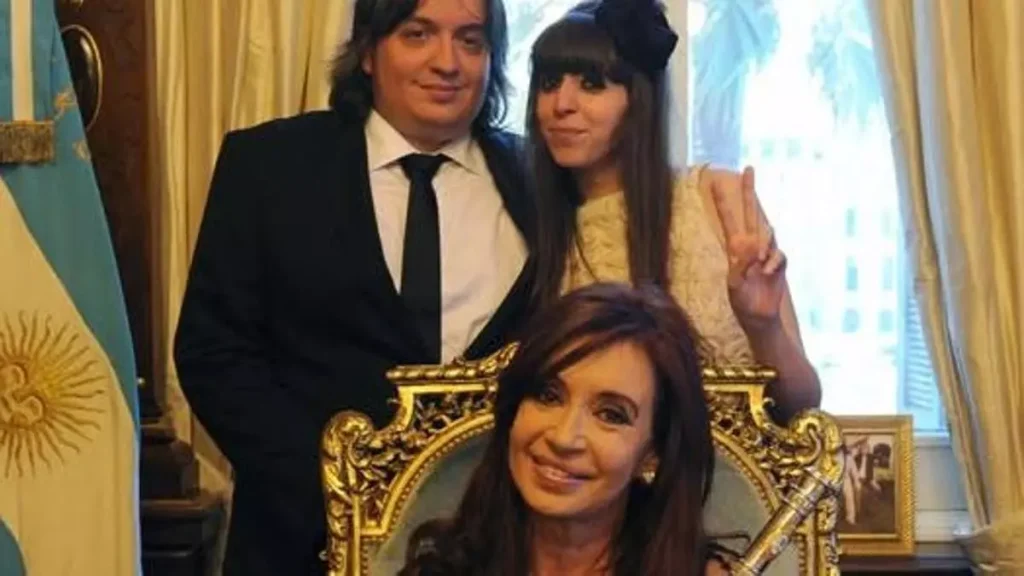
Cristina Fernández De Kirchner Sees Her Argentine Empire Crumble After the Seizure of 20 Properties

The decision also affects her children, who had inherited assets, deposits, and shares

Of the seized properties, 19 were registered in the names of her children, Máximo and Florencia, in addition to one property registered in Cristina’s own name. / Wikimedia

14ymedio bigger14ymedio/EFE, Havana, November 21, 2025 — Argentine Justice ordered the almost total confiscation of the emblematic assets of Cristina Fernández de Kirchner and her children, Máximo and Florencia, to cover approximately 685 billion Argentine pesos derived from the final conviction for fraudulent administration and steering of public works contracts in the province of Santa Cruz.

The Federal Oral Court No. 2 has ordered the seizure of approximately 20 properties, primarily located in Río Gallegos and El Calafate (Patagonia, southern Argentina), which will now be under the jurisdiction of the Supreme Court for administration and subsequent public auction. The former president, sentenced in 2025 to six years in prison and permanently barred from holding public office in the Vialidad case, now faces the financial dismantling of her family’s inheritance.

The hardest blow falls on Máximo and Florencia, her children. Many of the properties now subject to seizure were already in their names, thanks to a meticulous schedule of donations and transfers made between 2006 and 2016. In that last year, Cristina transferred 50% of 26 properties to them, in addition to bank deposits and shares. That move, presented at the time as a “family” asset restructuring, is now being interpreted by the courts as part of the same criminal scheme.

All those convicted must use their assets to cover the full amount of the damages, even if those assets are held by family members or third parties, according to a mechanism known as “joint and several confiscation.” This legal mechanism allows for the seizure of the 19 properties registered in the names of Máximo and Florencia, as well as a property in Cristina’s own name, lots in El Calafate, and assets linked to the hotel business. continue reading

Visits to the Peronist leader are restricted to only twice a week, a maximum of two hours, and no more than three people per shift.

While the Supreme Court prepares to act as administrator and auctioneer of the assets that for years represented the economic power of Kirchnerism, Cristina Fernández’s daily life has been spent under house arrest since June of this year. The same Federal Oral Court 2 that signed the seizure order has just restricted visits to the Peronist leader to only twice a week, for a maximum of two hours, and with no more than three people per visit. The decision comes after a meeting with nine economists that exceeded the limits of her legal status.

The new rules do not affect her immediate family, assistants, lawyers, or healthcare personnel, but they do limit Cristina’s ability to continue operating politically from her home, which she herself renamed San José 1111 on social media. On X, the former president attributed the decision to the “media circus” and defended the meeting with economists as part of a project for “productive and federal growth for the 21st century.”

Behind the fall of the Kirchner economic empire lies a geography that extends beyond Argentina, as a significant part of the family’s recent history unfolded in Havana. Florencia Kirchner traveled to Cuba in February 2019 to participate in a screenwriting course, already a key figure in the corruption cases involving her family. Just as she was due to return to Buenos Aires, Cuban doctors forbade her from flying, diagnosing her with post-traumatic stress disorder and mild lymphedema in her legs, in addition to other health problems. Cristina herself blamed the “fierce persecution” by the justice system for her daughter’s “physical deterioration.”

Between March 2019 and March 2020, Fernández traveled to the island at least ten times to visit her daughter.

From March 14, 2019, Havana became the former president’s second political and emotional home. Between March 2019 and March 2020, she traveled to the island at least ten times to visit Florencia. Some trips were to spend the end-of-year holidays, others to welcome 2020 with her daughter, and still others combined family and political engagements, such as the presentation of her book, Sinceramente, at the Havana Book Fair in February 2020.

Meanwhile, the Argentine Justice system imposed conditions: Florencia had to appear every 15 days at the Argentine Embassy in Cuba to report on her state of health and any changes of address, a form of minimal control over a key figure in the corruption cases involving the family.

From Cuba, Cristina fostered a narrative in which the Island was presented as a medical and political refuge from an Argentine Justice system supposedly aligned with “the hegemonic media.”

The thread that connects Río Gallegos, El Calafate, and Havana is that of a power that believed it could shield itself with properties, legal privileges, and international connections, and that is now discovering that the courts can also seize deeds, accounts, and hotels. Kirchnerism insists on speaking of “persecution.” The judicial reality, however, shows the end of an impunity that, for years, traveled first class between Buenos Aires and Havana. So far, Cuban state media have avoided mentioning the seizures.

____________

COLLABORATE WITH OUR WORK: The 14ymedio team is committed to practicing serious journalism that reflects Cuba’s reality in all its depth. Thank you for joining us on this long journey. We invite you to continue supporting us by becoming a member of 14ymedio now. Together we can continue transforming journalism in Cuba.

Cuba Is Freezing the Bank Accounts of All Foreign Companies

There is growing suspicion that the regime has appropriated these funds to pay for its imports

Line at a branch of the Banco Metropolitano in Luyanó, Havana. / 14ymedio

14ymedio bigger14ymedio / EFE, Havana, November 20, 2025 — The Cuban regime is communicating to foreign companies that they will not be able to extract or transfer abroad the currencies they currently have deposited in Cuban banks. This was confirmed to EFE by “multiple business and diplomatic sources.”

Foreign companies are also being offered the possibility of opening a new type of bank account, called “real,” which must be fed with “foreign currency.” These may be used for foreign transfers and cash withdrawals.

However, some foreign companies indicated to EFE that there are also problems in these “real” accounts with extracting currency in cash and repatriating money.

In an article published this Thursday, EFE says that the measure implies a recognition of the inexplicit “corral” that the country has been suffering for months, and generalizes the model that the Cuban authorities tested in the first half of this year with a handful of foreign companies, information also reported by the Spanish agency last April. continue reading

Although the regime formally restricted this kind of operation in early 2025, in practice it had already been controlling its partners’ finances for a long time

In fact, this newspaper had access last July to a letter from Agri VMA, a Vietnamese company with facilities in Mariel. The regime officially restricted this kind of operation in early 2025, but in practice it had already been controlling its partners’ finances for a long time, allowing them to make transfers only under express authorization.

In a desperate request for authorization, dated May 28, 2024, Agri VMA addressed three Cuban ministers to explain the imperative need to access their frozen funds in an account of the International Financial Bank — owned by the Cuban state — to send $300,000 to their headquarters in Vietnam. The company claimed to need these funds to “buy raw materials and ensure a perfect continuation of our services.”

It was not possible to know whether the transfer was finally authorized, but last year Havana became much more careful with its Asian ally, its second trading partner on that continent after China and its first in investment on the island. Agri VMA itself has not stopped appearing in the headlines for its “successful” rice project and last January became the first foreign company to which the Cuban state ceded land to exploit.

What is most suspect is whether the regime has been using these currencies to pay for its imports, in a context of absolute illiquidity in the banking system. Cuba has 334 businesses with foreign direct investment, of which 56 have 100% foreign capital, according to data from the Ministry of Foreign Trade.

According to what EFE published today, the plan is part of the mechanism for management, control and allocation of foreign exchange provided by the Government Program to Correct Distortions and Revive the Economy, the recently published plan of anti-crisis measures, which does not contain details.

According to the same EFE sources, the Cuban Foreign Ministry met this Wednesday with the diplomatic corps to communicate “a similar mechanism to alleviate the financial difficulties suffered by the representations of other nations,” although without having to open a “real” account. Thus, it was explained to them that a cut-off date for their accounts would be announced shortly. Foreign currency received from then on could theoretically be withdrawn and transferred abroad. The availability of previous funds is not guaranteed, they added.

The measure also takes place months after it was unexpectedly announced that all foreign entities must start paying rent in dollars

These announcements, which highlight the banking, economic and financial crisis that Cuba is suffering, take place at a time when many foreign companies are experiencing serious difficulties. These are aggravated by the distortions in the exchange rate, since legal entities must operate at 24 pesos per dollar when the street exchange of the greenback is around 450.

The measure is also taking place months after all foreign entities were unexpectedly told that they must start paying rent in dollars for the buildings they rent from Cuban real estate companies and for the salaries of their employees (which are paid through a Cuban agency that collects a commission).

Neither the Cuban government nor the Central Bank of Cuba, which is organically dependent on the executive, has publicly reported on these measures or explained the reasons. Experts and observers believe that the authorities have resorted previously to using the currencies in these accounts to be able to make payments abroad.

Also, several years ago, the debts of the Cuban State to more than 250 Spanish companies raised the sector’s complaints and forced the government of Pedro Sánchez to intervene. In a visit to Havana on the occasion of the opening of the Tourism Fair, dedicated in 2018 to Spain, the then Minister for Industry, Trade and Tourism, Reyes Maroto, asked the regime for a payment plan for its debt with Spanish entrepreneurs, as well as a reduction of bureaucratic obstacles so that they could do business on the Island.

In return, he offered Spain’s support for investment in Cuba, such as support lines for the internationalization of MSMEs* and, especially, an equivalent fund created with the $400 million debt that Spain forgave in 2015.

*Translator’s note: Literally, “Micro, Small, Medium Enterprises.” The expectation is that it is also privately managed, but in Cuba this may include owners/managers who are connected to the government.

Translated by Regina Anavy

____________

COLLABORATE WITH OUR WORK: The 14ymedio team is committed to practicing serious journalism that reflects Cuba’s reality in all its depth. Thank you for joining us on this long journey. We invite you to continue supporting us by becoming a member of 14ymedio now. Together we can continue transforming journalism in Cuba.

US Accuses a Pilot Who Participated in the Shoot-Down of Brothers to the Rescue of Immigration Fraud

Luis Raúl González-Pardo faces charges that could cost him up to 15 years in federal prison

González-Pardo, in the center, with a group of pilots from the Cuban Armed Forces / Martí Noticias

14ymedio bigger14ymedio (via EFE), Miami, November 13, 2025 — Authorities in Florida accused Cuban pilot Luis Raúl González-Pardo of immigration fraud for lying about his past in the Cuban Air Force after arriving in the US under Humanitarian Parole in 2024, despite being implicated in the deaths of four Americans.

The Attorney General’s Office in the South Florida District announced that González-Pardo, 64, faces charges of fraud and misuse of visas, permits and other documents, and of giving false statements to a federal agency, which could get him up to 15 years in federal prison.

“This man’s past as a longstanding military pilot for the evil Castro regime, which has brought unspeakable suffering to the Cuban people, should have been front and center in his immigration file,” Attorney General Pam Bondi said in a statement.

“This man’s past as a longstanding military pilot for the evil Castro regime, which has brought unspeakable suffering to the Cuban people, should have been front and center in his immigration file”

The pilot, who arrived in April 2024 under the humanitarian parole program of former President Joe Biden (2021-2025), submitted “false declarations” about his membership in the Cuban Air Force from 1980-2009 on his I-485 form, in order to adjust his immigration status, according to the Department of Justice.

The complaint alleges that “he falsely stated that he had never received any military or weapons training, never participated in a group of any kind that used weapons or threatened to use weapons, and never served in a military or police unit, when in fact he received such training and served in the Cuban Army.” continue reading

Authorities accompanied the indictment with a photo of the suspect while working in the Cuban Air Force.

La polémica estalló en octubre de 2024, cuando legisladores republicanos de Florida, como el entonces senador Marco Rubio, ahora secretario de Estado, enviaron una carta a la Administración de Biden para denunciar que la llegada de González-Pardo implicaba admitir a “individuos ligados al régimen ilegítimo de Cuba”.

The controversy erupted in October 2024, when Florida Senator Marco Rubio, now Secretary of State, sent a letter to the Biden Administration denouncing that the arrival of González-Pardo “implied admitting individuals linked to the illegitimate regime of Cuba.”

Authorities accompanied the indictment with a photo of the suspect while working in the Cuban Air Force

Lawmakers reported that the pilot is “notoriously linked” to a 1996 incident in which Cuban MiG-29 jets shot down two planes of the humanitarian organization Brothers to the Rescue, resulting in the death of four “innocent Cuban-American pilots.”

The current US president, Donald Trump, revoked the Humanitarian Parole program, a temporary legal protection that the Biden government granted to some 532,000 Cubans, Nicaraguans, Venezuelans and Haitians.

“This Department of Justice will vigorously pursue anyone who lies about their past and takes advantage of the US immigration system,” Bondi warned.

Translated by Regina Anavy
____________

COLLABORATE WITH OUR WORK: The 14ymedio team is committed to practicing serious journalism that reflects Cuba’s reality in all its depth. Thank you for joining us on this long journey. We invite you to continue supporting us by becoming a member of 14ymedio now. Together we can continue transforming journalism in Cuba.
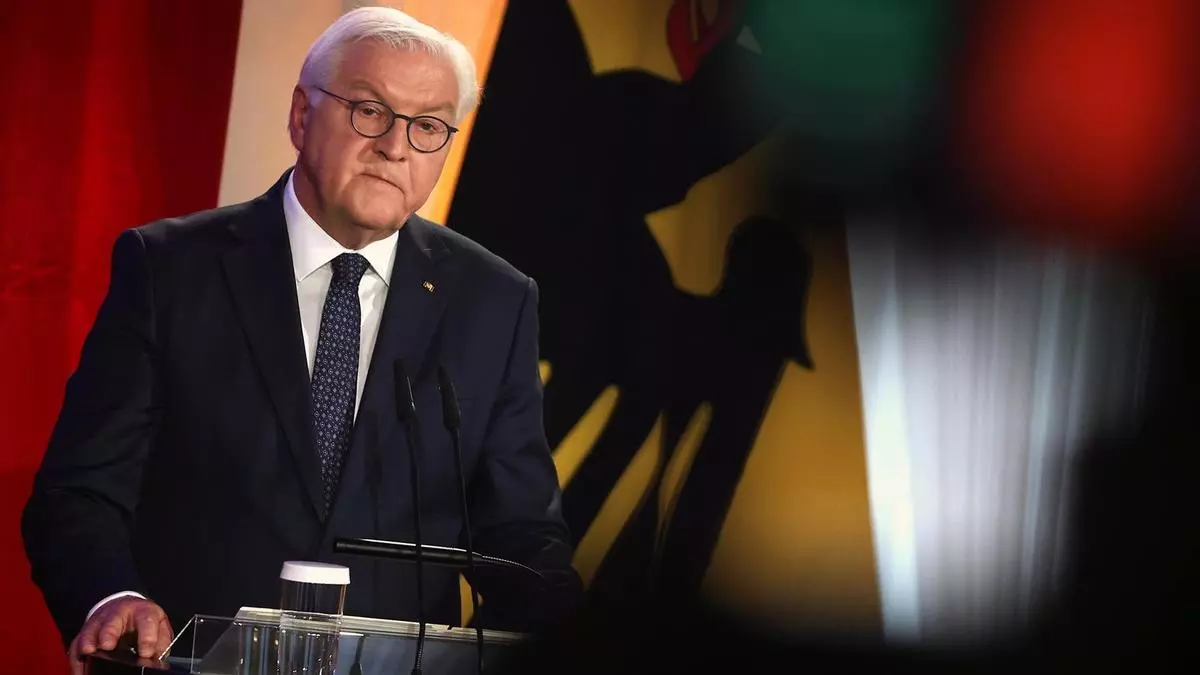
Germany’s President Believes Democracy Has Never Been As Threatened Since 1989

“A Russian aggressor has shattered our peace order,” warns Frank WalterSteinmeier

German President Frank-Walter Steinmeier commemorates the fall of the Berlin Wall

14ymedio biggerEFE (via 14ymedio), Berlin, November 9, 2025 — On Sunday German President Frank-Walter Steinmeier called for the defense of democracy, saying it faces the greatest threats it has experienced since the fall of the Berlin Wall in 1989.

He also invoked the darkest and brightest moments in German history during the ceremony to commemorate November 9, a date he described as “ambivalent” because of the various events with which it is associated.

“One hundred and seven years after November 9, 1918, the date of the proclamation of the first German republic, our liberal democracy is under pressure,” Steinmeier said.

“Populists and extremists mock our democratic institutions, poison our debates, and profit from fear,” he added.

“Populists and extremists mock our democratic institutions, poison our debates, and profit from fear.”

He went on to recall the pogroms of November 9, 1938, the so-called Kristallnacht, and said that 87 years later anti-Semitism has intensified since the Hamas attacks of October 7, 2023.

“And 36 years after November 9, 1989, the day the Berlin Wall fell? We feel above all how the distance between East and West is growing, and how the memory of the energy of the peaceful revolution is losing its power. It is not continue reading

easy for us to draw strength and confidence from those happy times,” he said.

Steinmeier asserted that everyone who knows him knows that he does not tend towards alarmism or describing apocalyptic scenarios, but he added that given the current situation, one must dare to look at the threats that exist.

“We cannot lend ourselves to a new fascination with authoritarianism and then fall into a lack of freedom, only to have everyone later say that they neither wanted it nor knew it was coming. Today, November 9th, I say it clearly: we can know it, and we do know it,” he stated.

According to Steinmeier, never before, since the reunification of Germany, have democracy and freedom been so threatened as they are now.

“Never before, since the reunification of Germany, have democracy and freedom been so threatened.”

“Threatened by a Russian aggressor who has shattered our peaceful order and against whom we must protect ourselves, and threatened by far-right forces that attack our democracy and gain support among the population,” he declared.

Simply waiting for the storm to pass is not, according to Steinmeier, a solution. “We have to act, and we can act. Our democracy is not doomed to surrender,” he emphasized.

“Our historical experience teaches us that the reckless attempt to tame anti-democrats by giving them power is something that failed not only in Weimar. Extremism, according to the American political scientist Daniel Ziblatt, never triumphs on its own. If it succeeds, it is because others allow it. That is the lesson of the Weimar Republic,” he remarked.

Therefore, Steinmeier called for maintaining the existing cordon sanitaire against the far-right Alternative for Germany (AfD), although without explicitly mentioning that party.

“There can be no political cooperation with extremists. Not in the government, nor in parliaments,” he emphasized.

____________

COLLABORATE WITH OUR WORK: The 14ymedio team is committed to practicing serious journalism that reflects Cuba’s reality in all its depth. Thank you for joining us on this long journey. We invite you to continue supporting us by becoming a member of 14ymedio now. Together we can continue transforming journalism in Cuba.