
From Yankees to Yumas*, Cuba’s Love-Hate for the United States / 14ymedio, Zunilda Mata

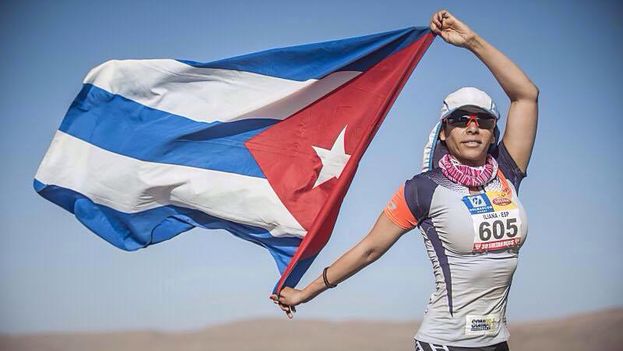
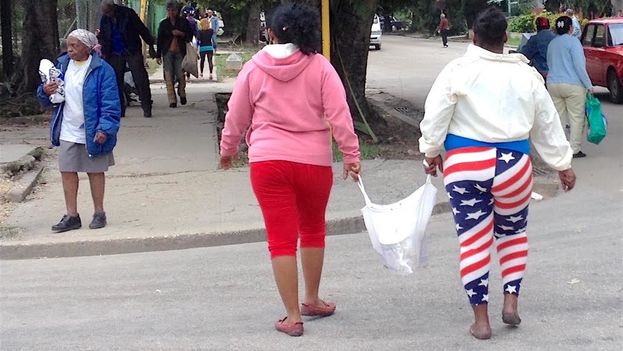
The flag, better "well adjusted" some think. (14ymedio)
The flag, better “well adjusted” some think. (14ymedio)

14ymedio bigger14ymedio, Zunilda Mata, Havana, 19 March 2016 – From the wall of his room hangs an American flag and on his computer screen the wallpaper is the image of Uncle Sam pointing his finger. Maurice is 30 and since he was young he was raised under the strictest anti-imperialism, but today he displays a great fascination for the neighbor to the north. With Barack Obama’s visit to the island, this young man who once shouted “Cuba Sí! Yankees No!” gives free rein to his adoration for yumalandia.*

“My uncle who lives in New Jersey sent me this dollar bill when he earned his first wages after going there as a rafter,” he relates. He has it framed on the wall next to his desk and dreams of being “on the other side of the pond.” The room is decorated with license plates from Las Vegas and Miami, a Starbucks sign, a drawing of Lincoln’s face and a photo of the Capitol in Washington. continue reading

“I collect everything that comes from there,” explains Mauricio, who has never set foot in the United States, but says he feels like “a son of the land of opportunity.” His vision of the country situated only 90 miles away has been formed through TV shows, Hollywood movies, and what friends who have managed to get there tell him. “I should have been born there,” he says without blushing.

The normalization of relations between Cuba and the United States has made more visible the fascination many Cubans feel for their powerful neighbor. “Now I go out wearing the American flag whenever I can,” boasts Liudmila, 22 and a devoted attendee of the informal gatherings on G Street in Havana. A student in her last year at the Teaching Institute, she says that she goes to classes wearing the stars and stripes.

“Before the teachers were irritated when someone was dressed that way, but now it has become normal and many do it.” At meetings of the University Student Federation (FEU) they have asked the students to avoid wearing clothes with allusions to the United States, but “it’s useless, because people keep wearing it,” explains Liudmilla.

T-shirts with Barack Obama’s face also proliferate. “He is my idol,” said Adonia, a young mixed-race man of 19, who sees the United States president as a role model. Asked if he would wear any clothing with allusions to Raul Castro, he grimaced in disgust. “No, we’ve already had too much of that everywhere to wear it on our bodies,” he says.

Cuba is one of the few Latin America countries where the word gringos is not used to refer to Americans. Instead, popular language uses the noun yuma, with a strong sense of admiration. Despite intense official propaganda, the word Yankee never took hold in everyday speech.

“The yumas are the best,” exclaims a taxi driver who operates on the route to the airport. “They give the best tips,” the man justifies. A similar opinion is shared by waiters in paladares (private restaurants), as well as in state establishments. “They come with the idea that here they also have to leave 10 percent of the check and that benefits us greatly,” says a waiter at Los Nardos, a place in Old Havana.

Yumaphilia reaches ridiculous extremes. “I only wear clothes that say Made in USA,” says a client of a sophisticated Havana clothing purveyor. ”Quality is quality and they have it,” says the woman. She adds that the day they open “a McDonald’s in the Plaza of the Revolution, I swear I am going with my children and we are going to ask for the biggest things on the menu.” The saleswoman in the shop provokes her, asking, “What about sovereignty, Girl?” Her response is brief and biting. “Can we eat that?”

*Translator’s note: Yuma is an affectionate term in Cuba for an American.
More than 200 Activists Arrested Throughout the Island / 14ymedio

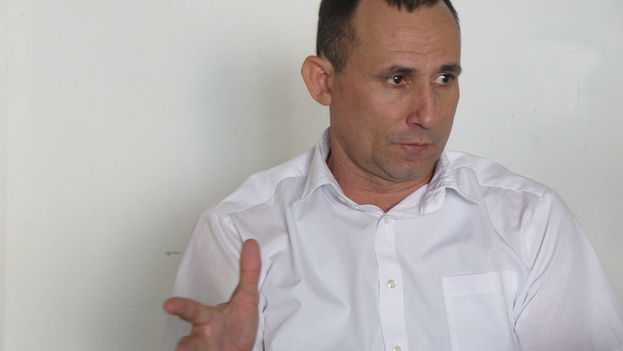
Jose Daniel Ferrer, leader of the Patriotic Union of Cuba (UNPACU). (14ymedio)

14ymedio bigger14ymedio, Havana, 19 March 2016 — The arrests of 209 activists is the final result this Saturday, a day on which several opposition groups demanded the release of political prisoners. The majority of those arrested are members of Unión Patriótica de Cuba (Cuban Patriotic Union, UNPACU), according to a statement to 14yMedio by its general coordinator, José Daniel Ferrer.

The bulk of the arrests took place in the eastern provinces and in the special municipality of Isla de la Juventud (the Island of Youth, formerly the Island of Pines) when the activists demanded publicly “the release of political prisoners, respect for human rights and the end of repression against the Ladies in White,” stated the activist formerly imprisoned following Cuba’s Black Spring. continue reading

Other activists were prevented from leaving their homes during police operations, including Zaqueo Báez, who was arrested on two occasions this past week. A similar situation was denounced by Arcelio Rafael Molina, a member of UNPACU, who has been forbidden to leave his home in the municipality of Playa, in Havana, which is also the headquarters for the western branch of the organization.

The group denounced as well that, this morning, a group of 15 of its members in Havana’s Parque Central (Central Park) was “surrounded by political police agents who threatened them with arrest if they created any demonstration.”

In the eastern part of the country, the bulk of arrests are concentrated in Santiago de Cuba with 147 detained activists, plus 28 in Guantanamo, 16 in Las Tunas and 6 in Holguín.

UNPACU is the largest opposition organization in the country, and it has shown public support for the visit of Barack Obama who will arrive on the island this Sunday. In its communiqués UNPACU has also warned about a possible increase in repression during the president’s stay in Cuba.

Translated by Ernesto Ariel Suarez

It is Never too Late to Set Things Right / 14ymedio, Pedro Campos

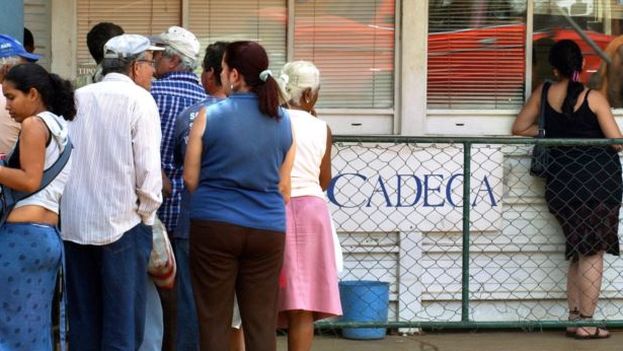
Several people line up in at a currency exchange. (EFE)

14ymedio bigger14ymedio, Pedro Campos, Havana, 19 March 2016 — Foreign Minister Bruno Rodriguez, commenting on the latest measures of the Obama Administration to loosen the strings of the blockade-embargo, announced Thursday at a press conference that the Cuban government had decided to eliminate the 10% tax on the dollar, established in 2004.

When it goes into effect, this measure will have an immediate positive effect on people’s pocketbooks and on the country in general. The dollar will be worth one Cuban Convertible Peso (CUC) and remittances sent by family and friends abroad will automatically increase their purchasing power by 10%. For every dollar that comes into the country in this way, the recipients will have 10 cents more to spend on food or whatever they need. continue reading

People with account in dollars  automatically earn 10% relative to the CUC and the “little” Cuban peso (worth 4¢ US). Foreign investors will receive a 10% reduction in the costs of doing business in Cuba and, in general, the expenses of foreigners in the country will be reduced by 10%.

In addition, the prices of products sold in CUCs are effectively reduced by 10% and the cost of paying a Cuban work force is reduced by the same amount. A foreign concern that pays a Cuban worker 100 CUCs would normally face a cost to do so of 110 CUCs, but now will shell out only 100.

In the modern global economy, one of the measures taken by countries to stimulate their sales and investment is the devaluation of the national currency. This measure, in fact, is a devaluation of the national currency, the CUC, by 10% against the dollar, although it is being presented in a different light.

Several years ago, when the Cuban government implemented the tax of 10% on the value of the CUC against the dollar, it was a hard blow, not to the “empire” which continued to strengthen, but to the Cuban economy and the pockets of its citizens who receive remittances from abroad

This move will allow the dollar to be accepted by individuals in their businesses on par with the CUC and will avoid cumbersome exchanges, unless the Government specifically prohibits the circulation of the dollar in Cuba, which would be counterproductive. In fact, Cubans can carry dollars, operate and shop with them.

If such a prohibition does not appear, it is assumed that with increasing American tourism the free circulation of the dollar in the Cuban economy will also increase and this will create better conditions for establishing, in the near future, a single currency although in the short-term it is likely that we would have three basic currencies: the Cuban peso, the CUC and now the dollar on par with the CUC.

Silently, the Cuban economy would thus assume a process of dollarization that would connect us well to US market, favoring the economic development of the country in the short and medium term. “After the feast comes the reckoning,” as my grandmother would say.

This could ultimately be considered the government of Raul Castro’s most important economic measure, given the immediate impact it would have on ordinary people’s living standards and its effects as a stimulus to tourism, foreign investment and the purchase of Cuban products in the world market.

On 2 September 2007, taking as a starting point the ideas of democratic socialism, a paper titled “15 proposals for the revitalization of socialism in Cuba” was published, suggesting: “Restoring parity between the Cuban Convertible Peso against the dollar, with a minimum exchange tax to stimulate tourism, foreign investment (preferably indirect and in joint ventures), remittances and internal and external movement of the economy.”

It is never late to set things right.

“The Only Thing I Want Is For Them To Let Me Be With My Son” / 14ymedo, Mario Penton

Fernando Collazo and Tania Chacon. (Facebook)

14ymedio bigger14ymedio, Mario Penton, Miami, 18 March 2016 — When Fernando Collazo left Cuba on 23 October 2014 heading to Ecuador, he carried painfully in his heart nostalgia for his family and the homeland he left behind and the illusion of a person who hopes to devote his best energies to succeeding in a foreign country and, at the expense of every sacrifice, to helping his family.

He was driven by his commitment to his brother, who did not hesitate for a moment to sell his possession to get the money needed for a plane ticket to Quito in which the family deposited its hopes. Finally, they would emerge from misery and illegality. Fernando would not have to keep selling orange concentrate in the capital, stolen in God only knows what ways from the few remaining citrus producers in Jaguey Grande. continue reading

Fernando is a simple man, hardened by physical labor, a man of few words, but with an exquisite sensitivity. He came to the land of Pichincha like many Cubans, with the hope of asking the coyotes, once he got the money together, to help him continue his journey to the United States. “I came to this country with $200 in my pocket. That’s all I had.”

On his third day in the country, on a tourist visa, he began working as a bricklayer in a school in Tulcán. It was there that he met Tania Chacon, an Ecuadorean woman, the single mother of an 11-year-old. They decided to live together and Collazo took over maintenance of the house, where his mother-in-law also lived.

Months passed and Tania was pregnant. Five months into the pregnancy, he needed to regularize his immigration status to be able to continue to work when his son was born, so he went to the Cuban consulate to ask for instructions about how to proceed. There he saw an official who explained that after the birth of the baby he could benefit from Ecuadorian nationality without any more bureaucratic complications. Encouraged by this hope, he took the minibus back to his city when the immigration police launched a raid and he was arrested.

“The first thing they did was take my belt, my cellphone and the thirty dollars I had,” he remembers. He never saw the money again. He was detained and held in a cell until he was taken to the Hotel Carrion, a center where they hold people who are not formally under arrest but nor are they free to leave, while awaiting processing for deportation to their places of origin.

Fernando’s trial was held and the judge ruled for his deportation. Tania Chacon has asked repeatedly that he be allowed to stay, at least until the birth of their son. The repeated appeals have exhausted the family resources to the extent that they have been selling their appliances. Not even a child support judgment they tried as a way to stop the process was successful.

Nor have the numerous letters sent by Cubans to president Rafael Correa asking about the case. The recommendations from his employers are worthless as are the interventions from humanitarian organizations. “The only thing I want is for them to let me be with my son. I don’t care if they deport me afterwards, at least let me see him,” asks Fernando.

This Friday is the last chance to secure the release of Fernando Collazo. His lawyer filed a habeas corpus plea to try to stop the deportation process. Organizations of Cuban civil society in the Andean country have expressed their support through a statement and are demanding his release.

Obama Sends Letter to Havana Woman / 14ymedio

Barack-Obama-Cuba-Casa-Blanca_CYMIMA20160317_0008_13
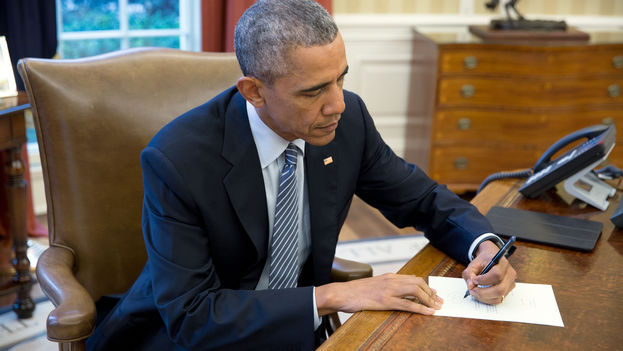
US President Barack Obama, sent a letter to Cuba. (White House)

14ymedio bigger14ymedio, Havana, 17 March 2016 — US President Barack Obama hopes “to have time to enjoy a cup of Cuban coffee” during his upcoming visit to the island that begins this Sunday. So he said in a letter he sent to Ileana Yarza, a resident of the Vedado neighborhood in Havana. The letter traveled this Wednesday in the first cargo of direct mail from the United States to Cuba in fifty years.

Yarza, 76, wrote to the US president on 18 February, when his visit to Havana was announced, to express her joy at the news and to invite him to have a cup of Cuban coffee at her home.

In his answer, Obama thanked the woman for her support and stressed that the reestablishment of direct mail “serves as a reminder of a bright new chapter in the relationship between our two nations.”

Miami-Havana postal-flights will have a frequency of three times a week (Monday, Wednesday and Friday) with three tons of cargo on each trip, beginning on March 25, according to remarks made this Wednesday by the vice president of the Cuban Post Office, Zoraya Bravo Fuentes.

The Role of the Spoilsport / 14ymedio, Reinaldo Escobar

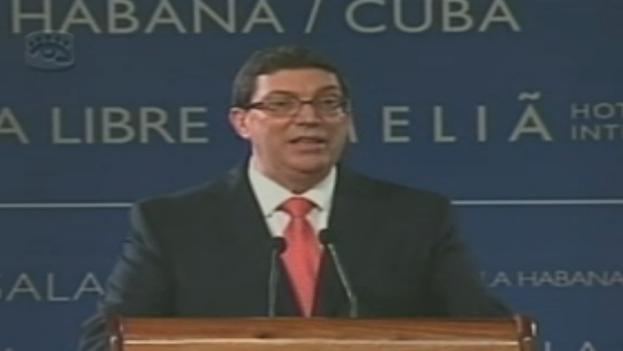
Cuban Minister of Foreign Affairs Bruno Rodriguez during his speech on Thursday. (Fotograma)

14ymedio bigger14ymedio, Reinaldo Escobar, Havana, 18 March 2016 – During his press conference on Thursday, Cuban Foreign Minister Bruno Rodriguez tried to diminish the importance of the United States’ most recent package of relaxations toward the island. His remarks were an attempt to curb any enthusiasm for the latest measures: permission for Cuba to use the dollar in its transactions, and the ability to pay Cuban citizens for their work in the United States or for US entities even if they are not migrants to that neighboring country.

The most substantial part of his speech was the announcement of the elimination of the 10% tax on the dollar. In the newly inaugurated pressroom at the Havana Libre Hotel, the murmurs of joy could not be stifled when the minister declared, “As long as there is financial persecution, there will be taxation, only after verifying this security exists, will it be exempt.” continue reading

The foreign minister noted that, unlike the United States, Cuban has not placed restrictions on the citizens of that country visiting Cuba. However, he omitted the restrictions that Cuba’s immigration law imposes on Cubans living abroad, many of whom are denied authorization in their passport to travel to their country of origin. Others have even been prevented from boarding a plane to their homeland.

An interesting detail was that in his description of what Obama will do in Cuba, he passed over the clear intention of the US president to hold a meeting with dissidents and activists from independent civil society. It was also striking that none of the four journalists authorized to ask questions mentioned this issue, given that it has been so widely talked about.

To the question asked from Andrea Rodriguez of the Associated Press regarding whether “eliminating the tax” was the only thing Cuba was offering in response to the new package of measures from the US aimed at normalizing relations, the foreign minister referred to measures taken by the Revolution since 1959, specifically those that caused the rupture in relations. “Cuba is a country that is constantly changing,” he said, and offered as an example the Guidelines agreed to at the Sixth Congress of the Communist Party of Cuba.

On the street, the only thing people were talking about was the elimination of the tax and almost no one objected to the conditions mentioned for its implementation at the currency exchanges. Cubans take it for granted and think that the measure could bring as a collateral consequence an increase in the flow of remittances, because since the introduction of the tax in 2004 some of their relatives living in the United States felt they were being cheated with the artificial decrease in the value of the money they sent to family in Cuba.

Most of the people on the street consulted by 14ymedio were indifferent to the demand to return the Guantanamo Naval Base as well as to the reiteration at the negotiating table that there will be no talk of internal changes in Cuba because these “are and will be the sovereignty of our people.”

As much as the foreign minister wanted to sow discouragement, optimists continue to believe that Obama will bring in his diplomatic pouch irresistible offers for the people and that the government will have no option but to adapt the rigidity of the system to the new proposals, or to continue playing the role of the spoilsport.

Havana Hides its Beggers / 14ymedio, Yosmany Mayeta Labrada

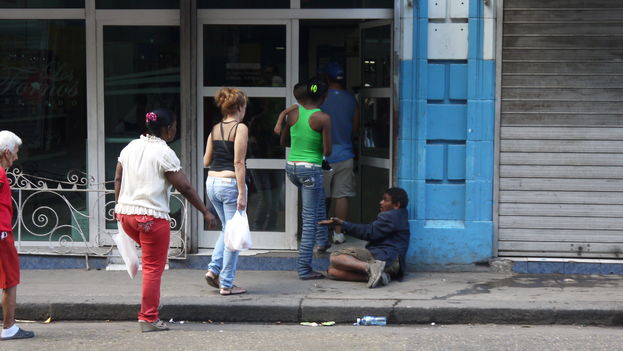
For several days, brigades from the Ministry of Public Health are interning the city’s beggars in health facilities to get them off the street. (14ymedio)

14ymedio bigger14ymedio, Yosmany Mayeta Labrada, Havana, 17 March 2016 – Fixing up the Latin American Stadium and repairing the streets where Barack Obama’s motorcade will travel are just a part of the preparations before the coming of the president of the United States to Havana this Sunday.

Nancy Navarro, a nurse at the January 1st Teaching Polyclinic in the Playa district, told 14ymedio that there was a meeting at her workplace to prepare a census of the people wandering around the city. The process also included an assessment by professionals specializing in mental health, who in the company of other technicians are responsible for picking up the beggars, “on the street or even in their homes.” continue reading

A doctor from the Fifth Canaria Health Center in the municipality of Arroyo Naranjo, said that “seniors roaming the streets of Havana’s various municipalities will be interned” there. The employee acknowledged that she expected an influx of a little more than 200 elderly, “although this is a very high figure for the facility because it does have ideal conditions for sheltering them.”

Yaneysi Rios, a doctor at the 14th Clinic in the municipality of Habana del Este, explained that many homeless people do not have family and need to be hospitalized for life. “It is up to us to see to these people who belong to our medical center, many are elderly and that have no family nor do they receive care from any parallel institution. In reality they need to be hospitalized for better care of their health,” she added.

One of those elders who wanders around the city is Rogelio. He can be seen in a centrally located park in Vedado as well as in the remotest neighborhoods on the outskirts. “I’m retired from transport for more than 15 years ago and since then I collect cans in different places and in nightclubs. With over 42 years of work I have no place to live, so today I stay here and tomorrow there,” he said.

Now he is trying to hide from the eyes of the police and medical teams who are inspecting the streets. He does not want to go to a detention center because he prefers “to have my independence.” Xiomara Kindelan agrees with him. Her 69-year-old brother was taken to one of those temporary centers while she wasn’t home. “Truly he roams” she declared, “but if they had told me to control him so he would not to leave the house for several days, I would have no problem, ultimately he is my younger brother.”

Neighbors on Monte street, in the municipality of Old Havana, watched when employees from Public Health approached several people begging in the streets and put them on a bus. A worker from Community Services in the area said that since early Monday the raid has been massive: “I have not seen anything like it and I have spent years working here, anyone with the hint of a being beggar was forced on the bus, many are elderly people living in the area who have children and grandchildren who are dedicated to their care.”

Reinier Lopez, a resident of Monte Street at the corner of Angeles, said he was angry because his grandfather was taken away “like a dog in the street… I do not agree with these actions, I am a trained young man and for five years I have devoted myself to my job, my house and caring for my grandfather who is 78. Now he is in a place for people with mental disorders it is not the right thing when you have family members who care for you,” he argued.

Although these measures were never officially announced, some homeless migrated to more distant neighborhoods, while the families of others are hosting them temporarily until Obama finally says goodbye to the island and life returns to normal.

A Package to ‘La Yuma’ / 14ymedio, Zunilda Mata

Post Office in Havana. (EFE)

14ymedio bigger14ymedio, Havana, Zunilda Mata, 17 March 2016 – At 3:10 in the afternoon she entered the wide and deserted corridors of the main Cuban post office. Sonia had been carried away by the news and had packed up a small box with photos and a few souvenirs she wanted to send her sister in Florida. But the objects collected to send to the hands of her intended recipient encountered an obstacle: it still isn’t possible to send a package direct to the United States.

The scene took place just as the national and international press announced the reestablishment of direct mail service between the two countries, interrupted for decades. Almost five hours after the IBC Airways plane with the first mail from the United States landed in the Cuban capital, at Window No. 11 at the Ministry of Communications (Mincom), Sonia received a “no” in answer to her attempt to send a small package to Coral Gables. continue reading

“Packages still can’t be sent to the United States,” explained an employee behind the glass.

Again, Cuban reality belies the headlines. Susana, director of Mincom’s Postal branch, tries to convince the customer that she must have “misread” the newspaper, because “it is not yet possible” to send letters and packages directly to “la Yuma.” Her words resonate with an echo in a place where hardly anyone tries to send a money order from one province to another and others submit claims for the contents of shipments have been lost.

The employee corrected herself in the face of Sonia’s astonishment. “The thing is, we don’t have all the regulations for how to send things,” she justifies. Communications between the two governments — enemies for more than half a century — seem to be easier to resume that communications with Cuban citizens. “We take parcels for anywhere in the world except the United States,” the official emphasized.

The director repeats the same speech and insists that the direction whether to apply to the United States the same regulations applied to all other countries has not been received. “The agreements have been made but this is lacking,” she concludes. Every word she utters sounds like a new obstacle that will have to be overcome for any postal exchanges between the two shores.

In addition, Sonia receives confirmation of a more disturbing news. “Anyway, today is the last day to send or receive packages, because everything is stopped until the United States president leaves.” The reason, apparently, is congestion at the Havana airport as a result of the presidential visit.

Sonia asks whether the service, if any, can be paid for in Cuban pesos. “Yes, because we don’t blockade ourselves,” replies the branch director. But her phrase is vague and delivered with little enthusiasm. As faded as the stamps on Cuban letters.

Five 14ymedio Journalists Invited To A One-Year Course In Miami / 14ymedio

The training helps 14ymedio to continue our mission to create and promote a new independent journalism in Cuba. (14ymedio)

14ymedio bigger14ymedio, Havana, 15 March 2016 — Five 14ymedio journalists will participate in a program organized by the International Center for Journalists (ICFJ) in the United States, according to a statement released Tuesday. Over the course of a year, the independent Cuban writers will work in Miami media to learn techniques of storytelling (narrative), multimedia and reporting on the new direction of relations between the two countries and the impact on the inhabitants of both shores.

This initiative, which is supported by a budget of $110,000 awarded by the U.S. John S. and James L. Knight Foundation, “will enhance coverage in both countries,” said ICFJ President Joyce Barnathan. “In particular, Cuban journalists can improve their digital skills,” she added.

“The historic change in relations with the island offers a unique opportunity for a valuable exchange between journalists and the creation of a network of learning among peers,” says Shazna Nessa, director of journalism for the Knight Foundation.

The Cuban journalists traveling to the United States will also participate in the International Symposium on Online Journalism to be held in April in Austin, Texas, organized by the Knight Center for Journalism in the Americas.

The training will help 14ymedio to continue our mission to create and promote a new independent journalism in Cuba. What we learn in Miami is multiplied in Cuba, as we will impart that knowledge to the rest of the team in the country and future generations who will join us in developing 14ymedio. It will also be an opportunity to develop an active collaboration with media in the United States and other countries.

Four Cuban Political Prisoners Will Be Released To The United States / 14ymedio

The trade unionist Vladimir Morera Bacallao. (Source: Twitter)

14ymedio bigger14ymedio, Havana, 15 March 2016 – Four Cuban political prisoners will leave this week for the United States, a decision that the Cuban government has taken a few days before President Barack Obama’s arrival on the island. The departure of the opponents is the result of efforts undertaken by the Catholic Church, as reported to 14ymedio by relatives of the inmates.

Opponents Vladimir Morera Bacallao, Jorge Ramírez Calderón, Niorvis Rivera Guerra and Aracelio Riveaux Noa were transferred last week to the hospital of the Combinado del Este Prison in Havana, from where they will depart on Tuesday and Wednesday mornings. continue reading

Librado Linares, leader of the Cuban Reflection Movement, told this newspaper that he had been able to speak by telephone with them to confirm the news. “They told me that are flying to the United States but without their families”, said the former prisoner of the Black Spring. According to the opposition, the authorities promised that their families “may leave, but later.”

In the eastern part of the country, activist Lisandra Robert, a member of the Patriotic Union of Cuba (UNPACU) with responsibility for ​​political prisoners, confirmed that “the relatives of Aracelio Riveaux Noa and Niorvis Rivera Guerra were visited by someone who identified himself as a member of the Catholic Church, accompanied by an official of the Interior Ministry.”

During the visit, the two men explained to the relatives of the prisoners that “an agreement” had been reached to release the prisoners to the United States. The condition for the families to be able to accompany them [later] was that they depart “immediately” for Havana, and from there fly to the US.

Robert explained that Aracelio Riveaux Noa included “in the list to travel” several family members but only his mother and three nephews were accepted. In the case of Niorvis Rivera Guerra, his wife and children will also emigrate.

These four political prisoners were among a group of 53 inmates who were released in January 2015, after negotiations between the governments of Cuba and the United States became public. Later, they were again returned to prison and convicted for their activism in the streets.

Hard Blow To The Opponents Of Obama’s Policy Toward Cuba / 14ymedio, Pedro Campos

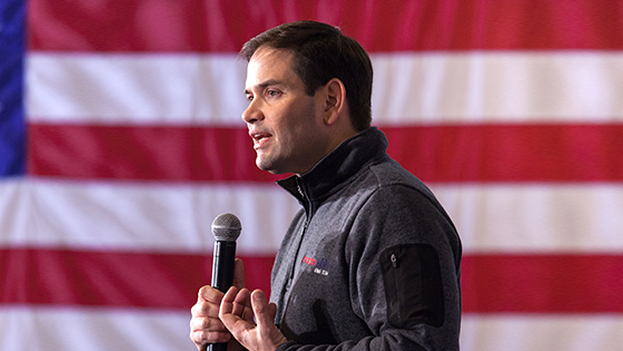
Senator Marco Rubio. (Facebook)

14ymedio bigger14ymedio, Pedro Campos, Havana, 16 March 2016 – In the Republican primary this Tuesday in Florida, candidate Donald Trump, who has been in favor of continuing Obama’s policy toward Cuba, defeated Cuban-American Marco Rubio by a margin of more than 20%, in the bastion of Cuban exile voters.

This adverse result, achieved in his home state and the headquarters of the Cuban opposition, led Senator Rubio to the decision to end his campaign to become the candidate of the Republican Party and should serve him to reevaluate any future political strategy.

A more extensive reading of the fact should lead American politicians of Cuban origin to understand that among the hundreds of thousands of nationals from the Island living in Florida, the policy Rubio defended, of pressure and an embargo on Cuba, can no longer count on majority support, as has been repeatedly pointed out by pollsters and political analysts. continue reading

Rubio had sustained his campaign in Florida opposing Obama’s policy to exchange the embargo and the pressure for rapprochement and cooperation. A part of the most radical opposition in Cuba trusted in his victory, and that once he was president of the United States he would reverse the policy of his predecessor and return to the embargo and pressure.

It is also a hard blow to internal opposition grouped who believed Rubio would win, supported him in his efforts and did and are doing everything possible to demonstrate the unworkability of Obama’s policy. They oppose his upcoming visit to Havana and with their actions have challenged the new turn in United States policy.

Rubio’s defeat in Florida is a sign that Cuban exiles have increased their support for the new policy of the United States government towards Cuba, which should contribute to a readjustment of the strategies of the most radical groups among the exile and the internal opposition and, presumably, in the position of the United States Congress towards the embargo in the coming months.

The more moderate part of the internal opposition, which for some time has assumed a different approach to that advocated by the most radical groups in Miami, is now in a better condition to advance their position in favor of dialog with Havana.

Moreover, candidates with a greater number of supports, both the Democratic and Republican Parties, favor a continuation of the new policy towards Cuba, so it becomes increasingly likely that whatever the results in the presidential elections in the US, the current trend would continue.

These considerations must help the Cuban government feel calmer about the future of its relations with the US, while the internal opposition on the island assimilates that this new relaxed atmosphere here to stay. These perspectives provide opportunities for both the government and the opposition to consider inclusive agendas that contribute to improved welfare of the Cuban people.

Some may point out that the battle for the Republican nomination is not over and that another Cuban American, Ted Cruz, who also opposes Obama’s policy, is still in the running. This is true, but in the unlikely event that Cruz beats Trump he would have to adapt his speech to the viewpoints that have marked the results in the primaries.

Safe Airport, Stunned Citizens / 14ymedio, Reinaldo Escobar

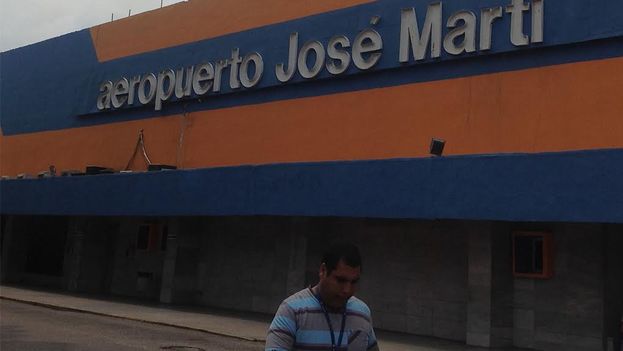
Terminal No. 1 at Jose Martí Airport, freshly painted. (Reinaldo Escobar)

14ymedio bigger14ymedio, Reinaldo Escobar, Havana, 12 March 2016 — As I walked along the always well kept Van Troi Avenue leading to Jose Marti Airport Terminal No. 1 in Havana, I had the journalistic impulse to take some pictures of the site where United States President Barack Obama will probably arrive on his upcoming visit to Cuba.

First it was a lady, let’s call her a young woman, who on seeing me – on being surprised by me, according to her – pointed at the sign that indicated the proximity of the airport and told me in a combative and energetic tone, “Compañero, what are you doing taking pictures here?” With my best good faith I answered her that I was doing what any visitor to the city does and continued on. continue reading

Then I found a good angle to capture the bust of José Martí, the flag and the front of the terminal; a few steps further on, the picture improved because the control tower could be seen in the background, which is the hallmark of any airport.

When I was at a suitable distance to capture the sign with the full name of the place, a voice – polite and authoritarian – called my attention, while the image of a man interposed itself in the bottom of the frame.

“Why are you taking photos?” he asked me, almost friendly. As I was beginning to lose patience I answered with a question, “If I were a foreign tourist who was taking photos, would you say something?”

He asked me to relax, because his job was to “protect” the place and he wanted to know my motives.

To get a step ahead of his intentions, I voluntarily showed him my identity card.

Then another one came over. “What’s going on here?” he spat out in a scolding tone. Barely listening to the explanations he pulled out a card where I could see the letters DSE, which identify the Department of State Security. I’ve always wondered if in the courses these agents take they are trained to show their identification. Because they do it in such a way… that you’re left with the impression they’re going to show you… something else, a pistol, let’s say.

“Come with me!” he said, and began to walk toward a car. “And where are you taking me?” I asked. “I showed you my identification that said I am the authority, now you get in and I am taking you where you belong,” responded the agent, with a gesture not open to appeal, adding in a softer voice, “We are going to talk to you.” The only defense I found at hand was to say, “That is, if I want to talk.”

The car took me to a nearby police station. Although the trip was brief, I recalled Nguyen Van Troi, the young Vietnamese executed on 15 October 1964 for having tried to attack Robert McNamara. Van Troi was surprised while putting mines on a bridge that the United States Secretary of Defense was going to pass under on a visit to Saigon, and I was being taken along the avenue that bears his name under suspicion of disturbing a visit from Barack Obama. At least I was convinced they weren’t going to shoot me, but I couldn’t free myself from the comparison.

Upon arriving at the police station, always accompanied by the young officer who had caught me in flagrante, they sat me down on a bench with some soldiers who were resting from the tiring day of fumigating for mosquitoes. A few minutes later a gentleman around 50, who said he was Lieutenant Colonel Saul, attended to me.

His first words were, “You should know you are not under arrest. You are here to answer some questions.” He wanted to know if I was a journalist and if our organ was dedicated to doing something against the state. I showed him my card that identified me as a journalist with the digital daily 14ymedio, and he asked me who the director (male) was. “Directora (female),” I corrected, “Yoani Sanchez is the directora.” And I gave him a long explanation of our purpose as journalists.

“Ah, yes, Yoani Sanchez!” he said, as if he had understood everything in one fell swoop. He explained to me, very friendly, that they were fulfilling a duty to ensure airport security before the visit of US president. The only thing missing was the Hollywoodesque phrase, “It’s nothing personal, I’m just doing my job.” He asked me to wait a few minutes to consult with his leadership and returned almost immediately to tell me that all I had to do was to erase the photos I had taken.

“In your presence?” I asked him, as if it wasn’t obvious that that was what it was all about.

“Well, that will be easy,” I said, and under the watchful eye of the youngest official I placed four images I had captured in the virtual trash basket. At least I thought I had erased them. Only on returning to the newsroom did I discover, “to my horror,” that one of them had been saved, and it was precisely the one where my captor appeared. But I swear it was unintentional…

I leave it here above this text. I’m just doing my job, trying to show the colors they are using to paint Terminal No. 1.

Cuba’s ‘Super Tuesday’: US Dollar ‘Freed’ and Havana Plants a Ceiba Tree / 14ymedio

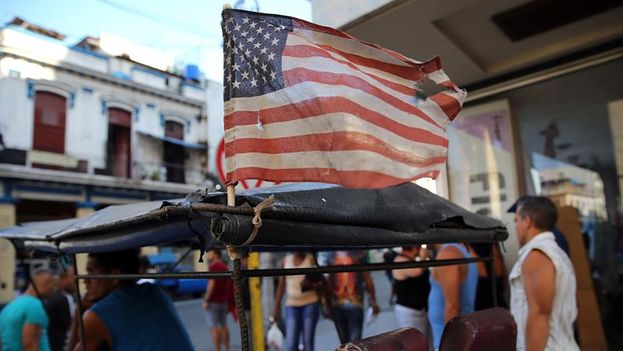
An American flag flies on a pedicab Monday in Havana. (EFE)

14ymedio bigger14ymedio, Havana, 15 March 2016 — It was an open secret that the United States would approve a new package of relaxations before Barack Obama’s official visit to Cuba. However, the new measures that widen Cubans’ access to the dollar and the ability of Americans to visit the island have taken some by surprise, among them the official press which, two hours after making the information public, still hasn’t reacted.

On the streets the rumor is just starting to get out that “the yumas (Americans) opened up the fulas (bucks),” a reference to the authorization to use the U.S. dollar from Cuba, and the new ability for residents of the island to maintain bank accounts in the United States. Amid the daily hardships, many cling to the hope that “Obama’s package-attack,” as it was baptized by a taxi driver this morning, will improve their lives.

Among the amendments that are beginning to spark the most excitement is the possibility that United States companies can engage in transactions “related to sponsorship or contracting with Cuban citizens to work or provide services in the United States,” a measure that benefits athletes, artists and other professional sectors.

Moises is 39 and drives a horse-drawn carriage for tourists around Havana’s Central Park. “I just heard about it because a customer heard it on TV in the hotel,” he told this newspaper. He has a degree in mechanical engineering, and hopes “to get a pinchita (visa) to come and go… I don’t want to stay permanently, but I would like to earn some money over there and live over here,” he explains.

Near the Plaza de Armas, the booksellers only have time to think about their own problems. The authorities in Old Havana have warned them they can’t set up there between 15 and 23 March. “It’s all about Obama’s visit,” complains one who sells books from the fifties and sixties. His daughter, who works in the food industry near the airport has also been told her workplace will be closed until after the visit of the US president.

Despite the inconvenience and the loss of money it means, the bookseller is happy with the new measures. “At last some good news, thank God, because the truth is we’ve had a tremendous bad patch of problems,” he says, cheerfully. Next to him is Osmel, another bookseller who has been selling there for more than a decade. “For my business this is very welcome because it means more trade and probably more tourists. Maybe now they’ll bring more greenbacks to the country,” he speculates.

Among members of the independent civil society, opinions have not been slow in coming. Dagoberto Valdes, director of the magazine Coexistence, believes the new relaxations are consistent “with the policy put in practice in Washington.” However, he demands that “in return, the Cuban government should now end the tax imposed on the dollar, which they justified by the difficulties that existed (in exchanging it) until today.”

Manuel Cuesta Morua, leader of the Progressive Arc, also applauded the gesture. “This is excellent news that indicates the acceleration of the normalization process and it will allow Cuba to better integrate itself into the global economy,” he says. A regime opponent and coordinator of initiatives such as the Otro18 (Another 2018) campaign, Cuesta Morua believes that “the world opening itself to Cuba implies the United States opening itself and that is what is happening.”

“The house of cards constructed by the government over the last fifty-some years to prevent Cubans from connecting to the world is falling down,” added Cuesta Morua.

Activist Miriam Leiva consider it “timely and positive” that Cubans can now use the dollar in banking transactions, because that opens the opportunity for American companies to buy in Cuba companies and also Cuban citizens can import or export goods, not just the self-employed. “What I think is important is that the Cuban government open the possibility to Cubans to enjoy the new measures, that is that it be not only useful for the state, but also for citizen transactions. In short, it is necessary that there be reciprocity with this measure,” she adds.

Satisfaction among the tourists was also evident this morning, as bit by bit they heard the news. Dominic, a German photographer who was waiting for the planting of the new ceiba tree at Havana’s El Templete, believes that news like today’s before the coming of Barack Obama is a hopeful sign. “I’m happy to be in Havana on a historic day, I hope that when I return the economic improvement resulting from a decision of this nature will be noticeable,” he adds.

An artisan on Obispo Street said he didn’t know if the news coming from Washington will be good or bad for Cuba. “To comment on that you have to be an economist, but for me it would be good if, in addition to the Americans ending the ban on using their currency, the government here allowed it to circulate freely and the currency exchanges gave you the real value for it.”

However, skepticism also abounds. “No one can fix this”, said a man who, broom in hand, was trying to remove fallen leaves around the statue of Carlos Manuel de Céspedes, in the center of the square. Near him some were throwing coins – Cuban pesos or Cuban convertible pesos – into the hole where the ceiba will be planted in Havana this Tuesday.

Amnesty International Warns About Censorship In Cuba / 14ymedio

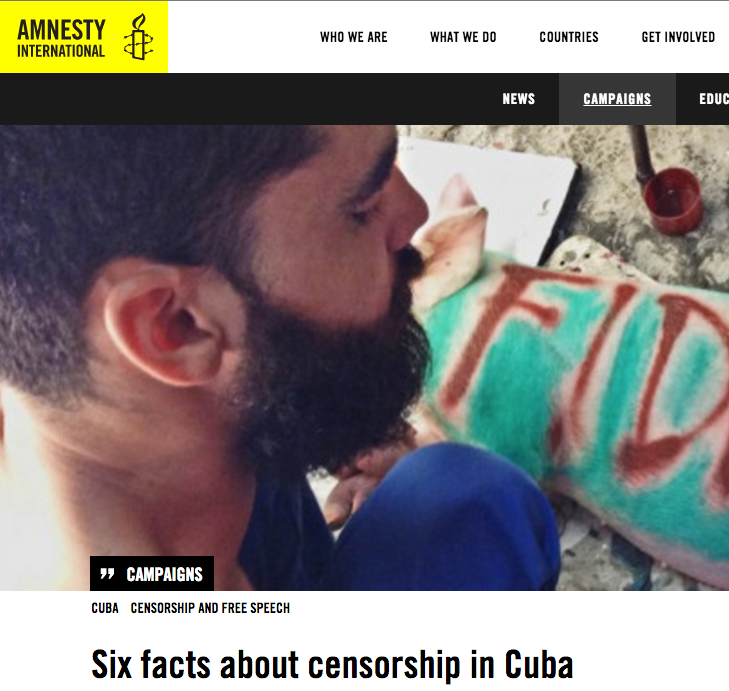
Screen Shot 2016-03-15 at 6.59.30 AM

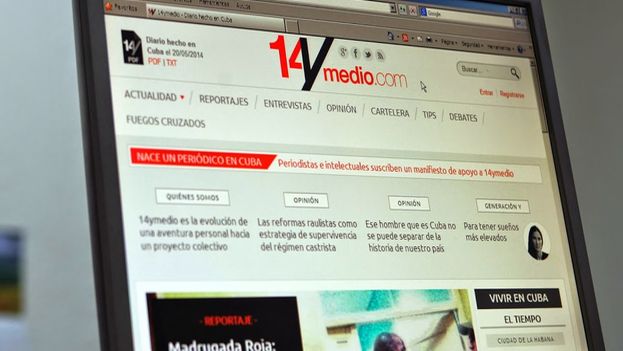
14ymedio bigger14ymedio, Havana, 13 March 2016 — On the occasion of World Day Against Internet Censorship, Amnesty International (AI) has published the obstacles that Cuban internet users must overcome to access the web and break the blockade against web pages that dissent from official policy. Under the title “Six Facts About Censorship in Cuba,” the note addressed the limitations on freedom of expression in digital, artistic and informational spaces for residents of the island. continue reading

Among the major violations listed by the report is the lack of freedom of expression exemplified in the imprisonment for ten months without trial of the artist Danilo Maldonado, known as El Sexto, when he attempted to stage a performance art piece with two pigs on which he had painted the names of Fidel and Raul.

The human rights organization denounced the state monopoly on the media and the harassment of independent journalists and bloggers. The note recalls the police cordon around the 14ymedio newsroom, to prevent its reporters from covering the activities of the International Human Rights Day, on 10 December.

Censorship on the web and low connectivity are also addressed in the document. “Internet access is still prohibitively expensive for most, and far from accessible to all,” it says. Despite the appearance of dozens of wifi zones and navigation rooms, “only 25 per cent of Cubans use the internet, while only five per cent of homes are connected,” denounces the text. 

“The landline, mobile and internet connections of government critics, human rights activists and journalists are often monitored or disabled,” says AI, for whom these actions are “a clear breach of the right to freedom of expression, including the right to seek, receive and impart information.”

The difficulties faced by international agencies to access independent information is also reflected in the document. “Communicating with Cuban human rights activists remains challenging, particularly at times when the authorities are arresting people based on their political opinion.”

According to the organization, Cuban citizens are “finding ways” to circumvent censorship and share information “From underground Wi-Fi, to creating apps, to harnessing the power of USBs.”

Amnesty International is a global movement, with a presence in more than 150 countries that aims to “undertake research and take action to prevent and end grave abuses of civil, political, social, cultural and economic rights throughout the world.” Cuba is the only country in the continent that does not allow access to Amnesty International, which has been unable to send an official mission to the island since 1990.

Somos+ Activist Applies to be Repatriated to Cuba / 14ymedio, Luz Escobar

Iliana Hernandez was the victim of a brief arrest in Cuba on March 8. (Facebook)

14ymedio bigger14ymedio, Luz Escobar, 14 March 2016 – The activist Iliana Hernandez has taken one of the most difficult decisions of her life, to resettle in Cuba after almost two decades living abroad. Nationalized with Spanish citizenship, the dissident has begun the paperwork to return to the island and continue her work in support of a democratic change within, according to what she told 14ymedio.

Hernandez published her decision on the social networking site Facebook, shortly after having been released after an arbitrary arrest on 8 March. The detention occurred when State Security stopped the car in which she was traveling, accompanied by Jose Daniel Ferrer, along 5th Avenue in Havana. continue reading

“I had had this idea for years and in January I wanted to do it but I didn’t have time,” explained Hernandez. The activist left Cuba on 13 August 1996, after several attempts to leave the island.

Current immigration legislation states that, after 24 months of an uninterrupted stay abroad, an emigration cannot return to live permanently in the country, nor own property here.

For the repatriation to become effective, the applicant must “have housing in Cuba or be sheltered in the home of a family member.” In addition, they must demonstrate with documentary proof that they have existing financial and housing resources in order to receive, shelter and support the returnee until they get housing and income of their own.

“Now I came for this purpose and I’m not leaving until I get my identity card,” she says. The activist works “online,” and believes she can continue to do so from the island despite difficulties in accessing the web. “They can’t threaten to deport me,” reflects Hernandez, who has served as a financial coordinator for Somos+ (We Are More) as well as being one of its founders.

The activist has visited a notary and presented the necessary documentation to begin the process of repatriation.

“One can not regret the decisions you make in life,” reflects Hernandez, but she says she has “thought this through very well.” The dissident affirms that she has wanted to return to the Island since the creation of the Somos+ movement. “We had a well-organized team on the outside, but now is the time,” she declared.

The Somos+ movement was created in March 2013 by Eliecer Avila, a computer engineer trained at the University of Information Sciences (UCI), and from its origins has been defined as a group focused on developing opinions and ideas with a vision of the future.

Iliana Hernandez was born in Guantanamo and has always been linked to the sports world. Last year the activist participated in the Marathon des Sables, a 144 mile race across the Sahara desert over seven days.