The medical mission has already been reduced to 35 people, with only three doctors and 32 technicians specializing in laboratory work, X-rays, electrocardiography, and nursing.
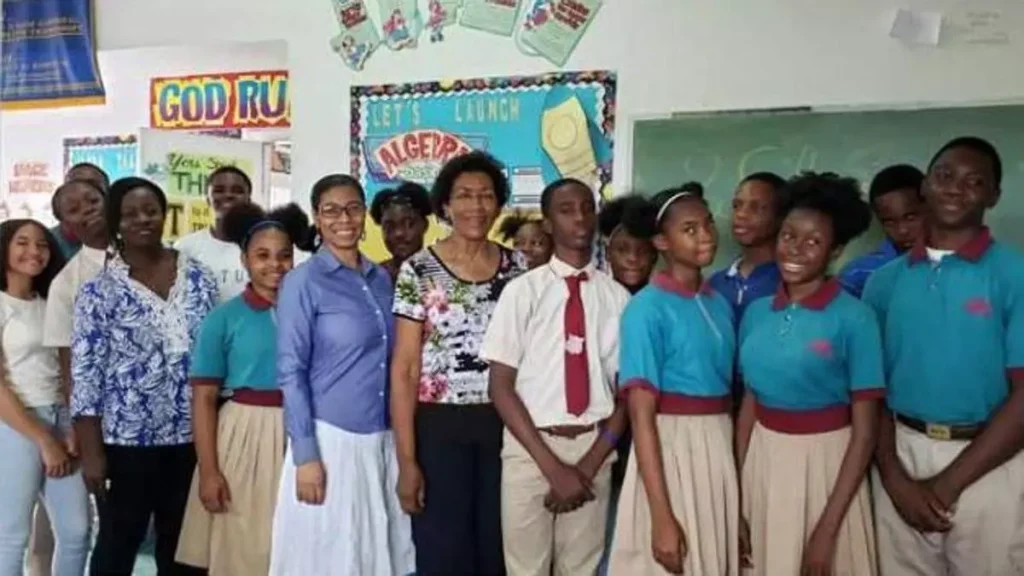
 14ymedio Madrid, August 31, 2026 / The Bahamas government has confirmed that it will not renew the contracts of 31 Cuban teachers for the new school year, a decision that adds to more than a year and a half of adjustments to the labor agreements that the archipelago maintains with Cuba and that coincides with still open negotiations with the United States on the status of Cuban health personnel in the country.
The Bahamian Ministry of Education explained that the renewal of the contracts “was never guaranteed” and that the affected teachers will have sufficient time to resolve their personal matters before leaving the country. The ministry insisted that its priority is “the recruitment and hiring of qualified Bahamian educators,” an effort that, according to the ministry, has already resulted in the addition of a significant number of new local teachers.
The decision comes after the Government of Prime Minister Philip Davis restructured its relationship with Cuban state recruitment agencies in 2025, following warnings from Washington that the model—managed through the regime’s intermediaries—constituted a form of forced labor. The State Department has repeatedly described Cuban labor export programs, both medical and educational, as exploitative schemes in which Havana retains the majority of the wages paid by the receiving countries.
The health mission has already been reduced to 35 people, with only three doctors and 32 technicians in laboratory, X-ray, electrocardiography and nursing, in addition to biomedical engineers.
The State Department has repeatedly described Cuban labor export programs, both medical and educational, as schemes of exploitation.
Foreign Minister Fred Mitchell declined to specify whether U.S. concerns influenced the decision regarding the teachers. However, the fact that the announcement coincides with Health Minister Michael Darville’s ongoing talks with Washington officials about directly hiring Cuban medical personnel—negotiations that have dragged on for more than 16 months without resolution—fuels the interpretation that the education adjustment could also serve as a sign of goodwill toward the United States while the health issue is being resolved.
The measure is not without internal costs. Frazette Gibson, the MP for Central Grand Bahama, criticized the way Cuban teachers were informed, and warned that their departure could disrupt programs in areas where the Bahamas relies on them: welding, agriculture, and other technical disciplines. The president of the teachers’ union, Belinda Wilson, had already pointed out in 2025 that Cuban staff play “a very, very important role” in the system, particularly in subjects with a chronic shortage of local candidates, such as languages, performing arts, early childhood education, and special education.
This structural dependence suggests that a total and abrupt closure of the Cuban educational program—similar to what happened in Honduras and Jamaica—would force the Bahamas to launch an international recruitment drive to fill the vacancies left by Cuban teachers, a process that, as the educational authorities themselves acknowledge, cannot be resolved immediately.
Frazette Gibson, the deputy for Central Grand Bahama, criticized the way the Cuban teachers were informed and warned that their departure could disrupt programs in areas where the Bahamas relies on them.
For now, there are no public indications that the Bahamian government plans to completely eliminate the program: of the approximately 110 Cuban teachers who returned to the classrooms in 2025, the departure of 31 would still leave a significant contingent in operation, a partial reduction rather than a definitive break.
The Bahamas thus joins, albeit gradually and less categorically, the list of countries—including Honduras, Guatemala, Jamaica, and Guyana—that in the last year and a half have ended or reformulated their labor cooperation agreements with Cuba, amid growing international pressure against a model that human rights organizations and the US government itself have described as a form of modern slavery.
______________________
COLLABORATE WITH OUR WORK: The 14ymedio team is committed to practicing serious journalism that reflects Cuba’s reality in all its depth. Thank you for joining us on this long journey. We invite you to continue supporting us by becoming a member of 14ymedio now. Together we can continue transforming journalism in Cuba.