She is also leaving the island out of fear of returning to prison: “I always run the risk of being locked up again, because I won’t be able to hold back every time something happens”
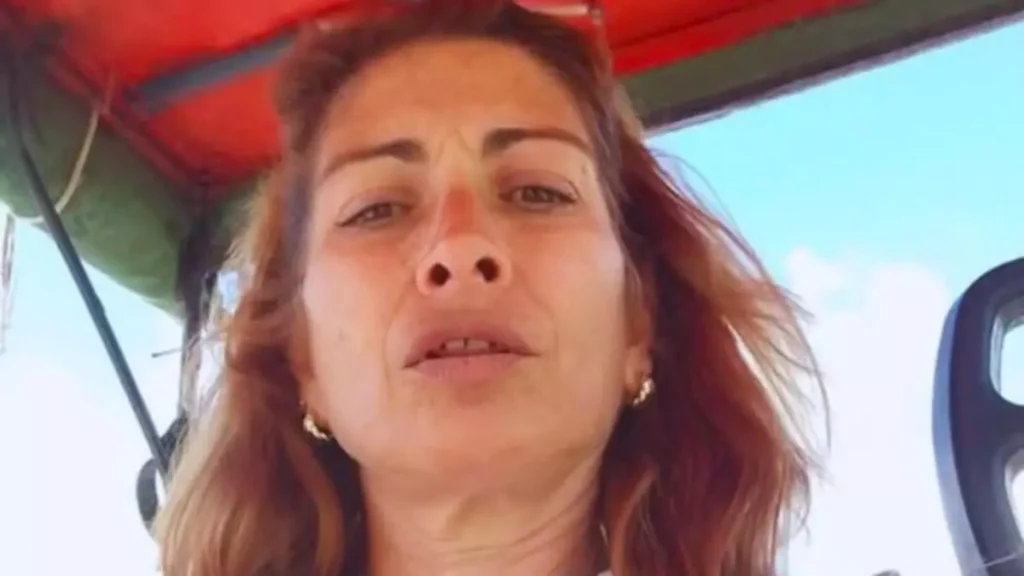
 14ymedio, Havana, September 14, 2026 / Camagüey-born activist Aniette González García left Cuba last Saturday bound for Guyana, after spending three years in prison and another nine months under State Security harassment. The woman left the island in search of the medical care she did not receive during her imprisonment and that she urgently needs, the Cuban Observatory of Human Rights (Ocdh) reported this Sunday.
“I left Cuba because I can’t stay there any longer. I have throat problems. I don’t know how serious they might be, and I’ll never find out there, because there’s nothing available to treat me. I’ve never even been able to get a full set of tests done”, González García denounced in a video recorded from Guyana, her voice barely distinguishable given her difficulty speaking, which was published by the Cuban Observatory of Human Rights (OCDH).
The observatory, which has supported the activist since her arrest in 2023, reported that González García’s health problems began in prison. “The loss of her voice has not stopped progressing. Without a single specialized examination, Aniette has reached the point of being unable to articulate a word. In medical terms, her condition is a dysphonia of unknown – ‘idiopathic’ – cause for lack of examination, not for lack of cause. No one in Cuba has looked at her vocal cords”, it stated in the video post.
Without a single specialized examination, Aniette has reached the point of being unable to articulate a word
The woman also noted that leaving the country is also due to her fear of returning to prison: “I always run the risk of being locked up again, because I won’t be able to hold back every time something happens.”
González García was arrested in March 2023 for posting photographs on Facebook of herself wrapped in the Cuban flag in support of a campaign for the release of artist Luis Manuel Otero Alcántara, leader of the San Isidro Movement, who was imprisoned at the time. The activist was held at the Kilo 5 women’s prison in Camagüey for nearly a year awaiting trial, until her sentence was handed down in February 2024.
The ruling not only gave her three years in prison, but also stripped her of her right to vote. Likewise, as a formality, she was barred from holding “posts” in entities related to the economy and politics in Cuba during that period of imprisonment, and she was informed that she would be considered a “repeat offender” before being granted any benefit or mitigating circumstance.
After the sentencing – the Prosecutor’s Office had originally sought up to four years in prison – various legal appeals were filed and dismissed by the court. Her family filed a request for the special habeas corpus procedure, an appeal, revocation of the pretrial detention order, a motion to disqualify the prosecutor, and an appeal of the verdict handed down, but all were in vain.
After the sentencing, various legal appeals were filed and dismissed by the court
Last December 7, she was released from prison after fully completing her three-year prison sentence. Following her release, various organizations welcomed the news and criticized the harshness with which the authorities had acted. “Her case is an example of the criminalization of dissent and the use of the penal system to punish expressions protected under the right to freedom of thought and expression”, said the Cuban Institute for Freedom of Expression and the Press (Iclep), which also condemned “the arbitrary nature of her arrest and the harassment she suffered in prison”.
Three months later, the harassment continued. Outside prison, on March 28 of this year, State Security agents took her from her home in Camagüey in a patrol car, in the presence of her underage granddaughter, and held her from morning until night under the pretext of an interrogation, without giving any explanation to the family. She was later released.
The wave of repression in the country has shown an increase during 2026. According to the most recent report from the legal advisory center Cubalex, an average of more than 10 repressive acts per day were recorded from January to June of this year, an increase compared to the second half of last year, when there were seven events a day.
In the first six months of this year, marked by “the worsening of the widespread crisis, a historic rise in social protest, and the intensification of state repression throughout the country”, the organization counted 1,894 rights-violating events. The repression affected at least 919 people (204 women and 715 men), “with a significant impact on independent civil society” in 58% of cases, and extended to citizens with no political affiliation, “with victims doubling among protesters, religious figures, informal workers, and military recruits”.
Translated by GH
______________________
COLLABORATE WITH OUR WORK: The 14ymedio team is committed to practicing serious journalism that reflects Cuba’s reality in all its depth. Thank you for joining us on this long journey. We invite you to continue supporting us by becoming a member of 14ymedio now. Together we can continue transforming journalism in Cuba.