The report proposes a general amnesty, the lifting of sanctions on fuel and, in the medium term, a Constituent Assembly.
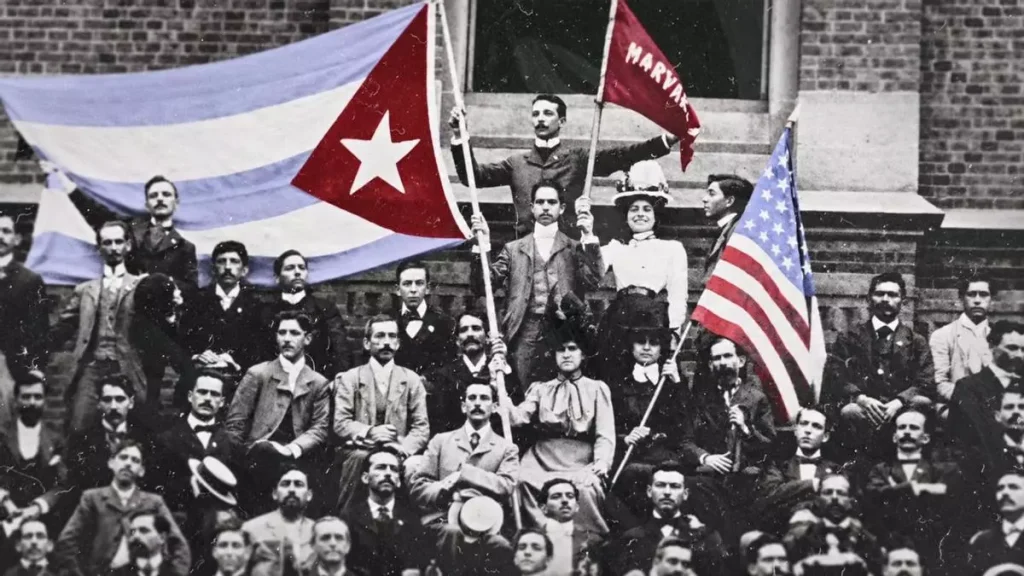
 14ymedio, Havana, September 12, 2026 / After nearly twenty pages describing a country ruined by authoritarianism, repression, inefficiency and decades of disastrous economic decisions, the Harvard Working Group on the Future of Cuba reaches a conclusion that will make more than one person uncomfortable: to get out of the hole it will also be necessary to count on those who currently govern the Island.
That is probably the most provocative idea in a text that, for the most part, traverses a landscape familiar to any Cuban: blackouts, hunger, exodus, hospitals without resources, schools without teachers, and cities in ruins. But the group—comprised of, among others, Tania Bruguera, Manuel Cuesta Morúa, Omar Everleny, Rafael Rojas, Julio Antonio Fernández Estrada, and former US diplomat Jeffrey DeLaurentis—attempts to go beyond the diagnosis and outlines a concrete political sequence.
The first step would be a general and unconditional amnesty for political prisoners. Following this, Havana should decriminalize forms of protest and expression protected even by the current Constitution, repeal decree-laws 349, 370, and 35, and eliminate extralegal practices such as the “regulated” movement, where citizens are prevented from leaving or returning to the country by administrative decision.
Later, a new Constituent Assembly would be formed, tasked with laying the foundations for a democratic and pluralistic system and a “social market economy” with different forms of ownership, including private ownership.
According to the plan, Washington would then have to respond “immediately, positively, and decisively,” starting by lifting sanctions that affect fuel supplies and providing resources to stabilize the economy. Later, a new Constituent Assembly would be convened, tasked with establishing the foundations of a democratic and pluralistic system and a “social market economy” with diverse forms of ownership, including private.
The proposal has a clear controversial aspect. It starts from the premise that those who have closed off any possibility of change for decades can now become agents of openness, in the style of Delcy Rodríguez. The report also acknowledges that repression has imprisoned, expelled, or forced into exile many of the actors who could have served as interlocutors for a transition. “The depopulation of the island is not only demographic,” it concludes after describing a weakened independent civil society and an insufficiently organized opposition.
The document questions the extreme opacity of the current talks between Cuba and the United States and points to the participation of figures who appear as representatives of the country without holding clear government positions. It specifically cites Raúl Guillermo Rodríguez Castro, grandson of Raúl Castro, noting that he does not hold any known official office and linking him to GAESA. The military conglomerate is described as a “state within a state,” with accounts far removed from public scrutiny and the effective control of the National Assembly.
It also proposes mobilizing private philanthropy to support hospitals, universities, schools, museums, and libraries.
The report also assigns blame to the government. It attributes the economic collapse to decades of inefficiency, poor policies, and misguided investments. Between 2014 and 2024, tourism received between 25% and 50% of the country’s total investment. In 2024 alone, tourism investment was 14 times greater than that of agriculture and 11 times greater than that allocated to health, social assistance, and education, even though hotel occupancy barely reached 23%.
It also proposes measures such as joining the International Monetary Fund, the World Bank, the Inter-American Development Bank (IDB), and the Development Bank of Latin America (CAF); liberalizing land tenure; promoting diaspora investment; ensuring transparent resolution of claims for confiscated properties; and even repealing the Helms-Burton Act. Furthermore, it proposes mobilizing private philanthropy to support hospitals, universities, schools, museums, and libraries.
The report abandons academic language and describes Trump’s policies as “explicitly imperial.”
The document attempts to maintain an uncomfortable equilibrium between Havana and Washington. It blames the Cuban system for the structural crisis but argues that US sanctions have considerably worsened its effects on the population. It even calls it “contradictory” that the United States offers up to $100 million in humanitarian aid while implementing measures that, according to its authors, contribute to the emergency it seeks to alleviate.
It is precisely when discussing Donald Trump that this striving for equidistance occasionally loses its composure. The report leaves the academic language and describes his administration’s policies as “explicitly imperial.” This harshness contrasts sharply with the much more clinical tone used when describing six decades of authoritarianism in Cuba.
Even so, this contradiction doesn’t diminish the central argument’s importance. Unlike the usual reports that list calamities and end where they began, this one raises a much more uncomfortable question: if Cuba needs a transition, can it be carried out against those who still control all the levers of the state, or will it have to be done, at least initially, with them as well?
Note: The report is only 12 pages and can be read in English in full here.
______________________
COLLABORATE WITH OUR WORK: The 14ymedio team is committed to practicing serious journalism that reflects Cuba’s reality in all its depth. Thank you for joining us on this long journey. We invite you to continue supporting us by becoming a member of 14ymedio now. Together we can continue transforming journalism in Cuba.