The official press points to the use of an “extremely toxic” mercury-based process, with neurodegenerative consequences as well as cardiovascular and kidney damage
 14ymedio, Madrid, October 12, 2026 /The warning comes neither from a non-governmental organization nor from the independent press, but from the pro-government outlet Periódico 26: the mercury used in illegal gold extraction in Las Tunas “has become a public health problem of a magnitude that is beginning to be worrying.” In a report published on Saturday, the provincial newspaper asserts that cases of neurological, kidney and psychiatric illnesses in the municipality of Jobabo and the neighboring communities of La Guásima and Jobabito are alarming, at three times the national rate.
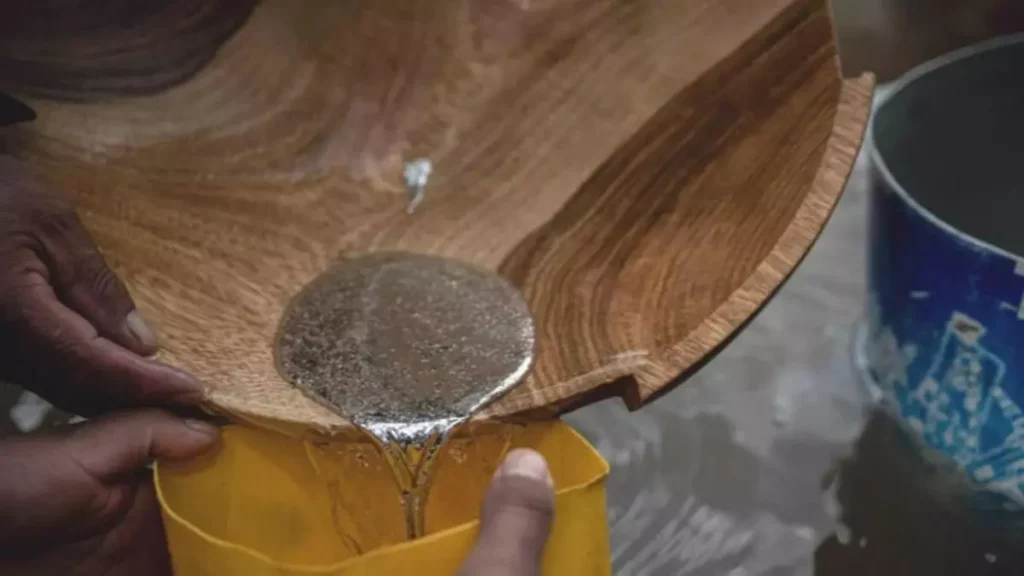
According to a medical specialist in toxicology, Alejandro Mestre Barroso, in the illegal gold mining carried out in the region, workers resort to a technique known as “asobe,” which consists of using elemental mercury – the kind used in thermometers, which is in principle harmless – to amalgamate the metal. The procedure is rudimentary: they wash the soil, add mercury to trap the gold particles and then burn the amalgam. With the heat, the mercury evaporates, leaving behind the gold nuggets.
However, the doctor warns, this evaporation turns elemental mercury into inorganic mercury, which is “extremely toxic.” Added to this is the mercury released while the soil is washed, which ends up in lagoons and rivers, where microorganisms transform it into an even more lethal substance.
Jobabo, he asserts, has one of the highest rates of kidney patients in the province, as well as high rates of psychiatric conditions
The expert tells Periódico 26 that “the main target organ is the central nervous system,” and that the consequences can include “neurodegenerative complications” and “cardiovascular and kidney damage, with short-, medium- and long-term after-effects.” Jobabo, he asserts, has one of the highest rates of kidney patients in the province, as well as high rates of psychiatric conditions such as schizophrenia, paranoid disorders and depressive disorders.
The first alarm bell rang in 2024. At that time, the Jobabo Hospital recorded a case of “rare Parkinson’s.” “After examining the patient and looking into his medical history,” the report continues, “doctors discovered that he was a worker at the illegal gold mine.” From then on, the authorities became aware of how widespread this informal practice was.
Since then, Dr. Mestre Barroso asserts, they have treated more than 25 patients. And the specialist says: “If we look at the national statistics, this figure is three times higher.” He also raises the alarm about the age of the patients: “We are receiving young people, aged 25 to 30, with acute kidney failure due to mercury complications.”
Those affected, he stresses, are increasingly young, “aged between 18 and 25” and “of both sexes.”
According to Periódico 26, four alerts have been issued since that first case: one in 2024, two in 2025 and another this year. In 2025, an operation was even carried out in Jobabo that ended with eight arrests. The official press also reported on this, stating that “power plants and electric generators, turbines for pumping water and chipijamas” were seized from them, as well as “types of electric demolition hammer or electric pick, used to crush, chip, excavate and cut concrete, ensuring constant chiseling and high productivity; and a trómer, a type of homemade mill for crushing stones, at the end of which process gold dust is obtained.”
The growing crackdown has done little good: “The activity no longer seems to be limited to Jobabo; there are now reportedly operations in El Cornito, in La Guásima,” the report states. And it does not concern only the local population, but also residents of other municipalities.
Last August, in Villa Clara, during a dispute, two clandestine gold miners were attacked by a third man, who killed one of them, Juan Luis Ávila, and seriously wounded the other, his brother, Lázaro Luis Ávila.
The incident took place in the village of Guaracabuya, in the municipality of Placetas, where there has been activity linked to illegal gold extraction for years. For decades, the Descanso mine was Cuba’s only underground deposit and supplied the Placetas Mining Production Basic Business Unit, but it was officially closed in 2019, when its concession came to an end. The official press reported at the time that the reasons were “the danger, the cost of operations and the slow pace of extraction.”
Since then, clandestine mining has continued to predominate in the area.
Translated by GH.
______________________
COLLABORATE WITH OUR WORK: The 14ymedio team is committed to practicing serious journalism that reflects Cuba’s reality in all its depth. Thank you for joining us on this long journey. We invite you to continue supporting us by becoming a member of 14ymedio now. Together we can continue transforming journalism in Cuba.