Only 1,913 of the 12,000 existing stores will be kept, and they will serve only people in vulnerable situations
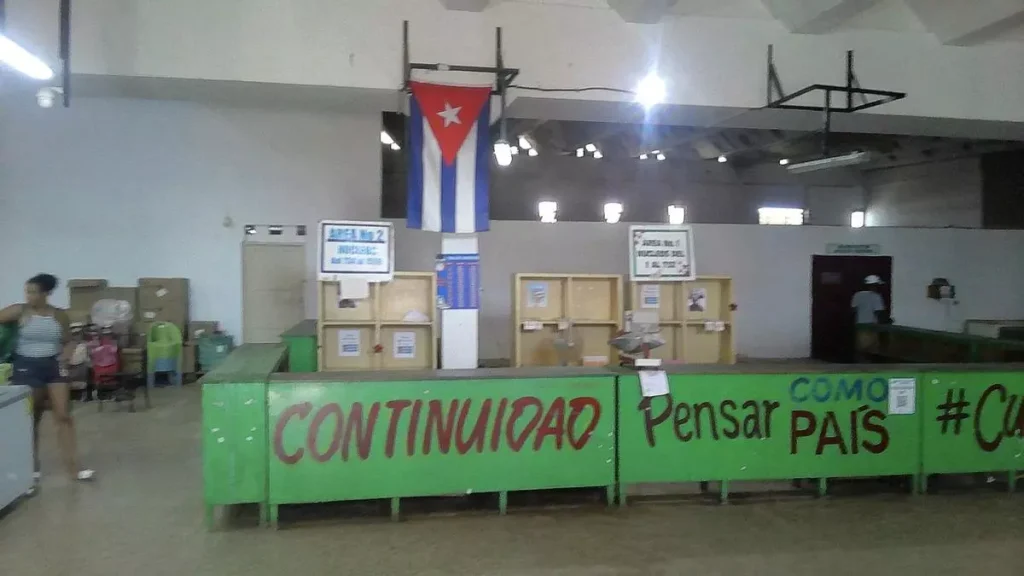
 14ymedio, Havana, October 6, 2026 / The Cuban Government has selected 1,913 bodegas, barely 16% of the more than 12,000 that make up the rationed market network, to continue operating as such and serve the people in the most vulnerable situations. At the same time, some others are being transformed into neighborhood markets, although the authorities have not said how many establishments will end up under that model.
Marpessa Portal de Villiers, director general of Merchandise Sales at the Ministry of Domestic Trade, confirmed this Tuesday on the program Haciendo Radio, on Radio Rebelde, that “not all” bodegas will become Neighborhood Markets. For now, 47 establishments are operating under that format.
In the Neighborhood Markets, who runs the premises also changes. They may be left in the hands of state enterprises, mipymes [micro, small and medium-sized businesses], non-agricultural cooperatives, and self-employed workers. Management is handed over through leasing or bidding, with priority for those who already worked in those establishments.
Those who take over the management of a Neighborhood Market can benefit from tax advantages and be exempted from paying rent
Those who take over the management of a Neighborhood Market can benefit from tax advantages and be exempted from paying rent. In exchange, they must sell the range of products defined by the Government, a condition that, according to the Ministry of Domestic Trade, should encourage a greater supply and lower prices.
While it reorganizes part of the retail network, the State continues to use the traditional bodegas to distribute the little that arrives through the rationed channel or from donations. Portal de Villiers reported the delivery of a package with five pounds of rice from a Chinese donation, as well as one pound of sugar and another of peas, the latter two at a cost, in several provinces of the country.
The free rice is being distributed in Pinar del Río, Artemisa, Havana, Matanzas, Cienfuegos, Villa Clara, Sancti Spíritus, Holguín, Santiago de Cuba, Guantánamo, and the Isle of Youth; in Mayabeque, according to the official, the distribution has already concluded. A kilogram of donated black beans is also being delivered in Havana, Holguín, Santiago de Cuba, and Guantánamo.
So far, the neighborhood markets offer prices almost as high as the informal market
The initial experience of the Neighborhood Markets, however, has so far shown that the new model offers prices almost as high as the informal market. In the one in Ayestarán, opened at the end of September in Havana, a liter of oil was around 2,600 pesos, a kilogram of powdered milk cost 4,500, rice 800, and black beans 600, prices that provoked protests among customers over an offering they considered expensive and scarce.
The contrast with the traditional bodega is even greater. In May, 14ymedio found that several state establishments in Havana intended for the ration book remained practically empty, after years of delays in the basic basket and a fuel crisis that further worsened supplies. In some cases, the official slogans took up more space than the products.
The Neighborhood Markets were born precisely in the midst of that deterioration. The rules approved in August establish the sale of 16 basic foods and five hygiene products, an opening that ends the state monopoly over part of retail and wholesale trade, although without resolving access to foreign currency or guaranteeing supply.
Translated by GH
______________________
COLLABORATE WITH OUR WORK: The 14ymedio team is committed to practicing serious journalism that reflects Cuba’s reality in all its depth. Thank you for joining us on this long journey. We invite you to continue supporting us by becoming a member of 14ymedio now. Together we can continue transforming journalism in Cuba.