The offensive against private businesses has reduced the offerings in a city where getting a package of chicken is a whole expedition
 14ymedio, Havana, Yoani Sánchez, August 19, 2026 / I went out into the street after almost three weeks of convalescence. I descended the 14 flights of stairs as if I was an 80-year-old woman. On reaching the ground floor, I took a deep breath and consoled myself with the thought that, by the time I returned, the electricity would surely be back on and I could take the elevator. Lost illusions.
I decided to take Conill Street, stopping first to say hello to the garbage dump on the corner. Although it had been cleaned once recently, it had grown back to the size of a country, with its own ecosystem, its habitual inhabitants, and the people who scavenge for food among the waste. The steps of the Ministry of Agriculture were crowded with people sitting and staring at their mobile phone screens. The internet connection is so bad that customers of the state monopoly Etecsa wander from block to block looking for a spot with a functioning data signal. At the entrance to the unproductive Ministry of Agriculture they’ve found a 4G hotspot.
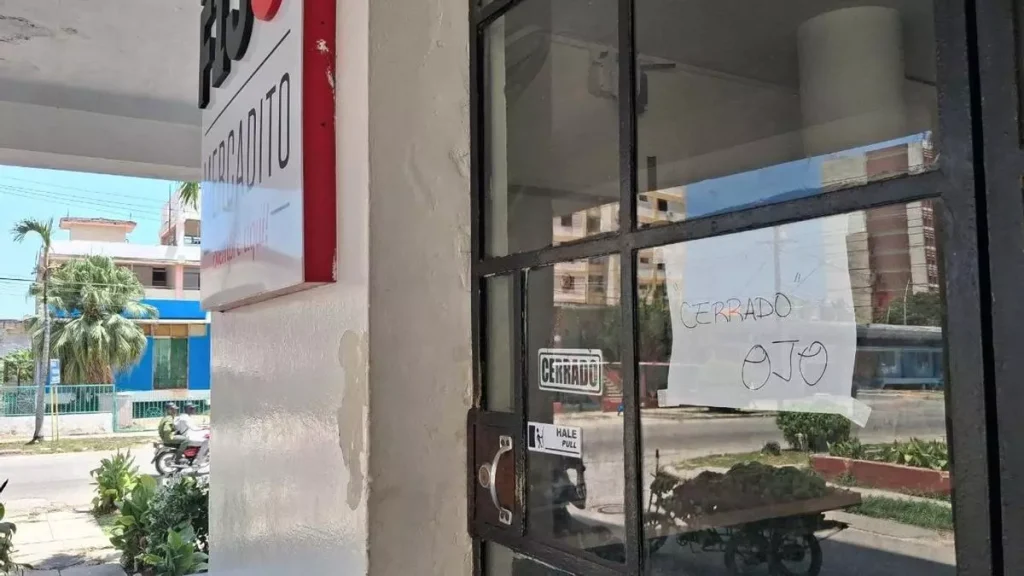
I cross Rancho Boyeros with great cautioun. The last thing I need right now is to twist an ankle on one of the many potholes or get hit by one of the few electric tricycles that travel along the avenue. Upon reaching the other side, I come across the first of several signs I’ll see along this short walk. “Closed,” it reads in the window of a small shop that until a few days ago offered a limited selection of basic products. I turn onto Central. On the corner of Tulipán, another handwritten sign repeats the same word. Across the street, at a garage where you could buy everything from cold water to soda crackers, the gate is down.
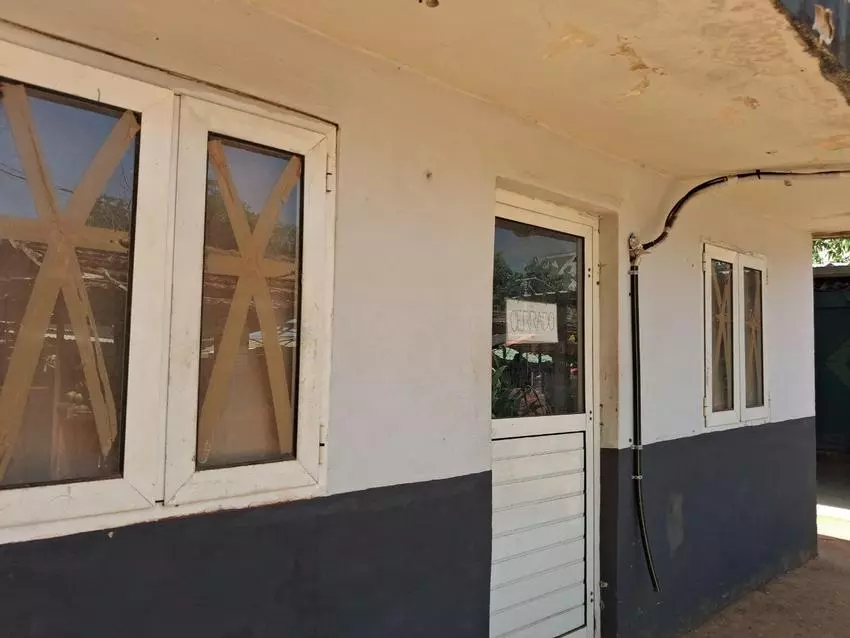
The offensive against on private businesses that don’t respect the price caps ordered by officialdom, or that refuse electronic payments has reduced the number of small markets in my neighborhood to just a handful of poorly stocked shops with long-faced employees. There is no chicken, sausages, vegetable oil, or ground beef, among many other missing items. Faced with the option of opening and risking a fine of thousands of pesos, the owners prefer to suspend sales and accumulate days of zero profit until the storm passes. “This is the land of the two-week break,” a neighbor I run into tells me. “Right now, the inspectors are giving up,” she adds.
Frustrated, I start heading home. The Tulipán Street market is still on my way. “I’m sure I’ll find something there,” I encourage myself. My body, at rest for so many days, is starting to show signs of exhaustion. I sit down against a wall, take out a bottle, and take a long swig of the sugary guava juice I made before leaving. The dose of sucrose works quickly, and I manage to cross back across the wide avenue that connects El Vedado with the airport.
As I approach Tulipán Market, I notice the difference. There are fewer cart vendors outside, fewer sellers offering goods on the sidewalks, and much less of the usual hustle and bustle. The refrigerators are off, several kiosks are closed, and the butchers’ chalkboards display barely any lard complete the panorama. In the three weeks since I last visited, the place feels completely different.
I leave with my bag empty. In Estancia, a man and his son sit on the sidewalk calling out in low voices, “Chicken, chicken!” A package of about seven or eight small drumsticks costs 3,000 pesos. There’s no other option. I take out the money and pay. The teenager hands me a dripping plastic bag with the completely thawed meat. I hurry back to my building.
I call from downstairs to tell my husband to wait for me on the seventh floor and help me finish bringing up the groceries. My legs are stiff, and I feel like my fever has returned. I take another long gulp of guava juice and reach the halfway point of the stairs I have to climb. Reinaldo is there. I have to sit down and rest before limping on to the top floor.
As soon as we got home, we started cooking some of the chicken. There’s no time to wait: it’s thawed and we have no way to store it. We’ve been without electricity for almost 24 hours now.
The Havana Chronicles can be read here
______________________
COLLABORATE WITH OUR WORK: The 14ymedio team is committed to practicing serious journalism that reflects Cuba’s reality in all its depth. Thank you for joining us on this long journey. We invite you to continue supporting us by becoming a member of 14ymedio now. Together we can continue transforming journalism in Cuba.