Civil Defense confirmed that “no seismic movement has been recorded in the national territory during the afternoon this Tuesday.”
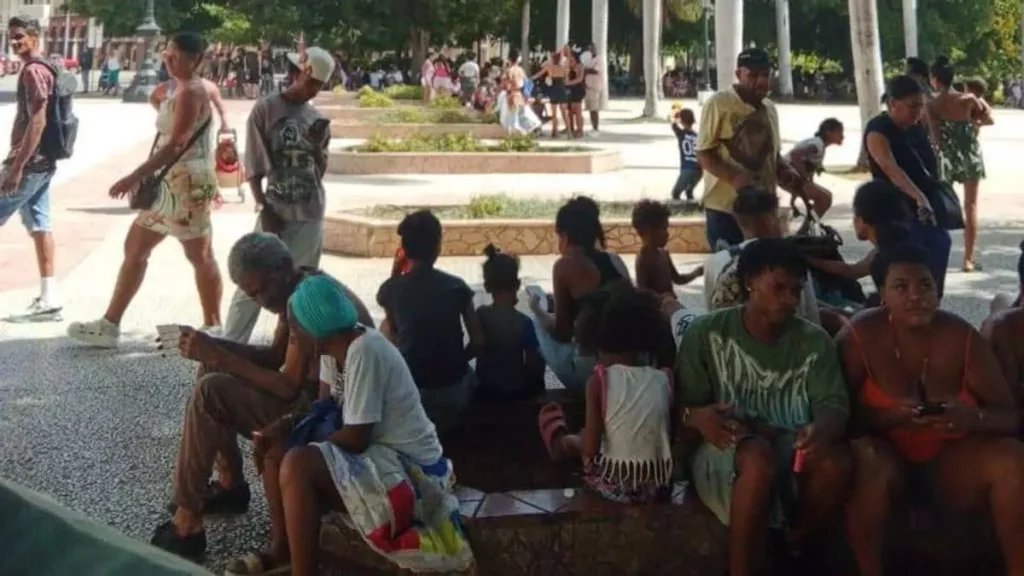
 14ymedio, Havana, August 18, 2026 – At approximately three in the afternoon this Tuesday, thousands of Cubans across the Island were startled when they received a loud alarm on their phones urgently informing them of an “earthquake alert.”
In Havana, the warning triggered nervousness among residents who immediately rushed to leave their buildings. “Remain calm and seek shelter somewhere nearby,” the alert on the phones indicated, a message that sparked scenes of panic. The vast majority were caught by the alarm in the middle of the blackout. Several accounts received by the 14ymedio newsroom described elderly people with their walkers hurrying to get out as best they could. In the Luyanó neighborhood, according to witnesses at the scene, an elderly woman screamed for them not to let her die alone. Some only managed to get out in their underwear, while others tried to rescue their pets.
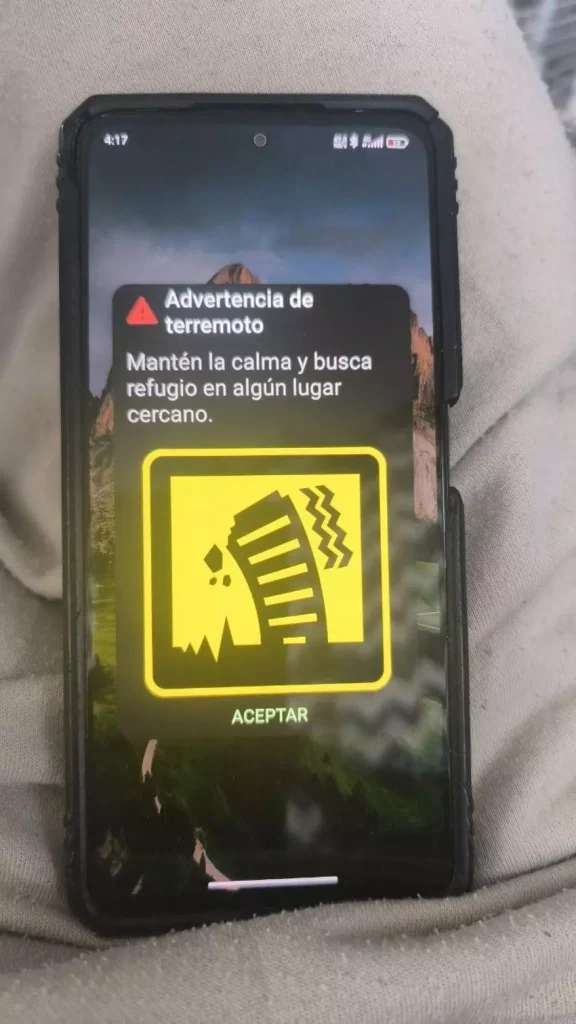
On the street, neighbors looked at one another amid uncertainty, nervous laughter and fear. Some elderly people were still trying to finish making their way down the stairs as their strength allowed. Others regretted having left their cat sleeping under the bed.
Minutes later, Cuba’s Civil Defense reported through its official channels that, according to confirmation from the National Center for Seismological Research (Cenais), “no seismic movement has been recorded in the national territory this Tuesday during the afternoon.”
“In the event of any real event, our official systems and channels will activate the corresponding protocols in a timely manner”
Dr. Enrique Arango, head of research at Cenais, described the alert that reached mobile phones and caused confusion among the population as “completely false.” “In the event of any real event, our official systems and channels will activate the corresponding protocols in a timely manner,” Arango stressed.
Following the scare, the official media began repeatedly issuing clarifications ruling out that it was an earthquake. Versions circulated on social media attributing the warning to an alleged Etecsa drill or a failed test, which Cubadebate quickly denied.
In an Island where residents constantly suffer from blackouts, shortages and bad news, Google seems to be taking the blame
The official media outlet pointed to the operation of Google’s earthquake alert system for Android phones as a possible explanation: the mechanism operates using accelerometers built into phones, which can detect movements compatible with the first vibrations of an earthquake. When numerous devices register similar signals at the same time, the system analyzes that data and can send an alert to phones located in the area. It is designed to gain a few seconds in the event of an earthquake, but its estimates can be wrong and an automatic alert by itself does not constitute confirmation that a tremor has occurred.
So far, the authorities have not explained what signal or movement could have triggered the mass activation of the alert. On an Island where residents constantly suffer from blackouts, shortages and bad news, Google seems to be taking the blame for the scare that sent neighbors running from their homes this Tuesday. The earthquakes that shook Venezuela and Colombia in recent weeks are still very fresh in the memories of Cubans and left many with the feeling that another major earthquake could occur at any moment in the region.
Translated by Regina Anavy
______________________
COLLABORATE WITH OUR WORK: The 14ymedio team is committed to practicing serious journalism that reflects Cuba’s reality in all its depth. Thank you for joining us on this long journey. We invite you to continue supporting us by becoming a member of 14ymedio now. Together we can continue transforming journalism in Cuba.