Despite the high price, some drivers use it in diesel vehicles when they can’t find fuel.
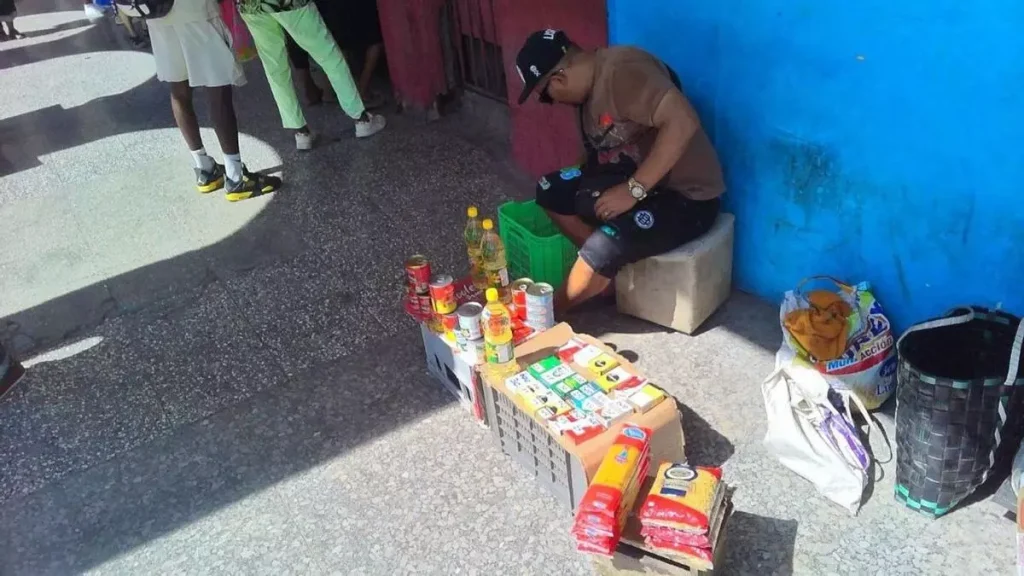
 14ymedio, Juan Diego Rodríguez, Havana, August 5, 2026 / Two bottles of sunflower oil, placed on plastic crates on a Havana sidewalk this Wednesday, encapsulate much of the Cuban crisis. The street vendor was asking 4,500 pesos for each, while also selling canned goods, packages of spaghetti, and packs of cigarettes. The price, verified by 14ymedio, has turned one of the most basic ingredients in the island’s cuisine into a luxury.
To buy that liter, a worker earning the minimum monthly wage of 2,100 pesos would have to hand over two months’ salary plus another 300 pesos. At Wednesday’s informal exchange rate, the bottle was equivalent to about $6.67 or €5.70.
The conversion, however, barely allows us to measure the chasm. In Spain, where incomes are much higher, a liter of refined sunflower oil costs between €1.75 and €2.85 in chains like Dia or Carrefour. For a Cuban living on their salary, on the other hand, the price seen in Havana represents more than 60 full days of work.
The 4,500 pesos verified by this newspaper doesn’t even represent the extreme of the price increase. Social media posts show bottles being offered for 6,000 pesos, demonstrating the extent to which speculation can go with a product that until recently had a maximum retail price of 990 pesos per liter.
The government eliminated that price cap in July, after the measure led to shortages, black market sales, and a widening gap between official prices and the actual cost of imports. Without enough stock to meet demand, the administrative limit ultimately drove the oil out of regulated stores, but it did not reduce its price on the black market.
The practice is technically possible on certain older engines and can keep them running temporarily, but it involves risks.
Now some local governments are trying to curb the uncontrolled price increases through inspections and “agreed-upon prices.” The Guantánamo Municipal Administration Council, for example, set the retail price of a bottle of oil at 2,200 pesos after studying the prices reported by local merchants. Without an increase in supply, these decisions risk repeating the history of previous price caps.
In addition to the demand for cooking oil, another unusual and revealing aspect of the energy crisis has emerged. Videos posted on social media show drivers pouring vegetable oil into the fuel tanks of diesel vehicles as a desperate alternative to fuel shortages.
This practice is technically possible in certain older engines and can keep them running temporarily, but it carries risks. Cooking oil is not biodiesel, and its higher viscosity can clog injectors, leave deposits, and ultimately damage the system.
In Cuba, plagued by blackouts and empty gas stations, the liter of fuel a family needs to fry an egg competes with the liter a truck driver pours into his tank to complete a trip. On the makeshift platform of that Havana sidewalk, the yellowed bottles encapsulated the scale of the disaster. This staple food is also an emergency fuel and a commodity whose price exceeds the minimum wages of two months work.
______________________
COLLABORATE WITH OUR WORK: The 14ymedio team is committed to practicing serious journalism that reflects Cuba’s reality in all its depth. Thank you for joining us on this long journey. We invite you to continue supporting us by becoming a member of 14ymedio now. Together we can continue transforming journalism in Cuba.