For lack of fuel, Matanzas cannot celebrate the traditional red snapper run this year
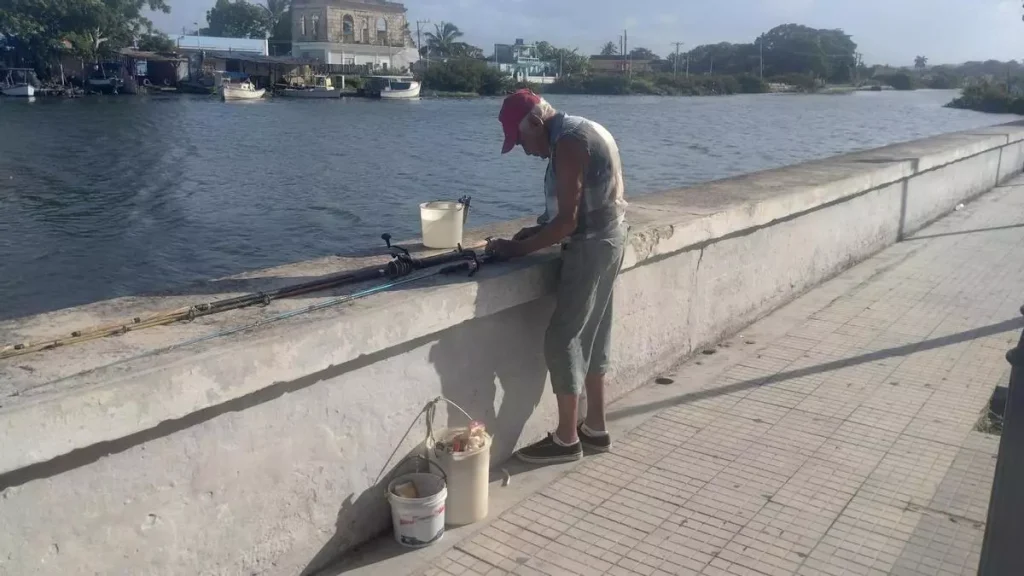
 14ymedio, Pablo Padilla Cruz, Matanzas, 14 June 2026 / Like two liquid daggers, the San Juan and Yumurí rivers cut through the geography of Matanzas. Before dawn, human silhouettes are already etched against the riverbanks. They carry nylon line, bait bags, cast nets and sport fishing rods. The people of Matanzas have the relationship with water and fish in their blood, but today that bond does not answer to the pleasure of a pastime, but to a far more relentless force: the urgency of putting food on the table in a city where the engines of the fishing fleet have fallen silent.
The fuel crisis and general shortage of supplies have completely transformed the map of local fishing. What was once a thriving deep-sea industry is today a silent resistance waged along the river’s edge.
From a footbridge that divides the Yumurí River in two, Joel prepares his tackle with his gaze fixed on the current. He is one of that tide of citizens who have had to look to the water for the sustenance that the markets cannot provide. His tone carries a heavy urgency, that of a man who knows his day’s work decides what his family will eat.
A fish today in Cuba can make the difference between eating something or going to sleep with an empty stomach.
“My friend, fishing is saving us,” says Joel without taking his eyes off the water. “My family has lived close to the river for generations and it has saved us from hunger more than once. A fish today in Cuba can make the difference between eating something and going to bed with an empty stomach. Many of us fish out of tradition or because we enjoy it, but lately people also fish for what they can put on the table.”
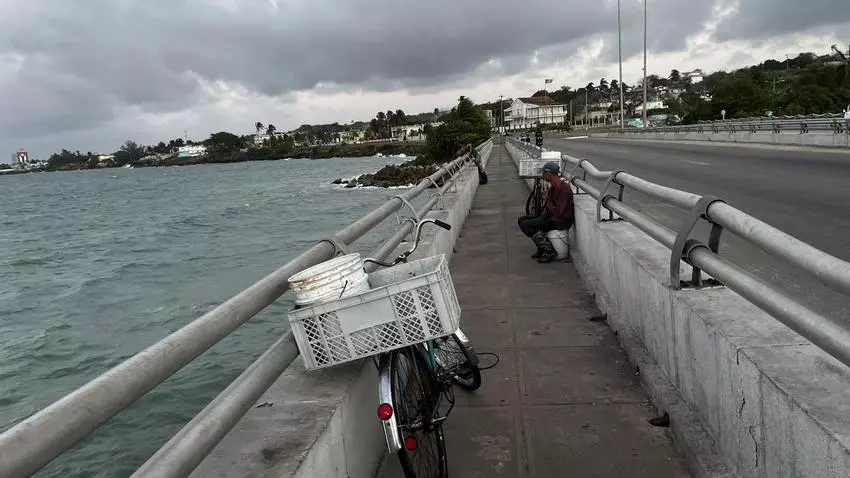
As he casts his line, Joel confesses his frustration, gazing at the horizon, a place that seems forbidden to ordinary Cubans today: “I’ve always wanted to own a boat and fish in the open sea, but the way things are, many boat owners are like me, fishing from the shore. The rise in oil prices has hit them so hard that some haven’t been able to go out to sea for almost a year. How do you make a living when what you staked everything on as your way of life ends?”
The dilemma Joel raises cuts to the heart of Matanzas’s fishing sector. Historically, June marked the beginning of the red snapper run. The fish would enter the bay and the water would become a dense mass of launches, boats and artisanal craft competing for the largest specimens, destined for sale or family consumption.
However, going after the red snapper is today a mathematical gamble in which the fishermen are set up to lose. This method requires keeping the engine running at low revs (usually between 4 and 7 knots) for hours, interspersed with short bursts at full throttle to reach the “ledge” or the reef edge and return before the weather turns.
A typical outing requires between 6 and 8 hours of navigation, with fuel consumption varying between 30 and 60 litres. Add to this the strict rule of thirds – one third of fuel to reach the spot, one third for the work and the final third to guarantee the return – and the actual fishing time is extremely short. Casting the nets badly or hitting a run of bad luck means not just coming back empty-handed, but facing ruin.
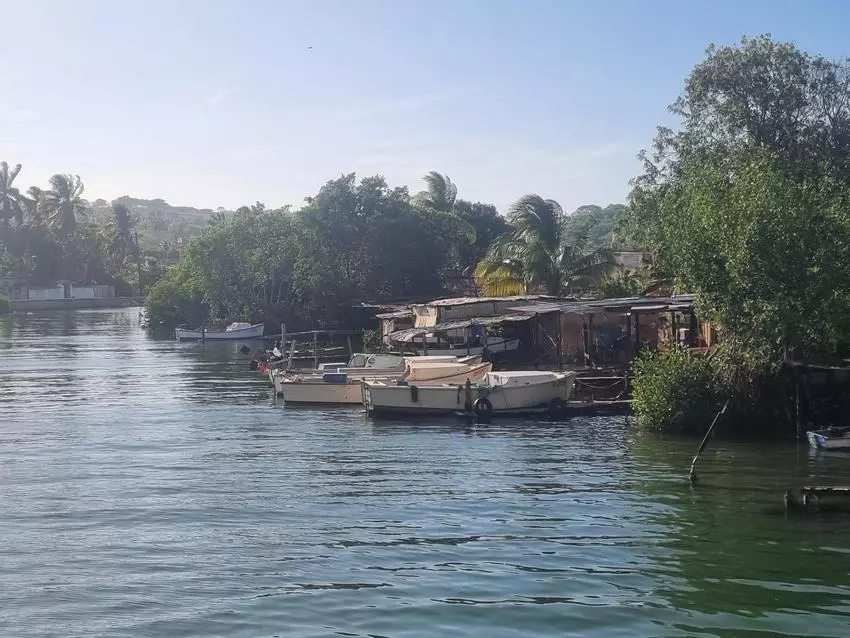
On the docks of the San Juan River, Antuan, the captain of a boat he does not own, assesses the situation with the cold pragmatism and irony of someone who knows the operating costs of the sea inside out.
“The idea that fishing makes us rich might have worked before,” Antuan says with a bitter smile. “Now, without fuel, owning a boat is a matter of wanting it but not being able to. Some of us save fuel for the snapper run, but a bad catch can wipe out all our savings. Others couldn’t even afford to save a couple of liters. That’s why there’s a saying that’s popular among us: when you buy a boat, you’ll be happy three times: the first time when you buy it, the second time when you go fishing for the first time, and the third time when you sell it and pass the problem on to someone else.”
The paralysis of the fleet does not only affect the sailors: it also empties the tables of the city. The fish that remain in the sea are food that never reaches the homes of the people of Matanzas. Against this backdrop, the river has become the region’s last social safety net.
The fleet’s paralysis doesn’t just affect sailors: it also empties the city’s tables.
Theobulo, whom everyone in the neighbourhood affectionately calls Theo, is an octogenarian who has left the boats behind to take up sport fishing from the wall. With the perspective gained from decades walking the same quays, Theo offers a historical and melancholy view of the deterioration of river life.
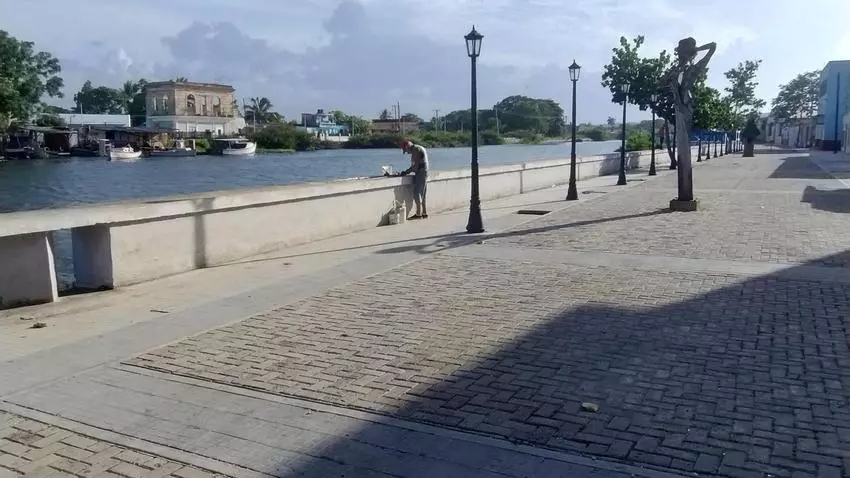
“Son, I grew up right here beside the river and I know more than half the owners of these boats,” relates Theo as he adjusts his rod. “Now, compared to a couple of decades ago, everything is harder. There’s no oil to go out fishing and there’s more hunger in the streets too. Those fish that don’t get caught no longer feed anyone in the city. Now many people, in the afternoon, take their lines and cast them trying to hook some little fish.”
Necessity has forced the people of Matanzas to break taboos and look for any alternative in the water – dynamics that the official narrative prefers to gloss over. “There’s even a woman who catches crabs and sells them,” the old man continues. “I think the newspaper Girón interviewed her a while back, but they never mentioned her need to sell what she takes from the river to get by.”
“There’s no fuel to go out fishing and there’s more hunger in the streets”
When asked whether he misses the adrenaline of sailing out to sea, Theo stares at the calm waters of the river, aware of his own good fortune but sceptical about the future: “My time at sea has passed. Now I fish on the shore for the odd little fish, for the fun of it. Luckily, I don’t need the river to eat… for now. Who knows about tomorrow,” he concludes at the very moment a small fish takes his hook and is pulled from the water.
The fishing landscape of Matanzas has been laid bare. While the red snapper complete their natural cycle in the bay, free from the pressure of the engines, the population crowds onto the bridges and riverbanks, trying to catch their daily sustenance by hand. The city’s fishing, stripped of its fuel, survives today on nylon line, patience and the bare necessity of keeping alive.
Translated by GH.
______________________
COLLABORATE WITH OUR WORK: The 14ymedio team is committed to practicing serious journalism that reflects Cuba’s reality in all its depth. Thank you for joining us on this long journey. We invite you to continue supporting us by becoming a member of 14ymedio now. Together we can continue transforming journalism in Cuba.